Tag Archives: Bart Ehrman

Does Paul’s Telling of History Contradict Luke’s Story in Acts?

In our next blog post in this series on “historical criticism,” we give another example of how historical critics can sometimes distort the Bible, based on certain methodological assumptions brought to the text. This fairly brief case study concerns how the unfolding of historical events as told in Paul’s letters differs from the story told by Luke in Acts. But it helps to put a finger in Acts and another finger in a letter of Paul’s to track with what is happening. What are we to make of these kind of “disconnects,” as some have put it, that we find in the Bible?

… another in a series of blog posts on “historical criticism” of the Bible

Paul in prison, by Rembrandt (credit: Wikipedia). Paul wrote some detailed letters, but do they contradict the story that we find in Luke-Acts?

The discrepancy is very minor, but it serves as a useful illustration. Here is a sample of a blog post written by Bart Ehrman, a professor at the University of North Carolina, a former Christian, and probably the most well known New Testament Bible scholar living today. Dr. Ehrman has developed quite a following, particular among those who are skeptical of the Bible as being the Word of God:

In virtually every instance in which the book of Acts can be compared with Paul’s letters in terms of biographical detail, differences emerge. Sometimes these differences involve minor disagreements concerning where Paul was at a certain time and with whom. As one example, the book of Acts states that when Paul went to Athens he left Timothy and Silas behind in Berea (Acts 17:10-15), and did not meet up with them again until after he left Athens and arrived in Corinth (Acts 18:5). In 1 Thessalonians Paul himself narrates the same sequence of events and indicates just as clearly that he was not in Athens alone, but that Timothy was with him (and possibly Silas as well). It was from Athens that he sent Timothy back to Thessalonica in order to see how the church was doing there (1 Thessalonians 3:1-3).

Although this discrepancy concerns a minor detail, it shows something about the historical reliability of Acts. The narrative coincides with what Paul himself indicates about some matters (he did establish the church in Thessalonica and then leave from there to Athens), but it stands at odds with him on some of the specifics.

Just from reading this, it is easy to get the sense that the Bible is contradicting itself. Dr. Ehrman correctly points out the differences in historical detail between 1 Thessalonians and Acts, but he does so with a little twist.  Did Paul really not meet up with Timothy until after Paul left Athens and arrived in Corinth? Is it possible that Timothy left Berea to travel to Athens to meet Paul, before going back to Thessalonica?  …. Mmmm…… Let us look a little closer….

Depending upon how you approach the text, your evaluation of the differences in the text will, of course, differ. If we take the two documents, 1 Thessalonians and Acts as separate articles of literature, and set the divine inspiration of Scripture aside, it is quite easy to conclude that there is a contradiction between Paul and Luke. This more skeptical view is implied by Dr. Ehrman.

On the other hand, if there is a fundamental unity that exists between these texts, a way of harmonizing the details emerges, without having to go into some rather contorted twists and turns. In fact, there really is a better way to make sense of what we read.

At the apologetics website Evidence Unseen, we can examine how 1 Thessalonians and Acts can be reconciled with one another. The discrepancy arises because Luke probably omitted mentioning Timothy’s travels to Athens, before reconnecting with Paul once again in Corinth. Here is a reconstruction of events, that resolves the supposed contradiction elaborated by Dr. Ehrman:

1. Paul goes to Athens (“Now those who escorted Paul brought him as far as Athens” Acts 17:15).

2. Silas and Timothy come to Athens. This is not mentioned in Acts. However, Luke does write that Paul told them “to come to him as soon as possible” (Acts 17:15). Paul writes, “We sent Timothy… to strengthen and encourage you” (not mentioned in Acts; 1 Thess. 3:2).

3. Timothy goes back to Thessalonica to check on them (“we sent Timothy… to strengthen and encourage you as to your faith” 1 Thess. 3:2).

4. Paul leaves Athens and travels to Corinth (Acts 18:1).

5. Silas and Timothy come to Corinth with money from Macedonia (Acts 18:5). They also come to Corinth with good news about the church of Thessalonica (“Timothy has come to us from you” 1 Thess. 3:6).

6. Paul writes 1 and 2 Thessalonians from Corinth. This might be what Luke means by writing, “Paul began devoting himself completely to the word” (Acts 18:5).

This example of a Bible “contradiction” is not too difficult to harmonize. True, there are instances where an attempted harmonization of certain discrepancies are not as easy, and one should be careful not to immediately gravitate towards an ad hoc solution that feels forced.

Bart Ehrman, yyy

Bart Ehrman (Agnostic/atheistic critic of the Bible)

Bart Ehrman has been often quoted as saying that given enough effort, you can pretty much reconcile just about any story to make everything fit, and rule out contradictions. But the opposite is also the case.  If you are bound and determined to find a contradiction in Scripture, then there are plenty of ways to find one, if you work at it. It does not always mean that finding a “contradiction” is the best way to understand the text, within its historical context.

Not all “historical criticism” is bad. It is important to reiterate that. Yet the method someone uses to try to sort out what is (a): a difference that can be reconciled or harmonized, versus (b), a difference that can only be regarded as a contradiction, is absolutely crucial when doing scholarship.

Unfortunately, there are many people, including many Christians, who tend to see only one side of the story, such as the popular description told by Dr. Ehrman, thus neglecting a perfectly reasonable approach that resolves the difficulty, without sounding forced, or otherwise implausible. As Proverbs 18:17 wisely states, “The one who states his case first seems right, until the other comes and examines him” (ESV).

….. In this next blog post in this series, we will examine how some progressive Christians make the same type of methodological assumptions about the Bible, as non-believers like Bart Ehrman does, in an effort to try to “rescue” the Bible from critics and skeptics. Does this type of Christian apologetic really work? Wait for a week for the next blog post and judge for yourself.


The Easter Effect

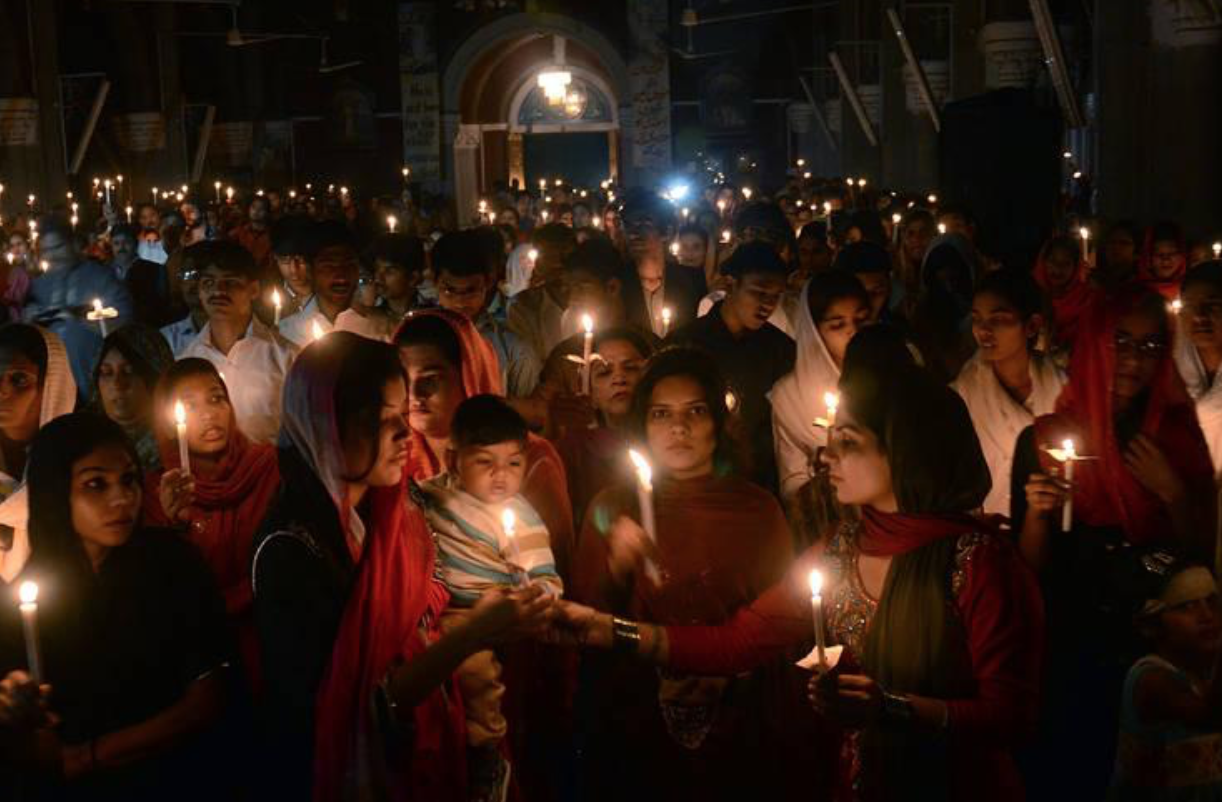
Pakistani Christian worshipers during an Easter Mass in Lahore, 2015. PHOTO: LIGHTROCKET/GETTY IMAGES (as in the Wall Street Journal article)

Several Veracity readers came to me on Easter Sunday and asked me about a recent Wall Street Journal article, “The Easter Effect and How it Changed the World” (behind a paywall), by a Catholic intellectual, George Weigel. Weigel’s argument is that the event of Christ’s resurrection, so inspired, so disturbed, and so invigorated the world of the Roman empire, that it eventually led to Christianity’s effectively taking over the Mediterranean basin within just a few centuries. Weigel published a briefer essay along the same lines in the journal First Things in 2016  (no paywall).

In the First Things essay, I disagree with Weigel’s judgment that the popularity of the New Atheism of the likes of Richard Dawkins has “just about expired.” I only see the trend continuing to erode the cultural landscape, though in a more subdued manner, until the church recaptures the imagination of the “Easter effect.” This caveat aside, I recommend Weigel’s thoughts to you.

If you are interested in this theme, of how the “Easter Effect” radically changed the world, even to the present day, you can explore this idea in a couple of books that treat this topic in-depth. Weigel was partly inspired by the work of Baylor University sociologist, Rodney Stark, in his 2012 The Triumph of Christianity: How the Jesus Movement Became the World’s Largest Religion. You can read a review of the book by Scott Wenig, of Denver Seminary.

In a similar vein, the infamously skeptical, UNC Chapel Hill scholar Bart Ehrman recently released The Triumph of Christianity: How a Forbidden Religion Swept the World. What is remarkable about Ehrman’s book is that even though he is decidedly an agnostic, he nevertheless finds the impact of the claims to Christ’s Resurrection to be of tremendous historical significance. So, even though Ehrman does not believe the Resurrection to be true, he admits that something indeed happened, following Jesus’ death, that led to the radical transformation of the Roman empire. Charlotte’s Reformed Theological Seminary president, Michael Kruger, reviews Ehrman’s book.

HT: Paulette Parker


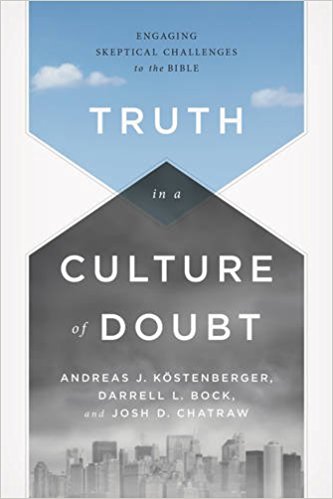
Truth in a Culture of Doubt: Brief Book Review

Still looking for that perfect gift book, for a high school graduate, off on their way to college? Consider Truth in a Culture of Doubt: Engaging Skeptical Challenges to the Bible, by Andreas Köstenberger, Darrell Bock, and Josh Chatraw.

Young people growing up in the church today face immense challenges from a culture skeptical to the Gospel. Leading the charge towards encouraging doubt is popular author and University of North Carolina religion professor, Bart Ehrman.

If you have never heard of Bart Ehrman before, you need to get out from underneath your rock, and learn about him. Ehrman grew up going to church and attending Christian colleges, but eventually lost his faith in the process. He has since authored five New York Times Bestsellers, and dozens of other books, all aimed at undermining confidence in the reliability of the Bible and its message.

What makes Ehrman’s skepticism so caustic, is that he knows his facts really, really well. He knows his Bible better than most Christians do, and he remains one of the world’s top textual critical scholars of the New Testament. The problem is that the conclusions he draws from his research are not always warranted. There are indeed very good answers to the issues he raises, that affirm the trustworthiness of the Bible.

In Truth in a Culture of Doubt, Köstenberger, Bock, and Chatraw, all evangelical and believing scholars themselves, tackle each of Erhman’s challenges in a very engaging manner, issues that every thoughtful Christian will face, as they seek to share their faith with their informed neighbors:

  • Is God Immoral Because He Allows Suffering?
  • Is the Bible Full of Irresolvable Contradictions?
  • Are the Biblical Manuscripts Corrupt?
  • Were there Many Christianities?
  • Are Many New Testament Documents Forged?

A nice little extra is a quick question and answer guide at the back of the book, that summarizes the basic arguments. Truth in a Culture of Doubt is an updated, more in-depth version of an earlier book by these evangelical scholars, Truth Matters, that I reviewed a few years ago. Though Truth in a Culture of Doubt was itself published back in 2014, the information packed in it is still relevant today, as the issues dealt within are not going away any time soon. Ehrman is still himself writing books, but more and more, any new issues that he writes about move further away from his area of expertise.

In many ways, the topics that Ehrman has been writing about for over fifteen years are not new. They are no more than popular distillations of scholarly, critical views in the history of Christianity, that have been taught in secular departments of religion at private and public universities for nearly a century now. Sadly, it has taken a barrage of these skeptical writings, in popular form, to force the evangelical church to better inform her people, and give better answers.

Read a brief excerpt from Truth in a Culture of Doubt here, then go buy the book for that young person you know, who is facing challenges from a skeptical culture.


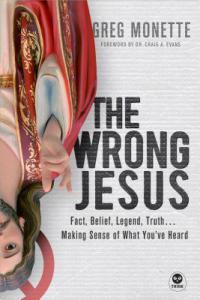
The Wrong Jesus for the Right Young Graduate

Greg Monette, a young scholar with Logos Bible Software and the Navigators, has written the perfect book to curious minds to sort out fact from fiction regarding who was and is Jesus.

Greg Monette, a young scholar with Logos Bible Software and the Navigators, has written the perfect book for curious minds to sort out fact from fiction regarding who was and is Jesus.

The Internet. YouTube. Your NewAge neighbor. The History Channel. Morgan Freeman’s The Story of God. Youth pastors. Skeptical friends. Parents. College professors…. Our world is simply bombarded with an untold number of conflicting voices, all telling us who Jesus really was. How do you figure out who the right Jesus is from the wrong Jesus?

If you know of a Christian young person graduating high school or college, you should know that they will be facing challenges to their Christian faith in college, the secular workplace, or just with their iPhone, scrolling through the Internet. Would not the best gift to such a person be something that will help to prepare them to better understand and defend their faith?

I recently picked up a copy of Greg Monette’s The Wrong Jesus: Fact, Belief, Legend, Truth . . . Making Sense of What You’ve Heard. Monette helps the reader to navigate many of the challenges to what the Bible teaches about Jesus, including questions about His existence, His divinity, and His message to a skeptical world.

In past years, I have recommended Truth Matters: Confident Faith in a Confusing World, by Andreas Köstenberger, Darrell Bock, Josh Chatraw. This is another excellent book along the same line (Hey, if Veracity co-blogger, John Paine, had dinner with co-author Andreas Köstenberger, it has to be good, right?). In Truth Matters, the authors focus on the popular writings of former evangelical scholar turned skeptic, Bart Ehrman. However, Monette’s book is broader in focus, looking also at archaeological issues, the miracles of Jesus, and how Jesus treated women.

Monette brilliantly defends the faith, but he is also refreshingly candid. The Bible is historically reliable, but the truth of Christianity is not dependent on our ability to figure out every detailed Bible discrepancy and fitting it in with some simplistic view of inerrancy.1 What ultimately matters is that if Jesus really is resurrected from the dead, then this changes everything.

A healthy perspective. A highly recommended book.

Notes:

1. I have written about this topic before, but I feel like this point needs to be repeatedly stressed.


Surviving College Intellectually as a Christian

Michael Kruger was a young Christian when he entered his first year at the University of North Carolina. He thought he was prepared for the challenges to his faith at college, but when sat in a New Testament introduction class taught by Bart Ehrman, it nearly blew out his faith, much like the feeling of getting a flat tire and listening to all of the air hiss out.

Colleges across the country are now in session. Will young Christians survive their time at a university with their faith intact? Dr. Kruger, now the president of Reformed Theological Seminary in Charlotte, North Carolina, shares some wisdom about surviving “Religion 101” in the following 6 minute video. I highly recommend Dr. Kruger’s blog.