From the Christianity Along the Rhine blog series…
The Veracity blog is normally not a high-traffic website. I am well-aware that long-form blogging does not really generate lots of “clicks.” Social media, like Facebook and Instagram, is way too time consuming and life-draining for me to deal with, anyway. But back in mid-September of this past year (2025), I was shocked to discover that Veracity received over 80 thousand views in just a matter of days.
I published my blog post about it on September 20, and somehow Google picked it up as the 3rd or 4th highest ranking Internet resource world-wide on the topic. Never before has something I have written gone so viral before.
We had 80,000 hits in just a matter of days, for a blog that gets just a tiny fraction of that on a typical day. Pretty wild for a blog with less than 200 subscribers.
As one might reasonably conclude, Jesus did not come back during the September 23-24 window. Shockers of shockers, Mhlakela was not deterred, and he ended up reformulating yet another prediction that Jesus would return during another window on October 7-8.
Alas again, October 7-8 passed without any fanfare. No rapture happened. The last I heard, he came up with yet a third date prediction, perhaps October 16-17, that of course, failed again. “Rapture Talk” since then morphed into “Rapture Fatigue.” Date-setting for Jesus’ return is a peculiar hobby that keeps on going despite the obvious, with its popularity waxing and waning over time.
In September, 2025, many end-times enthusiasts were waiting for the “rapture” of the church by Jesus…. a “rapture” that never came. What was all the fuss about?
Cameron is in many ways a popular evangelical Christian influencer, an evangelist and a spokesperson on conservative political issues as well. He admittedly acknowledges that he is not a scholar, and some of his amateur misunderstandings of things have come out in at least one filmed “prayer meeting” a few years ago, and on an historical documentary he produced on American history, which I have critiqued.
Kirk Cameron made a historical documentary film Monumental back in 2012, among his many other projects. Cameron has become a trustworthy and influential popular spokesperson among many evangelical Christians. But some now are concerned that Kirk has gone off the deep end…. or has he?
Is Kirk Cameron Now a “Heretic,” or Is He Simply Thinking Through Some Really Important Questions, and Wants to Talk About It?
Alas, Kirk Cameron means well, and to many in his audience, he seems trustworthy. So it really shocked some people, myself included, when he announced that he has shifted towards upholding a doctrine of conditional immortality.
The doctrine of conditional immortality differs from the traditional doctrine of eternal conscious torment. In the latter view, those who are eternally separated from God will undergo a never-ending experience of divine punishment resulting from their sin. However, the doctrine of conditional immortality, otherwise known as annihilationism, argues that those eternally separated from God will be punished, but that the punishment will have a terminus. To use a common expression, the punishment (of God) will fit the crime (of the sinner). Once the punishment, as rightly determined by God’s judgment, is rightly finished, the person will be annihilated. That person, separated from God, will no longer exist, eternally.
So, to answer the question posed by the title of this post: No, Kirk Cameron is not denying the doctrine of hell. But he is framing the way to think about hell in a category that might be unfamiliar and unsettling to others.
The debate of the exact nature of hell has been going on since the days of the early church. There are three main views on the topic: (1) the doctrine of eternal conscious torment, (2) the doctrine of conditional immortality, and (3) the doctrine of universalism. Universalism, which in its most popular form in Christians circles, as suggested by those like theologian David Bentley Hart, or William Paul Young, the author of The Shack, teaches that hell is really a kind of purgatory, whereby God will purge sin from the non-believer and eventually win that person to salvation, eventually, in the next life. In other words, hell is primarily restorative and redemptive, as opposed to being punitive.
While Christian universalism has had its proponents, even in the early church era, the doctrine was rejected as veering away from historic Christian orthodoxy. Names like Origen, and possibly Gregory of Nyssa, on up to more recent times, as with C.S. Lewis’ intellectual hero, the 19th century author George MacDonald, have espoused some form of universalism. But the orthodoxy of universalism has been rightly questioned.
It was really Saint Augustine of Hippo, an avid proponent of the doctrine of conscious eternal torment in the 5th century, who effectively put the nail in the coffin on general acceptance of conditional immortality…. at least for many Christians. Augustine’s massive influence pretty much made conscious eternal torment the traditional view of hell for centuries. But every now and then, conditional immortality makes a comeback, at least among a few Christians, in nearly every age of the church. So, Kirk Cameron’s musings on the doctrine of hell are far from new.
I take an agnostic view on the debate between these two perspectives at the present time. Dr. Mohler cites Matthew 25:46 as the main “go-to” verse to favor the doctrine of eternal conscious torment: “And these will go away into eternal punishment, but the righteous into eternal life.” But then there is Paul’s statement in 1 Thessalonians 2:9: “They will suffer the punishment of eternal destruction, away from the presence of the Lord and from the glory of his might.”
Eternal destruction sounds a lot like annihilation, at least to me. But I get Dr. Mohler’s point about Matthew 25:46. I am concerned about slippery slope tendencies on controversial topics, like Mohler, but these can be complex issues where different people will come to varying conclusions based on different ways of thinking. What matters more to me is how people arrive at their conclusion, as opposed to not just the exact conclusion they land on.
This is one of those doctrinal disputes which I have wanted to study, but I have not done a thorough enough job to make any firm, informed conclusion. About thirteen years ago, I read Robert A. Peterson’s Hell on Trial: The Case For Eternal Punishment, a 272 page articulate text which I highly recommend. Peterson makes a strong argument for eternal conscious torment, while acknowledging that some verses in the New Testament do lean towards conditional immortality. I have not yet read thoroughly any counter-perspective from the conditional immortality side of the discussion. I simply have not yet had the mental bandwidth to take on such a project, and I doubt I will get to it anytime soon (though I have wanted to).
An Appeal to Have More Charitable Dialogue on Controversial Topics Among Christians
But what concerns me the most about the controversy concerning Kirk Cameron are some of the outlandish comments, which have called into question Cameron’s spiritual integrity. Some have claimed that Kirk Cameron is embracing “heresy” now with his views on hell. That simply is not true. Kirk Cameron might indeed be wrong about conditional immortality, but that does not make him a “heretic.”
“With @KirkCameron announcing his position on conditionalism I’m seeing a lot of people attempting to critique it. I hold to ECT, but I do understand the topic of conditional immortality and I have yet to see anyone actually give a rebuttal that shows me they’ve interacted with the arguments and biblical reasoning from the other side. To condemn conditionalism/annihilationism as heresy is to say that John Stott, Edward Fudge, F. F. Bruce, potentially even Athanasius of Alexandria, are all heretics. This is, with all due respect, ridiculous. While the position might be unorthodox it is not heresy. If you actually want to interact with someone who knows the topic reach out to my friends @datechris and/or @DanPaterson7. Both are solid, fair minded, well educated and articulate holders of conditionalism.”
Gavin Ortlund, another theologian who holds to the traditional doctrine of conscious eternal torment, has a video which echoes Wesley Huff’s call for more charitable discussion. In Gavin’s four-layered model for how to go about “theological triage,” when Christians disagree with one another, from his book Finding the Right Hills To Die On, Gavin does not place this debate about the nature of hell as a “Tier 1,” top-level issue. It is an important issue to consider, a “Tier 3” issue, but Christians of good faith may come to different conclusions regarding the nature of hell. This is a good reminder that we should all strive for more charity in having discussions with one another on controversial topics.
I mean, if Kirk Cameron is no longer “safe,” then is anybody really “safe” anymore?
I have a couple more blogposts to put out before the end of the year, but this topic was too important not to pass up!
If there is one established fact that both conservative and liberal scholars admit about Jesus, it is that Jesus died a death on a cross by means of Roman crucifixion. However, in Islam, such a belief about the fate of Jesus is rejected.
In the Quran, Surah 4:157, states that the Jews “killed him not, nor crucified him, but so it was made to appear to them.” It was thought to be unbecoming for such a prophetic figure to die such a horrific death. But where did this belief denying the crucifixion of Jesus come from?
Perhaps the most likely source was associated with a Gnostic Christian teacher from Alexandria, Egypt, in the 2nd century, Basilides, who lived about the time of 117 to 161 C.E. According to Irenaeus, the 2nd century heresiologist who sought to expose the theological errors of Gnosticism, Basilides largely accepted the Gospel narratives about Jesus, but takes an unusual interpretive turn when it comes to the lead up to the crucifixion of Jesus.
Was Jesus really crucified on the cross? Or did someone trick the Romans with a switcheroo, and having Simon of Cyrene crucified instead? Many Muslims hold to the idea that something like this really happened, and that Jesus was never crucified, and that someone else was crucified in Jesus’ place. Where did this Islamic belief about Jesus really come from?
In Mark 15, Jesus is mocked and beaten by the Roman soldiers and then led out to be crucified. But at one point:
“21 …they compelled a passerby, Simon of Cyrene, who was coming in from the country, the father of Alexander and Rufus, to carry his cross. 22 And they brought him to the place called Golgotha (which means Place of a Skull). 23 And they offered him wine mixed with myrrh, but he did not take it. 24 And they crucified him and divided his garments among them, casting lots for them, to decide what each should take. “
Evidently, Jesus was struggling to carry his cross, so another man, Simon of Cyrene, was pressed into service to carry Jesus’ cross for him. Nevertheless, the traditional historical reading is that Jesus was brought to the place called Golgotha where he was crucified.
But Basilides (pronounced “ba-SIL-ih-deez“) saw some ambiguity in verse 22 of Mark’s Gospel (or the corresponding passage in Luke 23). Who was the “him” brought to Golgotha? If Simon of Cyrene was swapped out to carry the cross, would it not have been Simon of Cyrene who was then crucified, and not Jesus?
According to Irenaeus’ story, Basilides believes that the physical features of Simon of Cyrene and Jesus were swapped, to make it look like Jesus was crucified, when it really was Simon. As Simon was crucified, it was Jesus who stood by, laughing and ridiculing what was going on.
However, in M. David Litwa’s Basilides: The Oldest Gnostic, Litwa makes the argument that Ireneaus has confused the record of Basilides’ teachings with another Gnostic-influenced text, the Second Treatise of the Great Seth. Litwa maintains that Basildes actually believed that Jesus was crucified, and there was no supernatural switcheroo between Jesus and Simon of Cyrene at the crucifixion.
To complicate matters, the Second Treatise of the Great Seth itself is ambiguous enough to suggest that Jesus was not swapped with Simon at the crucifixion, and that Jesus’ “laughing” was not at Simon’s expense, but rather at the ignorance of those who ended up crucifying Jesus. Did Irenaeus misinterpret something here?
In contrast, in Bart Ehrman’s Lost Scriptures, Ehrman holds to the view that Ireneaus did not distort the stories of Basilides or the Second Treatise of the Great Seth, reviewed elsewhere on the Veracity blog. Litwa’s work, however, argues that indeed Basilides still held to the orthodox view that Jesus was indeed crucified, while still acknowledging that Ireneaus was correct in describing a number of other Gnostic views of Christianity which conflicted with Ireneaus’ orthodox perspective on Christianity.
We have other sources outside of Irenaeus, where certain tangential Christian groups denied the crucifixion of Jesus, early on in the history of the church. The Apocryphal Acts of John, briefly examined before on the Veracity blog, holds to a docetic view of Jesus, one who is divine but only appears to be human. In these Acts of John, Jesus is incapable of suffering, which lends support to the idea that Jesus could not have been physically crucified. In the Acts of John, Jesus’ crucifixion on the cross was merely an illusion. The Second Council of Nicaea in the 8th century officially condemned these apocryphal Acts of John as being heretical.
Does Dr. Litwa successfully make his case, that the traditional story about Basilides handed down through the centuries was distorted by Irenaeus? Yes and no. When it comes to tracing back the claim that there was a switcheroo between Jesus and Simon of Cyrene when it came to the crucifixion, the evidence that Litwa presents is quite compelling. Basilides probably did accept the traditional story of Jesus’ crucifixion, without a switcheroo. In fact, when it comes to the canonical Gospels’ presentation about the life of Jesus, Basilides does sound quite orthodox. Perhaps Irenaeus’ critique of Basilides was overly harsh in certain places.
On the other hand, there is just enough crazy stuff in Basilides’ worldview that firmly plants him in a Gnostic mindset, enough to justify Irenaeus classifying Basilides as being a heretic, even without the Simon of Cyrene crucifixion switcheroo story. Aside from Irenaeus’ report, this is what we know:
Basilides believed that angels created this material world. Furthermore, he believed that there was a complex hierarchy of 365 heavens. For Basilides, salvation comes not through faith, as commonly understood, but through knowledge. For Basilides, faith is really a form of higher perception and thought, and not a conscious choice. Though Basilides claims to have received this teaching from Saint Matthias, who replaced Judas Iscariot among the Twelve Disciples following the resurrection, ideas like those that Basilides promoted became common features of Christian Gnosticism.
M. David Litwa’s Basilides: The Oldest Gnostic examines what we can know and what we do not know about perhaps the earliest Christian Gnostic, often associated by the church father Irenaeus, as the originator of the story that Jesus was never crucified. Litwa challenges the long held view that Irenaeus accurately described this teaching by Basilides.
Part of the problem with getting an accurate portrait of Basilides is that very little survives from what he wrote. Irenaeus in the late 2nd century gives us the most information, whom Litwa says was misinformed at key points. Litwa shows that about 36% of the claims made against Basilides by Irenaeus are contradicted by other source material. Much of what else we have come from fragments attributed to his son and true disciple, Isidore, preserved primarily from other orthodox sources like Clement of Alexandria. Basilides apparently drew on the same New Testament material that the orthodox community did, but Basilides had an expanded canon of authoritative teaching derived from Greek thought, such as Plato.
For example, Basilides accepted the concept of the transmigration of souls; that is, reincarnation, based on a particular interpretation of Deuteronomy 5:9:
“You shall not bow down to them or serve them, for I the Lord your God am a jealous God, visiting the iniquity of the fathers on the children to the third and fourth generation of those who hate me” (ESV).
For Basilides, one could only receive punishment for one’s own sins, and not the sins of others. Therefore, Basilides understands Deuteronomy as assuming that a sinful person would receive punishment for their sins in a future “generation;” that is, in some future next life, indicating a reincarnation of the soul.
However, most scholars interpret Deuteronomy as not affirming reincarnation, and that the Old Testament rejection of the transmigration of souls made its way into and was preserved by orthodox Christian thought.
Litwa also shows that some 64% of the claims against Basilides made by Ireneaus are unconfirmed by other sources. But since Ireneaus got 34% wrong, he should not be relied upon as an accurate source. Perhaps Litwa is right on that, but still, without other source material to challenge Ireneaus’ other claims, it is difficult to say.
The Bauer historical project convinces a number of scholars today, if not the vast majority of academics who study and teach religion at secular universities and colleges in the United States. However, Bauer’s thesis is problematic, a subject too involved to get into here, but addressed elsewhere on Veracity. Nevertheless, to his credit, M. David Litwa does well in correcting some misunderstandings of Gnostic teachers, giving us a broader history of the early Christian movement.
Dr. Litwa’s book Basilides: The Oldest Gnostic is a fairly short read, coming in at well under 200 pages. I listened to the Audible version of the book in less than a few hours.
In our New Testament, we have 27 books, which include 4 Gospels. However, from about the second century and onwards for a few hundred years, a number of other competing gospel texts emerged (along with other letters), seeking attention from Christians hungry to know more about the faith. But among these “lost scriptures,” were any of these writings legit?
In historically orthodox circles, there was unanimous agreement that Matthew, Mark, Luke, and John were the official gospel accounts, describing the life, death, and resurrection of Jesus of Nazareth, dating back to the first century. Luke himself acknowledged that “many” (Luke 1:1) have sought to write gospel accounts about Jesus. So, what happened to these “many” alternative gospel accounts?
It is reasonable to say a number of these “many” accounts were probably lost, partly perhaps due to the turmoil caused by the Jewish Wars of the 66-70 CE, culminating in the destruction of the Temple in Jerusalem, and later during the Kito War impacting the Jewish community in Alexandria starting around 115 CE, as well as the Bar Kokhba Revolt in the 132 CE. Thousands and thousands of Jews died in these conflicts, which probably included a number of Jewish Christians. As the original Christian community of the first century was primarily Jewish, there is a good chance that a number of these “many” writings perished along with those who wrote or sought to preserve them.1
Sure, many Christians know that we have 66 books in the (Protestant) Bible, and in particular, the 27 which make up the New Testament. But what about those books from the early church era that did not make it into the New Testament? What were these books and what were they about?
What “Lost Gospels” Did Not Make the Final Cut Into the New Testament, and What Were They?
While none of these supposed “lost gospels” from the first century are known to us today, scholars nevertheless acknowledge that a number of other supposed gospel accounts can be dated back to as early as the 2nd century CE. However, for the most part, these writings have been lost for most of church history, except in cases where a church father quotes from such documents.
Nevertheless, there have also been spectacular re-discoveries of some of these documents that were thought to be lost, as with the 1945 recovery of the Nag Hammadi Gnostic Gospels recovered in Egypt, including the well-known Gospel of Thomas. It seems like every few years or so, a new discovery is made, as with the Gospel of Judas.
These gospel accounts which did not make it into the New Testament canon are generally called “apocryphal gospels,” where “apocryphal” describes something of questionable or unknown origin. Some apocryphal gospels have sought to tell a different version of Jesus’ story at variance from the four official accounts, which primarily explains why these texts were rejected by the historically orthodox of the early church, along with the late dating of such writings which put them out of reach of being written and/or authorized by the earliest Christian apostles, or anyone else in that apostolic circle.
In addition, yet another group of apocryphal gospels were written not to attack the official narratives, but rather to fill in the gaps perceived to be missing from Matthew, Mark, Luke and John. One popular apocryphal gospel like this that did survive from about 2nd century is the Protoevangelium of James, otherwise known as the Gospel of James, examined briefly here before on Veracity, which goes into considerable detail about the life of the Virgin Mary, including elements which are not reported anywhere in the four canonical Gospels.
The Gospels in our New Testament primarily focus on the public ministry of Jesus, a period generally thought to have lasted three years when Jesus was an adult. Of that material, our Gospels spend the most amount of time on the last week of Jesus’ life, including his crucifixion and subsequent resurrection. John and Mark completely ignore anything about Jesus prior to his public ministry as an adult.
The Apocryphal Gospels, part of the Penguin Classic series, was written by Cambridge University (U.K) scholar Simon Gathercole. Gathercole translates a number of alternative gospel accounts from the early church era, that are not found in our New Testament.
Apocryphal Gospels and Lost Scriptures
After I had the privilege of meeting Dr. Simon Gathercole in Cambridge in January 2024, I picked up a Kindle copy of his The Apocryphal Gospels, a collection of many of these non-canonical gospel accounts. A devout evangelical Christian scholar, Gathercole assembled this book together for the publisher, Penguin, as an aid to study the differences found between the apocryphal gospels and Matthew, Mark, Luke, and John. Unfortunately, Gathercole’s work is not available as an audiobook, which is how I have been largely reading books, while on my commute to and from work.
Instead, University of North Carolina biblical scholar, Bart Ehrman, does have his collection of apocryphal gospels, Lost Scriptures: Books that Did Not Make It into the New Testament, available on audiobook, so I gave Ehrman’s work a listen. Ehrman does not include certain apocryphal gospel fragments which Gathercole does. But Ehrman does include other non-canonical apocryphal New Testament texts which are not gospels, such as various letters and narratives claiming to have been written by those like Peter and Paul, but which scholars generally acknowledge today as forgeries.
Both Ehrman’s Lost Scriptures and Gathercole’s The Apocryphal Gospels are collections of diverse material, and therefore are more useful as reference works. Nevertheless, I wanted to listen to Ehrman’s book, and occasionally compare Gathercole’s work along the way. Both Ehrman and Gathercole give their translations of the whole of the surviving documents, when such texts are fairly short, while in some cases only providing a sample or even just an outline of those certain texts which are quite lengthy.2
Lost Scriptures That Sound Strange in Places
Some things you find in these apocryphal New Testament texts are fairly benign, whereas some other things are quite strange, counter to what you find in the canonical New Testament. Take the Gospel of the Egyptians, dated to the 2nd century, for instance. What we have of this gospel only exists from quotations found in the writings of the early church father, Clement of Alexandria. The Gospel of the Egyptians evidently contained a narrative detailing a conversation Jesus had with Salome, one of the women who first witnessed the Resurrection of Jesus.
Ehrman gives us saying number one as follows (Ehrman, p. 19)
When Salome asked, “How long will death prevail?” the Lord replied, “For as long as you women bear children.” But he did not say this because life is evil or creation wicked; instead he was teaching the natural succession of things; for everything degenerates after coming into being. (Clement of Alexandria, Miscellanies, 3, 45, 3)
That is not terribly strange. But here is Ehrman’s translation of saying number four (Ehrman, p. 19)
Why do those who adhere to everything except the gospel rule of truth not cite the following words spoken to Salome? For when she said, “Then I have done well not to bear children” (supposing that it was not suitable to give birth), the Lord responded, “Eat every herb, but not the one that is bitter.” (Clement of Alexandria, Miscellanies, 3, 66, 1–2)
According to Simon Gathercole, statements like these in the Gospel of the Egyptians were used as rationale for denigrating sexual relations and the having and raising of children (Gathercole, p. 179-180).3
Then we have Ehrman’s translation of saying number 5, drawn from the writings of Clement of Alexandria:
This is why Cassian indicates that when Salome asked when the things she had asked about would become known, the Lord replied: “When you trample on the shameful garment and when the two become one and the male with the female is neither male nor female.” The first thing to note, then, is that we do not find this saying in the four Gospels handed down to us, but in the Gospel according to the Egyptians. (Clement of Alexandria, Miscellanies, 3, 92, 2–93, 1)
Ehrman comments that the reference to the “shameful garment” to be trampled upon is a Gnostic idea that the human body itself is so utterly infiltrated with evil that it must be discarded before salvation can be realized (Ehrman, p. 18). Gathercole sees this also as a rejection of marriage (Gathercole, p. 179). Both of these ideas, the Gnostic despising of God’s good creation and the rejection of the institution of marriage are considered as heretical teachings by those within the tradition of historically orthodox Christianity.
Then there are texts like the Gospel of the Hebrews, for which only a few fragments have survived. Gathercole states that this was perhaps originally an edited version of the canonical Gospel of Matthew, with a few extra bits of narrative and sayings not found in Matthew. For example, the Gospel of the Hebrews includes the story of the woman caught in adultery, found only in most Bibles today in the canonical John 8.4
But there is some oddball stuff in the Gospel of the Hebrews, generally dated to the second century. For example, the Gospel of the Hebrews has Jesus saying that the “Holy Spirit” is his “Mother” (Ehrman, p. 16), which probably partly explains why the Christian church rejected its authenticity.
Gathercole quotes a fragment whereby Jesus questions his need for baptism, which raises other interesting questions:
The Lord’s mother and brothers said to him, ‘John the Baptist is baptizing, for the forgiveness of sins. Let’s go and get baptized by him.’
‘What sin have I committed,’ Jesus asked them, ‘to have to go and be baptized by him? That is, unless perhaps what I have just said was an unintentional sin! (Gathercole, p. 163-164).5
Lost Scriptures: Books that Did Not Make It into the New Testament, by University of North Carolina New Testament scholar Bart Ehrman, offers a complement to Gathercole’s selection of New Testament apocryphal writings, including various letters, notably some associated with Gnostic Christianity. The photo on the cover of Ehrman’s books features texts from the Nag Hammadi library, a collection of Gnostic scriptures rediscovered in Egypt in the 1940s.
The Gospel of Peter, With Its Talking Cross….and The Gnostic Gospels
The Gospel of Peter stands out as one of the oddest “lost gospel” accounts, in that it features gigantic angelic figures and a talking cross. The Gospel of Peter also tries to portray Pontius Pilate, as representative of the Romans, as being a friend of Jesus, and places the blame for Jesus’ death squarely on the Jews, a theme that has sadly fed into antisemitic attitudes emerging at various times throughout church history, in otherwise Christian communities. This feature has led scholars to conclude that the Gospel of Peter was a second century document, corresponding to the period where the Jewish and Christian communities clearly came to a “parting of the ways,” when the number of Jewish adherents to following Jesus dropped off sharply. Like several of these other “lost gospels,” the Gospel of Peter was eventually rejected during the early church era, and largely forgotten, until a fragment of it was rediscovered in the 19th century, in the tomb of an Egyptian Christian monk.
But most of the non-canonical gospels are associated with the heresy of Gnosticism, many of which belong to the Nag Hammadi library. The Gospel of Philip and the Gospel of Truth both contain esoteric sayings of Jesus, which promote the idea that one must be initiated into the secret knowledge of Jesus’ teachings, which the historically orthodox tradition of Christianity is accused of neglecting and suppressing. In Gnostic Christianity, the pivotal episode found in the canonical Gospels of Jesus’ crucifixion and resurrection is either downplayed or entirely neglected.
The Gospel of Mary, which was recovered in the late 19th century, has a strong Gnostic element as well, mixed with a proto-feminist message. In the Gospel of Mary, Mary Magdalene has received certain secret teachings from Jesus which were never imparted to Peter. Mary describes a vision she received from Jesus about the ascension of the soul. Peter listens but is not buying into the vision. One of the other male disciples of Jesus (Levi) then rebukes Peter for his macho-masculinity, making Mary the hero of the story and silencing Peter. While the feminist message is largely unique to this gospel, the dialogue displays a common feature of Gnosticism theology, in that the authority of the apostolic community, typically represented by the male twelve in Jesus’ inner circle, is rejected in favor of obtaining esoteric spiritual knowledge.6
Some of the more frustrating examples of “lost gospels” include forgeries written by “supposedly” historically orthodox Christians who wrote books trying to undermine heresies. I put “supposedly” in air quotes as it baffles me why some Christians would resort to writing forgeries in order to combat the writing of forgeries. For example, the Epistle of the Apostles was written probably in the 2nd century to refute certain well-known Gnostic Christian teachers of the late first and early second century, like Simon Magus and Cerinthus. It is just bizarre to think that some proto-orthodox Christian would take a tactic used by the Gnostics to then turn around and use it to refute those same Gnostics.
There are apparently several Apocalypses of Peter, one of them being the relatively popular work which it goes into explicit detail regarding the horrors of hell, which was even listed in the famous and orthodox Muratorian Fragment as being part of the accepted list of New Testament Scriptures, though this particular Apocalypse of Peter was ultimately rejected by the early church as being non-canonical. Bart Ehrman in his Lost Scriptures, in addition to this Apocalypse of Peter, includes yet another Petrine apocalypse, a Gnostic version known as the Coptic Apocalypse of Peter.
Ehrman also includes The Second Treatise of the Great Seth, which like the Gospel of Basilides (not included in Ehrman’s collection) emphasizes that Jesus of Nazareth was not crucified on the cross. Instead, Simon the Cyrene was mistakenly crucified in place of Jesus, while Jesus who escapes his execution laughs at the situation. This denial of the crucifixion of Jesus eventually made its way into the teaching of Islam. The idea behind the crucifixion “mix-up” claim is based on one particular Gnostic Christian belief that it would be impossible, even laughable, for God to have been crucified on a cross. The “Great Seth” is thought by some to be Jesus as the incarnate version of Adam and Eve’s third son, Seth.
A fragment of the Gospel of Peter found at Akhmim, in 1886. This copy has been dated to about the 8th or 9th century, C.E. The Gospel of Peter was rejected as being apocryphal by the early church, and therefore not appropriate for inclusion in the New Testament. It is most known for a reference to a “talking cross,” following the resurrection of Jesus.
Apocryphal Acts of the Apostles
Simon Gathercole’s collection focuses solely on various “lost gospels,” whereas Ehrman’s collection goes beyond “lost gospels” to include various “Acts” of the Apostles, but not the stories contained in the New Testament Book of Acts. Ehrman includes texts like these:
The Acts of John: John the son of Zebedee is the main character here, but this is a Gnostic text, with some odd-ball stories in it, such as about a bed John is sleeping in, which is infested with bedbugs. The miracle stories presented in the Acts of John are generally way overdone, sensationalist, and some downright absurd. One story is about a man, assisted by an accomplice, who breaks into the tomb of a dead woman whom the man lusted after, intent on having sexual relations with the corpse. The intended rapist is killed by a serpent. John then resurrects both the woman and the man. Jesus is described in ways that suggest that he never had a flesh and bones physical body. I was quite happy to be done with the Acts of John when I finished!
The Acts of Paul: Ehrman has an extract detailing how Paul was beheaded by Nero in Rome. The second century church father Tertullian knew of the Acts of Paul, as having been forged by a presbyter living in what is now modern-day Turkey, who wrote this book “out of love for Paul.”
The Acts of Thecla: Thecla was thought to be a well-known female disciple of Paul, and the book was quite popular even into the Middle Ages. Thecla breaks off an engagement to be married in order to follow Paul, which causes all sorts of problems for her. The Acts of Thecla were often circulated together with the Acts of Paul. While it is difficult to establish the historicity of these accounts, there is good reason to believe that Thecla was a real person, featuring one of the few in-depth stories from the earliest Christians about the piety of a female follower of Jesus.
The Acts of Thomas: Thomas was a disciple of Jesus. but here there is more to the story. Jesus apparently has a twin brother, Thomas, who is one-in-the-same as Thomas the disciple. Thomas is sold into slavery by Jesus to work for the “King of India,” in which Thomas is then enabled to be a great missionary to India, performing many miracles. This book gave rise to the narrative that Thomas founded the Christian community in southern India. Thomas upholds an extreme ethic of asceticism, forbidding sexual relations even among those who are married, and urging against having children. Towards the end of the book, a woman raised from the dead describes some pretty graphic descriptions about the horrors of hell that anticipate what we find in Dante’s Inferno. Most scholars date the Acts of Thomas to the third century.
The Acts of Peter: The adventures of the Apostle Peter are set in contrast with the movements of Simon Magus, thought to be the first Christian heretic found in the canonical Book of Acts. Peter ultimately defeats Magus, when Peter journeys towards Rome. There in Rome, Peter is finally martyred, being crucified upside down. Part of the Acts of Peter serves as a backdrop narrative for the 1951 film, Quo Vadis (an excellent movie, by the way).
Scholars debate with one another as to how much historical material is actually being described in these books, as they are likely a mix of both fact and fiction. But where to draw the line between the two is difficult to pin down.
The Apocalypse of Peter has been dated back to the 2nd century C.E. Like the Gospel of Peter, it was rejected as apocryphal by the early church, and therefore inappropriate to place into the New Testament. It claims to have been written by Peter himself. Scholars universally recognize this as a classic example of pseudepigrapha (spurious writings). This fragment was discovered in Egypt (credit: Wikipedia)
Lost Letters That Failed the “Sniff” Test for the New Testament
Ehrman’s collection in his Lost Scriptures also includes additional letters attached to well-known persons in our New Testament. Scholars today recognize that these apocryphal letters were indeed of dubious origin.
Take Third Corinthians, for example. Third Corinthians is generally dated to the second century, long after Paul’s death. It was primarily written as a proto-orthodox critique of certain heterodox teachings, such as Gnosticism, which denied the humanity of Jesus and the bodily resurrection of Jesus. Some Christians in the early church accepted Third Corinthians as genuine, such as the Armenian church, but even in the second century others recognized this letter as a forgery, despite its supposed good intentions. In more recent times, some Quakers who came to America during the colonial period had a copy of Third Corinthians with them.7
Ehrman includes other fascinating examples of such supposed lost correspondence, including:
Correspondence of Paul and Seneca: The likelihood that Paul ever had any contact with the contemporaneous and great Roman philosopher Seneca is extraordinarily slim. Nevertheless, some imaginative pseudepigraphical author drafted a series of letters between the two influential thinkers of the first century.
Paul’s Letter to the Laodiceans: The canonical New Testament letter to the Colossians mentions a separate letter to the Laodiceans by Paul which is now lost. But this did not prevent someone in the second century from writing a forgery in the name of Paul having the contents of this letter. Ehrman (p. 165) suggests that this may have been written by someone who sought to write a more proto-orthodox version of yet another letter to the Laodiceans found in the first attempt at a collection of New Testament writings, compiled by the notorious second century heretic, Marcion of Sinope.
The Epistle of Barnabas: Claimed to have been written by a companion of Paul, this “The Letter of Barnabas” is worthy of extended analysis, for perhaps another blog post. But in summary, this epistle enjoyed popularity during the early church era, even among certain historically orthodox believers, some considering it a candidate for the New Testament. But thankfully, it was dropped from consideration for good reason. It takes a very negative view of Judaism, ridiculing the Jews for having taken the teachings of the Law of Moses literally and missing the metaphorical meaning which the author believes that orthodox Christianity understood to be the correct way of interpreting the Old Testament. The letter probably helped to drive a deeper wedge between Jews and Christians, as Christianity made the transition from being primarily a Jewish movement to an almost exclusively Gentile movement.
Pseudo-Titus: A letter which dates back to about the 5th century, was obviously not written by Titus, though Titus is claimed to be the author. The work takes a very negative view of human sexuality, even calling for celibacy even among married couples, as a higher spiritual calling.
Ehrman includes selections from the Shepherd of Hermas, which like the Epistle of Barnabas, enjoyed great popularity among the early Christians, as some thought it to be fitting for the New Testament canon of Scripture. But aside from certain doubts of authorship, who according to some was supposedly the brother Pius, an early Roman bishop, the book was rejected from the canonical list, partly due to a tendency towards a works-righteousness mentality. The Shepherd of Hermas records a number of visions laden with allegorical messages, and is preoccupied with concerns about falling into sin after conversion. The Christian church is symbolically represented by a lady who often appears in these visions. Readers are told that those Christians who have fallen into such sin will have a second chance to repent, but only that second chance. After that, not even a later repentance of sin will allow for the salvation of the person.8
The Gospel of Mary, a facsimile on display at the Museum of the Bible, in Washington, D.C. The Gospel of Mary is often associated with Gnostic Christian collection of writings, dating back to the 2nd and 3rd centuries of the early Christian movement. The Gospel of Mary is of particular interest to modern feminists, as Mary Magdalene is featured as having received secret knowledge from Jesus.
A Super Gospel?
There was even an attempt to come up with a kind of “super” gospel, which attempted to merge all four of the well-acknowledged gospels into one text, in order to harmonize the differences found in our canonical gospels: Matthew, Mark, Luke and John. Simon Gathercole includes an outline of this Diatessaron (not the whole text) in his collection of The Apocryphal Gospels, but introduces it with a quote from Theodoret (393-460 CE), an early church father who was disturbed by how popular this “super” gospel was among some churches, taking drastic action to clean up the mess:
“This Tatian composed a Gospel called the “Diatessaron”, cutting out the genealogies and whatever else shows that the Lord was born, physically speaking, from the line of David. It was not only those of Tatian’s own sect who made use of this Gospel, but also people who otherwise followed the apostolic teachings. They did not recognize the wickedness of the composition but treated it naively as a compendium of the Gospels. I managed to find more than two hundred copies of the book revered in our own churches, so I collected them all and removed them, replacing them with the Gospels of the four evangelists” (Gathercole, p. 71)
You would think that a studied attempt to produce a gospel harmony would have been well-received by church leaders, but apparently not. Presumably, Theodoret judged the Diatessaron to have “the wickedness of … composition” in that Christians had confused it with an original document going back to the apostles themselves. Gathercole dates Tatian’s Diatessaron to the mid to late second century. Part of the problem in reproducing the Diatessaron in its entirety is that there is no early copy of the text which has survived to the modern day, so only an outline of its contents can be reliably reproduced. Furthermore, scholars do not even know what the original language was for the Diatessaron. Gathercole’s outline is from a late Arabic copy (Gathercole, p. 71).
Ehrman’s collection towards the end of his volume includes various works which describe various stages of the development of the Christian canon. One of the first canonical lists in use by the proto-orthodox is the Muratorian Fragment, the oldest surviving list of books to make up our New Testament. The fragment is named after the Italian scholar who discovered the document in the early 18th century. The Muratorian Fragment is dated somewhere in the latter half of the second century.
The Muratorian Fragment lists all of the books of our current New Testament, except for Hebrews, James, 1 and 2 Peter, and 3 John. However, it also includes certain texts not found in our New Testament, like the Shepherd of Hermas and the Apocalypse of Peter, which could be read privately but not read in church. Other texts attributed to Marcion, like the supposed Pauline letters to Laodicea and Alexandria, and various Gnostic teachers are to be rejected completely. The Apocalypse of Peter is of interest in that it describes a journey through heaven and hell, a kind of literature which anticipates Dante’s Divine Comedy. The Apocalypse of Peter assumes a doctrine of eternal torment regarding hell in very vivid imagery, denying both universalism and annihilationism.
Simply reading through some of various texts that were not included in the New Testament does not fully explain the whole process as to why these texts were finally not accepted into the canon of Scripture, a topic for another time. However, it does give you a look into what these texts say, how they substantially differ with the New Testament, in certain cases, while in some sense differing only somewhat in other cases.
A 9th or 10th century copy of the Gospel of Nicodemus, sometimes called the Acts of Pilate, in Latin.
What To Do With Lost Scriptures and Apocryphal Gospels?
The “lost gospels” and other “New Testament-ish” apocryphal texts covered by Bart Ehrman’s Lost Scriptures and Simon Gathercole’s The Apocryphal Gospels have enjoyed varying degrees of popularity throughout Christian history, among certain communities. But particularly since the Protestant Reformation, these texts were mostly forgotten, except when archaeological discoveries, particularly in the 19th century and the 20th century recovery of the Nag Hammadi Library unearthed these forgotten books. Every few years or so, a new discovery is announced of some “lost scripture,” fodder for a lot of conversation as to why we possess the New Testament canon that we currently have.
Back in the 1990’s, progressive Christian scholar Elaine Pagels published several books, which on a popular level discussed the so-called “Gnostic Gospels,” rediscovered in 1945 in Egypt in the Nag Hammadi library. I read those books with great interest as Pagels uncovered a look at Christianity which I never heard about in my evangelical church circles. I must admit that learning about these books helps to explain why some Christians over the centuries have sought to find answers to questions that the New Testament does not fully address. But make no mistake about it, Gnostic Christianity bears very little resemblance to historic orthodox Christian faith.
Many Christians are completely unaware of the existence of such apocryphal texts, whereas certain skeptics of Christianity look upon the designation of such texts as “apocryphal,” or even certain ones as “heretical,” as examples of the institutional Christian church supposedly hiding “the truth” from people, as a means of maintaining a grip and control on the minds of Christians and preserving power and privilege. Such a mindset takes on the character of either cynicism or even a kind of spiritual elitism, which suggests that the reader of these apocryphal texts can gain some kind of “inside scoop” that other, more historically orthodox Christians fail to possess.
The more traditional view, one that I accept, is less cynical and does not rely on the logic of conspiracies. Instead, there were always a few loose cannons in the early Christian movement who gave themselves over to quirky, at best, or downright distorting versions of the story of Jesus and the rest of the New Testament. Some of these texts would best be characterized as “fan fiction,” while others were polemical in nature. Some were motivated by good intentions, while others were motivated by the idea of inventing their own version of Christianity to suit some agenda at odds with the genuine narrative handed down from the original apostolic followers of Jesus.9
One thing is certain in that by the second century, there was a lot of diversity within the Christian movement, which led to efforts by historically orthodox Christians to push back against alternative voices. Ironically, many of the same alternative voices have managed to make a comeback in our own day, in the 21st century.
While Bart Ehrman’s Lost Scriptures contains more apocryphal material, and is therefore, more complete, Simon Gathercole’s The Apocryphal Gospels, while including certain texts which Ehrman omits, is on the whole a slightly more suitable collection, if you could only pick one of the two books. Largely this is the case as Gathercole’s evangelical commitments poke through enough in his introductions to the texts, without being overly dismissive of skeptical viewpoints. Ehrman’s work, on the other hand, is comparably more skeptical, but thankfully without being overly dismissive of historically orthodox viewpoints. Both works overlap with shared material, but both emphasize different aspects of apocryphal New Testament era works. In fairness, I have not read all the way through Gathercole’s book, but I have read enough to get the sense of how he approaches the apocryphal texts he is studying. Nevertheless, both Ehrman’s Lost Scriptures: Books that Did Not Make It Into the New Testament and Gathercole’s The Apocryphal Gospels (Penguin Classics) are important contributions to the scholarship of early Christianity and are worthy of study.10
We should be thankful that Jesus made his incarnate appearance in human history 2,000 years ago and not today in our social media age with its proliferation of “fake news” and the “like” button. Since the 19th century, scholars have been able to unearth a number of these lost texts. The situation of the early church was not as confused and contrived as Dan Brown’s popular The DaVinci Code portrays it. However, the story is complex enough. The history does show the need for a type of vetting process that the early church deployed to try to weed out both well-meaning yet sincerely misguided texts, along with deliberate misrepresentations of the early apostolic record, while preserving what was good and true.
It is important recognize that the development of the New Testament canon was an organic process. There were no set of meetings where bishops took any votes on which books were “in” and which books were “out.” Instead, there was a sense developed over many decades that these 27 books we have in our New Testament had the ring of truth in them.
It makes one appreciate the fact that we have had thoughtful and influential early church fathers who sought to keep the Christian movement on track. While the study of such apocryphal texts can help give us a fuller understanding of what early Christianity looked like, one must be careful not to immediately come to cynical conclusions which impute bad motives on behalf of historic orthodox Christianity. Instead, it is worth considering a better alternative; that is, that the early church in its historically orthodox form got the essential story of Christianity right to begin with.
Simon J. Gathercole. United Kingdom New Testament scholar, Professor of New Testament and Early Christianity, and Director of Studies at Fitzwilliam College, Cambridge. I met Dr. Gathercole on a visit to Cambridge, at his church, in January, 2024.
For a very good lecture which covers the topic of “apocryphal gospels,” which cites Gathercole’s book, which explains the differences between the “apocryphal gospels” and what we have in the New Testament, I would recommend the following from Dr. Peter Gurry. Dr. Gurry has co-written with John D. Meade Scribes and Scriptures: The Amazing Story of How We Got the Bible, which is on my reading list, and covers much of what he discusses in this lecture. Enjoy!!
Notes:
1. Dan Brown’s blockbuster 2004 novel, The DaVinci Code, popularized the idea that there were “lost gospels” which the Christian church across the centuries wrongly suppressed. The misinformation that Dan Brown and others spread twenty years ago has led to a renewed interest in learning about various New Testament apocryphal gospels and other controversial writings. However, scholars have known about such apocryphal works for decades, if not centuries. The problem is that many of these apocryphal works have been lost, and we only possess fragments of them, preserved by heresiologists like Irenaeus. Nevertheless, recent discoveries, like the Gospel of Judas, continue to perk interest into the question of how the New Testament canon was formed. Baylor University historian Philip Jenkins has written about these so-called “lost gospels.” The bottom line is that such “lost gospels” are generally dated too late to be considered for serious inclusion into the Christian New Testament canon. Jenkins has written several other articles of interest on the topic of “lost gospels,” and other “lost scriptures.” Here is a late August, 2025 installment of Philip Jenkins’ series on this topic. Another installment in early September.↩
2. One more word about comparing Ehrman’s Lost Scriptures to Gathercole’s The Apocryphal Gospels. Ehrman is a skeptic and not a Christian, whereas Gathercole is an evangelical Christian. Both are world-class scholars. Nevertheless, cognitive bias is something that no scholar can completely avoid. Yet in these two volumes both scholars are relatively restrained in keeping their biases in check. The focus of these two volumes is primarily on offering accurate translations of these apocryphal texts, and comparatively, the translations offered by Ehrman and Gathercole are remarkably close. Because I spent more time reading through Ehrman’s work, most of this review will focus on Ehrman’s Lost Scriptures↩
3. Frankly, the most bizarre and disturbing apocryphal gospel described between Ehrman’s and Gathercole’s book is the Greater Questions of Mary, found in Gathercole’s collection (p. 176-177). While we have no surviving copy to the Greater Questions of Mary, the early church father Epiphanius of Salamis (about 310/320 – 403 CE) describes the work, in Gathercole’s words with: “Here Jesus is said to have revealed to Mary the obscene rituals which Epiphanius’ pornographic account has attributed to the Gnostics, rituals which Jesus himself allegedly initiated. This is perhaps the most surprising of all apocryphal Gospel fragments.” I am less inclined to quote the text from Epiphanius as the obscenity is very, very disturbing.↩
4. Dallas Seminary evangelical Bible scholar, Daniel Wallace, has stated that the story of the woman caught in adultery was his favorite story of Jesus not found in the Bible. The story of this interesting portion still found in most printed Bibles today is worthy of a separate blog post, which I hope to get to in the future.↩
5. Some do wonder why Jesus was baptized by John the Baptist, if indeed Jesus was sinless. But if we carefully think through the doctrine of the Incarnation, a good answer can be be given to this question: For if indeed Jesus took our sin upon himself, not simply through his death on the cross, but also by the very fact of becoming God incarnate, the act of baptism by Jesus enacts for us the washing away of sins on our behalf. Jesus does not need to undergo baptism for any supposed sin on his part, but he does undergo baptism for the sake of our sins. 2 Corinthians 5:21 puts it well: “ For our sake he made him to be sin who knew no sin, so that in him we might become the righteousness of God.” I would recommend Thomas F. Torrance’s The Meditation of Christ, which looks at how the incarnation of God in Christ is intrinsically related to the doctrine of the atonement culminating with the death of Jesus on the cross. Red Pen Logic offers a different explanation for addressing the question about Jesus’ baptism. However, an even better answer draws on a studied understanding of Leviticus (see the three part Veracity blog post series). The “sin offering” instructions found in Leviticus 4 are not exactly clear in terms of application. Some scholars suggest that the translation of “sin offering” is actually misleading, and that it should be a “decontamination offering” instead. This would include both an offering for “unintentional sin” as most Christians generally understand it. However, it would also include an offering related to “ritual impurity,” a condition where someone was designated as unclean, but that there was no “sin” involved. In the Leviticus, ritual impurity, which is not sinful, is different from moral impurity, which is sinful. It is possible that there are cases where a “sin offering” would be appropriate to deal with ritual impurity, which is not sinful, such as when a woman gives birth to a child, she is designated as ritual impure for a period time, where a “sin offering” is required, though clearly giving birth to a child is not sinful (see Leviticus 12:1-8). It might be that Jesus underwent baptism as a purification rite, which was not due to sin, but rather to ritual impurity. Since ritual impurity is not sinful, there is no conflict with becoming ritually impure and the concept of a sinless savior. ↩
7. See Veracity blog post series on Matthew Thiessen’s A Jewish Paul. Thiessen argues that many second century Christians came to accept the idea that Paul believed in the “resurrection of the flesh,” which was in contrast with Paul’s genuine thought that “flesh and blood” can not inherit the Kingdom of God, see 1 Corinthians 15:50. Paul believed that the resurrected body for believers would not be corruptible, as opposed to our current, fleshly bodies, which are indeed corruptible and susceptible to decay and death. It would be more accurate to say that our current fleshly bodies will be transformed in the general resurrection to become “spiritual bodies,” as described by Paul in 1 Corinthians 15. I argue that the pseudonymous author of Third Corinthians never fully grasped that nuanced distinction. Whether or not early Christians who ultimately read and dismissed Third Corinthians as a forgery picked up on that problem is unclear.↩
10. Bart Ehrman has a companion book to Lost Scriptures, aptly titled Lost Christianities, which from my understanding from various reviews has a somewhat more polemical tone, where he analyzes these “lost scriptures” to suggest that early Christianity, even into the first century, was inherently diverse, a theme articulated by the early 20th century German scholar, Walter Bauer. Alternatively, a more historically orthodox approach challenges the Bauer thesis, suggesting that aside from the conflict between Jewish and Gentile Christians, there was less theological controversy in the first century of the Christian movement. ↩
Here are some highlights from the Veracity blog for 2024, as the year winds down to a close…..
But before I jump into that, here is a quick meditation on why Veracity exists. Veracity is all about learning, knowing, and defending what the truth is. Sadly, we live in a world where truth gets set off to the side. Sometimes, even those of us with the best of intentions get sidetracked and mislead by those who live by lies.
Here is a recent example. One of biggest news stories of 2024 has been the fall of the Bashar al-Assad regime in Syria. Veteran news reporter, Clarissa Ward, was in Syria investigating some of the prisons ran by the former Syrian president Bashar al-Assad. In one of the cells Ms. Ward went into with her guide, they found a man saying that he had been in the prison several months. It was a griping scene. Ward offered the man some water, and some food, before he eventually boarded an ambulance. It was horrifying to witness the state of this man who had been imprisoned by al-Assad…… or so it seemed.
A few days after this stunning report, it became known that the story about this man was a hoax. Apparently, Clarissa Ward and her camera team had been duped. This man whom they “rescued” from this prison cell was none other than Salama Mohammad Salama, a first lieutenant in the Syrian Air Force Intelligence, one of al-Assad’s cronies who himself had a record of torturing opponents of al-Assad.
I have to admit, when I first heard and saw the story, I bought into it hook, line, and sinker. On the surface, the story sounded convincing. My heartstrings were pulled, as I sympathized with the man’s plight, narrated by a stunned veteran journalist. But it did seem odd that the man went off with the ambulance without giving Clarissa Ward a phone number to call someone in his family, to tell them he was free from the prison. Clarissa Ward had been duped. CNN had been duped. I had been duped.
It is a terrible feeling to know that you have been lied to. Unfortunately, too often well-meaning Christians will get duped by misinformation about their faith. There are plenty of critics of Christianity who see right through the misinformation that gets propagated in certain Christian circles. Some of this misinformation comes in the form of rather benign Christian urban legends, or genuine conversations of disagreement regarding topics where we have incomplete data to work with. However, other pieces of misinformation can be highly damaging, triggering sentiments of mistrust towards Christian spokespersons or other Christians more generally. If those lies do not get exposed by Christians willing to think deeper about their faith, then it only increases the cynicism of the skeptic and prompts unprepared Christians to go through a process of faith deconstruction, which in some cases can lead to outright deconversion.
Veracity exists to expose those lies and get at the truth of what makes Christianity true. Hopefully, if you have been reading the Veracity blog for awhile, you have been helped at least somewhat to ask curious questions which might lead to a deeper and more genuine commitment to know and love Jesus Christ. Thanks for sticking around and reading.
Reflections on the Year 2024
I lost some goodfriends this year, as friends get older. These were men who walked humbly with God, and it showed in their lives.
Before there was Nicholas Cage in the Left Behind movie, there was Hal Lindsey, the great popularizer of EndTimes scenarious based on a dispensationlist interpretation of the Book of Revelation.
Jesus could still return at any time, but I am not waiting to hold my breath that the year 1948 holds the definitive key to unlocking this biblical prophecy.
Lindsey was a bit fuzzy about the exact date of Christ’s return, but the conflict between the U.S. and the Soviet Union had many concerned. Back then, the threat of the Cold War and the USSR had me thinking that Lindsey might be right. Maybe??? I was not a geeky student of the Bible then, yet I had Christian friends whom I respected who were enamored with Lindsey’s book. But the fall of the Soviet Union by 1989 pretty much dissolved Lindsey’s reputation.
Even within the last decade or so, back in the days before the iPhone and when watching television was still a thing, Lindsey was prominent on late-night cable TV, offering his analysis of world events that might impact the future. The Left Behind series of novels and movies owe a tremendous debt to Hal Lindsey. Mmmph.
Perhaps the larger scope of Lindsey’s Bible interpretive method, what theologians call “dispensationalism,” might prove to be correct in the long run, but the date-setting proclivities embedded in The Late Great Planet Earth have proven to fall woefully short in retrospect. With all due respect, I would argue that there is a better way to read the Bible concerning the “End Times.” For a similar approach, British theologian Ian Paul offers his perspective.
Frankly, I am glad I have never bothered with late-night cable TV. I was not missing much!
About 35 years ago, I attended a Christian youth conference in Pittsburgh where Campolo was headlined as the primary speaker. Afterwards a couple of friends and I were tasked to take Campolo back to the airport to catch a flight back to his home in Philadelphia, where he was a professor at Eastern University. He was a great conversationalist, with an amazing knack for helping others to think outside of the box. Campolo impressed me as a radical Christian, which was cool. Below is one of my favorite Tony Campolo sermons:
Over the decades, this quality also made him controversial. He kept pushing boundaries. He was the spiritual advisor to President Bill Clinton during the 1990s, through the period of Clinton’s sexuality scandal. Though pro-life with respect to abortion, he was otherwise very involved in progressive politics. At one point, he refused to identify himself as an “evangelical,” as in his view, the term had become hopelessly hijacked with its connection to right-wing politics.
But he kept pushing boundaries further than necessary. He became edgy in ways I ultimately could not endorse, popularizing the concept of a “Red-Letter Christian,” elevating the words of Jesus above other teachings in Scripture. As I have shown before (see the following hyperlinks), this hermeneutic is really an example of wishful thinking that fashions the ministry of the earthly Jesus into something that reflects the embedded cultural values of the Bible reader and not what is actually in the text of Scripture. In this way of thinking, the words/teachings of Jesus are prioritized over other teachings in the Bible, particularly the letters of Paul.
Jesus is not the only one speaking in the New Testament, for he also uses the words of Paul, but that only comes out over time. For example, Jesus’ earthly ministry was focused primarily on the Jews living in and around Jerusalem and Galilee, despite a few forays into Samaritan territory and contact with “God-fearing” Romans. In the “red letters,” Jesus tells us that he only came for the lost sheep of Israel (Matthew 15:24). It is not until AFTER the ascension of Jesus that the Gospel’s progress extends in full force to go outside of Israel and impact the whole world. Paul, who knew nothing of the earthly Jesus, received his commission on the road to Damascus by the Risen Jesus to be the Apostle to the Gentiles.
The Christian faith today would look a whole lot different if Jesus had not tapped Paul to be his prime emissary to the Gentile world. Otherwise, Christianity would probably only remain a smaller sect within Judaism, and not the worldwide, universal faith of billions today.
The New Testament does not offer a full throated attack against slavery, but you do get at least a modest, indirect attack against the institution of slavery in the teachings of Paul. In comparison, the “red letters” of Jesus in the Gospels never challenge the institution of slavery, even in any indirect way. If all we had were the “red letters”of Jesus to go on, we would have never had a Christian abolitionist movement to end slavery in the United State. Think about that.
If you looking for a message of non-violence in the New Testament, and you are willing to lay aside the whole concept of judgment coming at the end of time momentarily, the words of Paul help you out better than the “red letters” of Jesus. For while the “red letters” of Jesus in the Gospels do promote non-violence, the “red letters” of Jesus in the Book of Revelation tell a very different story. In Revelation, we have Jesus going around wielding a sword and not afraid to use it. Even if you take Jesus’ words in Revelation more non-metaphorically (a wise thing to do), Jesus’ words are still more harsh than anything we find in Paul. In comparison, Paul never says an explicit word about endorsing the use of violence. Think about that one, too, for a moment.
Then finally, when it comes to the doctrine of hell, even if you leave the Book of Revelation out of the picture, Jesus talks about hell, or images related to hell, more in his “red letters” than what we find in the words of Paul. Paul never even mentions any word corresponding to “hell” once in his letters, and he only talks about “eternal destruction” in one verse, 2 Thessalonians 1:9. The differences are real, if we only take the time to actually read the New Testament.
The theological trajectory that Tony Campolo took has grieved me.
“Red Letter” Christianity sounds great on the surface, until you actually start to read the “red letters” of Jesus in comparison to other texts in the Bible. At the risk of some overstatement, in Campolo’s way of wishful thinking he wanted to equate the words of Jesus, written in red in some Bibles, with social justice efforts. Much of this was all well-intended, as I have seen it. But it seemed to also follow in a murky way and track along with what Elon Musk has called a secular “woke mind virus,” whereby everything in reality is measured through the lens of an oppressor/oppressed matrix, viewing Dr. Martin Luther King, Jr.’s vision of a “color-blind” society as a deficiency and not a goal for real social change. Campolo even flipped his position on homosexuality, eventually embracing same-sex marriage as a viable Christian option.
A contrarian in many ways, Tony Campolo nevertheless set a very good example in encouraging conservative Christians to fight against racism and ending poverty, and not getting caught up in fantasies about “Christian Nationalism.” Despite many of the positive contributions like this he made, Tony Campolo regretfully drifted away from historic orthodoxy, in a way that is not theologically sustainable over the long run across the generations (as evident with his son, Bart), but he did not drift far enough to ultimately escape God’s grace, at least in my estimation.
Having read a few biographies about Dietrich Bonhoeffer, it was slightly painful to see how the film mangled some of the chronology of Bonhoeffer’s life. For example, Bonhoeffer confusingly placed Dietrich’s last trip to New York sometime presumably after Hitler’s invasion to Poland, after Dietrich had joined the Abwehr , the German military intelligence unit. The more historically accurate chronology has Dietrich going to New York for the last time in the early summer of 1939, realizing that he had made a mistake in going to America, and then returning to Germany to face his fate. Within a few months of his return to Germany, he then joins the Abwehr, in a subversive effort to bring down Hitler from the inside. Hitler invades Poland that September.
But the film did highlight the key moments of the German theologian’s overall career, who died at the hand of the Nazis, after being implicated in a conspiracy that failed to assassinate Hitler. What more can you try to squeeze into a 2-hour movie? Bonhoeffer’s Christian courage is both inspiring and controversial, and the legacy of this pacifist-turned-political-traitor will continue to be examined and re-examined for some time to come.
What I found fascinating are the reviews that go all over the map regarding the kind of impression the Bonhoeffer movie was trying to make. For example, on one side, Slate magazine says “In an age of rampant access to information but elusive truth, we are all searching for quick ways to categorize one another, and to claim the best heroes for our own personal camps. Such is also the case with Bonhoeffer, whose most popular biography was written not by a German theologian, but by American conservative radio host and prominent Trump supporter Eric Metaxas….. The movie is, then, yet another claim conservatives are making to Bonhoeffer’s legacy.”
On the other side, America: The Jesuit Review, took a completely different slant, suggesting that the film is actually a prophetic warning issued against Christian conservatives: “What separates “Bonhoeffer” from the myriad instructive Holocaust biographies and melodramas is its timing: American audiences have never before watched a movie about World War II-era Germany with the knowledge that a majority of their own electorate has voted in favor of fascism….Will Evangelical America be apologizing in five years?”
I guess that is partly why I liked the film, and would recommend others see it, even with the strained and confusing chronology. When viewers on opposite sides of their ideological biases have quite contradictory takes on the same film, it generally indicates that the film at least got something right. The truth is probably somewhere in the balance between two extremes.
On my “to-be-read” list is Charles Marsh’s biography of Bonhoeffer, Strange Glory: A Life of Dietrich Bonhoeffer. Most people that I know who have read the Marsh book tell me that it is better than Eric Metaxas’ biography of Bonhoeffer.
The Book of the Year… Books and More Books
My book of year, hands down, is Michael Licona’s Jesus Contradicted. More than any other book I have read in a long time, Licona’s work to reframe how we think about the inspiration of the Scripture, in view of the evidence, and see how the impact of Greco-Roman genres of literature helps us to make better sense of the differences/discrepancies we read in the Gospels. While I do not think Licona’s call for an updated revision of the Chicago Statement on Biblical Inerrancy will gain much traction, I do think Licona’s flexible view of biblical inerrancy is the most defensible way to think about the reliability of the Bible.
My number two book of the year is the timely The Anxious Generation, by Jonathan Haidt, showing how social media has hijacked the mental health of a generation of children and other young people. The book is making an impact, and I encourage everyone to go read it…. like right now!!
The good news is that the message of this book is not only making in-roads into the church (though perhaps not enough), it is starting to have in impact in the wider culture. In late November, 2024, Australia took the bold and audacious move of banning social media for people under the age of 16. I am not sure how enforceable such a law could be, but it is a step in the right direction as it will hopefully stir up families to take a closer look at how children digest and consume social media.
So while Haidt’s book is not the number one book I read in 2024, it certainly is the most timely and important!
The Anxious Generation: How the Great Rewiring of Childhood is Causing an Epidemic of Mental Illness, by Jonathan Haidt
——————–
Odds-n-Ends
The other most profound theological book I read in 2024 was Matthew Thiessen’s A Jewish Paul. I am not clear on what Thiessen’s exact theological commitments are, but in this book he explains Paul’s teaching about the “spirit,” in terms of “Pneumatic Gene Therapy,” as an explanation which makes sense of what Paul had in mind regarding the dynamics of living the Christian life, as well as thinking about the future bodily resurrection of believers.
Following up on A Jewish Paul, I read and reviewed Kent Yinger’sThe New Perspective on Paul, a very, very helpful and accessible introduction a topic that at least in some circles is very controversial. Read the review, or better yet, get a copy of the book to make sense of what the fuss is all about.
……………..
A couple of years ago, I decided to try to read at least one Bart Ehrman book a year, and offer a review. Ehrman is probably the world’s leading academic critic of evangelical Christianity, having a very loyal following of formerly evangelical Christians who have deconverted from Christianity, or otherwise deconstructed their faith in a more progressive direction. Ehrman’s podcast on YouTube has 180 thousand subscribers, so he is hard to miss.
Most Christians I know either do not know who Bart Ehrman is, which is odd, as he is probably the 21st century equivalent to Bertrand Russell, or the biblical scholar equivalent to the scientist Richard Dawkins. Or they just ignore Ehrman. I think that is a mistake. Faith deconstruction is fueled by social media these days, and Bart Ehrman stands at the head end driving a lot of it.
A lot of Christians think of Ehrman as “demon spawn,” or something like that. The problem is that Ehrman is actually an impressive, and in many ways, a winsome communicator and teacher, as evidenced by his podcasts. He considers the evidence carefully. He is a very engaging writer, too.
The problem with Ehrman ultimately, however, is one of method. The most formidable skeptics, like Ehrman, tend to think of themselves as “scholars” as opposed to being “apologists.” In this sense, “scholars” are those who do not descend to the level of apologetics. However, this is just a bunch of hogwash. Everyone is an apologist for whatever beliefs they have. Everyone has their biases, including Bart Ehrman, as well as Christians. Scholars like Ehrman bracket off the divine inspiration of the Bible to the side, which effectively undercuts the big-picture univocality of the Bible, thus reducing the Bible to a jumble of contradictory texts.
The key to appreciating Ehrman in the most irenic and charitable way is to acknowledge that he has many helpful insights, while being able to detect how the method he uses to do research is formed by the skeptical worldview he embraces, thus informing the kind of conclusions he arrives at, which are at odds with historic orthodox Christianity. There is no such thing as a completely unbiased scholar, despite what Bart Ehrman repeatedly suggests.
To wrap up the year, I read three biographies about a single person, Elisabeth Elliot, perhaps the most prominent female evangelical intellectual and Bible teacher of the latter half of the 20th century. Lucy Austen and Ellen Vaughn wrote some great books, examining one of the most fascinating, complex, and controversial Christians of the past hundred years. The stories about her life were equally riveting, maddening, and entertaining. But my ultimate conclusion is that reading about Elisabeth Elliot’s life challenged me to think more about what it means to act in obedience to Christ, no matter what the cost.
I started a bunch of other fun books, but finished very few of them! Look for some Veracity book reviews in early 2025. On some roadtrips my wife and I took this year, I caught up with a bunch of The Rest is History podcast episodes (my favorite podcast), particular the series about the life and assassination of John F. Kennedy (what a womanizer!), and the first half of the French Revolution history series. British historians Tom Holland and Dominic Sandbrook play off one another to do some great storytelling that I can listen to all day, if I could. Superb stuff!
Right now, I am most excited about the year 2025 being the 1700th anniversary of the writing of the Nicene Creed. That’s right. 1700 years ago, the first and perhaps most important church council (after the Jerusalem council described in Acts 15) met to hammer out the first universal creed of the Christian faith.


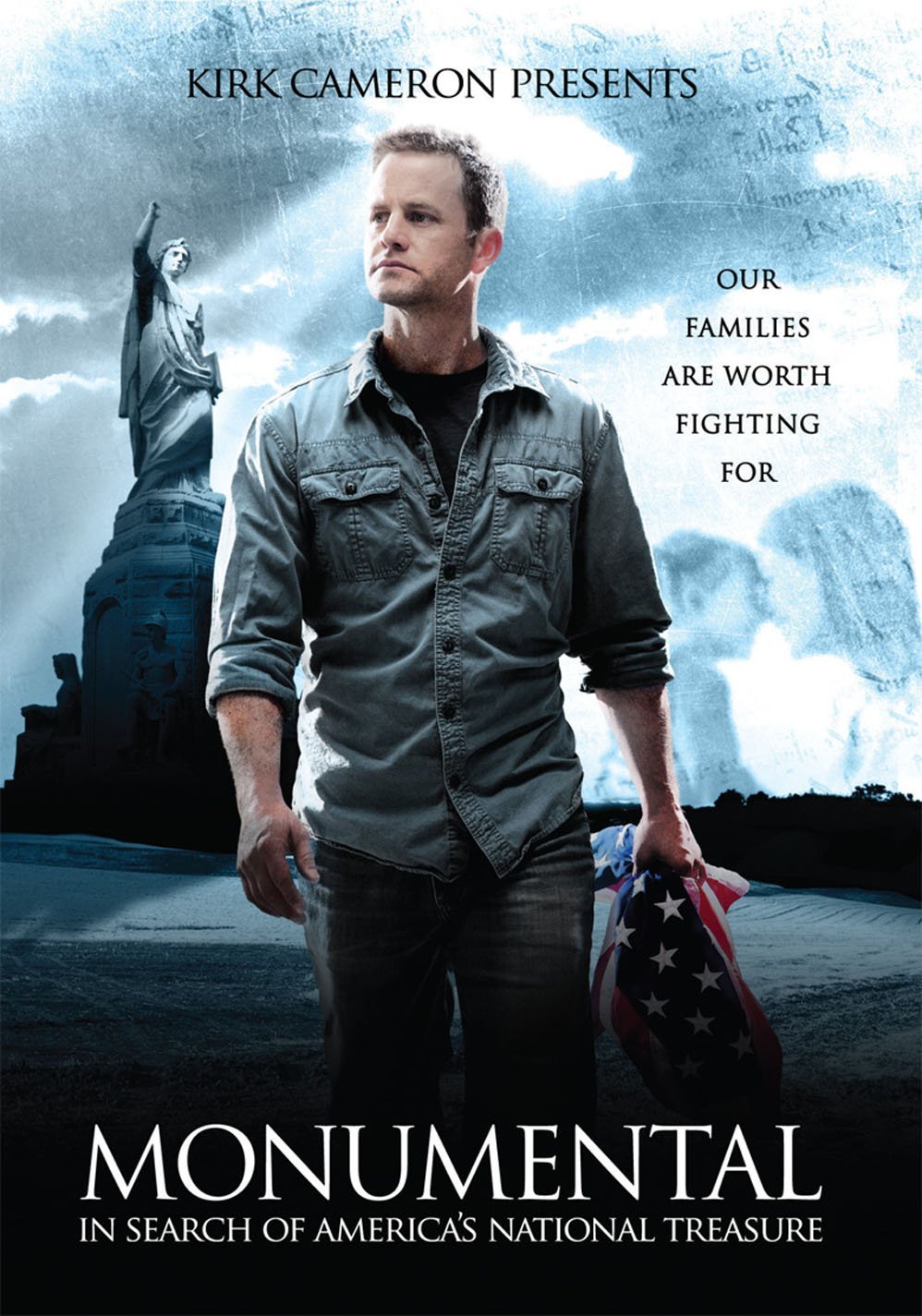
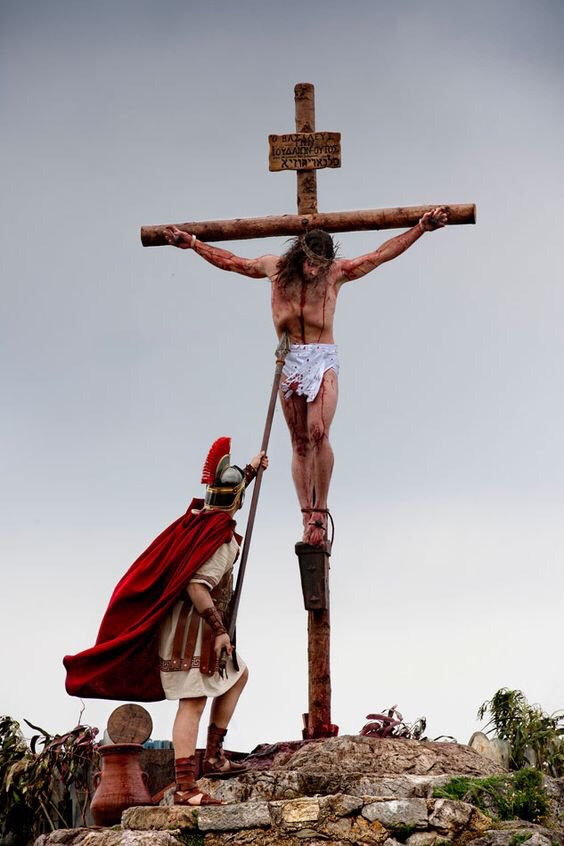
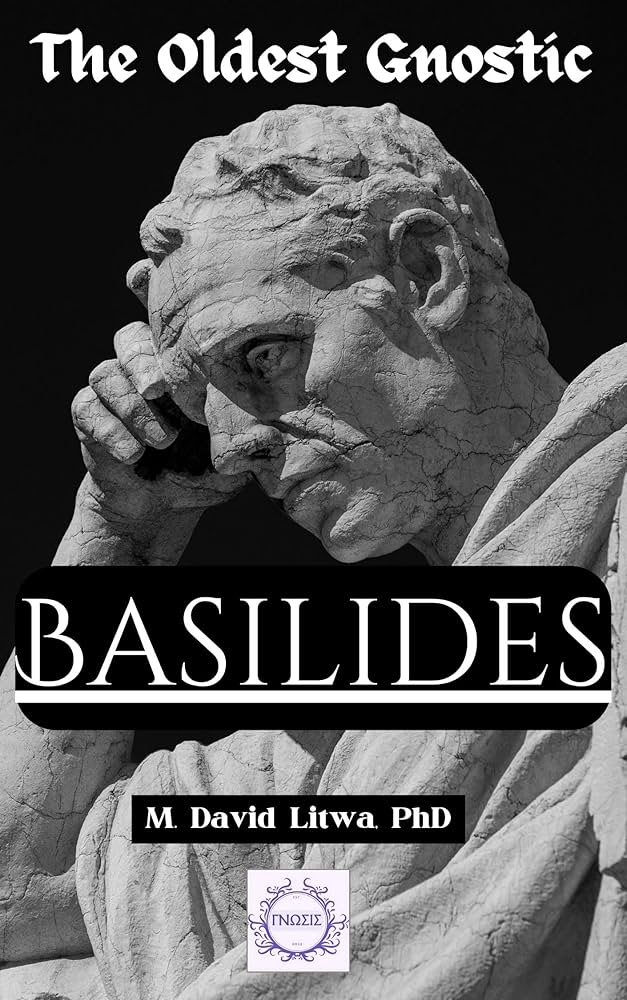
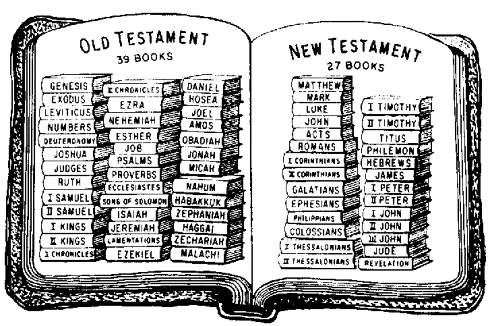
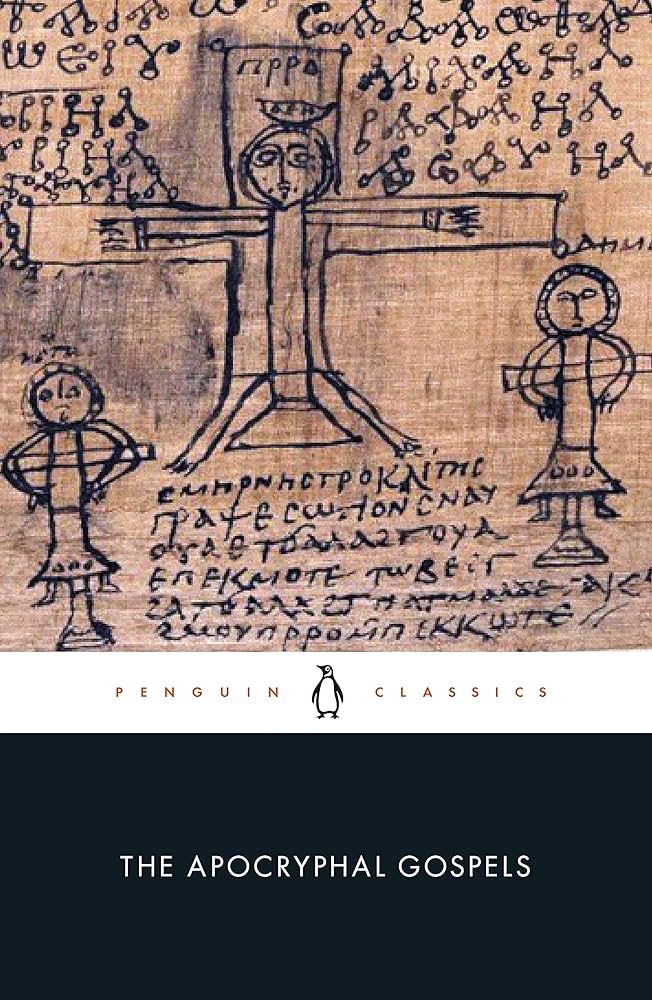
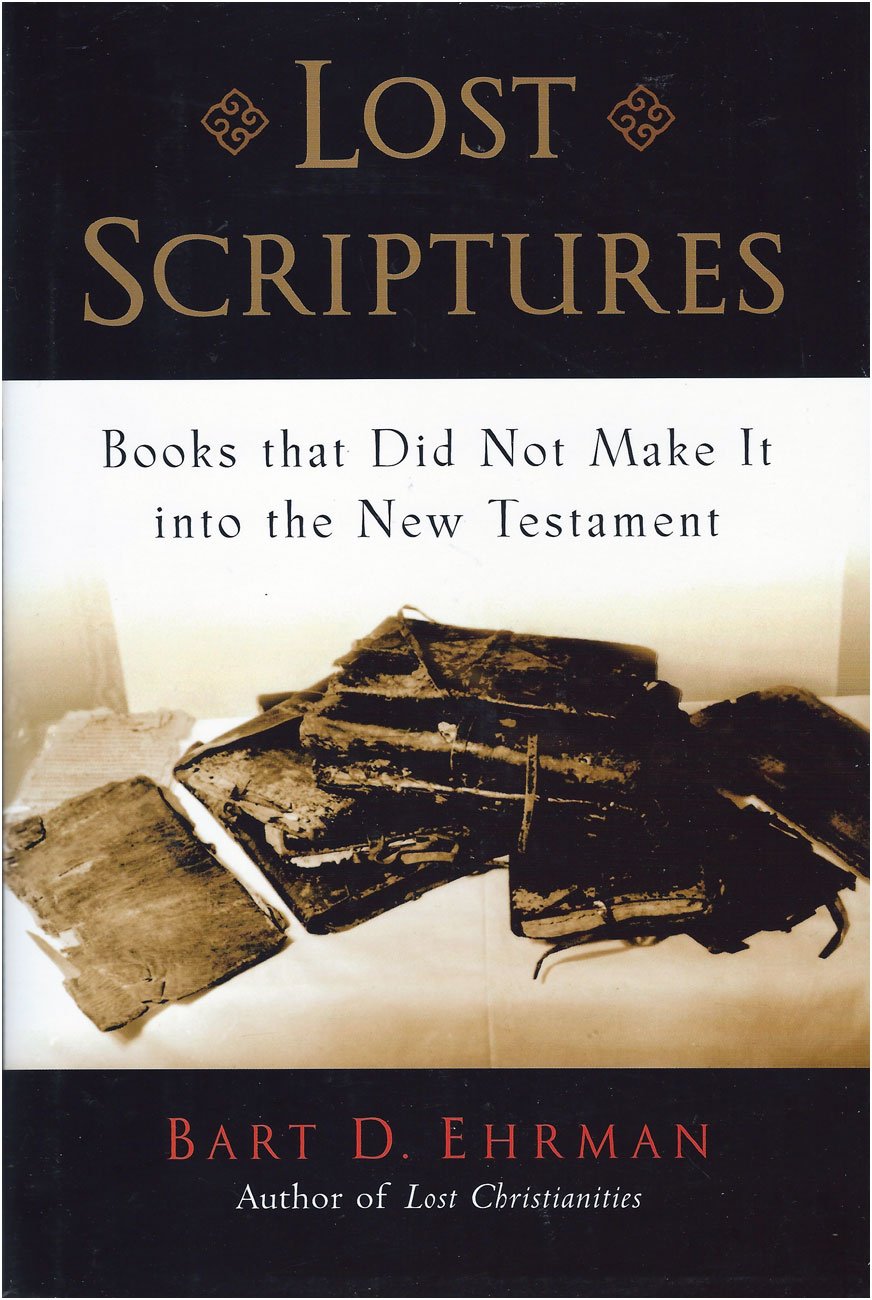

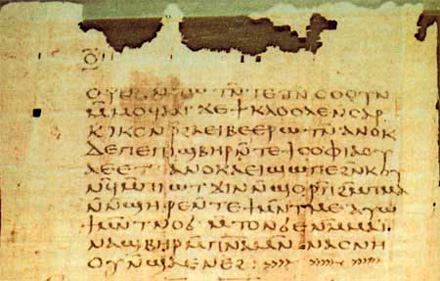
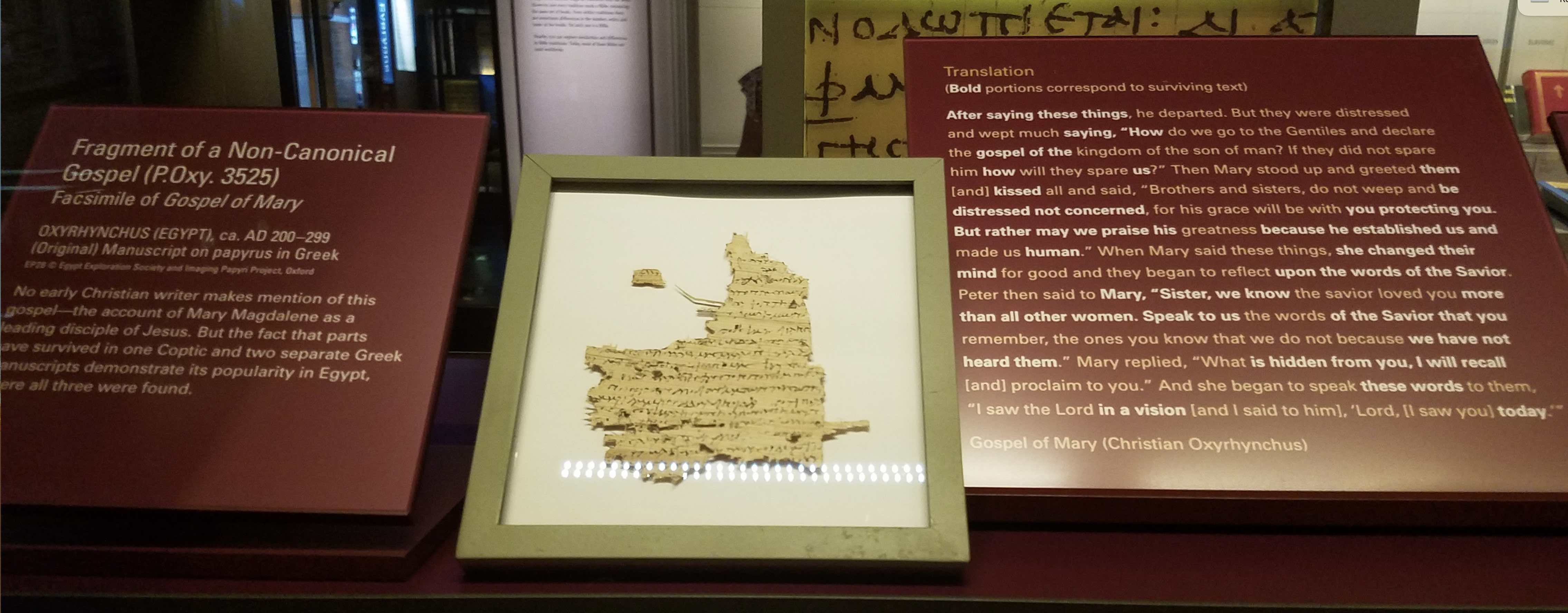
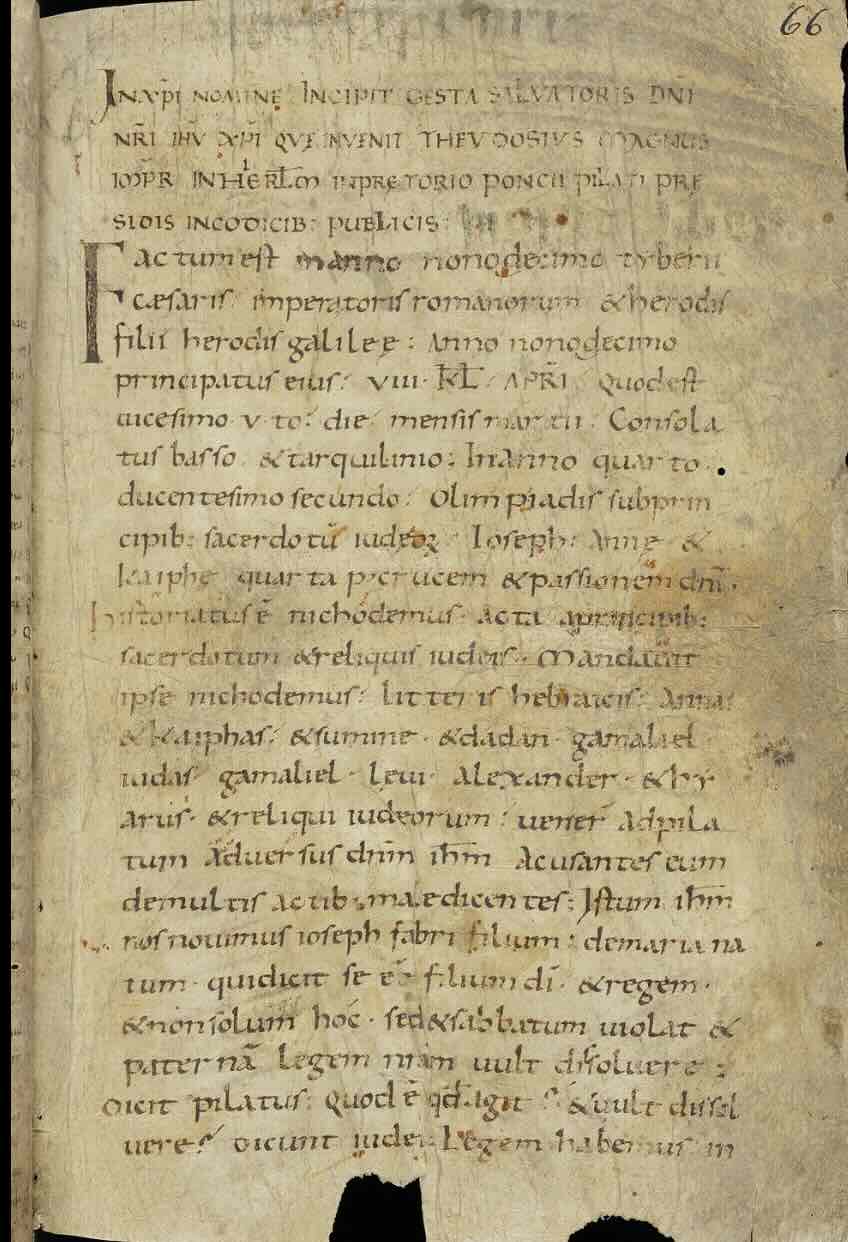



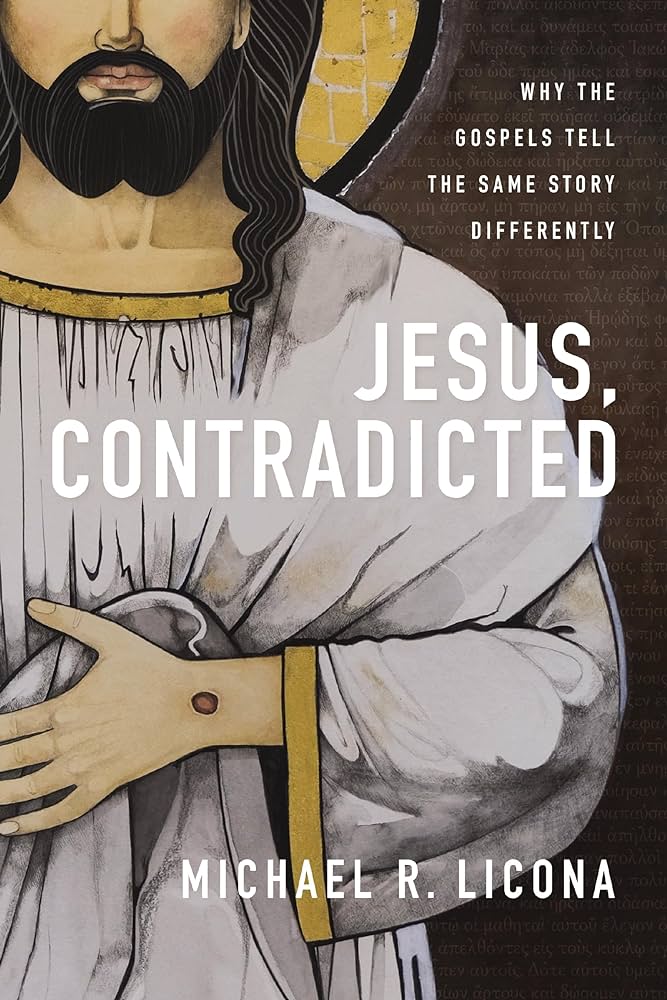




 Veracity