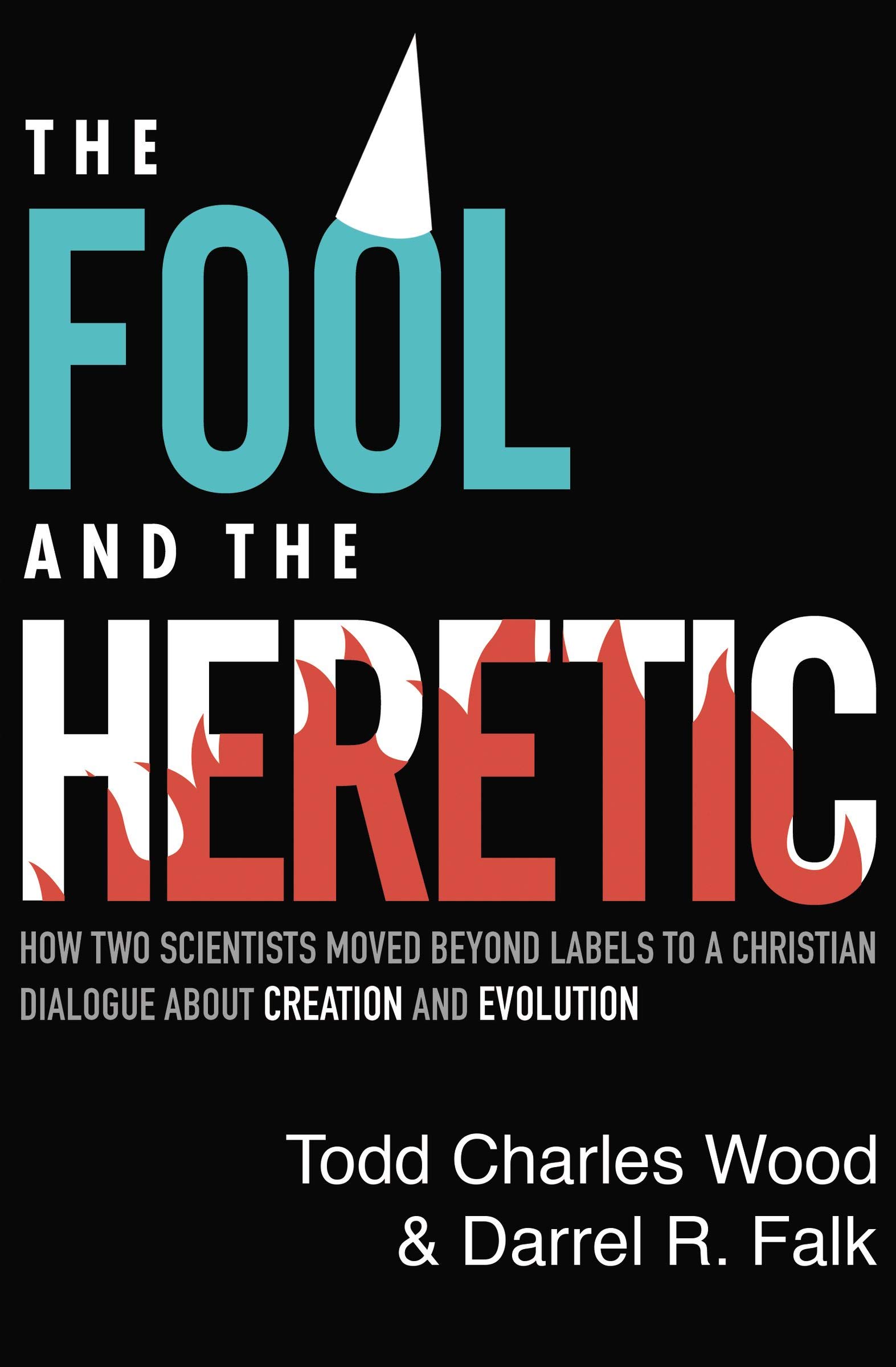
What happens when Christians disagree about the Creation story described in Genesis? Was the universe created in six, 24-hour periods, or did God use biological evolution, as part of the process of creating the universe, over millions of years? Are those who accept the former “fools?” Are those who believe the latter “heretics?” Can Christians, who take different views on Creation, find common ground with one another?
As a study in deeply profound contrasts, many Young Earth Creationists believe that evolution is attacking the very foundations of the Christian faith. Many Evolutionary Creationists believe that Young Earth Creationism is inviting ridicule to the Christian faith.
It would seem like these two views of Creation are in irreconcilable conflict with one another. So imagine this: What would it look like, then, if a Young Earth Creationist scientist and an Evolutionary Creationist scientist, both with PhDs in scientific fields, were to sit down in a room together? What would they say to one another? Could they become friends?
A Dialogue Between Christians in Deep Theological Conflict
The Fool and the Heretic: How two scientists moved beyond labels to a Christian dialogue about creation and evolution, is a book length dialogue of such a series of meetings. The Fool and the Heretic chronicles the story of two Christians, with doctorates in science, who met together on and off for five years, to see if they could find common ground with one another.
Todd C. Wood is a Young Earth Creationist. As a scientist, with degrees from Liberty University and the University of Virginia, Todd Wood understands the science of biological evolution very well. He just does not accept the story of neo-Darwinian evolution to be true. To him, the traditional interpretation of the early chapters of Genesis, with a 6,000 year old earth, is the correct one.
On the other hand, Darrel Falk is an Evolutionary Creationist. As a scientist, who helped to start Biologos, a ministry that seeks to educate Christians about the modern scientific theory of evolution, Darrel Falk understands the science of biological evolution very well, and he finds the scientific evidence compelling. Nevertheless, Darrel Falk believes the Bible to be true, and he accepts the Bible as God’s Word. For Darrel Falk, there is no contradiction between the current scientific consensus, regarding human origins, and the teachings of the Bible.
Putting these two believing scientists together might be a recipe for disaster, or it could be an opportunity for God to do something great. A mediation group, the Colossians Forum, sought to bring these two men together over several years, to see if they can see past their differences. But it was tough going at first, and reading this book was pretty emotional for me as well, as I will explain a bit more below.
The two most emotionally difficult chapters to read were entitled “Why Darrel’s Wrong and Why it Matters” and “Why Todd is Wrong and Why it Matters,” which really gets at the heart of why Todd Wood thinks Darrel Falk is wrong, and harming the church, and why Darrel Falk thinks Todd Wood is wrong, and harming the church. The slight downside to reading these chapters is that they were written by scientists, and the scientific concerns seem to override biblical concerns…. at least initially.

The “Fool”: Biologist Todd Wood: Young Earth Creationist scientist.
Why Proponents of Different Views of Creation, Think the Other Person is So Deeply Wrong
For example, in Todd Wood’s essay, “Why Darrel’s Wrong and Why it Matters,” he makes the often repeated argument that Evolutionary Creationists do not take God at His Word. They simply do not believe what God says to be true.
At one level, Todd Wood’s argument makes sense, as it sounds pretty straight-forward, following a traditional reading of the text of Genesis 1 and 2. A “day” in Genesis 1 is a 24-hour day. Attempts to turn a “day” into a “long period of time,” or any other interpretive tweakings, are manipulating a “plain reading” of the Bible. Science needs to bend its knee to the traditional reading of Genesis. End of story.
But I also found this to be really frustrating, as it is the same type of reasoning that has been used to justify the so-called “Flat Earth” movement, among a growing number of Christians, who contend that the earth is NOT a curvy globe, and they have Bible verses to supposedly prove it. After all, Job 38:4-5 “teaches” that the earth is to be measured with a line, and not a curve, right? That is the supposedly “plain reading” of the Bible. Any other interpretation compromises the “clear” interpretation of Scripture. The Bible proves those fairy tale makers at NASA, who concocted the idea, of landing a man on the moon, to be a bunch of liars, right?
When I hear Christians talk like that, I want to crawl into a hole and disappear.
The problem with this line of thinking is that it moves from identifying what the Biblical text says; that is, the observation of the text, directly to what the text means to me; that is, the application of the text. It completely skips over the most often neglected part (or at best, skims lightly over it), as to what the text means. In other words, what did the passage mean to the original writer and the original audience; that is, its interpretation, in its historical context, as the primary key to understanding how God meant the passage to be understood to all readers, regardless of where they stand in history. That task is an essential one, but sadly neglected by many students of the Bible today.
Frustratingly, Todd Wood has a tendency to simply equate the authority and truthfulness of the Bible with his own interpretation of the Bible. Whether Todd Wood realizes it or not, the two are simply not the same. Making the assumption that ancient Israelites 3,000+ years ago would have read Genesis 1 & 2 the same way Americans in the 21st century would have read it, requires evidence to support that assumption, not mere assertion.
Likewise, in Darrel Falk’s essay, “Why Todd is Wrong and Why it Matters,” Darrel Falk notes that he takes a figurative view of the early chapters of Genesis, as compared to a “literalistic” view, which Todd Wood holds. After all, science has proven to provide a very accurate, reliable description of our world. This is fine, as far as it goes, but you do get the sense that it is the science that is ultimately driving Darrel Falk’s interpretation of the Bible.
This is a weakness, that Young Earth Creationists can so easily expose. It gave me the impression that it is okay to read the Bible figuratively, if science requires it. But the actual context for the Bible itself was left unaddressed, which was disappointing to this reader. In other words, the intention of the biblical author, and the reception by the author’s original audience, is secondary, according to how Darrel Falk presented his argument. For Christians uneasy with broadly figurative or metaphorical interpretations of certain parts of the Bible, Todd Wood’s position comes across as more on solid footing.
However, as the book unfolds, you get a better sense as to why these two scientists differ. Todd Wood believes Darrel Falk to be wrong, in that the Evolutionary Creationist position puts doubts in the minds of Christians, about the truthfulness of God’s Word. As a result, Evolutionary Creationism harms the church, because it encourages Christians to question a view of the Bible, that has been largely accepted by many, many Christians, for hundreds of years.
Darrel Falk believes Todd Wood to be wrong, in that Young Earth Creationism flatly rejects the most well accepted and attested narrative of the modern, scientific consensus, regarding human origins, as taught in public high schools, universities, and public science museums, all over the Western world. This conflicting view, between Christianity and science, is unnecessarily driving people, mainly young people, away from the church, and away from the Bible.
What makes this dialogue really insightful and challenging is that the process of dialogue led both men to learn things about the other that they never considered before. For example, like many proponents of macro evolution, Darrel Falk went into the dialogue believing that all Young Earth Creationists simply do not understand the science. All Young Earth Creationists are fools. But Darrel Falk soon realized that Todd Wood really is not a fool.
Todd Wood understands the science very well. He knows that the evidence supporting the validity of neo-Darwinian evolution is very strong. Todd Wood even controversially said, “Evolution is not a theory in crisis. It is not teetering on the verge of collapse. It has not failed as a scientific explanation. There is evidence for evolution, gobs and gobs of it,” much to the chagrin of his Young Earth Creationist colleagues.
Nevertheless, along with his fellow Young Earth colleagues, Todd Wood believes the modern narrative about evolution to be completely wrong, because it goes against a classic reading of a crucial Scriptural text. He is of the school that says that, in time, the Young Earth Creationist narrative about creation will be proven correct. Young Earth Creationists simply have not yet discovered a testable, scientific model, that successfully makes predictions that align with a traditional reading of Genesis. But he believes they eventually will. He is completely convinced that the scientific evidence is on his side. He just needs to keep searching diligently to find it. On his website, Todd Wood’s motto is, “It is the glory of God to conceal a matter; to search out a matter is the glory of kings. (Prov. 25:2)” Todd Wood is no fool, but this does not mean that Darrel Falk is convinced by Todd’s argument.

The “Heretic”: Darrel Falk. Evolutionary Creationist scientist.
Moving Past the Standard Talking Points, in the “Creation Controversy”
Darrel Falk understands the science, but he also loves to study God’s Word. The Bible is the source of life and meaning for Darrel Falk, despite whatever he may find in his scientific studies. Since he views the Bible as God’s Word, Darrel Falk concludes that the Bible is completely trustworthy and true.
To this, Todd Wood concluded that Darrel Falk is not completely a heretic. In other words, Todd Wood is not convinced by Darrel’s interpretation of Scripture, but he does acknowledge Darrel to be a true brother in Christ.
Those are the very encouraging things I found in reading The Fool and The Heretic. Still, there are remaining difficulties that are hard to resolve. While Todd Wood is hopeful that the scientific evidence will eventually prove his way to be correct, his perspective is at times an outlier within the broader Young Earth Creationist movement. You still find a lot of Young Earth Creationists who simply do not understand the science, who fit right in with Darrel Falk’s stereotype, such as those who repeat the canard of saying that evolutionists believe that “humans have descended from apes.” While this makes for great rhetoric, it simply is not true, as it does not accurately reflect the views of scientists. Humans and apes, according to mainstream biology, share a common ancestor. But it does not mean that the apes we see today are the ancestors of today’s humans.
A good way of grouping different Young Earth Creationist approaches can be understood like this (courtesy of Randy Isaac, former executive director of the American Scientific Affiliation):
- (1) Scientists, educators, Smithsonian museum curators, and the political left, are in a Satanically-inspired conspiracy together to mock God’s Word, by promoting evolution.
- (2) The scientific data today appears to present the idea of an old-earth and old-universe, and a biological linkage between modern humans and pre-human creatures, but this is simply a matter of appearance. Nevertheless, this appearance of age is what we would expect when God performs a miracle. Just as when Jesus turned the water into wine, which by its very nature, has age to it, the same could be said about, say, the de novo creation of Adam. Adam would have appeared to be about a 30-year-old man, even though he was created within a single 24-hour period.
- (3) The current scientific consensus regarding human origins makes a lot of sense. But the evidence supporting the traditional interpretation of Genesis is still out there. Scientists have simply not yet discovered it …. but they will.
Todd C. Wood belongs firmly in this last category. Darrel Falk might shake his head in disbelief, but there Todd Wood is.
Nevertheless, there are those in the second category above, who argue for an appearance of age, when it comes to Creation. The nature of miracles makes exact, scientific description problematic. But someone like a Darrel Falk would reject such an argument, as it tends to suggest that God is a God of deception. Why make the earth appear to be millions of years old, when, in fact, it is only 6,000 years old? That seems like deception. And Darrel Falk does not believe that the God of the Bible is a God of deception.
This is all in contrast with the first category of Young Earth Creationist approaches, namely that a conspiracy exists to undermine the Bible, and that Evolutionary Creationists have gone right along with it, drinking the kool-aid. But the vast majority of scientists, whether they be Christian or non-Christian, hold to the scientific consensus that the earth is 4.34 billion years old.
While there is still some serious debate over certain aspects of modern, biological evolutionary theory (such as issues regarding Michael Behe’s “irreducible complexity,” Stephen C. Myer’s argument about the evidence of Intelligent Design in DNA), the broad consensus of many thousands of scientists remains very consistent. It is difficult to imagine how a conspiracy among scientists, involving vastly separate disciplines, ranging from geology, to astronomy, to chemistry, to biology, could keep such a conspiracy together, without at least someone finding a serious discrepancy.
Nevertheless, to Todd Wood’s credit, he does have a point, in that there have been advocates of evolutionary theory, that have indeed adopted heretical ideas about the Christian faith, denying essential truths of Christian doctrine, all because they think that the science demands it. For example, I have read some proponents of theistic evolution, making the argument that Christians need to completely discard the doctrine of the Fall of humanity, because the evidence from science does not support the idea of a great cosmic fall, in human history.
This is why Evolutionary Creationists, like Darrel Falk, prefer the terminology of “Evolutionary Creationism,” and not the terminology of “Theistic Evolution,” which is altogether too vague and not sufficiently grounded enough, in a Christian, biblical theology.
There were points in the dialogue where some misinformation, or at least potential misinformation, persisted. For example, Todd Wood believes that Darrel Falk’s more figurative or metaphorical reading of Genesis 1-11 is somehow “new” and innovative. Unfortunately, Darrel Falk does not sufficiently answer Todd Wood’s contention. So Darrel Falk remains vulnerable at this point.
However, as John Walton, a Wheaton College professor of Old Testament argues, a more figurative or metaphorical reading of Genesis 1-11 actually predates Todd Wood’s more literalistic approach. Walton contends, that due to discoveries within the past two hundred years or so, we now know more about the Ancient Near East, than did the fathers of the early church. Those early church fathers were working with the best information they had available to them, but they were still hundreds of years away from the original context of the Book of Genesis. But archaeological research, in recent times, has given us access to information, about the original context for Genesis, that the early church fathers simply had no contact with.
But perhaps Darrel Falk can be given some space here, as Darrel Falk is a scientist, and not a biblical scholar.
Todd Wood, on the other hand, expresses a concern shared by many other Christians. Christianity is indeed under attack, in the wider culture. Todd Wood believes that the prime target for the attack is the first few chapters of the Book of Genesis. If you can defend the first few chapters of Genesis as true, then that can serve as a bulwark against other compromises of the faith, down the line.
But is Todd Wood’s goal, to reinforce a traditional reading of a six-24-hour-period Creation story really going to achieve what Todd Wood is after, namely to uphold the doctrinal teachings in Genesis? Is Todd Wood’s task, to keep searching for scientific evidence to prove Young Earth Creationism to be true, worth the effort? For Darrel Falk, what Todd Wood is doing is a waste of valuable intellectual energy. The Christian faith can be defended in other ways, without spending Todd Wood’s great intellectual capital, on a dead end project, where the current scientific consensus remains increasingly settled.

Todd Wood and Darrel Falk: A Young Earth Creationist, and an Evolutionary Creationist: Unlikely dialogue partners, in an on-going in-house Christian debate.
My Response to The Fool and the Heretic
What is my take away from The Fool and the Heretic?
Well, I still continue to see this dilemma quite frequently in my own evangelical Christian circles. There are those, like Todd Wood, who believe that Evolutionary Creationists, like Darrel Falk, are corrupting the minds of the “sheep,” within our churches, causing needless confusion. Likewise there are those like Darrel Falk, on the other hand, who believe that Young Earth Creationists, like Todd Wood, underestimate the scientific understanding of too many of these same “sheep,” thereby dumbing down the Christian message, thereby inviting skeptics to poke fun at the Gospel.
Or to put it another way: On the one side, are those who do not comprehend the explanatory power that modern science has provided contemporary society, or they simply have no interst in science matters, hence these believers conclude that scientists, who embrace the scientific consensus are trusting in “man’s wisdom” and opposed to the knowledge of God. Those who are then “in the know” are willing to risk ridicule from the scientific establishment in order to protect the faith of the less informed “sheep.”
On the other side, are those who quietly smile and nod when they hear scientific nonsense being propagated by other uniformed Christians, but do not speak up, as they do not want to disturb the more childlike-faith professions of such fellow believers. And still, there are those in the middle who want to avoid the extremes of haughty skepticism, as well as uninformed hyper-literalism, on either side of the spectrum. It is in the midst of this tension that Todd Wood and Darrel Falk explore with one another.
Personally, I had a crisis of faith, back in my college years, precisely over this issue of Creation. I knew Genesis to be true, in that the Bible accurately and precisely described the human condition. But I found the particular, 1980’s Young Earth Creationist way of reading the Bible to be less than convincing, as taught by my well-meaning, but not scientifically trained, college pastor. I was not entirely sure about evolution, but I came to the conclusion that Young Earth Creationism was setting up otherwise unsuspecting Christians for a spiritual fall, and I did not want to have anything to do with this brand of Christianity.
Little did I know, at that time, that for the next thirty-plus years, God would place a number of Young Earth Creationist believers in my life. I could not figure this out, but I can honestly say that I can count on a number of these Christians as very dear friends of mine, to this very day, even though we disagree about the age of the earth, and other related topics. So, reading The Fool and the Heretic really helped me work through what it means to try to have a dialogue, with fellow Christians, when there is such deep seated disagreement about the relationship between science and the Bible.
As I wrote about nearly five years ago, learning to be able to “agree to disagree,” on the topic of human origins and Creation, has been really difficult for me personally. A good fifteen years ago, I made the decision to revisit the whole “Creation controversy,” to see if I had completely missed something, when I was deeply wrestling with this issue, back in my college years.
I even engaged in a letter exchange with Dr. John C. Whitcomb, for about 6 months, after listening to a sermon he preached on the Bible Broadcasting Network. Dr. Whitcomb, who is well along into his nineties now, was the co-author of The Genesis Flood, the book that launched the contemporary Young Earth Creationist movement, back in the 1960s. What got to me is that Dr. Whitcomb came across, not as a complete lunatic, but rather he approached me in his letters as quite a godly man, who genuinely cared for my soul.
That letter exchange really softened my heart towards Young Earth Creationists as people, fellow believers, who also love Jesus, and who want the world to come to know the love of the Savior, just as much as I do. I still have struggles getting my head around why Young Earth Creationists read the Bible the way they do, but in reading The Fool and the Heretic, it made me realize that it really is worth it to try to find common ground between believers, who disagree so strongly about interpreting certain controversial passages of the Bible, just as Todd Wood and Darrel Falk clearly do. There simply is no other book like this, available from a Christian publisher.
As to the downside of the book, it really dealt with some of the more radically opposed perspectives that dominate the discussion, among evangelical Christians. With exceptions noted above, most Christians, that I know, are somewhere between Darrel Falk and Todd Wood. They are generally uneasy with the idea of a 6,000 year old earth, that flies in the face of the modern scientific consensus. But neither are they convinced by a full blown concept of biological evolution, that might leave God out of the story.
There are other dialogue partners, that The Fool and the Heretic left out. For example, there are Old Earth Creationists, such as those affiliated with Reasons to Believe, who accept the modern scientific consensus in most areas, while still rejecting macroevolution, when it comes to biological theory. Old Earth Creationists have no problem accepting a 4.34 billion year old earth, and they do affirm the unique, special creation of Adam and Eve, but they do so without believing in any evolutionary linkage with prior biological lifeforms.
Along a similar vein, there are also proponents of Intelligent Design, such as at the Discovery Institute, who are contrarian to the typical Neo-Darwiniam story. Such proponents believe that an “intelligent designer” can indeed be affirmed by the scientific evidence. For those looking at a dialogue among these four perspectives, I would recommend reading Four Views on Creation, Evolution, and Intelligent Design, reviewed about a year ago here on Veracity.
Leaving those two other, mediating positions aside, Todd Wood and Darrel Falk represent the polar opposites in the Creation debate. Furthermore, The Fool and the Heretic, makes for a fairly quick read, which makes for a helpful introduction to the discussion. But if I had to pick one side that came out a little bit better in this book, it would be Todd Wood’s approach to Creation. In reading The Fool and the Heretic, I walked away with a more sympathetic view towards Todd Wood’s particular approach to Young Earth Creationism. If only more Young Earth Creationists were like Todd Wood, it would probably greatly enhance the public image of Young Earth Creationism, and lend more credibility to the movement.
Albert Einstein, The Famed Scientist, Was Once Just a Quirky Guy
Exactly one hundred years ago this year, our view of the world was changed by a solar eclipse. It can be argued that when Albert Einstein first proposed his theory of general relativity, that he was some sort of freakish madman, going against the well-attested, time-honored views of Isaac Newton, regarding the nature of time, space, and gravity. Frankly, if it were not for the persistence of Sir Arthur Eddington, who in 1919, made the crucial observations of a solar eclipse, that confirmed the predictions made by Einstein, we might never have known of the name of Albert Einstein (I would strongly encourage readers to take in Eric Metaxas’ interview of Matthew Stanley, the author of Einstein’s War, who chronicles the story of how Arthur Eddington confirmed Einstein, in the years during and just after the First World War).
Will Todd Wood, or another Young Earth Creationist scientist like him, emerge as the next Albert Einstein, or Arthur Eddington, to be able to take predictions, made by a proponent of Young Earth Creationism, and make observations that can confirm such predictions, for which the current scientific consensus can not adequately explain? The possibility is there, even though I would think that even Todd Wood would admit that this is an uphill battle.
However, it does bear noting that an Evolutionary Creationist, like a Darrel Falk, would probably reject the word picture of an “uphill battle,” as not being severe enough. Finding a successful Young Earth Creationist proposal would be more like trying to climb a thousand foot sheer cliff, with no climbing gear. No ropes and no crampons. With the climbing surface covered with grease.
So be it.
The rigorous dialogue continues.
But hey, if Todd Wood thinks the evidence is there, …. well…. then…. he can knock himself out at it. More power to him. Go for it.
A Nobel Prize surely awaits a Young Earth Creationist who can successfully make a prediction, while still being falsifiable, based only on a Young Earth scientific model.
In the meantime, as far as I am concerned, it is a whole lot easier to defend a view of Creation, based on evidence we do have, as opposed to appealing to evidence we do not have. In that respect, Darrel Falk has a leg up on Todd Wood, so I would tend to lean a lot more towards Darrel Falk, as having the better argument.
Nevertheless, the benefit of reading The Fool and the Heretic is to illustrate how two sincere Christian believers, can disagree so strongly, with respect to human origins, while still finding some common ground. Both scientists care deeply about wanting young people in our churches to flourish in their faith, and not be sidetracked spiritually with chronic doubts about the truthfulness of the Bible. In reviewing their dialogue, Young Earth Creationist scientist Todd Wood landed on this hopeful note: The process of having these series of talks between Darrel Falk and himself, has “been rewarding and frustrating all at the same time, but one thing I know for sure: Darrel has made me a better creationist and Christian, and I’m grateful for that.”
The more I think about that, the more I respect Todd Wood, and his search for evidence towards demonstrating the validity of a Young Earth, or what he calls a “Young Age” Creationist model.
Might this dialogue between these two scientists draw some towards Todd Wood’s side, towards Young Earth Creationism, or will it draw others more towards Darrel Falk’s side, towards Evolutionary Creationism? That is hard to say.
But genuine dialogue like this vital today. As biologist Joel Duff says, in his review of The Fool and the Heretic, this book encourages all sides involved, that we “must do better. This book helps us toward that goal.” I complete concur.
Will the conflict between Young Earth and Evolutionary Creationism ever resolve? Who knows? But The Fool and the Heretic at least suggests that real dialogue is indeed possible between vastly different Christian viewpoints. My hope is that The Fool and the Heretic might offer some sort of path, to help Christians, with different interpretations of the Bible, with respect to human origins, learn how to be friends with one another, and not enemies.