Robert E. Lee: Symbol of Christian Reconciliation or Symbol of Hatred?

When I attended Washington and Lee University (W&L) in the 1980’s, I was drawn to the school’s sense of tradition, civility and honor. But I was only a few months into my freshman year at W&L, before I wondered if I had made a mistake in going to college there. I had walked passed by a fraternity one Saturday night, when they were celebrating an annual tradition of having a Confederate ball.

W&L was all-male back then, one of only five all-male colleges remaining in the United States (now we are down to only two all-male schools, Hampden-Sydney and Wabash College). The men of this fraternity had all rented Confederate military uniforms, and their dates wore elegant dresses, with hoop skirts, as they danced the night away. But when I later saw a few of my African American friends on campus (of which there were few at W&L to begin with), I realized that my friends might have felt a bit out of place at this school. They surely would not have fit in at that fraternity Confederate ball, as every fraternity man and respective date were strictly white caucasians.

I had already applied as a transfer student to a different school, when I stumbled upon some essays about the life of W&L’s second namesake, Robert E. Lee, the Confederate army general, who after the Civil War, essentially saved the struggling college from extinction. I read that the defeated Confederate leader did not support a type of guerrilla warfare that many of his fellow Confederates had advocated. Instead, upon surrender to General Grant at Appomattox, Lee turned his attention towards healing the rift between North and South. By promoting a concept of the “Christian gentleman,” it was through Lee’s presidency at W&L that the education of Southern men was seen as a way of seeking reconciliation after a bitter military conflict.

The Robert E. Lee statue on Monument Avenue in Richmond, Virginia was removed in September, 2021. The power of symbols exercises tremendous influence over the human psyche: Some see the statue removal as an attempt to erase history, or more so, a desecration. Others see it as a liberation from a lie that has perpetuated a legacy of racism. But who really was Robert E. Lee, anyway?

R. David Cox’ The Religious Life of Robert E. Lee, which I reviewed a few years ago on Veracity, tells the story of a man conflicted by the ethics of slavery and yet loyal to his native Virginia. He had strong misgivings regarding the slavery system, but nevertheless supported the system, through his dedication to his Virginia homeland. There is no doubt that Robert E. Lee was a complicated figure.  In the end, Lee saw the military defeat of the South as divine judgment against him, and therefore his service as an educator at W&L after the war stemmed from his Christian convictions.

It was the image of Lee “the Educator and Reconciler” and not Lee “the Southern Military Hero” that helped to inspire me to turn down the offer to transfer to a different college, and then finish my 4-years at W&L. Fast forward to the early part of the third decade of the 21st century, and the popular opinion regarding Lee’s legacy has shifted dramatically.

After the defeat of the Civil War, and before his death in 1870, Lee rejected any notion that he should be memorialized and statues set up depicting him as a great Southern military leader. Rather, attention should be focused on bringing the United States back together, and accepting the dissolution of the slavery system as the will of God.
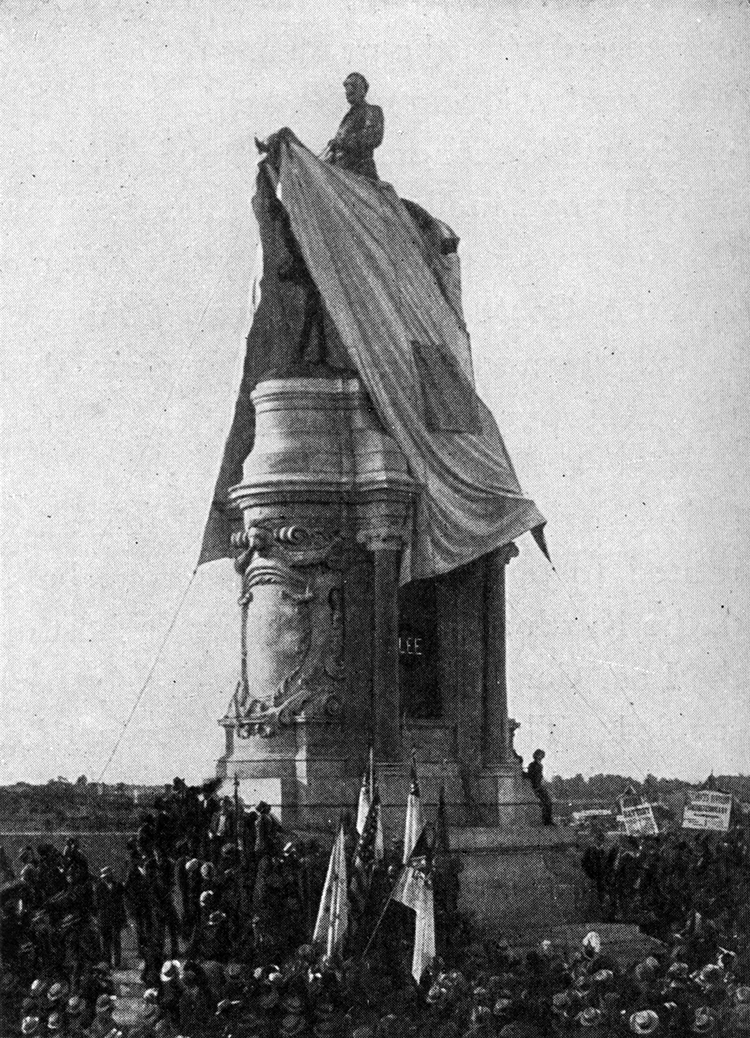
The Robert E. Lee statue on Monument Avenue in Richmond, Virginia, was unveiled in 1890 (credit: Wikipedia)

Nevertheless, by the end of the 19th century, the myth of the “Lost Cause” had firmly taken hold in the imagination of Southern folklore, and statues of Lee had popped up all over the South, a deliberate attempt to recall the “glory days” of the Antebellum South. The most prominent statue, in my mind, was the 60-foot tall depiction of Lee on his famed horse “Traveller,” in the midst of a traffic circle along Richmond, Virginia’s historic Monument Avenue. The refashioning of Lee’s image was complete by then, as even Traveller was transformed from a moderate sized breed to a stronger, more muscular-looking thoroughbred. Needless to say, not everyone has been impressed with the symbolism represented by the Lee statues.

In the wake of the death of George Floyd in 2020, protests turned their attention in Virginia to that Lee statue on Monument Avenue. After quite a bit of legal back and forth, the statue was finally removed from the top of its pedestal on September 8, 2021. As the statue was lifted off of its perch, cheering crowds sang “Nah-nah-nah-nah nah-nah-nah-nah, hey-hey, goodbye!!

So, how does one go about remembering someone who did not want to be remembered in the way he has been most often remembered?

People gather at the Robert E. Lee Monument on June 20, 2020 in Richmond, Virginia. After 2020 protests graffitied the monument, a Richmond Circuit Court Judge ruled to extend an injunction preventing the Virginia governor from removing a historic statue. The injunction was later rescinded, and the statue was removed by Governor Northam nearly 15 months later, September 2021 (Photo by Tasos Katopodis/Getty Images)


The Quest for the Historical Robert E. Lee

During the 20th century, most biography readers looked to Douglas Southall Freeman’s multi-volume, 1934-1935 Pulitzer Prize winning R.E. Lee: A Biography. Freeman was a great admirer of Lee, who seemed to imbibe the “Lost Cause Narrative” that tended to elevate Lee to an almost semi-divine status. So, by the time controversy over another Robert E. Lee military statue in August, 2017, in Charlottesville, Virginia, erupted into violence, a revisionist re-evaluation of Lee’s legacy was long overdue.

The often cited essay at The Atlantic, by journalist Adam Serwer, “The Myth of the Kindly General Lee,” published just weeks before the Charlottesville protests captivated the nation, is representative of this revisionist picture of the famed Confederate general. The subtitle for Serwer’s essay, “The legend of the Confederate leader’s heroism and decency is based in the fiction of a person who never existed,” pretty much sums up the disdain for Lee’s memory, as the honored military hero for the Confederacy.

A more fair and accurate portrait lies somewhere between Freeman’s distorted hagiography and Serwer’s campaign to dismantle any remaining virtue in Lee’s reputation. But where does one go to find a such a nuanced biography? Thankfully, former Gettysburg College and current Princeton University historian Allen Guelzo has set his sights on demystifying the matter with his expansive 2021 R. E. Lee: A LifeAllen Guelzo is an evangelical Christian, along with being a well-regard historian. Guelzo manages to bring out dimensions of Lee’s character and life that humanizes Lee in ways that others have not always done so.

Guelzo’s portrait of Robert E. Lee is framed around Robert’s attempt to distance himself from the shadow left by his revolutionary war hero father, “Light Horse” Harry Lee. “Light Horse” Harry was known to the general public to be a decorated military leader, serving under the Continental Army of General George Washington. But by the time Robert E. Lee was born, Harry Lee’s reputation had sunk. Robert’s father became known as a “swindler,” a man who speculated on various means of getting wealthy, encouraging others to join him, only to have such efforts fail, and force the family into debt.

When Robert E. Lee was only two-years old, his father was thrown into debtors prison. Robert’s father spent most of Robert’s young life trying to escape creditors. Robert hardly even got to know his father, as his father died while Robert E. Lee was still a child. Robert E. Lee endeavored to be everything that his father was not, except for the fact that Robert E. Lee chose to make life in the military a career. It took 50 years before Robert E. Lee made any effort to visit his father’s grave, and when he finally did so, he made little mention of his father’s grave to other members of the family.

Robert E. Lee refused alcohol, became exceedingly frugal with money, and determined to live a life of responsibility and duty. He vowed not to make the same mistakes his father did, and not leave his own children in the type of desperation that Harry Lee left him in. This characteristic of Robert E. Lee helped to shape some of the most significant decisions in his life, that would eventually impact the lives of thousands, if not millions, of Americans.

Partly through the influence of his mother, Robert E. Lee sought to honor the reputation of his father’s militarily most distinguished supporter, George Washington, even to the point of marrying into the Washington family, by marrying Mary Custis, a descendant of Washington. Lee made top honors at West Point, and served the U.S. Army as an engineer for decades, before coming into his own as a trusted supporter of General Winfield Scott, during the U.S.-Mexican War. Winfield Scott essentially became the father Robert E. Lee never had.

The death of Robert E. Lee’s father-in-law precipitated a crisis, that led to perhaps the most morally damaging act in Lee’s life. The father-in-law,  George Washington Parke Custis, a step-grandson to George Washington, had himself inherited a considerable amount of property, mainly associated with a large estate plantation at Arlington, Virginia. The late Custis had decided in his will to follow the example of his step-grandfather, and release all of the slaves that he employed within five years after his death. In addition, Custis left his daughter (Lee’s wife) and grandchildren significant property, but bypassed his son-in-law, Robert E. Lee, while still assigning Lee to be the late Custis’ executor. Lee effectively took this as a vote of “no confidence” by his father-in-law, though Lee would indirectly benefit. However, the situation was made awkward since a most successful transfer of the estate to other members of Lee’s family was contingent on the remaining years of service to be provided by the soon-to-be-released slaves of Custis. Still clinging to the desire not to leave his children in a financial distressing situation as his father had done for him, this put pressure on Lee to try to make more efficient use of those slaves, prior to their manumission.

In various letters, Robert E. Lee had made his opinion known, that while he viewed the slavery system to be a moral “evil,” he was not a supporter of urgent abolitionism, instead hoping that a process of gradual emancipation would eventually wind down the slavery system. When several of Custis’ slaves decided to try to escape the plantation, before the five years specified in the Custis’ will had expired, the slaves were caught, and in a fit of anger, Lee ordered that they be whipped for their premature release from slavery service, in order to teach them “a good lesson.” Lee’s otherwise steady, measured, moral disposition had cracked. It was apparent that Lee’s hopes for gradual emancipation would not necessarily be sped up by any intentional action on his part.

Robert E. Lee statue being removed from a New Orleans monument in May, 2017 (credit: Scott Threlkeld/ AP)


Choosing Sides: Why Did Lee Defend the Confederacy?

However, the most significant decision that Lee faced in his life, was driven by a complex set of factors. Upon the eve of the Civil War, Lee had faithfully served for decades in the United States Army, and he seemed to be the best candidate to assume command of the Union army, under President Lincoln’s direction. Lee’s fatherly mentor, the retiring General Winfield Scott, personally asked Robert E. Lee to consider the offer, on April 17, 1861. Yet in the conversation that Scott had with Lee, Scott held the opinion that a Civil War could be averted.

Even though many states in South had seceded from the Union, Lee’s home state of Virginia remain undecided at the time. Lee was hopeful that perhaps Virginia could foster some type of middle position between the radical Southern states, like South Carolina, and the Northern slave-free states, for negotiating some type of mediating solution between the extremes.

At the same time, Lee was concerned about his duty to his family, and his responsibility towards the Arlington estate, just across the Potomac River from Washington. Lee believed that the family property was endangered by both sides, as Arlington held a high ground position, which would have been perfect for Confederate artillery to overlook the federal capital. Likewise, the Union side also recognized the strategic importance of the family property as well. Nevertheless, the family property was legally in Virginia, and he felt a certain obligation to defend his native state. Lee’s initial response to Scott included this, “General, the property belonging to my children, all they possess, lies in Virginia. They will be ruined if they do not go with their state. I cannot raise my hand against my children.”

It was this sense of duty towards Virginia and primarily his family, and his desire to get out from underneath the shadow of his father, that pushed him towards supporting Virginia, and declining Scott’s offer to lead the Union Army, three days afterwards on April 20. Lee’s middle-of-the-road, Southern view, that wished that slavery as an institution would simply go away over time, did not have a significant role in Lee’s decision.

In summary, Lee’s views on summary were complicated and contradictory. He disliked the institution of slavery, but he did nothing to try to end it himself. Instead, he opted to take up a different offer to eventually command the Army of Northern Virginia. Interestingly, Lee kept the provision specified in his father-in-law’s will and released the remaining Custis slaves, in 1862, while the Civil War was well underway.

Nevertheless, once the die was cast, the effects of that decision bore consequences that led to the deaths of hundreds of thousands of Americans. Lee’s plan for “winning” the war were straight-forward. If he could lead the Confederate Virginia army to shatter northern confidence, it could have led to some type of peaceful settlement between the North and the South. That was the best Lee could hope for, as he knew well that the North had more resources at their disposal than the South. The plan almost worked. However, defeats at places like Antietam and eventually Gettysburg shattered Lee’s plan, at the cost of many lives. Serious mistakes were made, included the loss of Lee’s orders before the Battle of Antietam, and an overly ambitious attempt to smash the Federals with Pickett’s charge doomed the Gettysburg campaign. Lee may have even considered a third attempt to humiliate the North, had it not been for Grant’s final campaign that eventually led to the capture of Richmond.

It is fascinating to consider what was going on in Lee’s mind, in the waning days of the Confederacy, when Grant was slowly tightening the grip around Lee’s army in Petersburg. Lee was desperate, and desperately short on men. So he petitioned the Confederate government to conscript, not just white Southerners, who been already been drafted into the Army of Northern Virginia, but African American slaves as well. Lee was quite firm in insisting that those conscripted slaves be given their emancipation, following the conclusion of their military service. This was certainly not well received by Southern slaveholders, who overwhelming rejected Lee’s request. Nevertheless, this one particular act suggests on the one hand, that Lee continued to have certain misgivings about the slavery institution, foreseeing its ultimate demise, while continuing to fight to preserve that very system.

The Lee I have come to appreciate, that of being the President of my Alma Mater, Washington and Lee University, following the Civil War is given a critical yet fair appraisal by Allen Guelzo. Like many if not most white American men of his day, both in the South as well as the North, Lee did not think very highly of the aptitude of most African Africans. Lee can not avoid the stain of racism. But you would be hard pressed to find exceptions to that, in the mid 19th century.

In Lee’s favor, as President of the then “Washington College,” he discouraged actions taken by Southern whites that would denigrate former slaves, even to the point of expelling white students who engaged in such behavior. Many white voices in the South probably would have preferred continuing on with guerilla war effort to resist the North, in the name of defending the Confederacy, but Lee’s wise judgment at Appomattox Courthouse, to cease hostilities, and move towards reconciliation prevailed. But Lee did not go out of his way to lift up the African American. Nevertheless, it can be genuinely said that Lee wished to put the tragedy of the Civil War behind him and refocus on the rebuilding of a United States, encouraging the students of the college to purse the life of being “Christian gentlemen.”
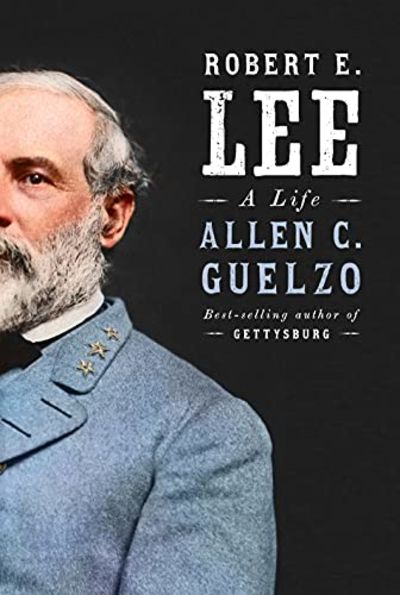
One looks back on Allen Guelzo’s R. E. Lee: A Life and sees a rather complex man, who sought to do what he believed was his duty, first and foremost for his family, who had a rather complicated relationship with slavery. Revisionists will often depict him as a defender of racial slavery, and traditional defenders of Lee will portray him as being a principled defender of states rights. Neither view is truly accurate. Both judgments are overstated and overly simplified, and thus they distort what should properly be remembered of the historical Robert E. Lee.

Lee’s motive of defending his children’s inheritance at Arlington, thus seeking to reverse the dishonorable legacy left to him by his absentee father, as the prime motivation for him joining the Southern cause, as argued by Allen Guelzo, stands out as a convincing and neglected aspect of Lee’s life. This does not diminish the fact that Lee was at least in some sense a traitor to the Union, and it’s army that he faithfully served for decades. But it does illustrate how one’s family history can deeply impact one’s moral decision making ability.

Furthermore, Guelzo portrays Lee as more of a cultural Christian, than a truly evangelical one, more so than I had originally imagined. A good case can still be made, even from Guelzo’s book, that Lee eventually took his faith more seriously, while he assumed the great responsibility for leading the Confederate military effort. His self-acknowledgment that God had used the Confederate loss to judge and chastise Lee should not be underestimated.

I would agree with the review of the book offered by biblical scholar Mark Ward, that R. E. Lee: A Life can help one see more clearly the faults of Lee, while still appreciating his many virtues. As the history of racism in America continues to have an impact on the Christian church, and the broader culture, R. E. Lee: A Life offers an important look into that history. Many books on Lee focus on his accomplishments as a military field leader, but R. E. Lee: A Life explores much more than that. Complicated he was …. Robert E. Lee has been branded as a traitor, who lacked a better sense of moral clarity regarding race and slavery, but still was enough of a Christian gentleman, who sought to serve and honor his family, out of a profound sense of duty, all at the same time. This type of balanced look at a person is sorely needed in our day and age.


Better Days Will Come Again: A Brief Review

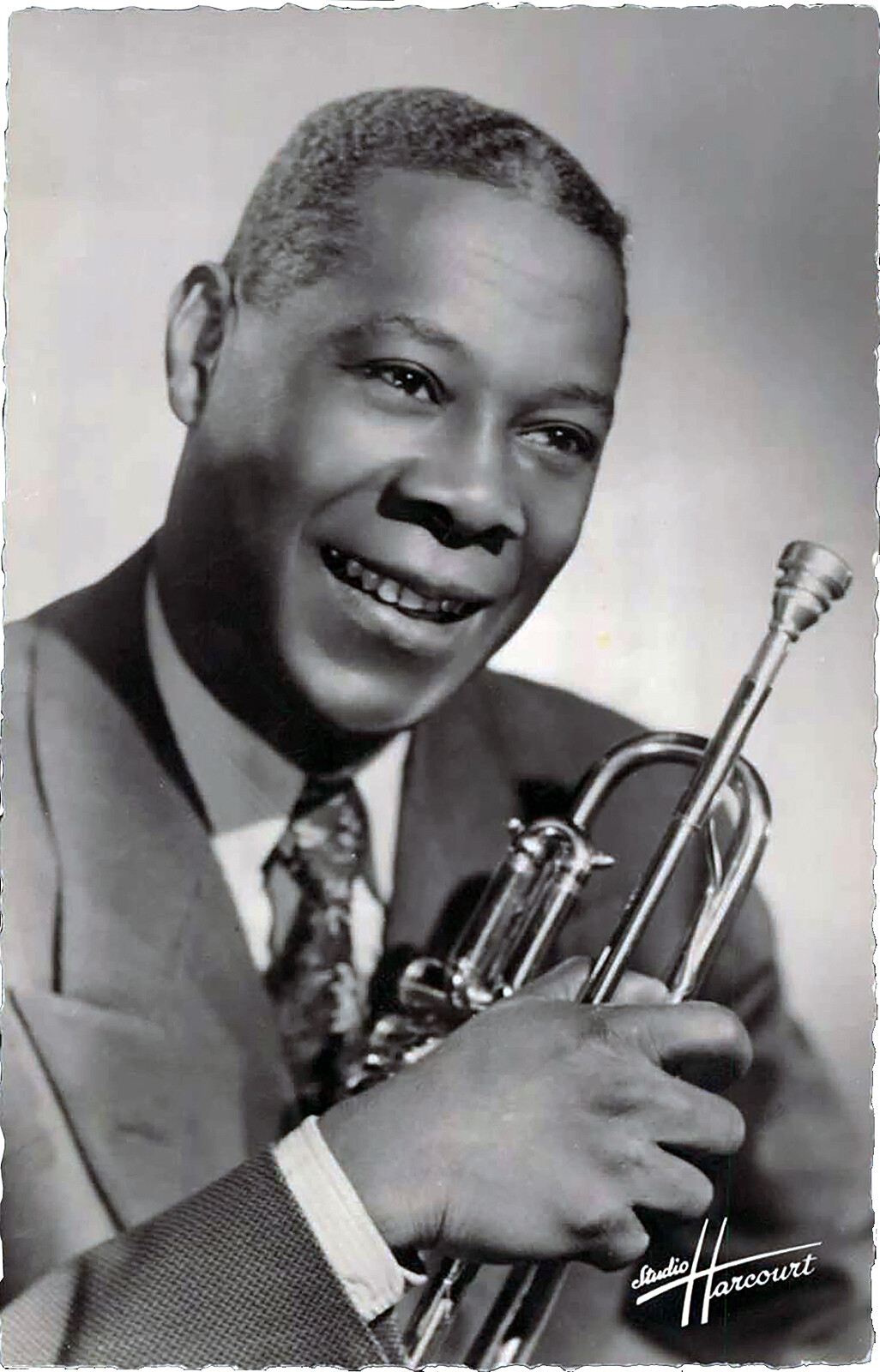
Arthur Briggs, the greatest jazz trumpet player in Europe, between the two world wars. His story is told in Better Days Will Come Again, by Travis Atria

A friend of mine is a great niece to Arthur Briggs, a jazz trumpeter, who was known as the greatest trumpet player in Europe, in the years from the end of World War I to World War 2. She asked me to read a book written about her great uncle, Better Days Will Come Again: The Life of Arthur Briggs, Jazz Genius of Harlem, Paris, and a Nazi Prison Camp, by Travis Atria, and I am glad I did.

To my embarrassment, I was completely unaware of Arthur Briggs, even though I DJ’ed a jazz show, on my college radio station, as an undergraduate. But there is a good reason why Briggs was so unfamiliar.

Though he was born on the island of Grenada, he made his way as a teenager to Harlem, during World War 1, and learned the art of jazz trumpet. However, America would not remain home for Arthur Briggs, as the pernicious effects of racism left him a strong distaste for American life. Briggs was most likely a descendant of London Bourne, an early 19th century African slave-turned-abolitionist, on the island of Barbados. Arthur Briggs had no patience for racist bigotry, so he no desire to stay living in America.

Arthur Briggs left America at the end of World War I to advance his career as a jazz trumpeter in Europe, where he finally settled in Paris, France. The years between the world wars were the hey-day for early jazz in Europe, and Briggs was at the top of his game. While the more familiar Louis Armstrong wowed audiences in America, Briggs toured nearly all of Europe with various jazz ensembles, but made his reputation primarily in Paris, where racism was much less an issue than it was in America. He played with the likes of guitarist Django Reinhardt and singer/dancer Josephine Baker. Briggs’ years in Europe explains why many like myself never knew of him.

The most challenging period of Briggs’ life was when Nazi Germany overran Paris in 1940. Briggs failed to escape Paris and was sent to a Nazi prison, at St. Denis, on the outskirts of the city, and spent the remainder of the war there. He experienced brutal dehumanizing conditions at St. Denis, along with the added insult of Nazi-imposed racism. Yet he survived the war, largely through the exercise of his extraordinary talents, which entertained his fellow prisoners, along with his Nazi guards and prison commanders.

Author Travis Artis introduces each chapter with a quote from the Bible, meaningful to Arthur Briggs, thus indicating a spiritual side to the great musician, but makes little emphasis on that aspect of Briggs’ extraordinary life. Better Days Will Come Again is a remarkable story of how one man stood up against the brutality of racism, excelling at his craft as a musician, as a crucial figure in the history of jazz.


When Philippians Says “Every Knee Shall Bow” to Jesus, Does This Mean That Everyone Will Be Saved in the End?

Philippians 2 includes some verses that advocates of universalism often quote to argue that every human individual will be saved in the end. Let us take a look at that claim, and see if it stands up under scrutiny. First, here is the passage, Philippians 2:4-11:

Let each of you look not only to his own interests, but also to the interests of others. Have this mind among yourselves, which is yours in Christ Jesus, who, though he was in the form of God, did not count equality with God a thing to be grasped, but emptied himself, by taking the form of a servant, being born in the likeness of men. And being found in human form, he humbled himself by becoming obedient to the point of death, even death on a cross.Therefore God has highly exalted him and bestowed on him the name that is above every name, 10 so that at the name of Jesus every knee should bow, in heaven and on earth and under the earth, 11 and every tongue confess that Jesus Christ is Lord, to the glory of God the Father (ESV).

The highlighted part, in verses 9-11, has phrases that puzzle many readers of the Bible, like “at the name of Jesus every knee should bow,” and “every tongue confess that Jesus Christ is Lord, to the glory of God the Father.

What does that really mean?

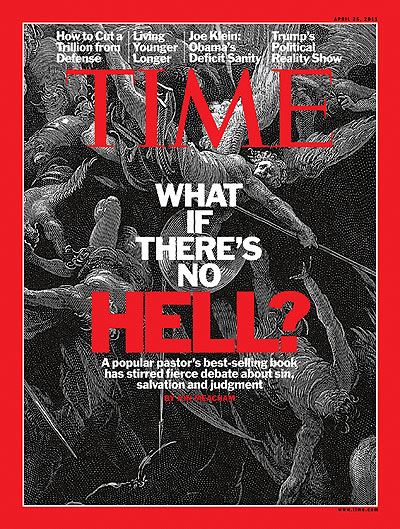
Time magazine’s April 25. 2011 cover was inspired by former megachurch pastor Rob Bell’s controversial book Love Wins, with a revisionist look at the classic doctrine of hell, that eventually led to Rob Bell leaving the pastorate.

What is “Christian Universalism?”

Now, before we dive any deeper, it is important to define what is meant by “universalism.” There is a popular form of “universalism,” embraced by those who have only a shallow knowledge about the Bible, which basically argues that there is no such thing as hell. Instead, when any and every human dies they are automatically ushered into the presence of “God,” and warmly received there.

This is essentially a typical “man on the street” view of what life after death looks like. However, this rather generic view of the afterlife is to be distinguished from a specifically “Christian Universalism,” that actually engages the Bible and affirms a doctrine of hell, but that frames the experience of the afterlife in terms that are quite different from what most other Christians believe.

Advocates of “Christian Universalism” make the claim that Philippians 2 teaches that, in the end, every human individual will eventually find salvation in Christ, because this passage teaches that everyone will ultimately make a profession of belief in Jesus. In other words, even those who do not make a profession of faith in Christ in this life will eventually be won over to the Gospel in the next life.

Not all “Christian Universalists” articulate their argument in exactly the same way, but there is a common thread of logic: A “Christian Universalism” perspective argues that the experience of hell, in the afterlife, does not have a purely punitive effect. Rather, hell has a purgative effect, of redeeming the lost sinner, who has refused the Gospel in the earthly realm, only finally to be united with God, once the experience of hell removes their rebellion and hostility towards God. At the risk of oversimplifying the position, a “Christian Universalism” is basically an attempt to treat the medieval doctrine of purgatory as being applicable to all human beings, where God will ultimately sanctify every person, ranging from your kind yet eccentric uncle or aunt, who spouts atheistic sentiments, to the most terrifying persons, like an Adolf Hitler and a Joseph Stalin.

Cautions About Prejudging Any Discussion Regarding Universalism

It is necessary to say a couple of more things, before diving into the Scriptures regarding this passage. First, it must be acknowledged that over the years of the Christian church, outspoken advocates for a “Christian Universalism” have made their case for this particular point of view. Back in the early church, those like Origen, and perhaps(???) Gregory of Nyssa, have promoted some form of universalism. In the 19th century, the famed Scottish fantasy writer George MacDonald wrote in favor of a “Christian Universalism,” while others have made the claim that the great Swiss theologian, Karl Barth, did so, too (albeit in a rather obfuscated way).

In the 21st century, contemporary advocates of universalism have included the author Robin Parry; the somewhat obfuscated perspective offered by former megachurch pastor, Rob Bell, in his 2011 book, Love Wins;, and most recently, an unashamedly forceful case made by Eastern Orthodox theologian, David Bentley Hart. Hart has no qualms in announcing that the traditional doctrine of eternal hell is a cruel “obscenity” that does nothing more than terrorize young children with unfounded trauma.1

In other words, let those who believe in eternal damnation be damned themselves.

While some may find such a view of eternity as attractive, accompanied by a sigh of relief, it must be stated that “Christian Universalism” has been a minority view in the long history of the Christian church.  More often than not, Christians over the centuries have typically viewed such purveyors of “Christian Universalism” with contempt.

Some Christians have believed that all historically orthodox Christians should shun such “Christian Universalism” proponents as being nothing more than pure heretics, that deserve full-on condemnation and the utter rejection of all of their writings and teachings. However, we should be careful not to sanction a blanket dismissal of such persons. Consider just a few of these things:

  • Origen wrote the first Christian systematic theology, in defense of a Christian worldview, in the early church of the 2nd century. After Saint Paul, we owe pretty much the entire intellectual development of a “Christian mind” to the seminal writings of Origen.
  • Gregory of Nyssa championed both the doctrine of the Trinity as well as being one of the first persons to advocate for the elimination of slavery, hundreds of years prior to the Atlantic slave trade of Africans to America.
  • George MacDonald’s fantasy books played a large role in bringing the well-known apologist C.S. Lewis out of atheism to having faith in Christ.
  • Karl Barth has been credited as almost single-handedly recovering the doctrine of the Triune nature of God, for 20th century Christians, back in the day when many Christians were ready to abandon the Trinity.
  • David Bentley Hart, one of the world’s most prominent theologians, has written perhaps the most lucid, extraordinarily witty, and highly acclaimed critiques against the “New Atheists,” Atheist Delusions.

One can respectfully and strongly disagree with someone on a very important point of doctrinal controversy without having to feel the need to completely throw that other person without mercy under a bus. Christian Universalists can still be quite orthodox in other doctrinal matters. Christians can learn even from those who have heretical tendencies, on certain doctrinal matters. Or to put it another way, if you have a Christian friend who believes in universalism, it is okay for you to let your friend be wrong.

Secondly, very few thoughtful Christians relish the idea of the doctrine of hell, and for good reason. The doctrine of hell raises really difficult questions, that even the most devout Christian struggles with from time to time.

The late J.I. Packer put it this way:

“No evangelical, I think, need hesitate to admit that in his heart of hearts he would like universalism to be true. Who can take pleasure in the thought of people being eternally lost? If you want to see folk damned, there is something wrong with you!”

Likewise, I want the universalists to be right. I do not want people, for whom I deeply love and care for, to perish eternally separated from God. Even if universalism was not true, and yet there was still a way for people to somehow have an opportunity, post-mortem, to come to faith in Jesus (as some have argued), I would want that to be true. Better yet, I would want everyone to come to know Jesus, in this lifetime!

But just because I want something to be true, does not make it true. If the Bible teaches something that I have a difficult time accepting or understanding, that still does not give me the liberty to pick and choose what to believe, from the Bible. If the Bible really teaches that not everyone will be saved in the end, a viewpoint which I will argue is indeed found in the Holy Scriptures, then it is incumbent on me to be willing to submit to that teaching, out of obedience to God. If the evidence found within the Bible points towards a particular direction in establishing a doctrinal truth, then I need to hold onto that, and not waiver, even if from my limited point of view, I do not like it.

Sure, there are difficulties, such as the fate of the unevangelized, that every Christian reading the Bible needs to deal with. But one answer to that would be for Christians to be gripped with the urgency of the missionary enterprise, and do everything we can to make disciples of all of the nations. One of the biggest criticisms aimed at the “Christian Universalist” position, is that it undercuts the impetus behind world evangelization.

Alternatively, by taking seriously the Great Commission, we demonstrate obedience towards following the commandments our our Lord Jesus Christ (Matthew 28:16-20). Still, when all is said and done, it is one thing to hope for and pray for God to make a way for someone to come to know Jesus, in a manner that might completely defy our understanding. But it is quite another to dogmatically assert a belief which can not be wholly be reconciled with Scripture (I will have to save any discussion of conditional immortality, or annihilationism, as a possible alternative to the doctrine of conscious eternal torment to a future blog post).2

Thirdly, what makes “Christian Universalism” so attractive to many is that it is perceived as a solution to one particular aspect to the problem of evil. Therefore, one can share empathy with such a concern on an emotional level without giving into a denial of sound doctrine. Here is the objection: For if God so loved world that he gave his Son for us, why would God not also just save the entire world, with every person in it? The doctrine of hell, in this context, comes across as triggering a sense of unfairness, that begs for an answer, for many non-believers and believers alike. In many ways, “Christian Universalism” addresses yet another dimension of any supposed unfairness being imposed on humanity by God. However, this is where Christians need to tread carefully, for what might appear to be unfair from a human perspective many not accurately correspond to what God deems to be unfair. A truly Christian view of God requires us to have the confidence that God is indeed right and good in ways that we as humans do not fully understand.

The bottom line is this: I am called to put my trust in God, and his goodness, and therefore I must accept the judgments of Scripture, and not defiantly question the Scriptures themselves as our authority. I may have doubts and struggles, and even honest questions, but I do not have the freedom to outright reject the truth of something taught within the pages of the Sacred Text, if I truly consider myself to be follower of Jesus.

Medieval depiction of purgatory, Très Riches Heures du Duc de Berry (credit: Wikipedia). For “Christian Univeralists,” the experience of hell is real, albeit in a disputed sense, but not eternal. Rather, it is the rough equivalent to the Roman Catholic doctrine of purgatory. Those who do not accept Jesus in this life will eventually be purged of their sins in hell, before becoming ultimately reconciled to God in the next life.

So, What About “Every Knee Shall Bow” and “Every Tongue Confess?”

Now, with those introductory remarks out of the way, we can explore what Philippians 2 is teaching, with more clarity. Contextually speaking, Paul in Philippians 2 is making a case for the incarnation of God, as expressed through Jesus Christ. What is true of God the Father is also true of God the Son. Furthermore, we need to follow Christ’s example, in his humility in becoming human, for our sake, considering others better than ourselves. It is through this humility that Jesus the Son of God is, in turn, lifted up to be given honor and glory, just as the Father is.

What then does this “every knee should bow” and “every tongue confess” regarding the Lordship of Jesus really mean? Some advocates of the doctrine of hell, in the form of eternal conscious torment, suggest that Philippians 2 is teaching that the sinner, separated from God in hell, will ultimately offer some begrudging acknowledgement in the superiority and/or worshipful-status of Jesus as Lord.

The problem with this interpretation is that in just a few verses later Paul urges his readers at Philippi to “do all things without grumbling or disputing” (verse 14). Yet this would be a strange thing to say, if indeed in a couple of prior verses Paul teaches that this form of acknowledging the Lordship of Jesus would include those who do so under duress, in a begrudging manner. Why would Paul teach this “begrudging” view of Christ’s Lordship, only to flip the application upside down a few verses later to warn against “grumbling or disputing?”

Some reinforce this “begrudging” view by suggesting that those “under the earth,” in verse 10, will included Satan and the powers of evil. But the phrase “under the earth” need not necessarily refer to such evil powers. It could just as easily refer to those who have died, including those who are buried; that is, “under the earth“, who are awaiting resurrection and salvation, upon the Second Coming of Jesus.

Still, a case might be viable for a “Christian Universalism,” at this point, if this “begrudging” view is to be rejected. But is this really what the Apostle Paul had in mind? A better answer would be to consider where this language of “every knee should bow” and “every tongue confess” actually came from.

The key is to remember that the mind of the Apostle Paul, as a Jew, was saturated in the world of the Old Testament. The language of “every knee should bow” and “every tongue confess” can be found in Isaiah 45:23:

By myself I have sworn;
    from my mouth has gone out in righteousness
    a word that shall not return:
‘To me every knee shall bow,
    every tongue shall swear allegiance.’ (ESV)

In other words, Paul is forcing the reader to look back at what the prophet Isaiah was talking about, and that this gives us the clue as to what Paul is really after here. When Isaiah was writing this, he was referring to Cyrus the Great, the Persian ruler, who ended the Babylonian Exile, for the Jews in 6th c. BCE, and instructed the Jews to return back to their Promised Land (Isaiah 45:1). The favor that Cyrus extends towards the Jews in Exile is a sign of God’s faithfulness to the Jews, and therefore, the people should bow in reverence and allegiance to the God of Israel.

Interestingly, this passage of Isaiah also makes reference, not just to the restoration of the Jewish homeland, but a calling to the Gentile peoples to repent and come to know and worship the God of Israel (Isaiah 45:20,22 ESV):

“Assemble yourselves and come;
    draw near together,
    you survivors of the nations!
They have no knowledge
    who carry about their wooden idols,
and keep on praying to a god
    that cannot save….

“Turn to me and be saved,
    all the ends of the earth!
    For I am God, and there is no other.

In other words, the prophet Isaiah is talking about “every knee” and “every tongue,” not the sense of “every individual,” but rather, in terms of “every kind of person.” For Isaiah, this means that God is interested having “every kind of person,” including not just Jews, but Gentiles as well, including all “the nations,” coming to know the God of Israel.

Furthermore, Paul argues throughout nearly all of letters for a view of salvation, that not only includes Jews, but Gentiles as well.  This ties in perfectly with the message of Isaiah, that Paul has brought to mind in Philippians. He specifically brings up the Jewish/Gentile issue in Philippians 3. Therefore, it is more consistent and exegetically responsible to say that the “every knee” and “every tongue” in Philippians 2 is about “every kind of person,” including not just Jews, but Gentiles as well, acknowledging that Jesus as the Son is just as much divine as the Father is.

However, for the sake of the argument, what if the “Christian Universalist” is right, by suggesting that “every knee” and “every tongue,” in this passage, is about “every individual,” as opposed to “every kind of person,” both Jew and Gentile? While this case is not likely, it is important to consider briefly what else Paul might be thinking regarding the permanence of hell.

It is true that the Apostle Paul never talks about hell specifically in any of his letters. But this does not mean that he does not address the topic. In 2 Thessalonians 1:5-10, Paul writes that at his Second Coming, the Lord Jesus will inflict “vengeance on those who do not know God and on those who do not obey the gospel of our Lord Jesus.” Regarding the permanence of this punishment, he goes onto say that “they will suffer the punishment of eternal destruction, away from the presence of the Lord,” which indicates a certain finality to the eternal judgment against those who reject the Gospel. It is just really difficult to imagine how anyone can read this passage, while still making a compelling argument for “Christian Universalism,” though some have tried. While Paul admittedly focuses on the message of eternal life for those who do know the Lord, by always urging his readers to believe the Gospel, he never ignores the sad reality of God’s condemnation of the lost.

You really can not get away with trying to make a case for universalism from Philippians 2 without running against a central argument that both Isaiah in the Old Testament, and Paul in the New Testament, are trying to make. When we allow our “wishful thinking” for something to be true to distort our evaluation of the evidence for or against a particular doctrine, we end up creating a situation that creates more problems than it solves. In other words, “Christian Universalism” may sound like a great thing, and some might still hope for it, but you really have to bend over backwards with awkward exegetical somersaults and hermeneutical handstands to try to “make it work” with the Bible. Instead, we should soberly accept that the failure to acknowledge Jesus as Lord in this life has eternal consequences that lead to an ultimate separation from God.

To summarize the points of this post, readers might want to view the following video interviewing Dr. Russell Moore, public theologian at Christianity Today magazine. After that, for a quick summary as to why “Christian Universalism” does not work with the teachings of the Bible, take a few minutes to listen to Old Testament scholar, Dr. Michael Heiser.


Notes:

1. David Bentley Hart has raised a lot of eyebrows in recent years. His spat with N.T. Wright over competing New Testament Bible translations (Wright’s review of Hart’s translation, and Hart’s review of Wright’s translation) serves as a reminder that one should never simply depend on just one Bible translation, particular one done by just one scholar. Committee-based translations, like the NIV and ESV, are not perfect, but they have a built-in mechanism that prevents idiosyncratic readings from disturbing the reader, how thought-provoking they might be. Hart’s own Bible translation has come under critical review from a wide variety of sources (a positive review at the PostBarthian blog,  James Parker at The Atlantic with a mixed review,  Eastern Orthodox priest Stephen Young’s incisive review, blogger Alex Joyner’s mixed review, Bob Short’s multipart review at CatholicBibleTalk #1, , #2, #3, #4, #5, #6, and Wesley Hill’s description of Hart’s project as a “glorious failure.”). Ah, but N.T. Wright’s New Testament translation got a good work-over by Robert Gundry.  

2. In Christian circles, there are basically three views regarding the doctrine of hell: (1) the doctrine of conscious eternal torment, the most traditional view, (2) the doctrine of conditional immortality, whereby the wicked are annihilated in hell, once they have fully experienced God’s judgment against them, and (3) Christian Universalism, whereby all people are saved. There has also been a revised interest in purgatory, among some evangelicals, in recent years. Obviously, this relatively short blog post is not the place to advance any sustained argument regarding any particular view of hell. Rather, my aim here is to address one particular objection raised by “Christian Universalists” regarding one particular Bible passage, by examining the larger Scriptural context for that one Bible passage.  


Best (and Bittersweet) Wrapup of 2021 … Books and More

At the end of each year, I like to take some time looking back over some of best things I have learned, mainly from books (and podcasts), with a wrap-up of some of the biggest stories hitting the Christian world. But before I do that, I would like to report on the most bittersweet moment this past year.

It was the loss of our Italian greyhound, Digby. He was a rescue dog that we adopted, near the time when I learned that my mother was dying of cancer, back starting in 2014. He had been pulled out of a burning house, engulfed by a fire, and he needed a home. Friends who were traveling through Indiana picked him up for us, that we might give him a “forever home”. This sweet little guy gave my wife and I much joy for seven years.

He was in many ways a much better dog than Dooty, another Italian greyhound, whom we lost in 2013. In September, 2020, our newest “family member” was sadly diagnosed with chronic kidney failure. Dogs typically do not recover from this disease, but with certain types of medical treatment, they can live months, or even years after the initial diagnosis, with a good quality of life. Fourteen months later, though, in early November, it became apparent that the condition of this Italian greyhound was rapidly deteriorating. What made his death so much the more difficult was his genuinely sweet disposition to the very end. I marvel at the glory of God that was on full display by this creature.

We will miss this little guy. Hopefully, we will meet someone just like Digby in the New Heavens and New Earth (The first two following pics were from late 2020. The third was from September, 2021. The last one was from November, 2021).


Speaking of bittersweet, here is a remarkable story of forgiveness, displaying the power of the Gospel.  A Christian friend of mine, Debbie Smith, was sexually attacked in 1989, when a man entered her home and dragged her into the woods. He was eventually caught and convicted, after DNA evidence provided a positive match for the suspect. Earlier this year, Debbie spent five hours visiting this man, still in prison, where she told him that she had forgiven him.


Here is my wrap-up for 2021….

This will really show my age here, but just few weeks ago I learned that Michael Nesmith, the lead guitar player and primary songwriter for the 1960’s television pop-group, the Monkees, died at age 78. As a kid, I watched re-runs of that show, and I was drawn to Nesmith’s character, always wearing a wool hat, and who came across as the most pensive member of the band…. Just one little interesting factoid about Nesmith I recently learned: His mother invented Liquid Paper, the typewriter correction fluid, in 1954, as a divorced single mother, trying to raise her son Michael ….  Here is one of Nesmith’s musical creations, that he introduces in this silly video for the television show, “You Just May Be The One.” Mickey Dolenz, the drummer, is the only surviving member of the band:

—————————————————————————–

Onto some things of a more serious nature….

On the bright side, in the midst of disaster, it is really encouraging to see how Christians are working together to help the folks impacted by tornadoes in Kentucky, back in early December…. My wife and I visited family over this Christmas near where the worst tornado, which reached up to EF-4 strength, devastated the towns of Dawson Springs and Mayfield, Kentucky. You could see the damaged inflicted along the path the tornado took crossing Interstate 69 in several places. It made me appreciate the power of nature to inflict terrible damage, and impact many lives, as we could see debris for miles scattered over rural Kentucky…..

On the more problematic side of the church…..

One of the most significant developments that I have been seeing in the American church is the development of what might best be called “progressive Christianity,” as a contrast to “historically orthodox Christianity.” A generation or so ago, this distinction was primarily seen as the difference between “mainline Protestant Christianity” and “evangelicalism.” But with the looming collapse of the Protestant mainline, and the emergence of other churches that do not fit the older Protestant mainline mold, the category of “progressive Christianity” seems like a much more appropriate designation. Unlike in previous generations, when so-called “liberal Christians” went to “mainline churches” (with a few conservatives mixed in, here and there), and “conservative Christians” went to “conservative evangelical” churches, many churches today are a blended mix of everything, that defies easy boundary markers.

As some have said, this blending is an invitation to shallowness…..

We are now living in an age where the specific boundary between “progressive Christianity” and “historically orthodox Christianity” (certainly of the Protestant sort) can become slippery and elusive. On the one side, some doctrinal controversies can cause unnecessary division, and harm the unity of Christ’s body. Yet at the same time, the category of “disputable matters” can also become so broadly and loosely defined that the concept of knowable, absolute Christian truth becomes a meaningless enterprise. Some differences in belief and practice are simply stark and distinctive, and difficult to ignore. The following video dialogue between Sean McDowell (historically orthodox Christian) and Colby Martin (progressive Christian) provides an informative illustration as to what this chasm in the church looks like:


Speaking of controversy 😦   …..  When COVID started to emerge in the U.S., a little under two years ago, I first thought that this crisis might be the spark that would lead to a spiritual revival. Having people crammed up in their homes for weeks on end might encourage a massive wave of interest in spiritual things. But such was not the case. In fact, things have pretty much devolved into an unparalleled amount division in the culture… and 2021 was pretty much the wearisome ballooning of the same craziness that engulfed people in 2020!!

So much of this spirit of division is driven by the flood of post-modernism throughout the Western world. The shady world of fake news and deepfake technology has not helped matters, that is for sure (listen to this Holy Post podcast, if you are unsure what “fake news” and “deepfake technology” is)….. and our American educational system has pretty much robbed a whole generation of a vibrant appreciation of history, a situation that we have managed to export to places outside of the U.S., like the U.K, according to historian and The Rest is History podcaster, Dominic Sandbrook.

This state of affairs is pretty depressing, but there are signs of change in the air. Positive change. Even a gay atheist, like the venerable British historian, David Starkey, who last year ran afoul of the U.K.’s extreme “social justice warrior” movement and virtue-signaling “woke” crowd, laments our culture’s failure to pursue truth. What if every Christian possessed this type of desire to pursue truth?


Sadly, this depressing state of affairs permeates the church as well. Consider the case of Eric Metaxas. A few years ago, despite some earlier misgivings about some of his writings, I imagined that Eric was becoming the type of evangelical public intellectual who could soundly speak for the conservative evangelical movement as a whole. After reading his book on Dietrich Bonhoeffer, I was pretty excited about Eric Metaxas’ prospects as a popular-style, evangelical public intellectual. I was very hopeful about Eric, and here on Veracity I have linked to perhaps a good half dozen episodes of his talk show from YouTube (which have all since mysteriously vanished)…

…. and then 2020 came. …  Eric appeared to go off the deep end, uncritically embracing various conspiracy theories (as it would appear). WORLD News Group did an interview with Eric Metaxas in November, 2021, primarily regarding a new book authored by Metaxas, but also to ask the question that keeps popping up in my mind, “Whatever happened to Eric Metaxas?Give it a listen and make up your own mind.

Speaking of WORLD News Group, that sponsors the daily news podcast, The World and Everything In It, that my wife enjoys listening to daily, a shakeup there has everyone scratching their heads. WORLD has historically been on the more conservative side of conservative evangelicalism, under the editorial leadership of Marvin Olasky. I have had issues with some of WORLD’s reporting over the years, but I have also been grateful for WORLD taking controversial stands, in exposing various scandals inside the evangelical world, and Marvin Olasky was largely responsible for that type of journalism. Now, however, Olasky has announced his resignation from WORLD magazine, since a decision at WORLD was made to take editorial control of the magazine away from Olasky.

Olasky has his concerns about the future of Christian journalism: “The trend in journalism these days is to emphasize opinion, not reporting. Reporting is costly; opining is relatively cheap. It can lead to more ‘reader engagement’ in terms of clicks, likes, shares—and subscriptions. Challenging readers or donors can be costly: Supporting proclivities and prejudices is better at cementing loyalty. These days it makes a certain kind of economic and political sense to abandon Biblical objectivity and become known as a liberal or conservative organ.” For someone who is such a resolute conservative evangelical to make such a statement does not bode well for the state of the church.

I am continually being challenged to learn How to Have Impossible Conversations in a digital world where the social media algorithms steer us all into ideological corners, on both the right and the left, and thus facilitating outrage fatigue. Thoughtful, intelligent nonbelievers employ such conservational strategies, to avoid nonsense, but Christians would do well to do the same. Probably the best summary of this problem, from a pastor’s point of view, comes from this interview of pastor Matt Chandler by theologian Preston Sprinkle:

To get a feel for how difficult the situation is, just recently in December, 2021, the Pew Research Forum released an updated report chronicling the rise of the “Nones,” those who say that they no longer have a religious affiliation.  In 2007, the survey indicated that the “Nones” made up 16% of the American population, rising to 26% by 2019.  Now, just a few years later, we are at 29% for the “Nones.” That is almost 1 out of 3 Americans (about 3 out of 10, to be more exact), whereas this was just at 1 out of 6 Americans (about 3 out of 20), a little more than a decade ago.

On the whole, American Christianity does not seem to know what to do about this situation….


Now onto better things….

Before I hit the book review summaries, I like to put another plug in before the end of 2021 for the Cambridge House at the College of William & Mary. I am super-excited about what is going on there!!.This is a great effort to try to put a dent into the growing “Nones” trend, on just one local college campus, here in the United States.

Now, this is perhaps the most exhilarating story of the year… just in time for Christmas. The group of conservative Anabaptist missionaries that were held captive by gang members in Haiti for weeks made a daring escape away from their captors. Wow!! (One of the captive missionaries gives a one-hour testimony of his experience).


Some Book Reviews…..

If there is one thing I appreciate about bike commuting is the ability to listen to audiobooks (and podcasts) while I ride. Not only am I trying to get my body in shape, I am working on getting my mind (and hopefully, my heart) in shape as well. As we are s-l-o-w-l-y emerging out of the COVID pandemic, I have been able to sneak in some great listens during 2021.

First, let me say that I am trying to stay off the 24-hour news cycle, that I believe has been a detriment to the spiritual health of millions of people. We live in an age where evidence-based reasoning takes a backseat to whoever successfully can take advantage of the attention-getting algorithms propagated by social media networks like Facebook. I am thankful for a site like Ground News that takes the current headlines, and simply summarizes the stories, and organizes the reporting media based on an organization’s ideological bias. Another site, AllSides.com, does pretty much the same thing. Websites like these help to quickly cut through all of the garbage.

I want to next list off a few of my favorite podcasts. When it comes to Bible study, nothing else beats Dr. Michael Heiser’s Naked Bible Podcast. This is some of the best Bible teaching out there today, a combination of verse-by-verse exposition, apologetics, and an appreciation of current biblical scholarship, all wrapped up into one. If you think studying the Bible might be “boring,” then the Naked Bible Podcast is your antidote.

Preston Sprinkle has a wide variety of fantastic interviews on his Theology in the Raw podcast. Beyond theological topics, focusing on history, I have become a follower of The Rest is History, by British historians Tom Holland and Dominic Sandbrook, which is a lot of fun, as well as being educational. Premier Christian Radio’s C.S. Lewis podcast is a wonderful introduction to the great Oxford Don, Christian apologist, and children’s book author, featuring interviews with scientist/theologian Alister McGrath. Plus, if you have ever wondered what the whole Old Testament Apocrypha was all about, you should try the Bad Books of the Bible podcast, put out by Ancient Faith Radio.

Then there is a whole slew of YouTube channels, such as Sean McDowell’s channel, for great apologetics content; Gavin Ortlund’s Truth Unites, for an evangelical Protestant engagement with Roman Catholicism and Eastern Orthodoxy, and Matt Whitman’s Ten Minute Bible Hour, a Baptist look at the richness of different Christian traditions.

But hands-down, the most provocative podcast I have listened to this year has been Christianity Today’s The Rise and Fall of Mars Hill…. It is eye-opening, intense, soul-searching, spiritually challenging, and controversial, all at the same time…. In the wake of Ravi Zacharias scandals, The Rise and Fall of Mars Hill gave me a lot to think about how Christians have not handled celebrity pastor Christianity that well…..After just finishing listening to the whole series, with my small-letter “c” complementarianism in view, I confess that I am still drawn to the power, penetration, and conviction of Mark Driscoll’s message. But it is quite clear that Pastor Mark’s theological vision got hijacked by a type of control-freakish machismo that ultimately took down Mars Hill Church from the inside.

It would appear that the greatest threat to Christianity lies not in the surrounding culture, but right in the backyard of the church.

Who needs television and the 24-hour news cycle when you’ve got stuff like this to listen to?

But now for the books….

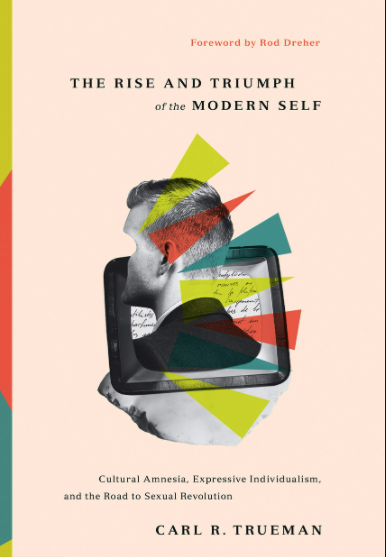
The Rise and Triumph of the Modern Self, by Carl Trueman. Best book of the year.

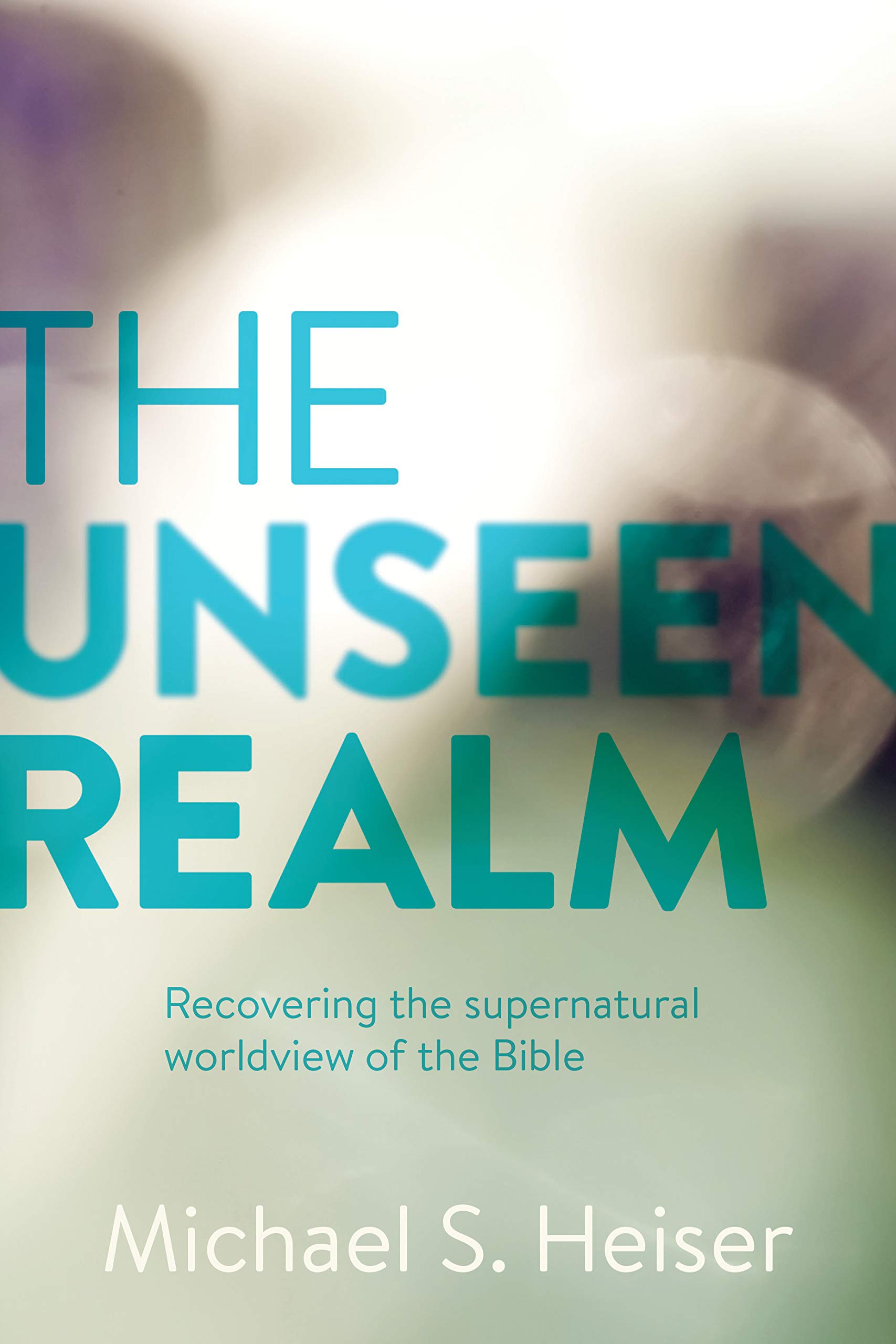
  • The Unseen Realm, by Michael Heiser. Trueman’s book only beat this Heiser book, because of the timeliness. But Michael Heiser’s research into the supernatural world of the Bible has completely shifted the way I read the Bible. The Unseen Realm, and its less-academic version, Supernatural, are destined to become classics in Biblical studies, revolutionizing how to approach the Bible as a whole, shaped by the historical context of Second Temple Judaism. I hope to be writing a lot about Dr. Heiser’s work in future blog posts. This has motivated me to dig into the Scriptures, with greater enthusiasm, than anything else I have read in the past 5 or 6 years. In my view, if we are praying for revival in the church, that might explode into a new “Great Awakening” in our culture, I believe it will start by grappling with some of the ideas and thoughts found Dr. Heiser’s books. Review here at Veracity.
  • Embodied, by Preston Sprinkle. This is the “go-to” book I would recommend to understand the crisis of gender identity overtaking the culture today, and its impact on the church, based on solid scientific research and biblical wisdom. However, unlike Trueman’s The Rise and Triumph of the Modern Self, Sprinkle’s Embodied is more focused on how to care for people wrestling with these deeply personal issues, instead dealing with the culture war questions. Embodied was also a very important personal book for me, too. Review here at Veracity.
  • The Two Popes, by Anthony McCarten. A provocative look at the relationship between the current pope, Francis, and the previous pope, Benedict. It is a great movie, too. Review here at Veracity.
  • Welcoming Justice, by Charles Marsh and John Perkins. A short but helpful book that sidesteps around the unhelpful categories of critical race theory and “wokeness” to get at the real story of how the church can effectively combat racism. Review here at Veracity.
  • The Bible With and Without Jesus, by Amy-Jill Levine and Marc Zvi Brettler. Two Jewish scholars help both Christians and Jews understand why both groups read the Bible, and particularly, the New Testament, so differently.  Review here at Veracity.
  • Finding the Right Hills to Die On, by Gavin Ortlund. When theological controversial erupts in your small group or church, Ortlund’s book is great resource to try to frame what is important and unimportant regarding how to navigate theological controversy. I found this book immensely helpful in trying to navigate a theological debate that has been tearing at my home church, for the past couple of years, and its impact on personal relationships. Review here at Veracity.
  • The Making of Biblical Womanhood: How the Subjugation of Women Became Gospel Truth, by Beth Allison Barr. An otherwise brilliant and illuminating study of the history of women in the church, making an important case for affirming the gifts of women in the life of the church, nevertheless comes up short when it comes to offering a cogent, exegetically compelling interpretation of the Bible concerning women in church leadership. To use a manner of speaking going back to J. I. Packer, Beth Allison Barr’s efforts are well-meaning, positively enlightening, challengingly corrective on certain matters… and yet still “wrong-headed” at certain crucial points. Review here at Veracity.
  • Judaism Before Jesus, by Anthony Tomasino. The best book that I have read that gives you an historical introduction to the “Time Between the Testaments,” between the Old and New Testament, otherwise known as the period of “Second Temple Judaism.”  Review here at Veracity.
  • Paul Among the People, by Sarah Ruden. A classicist scholar examines the writings of the Apostle Paul, and surprisingly concludes that Paul is not the “bad guy” that so many skeptics, and even liberal-minded Christians, think he is. Review here at Veracity.
  • Still Time to Care, by Greg Johnson. A history of the “Ex-Gay” movement, with a positive challenge for Christians to return to an ethic of care for those who experience unwanted sexual attractions, as opposed to an ethic of cure. Review here at Veracity.
  • To Think Christianly: A History of the L’Abri, Regent College, and the Christian Study Center Movement, by Charles Cotherman. An insightful history into the concept of a “Christian Study Center,” from Francis Schaeffer, to James Houston, to R.C. Sproul, and even to anticipating the new Cambridge House, near the College of William and Mary. Review here at Veracity.
  • Founding Brothers, by Joseph Ellis. A history of some significant moments in the lives of America’s Founding Fathers, and their relationships with one another. Review here at Veracity.
  • A Parent’s Guide to Smartphones (Axis Parent’s Guide). David C. Cook publishers has been putting a great little series of books, aimed at Christian parents, to help them raise their kids. Each book is short, and can be read in perhaps under an hour. I picked up one these via Kindle, A Parent’s Guide to Smartphones, and the material was brief, but entirely helpful. Other books in the series address topics ranging from “Internet Filtering & Monitoring”, to “Vaping”, to the television show “Stranger Things.” If you know of a parent who is swamped with the pressures of raising children in a digital age, books in this series would be a great gift for them.
  • Urban Legends of the Church History, Urban Legends of the Old Testament, and Urban Legends of the New Testament, respectively by John Adair and Svigel, by David A. Croteau and Gary Yates, and by David A. Croteau. These three books in the “Urban Legends” series, published by B&H Academic, do a great job dispelling a lot of the common “fake news” stories surrounding church history and the Bible. Hopefully, this book series will encourage the death of at least some of these fictions that afflict the church. Review here at Veracity.
  • Unbelievers: An Emotional History of Doubt, by Alec Ryrie. An historical study in how believers wrestle with doubt. For a “second guesser” like myself, Ryrie’s book has been exceedingly helpful on a personal level. Review here at Veracity.
  • The Legacy Standard Bible. As of December, 2021, the finishing touches have just been put on a new Bible translation (more background here), that has a good deal of momentum behind it, in some circles. The New American Standard Bible has been a favorite of many for decades, along with its cousin, The Amplified Bible, as developed by the Lockman Foundation (These translations are fine translations, but I tend to lean more towards the English Standard Version myself). Pastor John MacArthur, and the faculty at The Master’s Seminary, in Southern California, have taken the 1995 edition of the New American Standard Bible, and have modified it in a way that they hope will emphasize a very traditional outlook on English Bible translation. I have not read through the whole Legacy Standard version (available online), but looking at it so far, the LSB is for those who find themselves frustrated with all of the newer Bible translations. YouTuber Timothy Frisch has a helpful video describing the Legacy Standard, in more detail.

Michael Heiser’s Unseen Realm: Recovering the Supernatural Worldview of the Bible.  The Carl Trueman book was more timely, but Heiser’s book will probably have a deeper, longer lasting impact on me.  The second best book of the year I read in 2021.


I have already started on Allen Guelzo’s new biography of Robert E. Lee, and the first chapter or so is simply fantastic. I am looking forward to more good listens on my bicycle commutes in 2022!

For other reflections on the year 2021, see my post from the end of the summer.  Ah, now we await a new year, in 2022! Let us pray that God does a work in the hearts of his people for the sake of the Gospel!!

Before I sign off for 2021, why not another fun tribute to the Monkees, this time with Colt Clark and the Quarantine Kids playing “I’m a Believer”…. and to top it all off, here is the Queen of the United Kingdom, Elizabeth II, with her Christmas greeting. She is like the world’s grandmother.


Christian Urban Legends

Were the shepherds at the birth of Christ really despised, social outcasts? This popular story makes for a great Christmas sermon message, namely that lowly, poor shepherds, having the social reputation equivalent to prostitutes, were given the honorary privilege of giving testimony to the birth of the Messiah. Though well intended, it turns out that this is largely an urban legend.

“Adoration of the Shepherds,” by Gerard van Honthorst, 1622. (credit Wikipedia: The Yorck Project: 10.000 Meisterwerke der Malerei. DVD-ROM, 2002. ISBN 3936122202)

Evangelical Bible scholar, David Croteau, the Dean of Columbia Biblical Seminary, and author of Urban Legends of the New Testament, acknowledges that many other scholars over the years have commented on the supposed despised nature of 1st century Jewish shepherds, citing sources like Aristotle and the Babylonian Talmud, for support. However, Croteau points out that Aristotle was not a Jew, and lived several hundreds of years before Christ, and the Babylonian Talmud was not produced until several centuries after Christ. Furthermore, British Bible scholar Ian Paul notes that the Babylonian Talmud’s denigration of shepherds might have been shaped more by an anti-Christian polemic, rather than the actual historical context. In other words, these are not the best expert witnesses as to how shepherds were viewed by 1st century Jews.

As it turns out, Croteau cites the best evidence that counterbalances this legend directly from the New Testament itself. Luke 2:18 tells us that “all who heard it were amazed at what the shepherds said to them,” when speaking of the appearance of angels. But the people were not amazed by the supposed fact that these were “lowly” shepherds. Rather, they were amazed by what the shepherds were talking about, that of the birth announcement of the Messiah.

Instead, the Bible holds the profession of shepherding in high respect. For example, Genesis 13 notes that Abraham had much livestock, herds, and flocks of sheep. Also, Exodus 3:1 tells us that Moses was a shepherd, and that before David was king, 1 Samuel 17 tells us that David himself was a shepherd. Jesus himself speaks of being “the good shepherd [laying] down his life for the sheep” (John 10:11).

True, shepherds were not wealthy, and belonged to the lower class, and thus represented the poor and humble, but they were hardly the social equivalent to prostitutes. With such an established pedigree, from Abraham to David, to ultimately Jesus, the traditional story of the “despised” Bethlehem shepherds simply does not fit the actual data.

Continue reading