John Paine and I have reported before on Newsweek‘s now infamous Christmas front page article written by journalist Kurt Eichenwald entitled, “The Bible: So Misunderstood It’s a Sin.”As a way of following up on the continuing saga of the blunder made by such an influential mainstream publication, after Newsweek invited messianic Bible scholar Dr. Michael Brown to write a response essay in their magazine, Brown then invited the journalist, Kurt Eichenwald, to appear on Brown’s Line of Fire radio show recently. I listened to the program available online and simply felt compelled to make some commentary.
On the bright side, it is apparent that Eichenwald and Newsweek hope that evangelical Christians will engage in creative and respectful dialogue with others without resorting to vitriol and name calling. I could not agree more. Furthermore, Eichenwald believes that there are many Christians who say that they “believe the Bible” but they simply have not read and studied what the Bible really says. Again, Eichenwald is 100% correct about the problem of biblical illiteracy and lack of understanding concerning theological doctrine and church history within our churches today. The hypocrisy of those who say that they “know the Bible” yet who do not take the time or energy to dig into the study of God’s Word and its history is truly appalling. But is Eichenwald correct is his understanding of the Bible, and its history? Continue reading
On Monday, January 19, 2015, selected movie theatres across the country will be showing a special documentary film, Patterns of Evidence. The story is about a filmmaker, Timothy Mahoney, who had a crisis of faith when he learned from the consensus of critically minded scholars that the Exodus, the famous story of Moses leading the people out of Egypt and the parting of the Red Sea,… NEVER HAPPENED.
Well, at least, that is the conclusion that is drawn from many archaeologists of the ancient Bible periods. True, the study of archaeology has yet to provide demonstrative evidence confirming the Biblical account of the Exodus. Therefore, many come to the conclusion that the Exodus was simply a “made up” part of the Bible. In other words, the story in the Bible is just as fictional as Ridley Scott’s version of it in Exodus: Gods and Kings, introduced with extensive background discussion to the archaeological issues involved here earlier on Veracity. But is there another way to approach this issue and arrive at a different conclusion?
In Mahoney’s documentary film, he looks at the possibility that the search for the Exodus has focused on the wrong time and place. Having not seen the film myself, I can not myself offer a review, but you may want to look at the following reviews from Answers in Genesis and the Gospel Coalition.
To find a film showing for this one night in your area according to zip code, look here. (In Williamsburg, Virginia, it is at 7pm at the High Street Movie Tavern). A 6:30 pm discussion led by Fox News commentator Gretchen Carlson and featuring author Anne Graham Lotz, Eric Metaxas, Father Jonathan Morris, and Dennis Prager precedes the film. If you attend the film, I would like hear your thoughts about it, as I am not sure myself that Mahoney’s case is without difficulties. Take a skeptical friend. It is sure to be controversial and generate plenty of conversation. Does the filmmaker make a convincing case?
UPDATE: January 20
Check out the Veracity review of the film by viewing the comments section below, given by Veracity’s own John Paine. Thanks, John!
When speaking of people and their beliefs I wear my belief on my sleeve;
I believe that people believe what they believe they believe.
When people reject a truth or an untruth it is not because it is a truth or an untruth that they reject it,
No, if it isn’t in accord with their beliefs in the first place they simply say, “Nothing doing,” and refuse to inspect it.
Likewise when they embrace a truth or an untruth it is not for either its truth or its mendacity,
But simply because they have believed it all along and therefore regard the embrace as a tribute to their own fair-mindedness and sagacity.
These are enlightened days in which you can get hot water and cold water out of the same spigot,
And everybody has something about which they are proud to be broad-minded but they also have other things about which you would be wasting your breath if you tried to convince them that they were a bigot,
And I have no desire to get ugly,
But I cannot help mentioning that the door of the bigoted mind opens outwards so that the only result of the pressure of facts upon it is to close it more snugly.
Naturally I am not pointing a finger at me,
But I must admit that I find any speaker far more convincing when I agree with him then when I disagree.
The article has generated A LOT of responses, so many that I think it would be best to list out some of the more prominent ones. The original Newsweek article is extremely long, but it is worth taking some time to go through it as it adequately illustrates many of the most common objections and confusions regarding Christianity and the Bible that you will encounter today among secularly-minded thinkers, or those thinkers who wish to reshape Christian faith to look more “modern.” But you should also read a few of the responses as an aid to help you develop an informed response to Eichenwald’s many complaints. It is great way to get an education on some critical issues in doing Christian apologetics in a skeptical world. Some of what Eichenwald says presents challenging difficulties for the Christian, while much of what he says, if not the bulk of it, can be answered in a manner that effectively communicates an honorable confidence in God’s Word:
Michael Kruger (Reformed Seminary in Charlotte, N.C.) has two articles (#1 and #2 ), but what is most valuable is that Mr. Eichenwald offers some rejoinders to Kruger’s critique in the comments section.
Ben Witherington (Asbury Seminary, Kentucky) offers a response from an evangelical Wesleyan perspective.
For a response from the more conservative wing of mainstream Protestantism, this detailed response from Robert Gagnon (Pittsburgh Theological Seminary) fills in some of the gaps left by others in their critiques.
Kurt Eichenwald has repeatedly said that some of the responses to his Christmas essay from Christians were loaded with “vitriol” and “name calling.” Perhaps Eichenwald has this series of video responses in mind ( you have to scroll past much of the unedited chatter in places, but you can look here: #1 and #2)by Reformed apologist James A. White (Alpha-Omega Ministries), but I will let the viewer be the judge of that.
In addition to the well-known agnostic Bart Ehrman (University of North Carolina, Chapel Hill), Mr. Eichenwald leans heavily on the critical views of Jason David BeDuhn, professor of Comparative Study of Religions, at Northern Arizona University. BeDuhn, in this essay, responds to a critique of the Newsweek article by Southern Baptist Seminary head, Al Mohler.
In my view, the best and most thorough response is from Darrell Bock (Dallas Seminary). If you only have time to read one of these, pick either the Dan Wallace one linked above or this one by Bock.
The latest response from Newsweek itself is that they agreed to publish the following rejoinder by messianic scholar Michael Brown. In Newsweek’s introduction to Dr. Brown’s essay, they still stand by Eichenwald’s original story, in an effort to promote discussion. Furthermore, they announced that Dr. Brown has invited Mr. Eichenwald to be on his Line of Fire radio program the week of January 19.
Duke University is probably best known for its legendary college basketball team, but perhaps now it will be remembered in a different way. Though founded by Methodists and Quakers in Durham, North Carolina, Duke recently announced that the Muslim student group would be allowed to chant their weekly call-to-prayer from the Duke Chapel bell tower on Fridays. Even though the Chapel also rings its church bells for Christian services on Sundays, the controversy over the chanting of the adhan led the University to rethink its decision to allow the Islamic call-to-prayer in such a demonstrably public manner.
The folks at Duke probably should have contacted some folks at the College of William and Mary before making their initial decision. Alas, the intendedly noble desire to promote religious pluralism and stand against discrimination yet again runs afoul of honoring the historically Christian heritage of these now secularized institutions of higher learning.
I recently finished reading Philip Jenkins’ The Lost History of Christianity, and the incident at Duke made me think of Jenkins’ recounting of historically Christian lands in Africa and Asia having church bells ringing for hundreds of years before the Islamic invasions that began in the late 7th century. Over the centuries, the dhimmi status of the Christian population eventually led to the de-Christianization of these areas. The bells that announced the Christian call to worship were becoming less and less while the Islamic adhan soon dominated the soundscape, as formerly Christian communities were converting to Islam.
Is the situation different now? Duke University surely has a relatively small yet active evangelical Christian presence, but officially the school is only nominally connected to its Methodist and Quaker roots. Do that many Duke students, faculty and staff pay attention to the bells that ring on a Sunday morning? What difference would the Islamic call-to-prayer make on a Friday?
UPDATE: Friday, January 16
This was supposed to be the first day that the Islamic call-to-prayer would be made from bell tower of the historic Duke Chapel, but the university announced that the call-to-prayer will be moved to a different part of campus because of the controversy. Sadly, part of the university’s decision was due to a credible threat of violence. These type of threats should be greatly troubling to the followers of Jesus.
As an aside, the update news article linked above notes that most students at Duke were supportive of the university’s original policy proposal. Is the student support for the call-to-prayer from the Chapel bell tower primarily an indicator of a commitment to religious plurality in public life, or is it partly due to an ignorance of Christian history? I wonder.

 John Paine and I have reported before on Newsweek‘s now infamous Christmas front page article written by journalist Kurt Eichenwald entitled, “The Bible: So Misunderstood It’s a Sin.”As a way of following up on the continuing saga of the blunder made by such an influential mainstream publication, after Newsweek invited messianic Bible scholar Dr. Michael Brown to write a response essay in their magazine, Brown then invited the journalist, Kurt Eichenwald, to appear on Brown’s Line of Fire radio show recently. I listened to the program available online and simply felt compelled to make some commentary.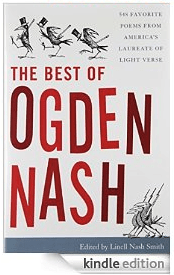





 Veracity