The Wrong Jesus for the Right Young Graduate

Greg Monette, a young scholar with Logos Bible Software and the Navigators, has written the perfect book to curious minds to sort out fact from fiction regarding who was and is Jesus.

Greg Monette, a young scholar with Logos Bible Software and the Navigators, has written the perfect book for curious minds to sort out fact from fiction regarding who was and is Jesus.

The Internet. YouTube. Your NewAge neighbor. The History Channel. Morgan Freeman’s The Story of God. Youth pastors. Skeptical friends. Parents. College professors…. Our world is simply bombarded with an untold number of conflicting voices, all telling us who Jesus really was. How do you figure out who the right Jesus is from the wrong Jesus?

If you know of a Christian young person graduating high school or college, you should know that they will be facing challenges to their Christian faith in college, the secular workplace, or just with their iPhone, scrolling through the Internet. Would not the best gift to such a person be something that will help to prepare them to better understand and defend their faith?

I recently picked up a copy of Greg Monette’s The Wrong Jesus: Fact, Belief, Legend, Truth . . . Making Sense of What You’ve Heard. Monette helps the reader to navigate many of the challenges to what the Bible teaches about Jesus, including questions about His existence, His divinity, and His message to a skeptical world.

In past years, I have recommended Truth Matters: Confident Faith in a Confusing World, by Andreas Köstenberger, Darrell Bock, Josh Chatraw. This is another excellent book along the same line (Hey, if Veracity co-blogger, John Paine, had dinner with co-author Andreas Köstenberger, it has to be good, right?). In Truth Matters, the authors focus on the popular writings of former evangelical scholar turned skeptic, Bart Ehrman. However, Monette’s book is broader in focus, looking also at archaeological issues, the miracles of Jesus, and how Jesus treated women.

Monette brilliantly defends the faith, but he is also refreshingly candid. The Bible is historically reliable, but the truth of Christianity is not dependent on our ability to figure out every detailed Bible discrepancy and fitting it in with some simplistic view of inerrancy.1 What ultimately matters is that if Jesus really is resurrected from the dead, then this changes everything.

A healthy perspective. A highly recommended book.

Notes:

1. I have written about this topic before, but I feel like this point needs to be repeatedly stressed.


When God Spoke Greek: A Short Review

When I first started to read the Bible as a young Christian, I bought myself a study Bible. As I was reading the New Testament, I would run across quotations of the Old Testament. I rarely took the time to go back and read the various Old Testament references. But for the past two years, I have taken a “deep dive” into the Book of Romans, so I decided to look up some of those cross-references…finally. What I found at first surprised me, then it bothered me, and then it captivated me.

Here is the surprise: On more than one occasion, a New Testament writer will quote something from the Old Testament. But if you compare the quotation in the New Testament with what you have in our English translations of the Old Testament, the quotations typically do not match, word-for-word.

Are these typos in our Bibles?  Apparently not.

Not sure if you believe me? Come take a little trip with me into the Book of Romans, and I can show you…

Continue reading


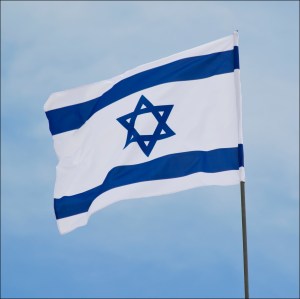
Who is a “True” Jew?

Who is a "true" Jew, according to the New Testament?

Who is a “true” Jew, according to the New Testament?

Throughout the Old Testament, generally speaking, a “Jew” is someone who is a member of God’s covenant people, bound together by the Law of Moses given on Mount Sinai, as defined by the first five books of the Bible. In contrast, a “Gentile” is someone who is not a Jew[1]. For example, Jews keep the requirement of male circumcision, whereas Gentiles do not. Historically however, those who can trace their ancestral lineage back to this special nation of people, Israel, are still considered to be “Jewish,” even if they do not keep all of the rules associated with Moses.  I have known a number of  Jewish people who would consider themselves to be agnostics or atheists. These people are “ethnically Jewish,” though not “religiously Jewish.” But this distinction often causes confusion.

So, when we think of someone who is a “Jew,” do we mean someone who is ethnically Jewish? Or do we mean someone who is a practicing or believing Jew, someone who really believes in the God of Abraham, Isaac, and Jacob? Does the New Testament help us out here?
Continue reading


Destiny Disrupted: A History of the World Through Islamic Eyes

Islamic Center in Williamsburg, Virginia

Islamic Center in Williamsburg, Virginia

Everyday on my drive home from work, I pass by a house that always catches my curiosity: There is an Islamic mosque off to the side. I have often wondered, who really goes to that mosque? Why do they go? What goes on inside?

Over the past few years, I have had the privilege to make friends with some young men who attend that mosque. They are a nice bunch of guys. How much do they really know about Jesus? I am not sure yet.

Before I met these guys, I never knew that much about the history of Islam. So I thought it might be best to take some time to learn. What is the bigger story behind how a group of young men from the Islamic world ended up in my town? That is how I stumbled upon an Audible.com audiobook by Tamim Ansary, Destiny Disrupted: A History of the World Through Islamic Eyes.
Continue reading


On Disputable Matters

Accept the one whose faith is weak, without quarreling over disputable matters.(Romans 14:1 NIV, photo credit: Anglicans Ablaze)

Accept the one whose faith is weak, without quarreling over disputable matters.(Romans 14:1 NIV, photo credit: Anglicans Ablaze)

In Romans 14 through the first half of Romans 15, the Apostle Paul is encouraging the church in Roman not to quarrel over “disputable matters.” The church in Rome was divided between the Jewish Christians, who emphasized adherence to the Law of Moses, and the Gentile Christians, who emphasized greater liberty. Here, Paul gives us an excellent model of how to work through differences that come up in the Christian community, seeking to love one another, even when we do not agree.

However, the “elephant in the room” about this concerns defining what is a “disputable matter.” It seems that everyone has a different list of what they think is disputable and what is indisputable. So how is this fundamental question resolved?

Continue reading