
Category Archives: Witnesses

Chi Rho

Veracity BlavatarIn the early days of Christianity, believers often paid the cost of discipleship with their lives.  Estimates are that 700,000 people died in the Roman Colosseum, where Christians were slaughtered for amusement at midday.  Followers of Jesus adopted Chi Rho as a christogram to symbolize their faith in Christ.   When choosing a graphical symbol for this blog the decision was pretty easy.

Depending upon where you live and your circumstances, life for a contemporary Christian can be quite comfortable.  While persecution of the Christian church is very real, in my corner of the world our faith is seldom called into the midday arena.  But I had dinner recently with the Reverend John Yates, whose faith was tested, and who paid a great price for his beliefs.

Without going down rabbit trails, the crux of the matter is a highly publicized dispute between the Episcopal Church and several Virginia congregations who took issue with the “intellectual integrity of faith in the modern world.”  The breakaway congregations felt that Episcopal leadership was acquiescing to contemporary culture instead of holding true to the Christian faith.  At the Chapel we have a Woodwardism (sayings attributable to Dick Woodward) that applies here: “Is the Church a thermostat or a thermometer?”  In other words, is the Church telling us what the temperature is, or is the Church setting the temperature?

The decision to leave (quoted below from a 2007 Washington Post article) resulted in the Diocese filing a lawsuit to regain the buildings and assets of the breakaway congregations.  The lawsuit dragged on for years, and cost millions of dollars in legal fees.  The court decided first in favor of the congregations, then reversed itself in favor of the Diocese.  John Yates’ The Falls Church congregation will have a final on-site service then vacate the premises on May 13, 2012.  They will then meet in rented facilities while they work out a long-term plan for their church house.

My purpose in blogging about this issue is not to cast stones at the Episcopal leadership, or to inflame anyone.  I just find it encouraging that in an age of stupendous cultural compromise there are believers willing to die on mountains for their faith.  How exciting for John Yates’ congregation.  I envy them in a way because church will be more expensive and less comfortable for quite some time, but what a privilege to know that your leadership is up to the task.  God bless.  Chi Rho.

Why We Left the Episcopal Church

By The Rev. John Yates and Os Guinness

The Washington Post
Monday, January 8, 2007

When even President Gerald Ford’s funeral at Washington National Cathedral is not exempt from comment about the crisis in the Episcopal Church, we believe it is time to set the record straight as to why our church and so many others around the country have severed ties with the Episcopal Church. Fundamental to a liberal view of freedom is the right of a person or group to define themselves, to speak for themselves and to not be dehumanized by the definitions and distortions of others. This right we request even of those who differ from us.

The core issue in why we left is not women’s leadership. It is not “Episcopalians against equality,” as the headline on a recent Post op-ed by Harold Meyerson put it. It is not a “leftward” drift in the church. It is not even primarily ethical — though the ordination of a practicing homosexual as bishop was the flash point that showed how far the repudiation of Christian orthodoxy had gone.

The core issue for us is theological: the intellectual integrity of faith in the modern world. It is thus a matter of faithfulness to the lordship of Jesus, whom we worship and follow. The American Episcopal Church no longer believes the historic, orthodox Christian faith common to all believers. Some leaders expressly deny the central articles of the faith — saying that traditional theism is “dead,” the incarnation is “nonsense,” the resurrection of Jesus is a fiction, the understanding of the cross is “a barbarous idea,” the Bible is “pure propaganda” and so on. Others simply say the creed as poetry or with their fingers crossed.

It would be easy to parody the “Alice in Wonderland” surrealism of Episcopal leaders openly denying what their faith once believed, celebrating what Christians have gone to the stake to resist — and still staying on as leaders. But this is a serious matter.

First, Episcopal revisionism abandons the fidelity of faith. The Hebrew scriptures link matters of truth to a relationship with God. They speak of apostasy as adultery — a form of betrayal as treacherous as a husband cheating on his wife.

Second, Episcopal revisionism negates the authority of faith. The “sola scriptura” (“by the scriptures alone”) doctrine of the Reformation church has been abandoned for the “sola cultura” (by the culture alone) way of the modern church. No longer under authority, the Episcopal Church today is either its own authority or finds its authority in the shifting winds of intellectual and social fashion — which is to say it has no authority.

Third, Episcopal revisionism severs the continuity of faith. Cutting itself off from the universal faith that spans the centuries and the continents, it becomes culturally captive to one culture and one time. While professing tolerance and inclusiveness, certain Episcopal attitudes toward fellow believers around the world, who make up a majority of the Anglican family, have been arrogant and even racist.

Fourth, Episcopal revisionism destroys the credibility of faith. There is so little that is distinctively Christian left in the theology of some Episcopal leaders, such as the former bishop of Newark, that a skeptic can say, as Oscar Wilde said to a cleric of his time, “I not only follow you, I precede you.” It is no accident that orthodox churches are growing and that almost all the great converts to the Christian faith in the past century, such as G.K. Chesterton and C.S. Lewis, have been attracted to full-blooded orthodoxy, not to revisionism. The prospect for the Episcopal Church, already evident in many dioceses, is inevitable withering and decline.

Fifth, Episcopal revisionism obliterates the very identity of faith. When the great truths of the Bible and the creeds are abandoned and there is no limit to what can be believed in their place, then the point is reached when there is little identifiably Christian in Episcopal revisionism. Would that Episcopal leaders showed the same zeal for their faith that they do for their property. If the present decline continues, all that will remain of a once strong church will be empty buildings, kept going by the finances, though not the faith, of the fathers.

These are the outrages we protest. These are the infidelities that drive us to separate. These are the real issues to be debated. We remain Anglicans but leave the Episcopal Church because the Episcopal Church first left the historic faith. Like our spiritual forebears in the Reformation, “Here we stand. So help us God. We can do no other.”

The Rev. John Yates is rector and Os Guinness is a parishioner of The Falls Church, one of several Virginia churches that voted last month to sever ties with the Episcopal Church

Agnes Gonxha Bojaxhiu

The Apostle Paul was scrawny, hard on the eyes, not a good speaker, and constantly paid the price for his style and message.  He had lots of scars and baggage.  He made mistakes.  He considered himself, “…less than the least of all God’s people .”  And yet he was one of the most influential people who ever lived.  Two thousand years after his death, his letters are among the most reproduced documents in the history of mankind.

In 2 Corinthians 10 Paul responded to attacks against his ministry and his person.  He acknowledged that he was “timid when face to face” (v. 1),  and  that people were saying, “His letters are weighty and forceful, but in person he is unimpressive and his speaking amounts to nothing” (v. 10).

It occurred to me this week, while thinking about Paul, that I had seen and heard someone who fit the description of being a less-than-impressive speaker, but having a powerful message that touched mankind.  Her name was Agnes Gonxha Bojaxhiu, and she was often called ‘diminutive’.  And like Paul she had detractors.  But she had the courage of her convictions and she was able to demonstrate the mercy and love of Jesus Christ in incredible ways.  And for that she was memorable.

In 1994 she gave a speech at the National Prayer Breakfast, attended by President Bill Clinton and a room full of dignitaries.  I remember that I could barely see her head above the podium, could barely make out what she was saying above the acoustics in the room, and that nevertheless she received a standing ovation.  It’s difficult to watch her speech (below) in some respects because she was not an impressive speaker.  But don’t miss the last minute when she stepped down from the podium.

So what did she say?  Here’s the impressive part—her transcript.  Many parts of her message confronted the views of the powerful people in the room, but she delivered it passionately anyway, to please an audience of one.  She had lived through unspeakable suffering to develop her message.  It’s the living Gospel ,with mandates and complete conviction.  Mother Teresa really walked the walk.  And she had a lot in common with the Apostle Paul.

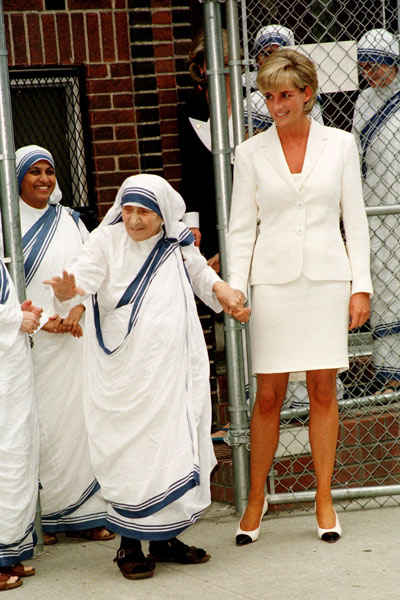
Here’s a photograph of two renowned women—one was a beautiful lady who brought peace and joy to millions of people, and the other was a princess.

Princess Diana Meets Mother Teresa

Princess Diana Meets Mother Teresa


Gary Carter…the rest of the story.

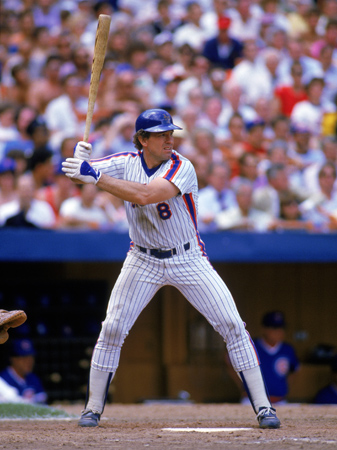
Gary CarterWith all due respect to the thousands of well wishers, reporters, editors, professional athletes, and media pundits who have paid tribute to baseball great Gary Carter, the coverage of his passing (on February 16, 2012) comes up short of getting to the heart of this great man.

Gary Carter was one of the best catchers and baseball players to ever pick up a ball and bat. He played hard, played hurt, achieved legendary success, and is remembered for many great achievements on the diamond. The tributes in the media are quick to point out that he was never without a smile on his face, would go to great lengths to please the fans, was a fierce competitor, and that he played through great physical adversity (ultimately nine knee surgeries) with unparalleled enthusiasm. He was lambasted at times for being an energetic goody-goody, and skeptics doubted that anyone could genuinely be that happy. His 18-year professional career included MVP honors in two All-Star games, a World Series title, Gold Glove and Silver Slugger awards, and all the rewards that go with that kind of performance. Gary was unquestionably one of the best clutch performers in all of sports. He was enshrined in Cooperstown in 2003.

Marion, David, Neil and I were there to hear his induction speech, and were impressed with how he used this opportunity to acknowledge his Lord and Savior. We knew he would, but were nevertheless somewhat surprised at the degree to which the news media cut out his God statements. Through the advent of Google News, we can follow the thousands of articles and videos that have been posted on the Internet in his honor this week. While they have been overwhelmingly kind in pointing out what an amazing, beloved athlete and humanitarian he was, very few articles have gone beyond mentioning that he was a man of strong faith.

Gary’s battle with cancer was chronicled by his adoring daughter Kimmy Bloemers on her CaringBridge blog, which now contains thousands of guestbook tributes. If you want to understand Gary Carter, it won’t take long reading this blog to figure out what made him tick.

Over the past few days I’ve read much more than I care to admit about his passing. He is finally pain-free, and in Heaven where he belongs.  Reading the online postings elicited a flood of family memories. Going to a cousin’s Ontario wedding in 1981 during the playoffs and seeing lots of radio earplugs in use during the service—that’s when it started for me.  I caught the fever.  So many games watched with Mom, Dad, Pete, Marion, Neil and David (we often had family dinners for special games). Seeing Gary play in Norfolk on a rehab assignment and having to listen to his game-winning home run on the radio driving home because Neil was young and overheated. All of the 1986 season. Jumping out of bed in the mornings (in pre-Internet days) to read the box scores to see how Gary Carter did. Going to work at my father’s office and having Dad tell me gleefully as soon as I walked though the door that Gary Carter had just hit five home runs in two consecutive games. Putting a Mets World Series commemorative baseball in the neonatal isolette when David was born.  Cheering the two home runs he hit in Game 4 of the World Series against Boston (the one that left the park and bounced down Lansdowne Street was my personal all-time favorite).  There are many, many Gary Carter baseball memories woven through the fabric of our family.  But there is a lot more to the impact he has had on us than baseball.

Gary wrote in his books about not wanting to be vague or wishy-washy about acknowledging Jesus Christ as his Lord and Saviour.  The man used the ‘J’ word on air, naturally, and without fear of how it would be received during the greatest moments of his career. He wasn’t the slightest bit intimidated to thank Jesus Christ when the microphones were on (after all, whom did Gary Carter have to impress?).

I had the pleasure of meeting Gary in 1993 and inviting him to speak at our Williamsburg Mayor’s Prayer Breakfast.  I spent time with him on three occasions, and introduced him at the breakfast.  He was the real deal, as gracious as anyone could ask, while being mobbed for autographs everywhere he went.  I was able to relay to him a great compliment that he hadn’t yet heard.  In a 1990 game playing for the Giants, Gary got five hits including a home run, and was named the player of the game by the announcers, who included Ray Knight, his former Mets teammate.  Ray made the statement on air that Gary Garter and Johnny Bench would be counted among the best catchers to ever play the game, and that he (Ray) had played with both of them.  “Johnny Bench did it all on natural ability and Gary Carter did it all with hard work,” Ray said during the telecast.  What struck me most was how comfortable and genuine Gary was.  His Bible was worn from use.  While sitting in the Norfolk Airport terminal I remarked about the ink all over his hands and asked how many autographs he had signed that day. “A lot,” he sighed, but pleasantly added, “If you brought something I’ll be happy to sign it.”  I said I thought it was rude to ask for autographs and hadn’t brought any memorabilia.  He had a special card printed that contained his testimony, and would stuff them in his Bible to sign and hand out when people asked for an autograph.  He was down to his last one, asked for the names of my sons, and signed it to both of them.  Two days later a large package arrived in our mailbox with signed cards and 8×10 autographed glossy photographs.  And as impressive as all that was, there was one comment from him several months later that speaks to what this man was all about.

A couple of months went by while we finalized the arrangements for the breakfast.  Gary flew up from Florida and met Marion, Neil, Mom, Dad, and about 450 others at the breakfast.  Upon meeting Marion, he immediately remarked that he too had married his high school sweetheart.  He had absolutely no reason to remember that Marion and I met in high school, but ordinary people really mattered to him and he listened carefully to what they had to say.  You can find countless stories like this in the online tributes.  Gary made people feel special by caring about them.

Ironically (or not), a Montreal rapper has captured the essence of Gary Carter, and I think I know how he feels.  All I can say is “God bless, catch ya later, and merci beaucoup!”

P.S. Bill Warrick drove Gary to the airport at breakneck speed to catch his flight home.  We were running late because of all the autograph requests, so we grabbed the remaining unsigned books and ran for the airport.  Gary finished every last autograph while they loaded his plane.  Even airport security personnel came over with napkins for him to sign.  He graciously and energetically made the time count.