Category Archives: Witnesses

A Year of Biblical Doubting #1

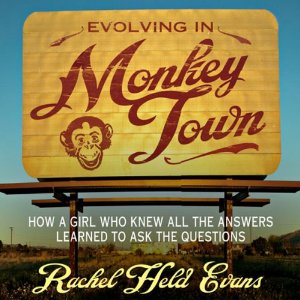
Rachel Held Evans first book.  She's young, church-going.... and not very sure about her faith.   Does she represent the future of "evangelical Christianity"?

Rachel Held Evans first book. She’s young, church-going…. and not very sure about her faith. Does she represent the future of “evangelical Christianity”?

How do you handle doubt? Some want to shove it under the rug. Some, frankly, never really go through serious periods of doubt. Others wallow in their confusion. Some simply rebel as an escape mechanism. Others are driven to God’s Word, study, prayer, and fellowship to find answers. Where do you go when you begin to second guess everything, if you ever do?

Part of what we are trying to do with Veracity is to provide tools to help folks to get into God’s Word so that God’s Word can get into us. What resources are available that can equip us to better understand our faith so that we can better serve the Lord in our worship and witness? However, there are times where doubt can plague us in our spiritual journey and threaten to derail us spiritually. Perhaps an explanation about the Bible we once heard no longer makes sense anymore. Or is there some assumption that we have made about the Christian life that no longer appears to be working? Perhaps we expected God to do something and things did not turn out the way we think it should.

Doubt is an enormous topic to tackle in a single blog posting. So I will be content for now to give you a partial case study.
Continue reading


Rob Bell and Don Draper – The Ad Man’s Gospel

As I was finishing up my blog post comparing songwriter Mark Heard to popular evangelical author Donald Miller, I was trying to figure out how to handle Rob Bell. Bell has been the most explosive figure in progressive evangelicalism today, though within the past few years he has gone out even further than many of his progressive evangelical colleagues are willing to endorse. Theologically speaking in my view, a confused ecclesiology is what unites the contemporary triune fellowship of Bell, Miller, and Brian McLaren. It is difficult for me to say this, because while I still know that these folks love Jesus and I can still learn some things from them, there have just been some other things there that continue to bug me. However, there could be more to the analysis. I think I have stumbled onto an idea, but I had to look “across the pond” to find it.

While some evangelicals in the U.S. still puzzle over the Rob Bell storm in recent years, a fire is currently raging in Britain. Recently, a debate between progressive evangelical Steve Chalke and more classic evangelical Andrew Wilson has intensely engaged thoughtful Christians. In reflecting on the debate, Andrew Wilson pointed to a specific problem in Steve Chalke’s argumentative method. In a nutshell, Wilson claims that Chalke sets up a type of “straw man” noting some extreme case, and therefore reacting to it with a different extreme case as THE solution, without acknowledging that there might be more moderate and alternative solutions that are being sidestepped. Wilson likens this to what Rob Bell is doing as a communicator of the “Ad Man’s Gospel”. Strangely, however, I do not think Rob Bell is alone in this. You can find folks equally on the more “fundamentalist” side of the evangelical movement who do EXACTLY the same thing in reverse. Wilson cites this post by Alastair Roberts as evidence. It says it better than I can.

On the downside, it does make me seriously question how viable the Internet; e.g. blogging, serves as an effective vehicle for thoughtful communication and dialogue. I am still doing it, but I have my doubts. Veracity readers: Are Andrew Wilson and Alastair Roberts right?

If you follow the whole line of thought, you will never think about Oldsmobiles the same way again….

Alastair Roberts's avatarAlastair's Adversaria

I find Rob Bell fascinating.

Sure, I disagree with his theology, but when it comes to engaging communication, the man is virtually without peer.

If you want to see a masterpiece in clever communication, look no further than a promotional video for a Rob Bell book.

This is Bell in his element.

Attention-grabbing.
Engaging.
Dynamic.

Take, for instance, this recent offering:

The dislocated camera shots.
The fractured statements.
It’s all there.

You start with the evocative image of the Velvet Elvis, reminding you of that summer you read through that book as a teen.

How that book resonated with you at the time!

Rob begins by telling us that a lot of people in our culture ‘can’t do the God-sort of belief system or idea.’ A ‘very, very popular movement’ tells us that this is all that there is. However, lots and lots of people, when they experience vaguely defined…

View original post 3,294 more words


Following the Emerging (Jazzy Blue) Heard

Back some years ago, one of my favorite singer-songwriters was (and still is) a guy named Mark Heard. Long before “Contemporary Christian Music” became an industry, Mark Heard was with his guitar singing folk songs about life and Jesus. But Mark was out there on the edge. In those days, his style of music was not as acceptable in the mainstream of evangelical Christianity as it is today. Yet neither was he welcome that much in the secular world of music.

From his 1981 album, Stop the Dominoes, you can get a flavor of his existential angst in the song “Stuck in the Middle“:

Well my brothers criticize me
Say I’m just too strange to believe
And the others just avoid me
They say my faith is so naive
I’m too sacred for the sinners
And the saints wish I would leave

Here is one of my favorite Mark Heard songs, “Dry Bones Dance“, harkening back to the vision of the prophet Ezekiel. Someone has put together a collection of all of Mark Heard’s lyrics, including Dry Bones Dance if you want to read along as he sings.

From time to time, I love to spin up one of Mark Heard’s albums, but over the years I have come to see also a darker side to Mark Heard’s spirituality. And I think a brief look at his story can show us how often stories like his can get repeated today and relatively few seem to notice.
Continue reading


To The Least of These: Phoebe Palmer

It has been said that behind every successful man is a remarkably great woman who has made that man who he is. How true that is! I do not know how I qualify, but as a married guy myself, I am surely thankful for my bride and all that she does to support me!

Women have often been sadly neglected in the history of church. But the truth is that the church never would have grown as it has apart from the contribution of women raised by God to serve His purposes. These women need to be remembered, honored, and celebrated.

One of the greatest forgotten women in the church was the 19th century Phoebe Palmer. The following blog post in our Lenten series gives you an introduction to this extraordinary woman….

lathamta's avatarLessons in Lent

Phoebe Palmer (1807-1874). Evangelist and Social Reformer. Phoebe Palmer (1807-1874). Evangelist and Social Reformer.

On the night of July 29, 1836, Phoebe Palmer had rocked her 11-month-old daughter to sleep, and placed her in her crib. A few minutes later, a carelessly handled oil lamp landed in the crib, pouring hot and burning oil on the child. Within a few hours, the child was dead, and Phoebe Palmer’s life was in bitter agony. This was her third child lost in infancy. Why had God allowed this to happen? This may sound harsh to us today, but Phoebe wondered if perhaps she had loved her child too much, making her daughter into an idol. A year later, Phoebe had a profound encounter with Jesus Christ. Her “heart was emptied of self and cleansed of all idols” and she had come to know the Lord as being her “ALL IN ALL”.

Phoebe Palmer was the firebrand of the 19th…

View original post 347 more words


Bonhoeffer’s Cost of Discipleship

Dietrich Bonhoeffer understood what it was to take up the cross and follow Jesus, even if it meant stepping out of the norm of what Christians were expected to do. As a young pastor and seminary professor in Nazi Germany, Bonhoeffer knew that Hitler’s regime was setting up an idol to be worshipped, realizing that the German Christian community was getting hookwinked by the Nazis. Why did this Christian pacifist turn into a co-conspirator attempting to assassinate Hitler?

The following blog post from our church’s Lenten series reflects on the cost of discipleship that Bonhoeffer had to calculate. Granted, I am painting the standard portrait of part of Bonhoeffer’s life. Questions still abound: Was Bonhoeffer right in what he did in trying to assassinate Hitler? (One of my theological heroes, T.F. Torrance, says “NO”, biographer Eric Metaxas says “YES”). At least one historian disputes that Bonhoeffer ever gave up his pacifist beliefs at all! Did he abandon his evangelical faith in the Tegel prison, accusing the evangelical church with being complicit with genocide? Or was he strengthened in his faith through his ordeal for the sake of the Gospel? The definitive answers to these questions remain buried in some unmarked grave at the Flossenburg concentration camp.

As an introduction, author Jim Belcher gives us a glimpse of a trip he took with his family to visit the concentration camp at Flossenburg, where Dietrich Bonhoeffer spent his final twelve hours…

lathamta's avatarLessons in Lent

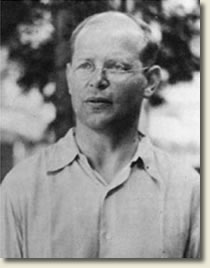
Dietrich Bonhoeffer in the courtyard of the Tegel military prison Dietrich Bonhoeffer in the courtyard of the Tegel military prison

Dietrich Bonhoeffer was not able to sleep very well for nights.

Bonhoeffer had just arrived in New York in 1939. At the urging of
friends, the young German evangelical theologian was able to cross the
Atlantic ocean, giving him sanctuary from the impending doom that
would become World War 2, as instigated by Hitler and the German Nazi
movement. In the safety of good fellowship, Bonhoeffer would have
been spared the terrors of war and enjoy a life of relative ease.

Yet Bonhoeffer was troubled in his soul.

The difficulty was that Bonhoeffer knew that the lives of European
Jews were in dreadful danger. Two years earlier, he had written a book
entitled, The Cost of Discipleship. This book was an
extended exposition of the Sermon on the Mount, from Matthew 5-7, part
of the focus of our sermon…

View original post 362 more words