Category Archives: Witnesses

Martyn Lloyd-Jones: Logic on Fire

Martyn-Lloyd Jones (1899-1981) was the most influential British preacher of the 20th century, rivaled perhaps by only John R. W. Stott. As a young man from Wales, Jones had trained to be a medical doctor, but wrestled with a calling to preach. View an interview with him here on Veracity.

Upon taking the pulpit at Westminster Chapel in London, Jones became known as a scholarly yet fiery, verse-by-verse expositor of the Bible. In his series on the Book of Romans alone, he delivered at least 366 sermons on the 16 chapters of this great letter by the Apostle Paul. That’s a good six years plus of preaching week by week just on one book of the Bible!

He was not afraid to ruffle some feathers. He was thoroughly Reformed in his theology, an unapologetic critic of Arminianism and champion of the sovereignty of God, and he showed great restraint in voicing his frustration with dispensationalism. Yet he was a man of controversy of his own making, too, criticizing other evangelical leaders who were not severe enough in distancing themselves from more liberal wings of the church, while ironically embracing a tentative yet curious acceptance of a more charismatic form of Christian faith.

Nevertheless, Martyn Lloyd-Jones was passionate about helping believers understand God’s Word and live it out at the most profound level. In an age where many churches shy away from verse-by-verse teaching in favor of more thematic approaches to pulpit teaching, evangelicalism today would do well to learn from the example of the “Doctor,” even if one does not fully find themselves in agreement with all of Martyn Lloyd-Jones teachings, many of them having been preserved in audio form by the MLJ Trust.

A new film is out now documenting this man’s life: Logic on Fire, available here.


Tenacity: Mel Rosche

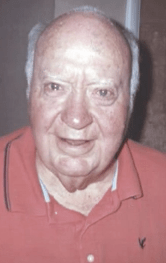
Melvin G. Rosche. February 27, 1921 to March 16, 2015. Photo: Brigette Weis

Melvin G. Rosche. February 27, 1921 to March 16, 2015. Photo: Brigette Weis

Several weeks ago, I lost my mother to cancer. One of the first people I talked to after my mother died was my former Young Life leader, Mel Rosche. At 94 years of age, Mel took my hand and prayed with me and cried with me. Mel Rosche was one of the most remarkable people I have ever known.

A farm boy growing up in rural Illinois, Mel Rosche went off to serve as a pilot in the Army Air Force during World War II. On a bombing mission out of Italy in December, 1944, Mel’s plane was shot down over Hungary. I remember as a high school kid sitting at Mel’s feet, enraptured as he told us about being picked up by some Hungarians out of a corn field in his parachute, when he pulled out a Sunday School picture of Jesus from his wallet, whereupon his captors realized that Mel was a Christian. Several months later, while on a train bound towards a German camp for prisoners of war, the train stopped so that the prisoners could see Werhner von Braun’s V-2 rockets being fired off, presumably against the British. Little did Mel know at that time that he would have the opportunity to work near von Braun at NASA in the 1960s in the development of the United States space program. Mel’s prisoner of war camp was eventually liberated by the Soviet army.

Mel came back to the States after the war to marry Ruth, his high school sweetheart. Mel and Ruth moved to Virginia with his degree in aeronautical engineering and served in NACA, which eventually became NASA, and raised two children along the way. Mel’s career was fascinating as he helped to lead a team of structural engineers in designing and testing spacecraft that could carry people back and forth to the moon. One of his most famous colleagues for a brief period was the indefatigable visionary Buckminster Fuller.

While living in northern Virginia, the Rosches met Scott Dimock, an area director for Young Life, a ministry whose mission is dedicated to reaching disinterested high school kids with the Good News of Jesus Christ. When Mel and Ruth moved to Williamsburg, near where Mel was working at NASA Langley Research Center, they met up with a former Young Life student, Bill Clark, then a young man attending the College of William and Mary in 1972. Following Clark’s leadership, they started the ministry of Young Life in the Williamsburg, Virginia area (currently led some 43 years later by area director Nathan Havasy).

When Bill Clark graduated from William and Mary in 1974, Mel had a bit of a crisis. What would become of the Young Life outreach to teenagers that they had started? Well, just as Martin Luther King Jr. had his “kitchen table” experience which led to his commitment to the civil rights movement, Mel Rosche had a “kitchen table” experience of his own. Mel’s experience might not have been as dramatic as King’s, but it still impacted a whole generation of people. As Mel sat and prayed, he got a clear sense that God had called him to be a missionary to teenagers. God gave Mel a love for high school kids.

Over the next few years, Mel took early retirement from government service so that he and Ruth could dedicate their lives to loving teenagers for Jesus Christ. Mel would invite kids to come over and play pool in the Rosche’s basement, and he would teach dozens of young people how to water ski off of his boat. Countless young people were impacted by this man and his determination to answer the call of God in his life.

By 1979, I had received dozens of invitations to attend a Young Life meeting in high school. I never showed any interest. But then one day, a friend of mine told me that there were good-looking girls at the Young Life club. So I went. Sure, there were some good-looking girls there. But I was really intrigued by this “old” guy with white hair. Here was this retired NASA engineer standing in front of a group of rowdy teenagers, trying to lead the group in singing some song terribly off-key.

Mel could not hit a note even if it was painted on the side of a barn. What was it that would possess this man to hang out with a bunch of rascally teenagers?

I kept coming to Young Life meetings, and I listened as Mel shared stories of Jesus from the Bible. Even though I had grown up in a church, I was filled with a lot of doubts and questions about the Christian faith. But within a few months, I continue to listen and learn, and I was drawn in.

I even got up on water skis myself.

Later when I was in college, I would come back to ask Mel more questions. I was going through a crisis of faith. Caught up in the academic rigor of a secular university, a number of well-intentioned Christian friends of mine had told me that I basically had to choose between the Bible and science, between following after Jesus and pursuing the life of the mind. One of the issues at stake was the Creation vs. Evolution controversy. After I poured out my anguish with Mel, I listened to his story of when he was about my age. Growing up in the post-Scopes Monkey Trial era in the 1930s, the question of evolution dominated Mel’s mind. As Mel put it, “I got so tired of thinking about it, I asked God, my junior year [in high school] to free me from it. He did and still has. When I saw that He had answered my prayer, I asked Jesus Christ to be my Savior.

Mel’s answer impressed me so much. It was not theologically sophisticated, but it was genuine, honest and simple. For Mel, there was no conflict between accepting the findings of modern science and accepting the Biblical testimony about the Risen Jesus. Mel was determined not to let anything stand in the way between him and his love for God.

Mel eventually left Young Life staff in the mid-1980’s, training my dear friend, Charly Franks, to take over the leadership of the local ministry. But when Charly left Williamsburg, Mel stayed on Young Life committee and mentored me when I was the local ministry staff.

Soon, Mel’s life changed dramatically when he began to have difficulties standing. Not too long after that, his partner for many, many years, Ruth, died, and Mel suffered more health difficulties. Mel had been beat up pretty bad by all of these trials in his life.

But this did not stop Mel. His passion for young people found a new expression through the ministry of Heart for Orphans, an outreach in Ukraine with a mission to provide small, family-style transition homes to teens who have graduated from orphanages.

As Mel entered the last decade of his life, he was beset with continued health problems. But Mel’s attitude was incredibly inspiring. He would always say that he “never felt better.” He was a blessing and shared this blessing with everyone around him. At the retirement community where he lived, to date he is the only person to have been sent into “skilled nursing” care, only to return back to assisted living… not simply once, but twice!

That is why I can say that the best word to describe Mel is tenacity. Once Mel got a grip on something, he could never let go, whether it was a joyful passion for teenagers, his love for his children and grandchildren, or even his health. After every setback, he would always bounce back. But most importantly, Mel had an incredibly tenacious grip on the grace of God.

Whether or not I ever live to be 94 years old, I want to be just like Mel Rosche.


Eulogy for My Mother

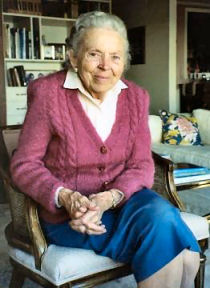
Anne Jackson Morledge (November 6, 1928 - February 24, 2015)

Anne Jackson Morledge (November 6, 1928 – February 24, 2015)

My mom died a few weeks ago.

Anne Jackson Morledge was 86 years old, without a doubt the most influential person in my life. Humanly speaking, she was my anchor.

She had been diagnosed with a brain tumor resulting from a stage IV glioblastoma cancer. The tumor was surgically removed, but the surgeon carefully warned us that there was a 100% chance of recurrence. In the weeks after the surgery, I devoured Siddartha Mukherjee’s The Emperor of All Maladies in an attempt to understand this dreadful disease of cancer. Living only twenty minutes from the nursing facility where my mom was, I visited her almost every other day. We had many in-depth conversations as she progressively declined. The wonderful gift provided by the surgery is that it gave time for family and friends to come visit my mom and say good-bye. In the end, she died peacefully in her sleep, with the immediate cause being complications due to pneumonia.

My mother lived a wonderful life, and she was a tremendous blessing to many.

A number of family and friends have requested that I send them the text of the remembrance I gave yesterday at her memorial service. My remarks were framed within the Episcopal Rite II liturgy for the burial of the dead, part of Thomas Cranmer’s Book of Common Prayer, a powerful testimony to the Christian hope. My Veracity co-blogger, John Paine, convinced me that I should publish it here on the blog, commenting that the tensions I highlighted were refreshingly honest:
Continue reading


Selma, 1965: Where Were the Followers of Jesus?

It was March 7, 1965, a day remembered in the civil rights movement as “Bloody Sunday.” A group of African Americans were planning to march from Selma to Montgomery, Alabama to demand that they be given the legal right to vote without any unnecessary encumbrances. Six hundred men and women began their march across the Edmund Pettus Bridge, only to be greeted by a line of state troopers waiting for them with billy clubs and gas masks, and members of an all-white county posse, composed of men who had been deputized to participate only the night before. The non-violent marchers were told to go back home or “go to your church.”  Television cameras, such as these scenes from CBS, were broadcast around the world showing how the marchers were run over and beaten by “law enforcement.”

In the 2014 film by Ava DuVernay , Selma, the general outline of the story is depicted, showing how the marchers were eventually able to complete their march to Montgomery, which resulted in President Lyndon Johnson urging Congress to pass the Voters Rights Act of 1965. Critics have made much of DuVernay’s negative portrayal of President Johnson as being directly antagonistic towards the efforts of Martin Luther King, Jr., so one might complain of the tendency to oversimplify the narrative regarding what happened in Selma, and King himself was far from perfect.

Nevertheless, as I was watching the film, I kept thinking to myself, where were the followers of Jesus on that “Bloody Sunday” morning? As the state troopers were putting on their gas masks, they acknowledged that among the marchers were many Christians. And yet, I wonder where were the white Christians? Were the white Christians of Selma all in their churches that morning worshipping God? Upon hearing the television reports, did they come out and lend a hand to their African American brothers and sisters in the Lord as they were bleeding in the streets?

There were many who saw the events of “Bloody Sunday” unfold before them on their television sets across the world, and some responded by traveling to Alabama to participate in a future attempted march. One of these was a Unitarian Univeralist minister from Boston, James Reeb. Much like the Samaritans in first century Palestine, who were viewed in John 4:19-25 as theologically suspect with their call to worship on Mount Gerizim instead of the correct place, Jerusalem, Unitarian Univeralists fifty years ago as well as today are viewed as being theologically suspect among evangelicals. Yet why was it that someone like James Reeb became a martyr for the civil rights movement when he was beaten to death by white supremacists in Selma, and not a more theologically-sound born again Christian? Is it fair to say as in the story of the Good Samaritan in Luke 10:25-37, that James Reeb was like a modern day “Samaritan?”

Much has changed in fifty years, but it is the silence of the predominantly white, evangelical church during those tumultuous years that most disturbs me. In light of the teaching of Scripture, the silence is deafening. How was it that the evangelical church had became so complicit in the sin of racism, compromising their witness for the Gospel?

They had their Bibles. They had the message of truth and reconciliation.

Where were these “followers of Jesus?”


Marcus Borg: Friendly Liberal Critic

One of the most well-known liberal critics belonging to the Jesus Seminar died on January 21, 2015, Marcus Borg. Marcus Borg was an influential writer in liberal Protestant circles, such as in my late father-in-law’s church in the last years of his life, but with respect to Borg’s conservative evangelical critics, like Dallas Seminary’s Darrell Bock, Borg was a respectful and friendly dialogue partner.

My first encounter with Marcus Borg was in a highly recommended book he co-wrote with Anglican scholar N.T. Wright, The Meaning of Jesus: Two Visions. N.T. Wright defended an evangelical orthodox position affirming the virgin birth of Jesus, the divinity of Christ, and the bodily resurrection of the Lord. Marcus Borg denied ALL of these doctrines of the faith, but he nevertheless endeavoured to identify himself as a Christian, something that most evangelicals find incomprehensible. Borg aligned himself with the Jesus Seminar, which was notoriously known to gather together regularly to “vote” on which statements in the Gospels were actually authentic or inauthentic. Evangelical critics of the Jesus Seminar noted that was basically like using a democratic system of decision-making in order to establish what is true versus what is false, relying on the wisdom of man as opposed to the wisdom of God as revealed in inspired, sacred Scripture. Nevertheless, Borg was always rather cordial in his disagreements with his conservative evangelical dialogue partners.

Gospel Coalition author and blogger Derek Rishmawy best describes the Protestant liberal mindset as of “those who can at best recite the creeds with their fingers crossed. Having embraced the various presuppositions of Enlightenment and postmodern thinking, they are skeptical of supernatural claims and often doubt the very idea of objective truth.” Those who identify themselves as “liberal Christians,” like Marcus Borg, can say that they believe in Jesus, but when honestly challenged, their doubts regarding the supernatural get in the way of them having a full confidence of the genuine reality of a personal Lord and Savior in their lives…well, maybe the theologically sophisticated like Marcus Borg can somehow convince themselves, but in my experience the typical pew sitters in a liberal congregation under the influence of Borg and his followers find it difficult to overcome their doubts.

I, on the other hand, contend that there are other ways to address the question of doubt, as opposed to the way Borg sought to do it. While I am sympathetic that doubt is always something that challenges us in our faith, we can nevertheless move through our doubts and have the confident assurance that “If the Spirit of him who raised Jesus from the dead dwells in you, he who raised Christ Jesus from the dead will also give life to your mortal bodies through his Spirt who dwells in you.” (Romans 8:11) … and this is no mere “spiritual” resurrection. It is bodily full and real! Seeking to move through our doubts is part of the journey of personal discipleship behind the purpose of this Veracity blog.

In honor of this friendly liberal critic, it might be worth observing this classic debate between William Lane Craig and Marcus Borg on the topic, “Did Jesus Rise from the Dead?” Though I do not agree with Marcus Borg, it is nevertheless important to learn from this exchange how to challenge this way of thinking in a manner that is gentle and respectful.