
Martin Luther King Jr.’s “Mountaintop,” saturated with Scripture, the night before his death is chronicled by Justin Taylor at the Gospel Coalition, including a recording of the full speech. Here is the last minute of that speech:
Category Archives: Witnesses
“Chrislam,” Rick Warren, and the Internet Lie That Never Dies
Christians are called to be people of the truth (John 17:17). Sadly, some Christians have a persistent habit of misrepresenting the truth, by the way they (mis)use the Internet.
Take the example of pastor Rick Warren and the supposed “Chrislam” controversy. Rick Warren is the pastor of Saddleback Church in Southern California. For years, Rick Warren has taken an interest in building relationships with Muslims, so that they might hear the Gospel of Jesus. As Rick Warren says, “You cannot win your enemies to Christ. You can only win your friends.” Yet as a pastor of one of America’s largest churches, such a high profile personality comes under a lot of scrutiny.
Sadly, another Christian leader, a tele-evangelist (I will not name the man), became suspicious of Rick Warren and popularized the terminology of “Chrislam,” accusing Rick Warren of trying to combine Christianity and Islam together into a single new religion, and denying the faith. Rick Warren, in 2011, publicly denounced the accusations as false.
Now, just to be clear, I have no dog in this race. I have never met Rick Warren. I have never been to his church. I have never heard him preach, but others tell me that he is a great evangelist. I read a short pamphlet/book he wrote a few years ago, and I thought it was somewhere between pretty good and OK. Not the best thing I have ever read. But not bad either. I am sure God has and will continue to use his writings to change the lives of many people. It just was not necessarily the type of reading I personally go for.
In 2012, an article in a local, secular newspaper, the Orange County Register, printed a story that sought to confirm the reports of Warren’s “Chrislam” views and activities. Unfortunately, the newspaper article contained many errors, according to Saddleback Church. Shortly after the article was published, Rick Warren made statements intended to correct the misinformation. Sadly, some Christians, including the above mentioned tele-evangelist, spread the Orange County Register story, like wildfire on TV and the Internet, without ever bothering to ask Rick Warren directly, if the story was accurate or not.
Fast forward to 2018, and if you do a Google search, for something like “Rick Warren chrislam,” you will get an amazing 200,000+ hits, most of them repeating the same type of accusations made six years earlier in 2012, that Rick Warren addressed within days of the Orange County Register article.
Six years. Over 200,000 hits.
Never mind the fact that Saddleback Church has baptized over 45,000 people, over the years, a number of whom come from a Muslim background. That is right: people from a Muslim background, risking ostracism and family rejection, to publicly identify with King Jesus.
It is like the Internet lie that never dies.
If you have been tempted to pass on such old rumors like this to your friends, there is this pesky little command, in the Ten Commandments, that you might want to be aware of: “You shall not bear false witness against your neighbor” (Exodus 20:16).
The video below should pretty much dispel such rumors, which is an interview that Rick Warren had with a leading Calvary Chapel pastor, a year or two ago. Much of the lingering controversy involves Rick Warren’s signature in 2007 on a Christian response to the Yale “A Common Word” document, written by Muslim leaders. The Christian response was open to misinterpretation on several points, but it was meant to commend Muslim attempts to call for peace and dialogue, and rejecting violence, and not to be a final statement on doctrine. For more about the related “A Common Word” Yale document, see this earlier Veracity post.
Remembering Billy Graham, America’s Pastor
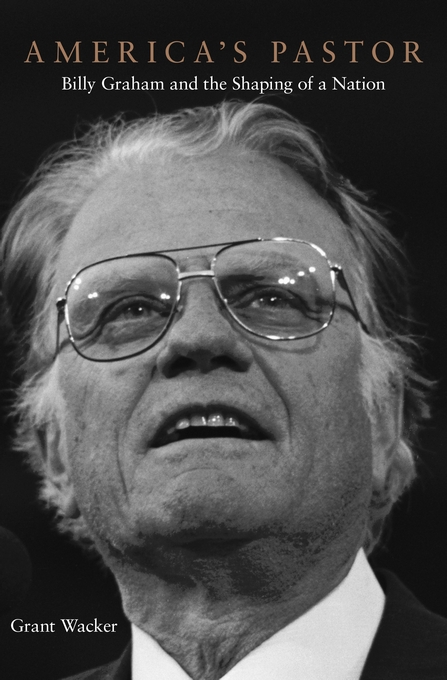
Grant Wacker’s America’s Pastor: Billy Graham and the Shaping of a Nation, offers a lot to think about.
Many young people today do not know the name of “Billy Graham.” But those of us who grew up in the 20th century knew of Billy Graham as probably the greatest evangelist who ever lived. He was easily the most influential Protestant evangelical leader in the 20th century. ChristianityToday, the magazine that Billy Graham helped to found, has an extensive tribute to his remarkable legacy. Last year, I read historian Grant Wacker’s biography of Graham, so I offer my review and personal reflections below. Losing Billy Graham is like losing your pastor. Billy Graham was America’s Pastor.
……….
I was 21 years old, walking towards the main arena in Champaign/Urbana, at the tri-annual Urbana missions conference, then held at the University of Illinois. This would be the highlight evening for some 18,000 college students, where we had the opportunity to listen to the world famous evangelist, Billy Graham. By this time in Graham’s ministry in the 1980s, he had shared the Gospel before millions of people around the world, having an impact on world evangelization, far greater than any other human in history.
Not only that, but Billy Graham had managed to forge a remarkable alliance of like-minded believers, all united around a common cause of proclaiming the Gospel of Jesus Christ to others, calling these people to have a living, vital relationship with the Lord, and upholding the Bible as God’s Word of Truth to humankind. What made this so remarkable is that this alliance spanned across multiple denominations, race barriers, nation borders … you name it, Billy Graham transcended them all. Every church and ministry I had been affiliated with looked up to him as a grandfatherly type of figure.
As an aside, a few years after this Urbana missions conference, I would attend a seminary that Reverend Graham helped to found. Furthermore, for nearly the past twenty years, being involved in my church’s music ministry, I have enjoyed a warm friendship with Ted Cornell, who himself was involved in the music ministry of the Billy Graham Evangelistic Association, traveling with the Graham team for crusade meetings all over the world.
I had been truly impressed with Billy Graham. Now, at this Urbana conference, it would be my first time to see the man preach, in person, aside from watching him on television.
But I soon experienced a moment of anxiety, on that December evening.
As I was crossing the sidewalk by the arena, packed with other college students, an older gentleman approached and stopped me earnestly, “Please take this and read it.” It was a small pamphlet, and the message was direct and to the point: Billy Graham was a “false teacher.” Graham did not insist, that all inquirers for the Gospel, who came forward to give their lives to Jesus at Graham’s crusades, receive water baptism as adults. Graham had substituted baptism, as taught in the Bible, with “coming forward” to the front of the preacher’s podium. This was a grave theological error, according to the pamphlet.
I was puzzled, having grown up in liberal Protestantism, with very little exposure to so-called “fundamentalism,” prior to my years in college. I had dedicated my life to Christ, a few years earlier in high school, and all of my spiritual mentors spoke highly of Billy Graham. Graham taught of having a personal relationship with Jesus, in a manner that eluded my experience in mainline, liberal Christianity.
Most of my mainline Protestant friends still liked Billy Graham. They just did not care that much for his “evangelical” message.
Now, as a college student, I was confronted with a jarring claim that this well-respected man, perhaps the most well-respected man in all of evangelical Christianity, was really a “compromiser” in disguise. Having defended Graham in front of my mainline church peers, and alternatively resisting ridicule from my atheist acquaintances, I felt angry, and a bit confused, by this pamphlet. I promptly dumped the pamphlet in the trash, and proceeded into the arena to hear the popular evangelist speak to a captivated crowd.
Did this man with his pamphlets not have anything better to do?
Listening to Billy Graham preach that evening was incredibly inspiring. He represented what “real Christianity” was all about, from what I knew… at least the “evangelical” kind of faith that I had experienced. Graham either directly spoke of or alluded to the central tenets, or fundamentals, of Christian faith as I understood them. They included having confidence in the Bible as the very Word of God; a belief in the Virgin Birth, signifying the incarnation of the Son of God; a belief in the Bodily Resurrection of Jesus, and His atoning work on the Cross to deal with sin; a trust in the work of the Holy Spirit, to give new life to the believer; and an expectation of the Second Coming of Christ. I left the arena that night invigorated and emboldened in my faith.
There were no protestors out on the street, as students poured out from the arena, after the event. The man who gave me the pamphlet had disappeared. But I kept thinking about him. As I went to bed that night, I wondered. Could I have misjudged the “pamphlet man?” Was he trying to “save” me from some errors of Graham’s preaching, that I knew nothing about, or was this merely the Evil One’s subtle attempt to try to confuse me? What was that episode with the “pamphlet man” all about? Continue reading
Tortured for Christ: The Movie
Richard Wurmbrand was a Lutheran pastor in Romania. The Communists threw him into prison for fourteen years. They tortured him, trying to persuade him to reveal the identities and locations of secret Christian believers. However, even solitary confinement in an underground cell did not force him to break his faith.
I am listening to the audiobook version of Tortured for Christ, and the story is riveting. Wurmbrand’s story is now coming to film, and if enough people buy tickets in advance (by February 26), local movie theaters will show the film on Monday, March 5.
Some Christians in America “think” they are being persecuted, but this is prejudice, not persecution. Real persecution of Christians, like what Wurmbrand went through, is going on all over the world. Voice of the Martyrs, the organization that Wurmbrand founded after leaving Communist Romania, in 1964, for the United States, is dedicated to raising awareness of Christian persecution across the globe.
The Power of the Third Rail: Jim Shaw’s Story, A Review
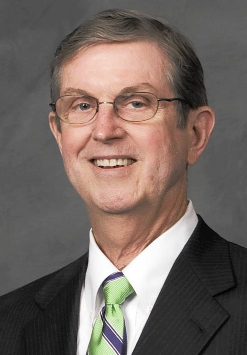 The last time I saw Jim Shaw was at the 20th anniversary celebration of the Lackey Clinic. Back in 1995, Dr. Shaw had a God-inspired vision to meet the needs of people who lacked good medical care, in the greater Williamsburg, Virginia area. Looking back, the Clinic has been a resounding success.
But the path was never easy. Not too long after Lackey Free Clinic got started, Jim Shaw ended up on the other side of the doctor’s office, so to speak, as he began his extremely difficult, 18+ year fight against cancer. His short book, The Power of the Third Rail: A Testimony of Life and Hope in Suffering and Ministry, tells the story.
Dr. Jim Shaw likened those years of his life to a three-railed, model train set. One side rail was his medical ministry, growing the outreach of the Lackey Free Clinic, and the other side rail was his battle with multiple myeloma, a bone marrow cancer. But the center rail, which powered the train, represented the power of Jesus Christ, through the Holy Spirit, the source of strength to guide him through the challenges of both ministry growth and suffering from cancer.
Jim Shaw had grown up in the Episcopal Church, even acting as an acolyte, but he had no depth of faith. Not knowing much about the Bible, he took an Old Testament class in college, designed by that school to help bolster faith in the modern world. Ironically, however, this class inadvertently destroyed whatever shaky faith he had growing up in a church. In this class, the supernatural acts of God, the parting of the Red Sea, the tumbling walls at Jericho, etc., were explained away, convincing this young man, destined for a career in pulmonary medicine, to turn off his mind “to the Bible as truth.” His scientific inclinations had led him to conclude that the Resurrection of Jesus simply could not be believed.
He married, and soon began his graduate studies in medicine, eventually doing research in pulmonary medicine. But his career put a huge stress on his growing family. His wife, Cooka, sought to bring Christ into the center of the family life, but Jim Shaw would have nothing of it.
Yet Cooka kept praying.
By the time the Shaws came to Williamsburg, the power of prayer began to soften Jim Shaw’s heart. Through the loving friendship of friends at our church, Williamsburg Community Chapel, Jim Shaw slowly began to have some of his intellectual questions answered. He read helpful books by C. S. Lewis, Josh McDowell, and Frank Morrison. But these books were not enough. He eventually encountered a new picture of Jesus, as a real, flesh and blood person, from meeting Father Joseph Girzone, author of the book, Joshua: A Parable for Today, and this helped to prod Jim Shaw to eventually put his faith in Jesus.
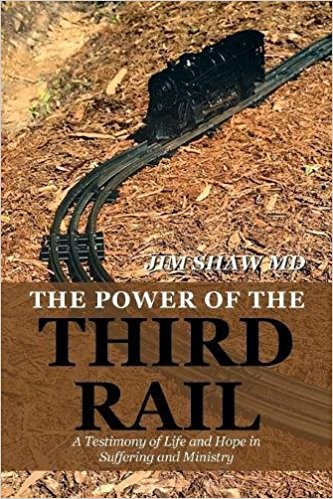 The Power of the Third Rail, which I was able to read in one or two sittings, walks the reader through the ups and downs of trying to start, and eventually grow, the Lackey Clinic, as well as chronicling his long-term struggle with cancer. Aside from the Lord Himself, the one real standout hero in the book is his cheerful and supportive wife, Cooka. What an incredible love did they have for one another!
At times, Jim and I wrestled with each other on certain matters of faith. But after having read his story, I am encouraged to know that for the things that really count, Jim Shaw and I shared the essentials of knowing the reality of Jesus Christ.
I remember years ago, in the early days of his Lackey ministry, sitting with Jim at a dinner on a men’s retreat, with him telling me of his grand vision to get the Lackey Clinic going. I kept thinking to myself, while it sounded like a great, noble idea, I was not convinced that anything that impactful could really take off. I am glad that I was wrong, as evidenced by the hundreds of patients who have continued to receive expert medical care over the years. Dozens of medical professionals and other volunteers, supported by generous donors, who care for those who fall through the cracks of the U.S medical system, have made it happen, with all the praise and thankfulness going to God.
I also remember, during those years, Jim and Cooka sitting in the back of our church, with Jim harnessed up with a halo neck brace, designed to immobilize his body from being shot through with piercing pain. I really wondered how long Jim was going to make it. To think that he left this world, to be finally cancer-free, only just a couple of years ago, astounds me as to how God proved faithful to him, to have him serve His purposes on earth.
The most profound lesson I learned, in this book from Jim Shaw, is that it was his time reading and studying the Bible that energized his walk with Jesus. Jim’s life exemplified the teaching by the former, pastor emeritus of our church, Dick Woodward: to get people into God’s Word, so that God’s Word can get into them.
So, if you want an encouraging, short read as to how one can meet God, in the face of the twin challenges of ministry and physical suffering, go get a copy of The Power of the Third Rail. Thanks, Cooka, for getting Jim’s story into print!
Jim Shaw was a reader of Veracity. You can read his obituary here. Veracity blog founder, John Paine, wrote a brief tribute to Jim shortly after his death. For more information about Lackey Clinic, and how you can help, and carry on Jim’s legacy, here is their website.
Feel free to share our book…

Join the Conversation


