Category Archives: Witnesses

Sarah Osborn’s World #3

Our third installment blogging about Sarah Osborn’s world (previous postings #1 & #2).

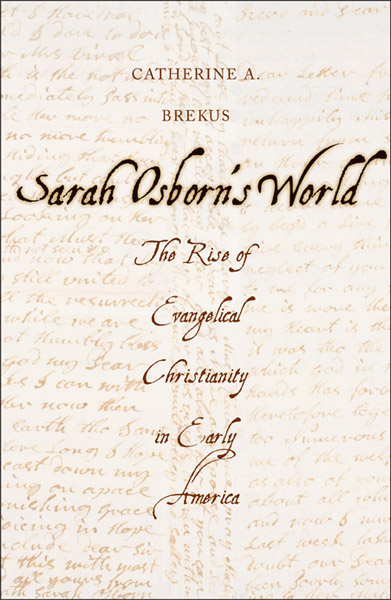
Within a few years after experiencing her conversion to Christ, Sarah Osborn completed her set of diary entries that would serve as the basis for her published work. Harvard Divinity School religious historian, Catherine A. Brekus, weaves these diary entries into her biography of this remarkable woman: in Sarah Osborn’s World. Sarah Osborn continued to write other letters and other diaries, that Brekus also highlights in her research, giving us insight into the life of this 18th century, American, evangelical Christian woman.

Sarah Osborn lived an exceedingly difficult life. One of those difficulties was having to bury her one and only son. When her son, Samuel, was only twelve years old, he had been sent off to learn a trade, serving as an apprentice to a tailor, which was a typical way of providing an education for young boys at the time. However, Samuel contracted what was most probably tuberculosis. In an age before the development of contemporary medicine, Sarah Osborn held the hand of her pale and dying son, for several days. Unfortunately for Sarah, who had only a few years previously come to faith in Christ, she agonized over the spiritual state of her son, as he had never given his own testimony as to having a faith in Jesus. Continue reading


Tenacity: John C. Whitcomb

John C. Whitcomb Jr., one of the early pioneers of the contemporary Young Earth Creationist movement, died on February 4th.
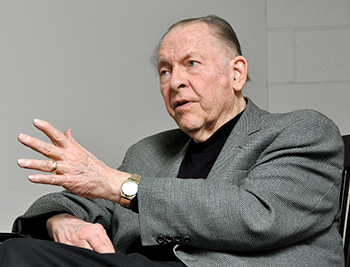
John C. Whitcomb, Jr. 1924-2020

In 1961, John Whitcomb teamed up with a hydraulic engineer, Henry M. Morris, to write The Genesis Flood, the foundational book that launched today’s Young Earth Creationist movement. Whitcomb was a theologian at Grace Theological Seminary, and he sought out Morris, who was then the chair of the civil engineering program, at Virginia Tech, in Blacksburg, Virginia. Combining Whitcomb’s knowledge of the Bible and Morris’ knowledge of science, the two collaborated in articulating the now, well-known thesis, that a global flood, as described by a traditional interpretation of the Book of Genesis, could sufficiently explain the existence of the fossil record, in an attempt to show that science could be synchronized with a traditional understanding of the Bible.

Other leading evangelical thinkers, such as Edward John Carnell, the president of Fuller Theological Seminary, were determined to persuade Whitcomb and Morris, that their project was ill-advised, and at one point, the preferred publisher, Moody Press, refused to publish the book. But Whitcomb and Morris persisted with tenacity, and so the idea that the earth was only 6,000 years old, and not 4.34 billion years old, as maintained by the scientific consensus, took off in the imagination of thousands of Bible believing Christians.

In subsequent years, organizations such as Ken Ham’s Answers In Genesis would expand on the themes articulated by the Whitcomb/Morris “flood geology” thesis, proposing that dinosaurs lived together with humans, in recent earth history, before the great flood. Such ideas have stood to be contrary to the reigning contemporary scientific consensus, that dinosaurs lived millions of years ago, long before the appearance of humans on planet earth.

Despite the fact that The Genesis Flood has had virtually no impact on the modern scientific enterprise, as taught by a plethora of public schools, universities, and Smithsonian museums, Whitcomb and Morris’ thesis has continued to generate controversy in evangelical churches across America. Dr. Whitcomb was also known for his defense of a classic 6th century B.C.E. date and traditional authorship of the Book of Daniel.
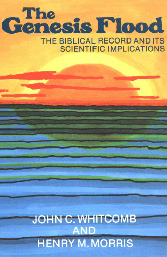
The Genesis Flood. The 1961 classic text that upset well over a century of sophisticated evangelical views supporting “millions of years” of earth’s history in favor of a radical concept of “flood geology,” in attempt to bring back an appeal to a literal, 24-hour day view of a Young Earth Creation.

I first made an attempt to read The Genesis Flood during my years as a mathematics major in college, while studying other scientific disciplines as electives. While I was attracted to Whitcomb’s appeal to the Bible’s authority, I remained unconvinced by his thesis. It was not until 20 years later that I actually began a written correspondence with Dr. Whitcomb. In his letters, between the two of us, over several months, I was impressed by his earnest appeal, and even more impressed by his gentle piety, in commending his ideas towards me. In particular, Dr. Whitcomb was clearly tenacious in holding his interpretation of the Bible, despite my attempts to encourage him to consider other alternatives.

“Agreeing to disagree,” on non-essential matters of the Christian faith, can lead to having some difficult conversations. But in my interactions with Dr. Whitcomb, I came to treasure his candor and gentle demeanor when engaging in controversial subjects. God used that time of correspondence with Dr. Whitcomb in my life, to help me to have a greater love for others, and encourage an interest in building bridges with other believers, even when agreement in sensitive matters, is not always easy to be had.

While I am open to the possibility of Dr. Whitcomb’s thesis, I am still not convinced that his understanding of Scripture, nor his understanding of the science, is correct. Nevertheless, I consider Dr. Whitcomb as a dear brother in the Lord, who genuinely desired that others may come to know and love the Creator of the universe, and so I grieve his death, yet knowing that he is surely with the Lord Jesus now. One day, I hope to be able to have a conversation with Dr. Whitcomb, where we will both surely learn the exact extent of what the flood really was, and exactly how old the earth really is.

The Baptist Bulletin has published a generous remembrance of Dr. Whitcomb’s life. Ken Ham, at Answers In Genesis, also wrote a remembrance of Dr. Whitcomb.

Pocahontas and the English Boys: A Brief Review

In early 17th century Jamestown, both the English and Native Americans used children to try to improve inter-cultural relations between the two groups. Young people were able to pick up new languages more quickly than adults, and such young people proved to be a useful means of acquiring information about the other side. But often, they had divided loyalties, which could put them in difficult situations.

In Pocahontas and the English Boys: Caught between Cultures in Early Virginia, Historian Karen Ordahl Kupperman tells the story of four such young people, three of them English boys who lived among the Native Americans, and Pocahontas, the prized daughter of Powhatan, who became fascinated with the English, and lived among them.

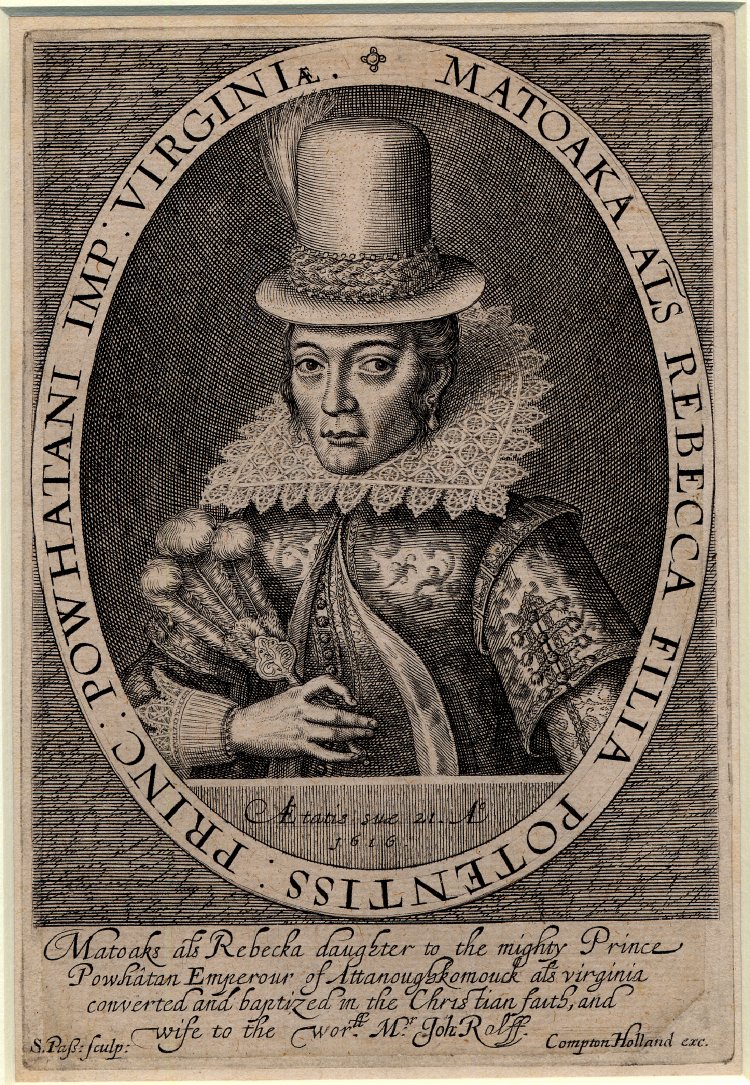
Portrait of Pocahontas by Simon van de Passe, in 1616, when she made her journey to England. This was within about a year, prior to her death.

Continue reading


Notable Deaths: R. Scruton, C. Tolkien… and J. Van Impe

We are just a bit past midway through the first month of 2020, and there are already some notable deaths for Christians to consider.

First, there was philosopher Sir Roger Scruton. As an outspoken conservative, British thinker, many Christians have looked to Scruton as a defender of “beauty,” a concept that has taken quite a beating, in our post-modern, post-Christian world. Scruton’s personal convictions about faith were quite complex, describing his involvement in the Anglican church as “my tribal religion, the religion of the English who don’t believe a word of it.

Secondly, there was Christopher Tolkien, the son of one of the Inklings, J.R.R. Tolkien. The elder Tolkien had written much of his works on Middle Earth, with his son, Christopher, in mind. Christopher Tolkien managed his father’s literary estate, after his father’s death, publishing previously unpublished J.R.R. Tolkien’s works, including The Silmarillion

Lastly, from a different angle in the Christian world, there was the colorful Jack Van Impe, a television evangelist, who regularly appeared for years, with his wife, Rexella, on late night television, with his analysis of current events as they related to biblical prophecy. Van Impe, who was able to memorize thousands of Bible passages, lost his spot on a popular television network in recent years, after calling other prominent evangelical leaders as promoters of what he called “Chrislam.”

Here is Roger Scruton in dialogue with Jordan Peterson.

Here is Christopher Tolkien reading the last part of The Lord of the Rings.

Here is Rexella, the wife of Jack Van Impe, talking about the coming of the Rapture (and a link to one of Jack Van Impe’s final television appearances).


Sarah Osborn’s World #1

As part of a focus on American Church History, over the next few months, I will blog my way through a book that I found both thoughtful and enthralling. I read it as I sat with my mother, a little over four years ago, when she dying of cancer.

The history of Christianity has been dominated by male voices. Some of the most profound literary contributions of women have simply remained forgotten. So when someone rediscovers a woman’s voice of faith from the past, it can be a real treasure to find.

Harvard Divinity School religious historian, Catherine Brekus, has given us a remarkable gift by recovering for us the lost story of Sarah Osborn (1714-1796), a poor woman from New England who met Jesus during the great revivals of the mid-18th century. It was during this “First Great Awakening” where the English speaking world was greatly impacted by the dynamic preaching of George Whitefield and John Wesley, which helped to define contemporary evangelicalism. I hope you enjoy her story as much as I did as I post up various blog summaries of Brekus’ wonderful book. Better yet, read the book yourself!

Continue reading