Category Archives: Witnesses

A Virginia Story of African-American Pentecostalism

During the heights of the 1930’s Great Depression, Elder Lightfoot Solomon Michaux rose as one of the most prominent African-American radio evangelists, in the history of Pentecostalism. What many do not realize is that his story began near Williamsburg, Virginia, my home town.

Michaux was born in Newport News, Virginia, in 1885. During World War I, Michaux was able to use his business acumen successfully, to obtain contracts to supply food to American troops. By 1917, Michaux had moved his family and business to Hopewell, Virginia, but he was unable to find a church, that fit well with him. Michaux had been drawn into the burgeoning Holiness movement, but he felt that more could be done to advance the Gospel, so he then moved more in Pentecostal circles.

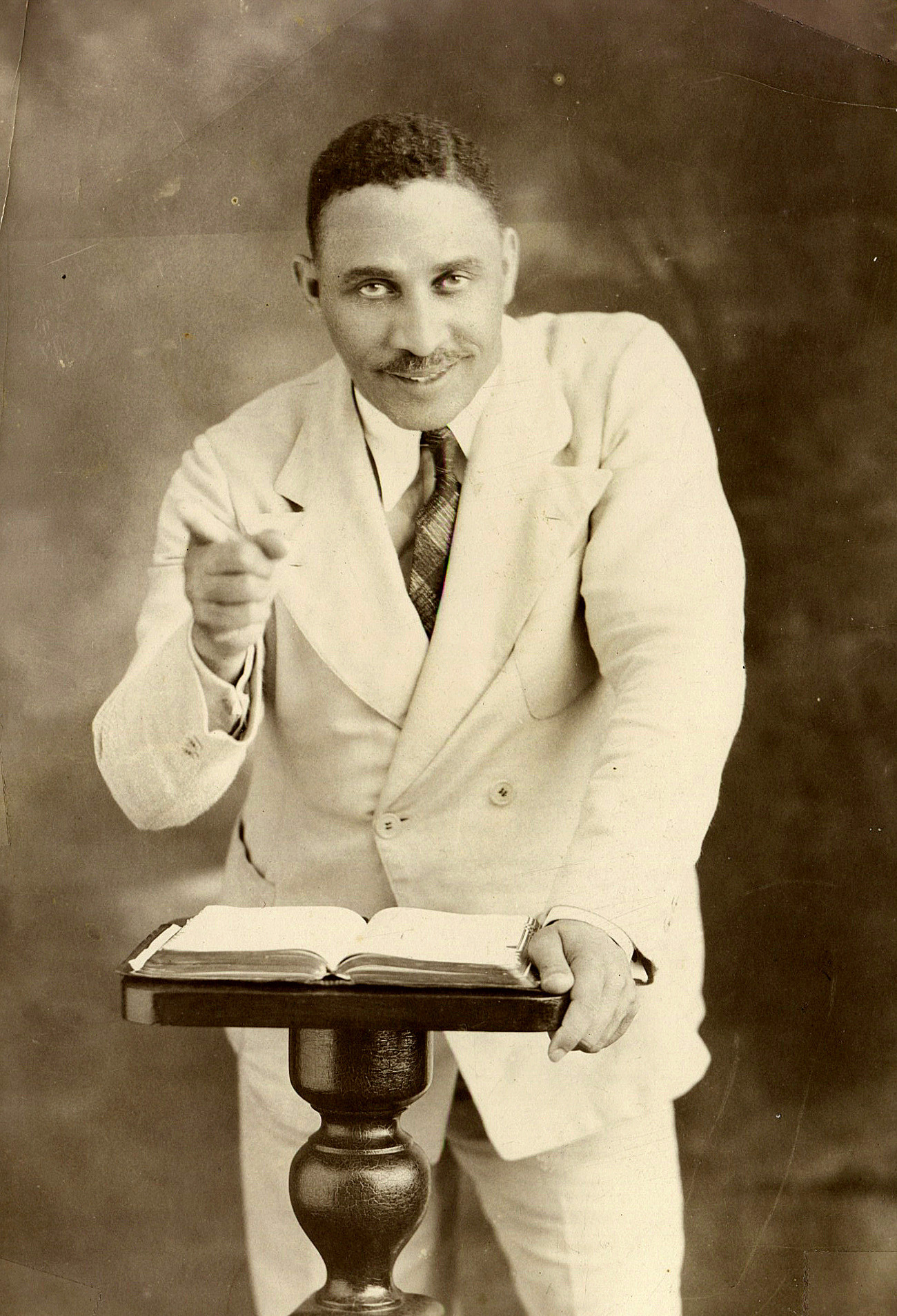
Lightfoot Solomon Michaux (1885 – 1968). Pentecostal Radio Evangelist, Church Planter, Business Entrepreneur, and Founder of the Gospel Spreading Farm, near Williamsburg, Virginia.

Michaux returned to Newport News in 1919, following the war, and began a series of tent revivals, that appealed to many local African Americans. But Michaux bristled against newer Segregation laws in Virginia, and was sent to prison. The racial conflict spurred Michaux onwards, to expand his preaching ministry for the Gospel and against racism, and establish churches. After leaving prison, he moved his ministry operations up to Washington, D.C.

In 1929, Michaux persuaded a local radio station to broadcast his evangelistic services, called the “Happiness Hour.” When the radio station was bought by the CBS Radio Network in 1932, Michaux was catapulted into the national spotlight, with perhaps as many as 25 million radio listeners. He even ventured into international radio ministry with the BBC, in the mid-1930s, thus establishing him as a pioneer, in global radio outreach ministry.

According to the Williamsburg Yorktown Daily, in 1936, Michaux purchased a 500 acre tract of land, located along the James River, just a few miles from Jamestown, Virginia, thus creating the “National Memorial to the Progress of the Colored Race in America.” Locals in Williamsburg know it is the “Gospel Spreading Farm.” When the Colonial Parkway was expanded to connect Williamsburg and Jamestown in the 1950s, the federal government secured a right-of-way, along the river, from the Gospel Spreading Farm, to complete the road project.

Michaux’s vision was to create a type of cooperative farming community, which would serve as a haven for African-Americans, offering educational and evangelistic programs. Michaux believed that a coming economic crisis, an order of magnitude worse than the Great Depression, would severely cripple the American economy. He believed that the farm would become a refuge for thousands of African Americans, to survive such an apocalypse.

Neither the apocalypse, nor the full vision of a highly-functioning, cooperative community, ever materialized. The national influence of Michaux was further eclipsed by a new rising star, in the African-American community, Martin Luther King, Jr.

According to the New York Times, Michaux was highly suspicious of Martin Luther King. Michaux did not believe that King’s vision, enacted through protest marches and sit-ins, was wholly inline with Christian values. Instead, Michaux believed that the crisis of racism in the American culture, could only be resolved through evangelistic preaching, and not through social protests. Michaux even embraced the idea that Martin Luther King was secretly a Communist, and Michaux at times cooperated with J. Edgar Hoover at the FBI, to undermine King’s influence.

Michaux was fearless and bold in his preaching. One story from the mid-20th century segregation era relates that Michaux preached at an “all-white, KKK-infested congregation” in Baltimore, Maryland. But his preaching was so effective that a white klansman was converted and joined a branch of Michaux’s African American Church of God, in Baltimore.

Michaux died in 1968. The Gospel Spreading Farm is still in operation, but a dispute in Michaux’s local church, over the land management, led to a split in the community, that for some remains unresolved. The Gospel Spreading Farm is quietly tucked away at the very end of Treasure Island Road, a spur off of Lake Powell Road. Yet residents of Williamsburg will be most familiar with the legacy of Michaux, when they see Oleta Coach Lines buses traveling up and down the roads, surrounding the Williamsburg area. Oleta is family owned and operated, through some church members, who grew up under the shadow of Michaux’s influence.

Below is a film clip from one of Michaux’s evangelist radio sessions, singing his signature song, “Happy Am I.”


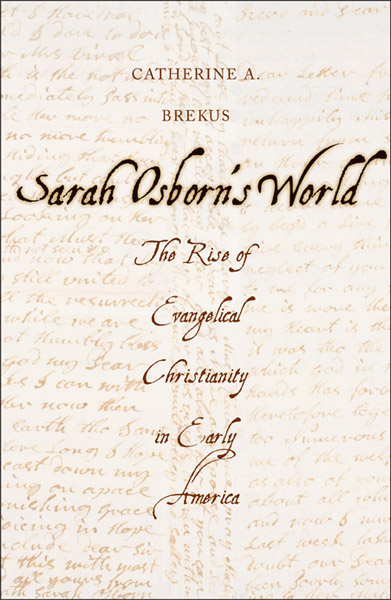
Sarah Osborn’s World #6

The last in this series of blog posts about the life of the 18th century diary writer, Sarah Osborn. I hope you have enjoyed them (Previous posts: #1, #2, #3, #4, #5).

By the eve of the American Revolution, Sarah Osborn’s health had declined so much that she was largely unable to write. Furthermore, the war severely disrupted Sarah’s ministry, as when the British first lay siege to the city of Newport in late 1775 and then finally occupied it for about three years, the city was emptied of over one-third of its inhabitants. This devastation combined with a hurricane and several harsh winters, and the loss of her husband Henry, brought Sarah once again to the brink of destitution. If it were not for the generosity of her Christian friends remaining in Newport, as practically an invalid she would have surely starved or froze to death. Continue reading


Her Majesty on the Coronavirus

If you wonder why she is regarded as the “Defender of the Faith and the Supreme Governor of the Church of England,” these 4-minutes will show why.  Here is the British Queen, Elizabeth II, giving a rare public address to her subjects, encouraging them during a difficult time. May we all be encouraged:


Sarah Osborn’s World #5

A fifth installment chronicling the story of Sarah Osborn (Previous installments: #1, #2, #3, #4).

As Sarah Osborn matured in age, so did her spiritual stature as a Christian leader in her Newport, Rhode Island community. But her spiritual influence grew out of the difficult trials she experienced in her life.

By the time Sarah Osborn hit her late 40’s, her health was so bad that she was simply unable to walk any long distances. She had to be carried to church by her friends. One would think that life for such a weak and physically disabled woman would be reduced to pure obscurity. However, this would not be the case for Sarah Osborn.

Over the next few years, Sarah Osborn would participate in an incredibly profound spiritual revival of people from all walks of life. What started out as simply an invitation to some neighbors to share in the nightly family devotional for one evening became an extensive, multi-year ministry. Night after night, people would cram inside her home to listen to Sarah share the message of the Bible. Hundreds of people from the town of Newport, Rhode Island and beyond would sit at the feet of this saintly woman who would pray for them.
Continue reading


Sarah Osborn’s World #4

The fourth in a series of posts about the life of Sarah Osborn. The first three are found here (#1, #2, #3)

Not too long after her young son died, Sarah Osborn was given the gift of a slave boy by friends. Sarah was too impoverished to afford her own slave. Our “tour guide” examining Sarah Osborn’s life, religious historian Catherine Brekus, surmises that Sarah’s friends hoped that having another young child to raise would assist Sarah in working through her grief. Furthermore, having a young slave might prove to be a sound investment for such a poor New England woman. In an era more than a hundred years before America was bitterly ripped apart by a Civil War, the evils of slavery were never thoroughly considered by Sarah, or her Christian friends, at that moment in time(p. 174). Continue reading