Category Archives: Topics

Do Jews and Samaritans Worship the Same God?

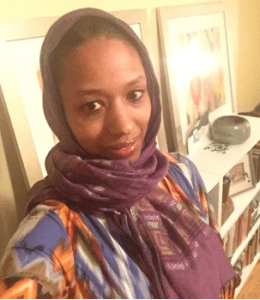
Wheaton College professor, Larycia Hawkins, in "hijab." (Facebook)

Wheaton College professor, Larycia Hawkins, in “hijab.” (Facebook)

The suspension of Wheaton College professor, Larycia Hawkins, in response to her “same God” comments about whom Muslims and Christians worship, has reignited a long-standing controversy within the church. Yes, on the one hand, theological clarity is at stake, but at the same time, having a measure of wisdom, that emphasizes shared values as a starting point in developing relationships of trust in the midst of cultural tensions, is just as important. Jesus never compromised on the truth, but He never compromised on His love for those who need salvation either.

Here is a great example: When Jesus met the woman at the well in Samaria in John 4, He was quite clear in saying that Samaritan theology did not line up exactly with traditional Jewish belief. The Samaritans (still) worship God, believing that Mount Gerizm is the proper place for such worship. Traditional Jewry has always focused on the Temple in Jerusalem instead. Jews would purposely avoid Samaritan lands because of the latter’s heterodoxy. But notice how Jesus, who purposely passes through Samaria, approaches the woman:

“Woman, believe me, the hour is coming when neither on this mountain nor in Jerusalem will you worship the Father. You worship what you do not know; we worship what we know, for salvation is from the Jews. But the hour is coming, and is now here, when the true worshipers will worship the Father in spirit and truth, for the Father is seeking such people to worship him. God is spirit, and those who worship him must worship in spirit and truth.”(John 4:21-24 ESV).

I just do not see Jesus falling for the modern, popular tendency for the “sound-bite” theologies of the politically-correct: “Samaritans and Jews worship the same God,” nor the opposite, bigotry-sounding to some, in this day and age: “Samaritans and Jews do not worship the same God.” Instead, Jesus proclaimed the truth, but he did it in a way of great wisdom that built a relationship of trust with this woman, and she recognized Jesus at the Messiah.

If only some of our Christian leaders and theologians on both sides of  issues like this were to show such restraint and wisdom. You can be theologically correct and still miss an opportunity to demonstrate love and solidarity with those, like the Syrian refugees, who are marginalized, for the sake of the Gospel. Likewise, on the other side, one need not resort to confusing or misleading theological statements for the sake of avoiding the appearance of bigotry. For the most part, I will leave it to the reader to make such judgments as appropriate (for the content linked below).

So, do Jews and Samaritans worship the same God?  How about Christians and Jews? Do they both worship the same God? What does one mean by the “same” God? These questions are not so easy to answer. No matter what your “take” on all of this is, we should probably take our cue from Jesus as to how we approach the current debate over whether or not Christians and Muslims worship the “same” God.

Additional Resources:


A Christian Response to the Syrian Refugee Crisis?

When I first posted a few days ago about the controversy at Wheaton College about a professor’s comment that “Christians and Muslims worship the same God,” I had no idea how involved the backstory was. I tend to live in a “media-less” bubble.  I have no cable TV, and I have no desire to get it (OK… I do miss watching ESPN sometimes).

It is quite apparent that a lot of American Christians (and others) are exceedingly anxious over the prospects of radical Islam doing great harm, and thereby wanting to distance themselves from those from traditionally Islamic-based cultures. The issue is quite controversial. Just this week, a public school system in Staunton, Virginia, shutdown when enraged citizens discovered that a teacher, as part of a calligraphy assignment, asked students to draw out the Islamic shahada, or statement of faith, in Arabic.

The controversy is no less intense when it comes to the question of allowing more Syrian refugees to enter Western countries. The situation has changed dramatically, since I first blogged about this topic two years ago, and since the persecution of Christians in Syria and Iraq became front page news. I am not an immigration expert, so I really do not know what the best answer is. But as a Christian, I simply want to try to follow my Lord in obedience to His Great Commission, loving my neighbor with the Good News of Jesus Christ, Muslim and non-Muslim alike.

I found the following video to be very helpful in explaining the background of the situation with the Syrian refugee crisis, in view of the crisis of radical Islam motivating the leaders of ISIS. It is more focused on the challenges in Europe, and it does not address spiritual concerns, but as followers of Jesus it would help us to better educate ourselves as to what is going on. You may not totally agree with the suggested solutions in the video, but I would hope that you might prayerfully consider how God might call you to respond to the crisis.

For example, I have a friend of mine who leads small teams for 10-day trips to a refugee camp near the Syrian border inside Jordan. There my friend and his team help to feed hungry refugees, provide education for the children of these desperate families, and build relationships with these lost people, all in the name of loving them with the Gospel of Jesus Christ. If you want more information of how you can get involved, please let me know, or leave a comment in the blog.


Do Christians and Muslims Worship the Same God?

Wheaton College professor, Larycia Hawkins, in "hijab." (Facebook)

Wheaton College professor, Larycia Hawkins, in “hijab.” (Facebook)

Christianity Today magazine recently reported that Wheaton College, an evangelical university in Illinois, has suspended political science professor Larycia Hawkins after she made statements that “Muslims & Christians worship the same God.” Professor Hawkins raised eyebrows on campus a few weeks ago when she adorned herself with the Islamic “hijab,” as an expression of solidarity with Muslims across the world. But it was her “same God” comments that motivated school officials to place her on administrative leave, pending a review of her statements in view of Wheaton’s statement of faith that all faculty must sign.

Wheaton College made a good decision here, and let me explain why. In view of the recent excellent series on “Basic Islam” (#1, #2, #3, #4, #5) by my Veracity blogging colleague, John Paine, it might be good to revisit why John’s interest in Islam is so timely and important. The question of whether or not Christians and Muslims worship the “same God” is complicated. It is sort of like asking whether or not someone likes the game of “football.” For most Americans, this means a game involving helmets, shoulder pads, and touchdowns. But for the rest of the world, “football” means nets, headers, and penalty kicks; that is, the game of soccer. So, it all depends on what you mean by the question.

For example, Professor Hawkins states that both Muslims and Christians are “people of the book,” assumedly the Bible. In a sense, this is true. But the problem is that Muslims and Christians have very different views of the Jewish Scriptures and the Christian New Testament. Christians believe the Bible we have now is the very Word of God, whereas Muslims believe that the current Christian Bible is terribly corrupted. Are these different assessments of “the book” not contradictory with one another? In one sense, Christian and Muslims both agree that the Bible testifies to the one “God of Abraham,” but they disagree as to what correctly represents the revelatory content of that Bible.

Professor Hawkins is evidently responding to various, unnecessarily Islamaphobic statements being propagated among the American media in the weeks following recent terrorist attacks in 2015. Sadly, many Christians are giving into an ethic of fear, when the Bible makes it clear that the perfect love of Christ casts out all fear (1 John 4:18). However, going to the opposite extreme only confuses matters. A lot more nuance is required before a professor representing a Christian college issues a blanket Facebook post stating that we all “worship the same God.” For a balanced view of what lies behind the recent controversy, I would encourage Veracity readers to digest Scot McKnight’s recent blog post at Jesus Creed.

As fellow human beings, we must learn to live peacefully in a pluralistic society with our neighbors who embrace very different perspectives of who “God” is. We must receive even the Muslims as our neighbors, and love them just as Jesus loves them. To this point, I hope professor Hawkins is able to make her case clear to the community at Wheaton College and eventually return back to her teaching position. But we must not sweep the differences between Christians and Muslims underneath the rug and treat them trivially.

In an age when doors to missions among most Islamic countries remain closed, American Christians have only recently encountered an incredible opportunity to share their faith. Many Muslims, including refugees from Syria, are making their way to the United States, living in our towns and neighborhoods. You do not need to go overseas to become a missionary to Muslims when Muslims are living next door to you, working in your company, or attending classes with you in your school. We betray the Great Commission of our Lord if we turn a blind eye to developing relationships with these neighbors for the sake of the Gospel. Some say that within the last ten years, more Muslims have come to faith in Christ than in the previous fifteen centuries. The fields are ripe for the harvest.

I have friends who are Muslim, and they are truly wonderful people. Frankly, there are times where I would much rather hang out with some of my Muslim friends, than others who proudly deny the values shared by both Muslims and Christians, in favor of a godless materialism. Nevertheless, like with anyone else on planet earth, every Muslim needs to hear about Jesus:  but not only my Muslim friends, but everyone who is my neighbor.

Let us not get muddled over questions that lead us towards a sound bite theology. Make it point to learn something about Islam. Read John Paine’s blog posts for starters! Go out of your way to introduce yourself to a Muslim and get to know them as a friend. Pray for the opportunity to share the Good News of Jesus with others and be obedient. Love your neighbor.

We all need the Gospel. We all need Jesus, Christians and Muslim and everyone else alike.

UPDATE: 12/22/15 See updates on the situation at Wheaton College here.


Krampus: “Santa’s” Dark Side

A 'Greetings for the Kampus' Christmas postcard from the early 1900s (source: Wikipedia)

A ‘Greetings from the Kampus’ Christmas postcard from the early 1900s (source: Wikipedia)

Just in time for this Christmas season, there is a new movie in theaters with a twist on Santa, Krampus (view trailer here). Krampus is actually an ancient, Alpine pagan character from pre-Christian Austria, a horrific beast who comes once year to scare children into good behavior. As the Gospel spread in that part of Europe centuries ago, the legend of Krampus got intertwined with the celebration of the Christian feast day for Saint Nicholas, on December 6. Old habits are hard to break! National Geographic has an informative write-up on the revival of Krampus celebrations, which generally takes place the night before Saint Nicholas’ day.

As Western culture continues to loosen its moorings to Christendom, it should not surprise us that Krampus makes his way to America. Krampus is yet another attempt in postmodernity to distract us from considering the mystery of the Incarnation. But it would be wrong-headed for Christians to dismiss Christmas itself as simply being of some pagan invention because of Krampus. We really need to be a bit “tongue in cheek” about this. So, I thought it might be helpful to relink a couple of older Veracity posts that dive into the history:


Basic Islam – Part 5

Uncomfortable

Harry Bliss, The New Yorker, September 6, 2010

Suppose that you’re a Christian who wants to share your faith with a Muslim. How would you go about doing that? Further, suppose that you appreciate how difficult it is for anyone to overcome what they have been taught adamantly since birth. Muslims who convert to Christianity are considered apostate and subject oftentimes to ostracism and harsh treatment. They break their family’s hearts. The penalty for apostasy in many Islamic countries is death. Conversion is serious business. Sharing could get very uncomfortable.

There are many, many testimonies online about Muslims who have converted to Christianity. Their stories are fascinating, heartbreaking, shocking, tragic, joyful, unlikely, and often involve dreams. Many relate miraculous healing or delivery from dire circumstances. Some, like the five Christians noted below who were raised by Muslim parents, answer a calling to witness to the global Muslim and Christian communities after they become Christians.

So what causes a Muslim to become a Christian? If you listen to Nabeel Qureshi or Abdu Murray, or even Mona Walter, you might get the impression that the common catalyst is steadfast friends who genuinely love them and reflect the love of Christ. While that appears to be true in many cases, after reviewing scores and scores of testimonies, there seems to be an even more common basis for Muslim conversions, namely critical thinking.

Critical thinking is not easy. It requires us to put away our feelings, our dogma, our subjective instincts, and to apply disciplined thinking that is “clear, rational, open-minded, and informed by evidence.” Sometimes the important questions are self-induced, and sometimes they are offered by friends who risk feeling a little uncomfortable. Either way they can move mountains.

What about our critical thinking? When we think about Muslims, do we envision terrorists? Are we that prejudiced? Or do we think about millions upon millions of people who need to hear the truth of the Christian Gospel? Are we ready to give a “reason for the hope” that is within us, with gentleness and respect? Do we have compassion for our brothers and sisters in Islamic countries who are persecuted for their beliefs? It’s very easy to feel anger and to hate when we are attacked. Terrorists are the enemies of free people everywhere. But what did Jesus say about our enemies? His words make us unique among the world’s religions, as does His sacrificial atonement. That should mean something.

We try not to give advice on Veracity, but we’re not at all above taking advice. Take it from Abdu Murray; if you want to reach out to a Muslim, don’t begin by attacking Islam—begin with the positive case for Christianity. If you want to engage in critical thinking, study Nabeel Qureshi’s Seeking Allah, Finding Jesus. Nabeel and his friend David Wood engaged in that process for five years. (If you watched David’s sociopath-turns-Christian testimony, don’t stop there.) Both of these guys were brilliant and committed to opposite truth claims. It got very uncomfortable at times between them, but their friendship only grew stronger as they subjected their beliefs to critical thinking. It cost Nabeel greatly. But he was willing to pay the price because ultimately he accepted the truth. I really cannot recommend his book highly enough. It is an incredible account of the power of friendship and apologetics in transforming even an ardent Muslim.

Take a little time to explore the links and testimonies of the incredible people below. If they are willing to risk their lives to share the Christian Gospel, as many of them do, maybe we shouldn’t worry so much about being uncomfortable.

Walter Mona Walter

Videos


Murray Abdu Murray

Videos

Gabriel Mark Gabriel

Videos

Qureshi Nabeel Qureshi

Videos

Rana Fazale Rana

Videos