Category Archives: Topics

People to Be Loved: Why Homosexuality is Not Just an Issue

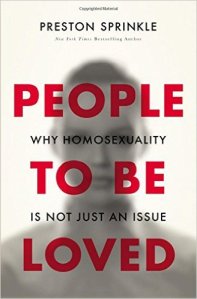
People To Be Loved: Why Homosexuality is Not Just an Issue, by Preston Sprinkle. Moving past the culture wars to love people with biblical truth.

People To Be Loved: Why Homosexuality is Not Just an Issue, by Preston Sprinkle. Moving past the culture wars to listen…. and love people with biblical truth.

What is THE number one issue impacting the evangelical church today, especially among young people? Some may think I am going out on a limb here to be so bold. Okay. I get that. But I am going to say it anyway.

I am not a betting person, but if I did wager, I think I would be right on this one: If you actually have a frank conversation with people under the age of 30 in the church today, it should not be difficult to arrive at a consensus: the issue, broadly speaking, is about gender and its relationship to sexuality. This would include issues like transgender, same-sex marriage, and same-sex attraction in general. What does it mean to be male? Or female? Young people, particularly those already in our churches, have a lot of questions about these issues and what the Bible has to say about them. But let us focus in on one of these in particular: homosexuality.

Unless you have been living in a cave for the past twenty years, you might have noticed a gigantic sea change regarding public opinion regarding same-sex attraction in Western culture. Hollywood personalities, like Ellen Degeneres, have in a sense, normalized social acceptance of same-sex behavior. The U.S. Supreme Court recently declared same-sex marriage to be a legal right. Even Super Bowl Half-Time shows appear to be joining in on the cultural realignment, in the minds of many. The situation has been building for some time, but looking back, it seems like the changes have been happening overnight.

When I have had discussions with Christians since the June, 2015 ruling in Obergefell v. Hodges, most have voiced the sentiment that America is going to “hell in a hand basket.” For many believers, this recent mega-shift in Western culture is an indication of a spirally downward decadence of a once Christian culture. Many fear that we have become Sodom and Gomorrah. Conservative Christian intellectuals wring their hands over what to do about the crisis of morality in the West.

The issue at a cultural level is indeed significant. We could spend a lot of energy debating what many consider to be cultural moral decline.

However, that is not what I want to talk about here. Can we shift gears on this discussion? Because the issue is deeper than Supreme Court decisions. The issue hits a lot closer to home.

It involves our churches.

It involves people with names, hurts and stories.

It involves family members, children of Christian parents, neighbors, co-workers, and friends.

It probably involves someone you know.

Homosexuality is not just an issue.

It is about people to be loved.

Chances are very high that a young person growing up today, in an evangelical church, personally knows of someone, perhaps even a close friend, who struggles with questions of same-sex attraction. But such a friendship puts that young person into a real quandary. Many Christians somehow “know” that the Bible condemns homosexuality, but they simply do not know how to care for friends or family members who wrestle with feelings of same-sex attraction. They know somehow that same-sex marriage is wrong, but what do you say to someone in your school, workplace, or church who admits, “Hey, I think I might be gay?”

Sadly, most local churches are not equipped to handle these type of issues. There are a few cases where someone, who has questions about their own same-sex attraction feelings can talk to a friend or small group about their dilemma. But these situations are sadly rare. If someone has mustered up the courage to step forward to tell their pastor or other trusted Christian leader that they have some sort of same-sex attraction, many times they are met with an awkward response.  Some are gently told to keep quiet, as this is an embarrassing type of sin. Or, it is simply too controversial to talk about in a local church setting. So, the same-sex attracted person is then encouraged to find help in some para-church ministry, shuttled off to talk with some expert or Christian psychotherapist outside of the local church for support.

In some cases, these type of para-church support systems work. Many times, however, they do not. The worst cases end in tragedy. Teenagers who wrestle with their sexuality are getting thrown out of their Christian homes, something that justifiably enrages mainstream journalists. The suicide rate of people who struggle with same-sex attraction type issues is staggering, and many blame the Christian church for the problem.

Many Christians today are seeing how badly things are going with this type of approach to homosexuality. Some, like young author Matthew Vines, author of God and the Gay Christian, argue that evangelical Christians need to change their view on homosexuality, simply accepting that same-sex behavior through gay and lesbian marriage is actually a good thing and approved of by God. Vines, and others, go on to argue that Christians who oppose same-sex marriage are simply “on the wrong side of history” and need to get over their “fear” of the homosexual.

In response, some people simply refuse to talk about the subject and prefer to sweep it under the rug.

Others are saying, “Hey, not so fast. We get the idea that the church has been handling the issue of homosexuality in the church rather poorly.  This is a point well taken. But perhaps we need to rethink this a bit more before dismissing two-thousand years of Christian teaching. Let us take another look at what is going on. What does the Bible actually teach on this subject?

I know that the emotions are intense. A number of Christian families I know are deeply divided. In some circles, talking about “same-sex attraction” has become a taboo, for fear of offending someone. Some families know that there are simply some conversation topics at Christmas dinner that are not to be discussed!

The reputation of the church has suffered in the midst of this crisis. Blogger Rachel Held Evans is worth listening to here. Evans notes that according to author David Kinnaman, in his book unChristian, a recent Barna Group survey among Americans 16-29 years old indicates that the word “anti-homosexual” is the most common word that describes the Christian faith.

Really? I mean, I surely would not want to be associated with any group or movement primarily known for hating people, whether that be same-sex attracted people, much less anyone else!

This issue does not and will not go away. The names and faces of people who have the courage to speak up about their own sexual struggles still trouble us. How does someone, who does not have a super-deep knowledge of the Bible, know what to think? Has the church really been wrong on this for two-thousand years?
Continue reading


The Eagle and Child in All of Us

And let us hold unwaveringly to the hope that we confess, for the one who made the promise is trustworthy. And let us take thought of how to spur one another on to love and good works, not abandoning our own meetings, as some are in the habit of doing, but encouraging each other, and even more so because you see the day drawing near. (Hebrews 10:23-25, NET)

image

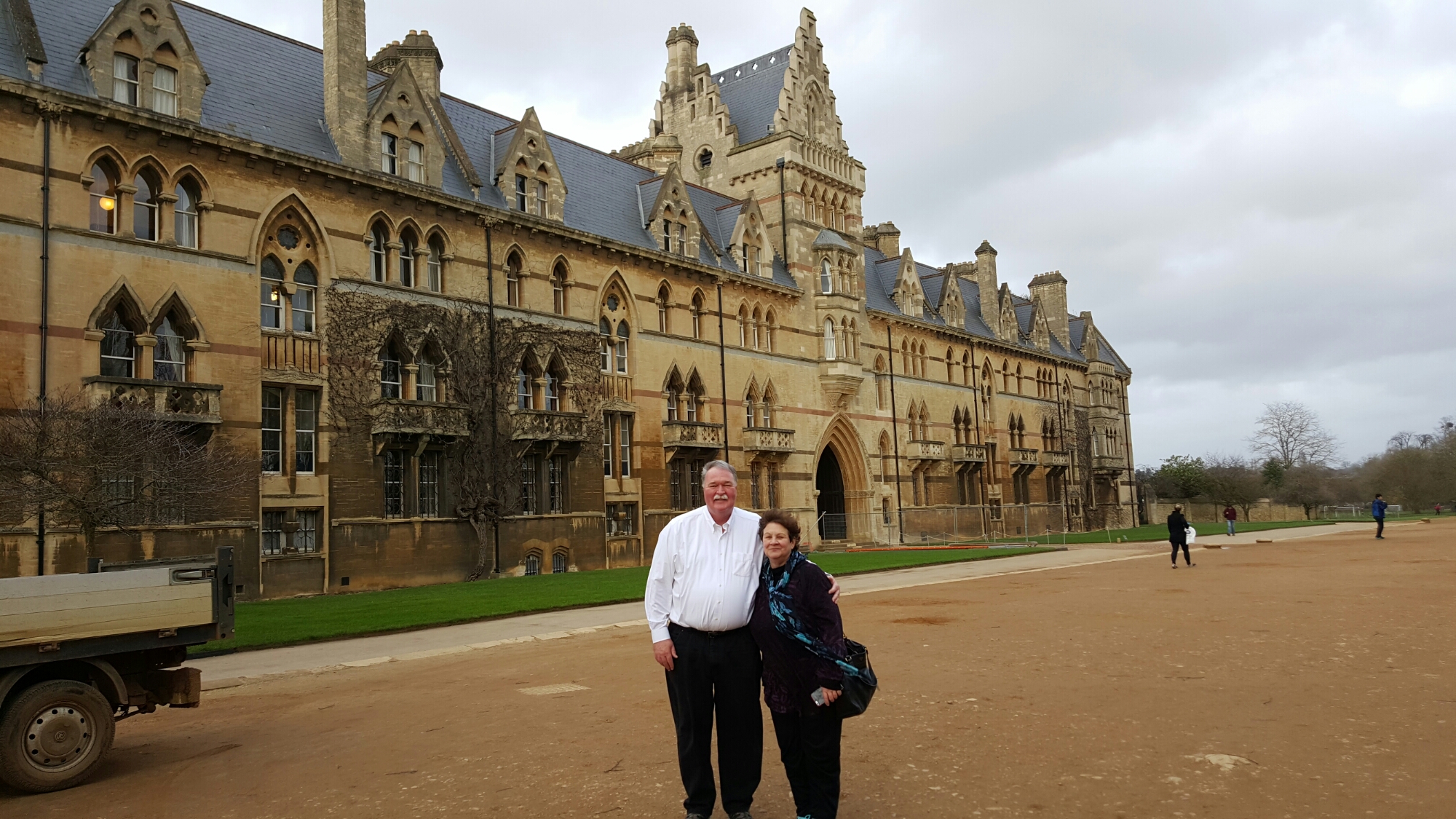
Outside Christ Church College, Oxford. One of the most beautiful and profoundly ‘magical’ places we have ever been. Scenes from Harry Potter movies were shot here. Albert Einstein, John Locke, John Wesley, Lewis Carroll, and 13 of the 26 Prime Ministers from Oxford studied here. Carroll’s Alice in Wonderland was inspired here, and Alice was the daughter of the Dean of Christ Church.

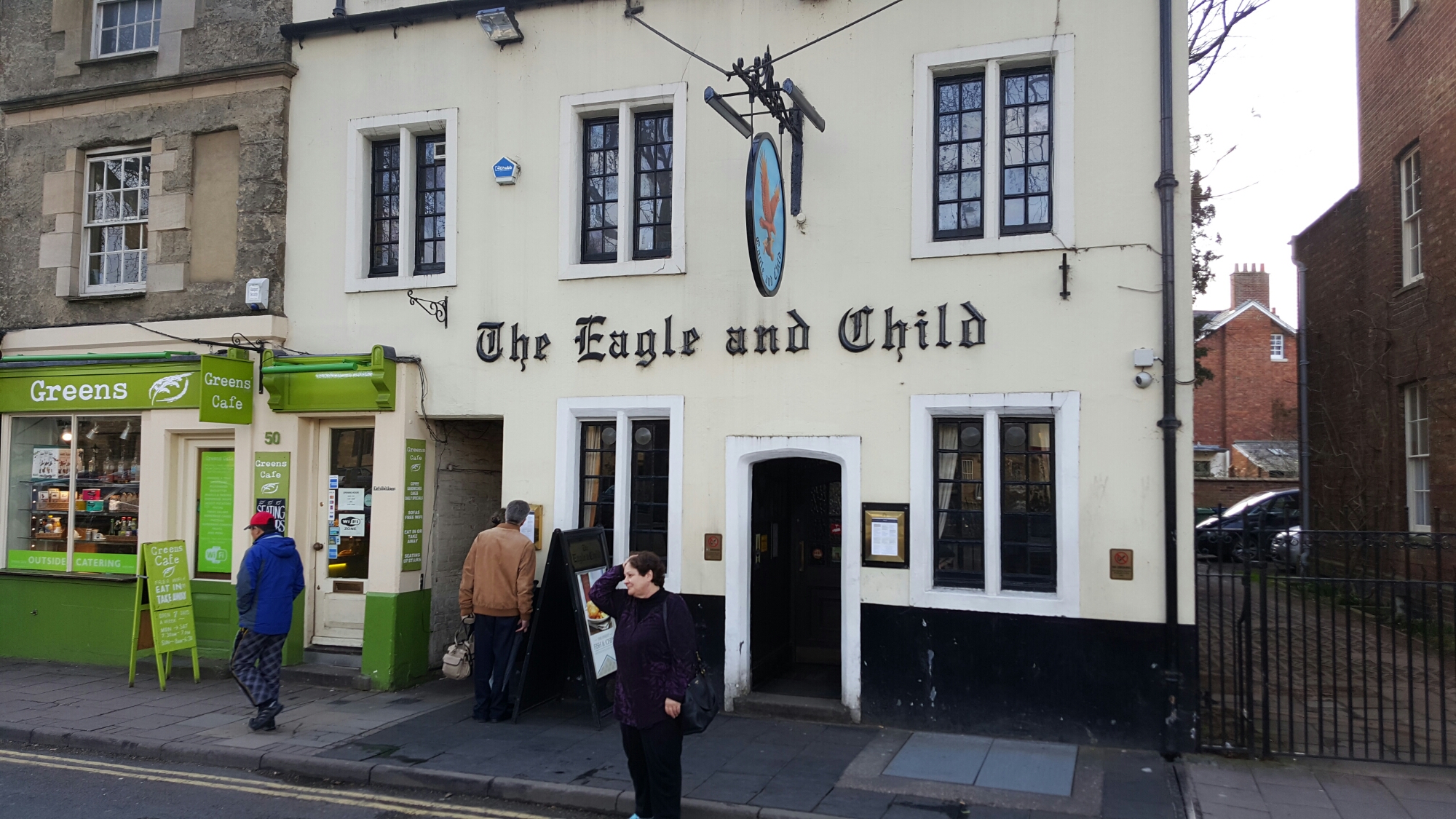
Yesterday, Marion and I travelled to Oxford and had a late lunch in the renowned Eagle and Child pub, where a group of famous Christians met regularly to encourage one another. We sat in the same nook where J.R.R. Tolkien, C.S. Lewis and others discussed ideas that shaped some of the most significant English literature to come out of the twentieth century. I couldn’t help feeling a little exuberant, so I took a few snaps with my cell phone and sent them off to friends and family.

image

I really didn’t want to write this post. I’ve never read any Tolkien. I’m no C.S. Lewis scholar. I find it difficult to read Lewis’ philosophical theology, preferring instead to listen to his books using Audible. His writing is undeniably brilliant and packed with words that connect the intellect to our faith. But as Dick Woodward once told me, “C.S. Lewis made things complicated, but I spent my entire ministry trying to make them simple—so people would understand.” One of the great wonders of the Christian Faith is that it works on both very simple and very complex levels.

image

image

Tuesday mornings at the Eagle and Child pub. This is where Tolkien, Lewis and others sat. The Gloucester sausages and steak and ale pie were quite good. We were late for lunch, so it wasn’t too crowded.

When Clarke received our photos from the Eagle and Child, he prodded me, reluctantly, into writing this post. But it occurred to me while sitting in the Eagle and Child that I have experienced and benefitted from the encouragement of some wonderful brothers and sisters. Brothers like Dave Thompson who will send long, deep, profound emails of encouragement at all hours of the night. And Dave Rudy, who always can add to any topic I may bring up (it’s amazing how much Dave has studied and absorbed). And Rob Campbell, who is the most devotionally devoted person I have ever met (and a finer friend you could not have). And Clarke Morledge himself, with an encyclopedic knowledge of all things theological and hermeneutical (his zeal is as contagious as his heart). And Ken Petzinger, a Princeton-educated physicist who is living proof that Christians also come with extreme intellectual capacity (and who always has something current to share from his personal studies). And Dick Woodward, who was such an encourager and gifted teacher. And Iris Rudy, who is such a good listener (and who commands respect when she speaks). And Tina Campbell, who works at being the most compassionate and hospitable person I know (and succeeds magnificently). And Marion, whom I could never thank appropriately for being such a wonderful, selfless person (and in whom I continually see the Gospel lived out).

So when the writer of Hebrews states, “And let us take thought of how to spur one another on to love and good works, not abandoning our own meetings, as some are in the habit of doing, but encouraging each other, and even more so because you see the day drawing near,” l get it. I am thankful for the Eagle and Child that all of us have experienced.

image

The University of Oxford has 38 Colleges and 6 Permanent Private Halls (PPHs) of religious foundation. There are cathedrals, churches and scenes like this everywhere you turn. I hope that you can visit Oxford soon!


Second Temple Judaism Timeline

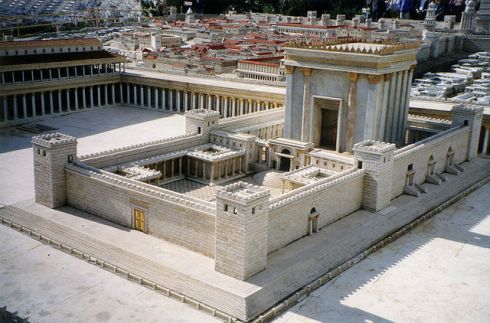
Second Temple in Jerusalem, from the Holyland Model in Jerusalem. I saw this on my trip to Jerusalem years ago, but this photo from Wikipedia is better.

Second Temple in Jerusalem, from the Holyland Model in Jerusalem. Based on the writings of Josephus. I saw this on my trip to Jerusalem years ago, but this photo from Wikipedia is better.

When the Jews returned from the Exile in Babylon, in the late sixth century B.C., Jerusalem and its original temple lay in ruins.  Leaders like Nehemiah and Ezra helped to lead the people to rebuild the city and the temple. This “Second Temple” survived until being destroyed in 70 A.D., by the Romans. During that 600 year period, the Jews were dominated by a range of empires, including the Persians, the Greeks, the Syrians, and finally the Romans, though they were able to manage a brief period of self-rule during the Maccabean Revolt. Much of the later part of the Second Temple period is unfamiliar to many students of the Bible, as the last prophet we have in the Old Testament is Malachi, leaving about a four hundred year gap in the biblical chronology unaccounted for until the birth of Jesus. But modern scholarship today indicates that knowing this period of Israel’s history is critical to understanding the cultural context for the New Testament.

Recently, I discovering this interactive timeline for the Second Temple Judaism period at the BibleOdyssey.org, sponsored by the Society of Biblical Literature.  I have been looking to something like this for awhile, so I am glad that BibleOdyssey.org put it together fairly recently. This is a great reference tool for your study of the Bible.

Just a word of caution: the Society of Biblical Literature includes a very wide spectrum of scholarship, conservative evangelical as well as liberal critical, so some of the dates given for a few of the biblical books might raise a few eyebrows.  For a comparable list of dates for the writing of Old Testament books from a conservative evangelical perspective, you might want to look as well at Matt Slick’s listing at CARM.org.


Top Posts of the Year 2015

As a way of closing out the year 2015, I thought I would highlight what I thought were some of the most thought-challenging blog posts and news articles of 2015, and why. Some caution is in order, as several of these posts can be disturbing to read. Nevertheless, they are important because the stories conveyed by the authors have ramifications for how we as followers of Jesus practice our faith in our world today.

  • Graeme Wood’s article in The Atlantic, What ISIS Really Wants, helps to shatter the myth that the aims the Islamic State of Iraq and the Levant having nothing to do with genuine Islam. Sure, moderate Muslims are repulsed by ISIS, but if you study their agenda to re-establish an Islamic caliphate, then you will recognize that the motivation behind ISIS comes straight out of a literalistic reading of the Koran.
  • As discussed here on Veracity, numerous media outlets reported on the statement made by Wheaton College faculty member, Larycia Hawkins, that Christians and Muslims worship “the same God,” that led to her being placed on administrative leave. The incident revealed tensions within the church, in view of the recent problems with terrorist attacks by radical Islamic groups, and the future status of 4 million Syrian refugees flooding the world. How should Christians relate to people from Islamic cultures?
  • National Geographic‘s Maureen Orth, in her front-cover article on the Virgin Mary shows just how seriously the Roman Catholic Church takes miracles associated with appearances of the Mother of Jesus. Is there a problem when people look to such “signs and miracles” to guide their faith, or does such a dependence on such things undermine the principle of the all sufficiency of Scripture alone to guide us towards the Truth? How do you discern the difference between a genuine miracle of God and a fake? The first reported sighting of Mary goes back to 40 A.D…. while she was still alive.
  • In a somewhat related story, Christianity Today‘s Bob Smietana investigates the connection between royalties from the popular evangelical worship song, “How Great is Our God,” and a church leader in the Nashville area who is under a cloud of suspicion regarding prosperity doctrine teachings and sexual abuse. There appears to be fine line between faithfulness to the Gospel and careening off a spiritual cliff (UPDATE: 12/31/15)
  • Rod Dreher, a Christian blogger, writes in the American Conservative that the recent debates over LGBT rights means that the “American way of life” is on a collision course with traditional, orthodox Christianity.  The culture wars, as we have known it, are over, and the battle for hearts and minds is in the up-and-coming generation of youth in our churches. Christians need to rethink how to go about biblical discipleship in a rapidly shifting culture, including considering the so-called “Benedict Option.
  • Ever wonder who popularized terms like “anorexia,” “PTSD,” and “biopolar disorder” in the modern vocabulary of psychology? Look no further than Robert Spitzer, the psychologist intellectual who died on Christmas Day, 2015, in this piece written by Amy Argetsinger for the Washington Post. Spitzer helped to steer the psychology profession to declare that homosexuality was not a psychological disorder in the 1970s. In the early 2000s, his work took a different turn, declaring from one of his studies that reparative therapy could actually cure homosexual orientation, which served as a very promising sign to the growing “ex-gay” evangelical Christian movement. However, this conclusion was later rescinded by Spitzer’s own reevaluation in 2012. Later that same year, Exodus International, the largest “ex-gay” evangelical Christian ministry in the world, closed its doors, following Spitzer’s revised conclusion that reparative therapy not only fails to help people in most cases, but that it can also cause great psychological harm. A growing view among evangelical Christians, while still believing in the Bible’s opposition to same-sex behavior, now agrees that reparative therapy is to be avoided, according to this article by Jonathan Merritt for The Atlantic.
  • And to top it off…. the biggest NON-stories for 2015… drum roll please….. the prophecy non-fulfillments regarding the Four Blood Moons and the Mystery of the Shemitah predictions…. ZZZZZZ…. surprise, these two were sleepers!!

A few of the above stories can get you a bit depressed. Here are few antidotes to the pessimism that indicates that God is doing some incredible things in our world today. May we be ever mindful of God’s providential care in the New Year!


Syrian Refugees: What Would Jesus Do?

And one of them, an expert in religious law, asked him a question to test him: “Teacher, which commandment in the law is the greatest?” Jesus said to him, “‘Love the Lord your God with all your heart, with all your soul, and with all your mind.’ This is the first and greatest commandment. The second is like it: ‘Love your neighbor as yourself.’ All the law and the prophets depend on these two commandments.” [Matthew 22:35-40 NET]

Now an expert in religious law stood up to test Jesus, saying, “Teacher, what must I do to inherit eternal life?” He said to him, “What is written in the law? How do you understand it?” The expert answered, “Love the Lord your God with all your heart, with all your soul, with all your strength, and with all your mind, and love your neighbor as yourself.” Jesus said to him, “You have answered correctly; do this, and you will live.” But the expert, wanting to justify himself, said to Jesus, “And who is my neighbor?” Jesus replied, “A man was going down from Jerusalem to Jericho, and fell into the hands of robbers, who stripped him, beat him up, and went off, leaving him half dead. Now by chance a priest was going down that road, but when he saw the injured man he passed by on the other side. So too a Levite, when he came up to the place and saw him, passed by on the other side. But a Samaritan who was traveling came to where the injured man was, and when he saw him, he felt compassion for him. He went up to him and bandaged his wounds, pouring oil and wine on them. Then he put him on his own animal, brought him to an inn, and took care of him. The next day he took out two silver coins and gave them to the innkeeper, saying, ‘Take care of him, and whatever else you spend, I will repay you when I come back this way.’ Which of these three do you think became a neighbor to the man who fell into the hands of the robbers?” The expert in religious law said, “The one who showed mercy to him.” So Jesus said to him, “Go and do the same.” [Luke 10:25-37 NET]

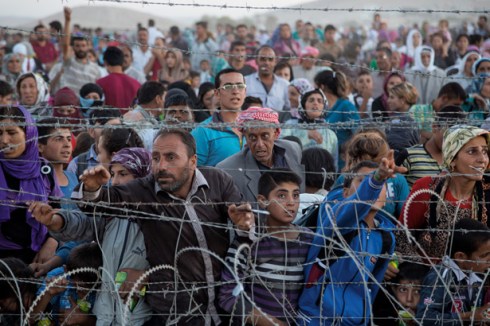
It is difficult at times to write about the application of Christian doctrine to our lives without getting cynical. We try very hard to avoid sounding off on Veracity. But, I have to admit that the self-absorption with American politics that we see in the media is disturbing. In a world full of suffering—that desperately needs the Gospel of Jesus Christ to be applied in relief efforts—we are drowning in a sea of political rhetoric that panders to isolationists and preys upon their fears. Don’t agree? Turn on any news program and count the minutes devoted to American politics. Also, while you’re watching, keep track of the minutes devoted to the four million refugees inside and fleeing Syria.

The Crisis in Photographs
Syrian Refugees

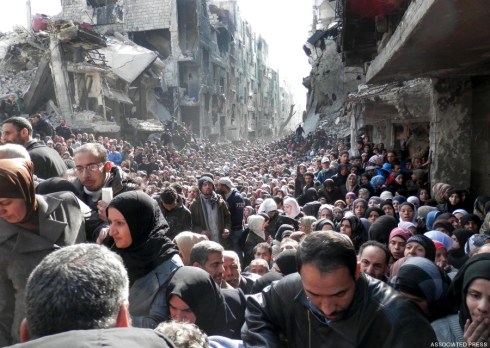
A sea of hungry, haunted faces looks out from a massive queue that snakes through the bombed out Yarmouk refugee camp in southern Syria. In the photo, taken on January 31, 2014 in Damascus’ Palestinian refugee camp, men, women, and children were in line for aid that included desperately needed food and medical supplies. There were more than 18,000 people in the Yarmouk camp, and many were starving to death.

Syria – Save the Children

Syria – Save the Children

Syrian Migrants

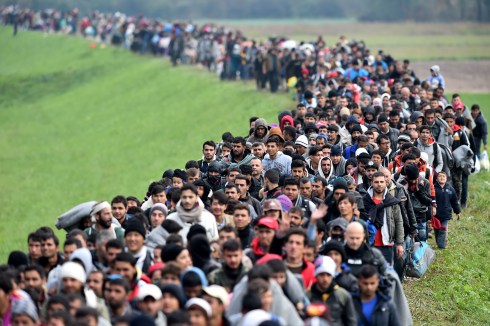
Migrants are escorted through fields by Slovenian police and the army as they walk from the village of Rigonce to Brezice refugee camp in October, 2015. (Photo by Jeff J. Mitchell/Getty Images)

Syrian 7

Millions of Syrians escape an apocalyptic civil war, creating a historic crisis.

Wounded Syrian Girl

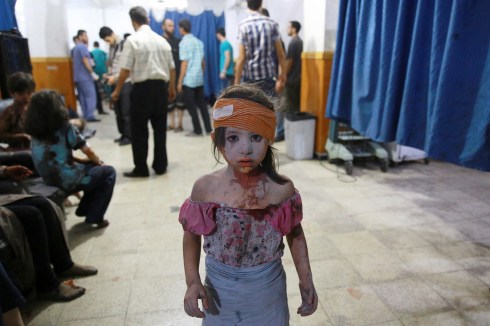
A wounded Syrian girl stands in a makeshift hospital in the rebel-held area of Douma, east of Syria’s capital of Damascus, following shelling and air raids by Syrian government forces on August 22, 2015. At least 20 civilians were killed, and another 200 wounded or trapped in Douma, a monitoring group said, just six days after regime airstrikes killed more than 100 people and sparked international condemnation of one of the bloodiest government attacks in Syria’s war.

A paramilitary police officer investigates the scene before carrying the lifeless body of Aylan Kurdi, 3, after a number of refugees died and others were reported missing when boats carrying them to the Greek island of Kos capsized near the Turkish resort of Bodrum on September 2, 2015. The tides also washed up the bodies of the boy's 5-year-old brother Ghalib and their mother Rehan on Turkey's Bodrum peninsula. Their father, Abdullah, survived the tragedy.

A paramilitary police officer investigates the scene before carrying the lifeless body of Aylan Kurdi, 3, after a number of refugees died and others were reported missing when boats carrying them to the Greek island of Kos capsized near the Turkish resort of Bodrum on September 2, 2015. The tides also washed up the bodies of the boy’s 5-year-old brother Ghalib and their mother Rehan on Turkey’s Bodrum peninsula. Their father, Abdullah, survived the tragedy.

A Dutch volunteer tries to comfort a migrant moments after arriving aboard a raft at a beach on the Greek island of Lesbos October 23, 2015.

A Dutch volunteer tries to comfort a migrant moments after arriving aboard a raft at a beach on the Greek island of Lesbos on October 23, 2015.

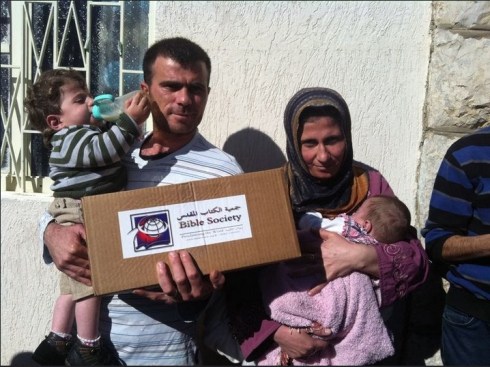
A Syrian refugee family with a Lebanon Bible Society aid package. The Bible Society provides aid for around 3,000 Syrian refugee families.

A Syrian refugee family with a Lebanon Bible Society aid package. The Bible Society provides aid for around 3,000 Syrian refugee families.

Pastoral Comment

After publishing this post, one of our astute readers called the following video to our attention. Pastor Max Vanderpool of Generations Community Church in Kentucky hit the nail on the head. We need to wake up and be vocal about what is happening. We need to be part of the solution, not part of the problem. The world is full of hatred and fear and self-absorption. Get involved. Show some compassion. That’s what Jesus would do!

What Can We Do?

Here are four organizations that provide aid to Syrian refugees, and others in the Middle East, in the name of Jesus Christ. Please consider clicking the links below to learn more about them and their relief efforts. Please use the donate links to make your year-end charitable contributions to show that you understand Jesus’ teaching in Luke 10:25-37.

World Vision Syrian Refugee Fund (Donate)

Christian Aid Mission (Donate for Shinar Mission)

Open Doors USA (Donate)

Samaritans Purse (Donate)