Category Archives: Topics

Why This Christian Thinks the “March for Science” is Not Such a Good Idea

Animals entering Noah’s ark, by Dutch painter Jacob Savery II (photo credit: Getty Images, Bridgeman Art Library). Celebrating God’s Creation is a really good idea. But do we need a “March for Science” to celebrate? Let me share with you my opinion.

While I am at it, another fairly short editorial blog post….

I recently received an email encouraging me, as a Christian, to participate in the “March for Science,” to be held in Washington, D.C., on Earth Day, April 22, 2017, as written about in this Christianity Today magazine article. The email encouraged me to participate “as an act of worship of the One who makes science possible.”

I have mixed thoughts about this. On the one hand, the email rightly affirmed my belief “in Jesus Christ, the Living Word of God for, through, and in whom all things were made, sustained, and held together by His power (John 1:3, Colossians 1:16).”

Classic, historical Christian faith has consistently taught that there are “two books” of God’s revelation. First, we begin with the “book” of Scripture, that the Bible is the inspired Word of God, useful for teaching, rebuking, correction, and training in righteousness (2 Timothy 3:16). That same Bible also affirms the “book” of nature, as the invisible attributes of God, namely his eternal power and divine nature, have been clearly perceived, ever since the creation of the world, in the things that have been made. People are without excuse… whether they have access to a Bible or not (Romans 1:20).

As a computer engineer, with a keen interest in science, and a Christian, I have wrestled with the relationship between the Bible and science for years. But the conclusion is clear. The evidence in Scripture and outside of Scripture both point in the same direction. Both the study of the Bible and the study of science act as independent witnesses that to speak to the same truth of God in Christ.

Sadly, we live in an age when many people, including more than a few Christians, are confused about this. In a culture enamored with supposedly “scientific” claims, many make assertions in the name of “science,’ but such “science” has not been sufficiently peer reviewed, nor properly fact checked. As a result, many say we live in a “post truth” culture, where “alternative facts” win out over genuine facts.

I fully support the concept of making more people aware of the value of genuine science, and building communities of people, particularly in our churches, who care about the pursuit of truth found in God’s Creation. However, I am also concerned that a “March for Science” might send the wrong signal. It might suggest that science is yet just another partisan voice in an already too divided, politicized world. Much of the same can be said about the message of the Bible, and how the Gospel has at times been too closely identified with a political movement.

Christians should be known as people who value truth, above all else. You will know the truth, and the truth will set you free (John 8:32). Science is a friend of the Gospel, and not an enemy. We do no favors by politicizing either.


“Bible Answer Man’s” Critics Follow-Up: Mormonism More “Thoroughly Biblical” Than Eastern Orthodoxy?

Hank Hanegraaff, the “Bible Answer Man” on many Christian radio stations, has sparked a debate among evangelicals as to what being a “biblical” and “orthodox” Christian really means.

I want to add a short editorial comment, following a curious development involving Hank Hanegraaff, “The Bible Answer Man,” and his recent admission into Eastern Orthodoxy, that I blogged about recently.

The Bott Radio Network is apparently a popular source of syndicated Christian radio, though not available in my state of Virginia. Upon hearing the news of Hanegraaff’s “crossing of the Bosphorus,” Bott Radio Network decided to drop “The Bible Answer Man” from their radio programming, a show that they have hosted since the 1980s. In a news report, the president of the Bott Radio Network, made this statement:

We want to make sure that our listeners know that the programming that we have on Bott Radio Network is thoroughly biblical.

Neither I, nor my Eastern Orthodox friends, are surprised by this. But that is not the whole story. To replace “The Bible Answer Man,” Bott Radio plans to accommodate a new lineup, featuring the teachings of other personalities, including David Barton, of WallBuilders. Presumably, Bott Radio believes that David Barton’s teachings are more “thoroughly biblical” than Hank Hanegraaff’s.

Pause for a moment.

David Barton, a controversial history popularizer, is a frequent guest on a show hosted by TV personality Glenn Beck, a well-known Mormon.

The irony here is that in 2011, a Moody Radio affiliate dropped David Barton from their playlist, when Barton claimed that fellow political conservative, Glenn Beck, another popular radio and TV personality, and an outspoken Mormon, was in fact an orthodox-believing Christian.Three years ago, we explored Glenn Beck’s association between Mormonism and evangelical Christianity, here on Veracity. According to various news reports, including this one, David Barton heard Glenn Beck say that he accepted “the Lord Jesus Christ [as] my Savior and my Redeemer.”  Here is an endorsement by Barton, standing by Glenn Beck’s conversion to Christianity, on Moody Radio:

Glenn says he’s Mormon. Ok, that’s fine. Based on what you heard, if you heard a Baptist say that or if you heard a Methodist say that…what would you say?….Why is it not a real conversion because of the label he wears?…I don’t care what label Beck wears. I don’t care what Glenn thinks Mormon means.

So, is the Bott Radio Network claiming now that Mormonism is more “thoroughly biblical” than Eastern Orthodoxy?

Seriously?

The Eastern Orthodox are not Protestant. Yes, that is true. But they are far more orthodox in their theology than the Mormons are. The Eastern Orthodox accept the Triune nature of God. Mormonism’s track record on the Trinity is highly suspect. The Eastern Orthodox have not added “newer” books to their canon of Scripture. The Mormons have added newer books. The Eastern Orthodox understanding of how believers become more Christ-like, otherwise known as the doctrine of theosis, is way-way-way different from the classic Mormon idea propagated by the late 19th century Mormon president Lorenzo Snow, “As man now is, God once was; as God now is, man may be.

Mormonism pales in comparison to Eastern Orthodoxy, concerning doctrinal truth, even if a Protestant ultimately finds many others beliefs of Eastern Orthodoxy unacceptable.

We live in strange times indeed.

It is apparent that the good folks at the Bott Radio Network do not know much about Eastern Orthodoxy, or Mormonism, or perhaps both. Sam Storms, a blogger with The Gospel Coalition, has a good summary of Eastern Orthodoxy belief, geared towards educating Protestants.


“The Bible Answer Man” Becomes Eastern Orthodox

Hank Hanegraaff, the “Bible Answer Man” on many Christian radio stations, has many evangelicals stunned and bewildered by his attraction to the “smells and bells” of Eastern Orthodoxy.

Hank Hanegraaff, otherwise known as the radio personality, “The Bible Answer Man,” recently converted to Eastern Orthodoxy. After two years of personal inquiry, Hanegraaff and his wife were chrismated and received into the Greek Orthodox Church, near their home in Charlotte, North Carolina, on Palm Sunday.

In the American evangelical sub culture, Hank Hanegraaff has been one of those influential personalities, known for possessing an encyclopedic knowledge of the Bible, where radio listeners have asked Bible questions from umpteen different directions, and Hanegraaff has had the ability to field them all live on talk radio. Absolutely amazing.

A number of evangelicals view Hanegraaff’s move to Orthodoxy as a type of betrayal, suggesting that he is no longer a true Christian. Others are confused, not knowing much about what is “Eastern Orthodoxy,” and why people are attracted to this ancient approach to Christian faith. Even the Christian satire site, the Babylon Bee, is poking fun at Hanegraaff, calling him “The Apostolic Tradition Man.”

Hanegraaff responds to criticism by saying, “People are posting this notion that somehow or other I’ve walked away from the faith and am no longer a Christian. Look, my views have been codified in 20 books, and my views have not changed,” according to an article in Christianity Today, the main source for this blog post. Hanegraaff recently posted a letter to ministry supporters reassuring them of his love for Jesus.

What does one make of all this? Continue reading


The Beautiful Gate: Holy Week, Ezekiel, Mary, and the Return of Christ

The Golden Gate of Jerusalem, that some identify as being the Beautiful Gate of Acts 3, where Jesus will return at the end of the age (credit: Wikipedia)

In Acts 3, some followers of Jesus met a lame beggar, at the Beautiful Gate, as the man was asking for alms of those entering the temple. Peter stunned the beggar by saying, “I have no silver and gold, but what I do have I give to you. In the name of Jesus Christ of Nazareth, rise up and walk!” (verse 6). The man was healed, and Peter boldly proclaimed the news that Jesus was and is indeed the Risen Messiah, to those who saw this miracle.

The man was “leaping up” (Acts 3:8), anticipating that this is one of the signs indicating the beginning of the messianic age, as foretold in the Old Testament, as in Isaiah 35:6 (ESV):

..Then the eyes of the blind shall be opened,
    and the ears of the deaf unstopped;
then shall the lame man leap like a deer,
    and the tongue of the mute sing for joy.
For waters break forth in the wilderness,
    and streams in the desert;..

The Beautiful Gate is not directly mentioned elsewhere in the Bible, and unfortunately, scholars are divided as to the exact location of the Beautiful Gate. As the Temple Mount area was largely destroyed in 70 A.D., it is difficult to establish the location with much certainty. However, there are at least one (or two) theories, though I am hardly qualified enough to be sure of them, that tell very interesting stories.

Some say that the Beautiful Gate is the same as the Golden Gate, located on the eastern side of the Temple Mount, sitting above the Kidron Valley, across from the Mount of Olives. Though not clearly specified in Scripture, tradition suggests that when Jesus made His triumphal entry into Jerusalem, starting from the Mount of Olives, that He entered the city through this gate, on Palm Sunday (Luke 19:28-44), the beginning of what many Christians call “Holy Week.” Within that following week, subsequent events would lead to the Crucifixion and, finally, the Resurrection of Jesus.

Proponents of this theory also suggest that when Jesus returns at His Second Coming, that he will appear on the Mount of Olives again (Zechariah 14:4), and travel the same route he took on Palm Sunday, entering the city again through this same gate, into the temple area.

What caught my attention with this theory was something that you will notice about this gate. As you see in the photograph, the gate has been walled off, and sealed shut.

This Golden Gate was sealed shut in 1540-41 AD, by Suleiman the Magnificient, an Ottoman Empire sultan. The story goes that Suleiman sealed the gate, and even placed a Muslim graveyard into front of the entrance, in order to prevent the Jewish Messiah from entering the city.

If you are familiar with the Book of Ezekiel, you will know that Ezekiel mentions a gate or entrance to the city, on the east side, facing presumably the Mount of Olives (Ezekiel 10:18-19, 11:23, 43:1-5). But then in Ezekiel 44:1-2, we read a fascinating passage:

Then he brought me back to the outer gate of the sanctuary, which faces east. And it was shut. And the Lord said to me, “This gate shall remain shut; it shall not be opened, and no one shall enter by it, for the Lord, the God of Israel, has entered by it. Therefore it shall remain shut.

Many Christians have read this to believe that Suleiman’s actions were actually a fulfillment of prophecy, though he did not realize it. Then when Jesus returns again, the gate will be opened for the returning Messiah (Ezekiel 46:12).

Such interpretations are not without their problems. A long standing, older interpretation, going back to the early church, understands that the shutting of the gate in Ezekiel 44:1-2, is about something completely different.

A number of early church fathers saw this as Ezekiel’s prophecy regarding the perpetual virginity of Mary, a belief shared today by Catholics and Eastern Orthodox alike, that Mary was not only a virgin before the birth of Jesus, but that she remained a virgin her whole life, as taught here by Saint Augustine of Hippo, in the 5th century AD.

“It is written (Ezekiel 44, 2): ‘This gate shall be shut, it shall not be opened, and no man shall pass through it. Because the Lord the God of Israel hath entered in by it…’ What means this closed gate in the house of the Lord, except that Mary is to be ever inviolate? What does it mean that ‘no man shall pass through it,’ save that Joseph shall not know her? And what is this – ‘The Lord alone enters in and goeth out by it,’ except that the Holy Ghost shall impregnate her, and that the Lord of Angels shall be born of her? And what means this – ‘It shall be shut for evermore,’ but that Mary is a Virgin before His birth, a Virgin in His birth, and a Virgin after His birth.” 

But I recently learned that the Beautiful (or Golden?) Gate figures prominently in the apocryphal story of the Annunciation of Mary, to her parents (see below). Not too many evangelical Protestants would accept this particular interpretation today.

Well, there is a lot of speculation here, I must freely admit. Various Christians have long debated and will continue to debate the details on these matters.

Nevertheless, the momentous events during Holy Week, from Palm Sunday to the Resurrection, give us a lot to think about. The entire message of the Bible, from the Old Testament, to the very end of this current age, puts a laser focus on this very special week in world history. No matter where you land on the true meaning, location and history of the Beautiful Gate, where Peter healed the lame beggar, this gate points to the central themes of the Bible that are worth the efforts of our meditation.
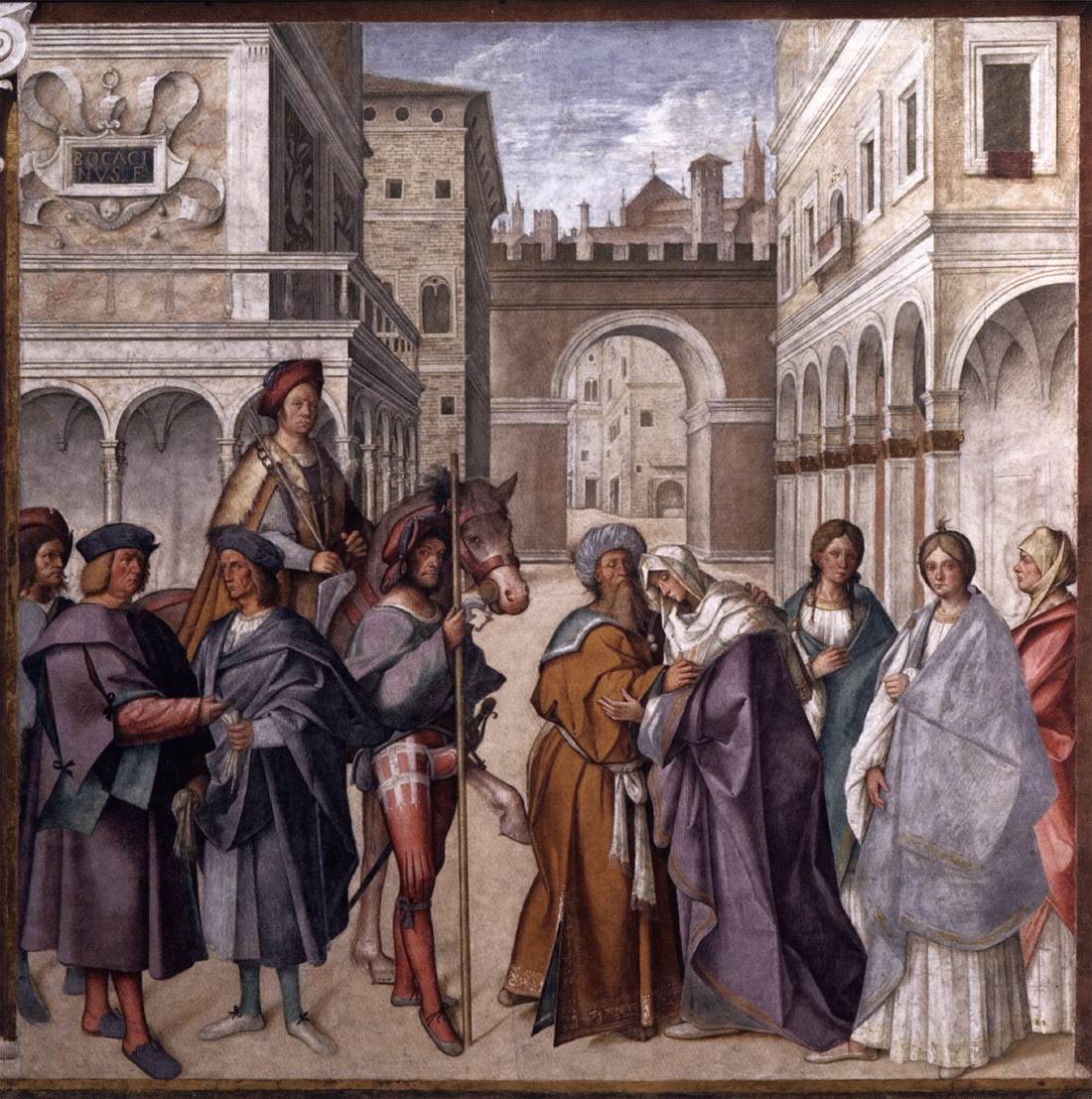
Meeting at the Golden Gate, by Boccaccio, 1514-1515, at Cremona Cathedral. In the New Testament apocryphal literature, the Protoevangelion of James, the parents of the EverVirgin Mary, Joachim and Anna, met at the Golden or Beautiful Gate, after both received a visit independently from the Archangel Gabriel, promising them the birth of their child. Though not a part of the Bible, the Protoevangelion of James was a popular text in the medieval church, for thinking about the life of Mary, the mother of Jesus. (credit: Web Gallery of Art).


Why Different Christians Recite the Lord’s Prayer Differently

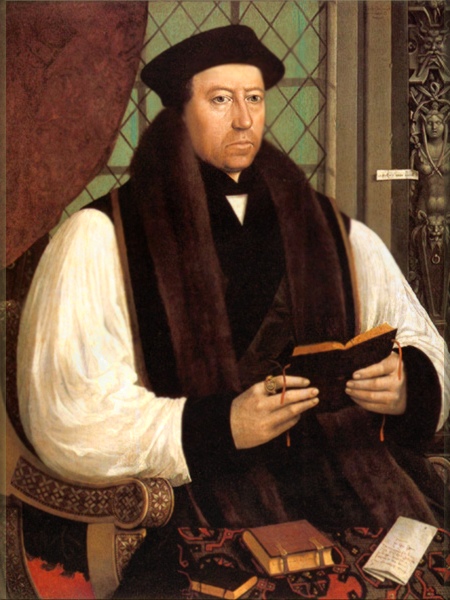
Thomas Cranmer, 16th century Archbishop of Canterbury, who guided King Henry VIII’s efforts to standardize an English version of the Lord’s Prayer.

Have you ever been a little confused when it comes to saying the Lord’s Prayer in a church service?

I remember when I first visited an evangelical church, that did not have a fixed, liturgical tradition. When it came to reciting the Lord’s Prayer, one group was still saying, “And forgive us our trespasses, as we forgive those who trespass against us….,” while the other group had finished their, “And forgive us our debts, as we forgive our debtors…,” several seconds earlier. The “debtors” waited patiently until “trespassers,” like me, had finished, before continuing together.

So, why the cacophony of voices among Christians?

Protestant Christians have been known for having multiple methods of saying the so-called, “Lord’s Prayer,” what many Catholics call the “Our Father,” based on the first two words of the prayer. My Catholic friends often tease me for the endless varieties of worship among English-speaking Protestants.

But it really was not meant to be that way. Much of the story goes back to the period of the Reformation, in 16th and 17th century England. Continue reading