Category Archives: Topics

Reformation: R. C. Sproul

R.C. Sproul (1939-2017), on camera, recording one his many Ligonier conference sessions, back in 1985 (photo credit: Ligonier Ministries).

Robert Charles Sproul, known to most people as “R. C.,” was one of the most influential theologians in 20th/21st century evangelical Christianity. A primary architect of the 1970’s Chicago Statement on Biblical Inerrancy, and an outspoken critic of the 1990’s dialogue statement between evangelicals and Roman Catholics, Evangelicals and Catholics Together, Sproul was first and foremost a Bible teacher, whose passion was to help Christians integrate their thought life with the teachings of Scripture.

I first heard of R. C. Sproul when a friend handed me a set of cassette tapes, on the relationship between modern philosophy and Christianity. Sproul had given these talks at various retreats held at Ligonier Valley, a study center Sproul had founded, near Pittsburgh, Pennsylvania. As a young believer, I was blown away at how articulate R. C. Sproul was in addressing the type of intellectual challenges I was facing in college.

Not too many Christian Bible teachers were doing this at the time. R. C. Sproul was against efforts within the evangelical church to “dumb-down” the Gospel message. Every Christian, not just professional pastors, needed to know the basics of theology, and he had the gift of taking difficult theological concepts and making them understandable to the average believer.

R. C. Sproul had zero interest in God, and plenty of interest in sports, until he got to college. He became a believer in college, and eventually studied theology under John Gerstner, at Pittsburgh Theological Seminary. At first, Sproul resisted the Reformed theology of Gerstner, making himself into a “pest,” but he gradually came around to Gerstner’s perspective. Later, Sproul pursued doctoral studies under the preeminent Dutch scholar, G. C. Berkouwer, in Amsterdam. The Ligonier ministry was moved to Orlando in the mid-1980s, sponsoring dozens and dozens of weekend and week-long conferences. He was able to pass the leadership of Ligonier Ministries, along with a magazine he had founded, Table Talk, and his Renewing Your Mind radio program and podcast to a new generation of teachers. Over his half century of ministry, R. C. Sproul lived a life of impeccable integrity.

As an ardent Calvinist, R. C. Sproul nevertheless had his critics. He left the mainline Presbyterian church (the PCUSA), over concerns of a drift towards liberal theology. He joined the younger, more conservative, Presbyterian Church of America (PCA) in the 1970s, identifying himself as an heir to the Reformed tradition of the 1648 Westminster Confession of Faith, to the chagrin of other evangelicals who would embrace “believer’s baptism” only, or elements of Arminian theology. Others criticized him for not taking a firm stand regarding the age of the earth, with respect to the doctrine of creation, while others accused him of holding to “replacement theology,” by his not taking a stronger stand to support national Israel’s role in biblical prophecy. He was drawn to taking a more preterist view of the Book of Revelation, that suggests that many events described in that book of the Bible have already taken place, to the consternation of many evangelical futurists, who see most of Revelation being fulfilled in the End Times. Sproul publicly rebuked the late theologian, Clark Pinnock, for the latter’s advocacy of the controversial doctrine of open theism. Some thought Sproul was too heady, in promoting theology, at the expense of practical spirituality. However,  R. C. Sproul resisted pressures by other evangelical leaders, to make political statements, preferring to stick to his core themes of teaching Christian theology and apologetics.

It is fitting that R. C. Sproul would finish his earthly life in the year of the 500th anniversary of the start of the Protestant Reformation. R.C. Sproul loved to tell the story of Martin Luther’s encounter with Rome, generally marked by the year 1517, with Luther’s Ninety-Five Theses. Sproul saw in Luther’s theology the missing ingredient in much of evangelical thought and life today, a consciousness of the holiness and sovereignty of God. If there was one note that R.C. Sproul sang loudly and sang well, it would be to call the church back to God’s sovereignty and The Holiness of God, the title for perhaps his most important book.

R. C. Sproul was truly a man of the Reformation. He is remembered here at Ligonier Ministries, and with this obituary at The Gospel Coalition. Below is a video set of snapshots of Sproul, over the years, teaching on his favorite subject, the imputation of the righteousness of Christ (check out that head of hair!!).

How the Reformation (Almost) Killed Christmas

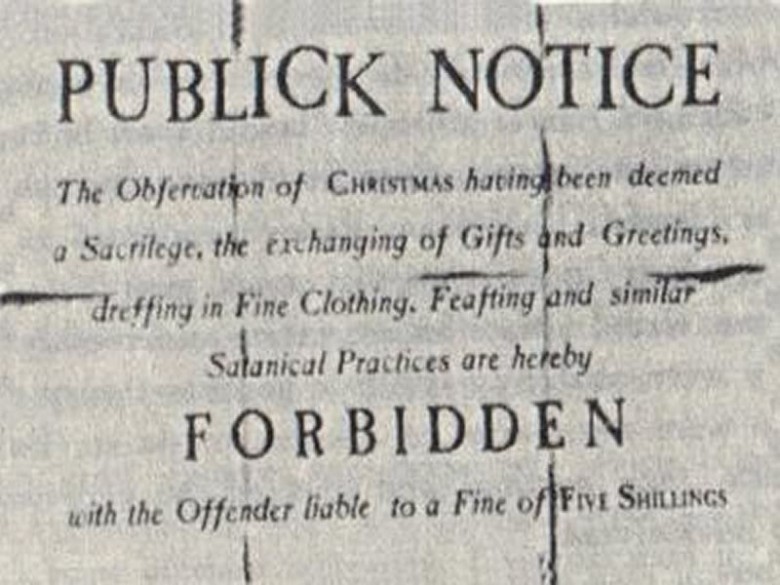
New England Puritans, in 1659, sought to ban Christmas celebrations, as they were thought to be “Satanic practices.” Only the most contrarian Christians are that severe today. How did Christmas win against Puritan opposition?

It was Christmas Day, 1550, in Geneva, Switzerland. A larger than usual crowd gathered at church that day, and the preacher, John Calvin, was rather annoyed.

“Now I see here today more people than I am accustomed to having at the sermon. Why is that? It is Christmas Day. And who told you this? You poor beasts. That is a fitting euphemism for all of you who have come here today to honor Noel.”

Calvin was not exactly trying to be like Charles Dickens’ Scrooge. Instead, he was bothered that so many of his church people were so superstitious, that they thought Christmas to be more important than the weekly Lord’s Day gatherings, held every Sunday. Calvin would be appalled by the contemporary practice of keeping shops open on Sundays, while closing those same shops on Christmas!

Calvin was not alone in his suspicions about Christmas, with some seeking to kill Christmas altogether. From Ulrich Zwingli’s Zurich, Switzerland, to the post-Elizabethan era of English Puritanism, in the early 17th century, many in the Reformation movement sought to abolish all feast and saints holy days… including Christmas.  The Bible gave no command and made no explicit provision for celebrating Christmas, and the Roman Catholic practice of celebrating Christmas was associated with so many superstitious beliefs (kissing under the mistletoe?), that it was better to be rid of all things that even hinted at “ole’ Saint Nick.” Even in colonial America, the Puritan settlers of New England sought to ban Christmas celebrations outright.

On the other hand, the German Reformer, Martin Luther, was one of the holdouts, who liked keeping Christmas traditions. Since the Bible never specifically prohibited Christmas celebrations, he saw no reason to forbid them. Luther gave his children toys and honey cakes on Christmas day. He popularized the Christmas tree. But for the English forebearers of Protestant reform, inspired by those like Geneva’s John Calvin, few Bible preachers and teachers on the British Isles cared that much for Christmas.

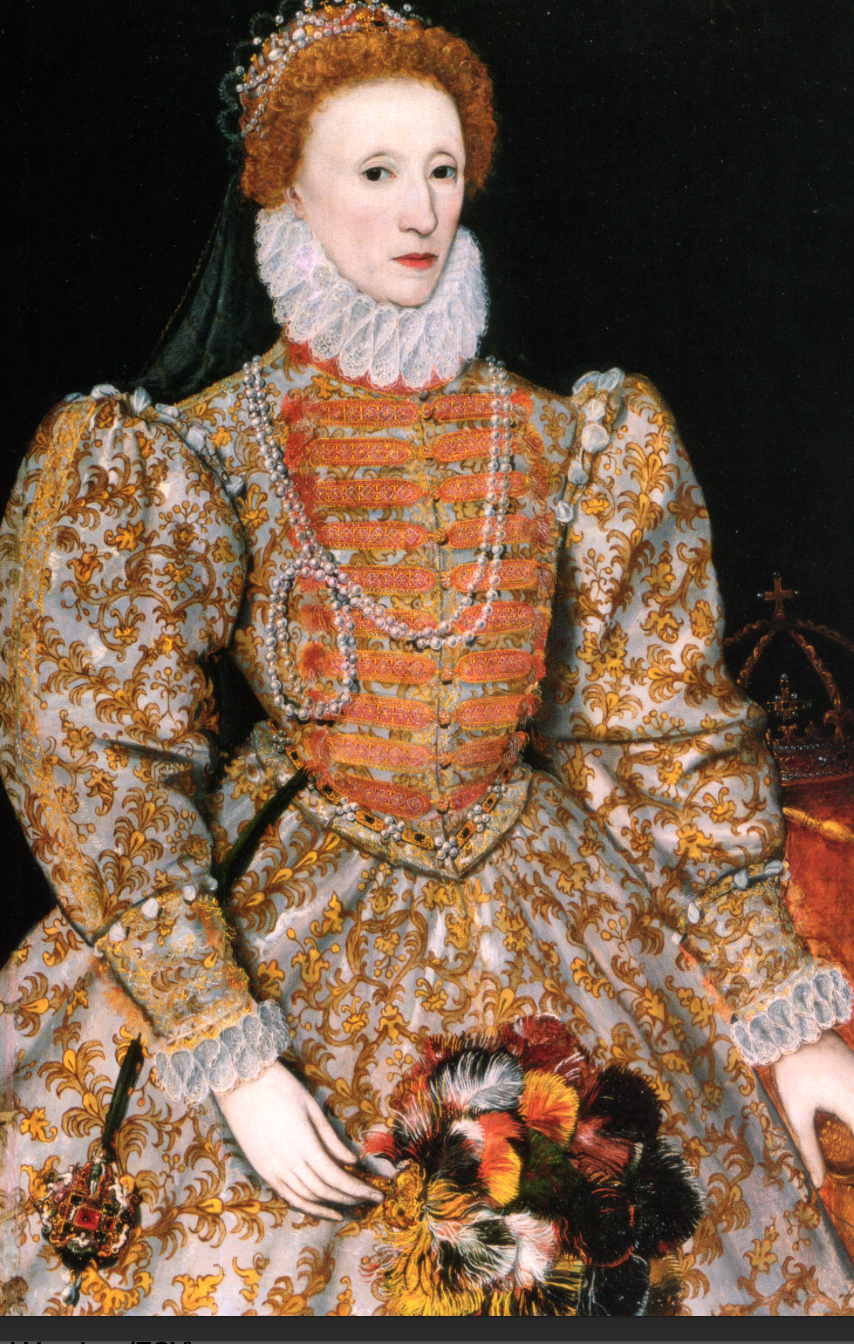
It was mainly during the long reign of Elizabeth I, the 16th century “Virgin Queen,” that Christmas managed to hang on, and even flourish, among the Protestant English. Christmas was a festive time at Elizabeth’s court.

Elizabeth I of England (1533-1603). The queen who saved Christmas for English Christians.

Elizabeth was determined to steer a middle course between the traditionalism of Roman Catholicism, which she abhorred, and the exuberant, reform-minded preaching of the Puritans, who wanted to strip the legacy of choral music, candles, and visual arts from the churches. The 1559 Elizabethan Settlement sought to marry Protestant theology with a collection of traditional, Roman Catholic worship practices. Elizabeth’s Protestant, yet not-so-rigid faith, gave space for the continued celebration of Christmas, during the tumult of the 16th century Reformation. Despite the efforts by Puritan partisans, to stamp out Romish traditions, the English populace loved Christmas.

By the late 18th and early 19th centuries, the red hot conflict between Protestantism and Roman Catholicism had finally begun to cool somewhat, and the Elizabethan embrace of Christmas eventually won over even ardently skeptical Bible-believers. The less confessionally-oriented growth of the evangelical movement, started by popular evangelists, like George Whitfield and John Wesley, made it possible once more for enthusiastic Protestants to consider Christmas as a genuinely Christian celebration, among English-speaking peoples. Towards the end of the 19th century, the popularity of English Christmas carols, ranging from “I Heard the Bells on Christmas Day,” to “O Holy Night,” to “Go Tell It on the Mountain,” helped to cement the reception of Christmas among English-speaking Christians.

Christmas did not merely survive. It thrived.

I am very much a child of the Reformation, sola fide, sola gratia, and all of the rest. Yet even though I do get rather burned out on the barrage of Christmas carols on the radio and in shopping malls, by about mid-December, I am nevertheless thankful that the Protestant Reformation did not ultimately succeed in killing off Christmas. In our increasingly secular American society, Christmas is still a festive time of year, where even the most skeptical non-believers are willing to enjoy a Christian celebration. Sure, many have no real understanding of the meaning of Christmas. Yet some are open to discuss spiritual things. Thanks to folks like Martin Luther (for Germans) and Queen Elizabeth I (for the English), the season of Christmas remains a time of year where we can focus on the mystery of God’s incarnate mission and presence on earth, through Jesus Christ.

Merry Christmas!

For a broader look at the “War on Christmas” in history, read this Veracity posting from a few years ago. The above blog post was inspired by reading David Swartz’s post, on the same topic, at the Anxious Bench blog.

The Williamsburg Inn, at Colonial Williamsburg’s Grand Illumination, 2017, celebrating the coming of the Christ, during the Christmas Advent season.


John Calvin and the Servetus Affair

John Calvin (1509-1564)

For some people, when they think of John Calvin, they think of predestination. Specifically, it would be the doctrine of double predestination, popularized by later followers of Calvin, whereby God elects some for salvation, and others for damnation. But in many quarters, Calvin is remembered differently, some negatively and to others, most positively (Listen to John Piper’s poem extolling “The Calvinist”). Continue reading


Your Mortgage, The Reformation, and the “Spirit of Capitalism”

For most people, if you want to buy your own home, you need to take out a mortgage. Or if you buy a new car, a car loan is necessary to make it happen. Most Christians, that I know, think nothing of this practice today. Several Christian friends of mine are even loan officers at different mortgage firms. But prior to the Reformation in the 16th century, it would have been unthinkable for a Christian to loan money out to other people at interest.

The Western medieval church banned the practice of Christians loaning out money to others, and charging interest, through a series of church councils, such as the Second and Third Lateran Council (1139 and 1179) and the Council of Vienna (1314). If you were ever convicted of making loans and charging interest, you could be even denied a Christian burial.

Why did the medieval church do this? Well, they thought that the Bible forbade the practice, which was called “usury.”

Take no interest from him or profit, but fear your God, that your brother may live beside you. You shall not lend him your money at interest, nor give him your food for profit.“(Leviticus 25:36-37ESV)
“He who walks blamelessly and does what is right…who does not put out his money at interest… He who does these things shall never be moved.“(Psalm 15:2-5 ESV)

Forbidding usury has its roots in the Old Testament, something that Muhammed picked up as well in Islam, which is why Sharia law also forbids loaning money to other people, and charging interest.

Even Martin Luther, early in the 16th century Reformation, condemned the practice, urging instead that Christians should loan money out to their neighbor gladly, at no charge:

“After the devil there is no greater human enemy on earth than a miser and usurer, for he desires to be above everyone.”

There were some caveats to this restriction against usury, however. While Christians were forbidden to make interest-bearing loans out to other Christians, the same did not apply to non-believers. Thus, European Jews were allowed to loan money out and charge interest. While this gave European Jews career opportunities, it is also fed into growing antisemitic sentiment, with tragic consequences. If you felt like you were being mistreated by your loan officer, or lender, then you could easily just “blame the Jews.”

However, attitudes towards usury began to shift once John Calvin, the Reformer in Geneva, Switzerland, came along in the mid-16th century. In a 1545 letter to a friend, John Calvin put it like this:

“We ought not to judge usury according to a few passages of Scripture, but in accordance with the principle of equity.”

For John Calvin, not every commandment for Old Testament Israel was applicable to the New Testament Christina. Furthermore, the foundational principle that the usury prohibitions were trying to get at, was to protect against the exploitation of the poor. You get a hint of where Calvin was going, by looking at other passages in the Bible, such as:

“If you lend money to any of my people with you who is poor, you shall not be like a moneylender to him, and you shall not exact interest from him“(Exodus 22:25 ESV)

Calvin therefore taught that charging interest for money loans, in principle, was perfectly acceptable. What should be forbidden was the charging of excessive interest, thus redefining the traditional meaning of “usury.”

Calvin’s ideas were not immediately accepted, as some believed that Calvin was shying away from the “clear” teaching of the Bible. But Calvin was not ultimately labeled as a being some kind of “liberal,” a charge often brought up against someone today, who might suggest that a traditional Bible interpretation be rethought. Nearly 500 years later, Calvin’s views about usury are standard among nearly all Christians. You can be a home mortgage loan officer, or work at a bank that does car loans, but you can not be a “loan-shark,” who charges exorbitant interest rates to exploit the desperate and needy.

John Calvin’s teachings against charging excessive interest demonstrate that Christians should be on the forefront against taking advantage of the poor and needy.

Changes like these, in how Reformers, like John Calvin, read the Bible, is what impressed the late 19th century German sociologist, Max Weber, to write his classic, The Protestant Ethic and the Spirit of Capitalism. Many of us grew up hearing about Weber’s “Protestant work ethic,” and its association with capitalism. Today, economists and historians dismiss many elements of Weber’s thesis. But it is difficult to imagine how the modern banking system, with home mortgages, car loans, and credit cards, would ever have emerged, if John Calvin had not re-examined the meaning of “usury” in the Bible.

So, the next time you make your mortgage payment, and you are grateful that it allows you to live in your own home, just remember to thank the Reformer, John Calvin.

This blog post inspired by reading Alister McGrath’s Reformation Thought.


What is the Apocrypha? (In Six Minutes)

Why are Protestant Bibles shorter than Roman Catholic Bibles? Bible scholar Bill Mounce explains why in less than six minutes. I have to note one small correction to Dr. Mounce in the video, in that while much of the Apocrypha was written in Greek, not all of it was. Some books of the Apocrypha were written in Hebrew, some in Aramaic, and some we do not know for sure. But those Apocryphal works in the Septuagint were all translated into Greek. Either way, after the fall of Jerusalem in 70 A.D., most Jews rejected the Apocryphal books of the Old Testament as being on par with the rest of Scripture.