Every year Ligonier Ministries and Lifeway Research partner together to compare the theological beliefs of average Americans with those who claim to be evangelical Christians. This year’s survey report has some encouraging news, but also some red flag warning signs. The most disturbing news is that an alarming 1/3 of evangelical Christians, believe that Jesus was merely a great teacher, and not divine. That is no better than what the average American, including non-church going ones, believe about Jesus. If you think that American evangelicals are being adequately taught the basics in Christian doctrine, you might want to think again (Read my case for why churches need to do a better job at Christian instruction, otherwise known as “catechesis”, at all ages).
Then there is his FringePop321 YouTube channel, geared towards ministry with people fascinated by all things fringe and bizarre (I will post a few of the better episodes to Veracity in due time).
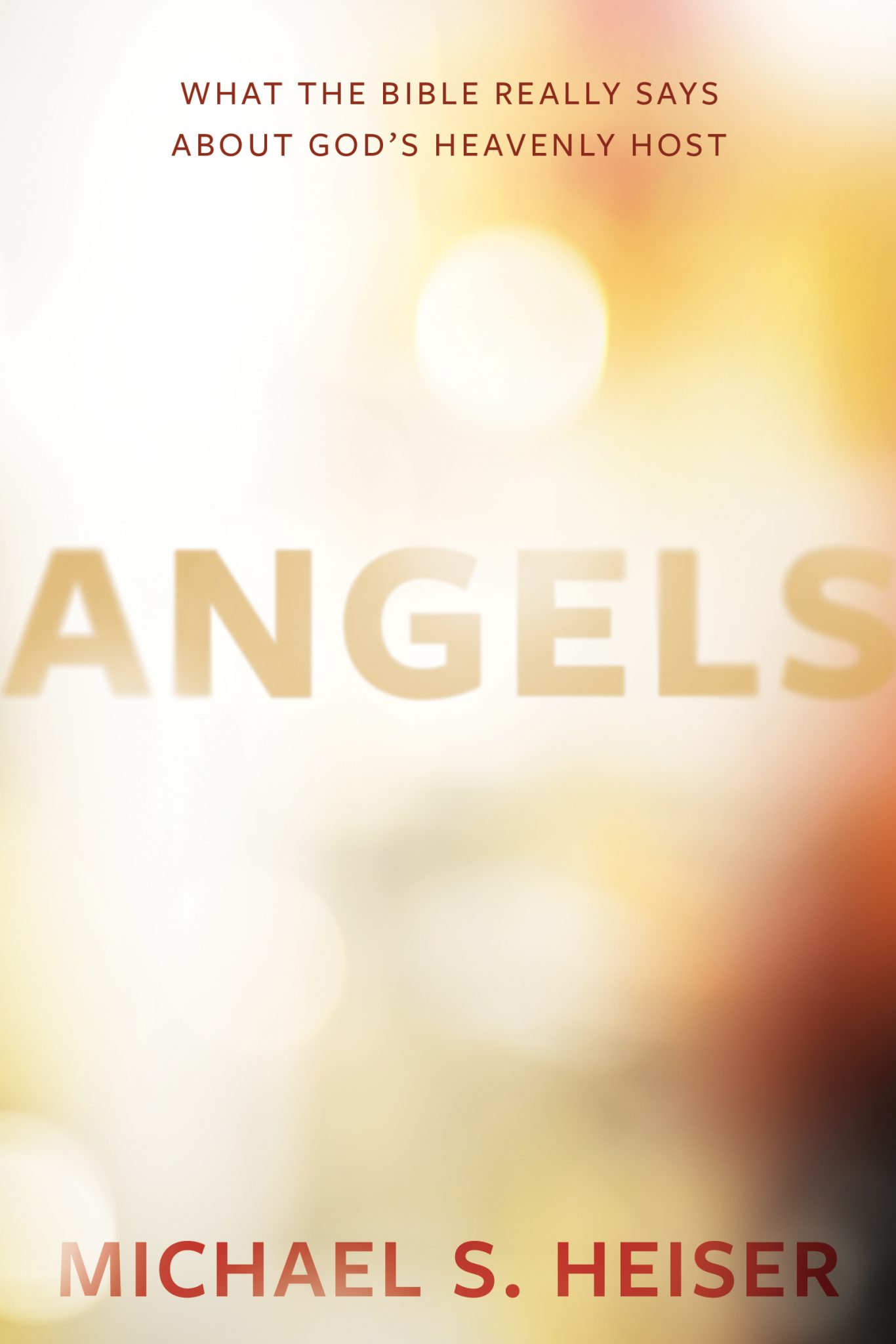
Despite all of this, I never committed the time to read any of his in-depth books. So this summer, I finally made the plunge and started with Angels: What the Bible Really Says About the Heavenly Host (via Audible audiobook). For those who are unfamiliar, Dr. Michael Heiser is an Old Testament scholar, who is gifted in making serious Bible study content accessible to believers who want to dive really deep into Scripture.
My quick take on Angels: Whoa. This changes the way I look at the supernatural. Why do we not hear more about this kind of stuff in church?
My background is such that I never really paid much attention to the topic of angels before. Sure, I read Frank Peretti’s This Present Darkness, when it was all the rage. But there was a certain cheesy-ness factor to Peretti that kept me from taking it too seriously. But with Dr. Michael Heiser, formerly a Bible scholar with Logos Bible Software, and his book of Angels: What the Bible Really Says About the Heavenly Host, I have changed my tune.
Heiser is an Old Testament scholar who makes a bold and provocative claim, but he has some real meat behind it. For Heiser, a lot of traditions that have floated around, about the supernatural realm, are merely that…. they are man-made traditions…. like the idea that angels have wings (they do not).
Different denominational traditions have come up with interesting ideas about angels. But Heiser contends that if we look back at the development of Second Temple Judaism, and the Ancient Near East context that preceded it, they provide the cognitive background for much of our New Testament. As a result, as scholars discover more about how ancient Israelites viewed the world, we gain valuable insight into understanding a lot of the “weird” passages of the Bible.
Looking for the Trinity in Genesis…. But Missing the Bigger Story
Take, for example, Genesis 1:26, where God says, “Let us make man in our image.” Who is the “us” that God is speaking to? About 99% (give or take) of evangelical Christians would say that this is a reference to the doctrine of the Trinity, embedded right there in the Old Testament.
Not so, as Dr. Heiser demonstrates. Heiser makes the case that the “us” is really a reference to a “divine council;” that is, the heavenly host, including angels, that were created by God in the non-material realm. We see other examples of this “divine council” at work, in several other texts of the Old Testament, including Isaiah 6 and 1 Kings 22:19-22, with no reference to the Triune nature of God.
Not only is the “Trinity” explanation rather ad hoc, a way for Christians to make the Old Testament fit into pre-conceived Christian ideas, it does not even make sense. For if all of the persons of the Godhead are already in cognitive union with one another, God does not need to tell himself what he is going to do. It makes better sense if God is addressing his heavenly host, whom he has already created, to speak about the creation of humanity.1
But why might this even be important? For several centuries now, skeptical scholars have taken this reference to “us” in Genesis 1:26 as evidence supporting a polytheistic conception of God, in early Old Testament history. According to this narrative, popularized in university religion classes and the History Channel, ancient Israelite religion evolved from a polytheistic view of “gods” towards a single, monotheistic conception of God. To put it bluntly, this would mean that Judaic religion, with its emphasis on what would become one “god”, is essentially a theological hack, using a manufactured monotheism to replace its original polytheism.
If you believe that, then it really cuts down the idea of the inspiration of Scripture a major notch.
However, if Heiser’s explanation is correct, and he has plenty of evidence to support his overall thesis, the concept of an angelic heavenly host does two things at once: It knocks out a well-intentioned, yet not altogether convincing apologetic for the Trinity. Plus, it silences at least a two-centuries long critique of Biblical faith, as a type of polytheism that clumsily morphs into monotheism.
This polytheism-evolving-into-monotheism story is completely wrong, as Michael Heiser contends. The concept of a monotheistic God, surrounded by his angelic heavenly host, is a theme that runs throughout the whole of Scripture, starting even there in Genesis 1. We do not need to read the Trinity into the Biblical text, when there is a better solution, that has greater explanatory power.
Getting Solid Scholarship into the Hands of the Everyday Christian Believer
What makes Heiser’s work so surprising is that none of his research is original. Angels is well-documented with footnotes that carefully relies on decades of peer-reviewed scholarship. Essentially, Heiser, though skilled in semitic languages and the Old Testament, is a popularizer of prevailing scholarship, that somehow never makes its way out of the academy, and into the hands of your typical church-going Christian.
Some well-intentioned conservative evangelical writers tend to promote a narrative that denigrates the bulk of evangelical scholarship, as somehow a backhanded slap against biblical inerrancy. But Heiser is not buying that story. Rather, the type of research he is making accessible to the average Christian is meant to support and encourage the evangelically minded believer. That scholarship, far from being an enemy of the faith, actually helps to ground our faith in evidenced-based reality.
One need not be convinced of everything Michael Heiser argues in order to benefit from his thesis. I am still mulling a few things over myself. Yet it is the careful attention to the text of Scripture, buttressed by responsible scholarship, that I find to be the most persuasive about Heiser’s work.
The only main drawback about Angels is that it does make for difficult listening as an audiobook. Angels does lean towards being an academic book. But it is primarily targeted towards someone who wants to do serious Bible study. You do not need to know the Biblical languages, or understand heavy theological concepts here. But you do need have an interest in wanting to dig deep and learn. I found myself having to stop what I was doing, when listening to the book, to go look up the Bible passage under discussion. I would strongly suggest getting the Kindle or paper edition of Angels, to supplement the audio version, to be used as future reference.
Dr. Heiser’s primary work is The Unseen Realm, which expounds his underlying thesis about the supernatural world. After reading Angels, I now want to dig into The Unseen Realm, to get the rest of the background material that permeates Angels. I have heard, that like Angels, there is a lot for the average reader to absorb in The Unseen Realm. To accommodate those who do not need lots of footnotes, a less academic version of the book, entitled Supernatural, is aimed to help those readers, in a more popular audience.
If you want to try to understand some of the weirder parts of the Bible, or you want to sift through some of the more erroneous popular understandings of angelic beings in Scripture, then Dr. Heiser’s Angels is the best place to dive into, as a start…. Oh, yeah, Dr. Heiser has a great explanation of that weird-weird passage that talks about head coverings for women in 1 Corinthians 11. Fascinating.
Seriously. Go read Angels and it will all start to make sense.
For an 8-minute explanation about why we do not need to read the Trinity directly back into Genesis 1:
I am not familiar with the “Sharpening Report,” so I am not in the position to make any endorsement, but the following interview with Dr. Heiser summarizes the content of the book.
Notes:
1. That being said, we should be clear in saying that Genesis 1 does not rule out the Trinity. It is sufficient to say that the Trinue nature of God is consistent with what is being taught in Genesis 1, and that God uses the process of progressive revelation to introduce the concept of the Trinity. Nowhere in the New Testament do we find any explicit statement saying “one God, three persons.” Rather, even in the New Testament we see the building blocks for the doctrine of the Trinity, that eventually gets fleshed out, in the early centuries of the Christian movement. Therefore, it is perfectly fine, and even necessary to say, that we as humans, male and female, are created in the image of God, reflecting the Triune nature of God, even if there is no explicit mention of the Trinity in Genesis. As Dr. Heiser teaches in the first video above, God addresses the heavenly host in Genesis 1:26, but when God creates humanity in Genesis 1:27, it is God alone who acts. This is consistent with a theology of the Triune God. We do not need to read something from the New Testament, or Nicene theology, back into Genesis. ↩
I will quote one of my favorite Scripture songs that I learned as a young believer in the 1980’s:
Lift Jesus higher. Lift Jesus higher. Lift him up for the world to see. He said, “If I be lifted up from the earth I will draw all men unto me.”
Written by an American song writer, it has been exported all over the world, and sung perhaps millions of times. Of course, we should lift up the name of Jesus, as He is worthy to be praised. The problem is that this song is largely taken from a single verse, John 12:32 (KJV), in a passage that few Christians bother to read carefully.
If you read that verse in context, this particular passage does not say what most Christians think it means. Look at the verse, and then read the very next verse:
(v.32) And I, if I be lifted up from the earth, will draw all men unto me.
(v.33) This he said, signifying what death he should die.
When we sing “Life Jesus Higher,” what are we really singing about?
As New Testament scholar Craig Keener demonstrates, John explicitly tells us what this text actually means, or signifies, as Jesus is prophetically saying that he would be physically lifted up on a cross, in order to die.
In other words, when we sing this song, it is like shouting out, “Crucify him! Crucify him!”
There are a couple of issues to consider, in an effort to clear things up:
First, the word “draw“, as in “draw all men unto me,” requires further consideration. In John 6:44, we see another reference to “draw,” where we read, “No one can come to me unless the Father who sent me draws him. And I will raise him up on the last day“(ESV). This would suggest that not everyone is necessarily “drawn” to Jesus.
This leads us into the thicket of the Calvinist/Arminian controversy, whereby advocates of limited atonement (Calvinist), those who believe that Jesus dies only for the elect, might say that John 6:44 teaches about God drawing the elect toward salvation. John 6:44 would thus restrict the scope of “all” in John 12:32, to only include “all of the elect.” Advocates of unlimited atonement (Arminian), those who believe that Jesus dies for every human person, might insist that the “draw” in John 12:32 is about Jesus’ death for all persons, but only in the sense of allowing for the potential of everyone’s salvation.
Secondly, it bears taking a closer look at who the “all” is about in this verse, from a different, hopefully more productive angle. Jesus’ speech takes place during a festival, where some “Greeks” (or Gentiles) had arrived (John 12:20). This has led many scholars to conclude that the “all” described by Jesus is not about all individuals, but rather it is about all kinds of people, including both Jews and Gentiles. In other words, Jesus’ death is not for Jews alone, but for Gentiles as well.
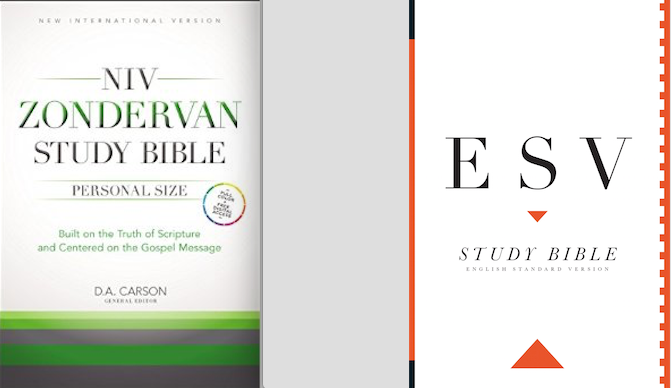
This does not resolve the Calvinist/Arminian controversy, but it refocuses our attention on a constant theme throughout the New Testament, regarding the relationship between Jew and Gentile, that does not receive as much attention as it should. It is very easy to get caught up theological debates that have raged throughout the evangelical movement over the past few hundred years, including the Calvinist/Arminian controversy, as well as the occasional interest in universalism. But a closer reexamination of the Jewish/Gentile conflict, that captivated the attention of the first century readers and writers of the New Testament, is a more responsible way of reading passages like this in John’s Gospel. A few modern study Bibles, such as the ESV Study Bible and the Zondervan NIV Study Bible, contend for this interpretation in their study notes, concerning John 12:32.
For years, I have sung this song, thinking that we are celebrating the glory of God, as Jesus is lifted up. The song has a very “happy-clappy” feel to it. But “lifting up Jesus,” in the context of this verse, is about how human sin drove Jesus to the cross, which should engender in believers a sense of sobriety, in view of how much we have rebelled against a holy and righteous God. In the most immediate sense, this is not very “happy-clappy.”
However, it is the Resurrection, in which Jesus had victory over sin and death, that should cause us to celebrate. So, yes, we are to lift up the name of Jesus, and it is in this way that we can joyfully sing praise to the Lord, thanking him for giving up his life, so that we as believers might receive new life. Furthermore, this new life is for everyone…. all kinds of people,….. whether they be Jew or Gentile, slave or free, male or female, black or white.
Though I still like the song, it makes me think twice about what we think and do as Christians, in our worship. Sometimes, we as Christians get the right lesson to be learned from the wrong text!
Newcomers to the English Bible often lament the seemingly never-ending proliferation of Bible translations: Which one do I pick? Long gone are the days when the King James Version of the Bible ruled them all!
Just when you thought we would be worn out by all of these new translations and updates, we learn in 2020 of yet another round of updates. First, the Christian Standard Bible (CSB) got a minor revision of updates, of less than 1% of the text, in early 2020. The CSB project was driven a lot by Dr. Thomas Schreiner, of Southern Baptist Seminary. Dr. Schreiner was once a graduate student of Dr. Donald Hagner, at Fuller Seminary. Hagner was my primary New Testament professor, when I went to Fuller. An interview with Dr. Schreiner, about the CSB, can be found here on YouTube. The CSB committee suggests that the small update this year will be the last one, for perhaps the next 10 years. Find out all about it here. A downloadable PDF of the changes can be found here.
Secondly, the venerable New American Standard Bible (NASB), developed by the Lockman Foundation, first published in 1971, was last updated in 1995. A new update for 2020 is expected to hit the printers by early 2021. But you can see a preview of the changes on Facebook.
Finally, we learn that Southern California pastor John MacArthur is planning on yet another revision of the NASB, to be called the Legacy Standard Bible. The impetus behind the Legacy Standard Bible is to provide an “accurate” translation, based on the latest advances in the study of ancient Bible manuscripts, while shying away from some current interpretive trends in certain modern translations.
Here is my take: The positive side of having all of these Bible translations is that it helps to compare different nuances in how English words and phrases can be used to translate the original Hebrew and Greek. All of the major translations available today are very good (only a handful, like the Passion Translation, generally should be avoided). That is why I make regular use of websites like BibleGateway.com, where you can compare different Bible translations, side-by-side, as part of my devotional and study reading, in addition to normally reading from my English Standard Version (ESV) study Bible.
But sometimes we can go too far. The downside to having so many Bible translations available, the situation will continue to lead towards more tribalism in English-speaking Christianity. Different Bible translations, with different perspectives, will compete for different readerships in mind, and individual believers and churches will find themselves gravitating towards one silo, or another, thereby undermining widespread trust across multiple segments of evangelicalism, a case that Bible scholar Mark Ward strongly made most recently.
In other words, the plethora of Bible translations will thrill the Bible nerd, like me, but it will surely frustrate and confuse the average Christian, for whom a regular pattern of Bible reading and study can be a struggle…. and it is simply better to have in mind the plumbers, Soccer moms, and restaurant table waiters, than in trying to cater to the Bible nerds.
A pretty powerful moment. Listen for the cicadas and tree crickets. The late John Lewis crosses the bridge in Selma, one final time. He originally tried to cross the bridge, on the way to Montgomery, before being stopped by a police riot, 55 years ago.






 Veracity