Category Archives: Topics

Constantine the Great?

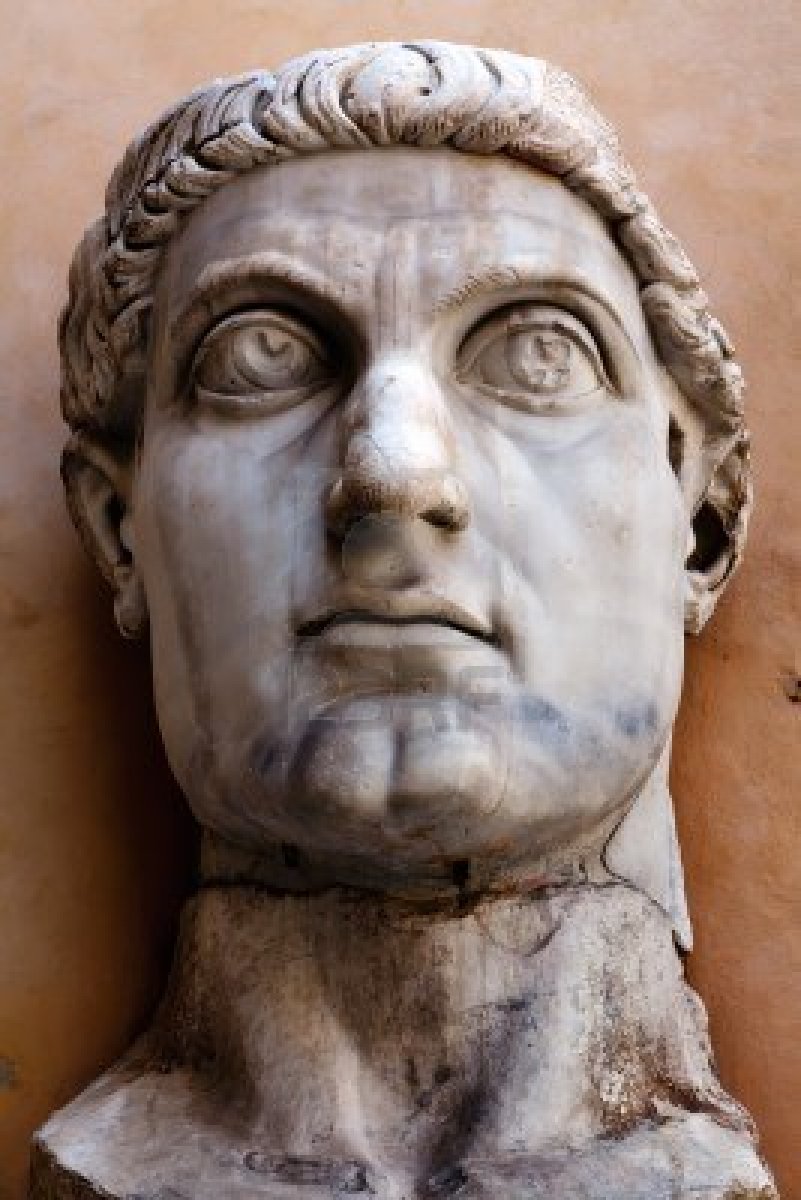
Constantine the Great, founder of "Christendom."

Constantine the Great, founder of “Christendom.”

Constantine awoke from his dream. Christ had appeared to him bearing the sign of a bent over cross. Earlier, Constantine had seen the same cross in a vision, with the inscription, “In this sign conquer”. Could this be the sign of victory he had been waiting for?

So the story goes…. it was the year 312, and this young Roman general was approaching the most pivotal battle in his life. Maxentius, a challenger to the imperial throne, had amassed an army to defeat Constantine. Constantine forged an alliance with another general, Licinius. But was this going to be enough to defeat Maxentius? Perhaps this sign from one of the gods was what he needed. Constantine ordered his troops to paint the sign of the cross on their shields. From there, Constantine won the Battle of Milvian Bridge, and the history of the world, along with the Christian faith, was forever changed.

Continue reading


Accordion Word at the Aquarium

Whale Shark at Georgia Aquarium

Whale Shark at the Georgia Aquarium (photo credit: Zac Wolf)

During a family visit to the Georgia Aquarium last weekend, for no particular reason I started wondering if they might have a clown triggerfish on the premises.  Clown triggerfish are part jaguar, part piranha, and part Peter Max—among the most colorful and striking of all animals.

Eventually I asked a docent in the Tropical Diver exhibit if there were any triggerfish around (leaving off the word ‘clown’ so as not to appear star-crossed with only the most beautiful fish).  He was very knowledgeable—probably a professor or teacher of marine biology just gazing at beautiful fish and waiting for someone to ask a question.  He led me around the exhibit, describing the three triggerfish they had (no clowns), where they normally hang out, their swimming patterns, and a whole host of interesting fish facts.  He said there was a triggerfish in the surf above our heads (go figure), and if we were patient the fish would eventually come into full view.  It did, he spotted it, and let me know right away so I could get a couple of pictures.  Then he said, “The evolution of their tails is really quite interesting.” Continue reading


Bible Genome

Bible Genome

Map of Direct Citations in the Bible

What Scriptures were most influential to the writers of the Bible?  Who cited whom? Which writers were most schooled in Scripture?  Which Gospel writer referred the most to other Scriptures?  How big a role did Revelation play in their thinking and teaching?  How about Genesis and Job?  How are the parts of the Bible connected?  Which books appear to have been written at the same time?

From God To Us Revised and Expanded: How We Got Our Bible by Norman Geisler and William Nix is a foundational text for those interested in the topic, and I can highly recommend pretty much anything by Dr. Geisler (more on that in a future post).

“Jesus and New Testament writers amply illustrate their belief in the full and complete inspiration of the Old Testament by quoting from every part of the Scriptures as authoritative, including some of its most disputed teachings. The creation of Adam and Eve (Matt. 19:4–6), the destruction of the world by a flood, the miracle of Jonah and the great fish (Matt. 12:39–40), and many other incidents are quoted authoritatively by Jesus. No part of Sacred Writ claims less than full and complete authority. Biblical inspiration is plenary.”
Geisler, Norman L.; Nix, William E. From God To Us Revised and Expanded: How We Got Our Bible. Moody Publishers.

Continue reading


Daniel WallaceDr. Dan Wallace has another outstanding post on Bible translation. His work and research are refreshingly real, and he clearly communicates what the Scripture tells us—and what it does not.

Daniel B. Wallace's avatarDaniel B. Wallace

There’s an old Italian proverb that warns translators about jumping in to the task: “Traduttori? Traditori!” Translation: “Translators? Traitors!” The English proverb, “Something’s always lost in the translation,” is clearly illustrated in this instance. In Italian the two words are virtually identical, both in spelling and pronunciation. They thus involve a play on words. But when translated into other languages, the word-play vanishes. The meaning, on one level, is the same, but on another level it is quite different. Precisely because it is no longer a word-play, the translation doesn’t linger in the mind as much as it does in Italian. There’s always something lost in translation. It’s like saying in French, “don’t eat the fish; it’s poison.” The word ‘fish’ in French is poisson, while the word ‘poison’ is, well, poison. There’s always something lost in translation.

But how much is lost? Here I want to explore…

View original post 1,508 more words


Peace

The Veracity blog is all about sharing, so for Christmas I’d like to share a gift that we all need so desperately—peace.

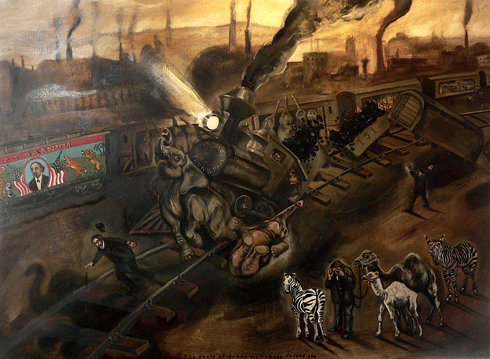
The Death of Jumbo by Sue Coe, 2007

The Death of Jumbo by Sue Coe, 2007

This year there’s no shortage of personal train wrecks and tragedies among my family and friends.  Through death, sickness, the collapse of relationships, or just the passage of time, many of them are dealing with insidious loneliness. And everyone has troubles. Yogi Berra was right, “The future ain’t what it used to be.” They’re all carrying on, but they all need peace. Just like you and me.

Peace isn’t linked to our circumstances—although a lot of misery certainly can be.  Some of the most peace-filled people I know have pretty difficult worldly circumstances.  But peace runs deeper than our circumstances.  Much deeper. Continue reading