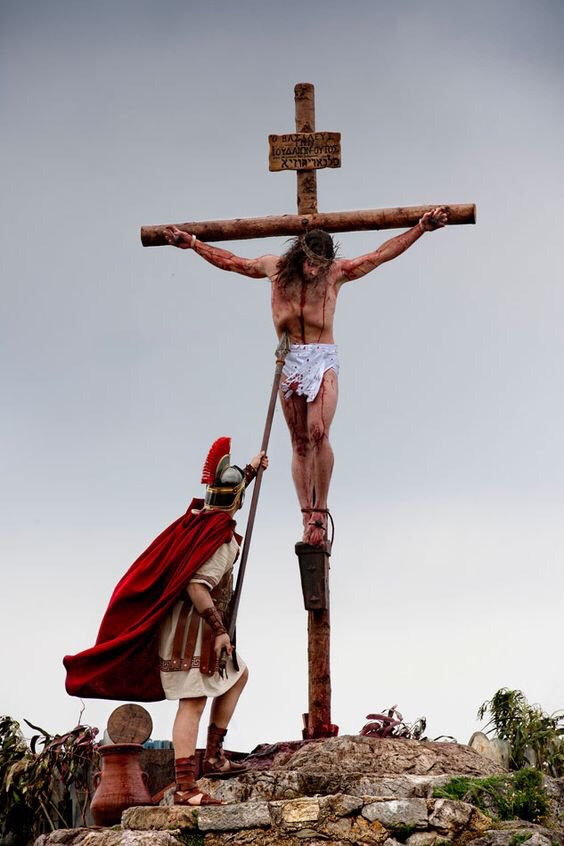
If there is one established fact that both conservative and liberal scholars admit about Jesus, it is that Jesus died a death on a cross by means of Roman crucifixion. However, in Islam, such a belief about the fate of Jesus is rejected.
In the Quran, Surah 4:157, states that the Jews “killed him not, nor crucified him, but so it was made to appear to them.” It was thought to be unbecoming for such a prophetic figure to die such a horrific death. But where did this belief denying the crucifixion of Jesus come from?
Perhaps the most likely source was associated with a Gnostic Christian teacher from Alexandria, Egypt, in the 2nd century, Basilides, who lived about the time of 117 to 161 C.E. According to Irenaeus, the 2nd century heresiologist who sought to expose the theological errors of Gnosticism, Basilides largely accepted the Gospel narratives about Jesus, but takes an unusual interpretive turn when it comes to the lead up to the crucifixion of Jesus.
Was Jesus really crucified on the cross? Or did someone trick the Romans with a switcheroo, and having Simon of Cyrene crucified instead? Many Muslims hold to the idea that something like this really happened, and that Jesus was never crucified, and that someone else was crucified in Jesus’ place. Where did this Islamic belief about Jesus really come from?
In Mark 15, Jesus is mocked and beaten by the Roman soldiers and then led out to be crucified. But at one point:
“21 …they compelled a passerby, Simon of Cyrene, who was coming in from the country, the father of Alexander and Rufus, to carry his cross. 22 And they brought him to the place called Golgotha (which means Place of a Skull). 23 And they offered him wine mixed with myrrh, but he did not take it. 24 And they crucified him and divided his garments among them, casting lots for them, to decide what each should take. “
Evidently, Jesus was struggling to carry his cross, so another man, Simon of Cyrene, was pressed into service to carry Jesus’ cross for him. Nevertheless, the traditional historical reading is that Jesus was brought to the place called Golgotha where he was crucified.
But Basilides (pronounced “ba-SIL-ih-deez“) saw some ambiguity in verse 22 of Mark’s Gospel (or the corresponding passage in Luke 23). Who was the “him” brought to Golgotha? If Simon of Cyrene was swapped out to carry the cross, would it not have been Simon of Cyrene who was then crucified, and not Jesus?
According to Irenaeus’ story, Basilides believes that the physical features of Simon of Cyrene and Jesus were swapped, to make it look like Jesus was crucified, when it really was Simon. As Simon was crucified, it was Jesus who stood by, laughing and ridiculing what was going on.
However, in M. David Litwa’s Basilides: The Oldest Gnostic, Litwa makes the argument that Ireneaus has confused the record of Basilides’ teachings with another Gnostic-influenced text, the Second Treatise of the Great Seth. Litwa maintains that Basildes actually believed that Jesus was crucified, and there was no supernatural switcheroo between Jesus and Simon of Cyrene at the crucifixion.
To complicate matters, the Second Treatise of the Great Seth itself is ambiguous enough to suggest that Jesus was not swapped with Simon at the crucifixion, and that Jesus’ “laughing” was not at Simon’s expense, but rather at the ignorance of those who ended up crucifying Jesus. Did Irenaeus misinterpret something here?
In contrast, in Bart Ehrman’s Lost Scriptures, Ehrman holds to the view that Ireneaus did not distort the stories of Basilides or the Second Treatise of the Great Seth, reviewed elsewhere on the Veracity blog. Litwa’s work, however, argues that indeed Basilides still held to the orthodox view that Jesus was indeed crucified, while still acknowledging that Ireneaus was correct in describing a number of other Gnostic views of Christianity which conflicted with Ireneaus’ orthodox perspective on Christianity.
We have other sources outside of Irenaeus, where certain tangential Christian groups denied the crucifixion of Jesus, early on in the history of the church. The Apocryphal Acts of John, briefly examined before on the Veracity blog, holds to a docetic view of Jesus, one who is divine but only appears to be human. In these Acts of John, Jesus is incapable of suffering, which lends support to the idea that Jesus could not have been physically crucified. In the Acts of John, Jesus’ crucifixion on the cross was merely an illusion. The Second Council of Nicaea in the 8th century officially condemned these apocryphal Acts of John as being heretical.
Does Dr. Litwa successfully make his case, that the traditional story about Basilides handed down through the centuries was distorted by Irenaeus? Yes and no. When it comes to tracing back the claim that there was a switcheroo between Jesus and Simon of Cyrene when it came to the crucifixion, the evidence that Litwa presents is quite compelling. Basilides probably did accept the traditional story of Jesus’ crucifixion, without a switcheroo. In fact, when it comes to the canonical Gospels’ presentation about the life of Jesus, Basilides does sound quite orthodox. Perhaps Irenaeus’ critique of Basilides was overly harsh in certain places.
On the other hand, there is just enough crazy stuff in Basilides’ worldview that firmly plants him in a Gnostic mindset, enough to justify Irenaeus classifying Basilides as being a heretic, even without the Simon of Cyrene crucifixion switcheroo story. Aside from Irenaeus’ report, this is what we know:
Basilides believed that angels created this material world. Furthermore, he believed that there was a complex hierarchy of 365 heavens. For Basilides, salvation comes not through faith, as commonly understood, but through knowledge. For Basilides, faith is really a form of higher perception and thought, and not a conscious choice. Though Basilides claims to have received this teaching from Saint Matthias, who replaced Judas Iscariot among the Twelve Disciples following the resurrection, ideas like those that Basilides promoted became common features of Christian Gnosticism.
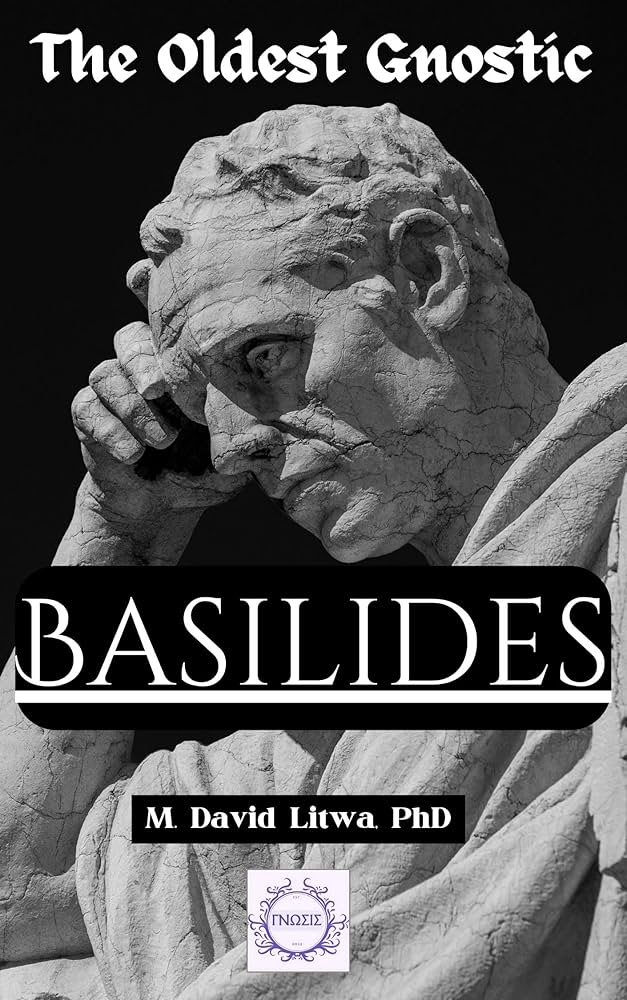
M. David Litwa’s Basilides: The Oldest Gnostic examines what we can know and what we do not know about perhaps the earliest Christian Gnostic, often associated by the church father Irenaeus, as the originator of the story that Jesus was never crucified. Litwa challenges the long held view that Irenaeus accurately described this teaching by Basilides.
Part of the problem with getting an accurate portrait of Basilides is that very little survives from what he wrote. Irenaeus in the late 2nd century gives us the most information, whom Litwa says was misinformed at key points. Litwa shows that about 36% of the claims made against Basilides by Irenaeus are contradicted by other source material. Much of what else we have come from fragments attributed to his son and true disciple, Isidore, preserved primarily from other orthodox sources like Clement of Alexandria. Basilides apparently drew on the same New Testament material that the orthodox community did, but Basilides had an expanded canon of authoritative teaching derived from Greek thought, such as Plato.
For example, Basilides accepted the concept of the transmigration of souls; that is, reincarnation, based on a particular interpretation of Deuteronomy 5:9:
“You shall not bow down to them or serve them, for I the Lord your God am a jealous God, visiting the iniquity of the fathers on the children to the third and fourth generation of those who hate me” (ESV).
For Basilides, one could only receive punishment for one’s own sins, and not the sins of others. Therefore, Basilides understands Deuteronomy as assuming that a sinful person would receive punishment for their sins in a future “generation;” that is, in some future next life, indicating a reincarnation of the soul.
However, most scholars interpret Deuteronomy as not affirming reincarnation, and that the Old Testament rejection of the transmigration of souls made its way into and was preserved by orthodox Christian thought.
Litwa also shows that some 64% of the claims against Basilides made by Ireneaus are unconfirmed by other sources. But since Ireneaus got 34% wrong, he should not be relied upon as an accurate source. Perhaps Litwa is right on that, but still, without other source material to challenge Ireneaus’ other claims, it is difficult to say.
The Bauer historical project convinces a number of scholars today, if not the vast majority of academics who study and teach religion at secular universities and colleges in the United States. However, Bauer’s thesis is problematic, a subject too involved to get into here, but addressed elsewhere on Veracity. Nevertheless, to his credit, M. David Litwa does well in correcting some misunderstandings of Gnostic teachers, giving us a broader history of the early Christian movement.
Dr. Litwa’s book Basilides: The Oldest Gnostic is a fairly short read, coming in at well under 200 pages. I listened to the Audible version of the book in less than a few hours.
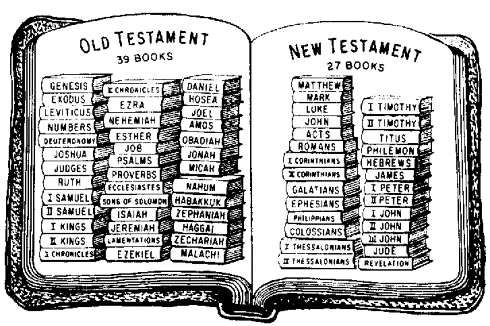
In our New Testament, we have 27 books, which include 4 Gospels. However, from about the second century and onwards for a few hundred years, a number of other competing gospel texts emerged (along with other letters), seeking attention from Christians hungry to know more about the faith. But among these “lost scriptures,” were any of these writings legit?
In historically orthodox circles, there was unanimous agreement that Matthew, Mark, Luke, and John were the official gospel accounts, describing the life, death, and resurrection of Jesus of Nazareth, dating back to the first century. Luke himself acknowledged that “many” (Luke 1:1) have sought to write gospel accounts about Jesus. So, what happened to these “many” alternative gospel accounts?
It is reasonable to say a number of these “many” accounts were probably lost, partly perhaps due to the turmoil caused by the Jewish Wars of the 66-70 CE, culminating in the destruction of the Temple in Jerusalem, and later during the Kito War impacting the Jewish community in Alexandria starting around 115 CE, as well as the Bar Kokhba Revolt in the 132 CE. Thousands and thousands of Jews died in these conflicts, which probably included a number of Jewish Christians. As the original Christian community of the first century was primarily Jewish, there is a good chance that a number of these “many” writings perished along with those who wrote or sought to preserve them.1
Sure, many Christians know that we have 66 books in the (Protestant) Bible, and in particular, the 27 which make up the New Testament. But what about those books from the early church era that did not make it into the New Testament? What were these books and what were they about?
What “Lost Gospels” Did Not Make the Final Cut Into the New Testament, and What Were They?
While none of these supposed “lost gospels” from the first century are known to us today, scholars nevertheless acknowledge that a number of other supposed gospel accounts can be dated back to as early as the 2nd century CE. However, for the most part, these writings have been lost for most of church history, except in cases where a church father quotes from such documents.
Nevertheless, there have also been spectacular re-discoveries of some of these documents that were thought to be lost, as with the 1945 recovery of the Nag Hammadi Gnostic Gospels recovered in Egypt, including the well-known Gospel of Thomas. It seems like every few years or so, a new discovery is made, as with the Gospel of Judas.
These gospel accounts which did not make it into the New Testament canon are generally called “apocryphal gospels,” where “apocryphal” describes something of questionable or unknown origin. Some apocryphal gospels have sought to tell a different version of Jesus’ story at variance from the four official accounts, which primarily explains why these texts were rejected by the historically orthodox of the early church, along with the late dating of such writings which put them out of reach of being written and/or authorized by the earliest Christian apostles, or anyone else in that apostolic circle.
In addition, yet another group of apocryphal gospels were written not to attack the official narratives, but rather to fill in the gaps perceived to be missing from Matthew, Mark, Luke and John. One popular apocryphal gospel like this that did survive from about 2nd century is the Protoevangelium of James, otherwise known as the Gospel of James, examined briefly here before on Veracity, which goes into considerable detail about the life of the Virgin Mary, including elements which are not reported anywhere in the four canonical Gospels.
The Gospels in our New Testament primarily focus on the public ministry of Jesus, a period generally thought to have lasted three years when Jesus was an adult. Of that material, our Gospels spend the most amount of time on the last week of Jesus’ life, including his crucifixion and subsequent resurrection. John and Mark completely ignore anything about Jesus prior to his public ministry as an adult.
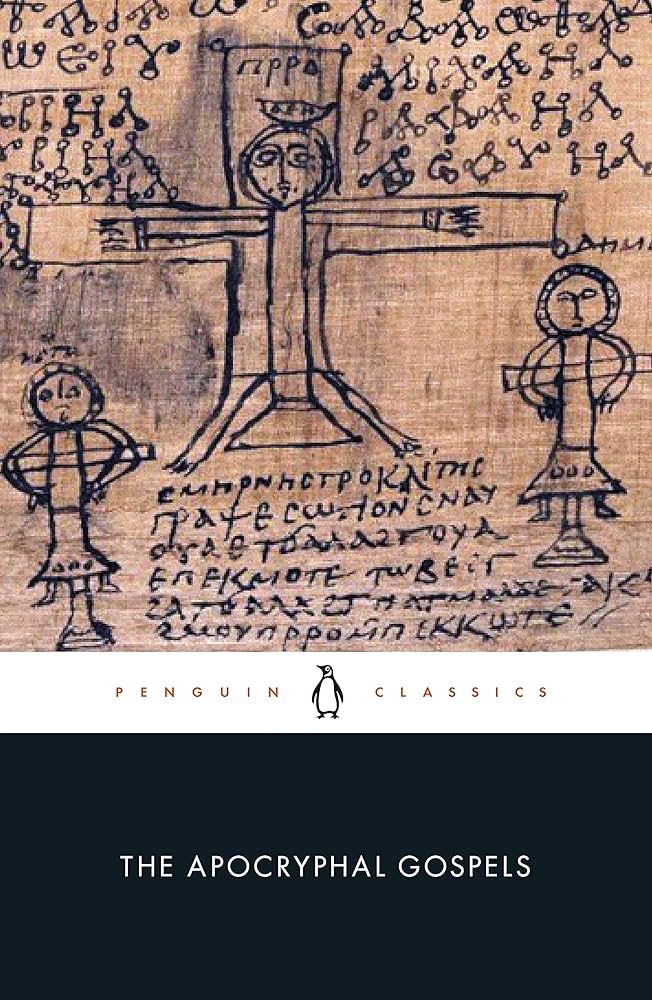
The Apocryphal Gospels, part of the Penguin Classic series, was written by Cambridge University (U.K) scholar Simon Gathercole. Gathercole translates a number of alternative gospel accounts from the early church era, that are not found in our New Testament.
Apocryphal Gospels and Lost Scriptures
After I had the privilege of meeting Dr. Simon Gathercole in Cambridge in January 2024, I picked up a Kindle copy of his The Apocryphal Gospels, a collection of many of these non-canonical gospel accounts. A devout evangelical Christian scholar, Gathercole assembled this book together for the publisher, Penguin, as an aid to study the differences found between the apocryphal gospels and Matthew, Mark, Luke, and John. Unfortunately, Gathercole’s work is not available as an audiobook, which is how I have been largely reading books, while on my commute to and from work.
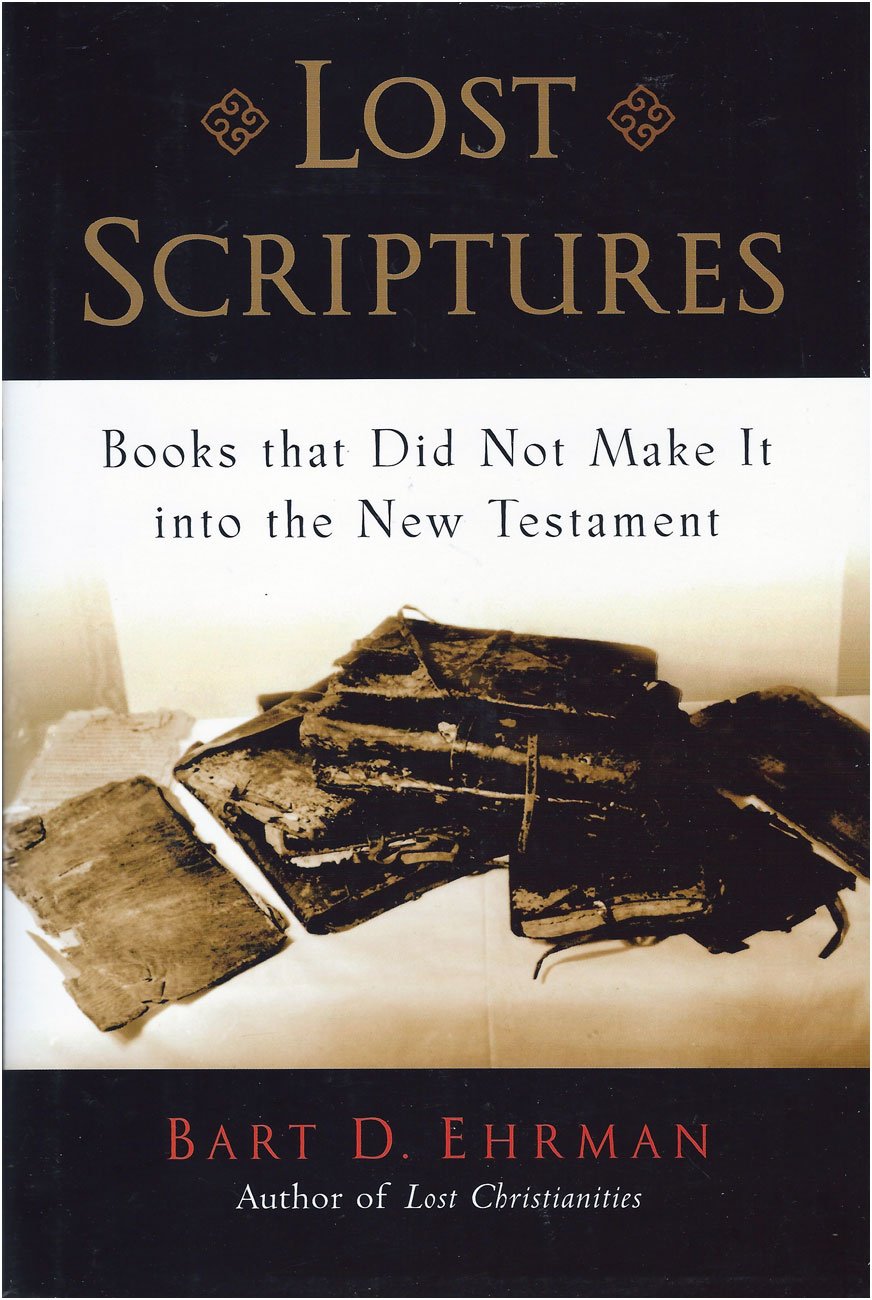
Instead, University of North Carolina biblical scholar, Bart Ehrman, does have his collection of apocryphal gospels, Lost Scriptures: Books that Did Not Make It into the New Testament, available on audiobook, so I gave Ehrman’s work a listen. Ehrman does not include certain apocryphal gospel fragments which Gathercole does. But Ehrman does include other non-canonical apocryphal New Testament texts which are not gospels, such as various letters and narratives claiming to have been written by those like Peter and Paul, but which scholars generally acknowledge today as forgeries.
Both Ehrman’s Lost Scriptures and Gathercole’s The Apocryphal Gospels are collections of diverse material, and therefore are more useful as reference works. Nevertheless, I wanted to listen to Ehrman’s book, and occasionally compare Gathercole’s work along the way. Both Ehrman and Gathercole give their translations of the whole of the surviving documents, when such texts are fairly short, while in some cases only providing a sample or even just an outline of those certain texts which are quite lengthy.2
Lost Scriptures That Sound Strange in Places
Some things you find in these apocryphal New Testament texts are fairly benign, whereas some other things are quite strange, counter to what you find in the canonical New Testament. Take the Gospel of the Egyptians, dated to the 2nd century, for instance. What we have of this gospel only exists from quotations found in the writings of the early church father, Clement of Alexandria. The Gospel of the Egyptians evidently contained a narrative detailing a conversation Jesus had with Salome, one of the women who first witnessed the Resurrection of Jesus.
Ehrman gives us saying number one as follows (Ehrman, p. 19)
When Salome asked, “How long will death prevail?” the Lord replied, “For as long as you women bear children.” But he did not say this because life is evil or creation wicked; instead he was teaching the natural succession of things; for everything degenerates after coming into being. (Clement of Alexandria, Miscellanies, 3, 45, 3)
That is not terribly strange. But here is Ehrman’s translation of saying number four (Ehrman, p. 19)
Why do those who adhere to everything except the gospel rule of truth not cite the following words spoken to Salome? For when she said, “Then I have done well not to bear children” (supposing that it was not suitable to give birth), the Lord responded, “Eat every herb, but not the one that is bitter.” (Clement of Alexandria, Miscellanies, 3, 66, 1–2)
According to Simon Gathercole, statements like these in the Gospel of the Egyptians were used as rationale for denigrating sexual relations and the having and raising of children (Gathercole, p. 179-180).3
Then we have Ehrman’s translation of saying number 5, drawn from the writings of Clement of Alexandria:
This is why Cassian indicates that when Salome asked when the things she had asked about would become known, the Lord replied: “When you trample on the shameful garment and when the two become one and the male with the female is neither male nor female.” The first thing to note, then, is that we do not find this saying in the four Gospels handed down to us, but in the Gospel according to the Egyptians. (Clement of Alexandria, Miscellanies, 3, 92, 2–93, 1)
Ehrman comments that the reference to the “shameful garment” to be trampled upon is a Gnostic idea that the human body itself is so utterly infiltrated with evil that it must be discarded before salvation can be realized (Ehrman, p. 18). Gathercole sees this also as a rejection of marriage (Gathercole, p. 179). Both of these ideas, the Gnostic despising of God’s good creation and the rejection of the institution of marriage are considered as heretical teachings by those within the tradition of historically orthodox Christianity.
Then there are texts like the Gospel of the Hebrews, for which only a few fragments have survived. Gathercole states that this was perhaps originally an edited version of the canonical Gospel of Matthew, with a few extra bits of narrative and sayings not found in Matthew. For example, the Gospel of the Hebrews includes the story of the woman caught in adultery, found only in most Bibles today in the canonical John 8.4
But there is some oddball stuff in the Gospel of the Hebrews, generally dated to the second century. For example, the Gospel of the Hebrews has Jesus saying that the “Holy Spirit” is his “Mother” (Ehrman, p. 16), which probably partly explains why the Christian church rejected its authenticity.
Gathercole quotes a fragment whereby Jesus questions his need for baptism, which raises other interesting questions:
The Lord’s mother and brothers said to him, ‘John the Baptist is baptizing, for the forgiveness of sins. Let’s go and get baptized by him.’
‘What sin have I committed,’ Jesus asked them, ‘to have to go and be baptized by him? That is, unless perhaps what I have just said was an unintentional sin! (Gathercole, p. 163-164).5
Lost Scriptures: Books that Did Not Make It into the New Testament, by University of North Carolina New Testament scholar Bart Ehrman, offers a complement to Gathercole’s selection of New Testament apocryphal writings, including various letters, notably some associated with Gnostic Christianity. The photo on the cover of Ehrman’s books features texts from the Nag Hammadi library, a collection of Gnostic scriptures rediscovered in Egypt in the 1940s.
The Gospel of Peter, With Its Talking Cross….and The Gnostic Gospels
The Gospel of Peter stands out as one of the oddest “lost gospel” accounts, in that it features gigantic angelic figures and a talking cross. The Gospel of Peter also tries to portray Pontius Pilate, as representative of the Romans, as being a friend of Jesus, and places the blame for Jesus’ death squarely on the Jews, a theme that has sadly fed into antisemitic attitudes emerging at various times throughout church history, in otherwise Christian communities. This feature has led scholars to conclude that the Gospel of Peter was a second century document, corresponding to the period where the Jewish and Christian communities clearly came to a “parting of the ways,” when the number of Jewish adherents to following Jesus dropped off sharply. Like several of these other “lost gospels,” the Gospel of Peter was eventually rejected during the early church era, and largely forgotten, until a fragment of it was rediscovered in the 19th century, in the tomb of an Egyptian Christian monk.
But most of the non-canonical gospels are associated with the heresy of Gnosticism, many of which belong to the Nag Hammadi library. The Gospel of Philip and the Gospel of Truth both contain esoteric sayings of Jesus, which promote the idea that one must be initiated into the secret knowledge of Jesus’ teachings, which the historically orthodox tradition of Christianity is accused of neglecting and suppressing. In Gnostic Christianity, the pivotal episode found in the canonical Gospels of Jesus’ crucifixion and resurrection is either downplayed or entirely neglected.
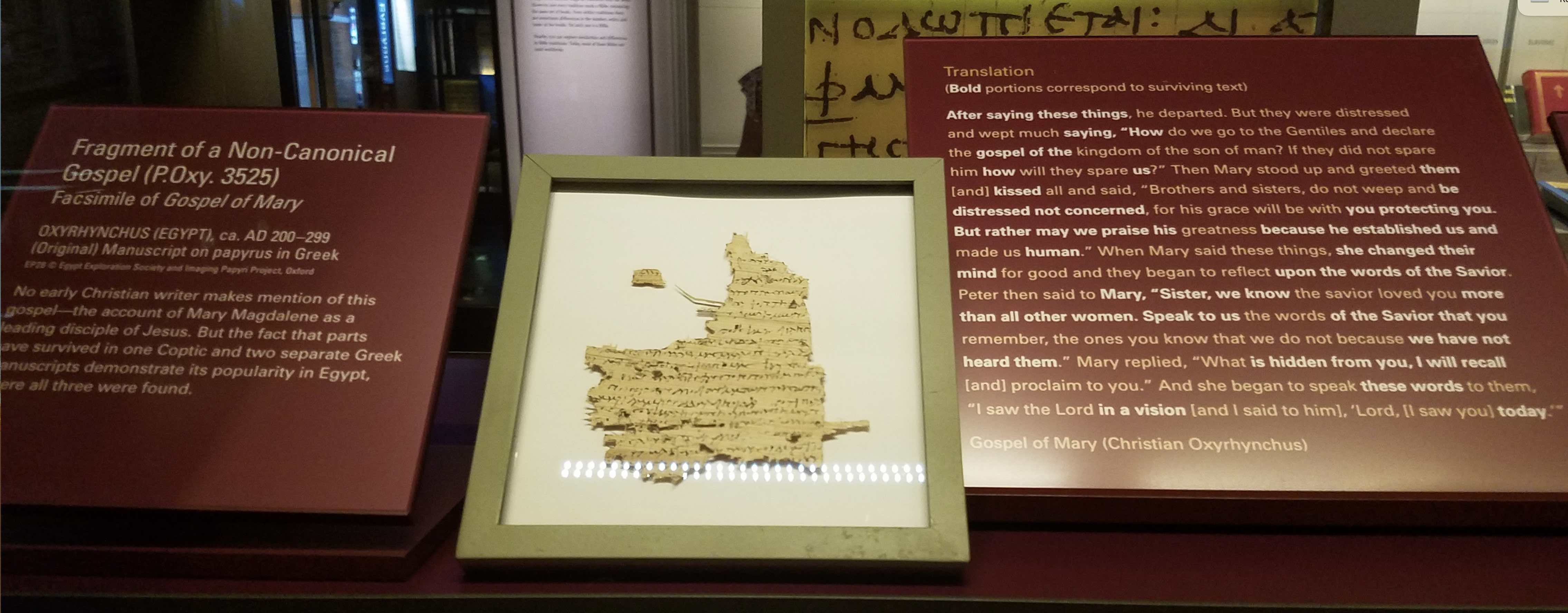
The Gospel of Mary, which was recovered in the late 19th century, has a strong Gnostic element as well, mixed with a proto-feminist message. In the Gospel of Mary, Mary Magdalene has received certain secret teachings from Jesus which were never imparted to Peter. Mary describes a vision she received from Jesus about the ascension of the soul. Peter listens but is not buying into the vision. One of the other male disciples of Jesus (Levi) then rebukes Peter for his macho-masculinity, making Mary the hero of the story and silencing Peter. While the feminist message is largely unique to this gospel, the dialogue displays a common feature of Gnosticism theology, in that the authority of the apostolic community, typically represented by the male twelve in Jesus’ inner circle, is rejected in favor of obtaining esoteric spiritual knowledge.6
Some of the more frustrating examples of “lost gospels” include forgeries written by “supposedly” historically orthodox Christians who wrote books trying to undermine heresies. I put “supposedly” in air quotes as it baffles me why some Christians would resort to writing forgeries in order to combat the writing of forgeries. For example, the Epistle of the Apostles was written probably in the 2nd century to refute certain well-known Gnostic Christian teachers of the late first and early second century, like Simon Magus and Cerinthus. It is just bizarre to think that some proto-orthodox Christian would take a tactic used by the Gnostics to then turn around and use it to refute those same Gnostics.
There are apparently several Apocalypses of Peter, one of them being the relatively popular work which it goes into explicit detail regarding the horrors of hell, which was even listed in the famous and orthodox Muratorian Fragment as being part of the accepted list of New Testament Scriptures, though this particular Apocalypse of Peter was ultimately rejected by the early church as being non-canonical. Bart Ehrman in his Lost Scriptures, in addition to this Apocalypse of Peter, includes yet another Petrine apocalypse, a Gnostic version known as the Coptic Apocalypse of Peter.
Ehrman also includes The Second Treatise of the Great Seth, which like the Gospel of Basilides (not included in Ehrman’s collection) emphasizes that Jesus of Nazareth was not crucified on the cross. Instead, Simon the Cyrene was mistakenly crucified in place of Jesus, while Jesus who escapes his execution laughs at the situation. This denial of the crucifixion of Jesus eventually made its way into the teaching of Islam. The idea behind the crucifixion “mix-up” claim is based on one particular Gnostic Christian belief that it would be impossible, even laughable, for God to have been crucified on a cross. The “Great Seth” is thought by some to be Jesus as the incarnate version of Adam and Eve’s third son, Seth.
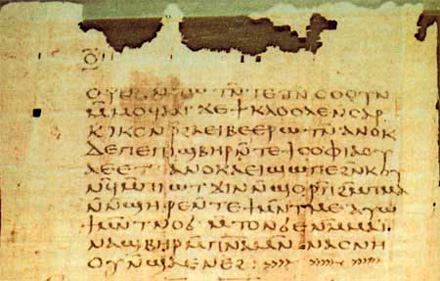
A fragment of the Gospel of Peter found at Akhmim, in 1886. This copy has been dated to about the 8th or 9th century, C.E. The Gospel of Peter was rejected as being apocryphal by the early church, and therefore not appropriate for inclusion in the New Testament. It is most known for a reference to a “talking cross,” following the resurrection of Jesus.
Apocryphal Acts of the Apostles
Simon Gathercole’s collection focuses solely on various “lost gospels,” whereas Ehrman’s collection goes beyond “lost gospels” to include various “Acts” of the Apostles, but not the stories contained in the New Testament Book of Acts. Ehrman includes texts like these:
The Acts of John: John the son of Zebedee is the main character here, but this is a Gnostic text, with some odd-ball stories in it, such as about a bed John is sleeping in, which is infested with bedbugs. The miracle stories presented in the Acts of John are generally way overdone, sensationalist, and some downright absurd. One story is about a man, assisted by an accomplice, who breaks into the tomb of a dead woman whom the man lusted after, intent on having sexual relations with the corpse. The intended rapist is killed by a serpent. John then resurrects both the woman and the man. Jesus is described in ways that suggest that he never had a flesh and bones physical body. I was quite happy to be done with the Acts of John when I finished!
The Acts of Paul: Ehrman has an extract detailing how Paul was beheaded by Nero in Rome. The second century church father Tertullian knew of the Acts of Paul, as having been forged by a presbyter living in what is now modern-day Turkey, who wrote this book “out of love for Paul.”
The Acts of Thecla: Thecla was thought to be a well-known female disciple of Paul, and the book was quite popular even into the Middle Ages. Thecla breaks off an engagement to be married in order to follow Paul, which causes all sorts of problems for her. The Acts of Thecla were often circulated together with the Acts of Paul. While it is difficult to establish the historicity of these accounts, there is good reason to believe that Thecla was a real person, featuring one of the few in-depth stories from the earliest Christians about the piety of a female follower of Jesus.
The Acts of Thomas: Thomas was a disciple of Jesus. but here there is more to the story. Jesus apparently has a twin brother, Thomas, who is one-in-the-same as Thomas the disciple. Thomas is sold into slavery by Jesus to work for the “King of India,” in which Thomas is then enabled to be a great missionary to India, performing many miracles. This book gave rise to the narrative that Thomas founded the Christian community in southern India. Thomas upholds an extreme ethic of asceticism, forbidding sexual relations even among those who are married, and urging against having children. Towards the end of the book, a woman raised from the dead describes some pretty graphic descriptions about the horrors of hell that anticipate what we find in Dante’s Inferno. Most scholars date the Acts of Thomas to the third century.
The Acts of Peter: The adventures of the Apostle Peter are set in contrast with the movements of Simon Magus, thought to be the first Christian heretic found in the canonical Book of Acts. Peter ultimately defeats Magus, when Peter journeys towards Rome. There in Rome, Peter is finally martyred, being crucified upside down. Part of the Acts of Peter serves as a backdrop narrative for the 1951 film, Quo Vadis (an excellent movie, by the way).
Scholars debate with one another as to how much historical material is actually being described in these books, as they are likely a mix of both fact and fiction. But where to draw the line between the two is difficult to pin down.
The Apocalypse of Peter has been dated back to the 2nd century C.E. Like the Gospel of Peter, it was rejected as apocryphal by the early church, and therefore inappropriate to place into the New Testament. It claims to have been written by Peter himself. Scholars universally recognize this as a classic example of pseudepigrapha (spurious writings). This fragment was discovered in Egypt (credit: Wikipedia)
Lost Letters That Failed the “Sniff” Test for the New Testament
Ehrman’s collection in his Lost Scriptures also includes additional letters attached to well-known persons in our New Testament. Scholars today recognize that these apocryphal letters were indeed of dubious origin.
Take Third Corinthians, for example. Third Corinthians is generally dated to the second century, long after Paul’s death. It was primarily written as a proto-orthodox critique of certain heterodox teachings, such as Gnosticism, which denied the humanity of Jesus and the bodily resurrection of Jesus. Some Christians in the early church accepted Third Corinthians as genuine, such as the Armenian church, but even in the second century others recognized this letter as a forgery, despite its supposed good intentions. In more recent times, some Quakers who came to America during the colonial period had a copy of Third Corinthians with them.7
Ehrman includes other fascinating examples of such supposed lost correspondence, including:
Correspondence of Paul and Seneca: The likelihood that Paul ever had any contact with the contemporaneous and great Roman philosopher Seneca is extraordinarily slim. Nevertheless, some imaginative pseudepigraphical author drafted a series of letters between the two influential thinkers of the first century.
Paul’s Letter to the Laodiceans: The canonical New Testament letter to the Colossians mentions a separate letter to the Laodiceans by Paul which is now lost. But this did not prevent someone in the second century from writing a forgery in the name of Paul having the contents of this letter. Ehrman (p. 165) suggests that this may have been written by someone who sought to write a more proto-orthodox version of yet another letter to the Laodiceans found in the first attempt at a collection of New Testament writings, compiled by the notorious second century heretic, Marcion of Sinope.
The Epistle of Barnabas: Claimed to have been written by a companion of Paul, this “The Letter of Barnabas” is worthy of extended analysis, for perhaps another blog post. But in summary, this epistle enjoyed popularity during the early church era, even among certain historically orthodox believers, some considering it a candidate for the New Testament. But thankfully, it was dropped from consideration for good reason. It takes a very negative view of Judaism, ridiculing the Jews for having taken the teachings of the Law of Moses literally and missing the metaphorical meaning which the author believes that orthodox Christianity understood to be the correct way of interpreting the Old Testament. The letter probably helped to drive a deeper wedge between Jews and Christians, as Christianity made the transition from being primarily a Jewish movement to an almost exclusively Gentile movement.
Pseudo-Titus: A letter which dates back to about the 5th century, was obviously not written by Titus, though Titus is claimed to be the author. The work takes a very negative view of human sexuality, even calling for celibacy even among married couples, as a higher spiritual calling.
Ehrman includes selections from the Shepherd of Hermas, which like the Epistle of Barnabas, enjoyed great popularity among the early Christians, as some thought it to be fitting for the New Testament canon of Scripture. But aside from certain doubts of authorship, who according to some was supposedly the brother Pius, an early Roman bishop, the book was rejected from the canonical list, partly due to a tendency towards a works-righteousness mentality. The Shepherd of Hermas records a number of visions laden with allegorical messages, and is preoccupied with concerns about falling into sin after conversion. The Christian church is symbolically represented by a lady who often appears in these visions. Readers are told that those Christians who have fallen into such sin will have a second chance to repent, but only that second chance. After that, not even a later repentance of sin will allow for the salvation of the person.8
The Gospel of Mary, a facsimile on display at the Museum of the Bible, in Washington, D.C. The Gospel of Mary is often associated with Gnostic Christian collection of writings, dating back to the 2nd and 3rd centuries of the early Christian movement. The Gospel of Mary is of particular interest to modern feminists, as Mary Magdalene is featured as having received secret knowledge from Jesus.
A Super Gospel?
There was even an attempt to come up with a kind of “super” gospel, which attempted to merge all four of the well-acknowledged gospels into one text, in order to harmonize the differences found in our canonical gospels: Matthew, Mark, Luke and John. Simon Gathercole includes an outline of this Diatessaron (not the whole text) in his collection of The Apocryphal Gospels, but introduces it with a quote from Theodoret (393-460 CE), an early church father who was disturbed by how popular this “super” gospel was among some churches, taking drastic action to clean up the mess:
“This Tatian composed a Gospel called the “Diatessaron”, cutting out the genealogies and whatever else shows that the Lord was born, physically speaking, from the line of David. It was not only those of Tatian’s own sect who made use of this Gospel, but also people who otherwise followed the apostolic teachings. They did not recognize the wickedness of the composition but treated it naively as a compendium of the Gospels. I managed to find more than two hundred copies of the book revered in our own churches, so I collected them all and removed them, replacing them with the Gospels of the four evangelists” (Gathercole, p. 71)
You would think that a studied attempt to produce a gospel harmony would have been well-received by church leaders, but apparently not. Presumably, Theodoret judged the Diatessaron to have “the wickedness of … composition” in that Christians had confused it with an original document going back to the apostles themselves. Gathercole dates Tatian’s Diatessaron to the mid to late second century. Part of the problem in reproducing the Diatessaron in its entirety is that there is no early copy of the text which has survived to the modern day, so only an outline of its contents can be reliably reproduced. Furthermore, scholars do not even know what the original language was for the Diatessaron. Gathercole’s outline is from a late Arabic copy (Gathercole, p. 71).
Ehrman’s collection towards the end of his volume includes various works which describe various stages of the development of the Christian canon. One of the first canonical lists in use by the proto-orthodox is the Muratorian Fragment, the oldest surviving list of books to make up our New Testament. The fragment is named after the Italian scholar who discovered the document in the early 18th century. The Muratorian Fragment is dated somewhere in the latter half of the second century.
The Muratorian Fragment lists all of the books of our current New Testament, except for Hebrews, James, 1 and 2 Peter, and 3 John. However, it also includes certain texts not found in our New Testament, like the Shepherd of Hermas and the Apocalypse of Peter, which could be read privately but not read in church. Other texts attributed to Marcion, like the supposed Pauline letters to Laodicea and Alexandria, and various Gnostic teachers are to be rejected completely. The Apocalypse of Peter is of interest in that it describes a journey through heaven and hell, a kind of literature which anticipates Dante’s Divine Comedy. The Apocalypse of Peter assumes a doctrine of eternal torment regarding hell in very vivid imagery, denying both universalism and annihilationism.
Simply reading through some of various texts that were not included in the New Testament does not fully explain the whole process as to why these texts were finally not accepted into the canon of Scripture, a topic for another time. However, it does give you a look into what these texts say, how they substantially differ with the New Testament, in certain cases, while in some sense differing only somewhat in other cases.
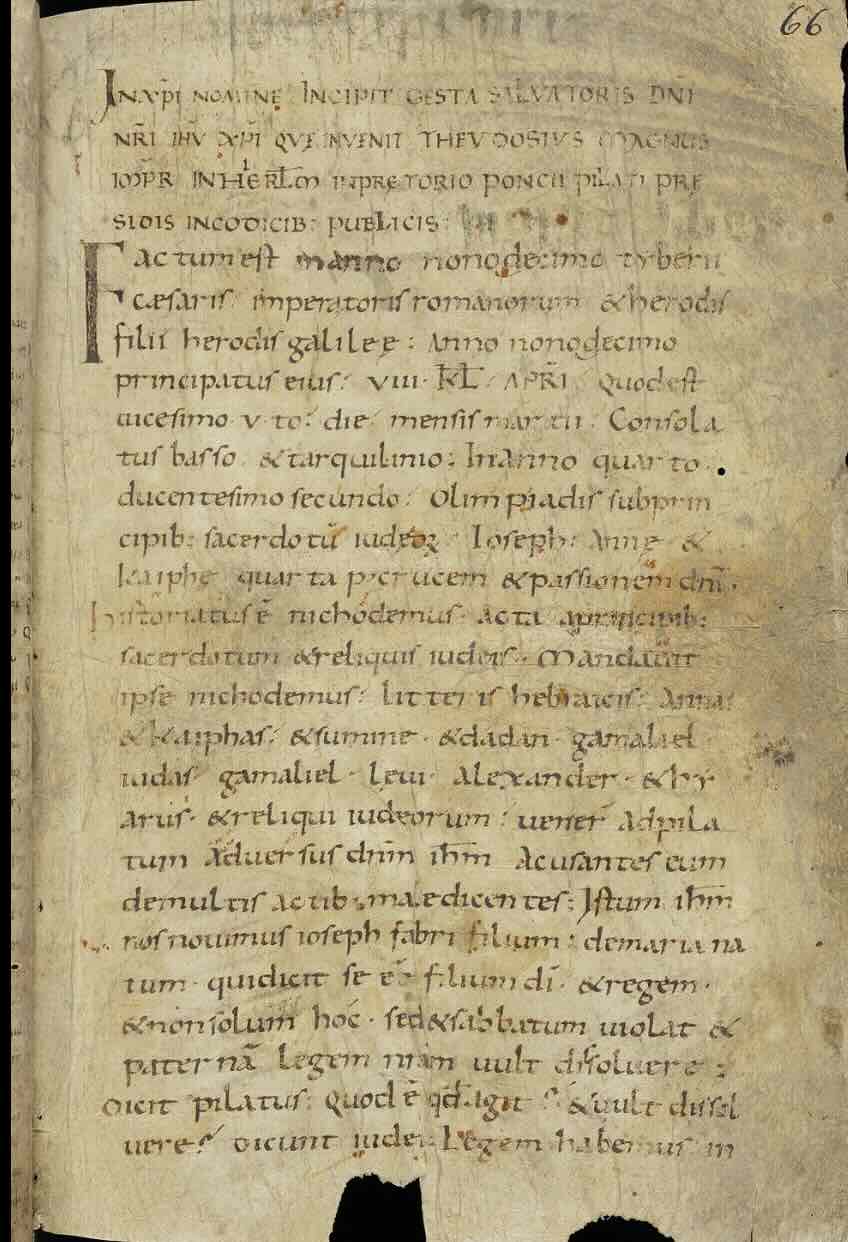
A 9th or 10th century copy of the Gospel of Nicodemus, sometimes called the Acts of Pilate, in Latin.
What To Do With Lost Scriptures and Apocryphal Gospels?
The “lost gospels” and other “New Testament-ish” apocryphal texts covered by Bart Ehrman’s Lost Scriptures and Simon Gathercole’s The Apocryphal Gospels have enjoyed varying degrees of popularity throughout Christian history, among certain communities. But particularly since the Protestant Reformation, these texts were mostly forgotten, except when archaeological discoveries, particularly in the 19th century and the 20th century recovery of the Nag Hammadi Library unearthed these forgotten books. Every few years or so, a new discovery is announced of some “lost scripture,” fodder for a lot of conversation as to why we possess the New Testament canon that we currently have.
Back in the 1990’s, progressive Christian scholar Elaine Pagels published several books, which on a popular level discussed the so-called “Gnostic Gospels,” rediscovered in 1945 in Egypt in the Nag Hammadi library. I read those books with great interest as Pagels uncovered a look at Christianity which I never heard about in my evangelical church circles. I must admit that learning about these books helps to explain why some Christians over the centuries have sought to find answers to questions that the New Testament does not fully address. But make no mistake about it, Gnostic Christianity bears very little resemblance to historic orthodox Christian faith.
Many Christians are completely unaware of the existence of such apocryphal texts, whereas certain skeptics of Christianity look upon the designation of such texts as “apocryphal,” or even certain ones as “heretical,” as examples of the institutional Christian church supposedly hiding “the truth” from people, as a means of maintaining a grip and control on the minds of Christians and preserving power and privilege. Such a mindset takes on the character of either cynicism or even a kind of spiritual elitism, which suggests that the reader of these apocryphal texts can gain some kind of “inside scoop” that other, more historically orthodox Christians fail to possess.
The more traditional view, one that I accept, is less cynical and does not rely on the logic of conspiracies. Instead, there were always a few loose cannons in the early Christian movement who gave themselves over to quirky, at best, or downright distorting versions of the story of Jesus and the rest of the New Testament. Some of these texts would best be characterized as “fan fiction,” while others were polemical in nature. Some were motivated by good intentions, while others were motivated by the idea of inventing their own version of Christianity to suit some agenda at odds with the genuine narrative handed down from the original apostolic followers of Jesus.9
One thing is certain in that by the second century, there was a lot of diversity within the Christian movement, which led to efforts by historically orthodox Christians to push back against alternative voices. Ironically, many of the same alternative voices have managed to make a comeback in our own day, in the 21st century.
While Bart Ehrman’s Lost Scriptures contains more apocryphal material, and is therefore, more complete, Simon Gathercole’s The Apocryphal Gospels, while including certain texts which Ehrman omits, is on the whole a slightly more suitable collection, if you could only pick one of the two books. Largely this is the case as Gathercole’s evangelical commitments poke through enough in his introductions to the texts, without being overly dismissive of skeptical viewpoints. Ehrman’s work, on the other hand, is comparably more skeptical, but thankfully without being overly dismissive of historically orthodox viewpoints. Both works overlap with shared material, but both emphasize different aspects of apocryphal New Testament era works. In fairness, I have not read all the way through Gathercole’s book, but I have read enough to get the sense of how he approaches the apocryphal texts he is studying. Nevertheless, both Ehrman’s Lost Scriptures: Books that Did Not Make It Into the New Testament and Gathercole’s The Apocryphal Gospels (Penguin Classics) are important contributions to the scholarship of early Christianity and are worthy of study.10
We should be thankful that Jesus made his incarnate appearance in human history 2,000 years ago and not today in our social media age with its proliferation of “fake news” and the “like” button. Since the 19th century, scholars have been able to unearth a number of these lost texts. The situation of the early church was not as confused and contrived as Dan Brown’s popular The DaVinci Code portrays it. However, the story is complex enough. The history does show the need for a type of vetting process that the early church deployed to try to weed out both well-meaning yet sincerely misguided texts, along with deliberate misrepresentations of the early apostolic record, while preserving what was good and true.
It is important recognize that the development of the New Testament canon was an organic process. There were no set of meetings where bishops took any votes on which books were “in” and which books were “out.” Instead, there was a sense developed over many decades that these 27 books we have in our New Testament had the ring of truth in them.
It makes one appreciate the fact that we have had thoughtful and influential early church fathers who sought to keep the Christian movement on track. While the study of such apocryphal texts can help give us a fuller understanding of what early Christianity looked like, one must be careful not to immediately come to cynical conclusions which impute bad motives on behalf of historic orthodox Christianity. Instead, it is worth considering a better alternative; that is, that the early church in its historically orthodox form got the essential story of Christianity right to begin with.
Simon J. Gathercole. United Kingdom New Testament scholar, Professor of New Testament and Early Christianity, and Director of Studies at Fitzwilliam College, Cambridge. I met Dr. Gathercole on a visit to Cambridge, at his church, in January, 2024.
For a very good lecture which covers the topic of “apocryphal gospels,” which cites Gathercole’s book, which explains the differences between the “apocryphal gospels” and what we have in the New Testament, I would recommend the following from Dr. Peter Gurry. Dr. Gurry has co-written with John D. Meade Scribes and Scriptures: The Amazing Story of How We Got the Bible, which is on my reading list, and covers much of what he discusses in this lecture. Enjoy!!
Notes:
1. Dan Brown’s blockbuster 2004 novel, The DaVinci Code, popularized the idea that there were “lost gospels” which the Christian church across the centuries wrongly suppressed. The misinformation that Dan Brown and others spread twenty years ago has led to a renewed interest in learning about various New Testament apocryphal gospels and other controversial writings. However, scholars have known about such apocryphal works for decades, if not centuries. The problem is that many of these apocryphal works have been lost, and we only possess fragments of them, preserved by heresiologists like Irenaeus. Nevertheless, recent discoveries, like the Gospel of Judas, continue to perk interest into the question of how the New Testament canon was formed. Baylor University historian Philip Jenkins has written about these so-called “lost gospels.” The bottom line is that such “lost gospels” are generally dated too late to be considered for serious inclusion into the Christian New Testament canon. Jenkins has written several other articles of interest on the topic of “lost gospels,” and other “lost scriptures.” Here is a late August, 2025 installment of Philip Jenkins’ series on this topic. Another installment in early September.↩
2. One more word about comparing Ehrman’s Lost Scriptures to Gathercole’s The Apocryphal Gospels. Ehrman is a skeptic and not a Christian, whereas Gathercole is an evangelical Christian. Both are world-class scholars. Nevertheless, cognitive bias is something that no scholar can completely avoid. Yet in these two volumes both scholars are relatively restrained in keeping their biases in check. The focus of these two volumes is primarily on offering accurate translations of these apocryphal texts, and comparatively, the translations offered by Ehrman and Gathercole are remarkably close. Because I spent more time reading through Ehrman’s work, most of this review will focus on Ehrman’s Lost Scriptures↩
3. Frankly, the most bizarre and disturbing apocryphal gospel described between Ehrman’s and Gathercole’s book is the Greater Questions of Mary, found in Gathercole’s collection (p. 176-177). While we have no surviving copy to the Greater Questions of Mary, the early church father Epiphanius of Salamis (about 310/320 – 403 CE) describes the work, in Gathercole’s words with: “Here Jesus is said to have revealed to Mary the obscene rituals which Epiphanius’ pornographic account has attributed to the Gnostics, rituals which Jesus himself allegedly initiated. This is perhaps the most surprising of all apocryphal Gospel fragments.” I am less inclined to quote the text from Epiphanius as the obscenity is very, very disturbing.↩
4. Dallas Seminary evangelical Bible scholar, Daniel Wallace, has stated that the story of the woman caught in adultery was his favorite story of Jesus not found in the Bible. The story of this interesting portion still found in most printed Bibles today is worthy of a separate blog post, which I hope to get to in the future.↩
5. Some do wonder why Jesus was baptized by John the Baptist, if indeed Jesus was sinless. But if we carefully think through the doctrine of the Incarnation, a good answer can be be given to this question: For if indeed Jesus took our sin upon himself, not simply through his death on the cross, but also by the very fact of becoming God incarnate, the act of baptism by Jesus enacts for us the washing away of sins on our behalf. Jesus does not need to undergo baptism for any supposed sin on his part, but he does undergo baptism for the sake of our sins. 2 Corinthians 5:21 puts it well: “ For our sake he made him to be sin who knew no sin, so that in him we might become the righteousness of God.” I would recommend Thomas F. Torrance’s The Meditation of Christ, which looks at how the incarnation of God in Christ is intrinsically related to the doctrine of the atonement culminating with the death of Jesus on the cross. Red Pen Logic offers a different explanation for addressing the question about Jesus’ baptism. However, an even better answer draws on a studied understanding of Leviticus (see the three part Veracity blog post series). The “sin offering” instructions found in Leviticus 4 are not exactly clear in terms of application. Some scholars suggest that the translation of “sin offering” is actually misleading, and that it should be a “decontamination offering” instead. This would include both an offering for “unintentional sin” as most Christians generally understand it. However, it would also include an offering related to “ritual impurity,” a condition where someone was designated as unclean, but that there was no “sin” involved. In the Leviticus, ritual impurity, which is not sinful, is different from moral impurity, which is sinful. It is possible that there are cases where a “sin offering” would be appropriate to deal with ritual impurity, which is not sinful, such as when a woman gives birth to a child, she is designated as ritual impure for a period time, where a “sin offering” is required, though clearly giving birth to a child is not sinful (see Leviticus 12:1-8). It might be that Jesus underwent baptism as a purification rite, which was not due to sin, but rather to ritual impurity. Since ritual impurity is not sinful, there is no conflict with becoming ritually impure and the concept of a sinless savior. ↩
7. See Veracity blog post series on Matthew Thiessen’s A Jewish Paul. Thiessen argues that many second century Christians came to accept the idea that Paul believed in the “resurrection of the flesh,” which was in contrast with Paul’s genuine thought that “flesh and blood” can not inherit the Kingdom of God, see 1 Corinthians 15:50. Paul believed that the resurrected body for believers would not be corruptible, as opposed to our current, fleshly bodies, which are indeed corruptible and susceptible to decay and death. It would be more accurate to say that our current fleshly bodies will be transformed in the general resurrection to become “spiritual bodies,” as described by Paul in 1 Corinthians 15. I argue that the pseudonymous author of Third Corinthians never fully grasped that nuanced distinction. Whether or not early Christians who ultimately read and dismissed Third Corinthians as a forgery picked up on that problem is unclear.↩
10. Bart Ehrman has a companion book to Lost Scriptures, aptly titled Lost Christianities, which from my understanding from various reviews has a somewhat more polemical tone, where he analyzes these “lost scriptures” to suggest that early Christianity, even into the first century, was inherently diverse, a theme articulated by the early 20th century German scholar, Walter Bauer. Alternatively, a more historically orthodox approach challenges the Bauer thesis, suggesting that aside from the conflict between Jewish and Gentile Christians, there was less theological controversy in the first century of the Christian movement. ↩
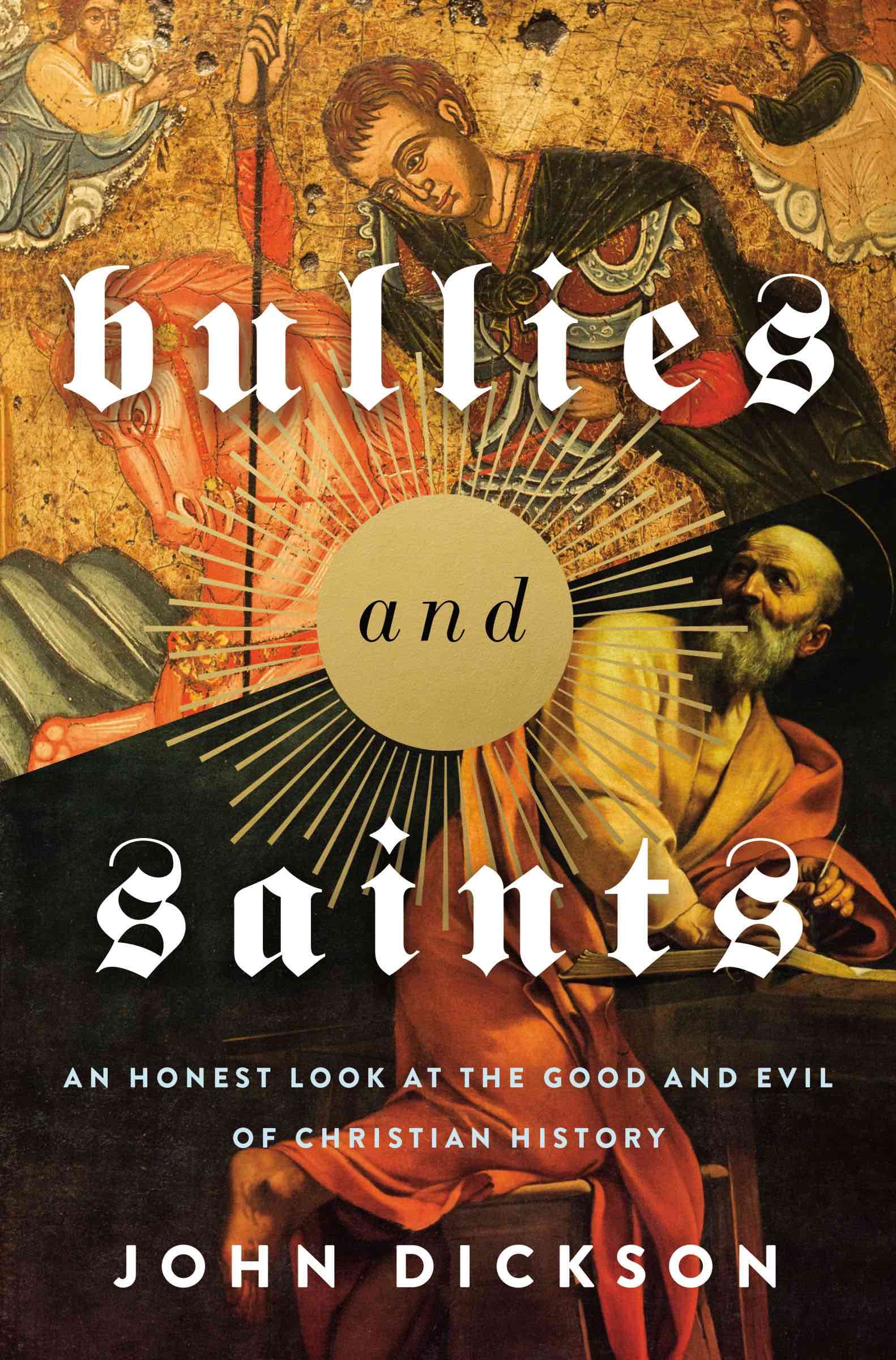
The history of Christianity often gets a bad rap in the culture these days. Is it possible to be honest about Christians behaving badly over the centuries, without becoming cynical about it?
In recent decades, a lot of apologies have been coming forth about Christians not acting much like Christians. Back in 1992, the Vatican apologized for the mistreatment of Galileo, admitting that Galileo was right and the church was wrong. In 2015, President Barack Obama acknowledged that during the Crusades, “people committed terrible deeds in the name of Christ.” In the year 2020, we heard all about the horrific legacy of slavery and racism in America, and its links to Christianity, particularly of the fundamentalist variety.
Such apologies have been lauded for their honesty, but have cast serious doubt on the integrity of Christianity. This has led many to believe that the Christian church has done more harm than good in the world. So, is it time to ditch the Christian faith for something better? Or is there more to the story?
In Bullies and Saints, Dickson takes a hard look about both the good side and the darker side of church history. Some have objected that the exposure of that darker side is like airing someone’s dirty laundry. How unpleasant can that be?
In response, John Dickson takes a balanced approach. Whenever Dickson faces the challenge that he is focused too much on the negative, his response is that one of the first things that Jesus taught his disciples is that “they should be willing to admit their own failure to love, their own moral bankruptcy” (Dickson, p. 37). Citing Jesus’ sermon on the mount, we hear Jesus’ saying “Blessed are the poor in spirit.”
The vocation of the Christian is to be a prophetic voice, to call out the existence of injustice in our world. But as Jesus taught in that same sermon, “Why do you see the speck in your neighbor’s eye, but do not notice the log in your own eye?” Christians really have no right to call out sin in the world around them until Christians are willing to call out sin in their own lives.
There is a lot of “church hurt,” experienced by people who have spent time in a Christian church, only to walk away from the experience with a bad taste in their mouth. But as John Dickson argues, an instrumentalist may play a musical piece written by Beethoven poorly, leaving the audience disappointed. But the fault for such a bad performance is not the fault of Beethoven. It is the fault of the poorly trained instrumentalist instead.
Likewise, simply because Christians fail to live up to standards set by Jesus Christ, this does not mean that Christianity as defined by Jesus is faulty, or untrue. Rather, it means that such Christians are at fault, either due to their own ignorance, or a failure to understand what being a Christian is all about. The wisdom of G.K. Chesterton is appropriate: “The Christian ideal has not been tried and found wanting. It has been found difficult; and left untried.”
Christians behaving badly need not require that Jesus himself and his message be rejected. In fact, the opposite is the case. The existence of bullies in the church confirms Jesus’ own teachings, and that what Jesus said and did was and indeed is still true. This is the bottomline message in John Dickson’s Bullies and Saints, and he makes an historically responsible case for it. Bullies and Saints is a fantastic, enjoyable, and learned book, a one-stop shop for a balanced look at the good and bad parts of church history across the centuries.
A Balanced Approach to Bullies and Saints in Church History
In Bullies and Saints, we learn about the bullying tactics sadly on display by those who have taken up the name of Christ. A few anecdotes are worth reporting.
During the Crusades, church leaders, including one of the most revered and saintly, Bernard of Clairvaux, encouraged knights and others who marched off to defeat the Turks. Bernard wrote a letter around 1145 to some of his followers, promising that such military efforts were to be viewed as a kind of spiritual pilgrimage, an act of penance to blur out and erase one’s own sins: “…Where it is glory to conquer and gain to die. Take the sign of the cross, and you shall gain pardon for every sin that you confess with a contrite heart” (quoted in Dickson, p. 10).
On the other hand, in Bullies and Saints we also learn about some very positive contributions to society in church history. Emperor Constantine is often described as a villain who wedded the Christian church to state power, thereby corrupting the church in the process. Yet Constantine, the Roman emperor who first granted toleration to Christianity with the Edict of Milan in the early 4th century, also passed a legal ruling to make divorce more difficult, one of the first efforts in human history to promote women’s rights.
In Roman history before Constantine, divorce laws put women at a distinct disadvantage. In that culture, a woman’s family was required to bring a dowry, whether that be a sum of money or other material wealth, to a marriage. But if the marriage was abruptly cut off by the husband, the wife would often be left in a state of significant financial loss. Based on Christian teaching that God created both man and woman in the image of God, Constantine ruled that if a husband divorced his wife on trivial grounds:
….he must restore her entire dowry, and he shall not marry another woman. But if he should do this [i.e., marry another woman after divorcing on trivial grounds], his former wife shall be given the right to enter and seize his home by force and to transfer to herself the entire dowry of his later wife in recompense for the outrage inflicted upon her” (quoted in Dickson, p. 75).
Think about it. A 4th century Roman emperor is saying stuff that mirrors the 21st century #MeToo movement. That surely made an unfaithful husband think twice before “shacking up” with another woman. Pagan Roman society before Christianity came along offered very little defensive support of women taken advantage of by undisciplined men.
Constantine also passed an early version of legal code outlawing the abandonment of infants. In pre-Christian Roman society, it was perfectly legal and moral to leave a baby abandoned if the family did not want the baby, subjecting the helpless child to certain death, unless someone else wandered along to either rescue the child, or to be picked up by a child trafficker (Dickson, p. 75).
Score yet again another point in favor of the influence of Christianity. It balances out the common negative narrative popularized on the Internet today.
Church History is a Complicated, Mixed Bag: A 5th Century Version of the 2020 “George Floyd” Riots
John Dickson corrects a number of misunderstandings about church history, such as the following example. This is a bit of a rabbit trail, but I found it all fascinating, and why you can not always trust popular revisionist history.
Similar to the George Floyd riots in the summer of 2020, Christians rioted in the city of Alexandria, Egypt, in the early 5th century. The 2020 death of George Floyd triggered riots across the United States, encouraging thousands to vent their frustrations after being subject for months to social-distancing restrictions in the wake of the COVID-19 pandemic.
Spurred on by social media algorithms designed to get more clicks, the riots spread across the world, leading to the dismantling of statues honoring leaders of the 19th century southern Confederacy, while also inspiring calls to take down statues of venerable modern heroes, like that of Jefferson and Washington in the U.S., and of Winston Churchill in London, the British statesman who stood up against Hitler’s Nazi Germany. Even a statue of Captain James Cook, the English sailor who “discovered” the eastern seaboard of Australia in the 18th century, needed a police guard established in John Dickson’s native Australia (Dickson, p. 118).
Likewise, when the Christians rioted in Alexandria, Egypt, less than a few decades after Christianity was declared the official religion of the Roman Empire, the violence that erupted left its mark upon history. Knowing at least something about church history, I had always thought of Cyril of Alexandria, the bishop in that city at the time, as a great Christian hero, despite some theological controversy along the way. Cyril was engaged in an important dispute with a bishop at Constantinople, Nestorius, that the average Protestant evangelical Christian knows nothing about. (If you do not know who Nestorius was, just consider the idea that the Christian movement that he led eventually brought the Christian faith into faraway places, like China, hundreds of years before the Protestant missionary movement. Supporters of Nestorius today say that Cyril of Alexandria misunderstood Nestorius). Though Cyril’s ideas received further tweaking, Cyril campaigned against his opponents in favor of the theological concept of Jesus having both a divine nature and a human nature, united together.
Jesus is both God and man, at the same time, though the details of this union of natures remain a mystery. Cyril’s campaign helped to pave the way to the Council of Chalcedon in 451, which affirmed the full divinity and the full humanity of Jesus Christ, which the vast majority of Christians continue to affirm to this day.
The history of Christianity would have been quite different without Cyril of Alexandria, especially regarding the Incarnation, a core Christian doctrine most believers in the 21st century take for granted. Cyril is regarded as a saint in both Roman Catholic and Eastern Orthodox communions. But Cyril’s legacy is actually quite complicated, something I knew very little about before reading Bullies and Saints.
Many critics of Christianity blame Cyril for inspiring a mob to attack and murder one of the greatest philosophers of the day, a woman named Hypatia, a leading advocate for reason and science. Such critics cast Cyril as an anti-intellectual zealot, who promoted hatred against science and against women. Unfortunately, such criticism has been mainstreamed into popular history story-telling in contemporary Western culture.
This narrative about Cyril of Alexandria has been promoted by both Edward Gibbons in his 1776 The Decline and Fall of the Roman Empire, and more recently, the world-renowned scientist Carl Sagan in his widely-acclaimed 1981 PBS documentary Cosmos. As a PBS fan back in the 1980s, I took in the message of Cosmos as pure “gospel truth,” though I remember little about the television program now. But there is more to the story, including details that Sagan failed to tell his television viewers, viewers like me.
Yes, a mob who looked up to Cyril did murder Hypatia. But what is often overlooked is that the reason for the attack had little to do with hatred of philosophy, the fact that Hypatia was a woman, or even issues directly related to Christianity. Political and socio-economic factors played a much larger role.
John Dickson and the sources he uses fill in the gaps of the common narrative: Tensions between Jews and Christians in Alexandria had become very intense in Cyril’s Egypt. Relations between Jews and pagans in Alexandria were arguably just as bad, if not worse, and had been that way for several centuries before Cyril.
Pogroms led by Alexandrian pagans against the city’s Jewish population resulted in perhaps thousands of deaths, as early as a decade after Jesus’ death. The Christian movement had barely got off of the ground at that point. Mistrust of the pagan elites by the relatively poorer Jewish community was inevitable, in the intervening centuries. Yet as time moved on and Christianity eventually eclipsed paganism in political influence in Alexandria, with many former pagans becoming Christians, much of that same hostility from the Jewish community was now redirected towards the new Christian elite.
Bishop Cyril came to believe that the current governor of Alexandria, ironically a baptized Christian named Orestes, had sided against the Christians in favor of the Jews in that city. Orestes had ordered an outspoken Christian to be tortured, resulting from a public dispute this man had with the Jews.
The influential bishop Cyril resented Orestes’ actions. Orestes appealed to Hypatia, a pagan philosopher respected by both pagans and Christians, in order to find a peaceful solution to a crisis that was spiraling out of control. But some of Cyril’s supporters from the lower classes got out of hand and rioted, confronting Hypatia themselves. The confrontation escalated, and the philosopher was killed. The Christian rioters had thought that the pagan Hypatia was aligned with the Christian Orestes, in favor of the Jews against the Christians under Cyril’s influence.
Did Cyril order his followers to have Hypatia killed, or did he simply turn a blind eye to enthusiasts who supported him? Historians debate this point. Either way, it would be easy to conclude that Hypatia’s death was a clear example of Christians behaving badly, even with the story’s complications.
However, what is also often neglected is that several of the most vocal supporters of Hypatia were Christians themselves, and these Christians strongly rebuked Cyril and his hot-headed enthusiastic followers, which included easily swayed monks. Much of the history about Hypatia was preserved by Christians sympathetic to her.
In reading Bullies and Saints, you get the picture that the controversy over Hypatia’s death was more of a class dispute as opposed to a religious dispute. Cyril of Alexandria is still in many ways a hero to me, but I can see his clay feet more clearly now. While Cyril’s behavior is certainly less than exemplary, the complex details of the story undermine Sagan’s oversimplified narrative of anti-intellectual, misogynistic Christians attacking a pagan, scientifically-learned female philosopher.
Recommended for a Fair Analysis of the Good and Bad of Church History
Stories like these are peppered throughout Bullies and Saints, offering a balanced analysis of Christians acting as saints as well as being bullies. I have only covered the highlights from the first third of the book. Dickson goes on with stories beyond the era of the early church, from Augustine’s sophisticated rationale with “just war theory,” to the Inquisition of the medieval period, to the clerical abuse of children by clergy in the modern era. Dickson hits all of the highlights (and “lowlights”) of church history, correcting misinformation with good information along the way.
Dickson moves with ease, acknowledging on the one hand, the anomaly of Charlemagne’s forced conversions of the Saxons (followed by Charlemagne’s eventual relaxation of such a policy, due to the saintly influence of Alcuin of York). On the other hand, Dickson exposes the highly problematic arguments in Stephen Greenblatt’s The Swerve, a popular atheistic attempt to blame Christianity for the medieval “dark ages,” and the Christian church’s supposed rejection of science and the intellect.
C.S. Lewis has been known for criticizing “chronological snobbery,” the tendency to think that we as modern people are more morally upright than our ancient and medieval predecessors. Bullies and Saints has the receipts that demonstrate the truth of Lewis’ argument.
A few surprises met me along the way through Bullies and Saints. For example, have you ever heard of the Prayer of Saint Francis? “Lord make me an instrument of your peace. Where there is hatred, let me bring love.”
I have sung songs based on this prayer ever since I was a little kid. The theme of peace was certainly a mark of Francis of Assisi’s spirituality, but the words of the prayer itself do not originate with him. I did not know that. Instead they were first published in a Roman Catholic magazine in 1912 by an unknown author, a poem that was extremely popular during the years of and following World War I.
Bullies and Saints makes for an extraordinary engaging read. I listened to it in Audible form, and John Dickson does a great job reading the text himself.
I highly recommend John Dickson’s Bullies and Saints as a well-rounded, balanced tour through church history, showing that one can acknowledge the many positive contributions of Christianity to the world, while being honest about the failures of Christians over the past twenty centuries, without descending into cynicism.
I do not know where all readers of the Veracity blog live, but here in my native Virginia, it is blazing hot now in mid-July!
In between sweating through yet another shirt, I ran across a fascinating article by Washington University biologist Joshua Swamidass at Christianity Today magazine: “Setting Our Scopes on Things Above.” I was reminded that exactly one hundred years ago this week, that the “trial of the century” took place in an extremely hot Tennessee, long before courtrooms had air conditioning!
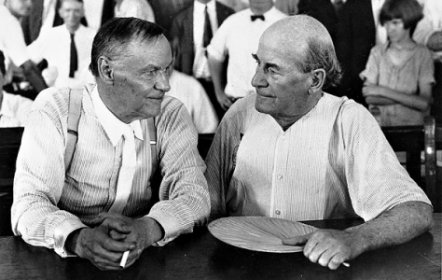
Likewise, the Scopes trial caught nearly everyone’s attention in 1925. While they did not have the Internet or television back then, they did have newspapers and radio, as dozens and dozens of journalists descended on the small town of Dayton to cover the trial. People were spellbound as William Jennings Bryan, a longtime presidential hopeful and conservative Christian, as the prosecuting attorney took on Clarence Darrow, an agnostic defender of science, and Scopes’ defense attorney. There was even a play written about the trial, which eventually became a movie, Inherit The Wind.
20th century cultural icons: cigarette smoking, agnostic advocate for science, Clarence Darrow vs. defender of the Bible, anti-evolutionist, populist politician, William Jennings Bryan, in the heat of a Tennessee summer.
Ironically, from today’s perspective, William Jennings Bryan was not a Young Earth Creationist. He was what might be a called a Day-Age Creationist, a form of Old Earth Creationism similar to what Hugh Ross at Reasons to Believe supports. While Scopes lost the court battle (at least initially), it was Christian “fundamentalism” which took the biggest hit, effectively pushing conservative Christians off the cultural mainstream. The sidelining of conservative Christianity would not show signs of reversing until the emergence of the “neo-evangelical” movement, embodied in personalities like Billy Graham, in the late 1940s and 1950s.
A few years ago, I wrote about the Scopes trial, along with a transcript of the (in)famous cross-examination of William Jennings Bryan conducted by Clarence Darrow, so I will not rehearse the details here. But the conversation about the Bible and its relationship to science has been a big part of the history of the Veracity blog over the past thirteen years. There are over a hundred blog posts about this conversation! Are the concepts of biblical creation and evolution compatible or incompatible with one another?
I think I can call him “Joshua” now, as I have personally corresponded with him before. Joshua helps to run a discussion board website at PeacefulScience.org. On the one hand, Joshua is critical of others, whether they be scientists or bible scholars, who argue against the historicity of Adam, particularly a certain subset of Christians (but not all) associated with Biologos, a Christian think-tank started by Francis Collins. The argument against historical Adam is that genetic studies have shown that the human population could not have arisen from just two people, Adam and Eve, in that modern humanity arose from a much bigger population of hominids.
There are several advantages to this solution: First, there is no need to tie all human descent as coming genetically from just two people. Other humans are involved as well. But what Joshua brings to the table is that all humans today, and even in Jesus and Paul’s day are all genealogically related to Adam and Eve, not necessarily genetically. The Bible is concerned about genealogy, not genetics.
Secondly, it resolves the difficulty made famous during the Scopes trial, when Clarence Darrow questioned William Jennings Bryan as to where Cain got his wife. Many Christian apologists today propose that Adam and Eve must have had an unnamed daughter, so that Cain must have married his sister. Various creationist groups, including the Young Earth Creationists at Answers in Genesis, as well as Old Earth Creationists at Reasons to Believe, hold to that apologetic proposal. There is no Bible proof text which explicitly supports this, as there is no mention in the Bible of Adam and Eve having daughters.
Yet this common proposal causes a big problem for historically orthodox Christianity, in that it effectively argues that God has changed his mind regarding the sexual morality status of incest. For if incest was okay for Cain, but then later declared by God to be sinful according to the Law of Moses, then this suggests that God can and has changed his mind regarding the definition of marriage. Many advocates of same-sex marriage today among Christians make the same sort of argument, saying that God could also change his mind regarding same-sex relations, condemning them all in the Bible times, but changing his mind today by accepting same-sex marriage now in the 21st century. Whole denominations of progressive Christians have gone down this route of biblical interpretation.
Joshua’s proposal is not a hill I am going to die on. But I do think it makes the best sense, considering other alternatives. A lot of Christians wrestle with the creation/evolution discussion, but Joshua’s book is one of the best I would recommend reading. I read Joshua’s book five years ago, and since then I have not found any proposal better than his. What makes Joshua’s proposal also helpful is that you can be a Young Earth Creationist, an Old Earth Creationist, or an Evolutionary Creationist, and still hold to a genealogical Adam and Eve and affirm the inerrancy of the Bible.
You might be interested in the following interview of Dr. Joshua Swamidass by another fellow scientist, who is a Christian, Rice University’s Dr. James Tour. Dr. Tour does not agree with Joshua’s take on Genesis, but the following conversation shows that the two have more common ground as believers who affirm the bodily resurrection of Jesus. It is a great conversation showing how believers, with different views of Creation, can find a common bond between each other. Check it out!
UPDATE August 26, 2025:
Well, I have to say that YouTube and Tik-Tok sensation Dan McClellan actually gave me something to think about, which confirms my conclusion as to how best to interpret the rise of humanity in Genesis. McClellan argues that Genesis 4:1-2 teaches that Adam and Eve had sexual relations to produce Cain and then Abel. However, the next time Genesis says that Adam “knew his wife again, and she bore a son and called his name Seth” is in Genesis 4:25. However, the birth of Seth is after when “Cain knew his wife, and she conceived and bore Enoch. When he built a city, he called the name of the city after the name of his son, Enoch” (Genesis 4:17 ESV).
This rules out the traditional explanation that Cain married his sister. For the text says that the third child born to Adam and Eve was long after Cain got married, and so Cain could not have married his sister, if his sister had not been born yet, assuming Adam and Eve actually had a daughter to begin with.
Now that is something to ponder!!!
Some might object by saying that Adam and Eve could have had sexual relations prior to Eve’s pregnancy with Seth, thus allowing for another birth in between Abel and Seth, but not mentioned in the text, but the Hebrew does really allow for that kind of distinction, as the verse links both the sexual act and the pregnancy together with the “again,” thus indicating that this was Eve’s third pregnancy, and not a possible fourth pregnancy.
Or some might object that the third pregnancy mentioned is only regarding male children, and that the text simply ignores girls. Okay, that might be possible. But how do you know?
McClellan goes onto say that the author of Genesis 4 knows nothing about a global flood, for there were clearly other humans living during the time of Adam and Eve, who are not represented in the genealogies of Genesis 5, and who are not destroyed in a flood event described by Genesis 7-9. This would indicate that if there really was a flood, it is local in nature (a large regional flood), and not a global flood.
Now, McClellan goes onto assert that these various discrepancies indicate that there were different authors involved in writing these various texts within Genesis, which explains what McClellan believes are contradictions in the text. But what if there were other humans living during the period of Adam and Eve and there was a local, and not a global flood, and that this is what Genesis is actually teaching? Then there is really no contradiction in these texts.
This does not specifically rule out the possibility of multiple hands involved in the writing of Genesis, but it does take away the strength of the argument, if it depends on the existence of supposed contradictions in the text, which really are not there. Something to think about!!
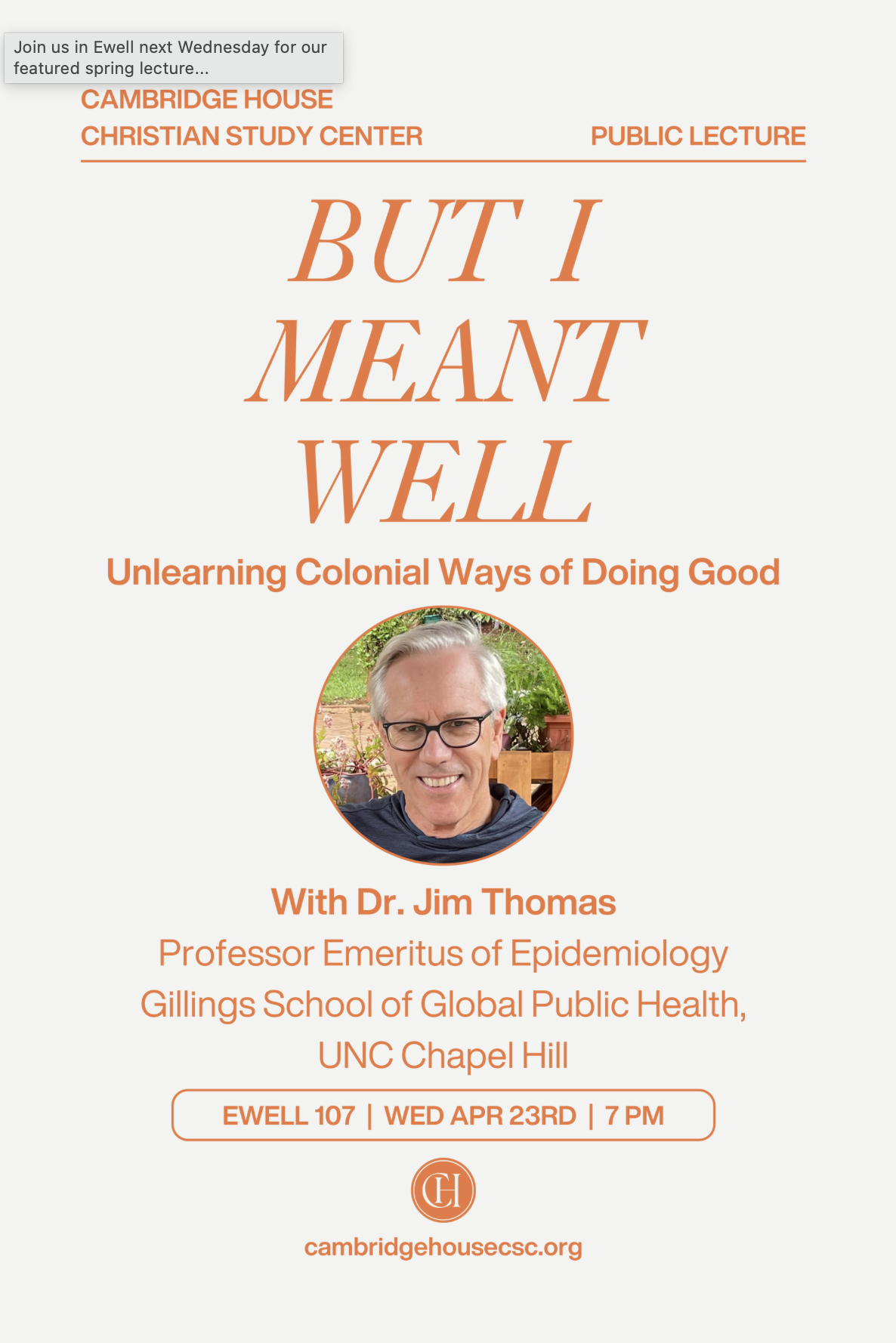
Come on out next week for the annual spring lecture sponsored by the Cambridge House, the Christian study center near the campus of the College of William & Mary. Cambridge House is about fostering dialogue about the historically orthodox Christian faith within the campus academic community, offering hospitality to students, faculty, staff, and friends of the study center in the Williamsburg area.
But I Meant Well: Unlearning Colonial Ways of Doing Good Wednesday, April 23rd | 7 PM | Ewell Hall, Room 107 Our spring lecture, “But I Meant Well: Unlearning Colonial Ways of Doing Good,” will be presented by Dr. Jim Thomas at Ewell Hall.
Jim has worked as an epidemiologist and ethicist in more than 40 countries. As a social epidemiologist, he studied how social forces, such as mass incarceration, shape the distribution of health outcomes in a community. As an ethicist, he was the principle author of the first American public health code of ethics and now advises other countries as they write their codes. While in Ghana to coordinate with the World Health Organization on data collection following an Ebola epidemic, he visited Elmina Fort. Elmina is where Africans were enslaved and held to be put on ships to the Americas. Seeing a church in Elmina was a shock to Jim’s Christian faith. On Wednesday, April 23rd, he will talk about how he processed that shock over the following years and how it affects his international work now.
Jim is an Emeritus Professor of Epidemiology in the Gillings School of Global Public Health at the University of North Carolina, Chapel Hill. Additionally, he serves as an Adjunct Professor at the French École des Hautes Études en Santé Publique.
If you can come, take a minute and RSVP, so that we can have a semi-accurate head count! See you next Wednesday!






 Veracity