


Harry Bliss, The New Yorker, September 6, 2010
Suppose that you’re a Christian who wants to share your faith with a Muslim. How would you go about doing that? Further, suppose that you appreciate how difficult it is for anyone to overcome what they have been taught adamantly since birth. Muslims who convert to Christianity are considered apostate and subject oftentimes to ostracism and harsh treatment. They break their family’s hearts. The penalty for apostasy in many Islamic countries is death. Conversion is serious business. Sharing could get very uncomfortable.
There are many, many testimonies online about Muslims who have converted to Christianity. Their stories are fascinating, heartbreaking, shocking, tragic, joyful, unlikely, and often involve dreams. Many relate miraculous healing or delivery from dire circumstances. Some, like the five Christians noted below who were raised by Muslim parents, answer a calling to witness to the global Muslim and Christian communities after they become Christians.
So what causes a Muslim to become a Christian? If you listen to Nabeel Qureshi or Abdu Murray, or even Mona Walter, you might get the impression that the common catalyst is steadfast friends who genuinely love them and reflect the love of Christ. While that appears to be true in many cases, after reviewing scores and scores of testimonies, there seems to be an even more common basis for Muslim conversions, namely critical thinking.
Critical thinking is not easy. It requires us to put away our feelings, our dogma, our subjective instincts, and to apply disciplined thinking that is “clear, rational, open-minded, and informed by evidence.” Sometimes the important questions are self-induced, and sometimes they are offered by friends who risk feeling a little uncomfortable. Either way they can move mountains.
What about our critical thinking? When we think about Muslims, do we envision terrorists? Are we that prejudiced? Or do we think about millions upon millions of people who need to hear the truth of the Christian Gospel? Are we ready to give a “reason for the hope” that is within us, with gentleness and respect? Do we have compassion for our brothers and sisters in Islamic countries who are persecuted for their beliefs? It’s very easy to feel anger and to hate when we are attacked. Terrorists are the enemies of free people everywhere. But what did Jesus say about our enemies? His words make us unique among the world’s religions, as does His sacrificial atonement. That should mean something.
We try not to give advice on Veracity, but we’re not at all above taking advice. Take it from Abdu Murray; if you want to reach out to a Muslim, don’t begin by attacking Islam—begin with the positive case for Christianity. If you want to engage in critical thinking, study Nabeel Qureshi’s Seeking Allah, Finding Jesus. Nabeel and his friend David Wood engaged in that process for five years. (If you watched David’s sociopath-turns-Christian testimony, don’t stop there.) Both of these guys were brilliant and committed to opposite truth claims. It got very uncomfortable at times between them, but their friendship only grew stronger as they subjected their beliefs to critical thinking. It cost Nabeel greatly. But he was willing to pay the price because ultimately he accepted the truth. I really cannot recommend his book highly enough. It is an incredible account of the power of friendship and apologetics in transforming even an ardent Muslim.
Take a little time to explore the links and testimonies of the incredible people below. If they are willing to risk their lives to share the Christian Gospel, as many of them do, maybe we shouldn’t worry so much about being uncomfortable.
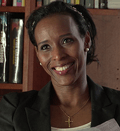 |
Mona Walter
|
 |
Abdu Murray |
 |
Mark Gabriel |
 |
Nabeel Qureshi |
 |
Fazale Rana |





 Veracity