
Author Archives: John Paine
About John Paine

Getting C.S. Lewis
 C.S. Lewis has always been hard for me to read. I started out with an immature dislike of the man’s writings—because one of his science fiction classics was on my summer reading list in junior high. I didn’t get much out of the little bit that I actually read.
To get C.S. Lewis you have to know something about his subject, or at least have formed an opinion or prejudice. Consider his famous “Trilemma Argument” from Mere Christianity:
“I am trying here to prevent anyone saying the really foolish thing that people often say about Him: I’m ready to accept Jesus as a great moral teacher, but I don’t accept his claim to be God. That is the one thing we must not say. A man who was merely a man and said the sort of things Jesus said would not be a great moral teacher. He would either be a lunatic—on the level with the man who says he is a poached egg—or else he would be the Devil of Hell. You must make your choice. Either this man was, and is, the Son of God, or else a madman or something worse. You can shut him up for a fool, you can spit at him and kill him as a demon or you can fall at his feet and call him Lord and God, but let us not come with any patronizing nonsense about his being a great human teacher. He has not left that open to us. He did not intend to.”
― C.S. Lewis, Mere Christianity
He seldom wrote merely to supply information. He argued. He defended. To take on his trilemma argument you have to know more than a little about what Jesus actually said. And then you have to interpret—and therein lies the efficacy of C.S. Lewis.
It helps to get to know him a little bit as a person, not merely as an Oxford don. To this day he is reviled and revered. He died the same day that JFK was assassinated. He smoked and met colleagues and friends in the Eagle and Child pub. He loved, he lost, and he hurt. And he reasoned himself out of atheism. He is one of the most widely published and influential Christian authors of all time. But there were only 21 people at his funeral.
Here is a fascinating essay that provides some insight into his character. As tempting as it might be to jump ahead to the videos, don’t miss this essay. You might identify with this reluctant but nonetheless effective evangelist.
The following videos describe his enduring significance (notice the Chi Rho) and his home life. It helps to know a little about the man before you get into his writing.
Faith and reason. Who knew?
Book of Job
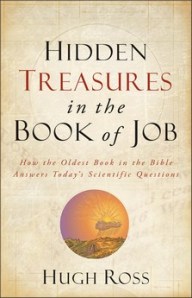
The Old Testament book of Job is a story about faithfulness through longsuffering, perseverance, and ultimately the love of God. Right? Right. But what else might we glean from the text?
You might be surprised to learn that Job is arguably the most ancient book in the Bible—predating Genesis by as much as 400 years. It also contains more information about the creation of the universe than most of us realize. What might it tell us of ethics, purpose, right doctrine, obedience, redemption, and even Heaven? Why does God ask all those specific questions?
If you’re interested in digging deeper, check out the book below.
Enjoy!
Inerrant and Infallible
We cannot explain or resolve all parts of Scripture. However, to surmise that apparent conflicts in the Bible must be ‘errors’ is an arrogant and dangerous supposition. Too many people give up too easily—if it doesn’t make sense they aren’t willing to dig deeper. Or to trust. 
A couple of years ago I listened as wise, godly friends discussed the inerrancy and infallibility of the Bible. All of them are mature Christians. The issue was not the authority of Scripture for faith and practice. The issue was whether it is necessary and/or appropriate to include in our statement of faith that the Bible contains the ‘inerrant’ and ‘infallible’ word of God.
While I try not to get too personal with this blog, the most that I can contribute on this topic is personal. Specifically, the more I study the more it all makes sense. Not just in a little way, but in one “Oh wow!” realization after another.
Many (not all) passages that at one time confused me or caused me to wonder if the writer was correct, came into sharper focus with deeper study. This detailed-study-leads-to-edification process has happened so many times that my view on the inerrancy and infallibility of the Bible has strengthened considerably.
Just one example—I recently audited an apologetics course entitled Creation and the Bible by Reasons To Believe. Dr. Hugh Ross, a renowned astrophysicist and the founder of Reasons To Believe states in his testimony that he became a Christian by reading the foundational books of the world’s religions and discarding them one by one based upon scientific errors apparent in their text. When he got to the Bible however, he found 13 scientifically accurate statements about the creation of the universe in the first chapter of Genesis. If you take the time to dig, the details are amazing and dramatically support the case for ascribing inerrancy and infallibility to the Bible.
There’s no shortage of opinions on the accuracy of the Bible. Our post-modern culture promotes individual opinions and disharmony over conformity and agreement. Fine. Got it. No one wants to give a straightforward yes or no to the question of Biblical inerrancy, and actually that should be the case. What do you do with translation differences, poetry, allegorical statements, the use of Koine (slang) Greek, textual criticism, differing accounts of the same events by different authors, a lack of modern technical precision, observational descriptions of nature, the use of hyperbole and round numbers, variant selections of material in parallel accounts, and so on? It takes a fair amount of clarification before we can get to a yes or no response.
But the concepts behind these adjectives are extremely important, and there are those who have done a very good job building a case for unity on this topic. The Chicago Statement on Biblical Inerrancy is a document worthy of very careful reading. Before I read it, I had my own unfocused views on the subject. After reading it and thinking it through, I’m in. I support the Chicago Statement.
So back to the question of whether it is necessary or appropriate to include that the Bible is inerrant and infallible in our statement of faith. In its constitutional context, the Williamsburg Community Chapel’s statement of faith is reduced to eight points about which we believe so strongly that we would break fellowship with those who would disagree. In this context, personally I believe it is appropriate—but not necessary—to include these terms (see Article XIX of the Chicago Statement). In other words, would I break fellowship with someone who was struggling with the genealogies of Christ in Matthew versus Luke? No. Would I break fellowship with someone who insisted that the differences in these genealogies prove the errancy of the Bible? Absolutely. More importantly, do I believe that the Bible is the inerrant and infallible, inspired word of God? Yes.
The Ascension Was Not Enough
 Have you ever thought about the events that transformed the apostles from runaway associates of Jesus into witnesses willing to be martyred for his message? The ‘About’ page on the Veracity blog encourages readers to “figure some things out.” That’s precisely what the apostles did between Good Friday (on the eve of the Jewish festival of Passover) and Pentecost (during the Jewish festival of Shavuot). But what they figured out wasn’t good enough.
The apostles witnessed all the miracles of Jesus while shadowing him for three years, but when the Roman soldiers showed up in Gethsemane all they had processed during those three years was quickly abandoned. They distanced themselves from him. So much for being bolstered by intellect. Obviously they were focusing on self-preservation and avoiding the pain and suffering that was about to be inflicted upon Jesus—just like you and I would have done. They knew that Jesus was God and that he had the power to raise the dead. They were there for the miracles, the transfiguration, the raising of Lazarus. Intellectually and experientially they knew—but they followed their feet.
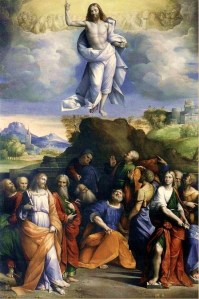
Forty days after the resurrection, they witnessed the ascension. But as mind-blowing as that event must have been—particularly in the afterglow of the resurrection—it wasn’t enough to change the apostles from cowards to revolutionaries. Jesus told them to wait in Jerusalem (for Pentecost, 10 days later).
This video from Glo Bible and our friends at Day of Discovery summarizes the events leading up to the ascension.
Jesus knew that his ascension would not be enough when he told the apostles beforehand, “…you will receive power when the Holy Spirit comes on you; and you will be my witnesses in Jerusalem, and in all Judea and Samaria, and to the ends of the earth.” The anointing of the Holy Spirit wasn’t icing on the cake, and it wasn’t an unplanned or spontaneous result of all the teaching that transpired before Pentecost. It wasn’t an insurance run in case the apostles didn’t get it. It was a vital part of God’s plan, preordained, and God’s provision for equipping disciples.
Ray Vander Laan has an amazing lesson on Pentecost (on the Southern Stairs of Herod’s Temple). It is one of the clips from the Faith Lessons DVDs, that should be in your personal library. This is teaching as good as it gets, and you can understand why Ray gets choked up when he describes the significance of being on those steps.
So…after all they had witnessed in the 51 days after Good Friday, particularly the resurrected Christ and his ascension, the apostles still didn’t have what it takes. We may like to think that if we had seen the ascension we would have been fully convicted and empowered. But the truth is it takes more. It takes God with us, not merely God before us. God knew that. God knows that.
When Christ gave the Great Commission in Matthew 28, he commanded his disciples to go to all the nations and baptize in the name of the Father, the Son, and the Holy Spirit. The ascension was not enough. It took Pentecost. It takes the power and person of the Holy Spirit. Dick Woodward has a lot of teaching about the Holy Spirit, as does the Apostle Paul. If we’re going to get anywhere in our devotional lives, it takes the Holy Spirit. There are rich blessings behind the preceding two hyperlinks.
Why is it important to appreciate the ten days between Christ’s ascension and Pentecost? It gets to the heart of the Trinity, and understanding that God is manifest in three persons—and that we need the power of all three in our lives. It also clearly demonstrates God’s plan for us—we are not only his children, but his anointed children. Without that anointing, it’s not enough.
Feel free to share our book…

Join the Conversation
Clarke Morledge on The Council of Nicaea Demythol… Clarke Morledge on From Genesis to Junia: An Hone… Clarke Morledge on From Genesis to Junia: An Hone… Clarke Morledge on From Genesis to Junia: An Hone… Clarke Morledge on From Genesis to Junia: An Hone… Clarke Morledge on From Genesis to Junia: An Hone… Clarke Morledge on Is the Apostle Paul Being Anti… Clarke Morledge on Reversing Hermon, by Michael H… Clarke Morledge on What About Those “Lost S… Clarke Morledge on Is the Virgin Birth Prophecy a… Clarke Morledge on The First Thousand Years, by R… Mark on The First Thousand Years, by R… Clarke Morledge on Reversing Hermon, by Michael H… Jim Long on Reversing Hermon, by Michael H… Clarke Morledge on Bart Ehrman’s Jesus: Apo…


 Veracity