

Now that the dust is settling after the storming of the Capital on January 6, and Americans witnessed a peaceful transition of power, from one President to another President earlier this week, it is worth taking stock of what has happened, and what it means for the church.
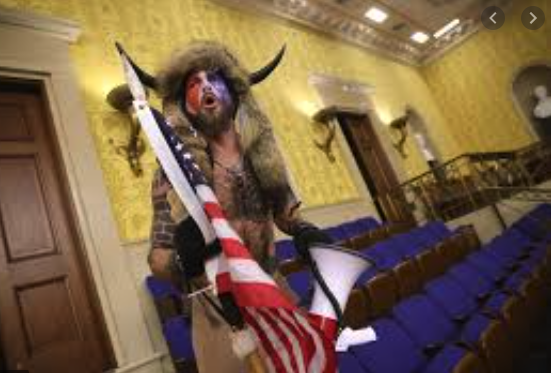
The first point to note is that we are reminded, yet once again, that we are to beware of false prophets. A shocking number of Christian leaders have publicly made pronouncements, for the past many months, prophesying that Donald Trump would win a second consecutive Presidential term. Astoundingly, such pronouncements continued to come out even after the November election indicated that Donald Trump had lost the race. A few of these Christian leaders have, thankfully, stepped up to apologize for “jumping the gun” too quickly, with too much “thus saith the Lord,” in making this particular prediction, that Donald Trump would be inaugurated on January 20th, 2021. But the fact that so many Christian spokespersons put their integrity on the line with such so-called “prophecies,” only to see their prophecies fail to come to pass, should be a sober warning to believers to avoid such false prophets in the first place. “For the time is coming when people will not endure sound teaching, but having itching ears they will accumulate for themselves teachers to suit their own passions” (2 Timothy 4:3 ESV), and also, “Thus says the Lord of hosts: ‘Do not listen to the words of the prophets who prophesy to you, filling you with vain hopes. They speak visions of their own minds, not from the mouth of the Lord’” (Jeremiah 23:16 ESV).
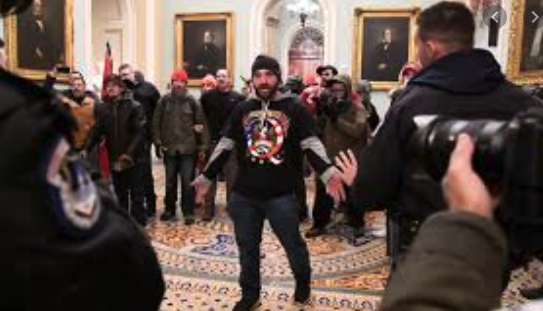
The second point to note is that Christians should be wary of conspiracy theories. The QAnon conspiracy theory was a special highlight of the fiasco at the Capital protest, on January 6. While the vast majority of protestors were peaceful, who gathered on the Washington Mall the day that the Electoral College votes were certified by Congress, the relatively smaller number of people who ended up storming the Capital included a number of Christians, who believe in the QAnon conspiracy. In a nutshell, the QAnon conspiracy contends that there is a pedophilia sex ring, enslaving countless numbers of children, run by a secret cabal of Democratic leaders, existing in the “deep state” of the American federal government. Believers in QAnon have held to the idea that Donald Trump was raised up by God to expose this “deep state,” such that while Trump was still President, his efforts would lead to the arrest of these corrupt Democratic leaders. But because of the insidious nature of the “deep state,” followers of QAnon knew that President Trump would only signal to QAnon followers in code, to know what to do. Many QAnon followers then believed that the President’s speech before the crowds gathered on January 6 was the cryptic signal that was needed to alert QAnon followers, that “the storm” had finally come, and so, they should go and storm the Capital. This is not some “mainstream media” spin. This is stuff you can see on hundreds of videos taken at the Capital on January 6.
QAnon is quite a complex web of intricate and even conflicting beliefs, so it is really difficult to tell if someone is really “in” on QAnon as a serious believer, or if they are simply toying with particular ideas associated with the QAnon cult. Not everyone in QAnon is a Christian, for that matter, and this political cult has apparently spread to other countries, not just the United States. Nevertheless, the fact that this major, massive arrest of Democratic pedophilia supporters never materialized, before Trump left office, has left quite a number of QAnon folks demoralized. Of the tiny few Q adherents who were arrested at the Capital, some were shocked that the President did not pardon their efforts in penetrating the Capital, fully believing that Trump would do so. At the same time, the unexpected turn of events have only emboldened the remaining faithful to double-down on the QAnon theory, trying to come up with a new strategy to figure out what went wrong, and what will happen next. The latest claim: Trump actually did defeat Biden in the election, and he is secretly governing behind the puppet Biden. After all, as the Q would say, it is all “part of the plan.”
The third point to note is the trend of “whataboutism,” that I hear quite a bit, that oddly tries to justify some of the weirdness that a number of Christians have participated in, during this tumultuous political season. “Oh yeah?? Well, What about Antifa? What about the radical elements of Black Lives Matter, that led to so much destruction of property during the summer of 2020?” Informed Christians should know that the rise of critical theory and wokeness has undercut the biblical justice theme of colorblindness, that Dr. Martin Luther King, Jr. envisioned over 50 years ago, as more secular minded theorists seek today to co-opt earlier Christian efforts to combat racism. But Christians should be, first and foremost, taking a stand against all forms of violence, whether perpetrated by the left or the right.
There are several reasons why the failure to discern true prophets from false prophets, the lure of conspiracy theories, and the temptation to embrace the rhetoric of “whataboutism”, is such an important concern, particularly for today’s American evangelical church.
First, the scandals involving false prophecies, conspiracy theories, and overly defensive rhetoric cause embarrassment for the proclamation of the Gospel. When I try to share my faith with my skeptical neighbor, co-worker, or family neighbor, I really need to focus on the claims of the Gospel, that Jesus is Risen from the Dead, that the Bible is indeed God’s Word, and that faith in Jesus matters in every area of life. What I do not need to be distracted with is when a non-believer brings up false prophets in the church, the rabbit trails of conspiracy theory thinking, and criticizing excuses for Christians behaving badly. Instead, what every believer needs to be most concerned with is having confidence in the Gospel, “For I am not ashamed of the gospel, for it is the power of God for salvation to everyone who believes, to the Jew first and also to the Greek” (Romans 1:16).
Second, such scandals indicate that well-meaning Christians have lost their focus, and have been tempted to put their trust in man, and not in the Lord. When a Christian become more engaged with politics and less engaged with the work of missions and evangelism, then you know that something serious is amiss. “Do not put your trust in princes, in human beings, who cannot save. When their spirit departs, they return to the ground; on that very day their plans come to nothing. Blessed are those whose help is the God of Jacob, whose hope is in the Lord their God” (Psalm 146:3-5 NIV).
And finally, such scandals show that many believers in our churches are not being fed with spiritual food that can properly sustain them in living a growing, dynamic spiritual life in Jesus. We have settled for rather shallow teaching, that does not really help the believer properly embrace and understand the Scriptures as the True and Living Word of God. For when people are not being challenged with solid teaching, they so easily gravitate towards other things that sound a lot more exciting and thrilling. Our social media enriched world only makes the challenge even more challenging. Weak sermons, lackluster one-on-one discipleship, and shallow small group Bible studies, that fail to help people really dig in and do the hard work of studying the Bible make people vulnerable to the exhilaration of the latest conspiracy theory, and having some special confidence in knowing the “real” inside scoop that false prophecy tends to encourage. “All Scripture is breathed out by God and profitable for teaching, for reproof, for correction, and for training in righteousness, that the man of God may be complete, equipped for every good work” (2 Timothy 3:16-17).
Folks, let us get back to basics. We have our work cut out for us. The culture surrounding us is becoming more and more opposed to the cause of Christ, which means that we are to hold onto and harness the truth of God, with greatly resolve and clarity, so that we might be more faithful in our life and witness, for the glory of His Name. We must learn the art of persuasion with our neighbors. Let us set about being in prayer and in the study of the Scriptures, and less enthralled with the latest Facebook post and media madness. Let us be out there, sharing our faith with others, helping the poor and the needy, and be ambassadors for Christ’s Glorious Kingdom.




 Veracity