
Which parts of the Law of Moses found in the Book of Leviticus are still binding on the Christian today? Christians from diverse traditions debate this most controversial topic. Jonathan Edwards, perhaps America’s greatest theological mind, had this to say:
“There is perhaps no part of divinity attended with so much intricacy, and wherein orthodox divines do so much differ, as stating of the precise agreement and differences between the two dispensations of Moses and Christ.”1
Leviticus is essentially a law book, detailing the specifics of the Old Covenant, which defined the standards for the ancient Israelite community. But what exactly are the elements from that Old Covenant that have been brought forward into New Covenant? And even if particulars of certain Old Covenant regulations from Leviticus are not binding on New Covenant believers, might there still be lessons in Christian obedience to be learned from them today?
Protestant evangelicals are divided on such issues: Is tithing carried forward under the New Covenant? Does the Bible allow Christians to get tattoos? What about Saturday Sabbath observance? Hebrew Roots Movement enthusiasts bring forward as much from the Old Covenant as they can, even without a standing temple in Jerusalem. Progressive Christians do just the opposite, and jettison as much of the Old Covenant as they can, when certain moral prescriptions are deemed out-of-date. The diversity of such practical applications in interpreting Leviticus can be bewildering.
I came across the teaching of the late Dr. Michael Heiser several years ago, through his Naked Bible Podcast. An expert in Semitic languages and the Old Testament, he did an audio series on the Book of Leviticus, which were transcribed to form the book Notes on Leviticus: From the Naked Bible Podcast. As the author of The Unseen Realm, one of the most groundbreaking books I have read in recent memory, having influence across multiple denominations and Christian traditions, Heiser walks the student of Leviticus through the text in ways that opened up the book for me, with a lens that helps to better understand so many other parts of the Bible. As I have noted at several points, I am not always convinced by Dr. Heiser’s thinking, but he is way far more right than wrong in what he says, and he challenges me to think more deeply on crucial issues concerning the Bible. The tens of thousands of thoughtful Christians who follow Heiser’s YouTube channel surely agree with me.
Heiser’s premise is that Christian readers have often read Leviticus through presuppositions they bring in from their understanding of the New Testament, often confusing things in the process. Alternatively, Heiser proposes that we should learn to read Leviticus from the perspective of an ancient Israelite. What did Leviticus mean to a follower of Yahweh centuries before Jesus came on the scene?
One of the major themes in Leviticus is the concept of atonement. I am publishing this post on Good Friday, which in the Christian calendar commemorates what Jesus accomplished on the cross for us. Many theologians link Good Friday to the concept of atonement, the focus of this final post in this series. But the exact meaning of atonement has stimulated a significant debate among scholars: What does it mean to say that Jesus died for our sins?
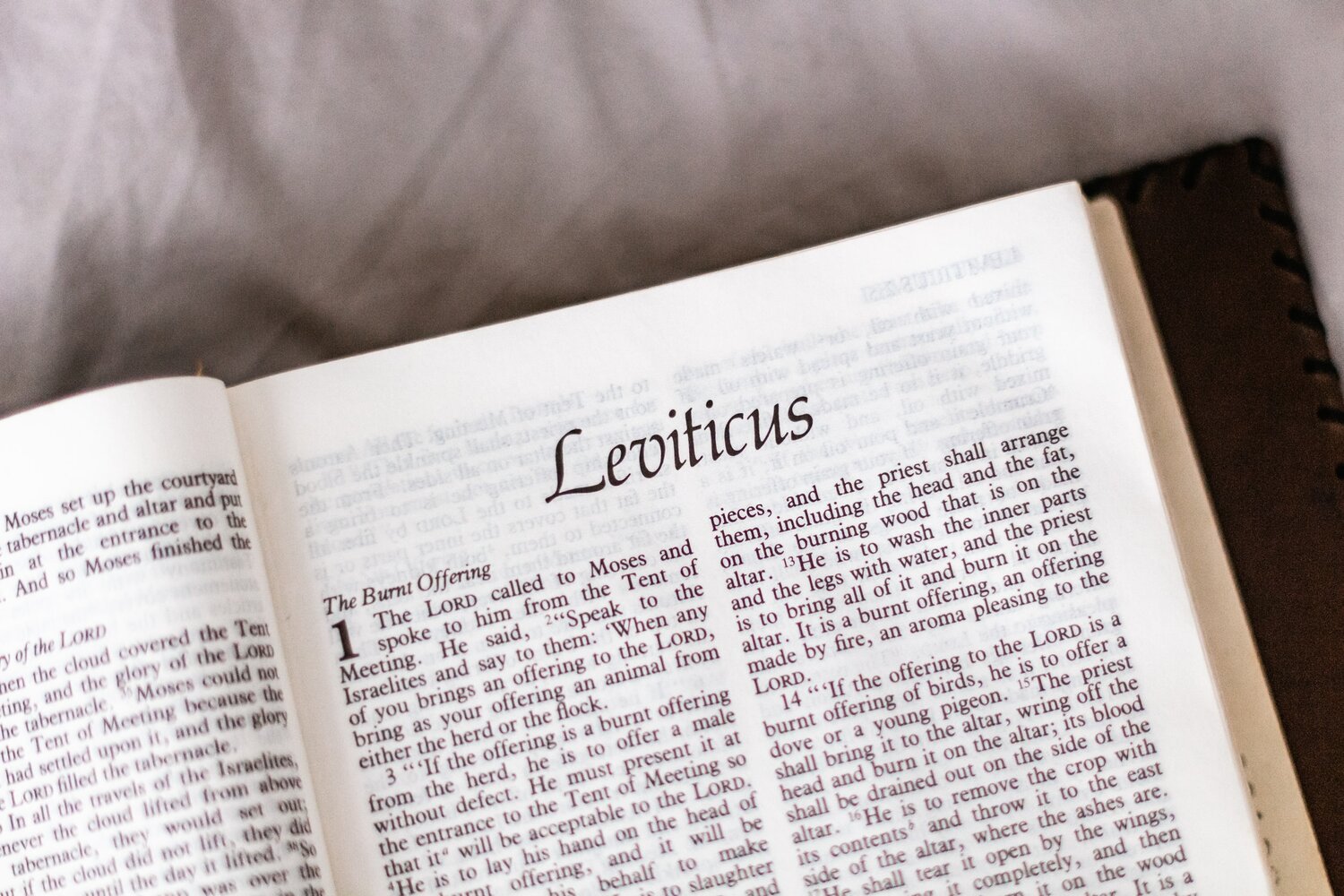
On the late Michael Heiser’s Naked Bible Podcast, this Old Testament scholar brings out important highlights, accessible to everyday Christians, who want to have a better grasp on Leviticus, one of the least studied, least understood, and least read books in the Old Testament.
A Recap of Basic Ideas Found in Leviticus
As discussed in the previous two installments in this blog series (part one, and part two), Heiser highlights Jewish scholarship on Leviticus to help Christians better understood this ancient book of the Bible. Heiser outlines some basic principles found in Leviticus, which are then modified under the New Covenant:
- The importance of being fit to enter sacred space: The ancient Israelite understood that God came to dwell in certain physical areas, such as the tabernacle when the people wandered through the Wilderness, and later with the Temple in Jerusalem. Outside of that sacred space, those areas were common to all. But the closer you got to the “Holy of Holies,” the more delicate you had to treat sacred space. Being in the presence of God was not something to be trifled with and taken lightly.
- The distinction between ritual impurity and moral impurity: Having impurity kept the Israelite from entering sacred space, the area where God dwelled. Impurity makes you unclean, but Leviticus gives detailed procedures about becoming clean again. But ritual impurity is not the same thing as moral impurity. Becoming ritually impure is simply a part of normal everyday life. Becoming unclean in the ritually impure sense is not sin. Moral impurity is different in that it is sin.
- Under the New Covenant as taught in the New Testament, believers have become the sacred space where God dwells. The coming of the Holy Spirit into the life of the Christian signals that God dwells in the person of every follower of Jesus. Sacred space is no longer confined to a tabernacle or temple.
- Under the New Covenant, believers are no longer required to follow the Levitical instructions regarding ritual impurity, because believers themselves are “sacred space.” However, believers are still bound to treat moral impurity for what it is; that is, sin. Thinking through the principles behind the logic of Leviticus can still be applied today to the Christian, without being held to the specific behavioral requirements associated with ancient Jewish boundary markers.
Before focusing on atonement, it is also important to summarize several other key lessons to be learned from Leviticus, which corrects common misunderstandings of how the ancient Israelite understood the Levitical system:
- For much of the Levitical offerings, placing a hand on an animal does not necessarily imply transfer of sin, as many Christians instinctively assume. Most of the time, placing a hand on an animal to be offered to the Lord is simply a way of saying that this animal belongs to the worshipper and that it is being given over to the Lord as that worshipper’s offering. Nevertheless, there are other situations where the laying on of hands on the animal does imply some sense of the transfer of sin to that animal (See discussion on the Day of Atonement below).
- Moral impurity is not contagious, but ritual impurity is. If someone commits adultery and someone else touches that adulterer, that someone else does not become impure. However, if a person touches a dead animal carcass, then that person becomes unclean. If someone else comes along and touches that person, that someone else could become unclean as well.
- Blood is never applied to the person who offers a sacrifice, but rather to the sacred space which the offeror is trying to approach. The splattering of blood represents the act of cleansing of sacred space.
- In the Levitical system, the priests were assigned the role of eating much of the meat associated with certain offerings. In certain cases, the average person would not partake in the eating of the meal reserved for the priest. However, in the New Testament, we have the priesthood of all believers. The Christian becomes a priest, having direct access to God through Jesus Christ, without the need of a go-between priest to intervene. This is why it is so significant that the Lord’s Supper involves all believers, where every Christian is invited to participate, instead of the Levitical system where in certain cases only a separate priestly caste would participate.
Heiser’s treatment of “sacred space,” along with distinguishing between ritual impurity and moral impurity, is the most important insight I learned from this study in Leviticus. Too often, Christians will read their view of the New Testament back into Old Testament books like Leviticus, thereby missing the original historical context.
Like many Christians, I had learned that the Law of Moses could be split into three different categories described by the Protestant theologian John Calvin: the ceremonial, the moral, and the judicial/civil law. In Calvin’s taxonomy, the ceremonial and a good bit of the judicial/civil law have been abrogated for the Christian, whereas the moral aspect of the Law of Moses is still binding under the New Covenant. While there is still some usefulness for Calvin’s model, Heiser does not use it, opting to think through a more ancient, Jewish way of reading Leviticus:
How would an ancient Israelite think about a text like Leviticus? I would encourage anyone who wants to learn about this to go listen to the Naked Bible Podcast sessions on Leviticus, particularly the first few episodes, to get the full story. Or grab a copy of Michael Heiser’s Notes on Leviticus: from the Naked Bible Podcast, which features the transcripts of these audio sessions.
Heiser goes into great depth to get at the reasons why certain Levitical instructions are about ritual impurity as opposed to moral impurity. All too often, Christians will read Leviticus to get a sense of Jews living under a constant state of being reminded of their own sinfulness, and undergoing the almost daily ritual of making sacrifices for one’s sin. However, the historical reality is that while sin was certainly a problem for the ancient Israelites, the more regular concern was for dealing with ritual impurity. Becoming ritually impure, in and of itself, was not sinful. Being in a ritually impure, or unclean state, was simply a part of life. While the efforts to address states of ritual impurity could be somewhat burdensome, it really was not a big deal.
A consideration of orthodox Jewish practices today helps to demonstrate what this means. At a Jewish website, Chabad.org, you can learn a lot about how today’s Jews think about ritual impurity. Here is a sample:
- It is almost impossible to remain ritually pure nowadays.
- The destruction of the Temple in Jerusalem in 70 C.E. has made it impossible to bring sacrifices before the Lord, as prescribed in Leviticus.
- Since it is so easy to become impure, and impossible to become pure once again, every person is presumed to be impure.
- Generally speaking, there is no prohibition for one to become ritually impure.
- It is very difficult to remain pure, and there is very little benefit for someone who would attempt (imperfectly) to remain pure.
- There are some exceptions: Some Jews still go through various types of purification rituals, to address certain impurity conditions; such as when a woman experience a menstrual flow, or when a Jewish priest touches a corpse.
I am extraordinarily grateful for Michael Heiser has done here. The only criticism I have of Heiser here is that it is not always easy to figure out if something belongs to the category of ritual impurity versus moral impurity, in every detailed instance. For if the Levitical teaching regarding moral impurity is carried forward into the New Covenant, whereas the Levitical specifics regarding ritual impurity are not, it makes a huge difference in how a Christian today applies Leviticus to their Christian walk.
The one example I keep coming back to is the instructions on what women, who have recently given birth to a child, should do when they have become ritually impure through childbirth, as taught in Leviticus 12. We know that the uncleanliness associated with childbirth is about ritual impurity, and not moral impurity. There is no sin associated with giving birth to a child. Nevertheless, Mary, the mother of Jesus became ritually impure when she gave birth to Jesus, in Luke 2:22-24, which required her to bring a “sin offering,” according to the requirements set forward in Leviticus 12:8. This can be quite confusing, which explains why Heiser describes the “sin offering” of Leviticus 4 as more of a “decontamination” offering instead, which is broader in scope than what the standard translation of “sin offering” implies.
Even when it comes to issues of ritual impurity, which no longer have direct application to the Christian life today, there are still principles to be gained from Leviticus which have an indirect application to one’s walk with Christ.
One example should demonstrate this: While some say that the kosher food laws in Leviticus had certain health benefits, there is a good biblical reason why these food restrictions were enacted upon the Israelites. It was to teach the people with whom they could have fellowship with, and with whom they should not. Therefore, a good principle for us today to be learned is to be careful about who we spend much of our time with as followers of Christ. If your friends are dragging you away from earnestly following after Jesus, then perhaps you need to find a new group of friends.
Paul himself reiterates this principle in the New Testament: “Do not be unequally yoked with non-believers” (2 Corinthians 6:14-18).
What probably complicates this area of discernment is that much of the arguments for why something is regarded as a ritual impurity issue; such as, the length of hair or beard, getting a tattoo, etc. rely on knowledge of the Ancient Near East world, subjects that are not explicitly addressed in the Old Testament. Having some exposure to the worldview backstory of the Pentateuch is essential to gaining a proper understanding of books like Leviticus. Simply reading the Bible alone, divorced from the study of the Ancient Near East, is insufficient, which is sure to frustrate many Christians who find it unnecessary to do anything more than just reading the Bible to gain understanding.

The late Michael Heiser. Semitic languages and Old Testament scholar. Heiser died in February, 2023.
Uncovering Nakedness and the Tragedy of Misinterpreting the Infamous “Curse of Ham”
Issues of human sexuality are mentioned multiple times in Leviticus. In multiple places in Leviticus, the phrase “uncover the nakedness of” appears quite frequently. According to Heiser, this is a euphemism for having sexual relations. In Leviticus 18:7 and 18:14, the text explicitly tells us that “to uncover the nakedness of” one’s father or uncle, respectively, is to have sexual relations with that man’s wife.
This helps to explain the rather infamous “Curse of Ham” passage in Genesis 9:20-27, whereby Ham is said to have uncovered the nakedness of his father, Noah. According to Leviticus, this means that Ham had sexual relations with Noah’s wife.
This does not mean that Ham had non-metaphorically pulled a blanket away from Noah’s drunken, sleeping body, in order to embarrass Noah. Nor does it mean that Ham had sexual relations with Noah himself. These woefully horrible misinterpretations led to the rationalization of millions of African Americans being enslaved in the United States, and the British colonies which preceded them, claiming that blacks should be enslaved due to their skin color.2
Such a tragic misinterpretation and misapplication is a travesty in the history of Christianity. Instead, the so-called “curse of Ham” was really a “curse against Canaan,” the result of Ham’s union with Noah’s wife, which Noah understood to be an assault on his leadership of the clan by his son. Noah saw this as an attempt by Ham to obtain a male heir to take over the clan. Just as Absalom sought to unseat the clan leadership of his father David by having sexual relations with David’s concubines (2 Samuel 16:21), Ham most probably sought to do the same thing in order to unseat the clan leadership from his father, Noah (Heiser, p. 230ff).

Were the authors of sacred Scripture writing with questions of modern science in mind? Probably not!
Science Versus the Bible?
Some particular elements in Leviticus address the “Bible vs. science” debate, an issue which has been very important for me, personally, but one that often gets glossed over in many Christian circles:
When Leviticus 13:1-8 addresses “leprosy,” it often immediately causes someone to think that this is a known medical condition. But a better translation would be “skin disease,” as the use of “leprosy” in Leviticus 13 is conceptually different from the contemporary medical condition of Hansen’s disease. A complex set of various skin diseases results in ritual impurity.
Heiser does not say that “leprosy,” as in Hansen’s disease, is completely ruled out, but this is not clear. Modern readers tend to associate the “leprosy” on Leviticus 13 with a bacterial infection which can produce deformities of appendages and/or rotting parts of the body. Yet Leviticus 13 does not specify such a medical condition. Heiser notes that even rabbinic commentary of Leviticus 13 does not explicitly link “leprosy” in the text to Hansen’s disease.
When it comes to the discussion in Leviticus 11 about the distinction between clean and unclean animals, Heiser acknowledges that it is not entirely clear as to why certain animals were considered clean and others unclean. Some Christians have thought that this is because clean animals have a certain positive dietary value that an unclean animal does not. Yet this is highly speculative as the text never comes out and explicitly explains this.
Nevertheless, thinking through this issue illustrates that we should not look to Scriptural texts like Leviticus as teaching technical aspects of science. Teaching science is not the purpose for which the sacred author wrote Leviticus. Rather, it was to teach the ancient Israelite about how to live under the Law of Moses and safeguard both ritual and moral purity.
Some have suggested that eating “unclean” things like pork and shellfish, which were not cooked properly, could make a person sick. But the problem here is there are plenty of “clean” foods, that if not properly cooked, could also make a person sick. Leviticus is not trying to lay out a scientifically precise public health program (Heiser, p. 159).
Furthermore, we must be careful even with the descriptions of the unclean animals, as when Leviticus 11:5-6 speaks of the rock badger and the rabbit, which “chew the cud.” According to modern biology, a ruminant, or an animal which “chews its cud,” has four stomachs, or according to a veterinarian friend of mine, one stomach with four compartments, whereby food is regurgitated and the chewing what was swallowed. This does not apply to either the badger or the rabbit. These two animals only have one stomach with one compartment. But from a pre-scientific perspective, in keeping with how an ancient Israelite would have thought, it certainly would have been the outward appearance that both badgers and rabbits looked as though they “chew the cud.”
Camels, as unclean animals described in v. 4, are closer to being ruminants which “chew the cud,” like cows and sheep which have four stomachs, as camels have three stomachs. Again, we are not talking about scientific precision here. If someone’s definition of biblical inerrancy demands scientific precision, simply because the Bible touches on a subject, with no consideration of the intent of the author, then such a strict view of inerrancy might come back to haunt them when trying to explain texts like Leviticus 11:5-6.3
We should be careful not to insist on any definition of biblical inerrancy that would try to force us to read Leviticus as a scientific textbook, a way of thinking that would have been foreign to the mind of an ancient Israelite. One of the many driving factors behind the contemporary “deconstruction” movement, which has sadly led to many Christians deconverting from the faith, is the unfortunate mindset that one must decide between what the Bible says and what science says. We should instead stick with trying to interpret Scripture according to what the sacred author intended to communicate to his Ancient Near East audience.
The main point that Heiser wants to drive home regarding clean versus unclean food animals is that while we are not entirely sure why some animals fit in the clean versus unclean category, it probably had something to do with accommodating certain cultural ideas at the time, which would have made sense to the people. But for the New Testament Christian, we are no longer bound to adhering to such food laws. For the Gentile Christian, the food laws clearly no longer apply. Yet a Jewish Christian may indeed continue to follow these food regulations, in order to maintain Jewish identity, just as long as such food regulations are not imposed on Gentile believers.
The Last Chapters of Leviticus
Although the book ends with Leviticus 27, with some teaching about vows and tithes, the chapter before it, Leviticus 26, has encouragement for Israel to continue on with obedience to the Levitical regulations spelled out in the book, along with warnings against disobedience. This chapter appears to be a way of wrapping up the message of the entire book.
The warnings against disobedience in Leviticus 26 are pretty dire. For if the people disobey what God has commanded, exile from the land is the only possible outcome:
“And I myself will devastate the land, so that your enemies who settle in it shall be appalled at it. And I will scatter you among the nations, and I will unsheathe the sword after you, and your land shall be a desolation, and your cities shall be a waste” (Leviticus 26:32-33 ESV).
Only then will the land find Sabbath rest and be restored back to a repentant people:
“Then the land shall enjoy its Sabbaths as long as it lies desolate, while you are in your enemies’ land; then the land shall rest, and enjoy its Sabbaths. As long as it lies desolate it shall have rest, the rest that it did not have on your Sabbaths when you were dwelling in it……
….But if they confess their iniquity and the iniquity of their fathers in their treachery that they committed against me, and also in walking contrary to me, so that I walked contrary to them and brought them into the land of their enemies—if then their uncircumcised heart is humbled and they make amends for their iniquity, then I will remember my covenant with Jacob, and I will remember my covenant with Isaac and my covenant with Abraham, and I will remember the land” (Leviticus 26::34-35, 40-42 ESV).
While devastating, exile from the land would not be the end of the story. Leviticus would prove to be a sustaining hope for those who underwent the Babylonian exile of the 6th century BCE. As Heiser puts it, this future hope is best expressed in Isaiah 40:
Comfort, comfort my people, says your God.
Speak tenderly to Jerusalem,
and cry to her
that her warfare is ended,
that her iniquity is pardoned,
that she has received from the Lord’s hand
double for all her sins.
A voice cries:
“In the wilderness prepare the way of the Lord;
make straight in the desert a highway for our God (Isaiah 40:1-3 ESV)
Yet Heiser notes that this last verse is tied to the New Testament, where John the Baptist enters the scene to announce the coming of the Messiah. Heiser concludes that while the return from Babylon to Jerusalem may look like a conclusion to the exile, the real conclusion of the exile was realized by the coming of Jesus as the Messiah, announced by John the Baptist. In other words, the end of Leviticus has a prophetic vision attached to it, which ties into the coming of Jesus.4
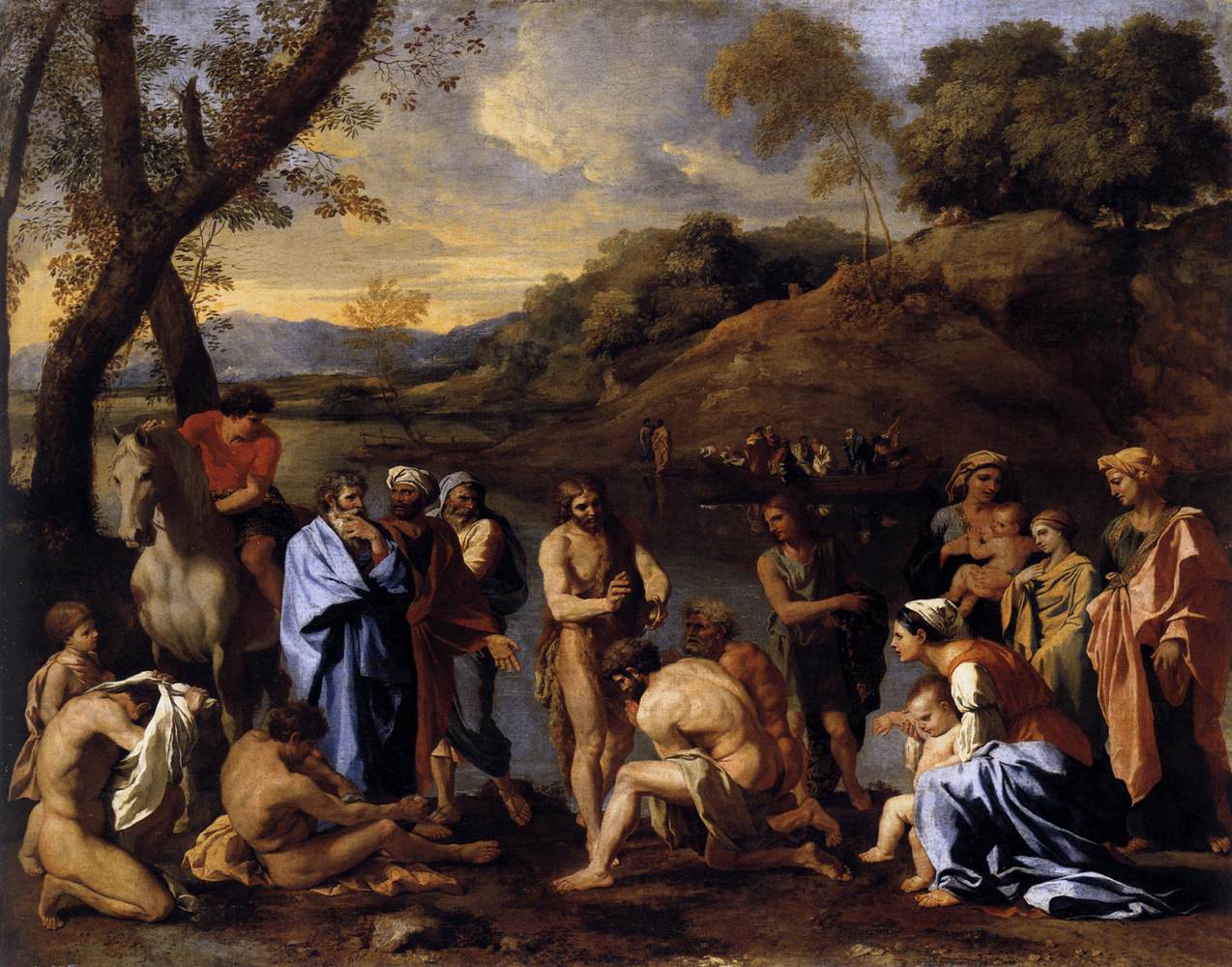
John the Baptist prepares the way for the coming of the Messiah.
Atonement in Leviticus
The word “atonement” in our English Bibles is a difficult term to deal with. When William Tyndale translated the Bible into English, he could not find a direct equivalent of the Hebrew word “kaphar” into English. So, he essentially made up a word, “atonement,” constructing it from a phrase “at-one-ment,” to make something one. Scholars today find that this Hebrew word can have several meanings. Some see that its primary meaning is “to cover.” Scholars like Michael Heiser see it as “to decontaminate.” In other words, to “atone for” something is to essentially “decontaminate” it, or wipe it clean.
Scholars across the board recognize that Leviticus 16 is the centerpiece of the Book of Leviticus. It is in Leviticus 16 where we read about the Day of Atonement, the most familiar part of the book for readers of the New Testament. This is where the high priest is instructed to enter the Holy of Holies once a year to present a “sin offering” on behalf of the entire people.
Michael Heiser sees this as a yearly way of effectively hitting the “reset button” regarding the treatment of impurity with respect to sacred space, cleansing the temple area once a year to wipe the slate clean for the people. Two goats are brought forward, one is slaughtered, as in the “sin offering” of Leviticus 4, whereas the other one is released into the wilderness, sending the impurity off and away from the presence of God. For this second goat, the high priest lays his two hands on the head of the goat ritually transferring all of the sins of the people to that goat (Leviticus 16:21).
This second goat is identified by most translations as the “scapegoat,” a translation of the Hebrew word “Azazel,” otherwise translated as “the goat that goes away.” Scholars have debated the meaning of Azazel: Is it a place, a demonic divine being, or neither, as simply a description of “the goat that goes away,” the traditional view?5
Heiser follows the dominant, recent scholarship which sees this Azazel as a proper name, as in Leviticus 16:8 where one goat is “for Yahweh” while the second goat is “for Azazel.” In the Dead Sea Scrolls, Azazel is the name of a demonic figure. In one scroll (4Q 180, 1:8) Azazel is the leader of the angels that sinned in Genesis 6:1-4. Also, we find this same reference to Azazel in the Book of Enoch (1 Enoch (8:1; 9:6; 10:4–8; 13:1; 54:5–6; 55:4; 69:2)), associating Azazel with the angelic leader of the divine rebellion of Genesis 6:1-4. In view of what has been found in the Dead Sea Scrolls and Enoch, many modern translations of Leviticus 16:8 say “Azazel,” and not “scapegoat”.6
The scapegoat ritual is not a sacrifice to Azazel, in the sense that there is no ritual killing involved here meant to satisfy Azazel. It certainly was not an “appeasement” of any kind to Azazel. Instead it was about the removal of impurity and sending that impurity off away from Yahweh, back to where that impurity came in the wilderness where Azazel dwelled. It was more about a rebuke to Azazel, a kind of “getting in your face” act of defiance against Azazel. Crudely put, it was the Israelite way of saying to Azazel, “Here is the sin that came from you that has corrupted us. We are sending it back to you. You can stick it in the place where the sun does not shine!”
Heiser’s conviction is that the traditional translation of “scapegoat” is better rendered as the name of a demonic being, “Azazel.” Unfortunately, too much stress on this creates an unnecessary false dichotomy, by opposing “scapegoat” and “Azazel,” when both terms actually fit together. In the end, whether Azazel represents a demonic divine being or not, the result is the same. Israel’s sin is ritually transferred to the goat and sent off into the wilderness, taking away the sins of the people.7
This is in contrast with the killing of the other goat, which is a sacrifice, in order to obtain the blood to be used to sprinkle inside the Holy of Holies, in an effort to purify the sanctuary. Nevertheless, the treatments of both goats accomplish the same task, but in different ways, to get rid of sin and all other impurity, effectively “hitting the reset button” and giving the people a fresh new start.
Jesus’ own understanding of the Passover, when he celebrates the Last Supper, links his impending death to the Day of the Atonement, a theme echoed in the Book of Hebrews, particularly in Hebrews 9 and 10. Jesus’ death outside the city of Jerusalem draws on the theme of the scapegoat, who is sent away from the Temple, away from the holy city. The New Testament theology of atonement essentially merges the story of the two goats in Leviticus 16 into a single narrative describing how Jesus takes away both ritual and moral impurity; the latter being our sin, through Christ’s work on the cross.
The New Testament links the Day of Atonement, Yom Kippur, with Jesus Christ as the great High Priest, with the death of Jesus. Just as the Day of Atonement acted as a great “reset button” once a year, the atoning work of Jesus was a once-for-all event, never to be repeated, superseding what we have in Leviticus.
Lingering Questions About Atonement
All of this makes sense, but there are some lingering questions in my mind: While the atonement of Jesus certainly deals with all aspects of ritual purity, as well as unintentional sins, what is not readily clear is how this deals with intentional sins, where no atoning procedure is described in Leviticus.
In such cases of intentional sins, or what Michael Heiser specifically describes as “high handed sins,” acts of moral impurity done on purpose, the land is defiled and the only thing that can remedy the situation is either death or exile. For if Israel’s sins became so great and grave, the only thing that could be done is for God to vomit the people out of the land, which surely happened with, for example, the Babylonian exile. In this sense, exile also effectively acts as God’s way of hitting the reset button.
Thankfully, the death of Christ on the cross also deals with those sins as well, the once-for-all sacrifice. The details are sparse, but what Heiser does say is that for those sins in Leviticus for which there is no atonement procedure prescribed in the text, those sins must be supernaturally purged by God (Heiser, p. 22). I just wish Heiser would have more clearly related how these ideas in Leviticus tie into the New Testament theology of atonement.
Some additional, concluding thoughts about the Day of Atonement according to Heiser still leaves me puzzled. The Day of Atonement, in its original historical context, was predominantly about the ritual cleansing of the tabernacle/temple’s “sins.” According to some Jewish scholars this ritual was transformed more towards personal atonement for one’s sins, once the Second Temple was destroyed in 70 C.E. This also fed into the New Testament theology of atonement.
I find Heiser to be confusing on this point, as he presents it in his Notes On Leviticus. Heiser does acknowledge that after the destruction of the Temple in 70 CE, that the moral purity component eventually became tied into the Day of Atonement idea in Leviticus 16, suggesting that originally the Day of Atonement was only about the removal of ritual impurity, and not moral impurity. (Heiser, p. 191). To say that the situation originally with Leviticus 16 was concerned only about ritual impurity and not moral impurity can be confusing.
Nevertheless, at other times in Notes of Leviticus, both ritual and moral impurity are in view regarding the Day of Atonement, as it is connected to the sacrifice of Jesus (Heiser, p. 208-211).
In Heiser’s landmark work, The Unseen Realm, he states his summary of the theology of the scapegoat/Azazel like this:
…. the ground on which Yahweh had his dwelling was holy. Sin had to be “transported” to where evil belonged—the territory outside Israel, under the control of gods set over the pagan nations. The high priest was not sacrificing to Azazel. Rather, Azazel was getting what belonged to him: sin (Heiser, The Unseen Realm, p. 178).
This would suggest that moral impurity; that is, what we commonly think of “sin,” is in view, and not simply ritual impurity alone.
The scapegoat acts as a substitute whereby the sins of the people are transferred to the goat, which is sent out to the wilderness, the place where Azazel dwells, the demonic realm where sin belongs. At the same time, the “sin offering” aspect of the Day of Atonement purges ritual impurity as well. Both moral impurity and ritual impurity are dealt with on the Day of Atonement. To be generous, I would simply chock this confusion up to a matter of inconsistency in Heiser’s presentation of these ideas, within his larger body of work (or perhaps I am just not getting it).8

Blood is part of the Holy Week story, particularly featured in the Lord’s Supper. Why is blood so important in the Bible, and what does blood signify?
The Question of Blood
One particular gnawing issue that might trouble the New Testament Christian is the prohibition associated with abstaining from blood described in Acts 15. In Acts 15, Gentile believers in Jesus are permitted to have full fellowship with Jewish Christian believers, as long as they uphold certain regulations found in Leviticus which describe acceptable behavior for sojourners among the Israelites.
Leviticus 17:8-18:30 describes a list of various regulations which not only applied to ancient Israelites, but also to the Gentiles who lived among the Israelites. It was the appeal to this passage which enabled the Jerusalem Council in Acts 15 to find a way to maintain peace between Jewish and Gentile believers in Jesus. All of the prohibitions listed in Leviticus 17:8-18:30 had to deal with idolatry, either directly or indirectly.9
For Gentiles even in the Old Testament times were allowed to reside within the Promised Land as long as they abstain from certain moral misbehaviors, most importantly, sexual immorality. But they also had to abstain from blood as described in Leviticus 17:10-16. For many Christians, this agreement established at the first church council, the Jerusalem assembly in Acts 15, is still in force today.10
Leviticus 17:10-12 says:
“If any one of the house of Israel or of the strangers who sojourn among them eats any blood, I will set my face against that person who eats blood and will cut him off from among his people. For the life of the flesh is in the blood, and I have given it for you on the altar to make atonement for your souls, for it is the blood that makes atonement by the life. Therefore I have said to the people of Israel, No person among you shall eat blood, neither shall any stranger who sojourns among you eat blood.”
One may object that something like a juicy cooked steak has blood in it, because of the red color. However, while there might still be trace amounts of blood in meat at a restaurant or from a grocery, most blood is typically drained from the animal when it is slaughtered. The red color substance in steak juices is not blood at all, but rather is myoglobin, a protein found in the muscle which transports oxygen in the blood. When myoglobin is exposed to oxygen, that protein turns red which makes it look like blood.11
The Jehovah Witnesses take an idiosyncratic view regarding this regulation to abstain from blood by insisting that faithful Witnesses must avoid blood transfusions. Historically orthodox Christians rightly reject such an interpretation, but it still leaves the question open as to how this prohibition is to be understood exactly today.
Interestingly, Leviticus 17:13 teaches that any animal killed via hunting must have its blood poured out and then covered with dirt. Heiser notes that the restriction regarding blood is mainly about making sure that blood is not to be used in any divination ritual. By pouring out the blood into the dirt, this act accomplishes two things. First, it symbolizes that blood is associated with life, and since life arose from the dirt, as in when Adam came from the dust of the earth in Genesis 2:7, any blood shed like this must be returned to God, through the dust, from which it came. Secondly, mixing blood with dirt polluted it so that it could not be used with any ritual practice associated with some deity other than Yahweh, the God of Israel.
Furthermore, Heiser comments on God’s threat to “cut off” anyone who drinks blood in Leviticus 17:10.
“Consuming blood was stealing from God because the blood was meant to be splashed on the altar which denoted that it was meant for God. If any of this was consumed, it was like eating from God’s plate, so to speak” (Heiser, p. 223).
Essentially, Christians should abstain from blood because of it’s association with practices that went against its ritual use in the tabernacle/temple. Furthermore, blood was also used in various pagan rituals, but that with the God of Israel, blood should either be disposed of in the ground, or it should be preserved for use in the tabernacle/temple. One could argue that without a physical temple anymore that this prohibition might no longer apply, but it probably is just as well that we should not consume meats that still have blood in it anyway, as a sign of Christian obedience and a desire for peace between Jewish and Gentile Christians. It would have been more helpful if Heiser had commented more on how this relates to the ongoing significance of Acts 15 for today’s Christian.12
How Jewish Were the Early Jewish Christians, and What Did That Mean for Gentile Believers?
I am still not entirely clear as to how the Jewish Christian fits into the story that Heiser presents to us regarding how Jesus made the moral purity system of Leviticus unnecessary for the New Testament believer. We have plenty of evidence that Jewish Christians in the early church continued on participating in the ritual system while the Jerusalem Temple still stood. For Paul, the Levitical system for the Gentile was irrelevant, as faith in Christ was all that was needed. The Gentile need not become a Jew in order to properly follow Jesus. Nevertheless, there are some Christians, who align themselves with something like the Hebrew Roots Movement, who claim that circumcision is not required by the Gentiles to become followers of Jesus, but that other elements of the ritual purity laws are still required by Gentiles, such as keeping the Saturday Sabbath and the kosher food laws, which is another complex topic for discussion.13
But what about the Jewish Christian? Paul himself sought to fulfill a particular ritual vow and purify himself when he entered the temple in Jerusalem, in Acts 21. The early Jewish Christian community continued to participate in the life of the Jerusalem Temple, as we know from Acts 2:42-47. So, how does one then account for the continued Levitical practices by Jewish Christians in the early church? Heiser left me hanging here on this question, with a partial but not fulling complete answer.
In my estimation, Paul practices a delicate balancing act in how he relates to both Jewish and Gentile believers:
“To the Jews I became as a Jew, in order to win Jews. To those under the law I became as one under the law (though not being myself under the law) that I might win those under the law. To those outside the law I became as one outside the law (not being outside the law of God but under the law of Christ) that I might win those outside the law. To the weak I became weak, that I might win the weak. I have become all things to all people, that by all means I might save some” (1 Corinthians 9:20-22 ESV).
Paul wants to reach his fellow Jews, so he accommodates to the Levitical ritual purity system in order that other Jews, who do not yet know Christ, may be brought into the family of God believing in Jesus as the long expected Messiah. At the same time, Paul is willing to set aside certain Jewish sensibilities, among those Gentiles who might view the traditional Jewish identity markers associated with ritual impurity as a stumbling block to embracing the Gospel of Jesus.
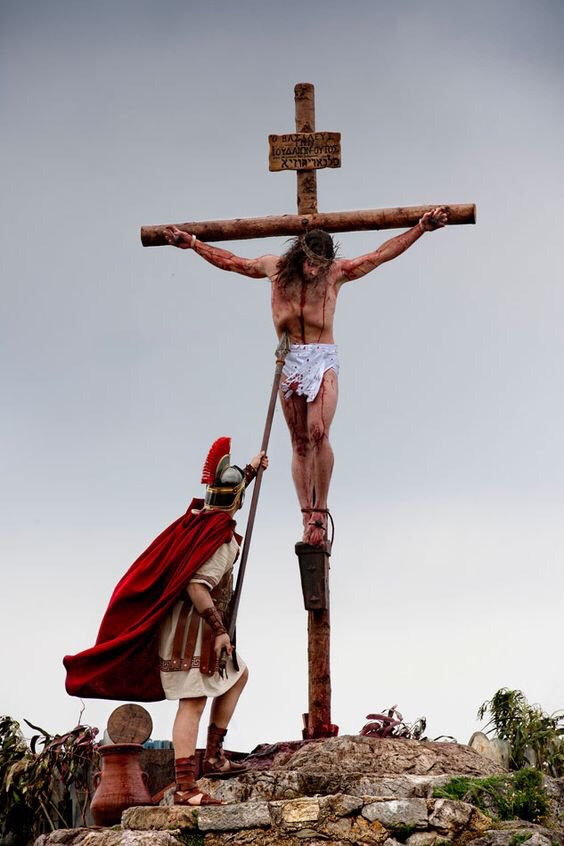
When we say that Jesus died for our sins, on Good Friday, what does that really mean?
The Nature of Atonement: The Good Friday Mystery
The other question that hangs over after reading Notes on Leviticus is concerning the exact nature of atonement as taught in the New Testament. I am content to leave this as a mystery, but the discussion among scholars can be quite puzzling.
Today, a number of scholars claim that penal substitutionary atonement is actually not a feature of New Testament teachings, despite the fact that so many evangelical Christians today instinctively associate penal substitutionary atonement with the essential message of the Gospel. In the simplest of terms, penal substitution says that Jesus paid the penalty for our sin (the “penal” part) by acting on our behalf (the “substitution” part) to accomplish that which we were unable to do ourselves. Any survey of the literature regarding this subject will conclude that the debate is highly contentious.14
Heiser’s observations about Leviticus indicate that the atoning work of Christ did more than just deal with human sin, with respect to moral impurity. It also dealt with ritual impurity. It would be inappropriate to use “penal” language to describe the work of Christ with respect to ritual impurity, and some scholars also question the language of “substitution” with what we find in Leviticus. So what does penal substitutionary atonement really mean?
Perhaps the issue is more of a matter as to how we define particular terms like “penal,” “substitutionary,” and even “atonement” itself. Michael Heiser himself held to penal substitutionary atonement, as do I, but he is rightly careful as to how such terms are defined and used in Christian theology.
For example, in addressing the role of blood in the Levitical system, Heiser states:
“Blood represented life, and in the sacrificial system, it protected a human who violated God’s laws or sacred space by means of substitutively purging that person from their impurity…… What sacrifice meant conceptually was that God will accept the blood of another life, in this case an animal, on behalf of the blood that he could exact from you. It’s in lieu of your life that God will accept this other life….. If you’re stripping out the principle of substitutionary atonement from the atonement picture, you’re not understanding it the way an ancient Israelite would’ve understood it. It would’ve been the first thing that an ancient Israelite thought of with purging someone from their impurity” (Heiser, p. 224-225).
In contrast to a number of scholars today, Heiser accepts that the concept of substitution with respect to atonement is perfectly consistent with what we find in Leviticus. Alas, a deeper exploration of these is worthy of a separate blog post, but for some preliminary thoughts, see the appendix below.APPENDIX
Nevertheless, there are some helpful takeaways here regarding a robust view of penal substitutionary atonement. Some carelessly say that the penal aspect of atonement suggests that God is angry with the sinner. But Michael Heiser responds that a better way to put it is to say:
“that God is angry with the sinner instead of at the sinner. He’s angry because the sinner is forfeiting what he could have in relationship with God, or that sin is self-destructive. God loves people and sin destroys them. That makes God angry. But that’s different than God being angry at the sinner.”
Furthermore, the focal point regarding Christ’s atoning work is not the death of Jesus, but rather the resurrection of Jesus. Christ’s ultimate objective was to solve the problem of death, which is a result of sin. Christ fulfilled that objective through the resurrection. But you do not really have a resurrection without a death which precedes it. As Heiser puts it:
“Christ wasn’t God’s chance to vent his anger on his Son. It was his chance to defeat death with resurrection and so secure eternal life for all who believe in the work of Jesus on the cross”.15
Once we grasp that the atoning work of Christ does more than just deal with our sin, it shows us the richness of Christian atonement theology. Christ also makes a new way for solving the problem of ritual impurity by placing God’s Spirit within us, thereby actually making us as believers the sacred space where God dwells. A better understanding of Leviticus helps us to better appreciate what Jesus actually accomplished on the cross.
Digging into Leviticus can be intimidating to some or boring to many other Christians who try to tackle this book. But in my listening to the Naked Bible Podcast, and reading the transcriptions of the audio published in Notes on Leviticus: from the Naked Bible Podcast, by Michael Heiser, I learned more than I could ever imagine. Yes, I do wish Heiser had given greater clarity at points in drawing the line between that which constituted a violation of ritual impurity versus moral impurity. I also wished that Heiser had more adequately addressed the third leg of John Calvin’s categorization of the Mosaic law; that is the judicial or civil aspect of the law. Some of Heiser’s conclusions are based on extra-biblical material, such as the Dead Sea Scrolls and the Book of Enoch, sources that some may not accept as evidence suitable for our understanding of the Bible, though I find that such suspicions are misguided.
Nevertheless, thinking through the framework of ritual impurity versus moral impurity, and how all of that is related to the concept of sacred space, and how the writings of Paul in the New Testament utterly transforms how we are to think about sacred space, are the best takeaways in doing a deep-dive into this often neglected, but extraordinarily important book of the Old Testament.
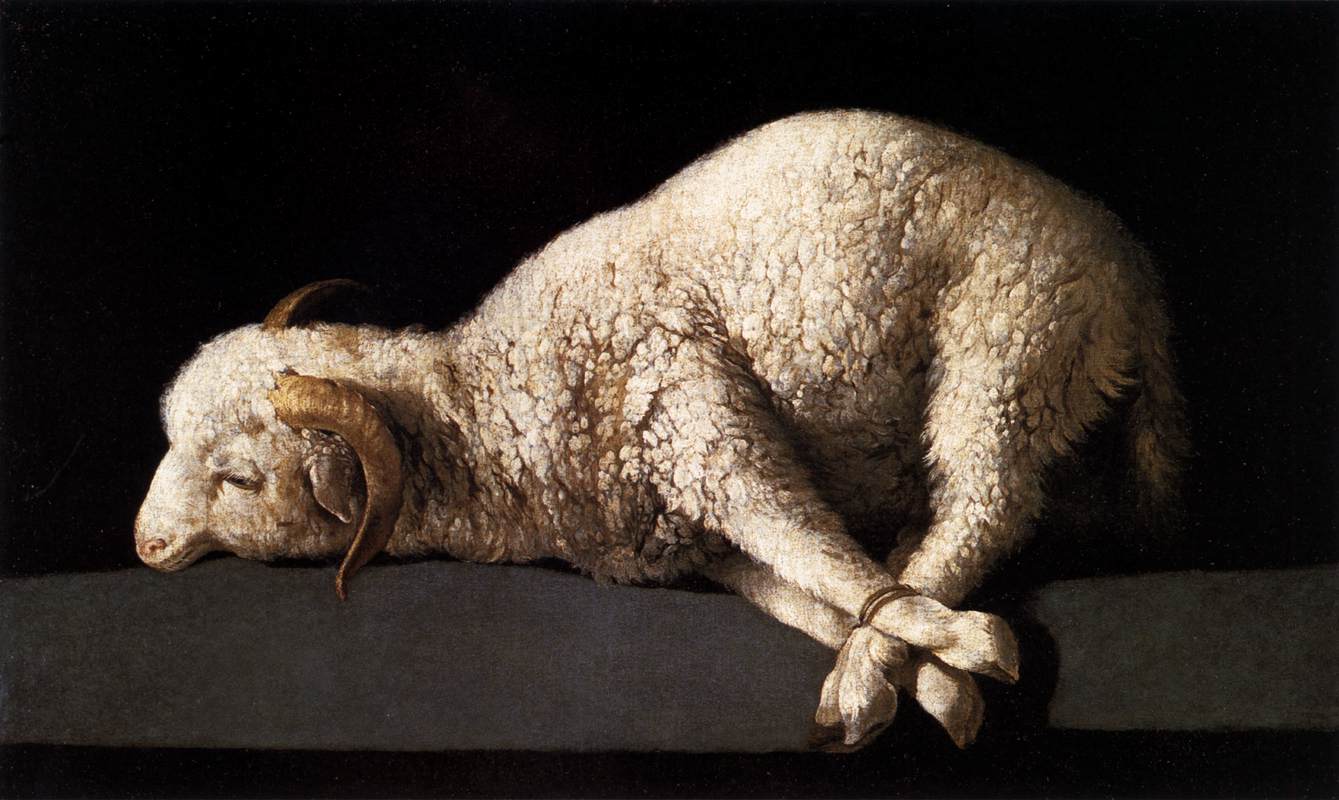
The Lamb of God, the unblemished sacrifice to take away the sins of the world. The work of Christ on the cross needs to understood with the background of Leviticus in mind.
——————————–
APPENDIX↩
A Response to Dr. Ronn Johnson’s Critique of Penal Substitutionary Atonement
Bible scholar Dr. Ronn Johnson was a longtime friend of the late Dr. Michael Heiser, contributing to some of the Naked Bible Podcast episodes. Currently, Ronn Johnson is a cohost of the Divine Council Worldview podcast, which carries on the tradition of the late Dr. Heiser’s Naked Bible Podcast. However, Johnson and Heiser differ in their views of penal substitutionary atonement. While Heiser still affirms a carefully defined view of penal substitutionary atonement, Johnson denies the doctrine. A growing minority of evangelical scholars, like Johnson, make the same claim, that penal substitutionary atonement is not taught in the Bible.
This claim that Johnson makes may sound unusual, as you have passages like Mark 10:45, where Jesus teaches:
“For even the Son of Man came not to be served but to serve, and to give his life as a ransom for many.”
Theologians debate as to from whom and to whom such a ransom payment is made, but it is a payment nonetheless paid on behalf by someone else, a theme consistent with the concept of penal substitution. Most evangelical scholars today still hold to some form of penal substitutionary atonement as a crucial doctrine upholding the Gospel message. But it is worth considering alternative viewpoints.
In several articles on Dr. Heiser’s website, Johnson laid out his views.
A couple of years later, Dr. Johnson released another series of articles entitled “The Bible’s Big Story”:
The main idea behind Johnson’s argument is to say that the penal substitutionary model of atonement does not adequately fit the Bible’s “Big Story” when it comes to God’s work to accomplish our salvation. Much of what Johnson says, according to these articles, chimes in with the work of British evangelical theologian N. T. Wright, particularly in his book, The Day the Revolution Began. I have not yet read Wright’s book, so what I will say here in this appendix is not a full-blown critique to this perspective. Hopefully, at one point, I will get to Wright’s book and address certain arguments in greater detail.
As noted on Veracity, Wright himself says that he still affirms penal substitutionary atonement. However, those who have followed his work, like philosopher William Lane Craig, are not convinced, concluding that Wright has in fact downplayed penal substitutionary atonement. Some stalwart evangelicals defend Wright’s defense of himself, while others agree with William Lane Craig. With those positions staked out, the sparks begin to fly! I prefer to be more careful here, in order to make a more sober assessment of the views expressed by scholars like Ronn Johnson.
Dr. Johnson does make some valid points. For example, in the Book of Acts, which is primarily focused on evangelism, the text never uses the language of penal substitutionary atonement to describe the content of the Gospel. Instead, Acts emphasizes the resurrected Christ, as the central focus of Gospel preaching. Furthermore, there is no place in the entire New Testament where we get an explicit description of Jesus paying the penalty for our sins, in our place. At best, any arguments for penal substitutionary atonement are made from implicit reasonings grounded in a variety of Scriptural texts.
Furthermore, a fully Jewish interpretation of Leviticus does not automatically lead to the common, evangelical Protestant view of penal substitutionary atonement. It takes some patient work through the whole Bible to get the whole picture. Johnson is correct to say that many evangelicals tend to read things in New Testament back into texts like Leviticus, thus missing out on how an ancient Israelite would have viewed Leviticus. Leviticus is often ignored by evangelical Christians, or at least significant portions of the book are often left unread and unstudied. The New Testaments filters which Christians often have do introduced distortions into how we read parts of the Old Testament, and Johnson is 100 percent right that the way we often treat Leviticus is a prime example of poor interpretation habits.
Johnson puts his critique of penal substitutionary atonement (otherwise known as “PSA”) like this in the first article of his “The Bible’s Big Story” series:
“We should never have described God as a payment-based being…. [I] will challenge the Sin Paid For model of the Big Story, claiming that it not only fails the Bible, but fails in explaining God’s character. It is a serious thing to damage God’s character, and I believe a leading culprit in this regard is the idea that God can be satisfied with payment for sin”.
One particular sticking point for Johnson, from his 5th article in “The Bible’s Big Story” series, is that he does not accept the premise that “God instituted OT sacrifices to teach the general concept of substitution.”
While Johnson finds evidence for penal substitutionary atonement lacking in the Bible, Michael Heiser does find grounding for it in Leviticus. In the Naked Bible Podcast episode 85, the 9th Q&A episode, Heiser is asked a question about whether or not penal substitutionary atonement can be drawn from Leviticus. When asked, how the sacrificial system in Levitcus informs our understanding of Christ’s death and how it accomplished salvation, Heiser’s answer is helpful:
“In terms of the sacrificial system, an impure person had to have a substitute to take care of the impurity. You couldn’t take care of your own impurity with your own self so there has to be something that God deemed acceptable to accept you in sacred space and in the life of the community, at least as it pertains to sacred space. So by definition or from the get go, if you’re polluted, you’re not coming anywhere close to the place that you need to come without the means to undo your pollution and that ain’t you. So it has to be something else. So just in principle, substitution is necessary there. But there’s also substitution in the sense that when sancitity was compromised or violated, the teaching point is that there has to be some penalty for that.
There had to be some fixing of that. Something had gone wrong with you that made you ineligible for sacred space. There doesn’t have to be a moral violation. Most of the time, it had nothing to do with that. It could be something innocuous. I touched a woman when she was menstruating. OK, you’re unclean now. It has nothing do with a moral offense and there were lots and lots and lots of these. So without a substitution, because you’re not coming anywhere close to the sanctuary here without a substitution, something that will enable you to, in the worst circumstances, be punished directly by God, possibly lose your life, without that, the sanctuary was in perpetual threat of contamination. So that’s why we had to have something, whether an animal or plant or grain, whatever it was depending on your level. If you were very poor, it didn’t necessarily have to be a blood sacrifice.”
This is why when Ronn Johnson (and others) deny the substitutionary aspect of the atonement, or even the penal aspect, it really makes me wonder what they mean by terms like “substitution” and “penal.” It is as though Johnson is looking for explicit references to “substitution” and “penal” in the Scriptural text, when the reality is that the logic of the atonement, particularly in the New Testament, is more implicit and nuanced, where you have to connect the dots across a variety of texts as opposed to citing specific prooftexts to make the theological argument. If you read through Johnson’s multi-part “The Bible’s Big Story” series, he often expresses dissatisfaction with not finding specific texts referring to the word “substitution” with respect to Old Testament sacrifices. But Heiser’s comments above suggest that the concept of “substitution” in Leviticus is still there, but it is implicit and not explicit.
We need not follow the common caricature that Jesus, as the nice, kind, loving and faithful Son, became a substitute for us by taking upon himself the wrath of the angry Father, thus satisfying God’s demand for payment for sin, as though the character of the Son and the character of the Father were at odds with one another. They were not. The Son is just as angry with our sin as the Father is, and the Father is just as loving towards his human creatures as the Son is.
Some presentations of penal substitutionary atonement tend to oversimplify the atonement story of Jesus, by following such a caricature. When Christians do this, we become vulnerable to the common skeptic critique that the death of Christ was simply some form of “cosmic child abuse.” A richer vocabulary about the work of Christ can bring about a better sense of balance.
Even an Eastern Orthodox priest and popular author Stephen De Young says the language of “propitiation” in the New Testament should not disturb us. What makes the sacrifices of Leviticus “propitiatory,” or pleasing to God in Leviticus, is not the death of the animal but rather the aroma of the burnt offering. God was not ultimately about the killing of animals. In the death of Christ, a substitute was necessary to be presented to God in order to provide for something which we ourselves could not provide, and God himself was the one to make that provision for us. Properly speaking, Christ as our substitute was a self-substitute, as Jesus as the Son is just as much divine as the Father is.
It is important to say that while Ronn Johnson denies the doctrine of penal substitutionary atonement, this does not mean that one ought to automatically conclude that he is no longer an evangelical, or that he is some “progressive Christian,” as some may want to prematurely conclude. Johnson is not ridiculing PSA as an act of “cosmic child abuse,” like many skeptics claim. While every major Christian creed completely affirms the idea that “Jesus died for our sins,” there is no statement speaking for all of Christendom which definitively describes the exact how, why, and what Jesus accomplished through his death on the cross. Many in the Eastern Orthodox Christian tradition reject penal substitutionary atonement as a Western innovation. Even C.S. Lewis came within the crosshairs of Reformation-minded Protestants who believed that Lewis’ view of substitutionary atonement fell short in certain ways, and yet Lewis is still held with high regard in nearly every Reformed theological circle which I know.
Nevertheless, my concern with Johnson, and others like him, is that it appears that he has put out a false dichotomy, affirming a particular approach to what Jesus did on the cross while needlessly denying PSA even in its most mature and responsible form. One can embrace other models of thinking through the meaning of Christ’s work on the cross, while still holding to some understanding of PSA. In other words, my critique of Johnson is very similar to a common evangelical critique of the British theologian N.T. Wright: Wright is right about what he affirms, but wrong about what he denies.
If I am wrong on this, and folks like Johnson are right, I am willing to stand corrected. But it really needs to be a strong argument in order to be convincing and compelling. To date, I have not seen sufficient evidence presented to overturn penal substitutionary atonement. To be fair to Johnson, it is worth saying that while penal substitutionary atonement is a legitimate, biblical way of understanding the meaning of Christ’s death, it need not be the singular, central motif for understanding Christ’s death. Alas, I have a lot more reading to do to be able to adequately engage Johnson on particular exegetical points he raises. I am sure that Dr. Johnson, and others who hold to his view, probably will push back on me for some assumption I have made, some mischaracterization of his view, etc., so I welcome that critique.
Both Heiser and Johnson affirm that the “divine council worldview” helps to explain a great deal of what we read in the Bible. This is a core concept adopted by both scholars, and I am persuaded that the “divine council worldview” has tremendous explanatory power. Furthermore, both scholars embrace the concept of faith as “believing loyalty,” something I wholeheartedly affirm. These are all good things. So, I am thankful that Dr. Johnson desires to carry on the legacy of Michael Heiser’s Naked Bible Podcast with the Divine Council Worldview podcast. I would just encourage the reader/listener to think carefully through Johnson’s position against penal substitutionary atonement.
In the end, I find that Heiser’s comments in support of a traditional view of penal substitutionary atonement (PSA), albeit with a fair bit of nuance, and careful definition of each theological term, is fully sound and acceptable within the bounds of historic orthodoxy Christianity. As noted in my reviews of Heiser’s various books, I largely agree with much of what Heiser teaches, and by virtue of their friendship, a great deal of what Ronn Johnson teaches, though the two differ substantially on the penal substitutionary atonement issue. Admittedly, I disagree with both on a variety of topics. One need not agree with everything to gain tremendous benefit from what such scholars teach stemming from the main thrust of their arguments.
Notes:
1. Quoted in Croteau, David. Perspectives on Tithing, p. 2. Originally from J. Edwards, The Works of Jonathan Edwards, rev. and cor. E. Hickman (Carlisle: Banner of Truth, 1974), 1: 465.↩
2. See Veracity postings on the “curse of Ham”, such as here and here. Heiser suggests that Ham’s sin is further compounded with the fact that he had sexual relations with his mother, a violation of the incest prohibition. But other scholars have noted that there might be significance in the fact that the name of Noah’s wife is never mentioned in the text. One Jewish apocryphal text, the Book of Jubilees, does give a name to Noah’s wife, Emzara, with the apparent understanding that Emzara was a first cousin to Noah, and therefore was not Ham’s mother, presumably a woman closer to Ham’s age.↩
3. See the “APPENDIX: A Defense of Scripture’s Use of Ancient Science/Beliefs to Reveal God’s Infallible Truth” under the Veracity post on Michael Heiser’s view of the “head coverings” passage in 1 Corinthians 11:2-16. ……. See also Veracity posts on deconstruction…. For a more robust look at the doctrine of biblical inerrancy, see the Veracity review of Michael Licona’s excellent book, Jesus Contradicted. ↩
4. Michael Heiser goes on and looks at how the Seventy Weeks of Daniel 9:24-27 are linked with this, particularly in how many Sabbath rests are enjoyed by the land before the exile was truly over. While Daniel 9 offers a lot of insight into how God’s plan unfolds throughout history, the interpretation of the Seventy Weeks of Daniel 9 can get pretty complicated. See the Veracity blog series on Daniel 9 from several years ago for more detail.↩
5. Some suggest that the laying of both hands, and not just one, on the second goat represents the act of transferal of sin in Leviticus 16:21, as opposed to the laying of just one hand in Leviticus 1:4, which simply represents ownership of the animal, and not the transferal of impurity (See HarperCollins Study Bible: Revised and Updated, notes on Leviticus 16:21, p. 688)…… The 11th century rabbi Rashi suggested that “Azazel” is a place, and evangelical scholar Gordon Wenham agrees, in his commentary on Leviticus. See Richard Hess, Leviticus: The Expositor’s Bible Commentary, p.720ff. Alternatively, John Walton notes that the dominant scholarly opinion accepts that Azazel was the name of a goat demon; “as spirit being of some sort.” See John Walton, NIV Cultural Backgrounds Study Bible, p. 1188ff. Those who reject the notion that Azazel was a demonic divine being generally draw this conclusion based on the assumption that the goat being sent away would have been considered a “sacrifice” to a god other than Yahweh, which would be contradictory to Yahwistic practice. However, the “scapegoat” here is technically not a sacrifice, in that the goat is simply sent off to wander in the desert. Instead, Israel’s sin is ritually placed on the goat, and the sin sent back to where it came from. The other objection is that the Old Testament never explicitly describes Azazel as a demonic divine being. Nevertheless, evidence from the Dead Sea Scrolls, as described in this blog post, indicates that it was common among Second Temple Jews to think of Azazel as a demonic divine being, in rebellion from Yahweh. Heiser also makes an appeal from the text of Leviticus alone: ‘The scapegoat, so the translator has it, symbolically carries the sins of the people away from the camp of Israel into the wilderness. Seems simple enough. However, “Azazel” is really a proper name. In Lev 16:8 one goat is “for Yahweh,” while the other goat is “for Azazel.” Since Yahweh is a proper name and the goats are described in the same way, Hebrew parallelism informs us that Azazel is also a proper name. What needs resolution is what it means‘ (The Unseen Realm, p. 176). Chad Bird, a theologian at 1517.0rg, and once a guest on Heiser’s Naked Bible Podcast, has helpful video summarizing the connection between Leviticus 16’s Yom Kippur atonement and the atoning work of Jesus on the cross. Bird calls Leviticus 16 a “dress rehearsal of the crucifixion and resurrection of Jesus.” I particularly appreciate how Bird ties Jesus’ “descent into hell” to the goat to Azazel idea in Leviticus 16, a theme found in the Apostles Creed. Read more about this in a previous Veracity blog post on the “descensus” clause in the Apostles Creed .↩
6. William Tyndale, one of the first scholars to translate the Bible into English, wrestled with the word “Azazel” when he translated it. He originally came up with the idea of the “escape goat,” which eventually got modified to invent a new English word, “scapegoat,” a word which is indelibly preserved now in the English lexicon. Scholar Chad Bird has a short 1 1/2 video explaining the significance of Azazel or the “scapegoat” for Christian theology. …. William Tyndale was operating with the best scholarship of his day to produce his English translation of the Bible. But in recent decades there has been an attempt to get at a richer Jewish understanding of Old Testament concepts which undergird Christian theology. “Atonement” is one of those ideas. See this video by Biblingo about nuances of the Hebrew word behind Tyndale’s “atonement.” ↩
7. ‘As a result, 1 Enoch 10:8 says, “The whole earth has been corrupted through the works taught by Azazel; to him credit all sin” (compare 1 John 3:8; 5:19).’ Stephen De Young, in his The Religion of the Apostles, p. 125, observes that both the Book of Enoch and Apocalypse of Abraham associate Azazel with being a demonic divine being, responsible for the divine rebellions of Genesis 6. See discussion on Veracity about Stephen De Young’s view of atonement. This part of the transcript for Heiser’s teaching on Leviticus 16 is not found in the book, Notes on Leviticus. But Heiser suggests that what renders the translation of “scapegoat” for “Azazel” senseless is in how Leviticus 16:26 is translated. The ESV has “And he who lets the goat go to Azazel shall wash his clothes and bathe his body in water, and afterward he may come into the camp,” a translation which makes sense to Heiser. Compare this is the classic standard KJV, which just sounds awkward: “And he that let go the goat for the scapegoat shall wash his clothes, and bathe his flesh in water, and afterward come into the camp.” That highlighted phrase “the goat for the scapegoat” sounds non-sensical. What does that even mean? It makes better sense to follow the ESV’s rendering, so Heiser makes a sound argument here. Heiser would argue that a translation like the NIV actually “cheats” in their translation, by inventing a syntax construction out of thin air, by replacing “for the” with “as a“: “The man who releases the goat as a scapegoat must wash his clothes and bathe himself with water; afterward he may come into the camp.” However, the CSB follows the idea of “Azazel” as a place: The man who released the goat for an uninhabitable place is to wash his clothes and bathe his body with water; afterward he may reenter the camp.” This is better than the KJV, but does not prove the point that Heiser wants to make, namely that Azazel is a proper name. Perhaps Azazel is both a proper name of demonic divine being and a place. In the end, the translation of Azazel as a proper name, or just “scapegoat” seems close enough. ↩
8. For example, as noted in this blog post, it is not fully clear in my mind as to how the work of Christ atones for those things, which according to Leviticus, can not be atoned for, such as those “high handed sins,” or other acts which lead to the defilement of the land and exile. .. .. For more on Heiser’s teaching about sacred space, see these YouTube videos: #1, #2, #3, and #4. …..See also Heiser’s blog article on Azazel for greater clarity about the significance of Azazel. ↩
9. See note on Acts 15:20 in the HarperCollins Study Bible, p. 6263. Chad Bird’s video on Leviticus 17, concerning the importance of blood in Leviticus, as connected to Christ’s shed blood on the cross for our sins is very helpful. Note that in Isaiah 53:10, the Suffering Servant is presents a guilt offering, an idea which is fundamental to Christian theology as the Jesus is considered to be a fulfillment of the Suffering Servant of Isaiah 53, indicating that that atoning work of Jesus on the cross also provides a guilt offering for sin, as described in Leviticus, and not just a sin offering as found in 2 Corinthians 5:21.↩
10. One must be careful here. In the context of the Acts 15:29 passage, the primary concern is about how Gentile believers and Jewish believers in Jesus can learn to get along with one another. The warning for Gentile believers is to try to avoid those practices which bring about offense in the mind of the Jews. This was less of a legal requirement and more of a desire to bring about peace between Jewish and Gentile followers of Jesus. In the case of consuming blood, some scholars suggest that what was particularly offensive was the practice of pagan Gentile priests tasting the blood of the sacrifice (Witherington 1998, p . 464 is quoted in Wilkins, Evans, Bock, and Kostenberger, The Gospels and Acts: Volume 1, The Holman Apologetics Commentary on the Bible, p. 1177). The context is different in 1 Corinthians 8:8; 10:25,27 where Paul is less concerned about dietary restrictions. The context in 1 Corinthians suggests a primarily Gentile community of believers, where concerns about Jewish sensitivity were not as sharp (Wilkins, et. al., p. 1177). …. For more on Acts 15, see Veracity blog post on Andy Stanley and Christians “unhitched” from the Old Testament..↩
11. Someone should probably inform Christian apologist Allen Parr that eating a burger or a steak, in most modern contexts, does not constitute a violation of Leviticus 19:26, which is repeated in Acts 15:29 to be applied to Gentile believers↩
12. In his teaching series on the Book of Acts, Heiser does note that the decision of the Jerusalem Council, that requires abstaining from blood, and the similar prohibition of eating animals that have been strangled; that is, animals that have not been drained of blood, as not about works-based salvation. Rather, the Apostles James simply says that with the Gentile adherence to these rules that they “will do well.” Everyone will get along. See Heiser, Notes on the Book of Acts, Kindle location 4093). Some have suggested that the prohibition against blood is actually a reference to murder, Gen 9.3–6; Lev 17.10–12; Ezek 33.25–26↩
13. A growing consensus among scholars, both conservative and liberal, argue that Jesus kept kosher, and other Jewish practices, throughout his earthly ministry. See Veracity blog post on “Did Jesus Eat Kosher?” …… It was primarily the Apostle Paul who believed that part of the message of his Gospel, which he says he received from the Risen Jesus, is that Gentile believers in Jesus need not become Jewish in order to be genuine followers of the Messiah. A central issue in the New Testament is in trying to figure out which Jewish-unique practices of the Mosaic Law were abrogated, according to the revelation which Paul preached. It had something to do with saying that while the moral purity concerns about the Law were still applicable to Gentile believers, the concerns about ritual purity were no longer binding on the Gentile Christian. But where is the line between ritual and moral purity concerns drawn? On the question as to why a woman giving birth to a child needed to get purification, see these discussions: #1, #2 . For a provocative look at Jesus and the Jewish Law, a new podcast by scholars Logan Williams and Paul Sloan gives a lot of food for thought. ↩
14. On my reading list is both Simon Gathercole’s Defending Substitution: An Essay on Atonement in Paul, and Andrew Rillera’s Lamb of the Free: Recovering the Varied Sacrificial Understandings of Jesus’s Death, which take polar opposite views regarding the issue of penal substitutionary atonement.↩
15. The previous two quotes are from Michael Heiser’s blog post: “Some Random Thoughts About Substitutionary Atonement.” This would reasonably explain why the Book of Acts, which chronicles the earliest decades of the church, never really focuses on the cross in the Gospel proclamation, and instead focuses on the resurrection. It just took awhile for the church to think through what the implications of Christ’s death were all about.↩




 Veracity
What do you think?