When Donald Trump was running for the office of President of the United States, one of his campaign promises was to move the U.S. embassy in Israel from Tel Aviv to Jerusalem. Such a symbolic act would have huge geopolitical ramifications, but why? It all boils down to how you read the Bible.
Look at the prophet Amos. The Book of Amos is mostly a rather devastating prophetic critique of the ancient, northern kingdom of Israel. After discussing all of the problems with Israel’s neighbors, Amos launches into a scathing attack on Israel, and how they are in many ways worse than their neighbors. God pronounces judgment, showing how God’s people do not pass the standard set by God’s plumb line (Acts 7:7-8), and the prophecy came true when Israel was conquered by the Assyrians. It is a rather sober message for a disobedient people.
But at the very end of the book, Amos gives the people a message of hope:
“‘In that day I will raise up the booth of David that is fallen and repair its breaches, and raise up its ruins and rebuild it as in the days of old, that they may possess the remnant of Edom and all the nations who are called by my name,’ declares the Lord who does this.“(Amos 9:11-12 ESV)
Many Jews and Christians today understand “the booth of David” to be a reference to the temple in Jerusalem. The temple was the center of worship for the Jews, and with the destruction of the first temple, built by King David’s son, Solomon, not many years after this prophecy was made, it gave hope to the Israelites that God would one day restore God’s people to the land, along with a rebuilt temple. A second temple was eventually built but subsequently destroyed in 70 C.E. With the reconstitution of modern Israel, partially centered around Jerusalem, there are many who still hope for the rebuilding of yet a third temple, and the full restoration of Israel promised by Amos.
President Trump’s campaign pledge would imply a type of endorsement to this hope. Yet setting aside the geopolitical issues, there is a major question as to how we are to read the Bible on this point: Is this really how we should read the prophecy of Amos today, regarding a future rebuilt temple in Jerusalem? Continue reading
My church is doing a summer Bible study on the Minor Prophets of the Old Testament. If you want a brief introduction to the Book of Amos, with some helpful visual illustrations, you can not do much better than this 7-minute video by the “Bible Project.”
Evangelical Christians can get pretty picky when it comes to Bible translations that they implicitly trust. But one of my pet peeves is when people, who have absolutely no background in biblical scholarship, tend to think they know better than people who have been studying the Scriptures in-depth for decades.
Critics have charged that the Christian Standard Bible, produced by conservative evangelical scholars, have nevertheless “changed” the Bible to make it “gender inclusive,” thus hiding a liberal agenda. But as I wrote a few years ago, in one of Veracity’s most widely read posts, the issue of “gender accuracy” between the ESV and NIV 2011 translations, two of the most popular translations read by Christians today, tends to vary from passage to passage. In other words, sometimes the ESV is more “gender accurate” than the NIV 2011, but in other cases, the NIV 2011 is more “gender accurate” than the ESV. I tend to prefer the ESV, but I see a number of strengths in other translations, such as the NIV 2011, and the new CSB.
It is true that no scholar, even conservative evangelical scholars, operates without a personal bias. Even the best scholars can be wrong at times. Therefore, one should not take the message of the comic to mean that the average person, without a PhD, should never be able to make their own informed decisions, when reading the biblical text, in order to understand its meaning.
All I am saying is that we all need a little dose of humility, and not quickly dismiss a Bible translation, simply because one or two passages in a different translation do not conform to our own presuppositions. My suggestion would be to visit BibleGateway.com, and pick some passages in your favorite Bible translation, and then compare them to something like the new Christian Standard Bible. Who knows? Perhaps reading something in a different translation may give you greater insight into the Bible.
Virginia judge Leon Bazille’s handwritten theological justification for banning interracial marriage. He ends by saying, “The fact that [God] separated the races shows that he did not intend for the races to mix.” What Bible was he reading from?
Fifty years ago today, the United States Supreme Court struck down a Virginia law forbidding interracial marriage. The Loving vs. Virginia decision cut at the heart of racist ideology in my home state, and paved the way for American democracy to recognize that skin-color makes no difference when it comes to marriage. For couples in interracial marriages today, June 12 is often remembered as “Loving Day.”
In addition to what I wrote in reviewing Loving, a 2016 film of the story behind the Loving vs. Virginia case, I believe the legacy stemming from Christian rejection of interracial marriage is a good example of what is meant by this difficult passage of the Bible:
“The Lord…[forgives] iniquity and transgression and sin, but who will by no means clear the guilty, visiting the iniquity of the fathers on the children and the children’s children, to the third and the fourth generation” (Exodus 34:6-7)
One application of this passage is that sin has its way of being repeated generation after generation, unless it is properly addressed, through confession and repentance. In recent decades, most Christians have thought that interracial marriage is not forbidden by the Bible, but over the past fifty years, this has not always been the case.
I have had more than one conversation in some thirty years, where a believer simply assumed that the Bible really did forbid interracial marriage. In every case where I challenged the believer to give me a prooftext, the answer every time was something like, “Well, someone told me it was in the Bible. I just do not know where it is.”
Mmmmpph.
Why would anyone go around saying “the Bible says,” when in fact, they have no clue as to what the Bible says?
At best, that is merely uninformed, or just plain, lazy-thinking Christianity. At worst, it is a subtle way of justifying sin. Furthermore, the fact that it took a secular court to force Christians to rethink how they were misinterpreting the Bible is a scandal in and of itself.
We should therefore not be surprised when so many in our society today apply the same logic about interracial marriage to same-sex marriage. As the thinking goes, “Christians were wrong to condemn interracial marriage some fifty years ago, so why should Christians be condemning same-sex marriage today? Marriage is about people loving one another and being happy as individuals making their own decisions. What does race and gender have anything to do with it?”
“So God created man in his own image, in the image of God he created him; male and female he created them” (Genesis 1:27)
Here Genesis sees human gender as a primary way of reflecting God’s character, demonstrating to the world around us, the nature of the God of the Bible. But how many of us think of God’s purpose for marriage in this way, as a means of displaying the attributes of God? The God of the Bible is Triune, the Father and Son in union through the bond of the Spirit, distinct persons yet in fundamental unity with one another.
Surely, those Christians from earlier eras who opposed interracial marriage were not theologically sound when they were thinking about marriage. Could it be that Christians today still need to learn more of thinking theologically about marriage? Could it be that we have some more confession and repentance to do today?
Fired up by enthusiasm, the theology of “the baptism in the Holy Spirit,” is taking over the globe. But what is it exactly? (photo credit: Getty Images, Economist magazine)
When my friend from high school asked me if I had received “the baptism in the Holy Ghost,” I had no idea that this question was a culmination of hundreds of years of church history, as Christians over the centuries have wrestled with what the Bible teaches regarding the Holy Spirit. I talked with various pastors and read several books. It really is a fascinating story.
The “Spirit of God” is first referenced in Genesis 1:2, right at the beginning of creation. But the doctrine of the Holy Spirit is not developed extensively within the pages of the Old Testament. Instead, the Holy Spirit makes a big splash in the New Testament, particularly in the writings of Luke, notably the Book of Acts.
For example, we read in Acts about the Samaritans who came to faith in Jesus
“14 Now when the apostles at Jerusalem heard that Samaria had received the word of God, they sent to them Peter and John,15 who came down and prayed for them that they might receive the Holy Spirit,16 for he had not yet fallen on any of them, but they had only been baptized in the name of the Lord Jesus.17 Then they laid their hands on them and they received the Holy Spirit.“(Acts 8:14-17 ESV)
Within the first few hundred years in the church, Christians generally took this “receiving of the Holy Spirit” to be part of the initial experience of the believer, someone who came to have faith in Jesus as the Messiah. Just as Peter and John “laid hands” on these new believers, that they might receive the Holy Spirit, so did early church leaders lay their hands on new disciples of Jesus, that they might be confirmed in their faith.1
This gave rise, particularly in the West, to the practice of confirmation, whereby these church leaders, who would mostly be called “bishops” within a few centuries, would visit different churches within their jurisdiction, meeting with new disciples in the growing Christian movement to make sure they had been properly instructed in the Christian faith. Confirmation was always closely associated with baptism, namely water baptism (as with the Samaritans, being “baptized in the name of the Lord Jesus”). But it was also associated with the initial inward experience of the Holy Spirit, otherwise known as the “baptism in the Holy Spirit.”

 When Donald Trump was running for the office of President of the United States, one of his campaign promises was to move the U.S. embassy in Israel from Tel Aviv to Jerusalem. Such a symbolic act would have huge geopolitical ramifications, but why? It all boils down to how you read the Bible.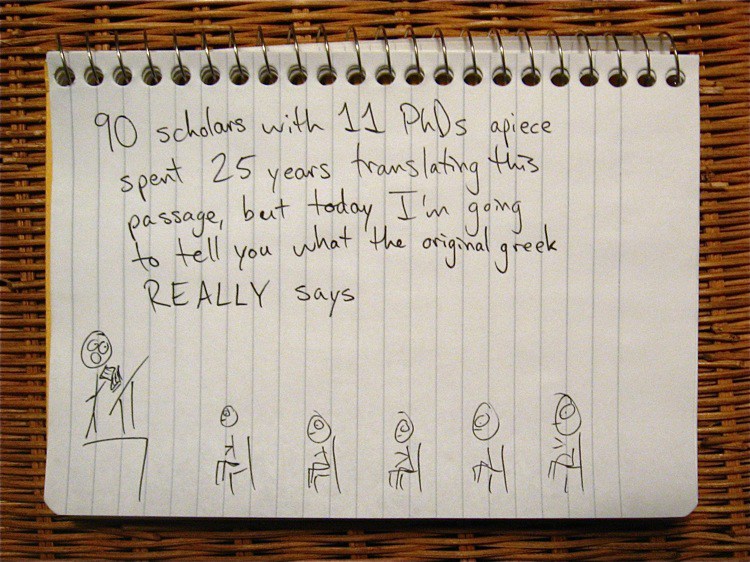





 Veracity