Tag Archives: veracity

How Do We Know the Old Testament is Valid?

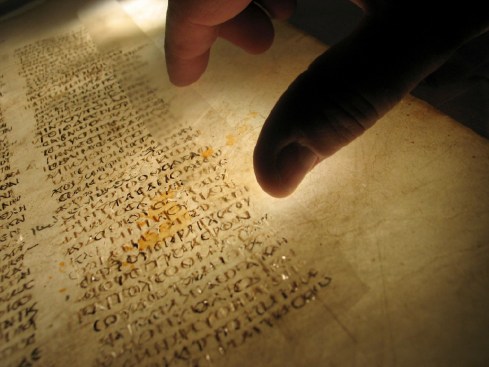
Codex Sinaiticus

Photo Credit: CodexSinaiticus.org


I’ve been reading the Old Testament straight through, struggling at times with the accounts reported in the ancient texts.  Admittedly, if someone at a party started telling these stories we’d all think they were loony.

There are essentially three possible pronouncements for the passages in the OT that are represented as factual, either:

  1. They are fictional and/or fraudulent, or
  2. They are (wholly or partly) allegorical and not meant to be taken literally, or
  3. The miraculous is in play and the historical accounts are correct.

There is no half-off sale in Christianity—we can’t have the New Testament without the Old.  Some poor souls work themselves into torturous and indefensible theological positions by cherry picking which parts of Scripture they accept and which ones they discount as allegorical.  Some of them even show up on documentaries wearing clerical collars, affiliated with organizations that have ‘Jesus’ or books of the Bible in their name.  Hmmm…. It’s best to think it through yourself.

Is our faith based merely on the hope that the OT is valid, or is there some intelligent basis of assurance? Continue reading


The Septuagint and the Original Old Testament?

The first part of the Book of Genesis, from the Septuagint, the early Old Testament Greek translation used by the early Christian church.

The first part of the Book of Genesis, from the Septuagint, an early  Greek translation of the Old Testament, which served as the “Bible” of the early Christian church before the completion of the New Testament.  Is this translation the closest thing we have to the “original” Old Testament?

I noticed sometimes the quotes of the Old Testament passages in [the Book of] Hebrews do not exactly match the wording when I go back and look up the verses in the Old Testament. I am just wondering what is going on.” This was a question sent to our pastors for our summer Bible study series on the Book of Hebrews. I do not know who asked the question in our congregation, but I want that person in my small group. What an awesome question!

The problem is that when you read a number of Old Testament citations in the New Testament, the New Testament writers are actually quoting from the ancient Greek translation of the Old Testament, the Septuagint. Most of the Old Testament was written originally in Hebrew, so it comes as a shock to people to learn that this ancient Greek version of the Old Testament is referenced quite a bit in the New. Critics of Biblical faith will ask if the New Testament writers are at best sloppy when quoting from the original Old Testament, or are they downright fraudulent and terribly mistranslate the Old Testament by relying so much on the Septuagint instead of the original Hebrew?

Get your thinking caps on. This is really a good question.
Continue reading


Old Testament Fit To Hebrew History

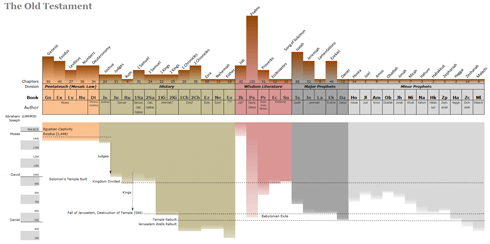
The Old Testament


Here’s a simple graphical representation of the books of the Old Testament, tied to Hebrew history.

I recently came across Tim Challies’ Visual Theology series, and his Periodic Table of the Bible.  The notes about that table state that he and graphic artist Josh Byers decided not to include chronology or the relative size of the books in their depiction.  That was intriguing because for some unknown reason I always thought it would be nice to have a chart indicating the size of the books of the Bible—suitable for taping to dashboards or refrigerators for memorization.  Inspired by Challies and Byers, I started noodling around.  It seemed pretty straightforward, at first, until it was time to fill in the authors and dates.

Among reliable references there is a lot of disagreement about who actually penned the books of the Bible, and when they were written.  Take the debate a step further by tying the dates of writing to Hebrew history (about which there is also considerable disagreement), and we have a formidable academic can of worms to sort through. Continue reading


Rosaria Butterfield – Hospitality and the Unlikely Convert

Rosaria Butterfield - An unlikely convert to Christian faith, touched by the art of hospitality.

Rosaria Butterfield – An unlikely convert to Christian faith, touched by the art of hospitality.

Unless you have been living under a rock for the past fifteen years, you probably know that American public opinion has been shifting dramatically within the past few years to support same-sex marriage.

Given the current cultural trajectory, many observers remark that it is inevitable that gay and lesbian marriages will become widely accepted, at least legally, across large sections of America. Many critics of a traditional reading of Scripture regarding homosexuality argue that  finally “the train has left the station” regarding same-sex marriage. Many would say that Evangelical Christians should join in and affirm the trend as a matter of promoting civil rights, as was the case with racial issues in the 1950’s and 1960’s. How does someone who holds to a high view of the authority of Scripture respond to these challenges in a Christ-like way?

Enter in Rosario Butterfield. She was a lesbian professor at Syracuse University, who was for years convinced that Christians publicly supporting an exclusive approach to traditional marriage were a threat to democracy and human rights.  She was an activist who was horrified by what she saw as “homophobia” and worked aggressively to try to stamp it out. But something unlikely happened along the way.
Continue reading


A Harbinger of Typology Gone Awry?

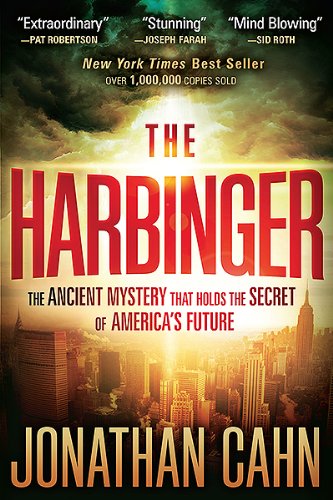
The Harbinger.  Popular New York Times Bestseller by pastor Jonathan Cahn.  Fact or fiction?

The Harbinger. Popular New York Times Bestseller by pastor Jonathan Cahn. Fact or fiction?

Have you read The Harbinger?” The wife of the elderly couple in the restaurant asked me with great curiosity and concern. “I am not sure what to think of all of it, but it sounds like a prophetic warning for America!

Sometimes going out to lunch can get you into trouble. As we were finishing up a meal with some friends and getting ready to leave, this couple at another table wanted to have a “conversation” with me. Well, it was more like a monologue than a dialogue. I was thinking that this would be brief, as my wife and friends had already left the restaurant, but this couple just kept going on and on about this “Harbinger” book, among other topics. I needed a rescue but there was none to be had. My wife was understandably upset, by this time waiting on her crutches outside the restaurant. After I finally left the couple as they were still in mid-sentence, I was sorely rebuked by my wife for leaving her stranded in the parking lot, after she had recently undergone foot surgery. Ouch. I had messed up. Boy, was I in trouble!

But I was not the only one in trouble. As I did a little more research later into The Harbinger, I realized that there are probably a lot more folks in trouble!

You see, I do not have cable TV, so I’m am pretty clueless about what passes for pop culture and the round-the-clock news cycle these days. But apparently, a Messianic Jewish pastor, Jonathan Cahn, has written a blockbuster novel, The Harbinger: the Ancient Mystery that holds the secret of America’s Future. As of late June, 2013, after 75 weeks on the New York Times Best Seller list under the paperback trade fiction category, The Harbinger, sat at #19. That is quite remarkable for a book written by an evangelical Christian author.

Now, the book may indeed be a great story if you like that particular genre, mixing non-fiction into primarily a fictional story. The problem is that it is sometimes hard to figure out the line where the non-fiction ends and where the fiction begins.
Continue reading