Tag Archives: theology

Inerrant and Infallible

We cannot explain or resolve all parts of Scripture.  However, to surmise that apparent conflicts in the Bible must be ‘errors’ is an arrogant and dangerous supposition.  Too many people give up too easily—if it doesn’t make sense they aren’t willing to dig deeper.  Or to trust. Bible

A couple of years ago I listened as wise, godly friends discussed the inerrancy and infallibility of the Bible.  All of them are mature Christians.  The issue was not the authority of Scripture for faith and practice.  The issue was whether it is necessary and/or appropriate to include in our statement of faith that the Bible contains the ‘inerrant’ and ‘infallible’ word of God.

While I try not to get too personal with this blog, the most that I can contribute on this topic is personal.  Specifically, the more I study the more it all makes sense.  Not just in a little way, but in one “Oh wow!” realization after another.

Many (not all) passages that at one time confused me or caused me to wonder if the writer was correct, came into sharper focus with deeper study.  This detailed-study-leads-to-edification process has happened so many times that my view on the inerrancy and infallibility of the Bible has strengthened considerably.

Just one example—I recently audited an apologetics course entitled Creation and the Bible by Reasons To Believe.  Dr. Hugh Ross, a renowned astrophysicist and the founder of Reasons To Believe states in his testimony that he became a Christian by reading the foundational books of the world’s religions and discarding them one by one based upon scientific errors apparent in their text.  When he got to the Bible however, he found 13 scientifically accurate statements about the creation of the universe in the first chapter of Genesis.  If you take the time to dig, the details are amazing and dramatically support the case for ascribing inerrancy and infallibility to the Bible.

There’s no shortage of opinions on the accuracy of the Bible.  Our post-modern culture promotes individual opinions and disharmony over conformity and agreement.  Fine.  Got it.  No one wants to give a straightforward yes or no to the question of Biblical inerrancy, and actually that should be the case.  What do you do with translation differences, poetry, allegorical statements, the use of Koine (slang) Greek, textual criticism, differing accounts of the same events by different authors, a lack of modern technical precision, observational descriptions of nature, the use of hyperbole and round numbers, variant selections of material in parallel accounts, and so on?  It takes a fair amount of clarification before we can get to a yes or no response.

But the concepts behind these adjectives are extremely important, and there are those who have done a very good job building a case for unity on this topic.  The Chicago Statement on Biblical Inerrancy is a document worthy of very careful reading.  Before I read it, I had my own unfocused views on the subject.  After reading it and thinking it through, I’m in.  I support the Chicago Statement.

So back to the question of whether it is necessary or appropriate to include that the Bible is inerrant and infallible in our statement of faith.  In its constitutional context, the Williamsburg Community Chapel’s statement of faith is reduced to eight points about which we believe so strongly that we would break fellowship with those who would disagree.  In this context, personally I believe it is appropriate—but not necessary—to include these terms (see Article XIX of the Chicago Statement).  In other words, would I break fellowship with someone who was struggling with the genealogies of Christ in Matthew versus Luke?  No.  Would I break fellowship with someone who insisted that the differences in these genealogies prove the errancy of the Bible?  Absolutely.  More importantly, do I believe that the Bible is the inerrant and infallible, inspired word of God?  Yes.


The Ascension Was Not Enough

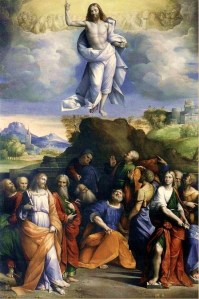
Ascension of ChristHave you ever thought about the events that transformed the apostles from runaway associates of Jesus into witnesses willing to be martyred for his message? The ‘About’ page on the Veracity blog encourages readers to “figure some things out.” That’s precisely what the apostles did between Good Friday (on the eve of the Jewish festival of Passover) and Pentecost (during the Jewish festival of Shavuot). But what they figured out wasn’t good enough.

The apostles witnessed all the miracles of Jesus while shadowing him for three years, but when the Roman soldiers showed up in Gethsemane all they had processed during those three years was quickly abandoned. They distanced themselves from him. So much for being bolstered by intellect. Obviously they were focusing on self-preservation and avoiding the pain and suffering that was about to be inflicted upon Jesus—just like you and I would have done. They knew that Jesus was God and that he had the power to raise the dead. They were there for the miracles, the transfiguration, the raising of Lazarus.  Intellectually and experientially they knew—but they followed their feet.

Forty days after the resurrection, they witnessed the ascension. But as mind-blowing as that event must have been—particularly in the afterglow of the resurrection—it wasn’t enough to change the apostles from cowards to revolutionaries. Jesus told them to wait in Jerusalem (for Pentecost, 10 days later).

This video from Glo Bible and our friends at Day of Discovery summarizes the events leading up to the ascension.

Jesus knew that his ascension would not be enough when he told the apostles beforehand, “…you will receive power when the Holy Spirit comes on you; and you will be my witnesses in Jerusalem, and in all Judea and Samaria, and to the ends of the earth.”  The anointing of the Holy Spirit wasn’t icing on the cake, and it wasn’t an unplanned or spontaneous result of all the teaching that transpired before Pentecost. It wasn’t an insurance run in case the apostles didn’t get it. It was a vital part of God’s plan, preordained, and God’s provision for equipping disciples.

Ray Vander Laan has an amazing lesson on Pentecost (on the Southern Stairs of Herod’s Temple). It is one of the clips from the Faith Lessons DVDs, that should be in your personal library. This is teaching as good as it gets, and you can understand why Ray gets choked up when he describes the significance of being on those steps.

So…after all they had witnessed in the 51 days after Good Friday, particularly the resurrected Christ and his ascension, the apostles still didn’t have what it takes. We may like to think that if we had seen the ascension we would have been fully convicted and empowered. But the truth is it takes more. It takes God with us, not merely God before us. God knew that. God knows that.

When Christ gave the Great Commission in Matthew 28, he commanded his disciples to go to all the nations and baptize in the name of the Father, the Son, and the Holy Spirit.  The ascension was not enough. It took Pentecost. It takes the power and person of the Holy Spirit. Dick Woodward has a lot of teaching about the Holy Spirit, as does the Apostle Paul. If we’re going to get anywhere in our devotional lives, it takes the Holy Spirit. There are rich blessings behind the preceding two hyperlinks.

Why is it important to appreciate the ten days between Christ’s ascension and Pentecost? It gets to the heart of the Trinity, and understanding that God is manifest in three persons—and that we need the power of all three in our lives. It also clearly demonstrates God’s plan for us—we are not only his children, but his anointed children. Without that anointing, it’s not enough.


Chi Rho

Veracity BlavatarIn the early days of Christianity, believers often paid the cost of discipleship with their lives.  Estimates are that 700,000 people died in the Roman Colosseum, where Christians were slaughtered for amusement at midday.  Followers of Jesus adopted Chi Rho as a christogram to symbolize their faith in Christ.   When choosing a graphical symbol for this blog the decision was pretty easy.

Depending upon where you live and your circumstances, life for a contemporary Christian can be quite comfortable.  While persecution of the Christian church is very real, in my corner of the world our faith is seldom called into the midday arena.  But I had dinner recently with the Reverend John Yates, whose faith was tested, and who paid a great price for his beliefs.

Without going down rabbit trails, the crux of the matter is a highly publicized dispute between the Episcopal Church and several Virginia congregations who took issue with the “intellectual integrity of faith in the modern world.”  The breakaway congregations felt that Episcopal leadership was acquiescing to contemporary culture instead of holding true to the Christian faith.  At the Chapel we have a Woodwardism (sayings attributable to Dick Woodward) that applies here: “Is the Church a thermostat or a thermometer?”  In other words, is the Church telling us what the temperature is, or is the Church setting the temperature?

The decision to leave (quoted below from a 2007 Washington Post article) resulted in the Diocese filing a lawsuit to regain the buildings and assets of the breakaway congregations.  The lawsuit dragged on for years, and cost millions of dollars in legal fees.  The court decided first in favor of the congregations, then reversed itself in favor of the Diocese.  John Yates’ The Falls Church congregation will have a final on-site service then vacate the premises on May 13, 2012.  They will then meet in rented facilities while they work out a long-term plan for their church house.

My purpose in blogging about this issue is not to cast stones at the Episcopal leadership, or to inflame anyone.  I just find it encouraging that in an age of stupendous cultural compromise there are believers willing to die on mountains for their faith.  How exciting for John Yates’ congregation.  I envy them in a way because church will be more expensive and less comfortable for quite some time, but what a privilege to know that your leadership is up to the task.  God bless.  Chi Rho.

Why We Left the Episcopal Church

By The Rev. John Yates and Os Guinness

The Washington Post
Monday, January 8, 2007

When even President Gerald Ford’s funeral at Washington National Cathedral is not exempt from comment about the crisis in the Episcopal Church, we believe it is time to set the record straight as to why our church and so many others around the country have severed ties with the Episcopal Church. Fundamental to a liberal view of freedom is the right of a person or group to define themselves, to speak for themselves and to not be dehumanized by the definitions and distortions of others. This right we request even of those who differ from us.

The core issue in why we left is not women’s leadership. It is not “Episcopalians against equality,” as the headline on a recent Post op-ed by Harold Meyerson put it. It is not a “leftward” drift in the church. It is not even primarily ethical — though the ordination of a practicing homosexual as bishop was the flash point that showed how far the repudiation of Christian orthodoxy had gone.

The core issue for us is theological: the intellectual integrity of faith in the modern world. It is thus a matter of faithfulness to the lordship of Jesus, whom we worship and follow. The American Episcopal Church no longer believes the historic, orthodox Christian faith common to all believers. Some leaders expressly deny the central articles of the faith — saying that traditional theism is “dead,” the incarnation is “nonsense,” the resurrection of Jesus is a fiction, the understanding of the cross is “a barbarous idea,” the Bible is “pure propaganda” and so on. Others simply say the creed as poetry or with their fingers crossed.

It would be easy to parody the “Alice in Wonderland” surrealism of Episcopal leaders openly denying what their faith once believed, celebrating what Christians have gone to the stake to resist — and still staying on as leaders. But this is a serious matter.

First, Episcopal revisionism abandons the fidelity of faith. The Hebrew scriptures link matters of truth to a relationship with God. They speak of apostasy as adultery — a form of betrayal as treacherous as a husband cheating on his wife.

Second, Episcopal revisionism negates the authority of faith. The “sola scriptura” (“by the scriptures alone”) doctrine of the Reformation church has been abandoned for the “sola cultura” (by the culture alone) way of the modern church. No longer under authority, the Episcopal Church today is either its own authority or finds its authority in the shifting winds of intellectual and social fashion — which is to say it has no authority.

Third, Episcopal revisionism severs the continuity of faith. Cutting itself off from the universal faith that spans the centuries and the continents, it becomes culturally captive to one culture and one time. While professing tolerance and inclusiveness, certain Episcopal attitudes toward fellow believers around the world, who make up a majority of the Anglican family, have been arrogant and even racist.

Fourth, Episcopal revisionism destroys the credibility of faith. There is so little that is distinctively Christian left in the theology of some Episcopal leaders, such as the former bishop of Newark, that a skeptic can say, as Oscar Wilde said to a cleric of his time, “I not only follow you, I precede you.” It is no accident that orthodox churches are growing and that almost all the great converts to the Christian faith in the past century, such as G.K. Chesterton and C.S. Lewis, have been attracted to full-blooded orthodoxy, not to revisionism. The prospect for the Episcopal Church, already evident in many dioceses, is inevitable withering and decline.

Fifth, Episcopal revisionism obliterates the very identity of faith. When the great truths of the Bible and the creeds are abandoned and there is no limit to what can be believed in their place, then the point is reached when there is little identifiably Christian in Episcopal revisionism. Would that Episcopal leaders showed the same zeal for their faith that they do for their property. If the present decline continues, all that will remain of a once strong church will be empty buildings, kept going by the finances, though not the faith, of the fathers.

These are the outrages we protest. These are the infidelities that drive us to separate. These are the real issues to be debated. We remain Anglicans but leave the Episcopal Church because the Episcopal Church first left the historic faith. Like our spiritual forebears in the Reformation, “Here we stand. So help us God. We can do no other.”

The Rev. John Yates is rector and Os Guinness is a parishioner of The Falls Church, one of several Virginia churches that voted last month to sever ties with the Episcopal Church


What Will Heaven Be Like?

Science

Continuing with our Heaven theme, here’s a very interesting take from apologist Dr. Richard Deem.  He paints a biblically consistent picture using the lens of science.  Click on the superscripts to see his references, then use your browser’s ‘back’ button to return from the GodandScience.org website.  All of the following text in this post is from that website.  (Thank you Dr. Deem for your work and permission to reblog!)

What Will Heaven Be Like?
by Rich Deem

Introduction

People often ask the question, “What will heaven be like.” Although the Bible discusses heaven, it is not possible to understand the full nature of heaven from a human perspective. Since heaven is where God lives, it must contain more physical and temporal dimensions than those found in this physical universe that God created. We cannot imagine, nor can we experience in our current bodies, what these extra dimensions might be like. Even so, we are given enough information in the Bible to understand many of the things that will be different in heaven compared to our lives today. Some of the information on this page is speculation (with alternative possibilities), but is based upon what the Bible says about heaven.

The end of the seventh day

Genesis, the first book of the Bible says that God created the universe in six days.1 By examining all the passages of the Bible that describe the creation of the universe, one can conclude that the six days of creation are six periods of time or ages that God created the universe, the earth, and life on it. The Bible tells us that we are currently in God’s seventh day of rest2 and encourages us to enter into that rest.3 God’s plan for the universe is to allow a large number4 of spiritual beings (both angels and humans) to choose to spend eternity with Him.5 At the appointed time, God will call an end to the present universe6 and judge those who reject His invitation.7

The eighth day

On the eighth day God will create again – this time an entirely new universe.8 The new universe will have entirely different physical laws. Here are some of the differences that stand out:

  • The new earth will have no sea8
  • There will be no Sun or moon9
  • Gravity will be absent or greatly reduced10
  • No more death, suffering, pain11
  • Believers will receive a new body12

Heaven’s characteristics

The characteristics of the new creation tell us that it will be vastly different from what we are used to on earth. Probably most noticeable difference will be the lack of gravity. The New Jerusalem is described as a 1,500 mile cube. Structures of this size would automatically become a sphere in this universe, because of gravity.10 Therefore gravity will either be absent or significantly reduced in the new creation. There will be no Sun or moon. This makes sense, since there will be little or no gravity. Without gravity, the new creation would not be bound to its source of heat and light. The lack of the Sun is not a problem for the new creation, since the Bible tells us that the glory of God Himself will provide illumination.13 The illumination provided by God14 is probably not the same kind of electromagnetic radiation (photons) that we call light. The illumination provided by God certainly involves the wisdom and knowledge that He possesses.15 With this kind of light, there would be no need to visually see things, since this would severely restrict our ability to “see” everything as God sees them. There will be no oceans, which means that there will be no water cycle. It would be difficult for a water cycle to operate without gravity. There will be the river of the water of life, which flows from the throne of God.16 Given its source, it seems likely that it may not be liquid water as we know it.

The laws of thermodynamics seem to be absent from the new creation, since the Bible tells us that there will be no heat.17 In this universe, the second law of thermodynamics controls virtually everything that happens. The law states that heat flows from hot bodies to cold bodies. Stars cannot shine, animals cannot consume food to produce energy to move, and chemical reactions cannot occur, since all these processes require the exchange of heat. This law is also called the law of entropy or decay, since the ultimate result of heat flow is that the universe continues to become more and more disordered. Science tells us that the universe, as we see it now, is temporary. It has a moment of creation, and without God’s intervention, will eventually expand to produce a collection of cold, lifeless matter. Obviously, such a universe would not be acceptable for housing eternal beings, such as those described in the new creation. As discussed previously, the processes requiring heat flow seem to be absent from the new creation. These include the Sun, the sea and a water cycle, and growing old and dying.11 Although there is described a tree (the tree of life) that bears fruit in heaven, it doesn’t seem to be there for eating. In fact, the Bible says, “the leaves of the tree are for the healing of the nations.”18 Given all the violence and genocide that has been perpetrated on the earth over the centuries, there will be need for healing among all the people groups. The lack of eating in heaven19 goes along with the idea that thermodynamics will be absent there. Finally, the Bible says “the creation itself also will be set free from its slavery to corruption,”20 suggesting a release from the laws of thermodynamics.

Some Christians believe that there will be eating in heaven. They cite the great wedding feast of the Lamb. Is this meant to be taken literally? Of course, the most important part of the wedding is not the feast, but the marriage. Are we going to be married in a literal physical marriage to Jesus Christ? I think most males would feel uncomfortable with this concept. We will be with our Savior and our Father in heaven and see Him face to face. I believe that the Jewish wedding was chosen to represent the celebration that will happen in heaven, since it was a most joyous and lengthy event known to the people for whom the message was given. One can be certain it will be a great celebration, whether or not we actually eat food.

The new creation will be a place of awesome beauty and is described in terms of precious jewels and metals. Although the description may not represent literal earthly jewels, it is intended to represent the amazing beauty of its appearance, as John, the apostle, saw it. For a preview of the description, see Revelation, chapter 21.

Heaven’s timelessness

Heaven exists outside the dimensions of both space and time. The Bible says that God exists outside of time and created time, probably as the means of implementing cause and effect. Without cause and effect, actions don’t have consequences and choices don’t have repercussions. So, the universe was created temporally for people to choose to love or reject God. Once the choices have been made, there is no longer a need for time to exist at all. So, when the Bible says God destroys the present universe, that includes the universe’s dimension of time. So, in fact, it does not matter when you die, you will end up in heaven with all the other people you know who went to be in heaven—either before or after you (relative to this universe’s time scale). This includes your ancestors and descendants. Since we are not restricted by time in heaven, could you look back at your life on earth and watch it happen? Probably not, since the Bible says that “the former things will not be remembered or come to mind” (Isaiah 65:17). When God destroys the present universe, it will have been as if it had never existed. Not even God would have access to it (Isaiah 43:25). How do things happen in the absence of time? Good question! Obviously instantly! There will be no more waiting for anything. Everybody will be able to talk to Jesus for an infinite “amount of time” all “simultaneously.” The English language doesn’t even have the proper words to describe how things will be in heaven.

Where is heaven?

Asking where heaven exists is a little like asking where the center of the universe is. In fact, the universe doesn’t have a center, since everything is moving away from every other thing. The Bible indicates that heaven does not exist in this universe, but is God’s abode. In fact, the Bible indicates that even the highest heavens (of this universe) cannot contain God.21 Since we human beings are restricted to the space time dimensions of this universe, we can never go in a spaceship and find heaven, since it is not any place to which we can travel. However, there is a way to get there.

What will people be like in heaven?

With physical laws being so different in heaven, it is apparent that our current bodies would not be acceptable in such a place.22 The Bible poses the question, “But someone will say, “How are the dead raised? And with what kind of body do they come?” (1 Corinthians 15:35). The answer to the question is given in a series of comparisons:23

Mortal vs. Heavenly Bodies
 Mortal Body  Resurrection Body
perishable imperishable
dishonor glory
weak powerful
natural spiritual

To a certain degree, we will be given some of the characteristics of God in heaven, since we will be like Him and the glorified Jesus.24 Without at least the dimensional characteristics of God, we would not be able to see Him, which the Bible says we will do.24

Contrary to the Mormon view of heaven,25 it doesn’t seem that people in heaven will be either male or female. Jesus was asked a complicated question about heaven by the Sadducees (a religious sect that did not believe in the resurrection of the dead) that directly leads us to this conclusion.26 The Sadducees gave a scenario of a woman who married 7 men (sequentially, since they all died prematurely) in her lifetime. They asked whose wife she would be in heaven. Jesus answered:

“You are mistaken, not understanding the Scriptures, or the power of God. For in the resurrection they neither marry, nor are given in marriage, but are like angels in heaven.” (Matthew 22:29-30)

In other words, there will be no marriage or sexual differences among those in heaven, since reproduction is unnecessary. This concept is supported by other biblical verses that indicate that males and females are spiritually equal.27 The same concept applies to the races.28 I doubt that there will be racial differences in heaven.

The idea that we will no longer be married is disturbing to some people. Personally, I like to be married. From an earthly perspective, the dissolution of marriage in heaven doesn’t sound like a good thing. However, in heaven, we will be “married” to Jesus, who will be our spiritual “husband.”29 If you are not currently a follower of Jesus Christ, you cannot understand what this will be like, and it will probably not have any appeal for you. However, if you have experienced the “highs” of following Jesus as He leads you, you will have a glimpse of how awesome this experience will be. God would not take away something good if He did not replace it with something better.

Besides receiving a new body, those who enter heaven will be given a new name30 and will be incapable of committing sin.31 Therefore, all the problems we have by being mean to each other will be gone. We will be able to enjoy each other’s company without the fear of being hurt by anyone. It will be great to be physically and morally perfect and to have fellowship with others who have been likewise transformed.

What will we do in heaven?

People have the impression that heaven will consist of people sitting around on clouds, playing harps. However, the Bible does not describe clouds, although some of the angels and the 24 elders and some of the saints are described as having harps in heaven.32

One of our first acts in heaven will be to help judge the world – specifically the angels.33 Why do the angels need to be judged? Before God created the earth, He created the angels, who, initially, all worshipped God,34 being led by the most beautiful angel, Satan.35 However, Satan (aka, the devil) became jealous of God and sought to take His place.35 Satan managed to convince one third of the angels to join him in rebellion.36 At this point, there was war in heaven, as the rebellious angels of Satan fought against the archangel Michael and the angels of God.36 Satan and his angels were cast from heaven onto the earth,36 where they attempt to persuade humans to follow him in rebellion against God.37 These rebellious angels are now referred to as demons.38 Since there are no rebels in heaven, the angels who rebelled against God will be judged by God’s people and cast into the lake of fire.39

Besides acting as judges in heaven, the Bible says that we will reign with God in heaven.40 Exactly what this reigning entails is not defined. However, we will also be serving God directly.41 Although this may sound boring at first glance, it obviously won’t be, since we will have direct access to the Creator of the universe. The book of Revelation specifically says that Jesus will be our shepherd, who will personally lead us.11 Paul in 1 Corinthians says that we will see Him “face to face” and “now I know in part, but then I will know fully just as I also have been fully known.”41 In essence, this verse is telling us that we will have the full knowledge of God, even as He currently knows each of us. This is amazing! Why atheists would not want to be part of this baffles me. Hebrews describes heaven as consisting of “thousands upon thousands of angels in joyful assembly.”42 So, heaven will be a big celebration. However, we know it will also be a place of righteousness and peace.43 The Bible says that we cannot imagine what heaven will be like, but that it will exceed our expectations. Each of us in heaven will be “revealed in glory.”44

Who will be in heaven?

Obviously, since heaven is God’s kingdom, He will be there. What is remarkable is that we have the opportunity to be there45 and see God as He is.24

Who will be in heaven with God? The angels will be there,46 and have been there since God created them. The Bible gives several lists of people who will not be in heaven.47 A summary of the activities that keep people out of heaven is listed in the table below.

Sins That Keep One From Heaven
sexual immorality idolatry adultery prostitution
homosexual offenses theft greed drunkenness
slander swindling impurity witchcraft
hatred discord jealousy fits of rage
selfish ambition dissensions factions and envy orgies
abomination lying cowardice unbelief
murderer sorcery

The list is fairly extensive and includes some things that all of us have done. At the end of the first creation we will appear before the great white throne of God.48 God will go through the “books” to see if we have committed any of the deeds listed in the table above.49 In addition, our names will be checked to see if they are in the “Book of Life.” Anyone whose name is not found in the “Book of Life” will be thrown into the lake of fire, based upon the unrighteous deeds that they had done in their lives.50 God does not grade on the curve, so all people who have been guilty of any one of the violations above will be sent to the lake of fire, which is the second death.51 However, those who trust (believe) in Jesus escape judgment and inherit eternal life in heaven (see below).52

How do we get to heaven?

So how can we enter into heaven and into the presence of the Holy God? What we cannot do for ourselves, God has already done for us. Jesus said, “unless one is born again, he cannot see the kingdom of God.”53 Jesus went on to explain that the second birth is to be “born spiritually.” Those who are born just once will die physically then will die spiritually at the second death,51 following the Great White Throne judgment.48 Those who are born twice (both physically and spiritually) will die physically, but will live spiritually forever.

How are people born again spiritually? Jesus said:

“For God so loved the world, that He gave His only begotten Son, that whoever believes in Him should not perish, but have eternal life. (John 3:16)

Belief in Jesus removes us from the White Throne Judgment,54 because Jesus took the penalty (death) for our sin at the cross.55 Those who accept Jesus as Lord and Savior are justified (declared righteous on the basis of faith)56 before God and can come before Him boldly57 through the grace58 that He has offered to all.59 By accepting Jesus as Lord and Savior, we give Him permission to change us into perfect beings (“the spirits of the righteous made perfect,” Hebrews 12:22-23) in the new creation.60 Those who reject God’s provision for sin will be judged on the basis of their sin and will be separated from God forever (the second death51), since God cannot allow sin into the new creation.

How do we enter into a relationship with Jesus Christ? We do this through belief in Him:

  1. Repent of your sin and selfishness. Repentance is agreeing with God that you have been wrong and being willing to turn from that old life to a new life61 in Christ.
  2. Receive Jesus Christ as your Lord (God and Master) and Savior (who takes away your sin).
  3. Receive the Holy Spirit as the promise62 of what God will do in your life.
  4. Thank God for His grace and the free gift that He has given you.

Once you receive Jesus Christ as Lord and Savior, you should walk with Him every day. Jesus said, “If you love Me, you will keep My commandments” (John 14:15). Talk to Him every day in prayer and do what He says. Find a good Christian fellowship (church) and read from your Bible every day. These things are not required to keep your salvation, but they will help you to grow in your faith and obedience and to experience more joy in your walk with Christ. When we come before God’s throne in the new creation, it will be good to hear the words…

…Well done, good and faithful servant…enter thou into the joy of thy Lord.63


Heaven

The Ecstasy of St. Paul

The Ecstasy of St. Paul (Johann Liss, 1648)

Contrary to what most people might believe, the Bible has a tremendous amount to say about Heaven.

There are two Heavens: the Intermediate (or Present) Heaven and the New Earth (the Heaven to come).

One reason life on Earth can be so difficult is that we were not designed or intended ultimately for life on Earth—Earth is not the final destination.  Earth is a testing place.  Jesus described Earth as a place of trials and tests and persecutions.  He offered rewards in Heaven (not on Earth).

All of this is part of God’s plan to redeem fallen humanity.

Hell is a place and Heaven is a place (although we probably don’t fully understand the idea of ‘place’ in this context).

We can take some clues from our world here on Earth what the New Earth might be like.  Beautiful mountains, sunsets, pastoral scenes, laughter, love—all hint at God’s glory and power to create.

God creates new worlds constantly (look on astronomy web sites at the nebulae and galaxies he is constantly creating).  So it will be with the New Earth.

Our acceptance into Heaven does NOT depend upon our works, only upon our faith in Jesus Christ.

There is continuity from our lives on Earth to our lives in Heaven.  We retain our identities in Heaven.

We will have glorified bodies in Heaven, and most probably physical and mental capabilities that we do not possess on Earth.

We will know our (believing) family and friends, and be able to spend time with them.

We will have jobs in Heaven, and will rule with Christ.  We will not float around on clouds all day and play the harp.

Our jobs and servant roles will bring us great pleasure.  We will NOT be bored.  We will learn, and we will achieve.

We will not be married as on Earth—our spouse will be Christ, and everything that we seek to do will be centered around loving and honoring him.

The focal place of the New Earth will be the New Jerusalem.

The afterlife is an eternal proposition—we have a very hard time even imagining how long eternity is.

When a believer dies, they face the “Judgment of Faith.” Based on their acceptance of Jesus Christ as Lord and Saviour during their life on earth, they immediately (no soul sleep) are in the presence of Christ, where Christ dwells in the Intermediate Heaven.

Our relatives and friends in Heaven are aware of what is happening on Earth, and can pray for us.

There’s no free pass—you can’t believe on someone else’s behalf.  This is great motivation to fulfill the Great Commission.  Ultimately the Judgment of Faith does not depend upon how good a person we were—only on our faith in Christ.

When Christ returns, he will bring with him the New Earth, as the Apostle John described in Revelation.

There will be a “Final Judgment,” and in this respect the decisions and activities in a person’s life matter (beyond our acceptance and trust in Christ).

Scripture leaves room to debate the order and duration of the events of end times.  This is called ‘eschatology’, and you’ll hear terms like premillennial, postmillennial or amillennial depending upon specific beliefs.  Ultimately, debates about eschatology are not as important as understanding that you are saved by faith in Christ.

As Dick Woodward says, your destiny does nodepend upon how you will do at a final exam in theology.


Where Heaven by Randy Alcorndo these ideas come from?  Largely from Randy Alcorn’s Heaven, a well researched text based on biblical, theological, and doctrinal references.  The book jacket contains this quote by a reviewer: “Other than the Bible itself, this may well be the single most life-changing book you’ll ever read.”  If you are interested in the topic of Heaven, this text is a great place to start.

In some respects it’s ridiculous to even try to bullet-list basic ideas about Heaven. There is a lot that can (and should) be debated, and much is up to interpretation.  Granted.  But what if you only had a few minutes to tell someone about Heaven?  What would you say?  We asked Pastor Bill Warrick just that question.  Bill had some very profound and personal answers, including some different perspectives on the above list.  Watch for that video soon on Veracity.  And by all means, spend some time figuring out what you believe and why.