Tag Archives: theology

Process of Suffering

Do you ever think about why God works by processes?  After all, why doesn’t God just ‘poof’ everything to be the way he wants it to be?  Why take 13.7 billion years to get to today?  Why take 4.6 billion years to build the earth and shape its climate?  Why did Jesus have to suffer?

Why do people have to suffer?

Countless theologians have taken aim at that question.  Most dissect it from the standpoint of purpose—as in “What is the purpose of suffering?”  The realities of suffering remain among the biggest stumbling blocks for atheists and believers alike.

When it comes to suffeDick Woodwardring, I have no credentials.  But I do know an expert.  Here are two messages Dick Woodward preached on the topic (from among many cataloged here) that get to the heart of suffering.

Some questions we just can’t answer.  Other questions we should never even try to answer.  Just like the difference between knowledge (knowing the answers to questions) and wisdom (knowing which questions count), it’s really important to know when to keep our mouth shut.

Here’s a short video that illustrates the value of “showing up and shutting up.”

It also highlights the processes by which God redeems us from suffering—not just for the care receiver, but the caregiver, the pastor, and everyone else.  Redemption is a process.  For whatever reasons, God followed his own rules, and suffered ultimately for our redemption.  There was no way to ‘poof’ the redemption of mankind—God had to prove it.

“For my thoughts are not your thoughts, neither are your ways my ways,” declares the LORD.  “As the heavens are higher than the earth, so are my ways higher than your ways and my thoughts than your thoughts.”
Isaiah 55:8,9 (NIV)

“The only thing that counts is faith expressing itself through love.”
Apostle Paul, Galatians 5:6b (NIV)

The above story has a happy ending.  All three men interviewed in that video are ministers—and very good ones at that.  All three will tell you when people are suffering the most important thing you can do is show up.  And don’t pretend to know the reason for their suffering.

Sometimes we see the happy ending.  Sometimes the ending is just too hard to bear.  It’s hard sometimes to understand that God makes the rules, knows what he is doing, has a plan for each of us, values sincerity, doesn’t need us to attempt to explain anything for him, and intends ultimately for us not to have an ending.  But let’s keep our mouths shut and just use our feet and ears and arms when people are suffering.  The process is important.

HT: Steve Flanary, John Green, Bill Warrick, Steve Hooge, Dick Woodward


Searching for God

Impact Wrench

An impact wrench is a fine tool for changing brake pads or tires.  But it’s completely useless when searching for scientific evidence of God.  For that job you need a Large Hadron Collider.  Right?  (The right tool for the job and all that.)

The recent experimental confirmation of the existence of the Higgs Boson and Higgs Field comprises a major milestone in mankind’s understanding of the universe.  After 50 years of mind-numbing, abstract theoretical research, theologians and scientists are lining up to interpret the data.  But not everyone is coming to the same conclusion.

Finding the Higgs Boson doesn’t prove the existence of God.  On that theologians and scientists are in complete agreement.  But some of them are as far apart on their interpretations as the tools they use. Continue reading


Lesson in Hermeneutics: Paris Reidhead

Paris Reidhead 1990

Paris Reidhead, 1990 (courtesy of Marjorie Reidhead)

When you get right down to it, most of us are timid about sharing our faith.

Among the thousands of people I’ve ever met, only a handful have had the character to put their faith out there without first running it through a popularity filter. The world is full of hard-edged egocentrics who feel it incumbent upon themselves to “tell it like it is,” but listening to most of them is painful.  I’m not referring to people like that.

Gary Carter and Paris Reidhead had the courage of their convictions.  One was a superstar athlete who, by the time I met him, didn’t have to prove anything. The other was a fire-and-brimstone preacher who could crush all distractions with his empowered delivery.

I had breakfast with Paris Reidhead 23 years ago at a men’s retreat.  I still remember much of what he said.  When he asked what I did for a living and I told him, he immediately asked if I could design a pump motor for use on a well that could “sustain 1,800 rpm when driven by oxen.”  As an engineer, this sort of question rarely comes up at breakfast.  Trust me.  (For the purposes of this blog I won’t go into why 1,800 rpm is important—let’s just say he knew what he was talking about.)

That weekend Paris Reidhead preached on the ‘S’ word.  A lot.  It helped me get over the idea that Christians are “holier than thou.”  Or that all our problems are solved when we come to faith.  He helped me understand how God has a plan to deal with ‘S’, and that he bankrupted heaven to pay for that plan.

In a world full of self centeredness, where prosperity theology is a ubiquitous salve, Paris Reidhead’s classic sermon Ten Shekels and a Shirt is a hard, cool rain on a scorched worldview. This teaching isn’t for beginners. He uses the ‘S’ word. He yells and slams the pulpit. He convicts every listener. And he reminds me of what Jesus said in John 8:32, “Then you will know the truth, and the truth will set you free.

So the next time you have 50 minutes to yourself, give a listen to this classic, masterful sermon. It ends up on the bottom line of why we are here. 

The transcript is available online at his family’s ministry site, and you can listen to many of his fine sermons here.

As an amateur mechanic, I appreciate when real mechanics talk about the “old school” way of doing things.  It’s a reverent term referring to doing things the tried and proven way—because it works.  The old school approach is based upon real craftsmanship, with an elegance that cannot be cheaply replicated. In the best sense of the term, Paris Reidhead’s hermeneutics were old school. And he was obvously a master of homiletics.

A very special thank you to Mrs. Marjorie Reidhead for providing the above photograph of her husband.  I hope I have framed his work in a way that honors his memory.


Getting C.S. Lewis

C.S. LewisC.S. Lewis has always been hard for me to read.  I started out with an immature dislike of the man’s writings—because one of his science fiction classics was on my summer reading list in junior high.  I didn’t get much out of the little bit that I actually read.

To get C.S. Lewis you have to know something about his subject, or at least have formed an opinion or prejudice.  Consider his famous “Trilemma Argument” from Mere Christianity:

“I am trying here to prevent anyone saying the really foolish thing that people often say about Him: I’m ready to accept Jesus as a great moral teacher, but I don’t accept his claim to be God. That is the one thing we must not say. A man who was merely a man and said the sort of things Jesus said would not be a great moral teacher. He would either be a lunatic—on the level with the man who says he is a poached egg—or else he would be the Devil of Hell. You must make your choice. Either this man was, and is, the Son of God, or else a madman or something worse. You can shut him up for a fool, you can spit at him and kill him as a demon or you can fall at his feet and call him Lord and God, but let us not come with any patronizing nonsense about his being a great human teacher. He has not left that open to us. He did not intend to.”
― C.S. LewisMere Christianity

He seldom wrote merely to supply information.  He argued.  He defended.  To take on his trilemma argument you have to know more than a little about what Jesus actually said.  And then you have to interpret—and therein lies the efficacy of C.S. Lewis.

It helps to get to know him a little bit as a person, not merely as an Oxford don.  To this day he is reviled and revered.  He died the same day that JFK was assassinated.  He smoked and met colleagues and friends in the Eagle and Child pub.  He loved, he lost, and he hurt.  And he reasoned himself out of atheism.  He is one of the most widely published and influential Christian authors of all time.  But there were only 21 people at his funeral.

Here is a fascinating essay that provides some insight into his character.  As tempting as it might be to jump ahead to the videos, don’t miss this essay.  You might identify with this reluctant but nonetheless effective evangelist.

The following videos describe his enduring significance (notice the Chi Rho) and his home life.  It helps to know a little about the man before you get into his writing.

Faith and reason. Who knew?


Book of Job

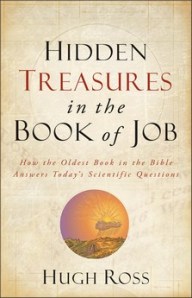
The Old Testament book of Job is a story about faithfulness through longsuffering, perseverance, and ultimately the love of God.  Right?  Right.  But what else might we glean from the text?

You might be surprised to learn that Job is arguably the most ancient book in the Bible—predating Genesis by as much as 400 years.  It also contains more information about the creation of the universe than most of us realize.  What might it tell us of ethics, purpose, right doctrine, obedience, redemption, and even Heaven?  Why does God ask all those specific questions?

If you’re interested in digging deeper, check out the book below.

Enjoy!

Hidden Treasures in the Book of Job