
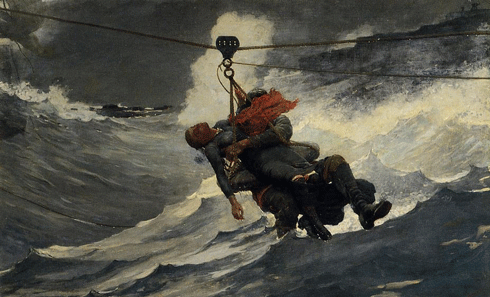
The Life Line by Winslow Homer, 1884
Personal discipleship has been a lifeline for me between what had become a comfortable and complacent Christian experience, and one that became vibrant, exciting, and very real.
If you search for “personal discipleship” on the Internet, you’ll find a variety of not-very-standardized definitions. So up front, here’s my homegrown definition: personal discipleship is the process in which a believer or seeker takes personal responsibility for investigating the claims and content of the Bible.
While we all appreciate hearing a well-turned sermon in a moving worship service, sitting in a pew is a passive experience. None of us would get very far academically if all we ever did was attend lectures. We have to read, study, work some problems through, write, engage others in discussion, apply ourselves, and prepare to be tested. And so it is with our faith.
Kierkegaard argued that Christians should take the initiative to work out our own relationship to God.[1] But this wasn’t Kierkegaard’s original idea, it came from the Apostle Paul.
“Therefore, my beloved, as you have always obeyed, so now, not only as in my presence but much more in my absence, work out your own salvation with fear and trembling, for it is God who works in you, both to will and to work for his good pleasure. Do all things without grumbling or questioning,”
Philippians 2:12-14 (ESV)
Here the more literal ESV translation of the text leads to great doctrine. This is not the Talmud instructing students to “Find thyself a teacher.” It’s the author of half the New Testament telling disciples to work out our own salvation with fear and trembling. Not to make up our ideas of God, but to reverently and humbly work on our relationship with him. Not to have anyone do the work for us, but to do it ourselves. Continue reading



 Veracity