
Kirk Cameron, the Christian actor, who first made his name in Hollywood as a teen actor in the Growing Pains television series, has recently gotten into some hot water, so to speak, with some of his fans. Cameron revealed on his podcast that he no longer accepts the traditional doctrine of hell as eternal conscious torment. Instead, he now holds to the doctrine of conditional immortality instead, at least tentatively.
A number of commentators have responded, such as Southern Baptist Seminary President Al Mohler, in an essay for the WORLD News Group. Dr. Mohler believes that Kirk Cameron’s move towards the doctrine of conditional immortality is a slippery slope towards other areas of compromise in Christian doctrine, whereby Cameron has allowed emotional concerns to overwhelm a commitment to historic Christian orthodoxy.
Cameron is in many ways a popular evangelical Christian influencer, an evangelist and a spokesperson on conservative political issues as well. He admittedly acknowledges that he is not a scholar, and some of his amateur misunderstandings of things have come out in at least one filmed “prayer meeting” a few years ago, and on an historical documentary he produced on American history, which I have critiqued.
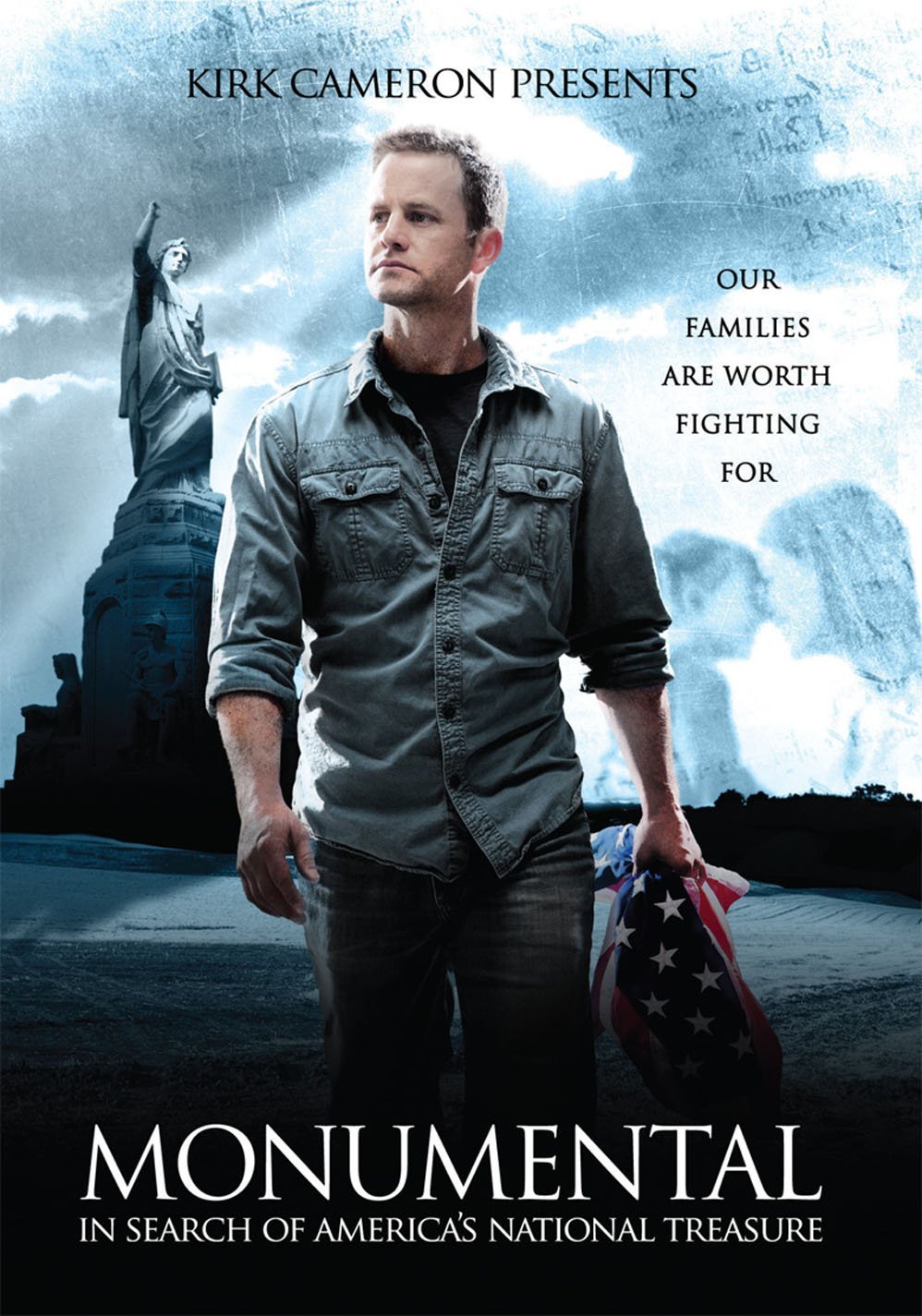
Kirk Cameron made a historical documentary film Monumental back in 2012, among his many other projects. Cameron has become a trustworthy and influential popular spokesperson among many evangelical Christians. But some now are concerned that Kirk has gone off the deep end…. or has he?
Is Kirk Cameron Now a “Heretic,” or Is He Simply Thinking Through Some Really Important Questions, and Wants to Talk About It?
Alas, Kirk Cameron means well, and to many in his audience, he seems trustworthy. So it really shocked some people, myself included, when he announced that he has shifted towards upholding a doctrine of conditional immortality.
The doctrine of conditional immortality differs from the traditional doctrine of eternal conscious torment. In the latter view, those who are eternally separated from God will undergo a never-ending experience of divine punishment resulting from their sin. However, the doctrine of conditional immortality, otherwise known as annihilationism, argues that those eternally separated from God will be punished, but that the punishment will have a terminus. To use a common expression, the punishment (of God) will fit the crime (of the sinner). Once the punishment, as rightly determined by God’s judgment, is rightly finished, the person will be annihilated. That person, separated from God, will no longer exist, eternally.
So, to answer the question posed by the title of this post: No, Kirk Cameron is not denying the doctrine of hell. But he is framing the way to think about hell in a category that might be unfamiliar and unsettling to others.
The debate of the exact nature of hell has been going on since the days of the early church. There are three main views on the topic: (1) the doctrine of eternal conscious torment, (2) the doctrine of conditional immortality, and (3) the doctrine of universalism. Universalism, which in its most popular form in Christians circles, as suggested by those like theologian David Bentley Hart, or William Paul Young, the author of The Shack, teaches that hell is really a kind of purgatory, whereby God will purge sin from the non-believer and eventually win that person to salvation, eventually, in the next life. In other words, hell is primarily restorative and redemptive, as opposed to being punitive.
While Christian universalism has had its proponents, even in the early church era, the doctrine was rejected as veering away from historic Christian orthodoxy. Names like Origen, and possibly Gregory of Nyssa, on up to more recent times, as with C.S. Lewis’ intellectual hero, the 19th century author George MacDonald, have espoused some form of universalism. But the orthodoxy of universalism has been rightly questioned.
However, the story is different from the doctrine of conditional immortality. There are no ancient, historic creeds or confessions which have rejected conditional immortality, unlike universalism. Prominent church fathers, and champions of orthodoxy, such as Ignatius of Antioch and Irenaeus of Lyons, were aligned with the advocates of conditional immortality.
It was really Saint Augustine of Hippo, an avid proponent of the doctrine of conscious eternal torment in the 5th century, who effectively put the nail in the coffin on general acceptance of conditional immortality…. at least for many Christians. Augustine’s massive influence pretty much made conscious eternal torment the traditional view of hell for centuries. But every now and then, conditional immortality makes a comeback, at least among a few Christians, in nearly every age of the church. So, Kirk Cameron’s musings on the doctrine of hell are far from new.
I take an agnostic view on the debate between these two perspectives at the present time. Dr. Mohler cites Matthew 25:46 as the main “go-to” verse to favor the doctrine of eternal conscious torment: “And these will go away into eternal punishment, but the righteous into eternal life.” But then there is Paul’s statement in 1 Thessalonians 2:9: “They will suffer the punishment of eternal destruction, away from the presence of the Lord and from the glory of his might.”
Eternal destruction sounds a lot like annihilation, at least to me. But I get Dr. Mohler’s point about Matthew 25:46. I am concerned about slippery slope tendencies on controversial topics, like Mohler, but these can be complex issues where different people will come to varying conclusions based on different ways of thinking. What matters more to me is how people arrive at their conclusion, as opposed to not just the exact conclusion they land on.
Interestingly, the world’s most famous New Testament scholar/skeptic, Bart Ehrman, believes that Jesus actually held to a kind of belief in conditional immortality, as opposed to eternal conscious torment. But Ehrman recognizes the difficulty put forward by Matthew 25:46. Ehrman’s solution, as a skeptic, is to say that Mathew 25:46 was a later invention by the early church, to make Jesus into being a teacher of eternal conscious torment (when he really was not).
This is one of those doctrinal disputes which I have wanted to study, but I have not done a thorough enough job to make any firm, informed conclusion. About thirteen years ago, I read Robert A. Peterson’s Hell on Trial: The Case For Eternal Punishment, a 272 page articulate text which I highly recommend. Peterson makes a strong argument for eternal conscious torment, while acknowledging that some verses in the New Testament do lean towards conditional immortality. I have not yet read thoroughly any counter-perspective from the conditional immortality side of the discussion. I simply have not yet had the mental bandwidth to take on such a project, and I doubt I will get to it anytime soon (though I have wanted to).
An Appeal to Have More Charitable Dialogue on Controversial Topics Among Christians
But what concerns me the most about the controversy concerning Kirk Cameron are some of the outlandish comments, which have called into question Cameron’s spiritual integrity. Some have claimed that Kirk Cameron is embracing “heresy” now with his views on hell. That simply is not true. Kirk Cameron might indeed be wrong about conditional immortality, but that does not make him a “heretic.”
Apologist Wesley Huff, who defends the traditional doctrine of eternal conscious torment, calls for more charitable conversation on this topic, from a post he made on X:
“With @KirkCameron announcing his position on conditionalism I’m seeing a lot of people attempting to critique it. I hold to ECT, but I do understand the topic of conditional immortality and I have yet to see anyone actually give a rebuttal that shows me they’ve interacted with the arguments and biblical reasoning from the other side. To condemn conditionalism/annihilationism as heresy is to say that John Stott, Edward Fudge, F. F. Bruce, potentially even Athanasius of Alexandria, are all heretics. This is, with all due respect, ridiculous. While the position might be unorthodox it is not heresy. If you actually want to interact with someone who knows the topic reach out to my friends @datechris and/or @DanPaterson7. Both are solid, fair minded, well educated and articulate holders of conditionalism.”
Gavin Ortlund, another theologian who holds to the traditional doctrine of conscious eternal torment, has a video which echoes Wesley Huff’s call for more charitable discussion. In Gavin’s four-layered model for how to go about “theological triage,” when Christians disagree with one another, from his book Finding the Right Hills To Die On, Gavin does not place this debate about the nature of hell as a “Tier 1,” top-level issue. It is an important issue to consider, a “Tier 3” issue, but Christians of good faith may come to different conclusions regarding the nature of hell. This is a good reminder that we should all strive for more charity in having discussions with one another on controversial topics.
I mean, if Kirk Cameron is no longer “safe,” then is anybody really “safe” anymore?
I have a couple more blogposts to put out before the end of the year, but this topic was too important not to pass up!



 Veracity