It is quite apparent that a lot of American Christians (and others) are exceedingly anxious over the prospects of radical Islam doing great harm, and thereby wanting to distance themselves from those from traditionally Islamic-based cultures. The issue is quite controversial. Just this week, a public school system in Staunton, Virginia, shutdown when enraged citizens discovered that a teacher, as part of a calligraphy assignment, asked students to draw out the Islamic shahada, or statement of faith, in Arabic.
The controversy is no less intense when it comes to the question of allowing more Syrian refugees to enter Western countries. The situation has changed dramatically, since I first blogged about this topic two years ago, and since the persecution of Christians in Syria and Iraq became front page news. I am not an immigration expert, so I really do not know what the best answer is. But as a Christian, I simply want to try to follow my Lord in obedience to His Great Commission, loving my neighbor with the Good News of Jesus Christ, Muslim and non-Muslim alike.
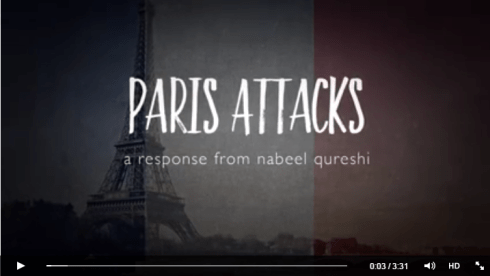
I found the following video to be very helpful in explaining the background of the situation with the Syrian refugee crisis, in view of the crisis of radical Islam motivating the leaders of ISIS. It is more focused on the challenges in Europe, and it does not address spiritual concerns, but as followers of Jesus it would help us to better educate ourselves as to what is going on. You may not totally agree with the suggested solutions in the video, but I would hope that you might prayerfully consider how God might call you to respond to the crisis.
For example, I have a friend of mine who leads small teams for 10-day trips to a refugee camp near the Syrian border inside Jordan. There my friend and his team help to feed hungry refugees, provide education for the children of these desperate families, and build relationships with these lost people, all in the name of loving them with the Gospel of Jesus Christ. If you want more information of how you can get involved, please let me know, or leave a comment in the blog.
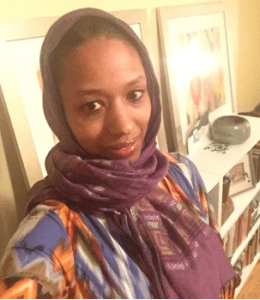
Wheaton College professor, Larycia Hawkins, in “hijab.” (Facebook)
Christianity Today magazine recently reported that Wheaton College, an evangelical university in Illinois, has suspended political science professor Larycia Hawkins after she made statements that “Muslims & Christians worship the same God.” Professor Hawkins raised eyebrows on campus a few weeks ago when she adorned herself with the Islamic “hijab,” as an expression of solidarity with Muslims across the world. But it was her “same God” comments that motivated school officials to place her on administrative leave, pending a review of her statements in view of Wheaton’s statement of faith that all faculty must sign.
Wheaton College made a good decision here, and let me explain why. In view of the recent excellent series on “Basic Islam” (#1, #2, #3, #4, #5) by my Veracity blogging colleague, John Paine, it might be good to revisit why John’s interest in Islam is so timely and important. The question of whether or not Christians and Muslims worship the “same God” is complicated. It is sort of like asking whether or not someone likes the game of “football.” For most Americans, this means a game involving helmets, shoulder pads, and touchdowns. But for the rest of the world, “football” means nets, headers, and penalty kicks; that is, the game of soccer. So, it all depends on what you mean by the question.
For example, Professor Hawkins states that both Muslims and Christians are “people of the book,” assumedly the Bible. In a sense, this is true. But the problem is that Muslims and Christians have very different views of the Jewish Scriptures and the Christian New Testament. Christians believe the Bible we have now is the very Word of God, whereas Muslims believe that the current Christian Bible is terribly corrupted. Are these different assessments of “the book” not contradictory with one another? In one sense, Christian and Muslims both agree that the Bible testifies to the one “God of Abraham,” but they disagree as to what correctly represents the revelatory content of that Bible.
Professor Hawkins is evidently responding to various, unnecessarily Islamaphobic statements being propagated among the American media in the weeks following recent terrorist attacks in 2015. Sadly, many Christians are giving into an ethic of fear, when the Bible makes it clear that the perfect love of Christ casts out all fear (1 John 4:18). However, going to the opposite extreme only confuses matters. A lot more nuance is required before a professor representing a Christian college issues a blanket Facebook post stating that we all “worship the same God.” For a balanced view of what lies behind the recent controversy, I would encourage Veracity readers to digest Scot McKnight’s recent blog post at Jesus Creed.
As fellow human beings, we must learn to live peacefully in a pluralistic society with our neighbors who embrace very different perspectives of who “God” is. We must receive even the Muslims as our neighbors, and love them just as Jesus loves them. To this point, I hope professor Hawkins is able to make her case clear to the community at Wheaton College and eventually return back to her teaching position. But we must not sweep the differences between Christians and Muslims underneath the rug and treat them trivially.
In an age when doors to missions among most Islamic countries remain closed, American Christians have only recently encountered an incredible opportunity to share their faith. Many Muslims, including refugees from Syria, are making their way to the United States, living in our towns and neighborhoods. You do not need to go overseas to become a missionary to Muslims when Muslims are living next door to you, working in your company, or attending classes with you in your school. We betray the Great Commission of our Lord if we turn a blind eye to developing relationships with these neighbors for the sake of the Gospel. Some say that within the last ten years, more Muslims have come to faith in Christ than in the previous fifteen centuries. The fields are ripe for the harvest.
I have friends who are Muslim, and they are truly wonderful people. Frankly, there are times where I would much rather hang out with some of my Muslim friends, than others who proudly deny the values shared by both Muslims and Christians, in favor of a godless materialism. Nevertheless, like with anyone else on planet earth, every Muslim needs to hear about Jesus: but not only my Muslim friends, but everyone who is my neighbor.
Let us not get muddled over questions that lead us towards a sound bite theology. Make it point to learn something about Islam. Read John Paine’s blog posts for starters! Go out of your way to introduce yourself to a Muslim and get to know them as a friend. Pray for the opportunity to share the Good News of Jesus with others and be obedient. Love your neighbor.
We all need the Gospel. We all need Jesus, Christians and Muslim and everyone else alike.
Suppose that you’re a Christian who wants to share your faith with a Muslim. How would you go about doing that? Further, suppose that you appreciate how difficult it is for anyone to overcome what they have been taught adamantly since birth. Muslims who convert to Christianity are considered apostate and subject oftentimes to ostracism and harsh treatment. They break their family’s hearts. The penalty for apostasy in many Islamic countries is death. Conversion is serious business. Sharing could get very uncomfortable.
There are many, many testimonies online about Muslims who have converted to Christianity. Their stories are fascinating, heartbreaking, shocking, tragic, joyful, unlikely, and often involve dreams. Many relate miraculous healing or delivery from dire circumstances. Some, like the five Christians noted below who were raised by Muslim parents, answer a calling to witness to the global Muslim and Christian communities after they become Christians.
So what causes a Muslim to become a Christian? If you listen to Nabeel Qureshi or Abdu Murray, or even Mona Walter, you might get the impression that the common catalyst is steadfast friends who genuinely love them and reflect the love of Christ. While that appears to be true in many cases, after reviewing scores and scores of testimonies, there seems to be an even more common basis for Muslim conversions, namely critical thinking.
Critical thinking is not easy. It requires us to put away our feelings, our dogma, our subjective instincts, and to apply disciplined thinking that is “clear, rational, open-minded, and informed by evidence.” Sometimes the important questions are self-induced, and sometimes they are offered by friends who risk feeling a little uncomfortable. Either way they can move mountains.
What about our critical thinking? When we think about Muslims, do we envision terrorists? Are we that prejudiced? Or do we think about millions upon millions of people who need to hear the truth of the Christian Gospel? Are we ready to give a “reason for the hope” that is within us, with gentleness and respect? Do we have compassion for our brothers and sisters in Islamic countries who are persecuted for their beliefs? It’s very easy to feel anger and to hate when we are attacked. Terrorists are the enemies of free people everywhere. But what did Jesus say about our enemies? His words make us unique among the world’s religions, as does His sacrificial atonement. That should mean something.
We try not to give advice on Veracity, but we’re not at all above taking advice. Take it from Abdu Murray; if you want to reach out to a Muslim, don’t begin by attacking Islam—begin with the positive case for Christianity. If you want to engage in critical thinking, study Nabeel Qureshi’s Seeking Allah, Finding Jesus. Nabeel and his friend David Wood engaged in that process for five years. (If you watched David’s sociopath-turns-Christian testimony, don’t stop there.) Both of these guys were brilliant and committed to opposite truth claims. It got very uncomfortable at times between them, but their friendship only grew stronger as they subjected their beliefs to critical thinking. It cost Nabeel greatly. But he was willing to pay the price because ultimately he accepted the truth. I really cannot recommend his book highly enough. It is an incredible account of the power of friendship and apologetics in transforming even an ardent Muslim.
Take a little time to explore the links and testimonies of the incredible people below. If they are willing to risk their lives to share the Christian Gospel, as many of them do, maybe we shouldn’t worry so much about being uncomfortable.
Pure and undefiled religion before God the Father is this: to care for orphans and widows in their misfortune and to keep oneself unstained by the world.
James 1:27, NET
Islam and Violence
In our previous post on Basic Islam, we introduced the question, “Has true Islam been hijacked by radical elements, as many claim, or do the acts of terror that are so prevalent in the world today have epistemological roots in Islamic doctrine and theology?”
It’s been an interesting week. I met Nabeel Qureshi and asked him how he would answer that question. (I also attended several conference presentations on Islam, and heard some diverse opinions on how to respond to Islam and how to deal with Muslim refugees.)
It’s an extremely loaded question. On one hand, those of us who have been blessed with close friends who are Muslim have a hard time accepting that Islam equates necessarily to violence. On the other hand, we cannot ignore the proliferation of terror that is perpetrated in the name of Islam.
So which is it? What did Nabeel say?
He said, “My answer is summarized, violence is built into the DNA of Islam.”
But he also referred me to several of his online videos and his book, Seeking Allah, Finding Jesus (which I bought from Audible and listened to in its entirety on the way home from the conference. If you want to read an incredible story about the power of friendship and the value of apologetics in winning people to Christ, read this book.)The next day, Nabeel posted the following three-minute video on his Facebook page.
Is the God of Islam the God of Christianity?
It would seem that because Christianity and Islam have their roots firmly in Genesis and Old Testament history that they worship the same god. But the biggest chasm between Muslims and Christians is the Trinity. While both faiths are monotheistic, Muslims abhor the idea that God exists in three distinct persons. In fact, the greatest sin in Islam (shirk) is to associate anyone—such as the Son or Holy Spirit—or anything with Allah.
But there is more to it than that. Theologians debate the moral sufficiency of the God of Islam, making strong arguments that Allah and the God of Christianity cannot be one and the same. While it may not be the first thing you would bring up with a Muslim friend, it’s important to understand. “The violence [that] is built into the DNA of Islam” is part of the moral sufficiency argument.
William Lane Craig’s recent presentation, entitled “The Concept of God in Islam and Christianity,” makes comparisons based on moral sufficiency. Dr. Craig takes on the unpleasant reality of the differences between Christianity and Islam. If we are going to reach Muslims for Christ, we better get used to the idea that we cannot ignore the differences. If this makes us uncomfortable, we are going to have to learn to deal with it.
No Shortage of Shortsighted Self-absorption
At both of the conferences I attended this week, there were sessions on Islam, including one entitled Responding to Islam. At that session, four presenters discussed ideas on how to handle the refugee crisis in the Middle East. One presenter, who has impressive credentials as a theologian, professor, and lawyer, gave a presentation on specific concessions he would require from Middle Eastern refugees wanting to enter the United States.
His presentation was full of the angry sentiment we hear on the news these days in the wake of the Paris attacks. It was also pompous, self-aggrandizing, and downright mean. He said several times that if his proposal kept good Muslims from entering the United States, “Worse things could happen.” Not exactly what one might expect from a follower of Jesus Christ.
One woman in the audience gave him favorable comments, and a man in the back asked for a copy of his paper. It may just be my impression, but there seemed to be more than a little appreciation for what he said.
Then a young man stood up and politely asked, “What is the New Testament basis for your proposal—in light of what the Bible has to say about orphans and widows?”
Wait a minute. We’re supposed to think and act according to the New Testament?! Orphans and widows…like in James 1:27? Are you kidding me? (I could get quite smarmy, so I’ll just stop there.)
Taking the High Ground
Nabeel was the first to speak at the panel discussion after that presentation. He was gracious and did not take on the mean presenter. He noted that his father was persecuted in Pakistan for his Islamic beliefs and that he came to the United States as a refugee. If we talk about responses to ISIS without realizing the unprecedented opportunity we have to share the Gospel with the Muslim world, we miss the point. We should consider what is happening to innocent Muslims. We are here [on this earth] to reach out to others. We must share the Gospel. For 1,400 years we have done virtually nothing to reach these people.
I really don’t have anything to add to that. “Pure and undefiled religion before God the Father is this: to care for orphans and widows in their misfortune and to keep oneself unstained by the world.”
While writing this post, Islamic terrorists carried out a series of attacks in Paris on November 13, 2015. Our thoughts and prayers are with the victims’ families, friends, and all those affected by these atrocious acts of barbarism. At such a time as this it is quite difficult to think about Islam in any objective light. Has true Islam been hijacked by radical elements, as many claim, or do the acts of terror that are so prevalent in the world today have epistemological roots in Islamic doctrine and theology? Political leaders call for a war on terrorism, and we think about drone strikes and military missions. Sadly, people everywhere are being drawn into this war—whether it makes sense to them or not.
I am not inclined to run around claiming that the apocalyptic end of mankind is at hand, but regarding war Jesus said,
“For many will come in my name, saying, ‘I am the Christ,’ and they will mislead many. You will hear of wars and rumors of wars. Make sure that you are not alarmed, for this must happen, but the end is still to come. For nation will rise up in arms against nation, and kingdom against kingdom. And there will be famines and earthquakes in various places. All these things are the beginning of birth pains. Then they will hand you over to be persecuted and will kill you. You will be hated by all the nations because of my name. Then many will be led into sin, and they will betray one another and hate one another. And many false prophets will appear and deceive many, and because lawlessness will increase so much, the love of many will grow cold. But the person who endures to the end will be saved.” (Matthew 24:5-13, NET)
So for those who think that we can somehow ‘win’ the war on terrorism, read the book. These wars will be with us to the end. Not convinced? Take a look ahead at Revelation 13:7.
But we are not called to sit by idly. Should we fight terrorism? Absolutely, with our full might—not just our military might. Jesus did not fight with the sword or attempt to raise up a militant army, but He did call upon us to spread the Gospel truth in the name of the Father, Son, and Holy Spirit. We have to fight with the same kind of compassion, love, and commitment that Jesus taught. Not an easy thing to do at any time, let alone in the wake of terrorism. My contention in writing this series of posts is that if we are to share the Gospel of Jesus Christ with Muslims, we should know something about their faith.
Basic Islam – Part 3
In our first two posts on Islam, we’ve looked at the foundational documents of the faith and learned a bit about the history of Islam and Muhammad. In this post, we’ll take a high-level view of what Muslims believe.
As stated at the outset, the deeper you look into any major religion, the more divergent that religion becomes. It’s easy enough to go to trusted sources, say CARM for example, to get the basics, but there’s a potential inherent bias when you ask someone outside a particular faith to describe that faith. And that holds true for any major religion.
If you want to know what Muslims believe, one inside source would be IslamiCity.org. Their web page on Understanding Islam and Muslims was prepared by The Islamic Affairs Department of the Embassy of Saudi Arabia in Washington DC. Some Muslims would disagree with certain statements, but it is worth taking the time to read if you are interested in learning about Islam. (Hardliners within and outside the faith could argue that this representation is too polished and politically correct, and others argue that it is “anti-Western in general and anti-American in particular,” but it is helpful nonetheless.)
So, what do Muslim’s believe? In no particular order, that:
God is singular in personhood, with no peers. There is only one God in all existence. God has complete authority over humankind in this world and life after death. In Arabic, God’s name is Allah.
God is supreme, omniscient, omnipresent, unique from His creation, and in control of everything. Everything that exists does so by His permission and will.
God revealed himself through a chain of prophets starting with Adam and including Noah, Abraham, Ishmael, Isaac, Jacob, Joseph, Job, Moses, Aaron, David, Solomon, Elias, Jonah, John the Baptist, and Jesus. God’s final message to man was revealed to the prophet Muhammad by the angel Gabriel.
After the supremacy of God, Muslims believe that Muhammad was the supreme and final prophet.
Angels were created from light, and jinn are another type of being, created from fire, who are invisible yet all around us.
The Quran is the dictated word of God and is completely authoritative. The Hadith are the collections of sayings and deeds attributed to Muhammad. Muhammad is the exemplar of Islamic faith, and Muslims seek to imitate him.
Abraham, in the book of Genesis, is a patriarch of Islam. Abraham is believed to have built the Kaaba in Mecca.
Mosques are the most important places of worship and are always pointed towards Mecca, the city of Muhammad’s birth. Mecca contains the Kaaba, or “House of God,” which houses a sacred stone upon which Abraham held Ishmael when he was building the Kaaba. The Kaaba is the most sacred place in Islam.
Christians have misconceived God. Muslims strongly deny the Trinity. The greatest sin in Islam is the sin of shirk—which is equating anyone or anything to be equal with God. Muslims understand the Christian Trinity to consist of God the Father, Jesus, and Mary (not the Holy Spirit).
Jesus was a prophet, was born miraculously from the dust like Adam (not born of a virgin), but He is not divine. He performed miracles and was a great prophet, but He was never crucified (the likeness of Jesus was put on another man, and that man was the one who was crucified). God saved Jesus by raising Jesus up to God. Jesus was not resurrected from the dead.
There is a Day of Judgment and individual accountability for actions.
No sacrifice is required to be forgiven by Allah. Forgiveness can be achieved through faith in Allah, sincere repentance, and obedience to Islamic law. Thus, Jesus’ atoning sacrifice was not necessary.
The Hadith describe the “Five Pillars of Islam,” which are: 1) the Shahada, which is the proclamation, “There is no true God except Allah, and Muhammad is his messenger,” 2) Salat, the five daily prayers, 3) Sawm, fasting, 4) Zakat, charity, and 5) Hajj, the pilgrimage to Mecca for all Muslims who are able.
Muslims who adhere to the Five Pillars of Islam, remain in the faith of Islam, and sincerely repent of their sins go to Jannah (paradise) when they die. If they do not remain in the faith, they are apostate. Apostasy is handled in different ways under Islamic laws in different countries, with punishment ranging from execution to imprisonment, but in some countries there is no punishment.
Islamic law should govern the entire world. (Not all Muslims believe this, but many do.) The framework of Islamic law is called Sharia, and there is a great deal of controversy within Islam about what that law specifically requires and how it is enforced. Radical Islamists use particular interpretations of verses from the Quran and certain Hadith to justify their acts of jihad, which can include terrorism and other forms of barbarism.
There are sects and factions within Islam that practice religious observances and hold views that are outside the mainstream faith. Examples include the Shiite holiday Ashoura (for which I won’t even provide a hyperlink because it involves grotesque self-mutilation), honor killings, and continuing acts of terrorism carried out in the form of jihad and in the name of Allah.
If you are trying to understand “Islamic fundamentalism” or “radical Islam,” some form of interpretation of, and adherence to, Shaira law is involved. If you study Islamic history, there is no shortage of bloodshed—as Islamic-historian-turned-Christian-evangelist Dr. Mark Gabriel notes.
But we still haven’t addressed the question, “Has true Islam been hijacked by radical elements, as many claim, or do the acts of terror that are so prevalent in the world today have epistemological roots in Islamic doctrine and theology?” We will.










 Veracity