Here is one of those Bible passages you probably never hear a sermon about:
50 But Jesus cried out again with a loud voice and gave up his spirit.51 Suddenly, the curtain of the sanctuary was torn in two from top to bottom, the earth quaked, and the rocks were split. 52 The tombs were also opened and many bodies of the saints who had fallen asleep were raised. 53 And they came out of the tombs after his resurrection, entered the holy city, and appeared to many. (Matthew 27:50-53, Christian Standard Bible)
It is Good Friday. Jesus had just died, after being crucified on the cross. Verse 51 is loaded with interesting details, but the really weird part starts in verse 52. At first glance, it seems like something out of the 1968 movie, The Night of the Living Dead. Does this mean we really have “zombies” in our Bible?
What makes this text all the more strange is the fact that only in the Gospel of Matthew do we have this story about the “zombies.” None of the other three Gospels even hint at this. You would think that the Resurrection of Jesus is a big enough event, but to have a whole group of raised saints wandering around Jerusalem would have really caused a stir. Where did they all go? What is going on here?
There are two basic ways of interpreting this passage: The traditional view suggests that this is an historical event that Matthew uniquely records. Yet trying to grapple with who these “saints” are, and what this all means, are both provocative questions.
The most common explanation is that these raised “saints” are Old Testament believers, such as some heroes of the faith, like the great prophets of the Old Testament, like Isaiah and Jeremiah, perhaps. Some tie this story of these raised “saints” with the Harrowing of Hell, commonly associated with the phrase, “He descended into hell/hades,” found in the classic early creed of the church, the Apostle Creed, which some suggest teaches that between his death on Good Friday, and his Resurrection on Sunday, Jesus is preaching the Gospel to those who have died, raising those who believe to new life.
The apocalyptic/metaphorical view suggests that this story in Matthew is not an historical event, but rather a type of prophetic vision of what will happen in the End Times, which is the reason why it is called “apocalyptic.” The appearance of raised saints points forward to the future, whereby all true believers in Jesus will be raised permanently to eternal life. While the apocalyptic/metaphorical view does not insist that this actually happened historically on Good Friday, it is nevertheless still true, since it is anticipating the reality of the future Resurrection.
Dr. Michael Licona, a New Testament scholar, and probably one of the most able defenders of the Bodily Resurrection of Jesus, against the skeptics who deny Jesus’ Resurrection, takes this metaphorical view. Dr. Licona came under severe criticism about ten years ago, or so, by suggesting that this story is an example of “special effects” added in by Matthew, to better explain the meaning of Christ’s death. Defenders of the traditional view say that inserting a fictionalized literary device smack dab in the middle of an historical narrative like this interrupts the flow of the story. But even more serious, Licona’s critics accused him of denying biblical inerrancy by “de-historicizing” this element of Matthew’s narrative.
So, which view is right? The traditional, historical view or the apocalyptic/metaphorical view?
A still frame from George Romero’s 1968 horror film, Night of the Living Dead. Matthew the Evangelist did not have this in mind regarding the risen dead that walked the streets of Jerusalem, following Christ’s Resurrection. But this peculiar incident in Matthew’s Gospel raises some interesting questions: Did Matthew mean this to be part of his historical narrative, or was this an apocalyptic metaphor, looking to the future?
Examining the Evidence
In classical debates about how best to interpret difficult passages like this, it is always the prudent idea to place the burden of proof on the non-traditional view. The traditional view, by the very fact that it has been embraced by Christians for a long period of time, even back to the period of the early church, should enjoy the favor of place in these type of discussions. It is up to defenders of the apocalyptic/metaphorical view to see if they can meet the burden of proof, in order to overturn the tradition.
Furthermore, defenders of the traditional view are concerned that the metaphorical view might call other miraculous events in Scripture into question. This is a very reasonable concern: Where do you draw the line here, and on what grounds do you make a distinction between an historical narrative account versus a prophetic, metaphorical vision of some sort? Jesus spoke in parables, which are fictional teaching devices, but the Gospels also claim that the Resurrection of Jesus is a real historical event, in space and time. The Bodily Resurrection of Jesus has the unanimous consensus from our New Testament sources, including all four Gospels. For if Jesus is risen from the dead, then this opens up the historical possibility of other miraculous Bible events having happened in history as well. But does this necessarily mean that the best explanation for another difficult passage requires a “miraculous” explanation? Another “non-miraculous” explanation, that fits the data better, might actually make better sense of the text. But does the evidence really support this? Traditionalists have a right to be worried, as some Christians, who find no difficulty in accepting the Bodily Resurrection of Jesus, will go to great lengths to dismiss other miracles, such as the Virgin Birth of Jesus, as a pious fiction, a view which causes all sorts of mischief.
From the perspective of an historian, one could argue that both the traditional and apocalyptic/metaphorical views are historical possibilities. Only those skeptics who reject the supernatural would rule out the traditional view as a possibility, because the idea of people walking around after being dead is most definitely a supernatural event. For some who employ the historical critical method, the impossibility of the miraculous is the starting point, and the divine inspiration of the text is an assumption that can be safely set aside, for the sake of getting at the “real” history. In other words, if you treat the miraculous with utter disdain, or you reject the concept of God-breathed inspired Scripture, then the whole business about Matthew’s Gospel “zombies” as historical event will probably just come across to you as completely silly. For historically orthodox Christians, the use of historical critical method does not require one to take those kind of skeptical steps.
However, it is not enough to determine an event’s possibility. What is more difficult is to try to determine how plausible an event might be, considering the evidence, and then try to weigh that evidence to figure out what view is more probable, compared to the other alternatives.
The sheer weight of tradition is not something to dismiss lightly. However, there are a number of factors to consider, that are frankly ignored or otherwise distorted by some commentators who defend the traditional view.
The first thing to consider is what did it mean for these saints to be “raised?” After all, Jesus himself had raised Lazarus from the dead (John 11:1-44). But was the raising of Lazarus the same as the raising of these saints on Good Friday?
Most scholars would agree that Lazarus was risen from the dead, but that he eventually died at some later time. You will be hard pressed to find anyone who believes that a 2,000 year old Lazarus is still living in some New York City high-rise apartment, collecting social security. Likewise, there are some who believe that these raised saints on Good Friday eventually died again, just as Lazarus did. Unfortunately, the text in Matthew does not tell us anything about the eventual fate of these raised saints.
If these saints who were raised died again, it does make you wonder what the point of the whole story was about. For if these raised saints were Old Testament believers, what would the point be for them to be raised, and then die a second time?
The other alternative would be that these raised saints remained alive after this event. Does this mean that a whole group of “zombies” are living in New York City apartments, collecting more social security, and making our taxes so high? Well, most probably not. Unfortunately, if these saints did remain alive, we have no record of an ascension of these saints (Though some do suggest that this is implied by another weird and difficult passage, Ephesians 4:7-10, and/or that these saints quietly ascended to heaven along with Jesus at Jesus’ ascension).
The real tricky part is trying to make this historical reconstruction of events fit with other parts of Scripture. Here is the Apostle Paul:
20 But in fact Christ has been raised from the dead, the firstfruits of those who have fallen asleep…. 23 But each in his own order: Christ the firstfruits, then at his coming those who belong to Christ.24 Then comes the end, when he delivers the kingdom to God the Father after destroying every rule and every authority and power. (1 Corinthians 15:20,23-24 ESV)
Some commentators say that the raised saints on Good Friday are some of the “firstfruits” of the resurrection promised to all believers. Some suggest that verse 23 above should have a comma after “Christ” but before “the firstfruits“, to therefore read: “But each in his own order: Christ, the firstfruits, then at his coming those who belong to Christ.” In other words, first Jesus is raised, then the “zombie” saints in Jerusalem, and then finally associated with the event of the Second Coming, everyone else is raised.
There are several problems here. To take verse 23, and divide it up into three separate events does not mesh well with verse 20, where the Resurrection of Christ, by itself, is equated with the “firstfruits” of the Resurrection. The answer to this objection is that “firstfruits” is plural, which would suggest that multiple events can be associated with these “firstfruits.” In other words, both the Resurrection of Christ AND the raising of these saints together are the “firstfruits.”
True, firstfruits is plural here, but this is a grammatical construction that can have a singular referent. A good example in English is the word mathematics. I majored in mathematics in college, but it does not mean that I double-majored, or triple-majored in multiple mathematic subjects. To say that I majored in mathematics is the same as saying that I majored in math, which is singular. I majored in one subject, mathematics. Likewise, it is perfectly consistent with the biblical text here to say that the (singular) Resurrection of Christ is equivalent to the (plural) firstfruits of the Resurrection. Furthermore, we can find another example of this singular referent to the plural firstfruits in a passage like Romans 16:5, where Epaenetus is described as the “first convert” (firstfruits) to Christ in Asia.
However, the most serious difficulty is that the order of events described by Paul here in 1 Corinthians does not mesh well with the traditional historical interpretation associated with Matthew. A number of commentators will say that in Matthew’s narrative that Jesus was Resurrected on Sunday morning, and then followed by the raising of the saints, who made their way about Jerusalem. This reconstruction might fit 1 Corinthians, if it was possible to interpret the firstfruits of 1 Corinthians 15 with multiple events.
However, a careful reading of the text shows that this simply is not true. In the Matthew passage quoted above, in the Christian Standard Bible translation, Jesus dies upon the cross on Good Friday (v. 50), then followed by the phrase, “Suddenly….” in verse 51, describing all of the events associated with the death of Jesus, which includes the opening of the tombs and the raising of the saints, all happening there on Good Friday (see verses 51 and 52). It is not until Sunday, after Jesus’ Resurrection do these saints leave their tombs and appear about the city, as we find in verse 53.
What the raised saints were doing in their tombs over the weekend is anyone’s guess…. perhaps they were waking up from their long sleep?? But the point here is to say that the raising of these saints preceded Christ’s Resurrection, which if understood in a non-metaphorical manner, would contradict with what Paul says in 1 Corinthians 15. That is a serious problem.
The “Suddenly…” of the Christian Standard Bible (CSB) in verse 51 is obscured in the otherwise excellent English Standard Version (ESV), which has the more archaic “Behold...” The New International Version (NIV) renders this as “At that moment…” There really is no way that you can delay the raising of the saints, in their tombs, until two days later, if the traditional historical interpretation is to be adopted.
However, the most pressing concern is the theological meaning behind the whole “zombie” episode. For if the point of the episode is to tell us that a number of saints were resurrected before Jesus’ Resurrection, it really messes with the whole theology of Resurrection that Paul is trying to describe in 1 Corinthians 15.
Unlike the “resurrection” of Lazarus, who eventually did die sometime in the 1st century timeframe, the Resurrection of Jesus is quite different. When Jesus died on the cross, and then was Resurrected, this Resurrection was (and “is”) permanent. In other words, Jesus will never die again. Likewise, the hope that Paul is trying to give to the Corinthian church is that Resurrection for us as believers, is unlike the story of Lazarus. Instead, our Resurrection will be like that of Christ’s Resurrection. For those believers who have died prior to Jesus’ Second Coming, they will be raised to eternal life, and they will never die again, following the example, the firstfruits, set by Jesus himself.
If this is indeed the point of the Matthew story, then we really are not dealing with something out of a “zombie” horror movie. Rather, the raising of the saints is a look into the future, whereby Matthew wants to reassure the reader that the coming Resurrection of Jesus two days later, after the Crucifixion, is the same hope that we can have as believers, that in the “End Times,” all who have died in Christ will be raised in Christ…. permanently!!
For the Christian, Jesus has conquered death, permanently. That is Good News!!
This is why the “special effects” apolocalyptic literary device mentioned by Michael Licona makes sense with the metaphorical interpretation, in contrast with the traditional, historical interpretation of this passage in Matthew’s Gospel. Historical critical analysis of this particular text chimes in well with the generally accepted view today that the Gospels fit within the literary genre of Greco-Roman biography. For example, Virgil describes the death of Julius Caesar with all sorts of reports of various apocalyptic phenomena, such as cattle speaking, streams standing still, pale phantoms being spotted at dusk, the opening up of the earth, and a comet being seen. It would have been perfectly acceptable for Matthew to use a similar literary device to make a theological point about the believer’s hope in a future Resurrection.
Where Do You Land on Understanding the “Zombie” Passage in Matthew’s Gospel?
So, which is the better interpretation of this passage? Is it the traditional, historical view, or the metaphorical, future-looking ahead view? Scholars will weigh the evidence differently, in order to make a judgment on the probability of an event. This is not a hill that I am willing to die on, but in my mind, the evidence favors the metaphorical view as the better interpretation, when examining all of the evidence. Has the burden of proof been met, to overturn the traditional view? I would say, yes, but many other devoted Christians would probably disagree with me here.
What does bother me is when some advocates of the traditional, historical view regard advocates of the apocalyptic/metaphorical view as somehow having a lower view of the Bible. With all due respect to such critics, the idea of promoting a particular “miraculous” interpretation of a difficult passage that results in postulating a contradiction in the Bible is not a good way of trying to supposedly “defend the Bible.”
Nevertheless, what both the traditional, historical view and the apocalyptic/metaphorical view have in common is the affirmation that God has the power to conquer death, and that God has done this through the Resurrection of Jesus. That message should give us hope that death does not have the final word. When all seems bleak, and at its darkest, we can trust in the reality that “Sunday is a’coming.”
In these early years of the third decade of the 21st century, we have endured the stench of death from the loss of friends and family who have suffered from Covid-19, and now more recently, we recoil from the horror of bodies left piled up on the streets of the cities of Ukraine. Thankfully, the story of the Christian faith gives us a sense of hope that a Resurrection awaits those who put their trust in Jesus, no matter how dark our world seems today. That is a message worth pondering on Good Friday.
In the next post of this series on “historical criticism,” I will review a book written by one of the finest conservative Bible scholars alive today, that uses the tools of “historical criticism” in a very responsible manner, without falling off any theological cliffs, as so many other advocates of “historical criticism” have repeatedly done. Look for it in a week or so.
In his 2005 New York Times best seller, Misquoting Jesus, Bart Ehrman told the story of how he discovered that there were mistakes in the Bible. Despite having attended stalwart evangelical institutions, like Moody Bible College and Wheaton College, in Illinois, Ehrman arrived at Princeton Theological Seminary, having serious questions about the Bible’s reliability.
Did Jesus mess up when He referenced the Old Testament, or did He say what He did on purpose? (Credit: Christianity Today magazine.)
When Harmonization is Helpful … and When the Search for Ad-Hoc Harmonizations Can Lead Someone Away from Faith
Bart Ehrman decided to write a hefty paper about a famous Bible discrepancy in Mark 2, where critics have claimed that Jesus mistakenly named “Abiathar” as a high priest in days of King David, when he should have used the name “Ahimelich.” Ehrman used the tools of “historical criticism” he had learned, trying to harmonize the details to somehow make the Bible “fit.” After pages and pages of analysis, a professor suggested to him that perhaps Mark or Jesus simply got that particular detail wrong.
At that moment, years of effort to “defend the Bible” came crashing down around Dr. Erhman. He remained a Christian after that for a few years, albeit a rather liberal or progressive one. But he gave up his faith altogether soon thereafter, the process of deconstruction having run its course to a full-blown agnosticism, if not downright atheism.
This story helped to catapult book sales of Misquoting Jesus, and later titles, thus giving Dr. Erhman the privilege of selling millions of books, for over the past 17 years. Every year or so, I have run into someone I know, or someone close to them, who has looked to Dr. Ehrman’s books as part of their deconstruction movement out of Christianity. Anytime Dr. Ehrman shows up on YouTube, he gets thousands of views.
Now, I am not saying that Dr. Erhman has been in it for the money. He is not. Nor is he purposefully attempting to destroy the faith of other believers in telling his story. He is not doing that either. Some Christians take a cheap shot at Ehrman and make wild accusations like these. Not only are such accusations unfair, they fail to adequately address some valid questions about what the Bible is actually teaching, concerns raised by Dr. Ehrman.
While there is nothing technically wrong with this harmonization, it can come across as sounding rather ad hoc, or forced, as it fails to answer the question as to why no one single Gospel records the two Temple cleansings. Furthermore, it is highly unlikely that Jesus could have gotten away with the first Temple cleansing in John, without getting arrested, but the second Temple cleansing chimes in well with his arrest later in the Passion Week.
Rather, a much better solution is to say that John was not trying to give a chronological account of the one Temple cleansing. Instead, John put the (single) Temple cleansing first in his narrative, to theologically highlight the fact that Jesus came to take down the Old Covenant, as represented by the Temple, and install a New Covenant, centered around faith in Jesus as the Son of God.
In other words, Temple worship does not save us. But faith in Jesus does. And that is Good News!! There is no real concern about possibly “de-historicizing” or “demythologizing” the Bible, as Rudolf Bultmann tried to do. It just makes better sense to read the text this way. No ad hoc harmonization required.
The main problem with a rather ad hoc harmonization approach to the Scriptures is that it tends to reduce Bible study to working a puzzle, merely trying to find solutions to a problem to be solved, instead of seeing Bible discrepancies as a window into exploring a mystery that sets a truly Christian imagination on fire. While sometimes solving a puzzle in the Bible is a worthwhile endeavor, as is the case with syncing up Paul’s description of his missionary journeys, when compared to potential discrepancies we find in the Book of Acts, the rich 2,000 year history of Christian reading and study of the Scriptures suggests meditating on the intricacies of Bible discrepancies actually helps the reader enter into the theological depths of God’s Word, at a whole new level. When the juices begin to flow to help the believer to expand their imagination, to think God’s thoughts after Him, to see that there are mysteries unfolding in the text, then that is a wonderful sign that the Holy Spirit is at work.
Connecting the dots associated with what at first appears to be conflicting data points in the Bible have led to some of the most remarkable conversions in the history of the church. It is that type of fired up Christian imagination that helped to turn former skeptics, like the 5th century Augustine of Hippo, to the 20th century Oxford don, C.S. Lewis, to having faith in Jesus. Bishop Ambrose in Rome helped Augustine see the Bible in a whole new way. J.R.R. Tolkien did this for his Oxford scholar/friend C.S. Lewis.
A Case Study on Doing Bible Study Without Excessive Harmonization
One of my favorite discrepancies is Jesus’ “mistake” in Mark 2. In this passage, the Pharisees criticize Jesus for letting his disciples pluck grain on the Sabbath. In response, Jesus explains that he and his friends are doing what David and his men did when they ate the holy bread in the time of Abiathar the high priest (Mark 2:25–26). The problem is, 1 Samuel 21 tells us that Ahimelech, not his son Abiathar, was the high priest at the time that David and his men ate the holy bread. Either Jesus made a mistake or Mark did. In either case, evangelicals get nervous.
Scholar Bart Ehrman said that when he discovered this discrepancy in seminary, it kick-started his departure from Christianity. Progressive UK pastor Steve Chalke made it his opening salvo in a debate with me about the truthfulness of the Bible. Countless Christians, on the other hand, upon seeing the problem, have rushed to their study Bibles or other resources where they discover, in relief, that the Greek phrase epi Abiathar could mean “in the passage about Abiathar” rather than “in the time of Abiathar.” “That must be it,” they exclaim. “Problem solved. On to Mark 3.”
Yet there is far more going on in Mark 2. Jesus’ argument is not that he has found an obscure guy in the Old Testament who once ate bread on a Saturday. His point is that David, Israel’s true king-in-waiting, and his consecrated friends were allowed the holy bread that day. Jesus is interpreting his actions through the story of Israel’s greatest king. He is saying, in that cryptic way he often does, “I am David. These guys are my men. So they can eat what they want.”
So Jesus is David, the true king of Israel, and the disciples are his allies. But they aren’t the only characters in the story. Herod is Saul, the current king who has drifted from God and now wants to kill the pretender to the throne. John the Baptist is Samuel, the fiery prophet who prepares the way for the new king and confronts the old one. Judas is Doeg the Edomite, the betrayer. And Abiathar? He is Eli’s great-great-grandson, the last surviving member of the old priestly line, whose eventual removal from the priesthood would prove true God’s word through Samuel (1 Kings 2:27).
All of this means that Jesus mentions Abiathar rather than Ahimelech for good reason. He is saying, “I am David, these are my men, and the current priests are Abiathar. They are in charge now, but in just a few years their priesthood will end, just like Abiathar’s. And my kingdom will be established, just like David’s.”
I think that’s wonderful. The Holy Spirit didn’t put discrepancies in Scripture to provide fuel for skeptics, employment for commentators, or annoyance for evangelical Christians. He did it to make us think, search, meditate, read, learn—and be ever filled with awe.
Andrew Wilson’s treatment of this difficult passage is a good example of a better way we should deal with certain Bible discrepancies. In the next post in this series, just in time for end of Holy Week, we will examine one of the most puzzling passages in the Gospels. To give you a hint, we will be talking about “Zombies” in the Bible. Look for it on Good Friday!
Should women care about who wrote Ephesians and Colossians?
The question in the title of this blog might strike some as a bit puzzling. After all, Ephesians starts off with “Paul, an apostle of Christ Jesus by the will of God, To the saints who are in Ephesus,” and the beginning of Colossians is not that much different (Colossians 1:1-2).
Sounds like a silly “no brainer,” right? Paul wrote these two letters. It’s obvious!
Well, anyone who has studied the development of “historical criticism” over the past several hundred years might tell you differently. While some think this topic is too heady or nerdy for them, it turns out that if you are married, as a husband or a wife, or a woman of any kind, or the concept of misogyny bothers you, this just might be important to you….
…. in a series of blog articles on “historical criticism”.…This is probably the longest post in this series, and while I thought about breaking it up into separate parts, maintaining the flow of the argument convinced me not to do so….
Of the “disputed” letters of Paul, 2 Thessalonians and 2 Timothy makes no significant contribution to a theology of male/female relations, but 1 Timothy, Titus, Ephesians, and Colossians do. This blog post focuses on this issue as it pertains to Ephesians and Colossians.
Why Do So Many Scholars Not Believe that Paul Wrote Ephesians Nor Colossians? Is this REALLY True?
In this blog series on “historical criticism,” we have been looking at how historical critical method has had an impact for the past several hundred years, in how people read the Bible. In some cases, the historical critical method has been helpful, in giving us more solid confidence in the Bible as the very Word of God. But in other ways, the historical critical method has led to more doubts about the Bible. This current blog post is a deep dive into one of these issues.
A general consensus among many (though not all !) biblical scholars trained in historical criticism today suggests that of the thirteen letters that are attributed to Paul in the New Testament, only seven of them were actually written by the Apostle Paul: Romans, 1 Corinthians, 2 Corinthians, Galatians, Philippians, 1 Thessalonians, and Philemon. That leaves perhaps as many as six of them were not written by the great apostle: 2 Thessalonians, 1st Timothy, 2nd Timothy, Titus, and the two to be examined in this blog post, Ephesians and Colossians. Furthermore, some of the issues surrounding the Pauline authorship question have a direct impact upon concerns many women have today in a postmodern age, as I will explain further below.
The question of Pauline authorship for the letters associated with his name is an acute difficulty in biblical scholarship. For example, the Gospels do not explicitly tell us who wrote them; that is, Matthew, Mark, Luke and John. We get those attributions of authorship from the unified, consensus tradition of the early church. According to most scholars, titles like “the Gospel according to Matthew,” etc. were attached to these Gospels after they were originally written. The letters of Paul are different. In the letters of Paul, each letter explicitly tells you that Paul, along with perhaps a co-author, like Timothy, for Colossians, wrote the letter.
A prime example of this type of difference can be found in terms of grammar used in Ephesians and Colossians: like the use of run-on sentences. In much of Paul’s “undisputed” correspondence, the sentences are fairly compact (for the most part). But not in Ephesians 1:3-14. Many scholars contend that this particular passage is one monster, run-on sentence, one of the longest sentences in the entire Bible (though some translations do break up this passage into shorter sentences, to make it easier to read). That’s twelve verses folks, all in a single sentence!
My high school English teacher would probably not have approved of this. She likely would have made Paul stay after class and work on his writing skills.
However, the problems with this type of argument are two-fold. First, Paul does use rather long, run-on sentences in some of his “undisputed” letters, as well. Check out the eight total verses, all in one sentence, in 2 Corinthians 6:3-10 sometime. Sure, there are style and vocabulary differences between the so-called “disputed” and “undisputed” Paul, but these differences are often exaggerated.
Second, such style and vocabulary differences can readily be explained by the use of a secretary, whether named or unnamed, which was actually a familiar practice in the ancient world. Back then, letter writing was more of a professional activity, due to the expense of working with papyrus, and not as commonplace as in modern times, where literacy rates are higher and writing material is much cheaper.
Ever tried buying a pack of papyrus today down at OfficeMax? That is a special order, I am afraid. Paul even tells us that Timothy helped out in the writing of Colossians, so the Bible is far from silent regarding the evidence for Paul getting help from others in producing his letters.
It is also very possible that such secretaries operated like ghostwriters, as we have with many popular authors today, or with political speech writers. Do you really think that the President of the United States writes out every speech he gives? No. Chances are more likely that certain writers are paid to write on behalf of such authors, political figures, etc., as long as they are trying to communicate the same content and message being intended. So, we should not be surprised if style and vocabulary vary between Paul and his use of secretaries.2
UK New Testament scholar Paul Foster took an informal survey at the “British New Testament Conference on Pauline Authorship” in 2011, of roughly 100 scholars, regarding which letters of the New Testament were written by the Apostle Paul. Hebrews is the “loner” here, as there is no claim in it that Paul wrote it. 1 & 2 Timothy and Titus have the least amount of confidence, but Ephesians and Colossians are next in terms of low confidence that Paul wrote them. This survey excludes American and other non-U.K. scholars, where some say the bias against Ephesians and Colossians as being truly Pauline is higher. Reference.
Does the Teaching in Ephesians and Colossians, These “Disputed” Letters of Paul, Contradict the Teaching of the “Undisputed” Paul?
The more challenging case to authentic Pauline authorship of Ephesians and Colossians comes down to differences in theological and ethical content. In other words, the claim is that what the author of Ephesians and/or Colossians is teaching is sufficiently different enough from, or even contradictory with, what is found in the undisputed letters of Paul, such that it would rule out the possibility of the Apostle Paul being the legitimate author. This claim suggests that someone, other than Paul, was writing in the name of Paul in order to push their own theological and/or ethical agenda on their readers.3
What type of evidence do scholars cite, when making such claims? Two particular theological differences stand out as examples:
In Paul’s “undisputed” letters, Paul talks about sin in terms of a hostile power, in the singular sense, and that the Gospel gives us a means of deliverance from that power (see Romans 5:6-11; 7:8, 11). However, in the “disputed” Paul of Ephesians and Colossians, “sins” is referenced in the plural, where deliverance is spoken of as “the forgiveness of sins” (see Ephesians 1:7; 2:1, 4:32 and Colossians 1:14; 2:13; 3:13).
In Paul’s “undisputed” letters, Paul talks about the resurrection as primarily a future eventfor believers (Romans 6:5). However, in the “disputed” Paul of Ephesians and Colossians we read that believers already experience Christ’s resurrection (Ephesians 2:4-8 and Colossians 2:12-13; 3:1).4
But even many scholars, who are otherwise not so sure of Pauline authorship, will admit that such differences are not necessarily contradictions. It could easily be understood that such differences result from differences in emphasis, and not some theological conflict.
For example, to speak of “sin” as a power, in one letter, and the forgiveness of “sins” in another letter does not imply a contradiction, but rather can be understood as complementary teachings. Likewise, the idea that the resurrection is a future event, regarding the future bodily resurrection of the saints, as well as it being a current event, in that we as believers share in the resurrection life of Jesus, who is already risen from the dead, are complementary theological themes. They do stand in tension with one another, but they do not conflict with each other.
Furthermore, it could be easily argued that the supposed tension between the “undisputed” and “disputed” Paul is overdrawn by critics who see a contradiction here. For example, Romans 8:9-10 argues that believers are “not in the flesh but in the Spirit, if in fact the Spirit of God dwells in you.” This is the same Spirit who dwelt in Christ who was raised from the dead. But this indwelling of the Spirit is in the present tense, and not the future tense. In one sense, resurrection is off into the future, but the presence of the Spirit in the believer is in the here and now, whereby we now experience a foretaste of what is to come. Romans 4:24-25 argues that Jesus was “raised [from the dead] for our justification.” Then in Galatians 2:20, Paul teaches that “It is no longer I who live, but Christ who lives in me.”
Both Romans and Galatians are regarded as “undisputed” letters of Paul. These “undisputed passages suggests that the Christian life is lived, in the here and now, as a result of Jesus’ resurrection, a past event. Therefore, the “undisputed” Paul is not simply relegating the resurrected life for the Christian believer as some purely far off event, way off into the future. The theology of Romans and Galatians need not be pitted against the theology of Ephesians and Colossians, as certain scholars have argued.
Paul could have easily tailored his message in different ways to different audiences, to meet different needs. Even in 1 Corinthians 9:20-22, Paul admits that to the Jews he became as a Jew, in order to win Jews, and to the Gentiles he became a Gentile, in order to win them to the Gospel.
In the 19th. century, a number of German scholars, who originally developed the historical critical method, believed that the undisputed letters have a more democratic, Protestant feel to them, as opposed to a more hierarchal, “early Catholic” feel to what is supposedly found in Ephesians and Colossians. For example, the undisputed letters of Paul have a sense of the church (Greek, ekklesia) as an egalitarian gathering of believers. The term ekklesia was originally a political term, that talked about a group of people assembled in a local community to make decisions together, on an essentially democratic basis. However, in Ephesians and Colossians, the writer talks about the church in a more highly structured, universal, even cosmic sense. Furthermore, Ephesians and Colossians appears to be more concerned about structured social arrangements within a Christian household, all within the larger Christian community, as in the relationship between parents and children, and slaves and masters (Ephesians 6:1-9; Colossians 3:20-4:1).
More can be said about that, but suffice to say, the particular issue about the Protestant “undisputed” Paul versus the more Roman Catholic “disputed” Paul is less of an issue these days. Both the “undisputed” and “disputed” Paul use the language of church as “ekklesia,” just with different emphases. However, the big differentiator, in the minds of many scholars today, concerns how the “undisputed” Paul versus the “disputed” Paul thinks about women. The pronounced concerns about Paul’s treatment of women, in his New Testament letters, more than anything else, overshadows the arguments made to deny that Paul wrote Ephesians and/or Colossians. 5
Does the “Paul” of Ephesians and Colossians wish to silence and subjugate women? Veracity examines the case made by critics.
How Does the Paul (or “Paul”) of Ephesians and Colossians Treat Women?
In our postmodern age, many are concerned about misogyny, the wrongful treatment of women. Sadly, Christians have at times been guilty, and such wrongful treatment has been rightfully exposed. Furthermore, in a day and age where “diversity”, “equity”, and “inclusion” are the watchwords, anything that even hints of misogyny is held suspect. Therefore, many skeptical scholars today suggest that the “disputed” Paul of Ephesians and Colossians has a rather ethically challenged view of women, when compared to what we find in the “undisputed” letters of Paul.
Is this really true? Let us take a look at the case being made.
For example, some argue that the “undisputed” Paul of Galatians 3:28 envisions an egalitarian relationship between men and women, by saying that “there is no male and female, for you are all one in Christ Jesus.” So far, so good. However, this is in contrast with the “disputed” Paul of Ephesians 5:21-24:
…..submitting to one another out of reverence for Christ. Wives, submit to your own husbands, as to the Lord.For the husband is the head of the wife even as Christ is the head of the church, his body, and is himself its Savior.Now as the church submits to Christ, so also wives should submit in everything to their husbands.
The “Wives, submit to your own husbands ” part sticks out like a sore thumb, for many 21st century readers.
A generation ago, you might have heard this Ephesians 5 passage read at a Christian wedding, and very few would have raised an eyebrow over it. But in the third decade of the 21st century, this Bible passage would undoubtedly trigger someone, and perhaps spoil the whole wedding day. You are more likely to instead hear the famous “love chapter”, 1 Corinthians 13, taken from one of the “undisputed” letters of Paul, thus avoiding any controversy.
Here in this Ephesians 5 passage, along with a parallel passage in Colossians 3:18-19, the “disputed” Paul is describing the relationship between husbands and wives, along the lines of the Roman “household codes.” In the era of the Apostle Paul, Roman society adopted the idea of “pater familias” (related to the Roman legal code of patria potestas,”power of a father”), where the oldest living male in a household had complete, absolute and unquestioned rule over everyone in the household, including wives, children, slaves, and other servants. The male head of the house had life and death power over everyone in the home. He even had unrestricted sexual access to slaves, without fear of censure by the surrounding society.
Advocates for rejecting Paul as the rightful author of Ephesians and Colossians will contend that the patriarchal, “chain-of-command” approach towards the treatment of women in these “disputed” letters is in contradiction with the egalitarian, “real” Paul of the “undisputed” letters.
Admittedly, at first glance, it does not look good for the Paul, or “Paul,” of Ephesians (and Colossians), as being a paragon supporter of women. But there is more to the argument. See if you can follow where this is all going.
The rejection of pater familias for sexual relations between husbands and wives is clear in the “undisputed” Paul of 1 Corinthians 7:2-4, where the conjugal rights are equally and reciprocally shared between the husband and wife, as opposed to the unilateral arrangement of husbands having complete sexual control over their wives, associated with the pater familias. It is claimed that the “undisputed” Paul of 1 Corinthians, emphasizing this pure egalitarianism, has no room for the contrary message found in Ephesians and Colossians. Many today see that the notion of “male headship” in marriage is actually not a Christian concept, but rather, something smuggled into the New Testament, via Ephesians and Colossians, by someone with an agenda alien to the “real” Paul of 1 Corinthians. 6
If Paul did not write Ephesians/Colossians, why would someone use the name of Paul to promote a teaching that some see as endorsing misogyny? The standard answer has been that Ephesians/Colossians were probably written decades after Paul’s death in the 60’s, between the years of 70 and 100 C.E. Some even date these letters perhaps up to 70 years later, well into the 2nd century C.E., in a time when church officials sought to domesticate the radically egalitarian teachings of the “undisputed” Apostle Paul. According to this view, late 1st century or 2nd century church officials had come to believe that the Apostle Paul’s teachings were too radical for Roman society, and needed to be amended to make Christianity more compatible with the pagan society. 7
This is a serious argument raised by a growing number of scholars (including a few Christian ones). For those who have grown up looking at the “Leave it to Beaver” days of the 1950s, as a hopelessly dark relic of a misogynistic past, this argument gives plenty of fodder for those who would rather leave Paul alone, and reject a good portion of the New Testament (if not all of it).
Women in the Greco-Roman world of the New Testament era were thought of as socially inferior to men. Did the Apostle Paul share that view? Do Ephesians and Colossians specifically endorse misogyny?
How to Respond to the Supposedly Misogynistic Views of the “Disputed” Paul?
The reactions drawn from this contrast of the “undisputed” Paul with the “disputed” Paul of Ephesians and Colossians, particularly with respect to the Bible’s treatment of women, vary greatly.
In our contemporary age, where feminism has an enormous impact on both society and the church, some would say that out of respect for women, we should reject Ephesians and Colossians as part of the Christian canon, in order to show Christian solidarity in opposing misogyny. When “diversity,” “equity,” and “inclusion” are the watchwords of the day, at least in certain quarters, a push for Christians to marginalize Ephesians and Colossians is ideologically strong. This position is radical, but at least it is honest and not half-hearted.
Other ways of thinking about this in progressive Christian circles are a bit more complicated. Some might say that it really does not matter what Paul says, whether it be the “undisputed” or “disputed” Paul, and that we should only focus on what Jesus’ says in the Gospels.
Others are more nuanced, and say that we can still embrace Ephesians and Colossians as part of the New Testament, even if Paul never wrote those letters. British Anglican priest and Oxford scholar John Barton is pretty typical of this perspective, as he writes in his A History of the Bible:
‘A lot depends on how we define the authority of biblical books. Are Paul’s letters authoritative because they are by Paul? If so, then establishing that one of them is in fact pseudonymous presumably reduces or even annuls its authority. Or are they authoritative because they are in the Bible? If so, the question of who wrote them might be regarded as irrelevant.’ (p.187)
Such progressive Christians conclude that Ephesians and Colossians were probably written by some avid disciple (or disciples) of Paul’s, decades after his death, with the understanding that these writers could tweak the Apostle’s Paul message in a new way that tried to meet the needs of a new generation. The progressive Christians holding such a view would suggest that we can still accept Ephesians and Colossians as part of the Christian New Testament canon, embracing those elements that are in sync with the “undisputed” Paul, while rejecting those elements that are seen to be in contradiction with the “real” Paul, found elsewhere in the New Testament. This is sort of like the analogy of eating a piece of fish: eat the meaty part, but spit out the bones, as an approach to suspect parts of the Bible.
The problem with this “spit out the bones” approach to Ephesians and Colossians is that it assumes that the practice of writing something in someone else’s name, and changing what is taught, was somehow benign in the ancient world. However, a number of scholars today are challenging that view, that it was “okay” to use the name of a famous person to promote even a slightly different agenda. For if someone in the ancient world was writing in the name of the Apostle Paul, for the purpose of changing the teachings of Paul, then such a literary work should be rejected as a forgery. In other words, writing something with the intent to deceive was considered lying (just as it is now). A forgery is a forgery.
So, is the judgment of “forgery” laid against Ephesians and Colossians a foregone conclusion? Not necessarily. In fact, we have good evidence to indicate even Ephesians and Colossians were authentically Pauline. The process by which certain writings were accepted into the New Testament canon was actually quite rigorous in the early church. Numerous other writings, ranging from the Epistle to the Laodiceans, Third Corinthians, to the Apocalypse of Paul were all rejected from the New Testament canon as being not authentically Pauline, though they all claimed to be. Therefore, to think that Ephesians and Colossians, if judged to be forgeries, simply slipped into the canon unnoticed is quite a remarkable claim indeed. Furthermore, there are good reasons to suggest that Ephesians and Colossians are not as misogynistic as some think.8
A More Faithful Response?: Evangelical Cases for Paul as the Legitimate Author of Ephesians and Colossians
Most evangelical scholars today do uphold the traditional position, that Paul was the real author of Ephesians and Colossians, but when intertwined with the issue of women, and their relationships to men, there are two primary camps within the evangelical fold: theegalitarian and the complementarian. Both the egalitarian and the complementarian camps affirm the equality as well as the non-interchangeability between male and female, yet broadly speaking, the egalitarian camp emphasizes the equality aspect, while the complementarian camp emphasizes the non-interchangeability aspect. Egalitarians tend to emphasize mutuality between male and female. Complementarians tend to emphasize the complementary roles that male and female perform, with respect to the other. Before outlining the distinctives of each position, it is important to highlight where both positions agree. 9
Egalitarian and complementarian evangelical Christians both agree that Paul wrote Ephesians and Colossians, citing the points above that the style and vocabulary differences between the “disputed” and “undisputed” Pauline letters are often over-exaggerated, and can be reconciled when considering Paul’s use of secretaries in writing his letters. When it comes to the theological content argument, where critics say that the “disputed” Paul contradicts the “undisputed” Paul, with what is being taught, evangelical scholars will also argue that such supposed “contradictions” are highly exaggerated, or else not properly understood. Part of the supposed “contradictions” could simply be a result of Paul’s growing understanding of the Gospel truth, as he advanced in his own spiritual maturity, filling out areas of theological and ethical concern that were not wholly addressed in other letters.
Evangelical scholars will also say that when wives are called to “submit to their husbands,” they are to do so “as to the Lord,” or “unto the Lord” (Ephesians 5:21-14). Submission is grounded in the concept that submission is to be understood, first and foremost, to God Himself, and secondarily, that submission more broadly speaking is mutual in human interpersonal relationships (see verse 21, especially, “submitting to one another out of reverence for Christ.“). Wives are not to submit to their husbands, as though the rule of the husband is absolute. Rather, they are to submit to God, as their husbands should as well. In other words, husbands and wives are to submit to one another, in mutual, yet different kinds of ways, within the context of giving honor and glory to God.10
Many scholars will say that while Paul in Ephesians and Colossians is using the “household codes” framework for stating his teachings, he is actually calling into question some key components of the Roman pater familias social arrangements. First, it is noted that the Ephesians 5 passage begins with a directive to wives first, and then to husbands, which flips the order of how the pater familias was typically expressed in the Roman era, where husbands/fathers always came first. Changing the order of presentation is important, as it would indicate that Paul is reversing the position of both the stronger and weaker parties in typical Roman thinking. In other words, far from rubber-stamping the pater familias Roman tradition, Paul is subverting it. Here is what follows the directive to wives (the corresponding Colossians 3:18-19 passage is more succinct):
Husbands, love your wives, as Christ loved the church and gave himself up for her,that he might sanctify her, having cleansed her by the washing of water with the word,so that he might present the church to himself in splendor, without spot or wrinkle or any such thing, that she might be holy and without blemish. In the same way husbands should love their wives as their own bodies. He who loves his wife loves himself.For no one ever hated his own flesh, but nourishes and cherishes it, just as Christ does the church,because we are members of his body. (Ephesians 5:25-30 ESV)
Secondly, this section regarding how husbands are to treat their wives does not in anyway indicate a type of dominating, overbearing relationship that a husband is supposed to have with his wife. Instead, the ethic of love, particularly as following the ethic of how Christ loves His church, is expressed. The husband is required to give self-sacrificially for the wife, just as Christ has done for the whole church. This overarching element of love is missing from the Roman pater familias, which makes explicit reference to the husband’s absolute control over his household, and is therefore in contrast with Paul’s teachings. 11
An Evangelical Egalitarian Approach to Ephesians & Colossians…
Nevertheless, egalitarian and complementarian evangelicals do differ beyond what is argued above. An evangelical egalitarian view will contend that the “disputed” Paul and “undisputed” Paul are one in the same, in that they are both egalitarian. The argument usually centers around the claim that the word “head” in Ephesians 5:21-24 has been mistranslated and misinterpreted. They would argue that “head”, in this context, actually means “source,” as opposed to something more traditional, like “authority,” or “leader.” In other words, to say that the “the husband is the head of the wife” is to say that the husband is the “source” of the wife, and not the “authority” or “leader.” For example, in an analogy of English usage, we could speak about the “head” of a river” as also being the “source” of a river, where the concept of authority is absent. 12
This egalitarian evangelical approach suggests that the claim made by critics, in denying Pauline authorship of Ephesians and Colossians, are doing so on the basis of reading a tradition into the text of Scripture, that simply is not there. At the same time, egalitarian evangelicals argue that the traditional-leaning complementarians are actually encouraging the critics in their resolve to undermine Ephesians and Colossians, by tacitly supporting a more misogynistic reading of these letters. In other words, when complementarians look the other way when some complementarians use their theology to hide the abuse the women, it brings the gospel into disrepute.
An Evangelical Complementarian Approach to Ephesians & Colossians…
A complementarian view will push back on an egalitarian view at this point. First, a complementarian view would call into the question the more “pro-women” perspective articulated by egalitarians, as misrepresenting complementarianism, as complementarianism is actually more “pro-women” than what egalitarians typically think. After all, even in some egalitarian churches, women still find themselves on the receiving end of abuse.
Secondly, a complementarian view may readily concede that there is a real difference between the ethical emphases in the “undisputed” letters versus what we find in Ephesians and Colossians, as more skeptical critics do argue. However, this is not a cause for embarrassment. Rather, this is what we would expect as Paul is tailoring his unified message in different contexts, with different needs, through his different letters. What might have been a concern at Ephesus or Colossae might not have been a concern in Corinth or Rome.
However, a complementarian view also pushes back against those critics who deny Pauline authorship of those latter two letters, in saying that such critics make too much of such a contrast between the “disputed” and “undisputed” Paul. In particular, the “undisputed” letters make no substantial reference to how husbands and wives are to have structure and order, with respect to decision-making, particularly when consensus between marriage partners is not easily reached, etc., whereas Ephesians and Colossians do specifically address such questions of structure and order. For example, Paul’s desire that husbands and wives have mutual conjugal rights in 1 Corinthians 7:2-4 need not conflict with the idea that the husband and wife relationship should parallel the Christ and church relationship.13
While many “broad” complementarians might emphasize the more traditional notion of “authority” and/or “leader“, with respect to interpreting the meaning of “head” in Ephesians 5:21-24 , there is also a “narrow” (or “moderate”) complementarian view that sees a mediating position between the “‘head’ means ‘source’” and the “‘head’ means ‘authority’” camps. This mediating position follows the most current research that argues that “head” in the Ephesians and Colossians context simply means “to occupy the position at the top or front.” 14
Towards a Meeting Place Between Complementarian and Egalitarian Christians?
Many in our postmodern culture today, and even in the church, view any form of complementarianism as an affront to contemporary sensibilities. But complementarians do not necessarily see it that way, as the tendency towards authoritarianism was never in Paul’s view. At least, those who hold a more moderate complementarian view reject a more rigid, authoritarian perspective, though admittedly, more extreme complementarians do go down the more authoritarian route.
Rather, the notion of the man occupying “the position at the top or front” with respect to the woman is simply meant to be understood in a more sacramental, mysterious way. It is part of what makes Christianity weird and unique, not yet just another voice echoing what we hear all of the time in the surrounding culture. In other words, the notion of “male headship” is not any more weird, than say, the Incarnation, Christ’s substitutionary atonement, the idea that we can “feast on Christ” through our participation in the Lord’s Supper, the doctrine of the Trinity, or even a belief in Christ’s resurrection.
Sadly, the sacramental character of a robust complementarian theology gets overshadowed by concerns over the mistreatment, exclusion, and denigration of women.The complementarian side of this debate finds themselves in the awkward position of dealing with extreme traditionalists who misuse passages like Ephesians 5:21-24 and Colossians 3:18-19 to gloss over all kinds of abuse of women, which only reinforces skepticism, not only of the complementarian position, but of the Bible in general. The silencing of women, by extreme traditionalists, has only added fuel to the skeptic’s fire, particularly as 1 Corinthians 14:34-35 often gets weaponized against women, in ways completely unwarranted by what is actually in the text.. 15
But the egalitarian view is not in any better position. In fact, it might be more precarious. For while evangelical egalitarians and skeptical critics of Ephesians and Colossians might find mutual agreement about relations between husbands and wives in marriage, along with the notion of having women serve as elders/presbyters in a local church, the skeptical critics of Ephesians and Colossians will most probably give evangelical egalitarians a silent pass, while dismissing their exegesis of at least some disputed texts as being a case of perhaps well-intentioned, but nevertheless, hopelessly wishful thinking. Perhaps it might be better for complementarians and egalitarians to learn to listen to one another better, and find common ground.16
Holding Onto Ephesians and Colossians as Pauline, Versus Losing Them
Many evangelical Christians look upon the complementarian/egalitarian debate as primarily a matter of how one should interpret particular controversial verses found in the New Testament. While this is still a valid concern for believers, far more is at stake. It should be evident that the current cultural and church debate, concerning how men and women are to relate to one another, has an apologetic component to it. In other words, how do we defend an historically orthodox approach to the Bible, without allowing current cultural concerns to completely alter how we view the nature of the New Testament?
This may sound like a “devil’s advocate” type of response, but this is worth exploring, for those who tend to doubt. After all, Christians are called to be truth seekers, above all else: So, what if the critics are correct, and a final conclusion is reached, that someone used Paul’s name to write Ephesians and Colossians? At one level, losing Ephesians and Colossians is not the end of the Christian faith. For if Jesus Christ is risen from the dead, then Christianity is true….period! If Paul never actually wrote Ephesians or Colossians, this would not destroy the reality of the resurrection of Jesus, which is the foundation of our faith. Christianity would still be true, but our Bibles would be a bit smaller.
However, at another level, ditching Ephesians and Colossians as not being truly Pauline may still cause problems for some doubters. For if the early church did not get the New Testament right, in terms of accurately identifying the letters that bear Paul’s name, then some might wonder, “What else did the early church get wrong?”
Furthermore, losing Ephesians and Colossians throws the debate between egalitarians and complementarians, by default, in the favor of the egalitarians. Some may celebrate this, but it does so at a high cost. Rejecting Ephesians and Colossians as being non-Pauline (and while you at it, toss in 1 Timothy and Titus as well), might provide great comfort to those who find any hint of misogyny in our New Testament objectionable. But what else would you lose?
If Ephesians and/or Colossians are shown to be non-Pauline in origin, we lose certain unique dimensions of Christian teaching that have given strength and comfort to Christians for generations. While other texts in the remainder of the New Testament do speak of the “forgiveness of sins,” without Ephesians and Colossians we lose Paul’s unique contribution to that doctrine. We lose a more robust and enriching Pauline teaching that not only do we await the coming resurrection, we also experience the reality of resurrection presently in our lives, as an established fact. Without Ephesians and Colossians, we lose Paul’s grand vision of the cosmic and universal nature of the church. We could go on citing other unique Pauline contributions to Christian faith, found in Ephesians and Colossians.In other words, we lose a lot without an authentically Pauline Ephesians and Colossians.
Attempts to “eat the meat” and “spit out the bones” of Ephesians and Colossians will not do. For this places the authority of the message, not in the text of Scripture itself, but rather in the hands of the interpreter. The interpreter becomes the one to try to separate the “meat” from the “bones,” as opposed to allowing the Scripture itself to speak authoritatively. Attempts to say that someone else could have written Ephesians and Colossians in the name of Paul, while drastically changing certain elements of his teaching, and still claim that Ephesians and Colossians should be accepted as authoritative Scripture, simply are not convincing. If Ephesians and Colossians are judged to be forgeries, then they are forgeries. Therefore, it is exceedingly more difficult to trust the Bible, if we somehow concede that certain writings in the canon were written with an intent to deceive us as readers.
On the other hand, a closer examination of the evidence indicates that there still is a solid case to be made that Paul is the real author of Ephesians and Colossians. If I have been successful in my argument from this blog post, there are good reasons to continue to affirm Ephesians and Colossians as truly Pauline, though different evangelicals might still differ on some of the details. Rumors of a misogynistic “Paul” obliquely lurking in the pages of the New Testament have been greatly exaggerated. Ephesians and Colossians can be confidently regarded as truly coming from the mind and teaching of Paul. Therefore, we can still enjoy the theological riches that Ephesians and Colossians give us as the very Word of God.
Why This All Matters for Believing Christians… Both Women AND Men (or It Should)
It has become quite common in recent years for some Christians to claim that the denigration of women was a prominent feature in the earliest, historically orthodox Christian communities. Strenuous efforts have been made to separate that ugly history from the Bible itself, in an effort to salvage confidence in the Christian faith as being “on the side” of women. Have these efforts worked?
This blog post documents a view, commonly held by many scholars today, that the Christian Bible we have now is hopelessly filled with misogynistic themes, that place women in a subjugated status. Some progressive Christians therefore conclude that the only way to rescue the Bible from those who wish to completely undermine its relevance to postmodern life is to clip out significantly large chunks of the New Testament, namely certain letters, or certain portions of letters, attributed to Paul, and dismiss such material as having no authority for believers today.
But is that claim true? Was the denigration of women really part of the story of the earliest Christian communities? Furthermore, was it really rooted in the very pages of the New Testament itself?
Or when we read certain difficult passages that we find in either Ephesians and Colossians, do we instead discover that Paul has something utterly different than propagating misogynistic tropes? Rather, is Paul speaking something about the beauty and difference between male and female that is to celebrated, instead of something to be embarrassed about and ignored?
Christian readers should consider these things, particularly when we discuss our faith with our neighbors. It is something to think about.
A few days before I eventually published this post, Erik Manning, an apologist aligned with William Lane Craig, put out the following videos that address some of the arguments made against Pauline authorship of Ephesians and Colossians:
Notes:
1. This is a pretty technical blog post, but the issue is very important. The notion of “disputed” letters of Paul in the New Testament, in contrast to the “undisputed” letters of Paul, means that scholars across the theological and ideological spectrum dispute about the authorship status of the former letters. Comparatively few Christians are aware of the debate, despite the fact that many scholars in the field doubt the authenticity of the “disputed” letters of Paul. The Oxford Bible Commentary, edited by John Barton, has an article on Ephesians by J.D.G. Dunn that best summarizes the matter: “Was the Letter Written by Paul? The traditional view, from the second century onwards, is certainly in the affirmative… But for the past 200 years the issue has been disputed, and though several prominent contemporary scholars still hold to Pauline authorship…, the majority have concluded that it was most probably written by someone else” (p.1166). A number of “progressive Christians” have been swayed by the debate, in favor of rejecting the six “disputed” letters of Paul as not being genuine; i.e. “fake”, while still coming up with a variety of fairly creative, yet ultimately convoluted ways of still keeping these books within the New Testament canon of Scripture, while selectively dismissing certain elements of teaching found in those “fake” letters (see this typical blog post by Keith Giles, a “progressive Christian.”) As I hope to show in this blog post, the ramifications of this debate are quite substantial, and impact how we view Christian discipleship. Plus, there is good scholarship done by a variety of scholars that suggests that the traditional view, that Paul really authored all 13 letters attributed to him, still has a good case to make….. A note should be added about the missing titles from the original copies of the Gospels: some scholars, like Brant Pitre, argue that the titles of the Gospels were likely included in the texts originally. While this is a possibility, the problem with this view is that it is not necessary to make a defense of the Gospels with that argument. It is sufficient to say that church tradition was unified in saying the Matthew, Mark, Luke, and John wrote their respective Gospels. We have no record of any early church leader suggesting that the authorial designations that we possess now are incorrect. In fact, we have other evidence that indicates that Justin Martyr, an early 2nd. century Christian apologist, simply referred to the Gospels as “the memoirs of the apostles,” without naming the authors. But these need not force the conclusion that the Gospels were purely anonymous, for other church fathers, particularly Irenaeus, explicitly named Matthew, Mark, Luke and John as the respective authors. ↩
2. The classic case illustrating Paul’s use of secretaries can be found in Paul’s most important letter, Romans. In Romans 6:22 we read that Tertius wrote the letter to the Romans. This would suggest that Paul dictated the letter to Tertius, who served as Paul’s amanuensis. It is quite possible that Paul gave his secretaries different degrees of latitude with respect to style and vocabulary. How much latitude would have been granted is greatly debated among scholars. Some find the ghostwriter or speech writer analogy to be too broad, but we simply have no evidence to discount the possibility, in the case of the 13 letters attributed to Paul. ↩
3. There is a special condition, cited by certain scholars, that suggests instances where someone was writing in someone else’s name, but doing so in a non-deceitful manner. Such scholars make a distinction between pseudepigraphical (writing under someone else’s name falsely) and allonymity (writing under another name, but doing so out of indebtedness to that famous person, by summarizing or faithfully restating the famous person’s teachings, intentionally for the benefit of future generations). Evidence in support of allonymity is based on the fact that the ancient world did not have copyright law, and so there was no legal conception of authorial ownership for written materials. The allonymity proposal was suggested by I. H. Marshall, as a middle-alternative between the designation of an ancient letter/document as being written authentically by the named author, and the pseudepigraphical designation, associated with deceit; i.e. forgery. Philip Towner, in his New International Commentary to the Letters of Timothy and Titus, summarizes Marshall’s approach, with explicit reference to Colossians and Ephesians (Kindle location 1525):
To navigate this treacherous middle-ground, Marshall suggests the term “allonymity” to define an authorial process that might close the gap between the apostle and the author who co-opts his name, in a way that allows escape from the allegations of deception and falsehood in the process. He explains that either the student or follower of Paul edits the notes of the deceased apostle, or he steps into the shoes of the dead apostle and carries the master’s teaching forward for future generations in a manner that is faithful to earlier apostolic intentions, even if the key of theological score has been transposed. Examples of this might be found in the philosophical schools, and some aver that Colossians and Ephesians represent letters of the same type. The view allows that the letters to Timothy and Titus, and 2 Timothy especially, may well contain authentic Pauline fragments that a follower worked into the three letters after Paul’s death. At some point between the time of their writing and early circulation and the time of the fathers who first mention them, the “allonymous” authorship of the letters was forgotten and the earliest witnesses attribute them to the apostle.
My New Testament instructor at Fuller Theological Seminary, Donald Hagner, followed this solution, championed by Marshall as well. Some scholars in support of this add that this would explain how the Book of Hebrews was admitted into the New Testament canon, on the basis of its apostolic teaching, despite the fact that there is no name attached to Hebrews anywhere in the text. However, the case of Hebrews differs in that the other letters traditionally associated with Paul all have Paul’s name attached to them, whereas Hebrews as no name attached to it, thereby making it an anonymous writing, in a different class of its own. Perhaps a better candidate might be 2 Peter, which some say was put together by a devoted disciple of Peter, based on sermon notes, etc. made from Peter’s teachings. Nevertheless, other scholars are not convinced that such a fine middle-ground solution can be found. But considering the current state of the evidence, it remains a plausible solution. ↩
4. The Harper Collins Study Bible introductory notes for Ephesians and Colossians do a good job of summarizing the case, arguing that the teachings found in Ephesians and Colossians diverge from the teachings found in the “undisputed” letters of Paul. It should be noted that the degree of suspicion regarding Ephesians is higher than for Colossians. For example, Werner Georg Kümmel, in his classic 20th century Introduction to the New Testament (pp. 340-346, 357-366), makes the case that Colossians is authentically Pauline, while Ephesians is not. Some readers might object that I should not even be entertaining any “historical critical” perspective that would jeopardize the traditional understanding of the New Testament canon. But as I have argued elsewhere, we need not fear the insights that “historical criticism” can give us. Once we understand the assumptions being made by an historical critic, we can then properly appreciate the evidence being presented without necessarily being driven to the same conclusions made by that historical critic, that are often subject to cognitive bias. ↩
6. (See footnote #14 below regarding the special case of 1 Corinthians 11:3, and footnote #15 below regarding the special case of 1 Corinthians 14:34-35)…. Baylor University historian Beth Allison Barr, in her The Making of Biblical Womanhood, makes the argument that the concept of “male headship” was invented by the church, and not Scripture. Barr is correct to observe that at least certain expressions “male headship” have distorted the application of Scriptural principles, all throughout church history. There is no argument against Barr here. However, it is difficult to see how she can call out “male headship” as an invented doctrine, without implicating the Bible itself in the process. The language of “head” with respect to male/female relations, particularly in marriage, is difficult to divorce from Scripture. See my review of Barr’s book here. ↩
7. The case is more pronounced with the Pastoral letters (1 Timothy, 2 Timothy, and Titus), where many scholars are more skeptical about Pauline authorship, as compared to Ephesians and Colossians. But a similar logic applies: someone other than Paul wrote these letters, using Paul’s name, in order to domesticate the more radical message of the Apostle Paul, and make it sound more palatable to the social standards of the wider pagan culture, and less offensive. According to Lilian Portefaix:
“…. with the suspicions that Christianity was a revolutionary sect in mind, it was important for the author to convince the authorities that Christian leaders were no revolutionaries. It has been noticed that the catalogue of virtues demand of the office-bearers (bishops, deacons, and elders) in the church (1 Tim 3:1-7; 8-12; Tit. 1:5-9) corresponds to the fixed pattern of traditional qualities appropriate to a military command… which are listed in the Strategikos by the tactic Onosander…. The catalogue of virtues attributable to an army leader embodies the Roman ideal of a paterfamilias who keeps a tight hand over his family; this idea is prescribed for bishops and deacons… who besides their own families, are set to govern the household of God… Presumably the ‘one in Christ’ formula (Gal. 3:28), concealing social and political implications, had tended to place master and slave on a equal footing outside the community and had attracted the attention of non-Christians.” (Feminist Companion to Paul: Deutero-Pauline Writings, ed. Amy-Jill Levine. “‘Good Citizenship’ in the Household of God: Women’s Position in the Pastorals Reconsidered in the Light of Roman Rule,” p. 151).
The problem with this thesis is that it still assumes that the pseudepigraphical author of “Paul’s” letters deemed Paul’s writings to be insufficient, and thus felt the need to change Paul’s teachings; effectively, contradicting the authentic Paul. Jouette M. Bassler is even more condescending in her assessment of the Pastoral Letters, a judgment that can be easily extended to Ephesians and Colossians, for the same reasons. In her discussion about the pseudepigraphical Paul’s treatment of widows in 1 Timothy, Bassler is not simply saying that misogyny crept into the early church. Rather, she is saying misogyny is rooted in the very New Testament itself. Bassler states:
“… the very persistence of the concern to control widows suggests that the church hierarchy continued to feel threatened by their (latent or active?) spiritual power… The Pastoral Letters were accepted into the canon and their pronouncements on widows in particular, and women in general, attained the normative status of inspired authority. Fortunately, the author left enough cracks in the letters’ rhetorical facade that we can get glimpses of the early struggle and expose his words for what they are — a calculus of suppression.” (Feminist Companion to Paul: Deutero-Pauline Writings, ed. Amy-Jill Levine. “Limits and Differentiation: The Calculus of Widows in 1 Timothy 5:3-16”, p. 146).
If Jouette M. Bassler is correct, then you have to wonder why anyone would want to keep these “disputed” letters in the New Testament canon today. But if Bassler is wrong, and the teachings about women in the “disputed” letters can be coherently read together with the content in the “undisputed” letters, thereby viewing the tension as indicative of complementary differences, as opposed to contradictions, then a more vibrant, positive and edifying view of Paul’s teaching can be gained. ↩
8. University of North Carolina bible scholar, Bart Ehrman, who is no ally to historically orthodox Christianity, and who considers Ephesians and Colossians to be forgeries, rejects the notion popular in some “Progressive Christian” circles that is was somehow “okay” in the ancient world to use the name of a famous person to write material that altered the message of that famous person. In Ehrman’s book Forged, he makes a persuasive case that forgery was considered forgery then, just as much as forgery is considered to be forgery now. The difficulty with Ehrman’s thesis is that he does not sufficiently value the evidence in favor of authenticity for the writings associated with the Apostle Paul, as well was seeing contradictions in the New Testament that need not be interpreted as contradictions. In a previous blog post, contrary to Ehrman, I elaborate on the rigorous process at work in the early church to adequately vet the legitimacy of New Testament documents to be admitted into the canon of the New Testament. ↩
10. Some argue that mutual submission here is more of an egalitarian perspective, specifically. However, mutual submission can also carry the sense of a reciprocative relationship, whereby the movement of one towards another calls for a corresponding movement from the other back towards the initiator, but in a different manner. The analogy of ballroom dancing might be applicable here, as one partner is the leader, and the other follows, but both parties must mutually submit to one another in order for the dance to be a success. Mutual submission, understood this way, has more of a complementarian perspective. One can easily identify extremes on both the complementarian and egalitarian sides of the debate, where on the one side, men are too often given a pass in abusing women, and on the other side, where gender becomes merely a social construct, where “man” and “woman” become purely subjective identifiers. ↩
11. Sarah Ruden’s Paul Among the People offers a refreshingly different view of Paul, that sees him more at odds with the Roman pater familias traditions of his day. Ruden’s perspective is all the more remarkable considering that she is a classicist, with a more progressive theological leaning. Her view on Paul’s understanding of slavery forced me to conclude two things about Paul: First, Paul was not a social revolutionary who sought to overthrow the established slavery system. Secondly, Paul did undercut the whole rationale for how people become slaves in the first place, mainly through what Paul wrote to Philemon about Onesimus. In other words, Paul does not upset the apple cart of slavery as an institution, but by subtly attacking the basis for how people can be regarded as slaves in the first place, Paul renders the slavery system as being mute. For without slaves, you can have no slavery system to uphold. Similar insights in Ruden’s book are applicable to the complementarian/egalitarian discussion. See my review of her book on Veracity. ↩
13. If there is one pet peeve I have about an egalitarian view of marriage is that it is hopelessly unrealistic, for the vast majority of people. I know of several egalitarian Christians with marriages, where they contend that the spouses have been married for decades without any substantial disagreements that could not be resolved by seeking after consensus. Even the prominent New Testament scholar Gordon Fee makes the same claim. Well, great for them. But unfortunately, for the rest of us, the effort to try to arrive at consensus in marital decisions at all costs is really a setup for failure. Yes, we should try to reach consensus when making decisions. But what happens when a consensus can not be reached? Does that mean that the marriage is a failure, or the marriage partners are a failure? Sometimes, someone has to step up to the plate and make a decision. Unfortunately, egalitarian marriage principles do not help you in those circumstances. They just leave you with a sense of failure, with unrealistic expectations prodding you along the whole way. ↩
14. The “to occupy the position at the top or front” understanding of “head” seems to be gaining the consensus in the research today regarding the meaning of “kephale” in Ephesians 5:22-24. I would liken it to standing at the “head” of a line to board a plane or a bus…. A “broad” complementarian view tends to see the authority/lead understanding of male “headship” as having a wide range of applications, not just in marriage or in the church, but in society as well. A more “narrow” (or moderate) complementarian view tends to see male “headship” more in terms of the husband as the gentle leader of the family, and that the office of elder in the church is restricted to qualified men, but allowing women to serve in other church leadership capacities without restriction (like deacon, bible study teacher, worship leader, seminary teacher, etc.). Some see an even more “narrow” view where only the senior pastor needs to be qualified male. Nevertheless, all flavors of “narrow” complementarians do not see any particular application outside of the home or the church (See footnote #5 above about “gentle complementarians”)… Regarding the meaning of “head” in Paul’s writings, see 1 Corinthians 11:3 also. The whole topic of 1 Corinthians probably deserves another blog post focused on that text. But a short response by some critical leaning scholars is to say that the whole of 1 Corinthians 11, regarding male headship, is actually a position that Paul himself does not hold, and that we know this from 1 Corinthians 11:16, which in the Christian Standard Bible reads, “If anyone want to argue about this, we have no other custom, neither the churches of God.” Most Christians traditionally understand Paul to say that the principle of male headship, however it is interpreted, is an inherent belief to be affirmed in the church, and that having such arguments to dispute against it is not a custom that he tolerates. However, these critical scholars will contend that it is the custom of male headship itself which not a custom he tolerates, and that therefore Christians should not bother with the concept of male headship. In this perspective, it is argued that the concept of headship in Ephesians has been horribly misconfigured to mean something opposite to what Paul originally intended.
15. 1 Corinthians 14:34-35 is one of the most puzzling passages in the Bible, as this passage has encouraged some to conclude that women should remain completely silent in church. This is difficult, not only for egalitarians, but complementarians as well. The most obvious difficulty in this interpretation is that just three chapters prior, in the same letter, in 1 Corinthians 11:2-16, Paul is encouraging women to pray and prophesy in church, which entails speech. For a full exposition of this passage, see the previous Veracity posting, on “Women Should Keep Silent in Church? : A Corinthian Conundrum Considered.” In summary, the three main views are (a) women are to remain silent in the church, but only when it comes to judging prophecy, which the preceding passage in 1 Corinthians 14 addresses, (b) this passage is an interpolation; that is, something added later to the text by a copyist scribe, and not part of the original New Testament, and (c) that Paul is actually quoting a view held by the Corinthian community, of which he is strenuously refuting, as being contrary to the Gospel message. Since the earliest New Testament documents lacked quotation marks in the original Greek, it is quite easy to understand how many Christians could have misinterpreted this passage. In that previous blog post, I make the case that the third view (c) makes the most sense of the text. This third view completely removes any hint of misogyny in Paul’s thinking here in this undisputed letter written by the Apostle. ↩
16. Andrew Wilson’s post on “Twenty Myths of the Gender Debate” is exceedingly helpful for both sides in the complementarian and egalitarian debate. ↩
In the 21st century, we have witnessed a major cultural shift with respect to why there are those who reject the Bible today. A lot of it comes down to how people think the Bible treats women.
I could also add that many today find difficulties in the Bible regarding racism, sexuality, and gender identity. But for the sake of simplicity, let us just stick with the topic of misogyny for this discussion (after all, March is “Women’s History Month”)…. Let me explain.
In the 20th century, Christians wrestled with the supposed conflict between science and the Bible. While such concerns still exist, a shift has taken place in terms what causes many people to resist the claims of the Christian faith
The Shift from “Science” to “Women”: 20th to 21st Century
In previous generations, particularly in the 20th century, it was the denial of the supernatural that most motivated critiques against the Christian faith and the integrity of the Bible. In certain cases, such critiques of excesses were justified. At times, Christians have resisted scientific progress out of a fear of having their faith come under attack.
Yet since Franklin, and particularly since the 20th century, many Christians rarely overwork everyday occurrences as being supernatural interventions by the hand of God. Most Christians today simply think of lightning strikes as part of God’s natural order of things, and that we need not sacrifice our confidence in God’s providential care simply because we appreciate the scientific lessons learned from our understanding of electricity and lightning.
In other words, Christians put lightning arrestors on buildings today, not because they are questioning God’s providence, but because they better understand how the laws of physics, that God himself created, actually work with lightning.
Just because someone claims that a supernatural “miracle” has happened does not mean that such claims should be automatically accepted. Even today, when we hear some fellow Christian believers rejoice that God “opened up a parking place” for them, many other Christians show a certain amount of skepticism for that type of display of piety. Nevertheless, every truly Scriptural-informed Christian continues to pray, seeking the Lord for His guidance in their daily lives.
Furthermore, since the medieval era, certain claims about “what the Bible teaches” no longer could be defended, nor such claims needed to be defended in the first place.
Rarely will you find a Christian today who believes that a geocentric model for the universe, where everything orbits around a fixed planet earth, including every other planet, sun and star, should be defended in order to somehow protect the authority of Scripture. Psalm 93:1 says that “the world is established; it shall never be moved” (ESV), but how many Christians, for the past century or more, believe that the Bible teaches that the earth rests at a fixed, unmovable point within the universe?
Today, it is sufficient to say that a heliocentric view of the solar system, with an earth moving around the sun, is perfectly consistent with the teaching of the Bible. So when the Book of Joshua talks about the “sun standing still“, many Christians today will differ on exactly what that means, but nearly all find it quite acceptable to say that this is not about the sun ceasing to move in its orbit around the earth. Nearly every Christian I know understands that when the “sun rises” and the “sun sets,” as the Bible so often says, as in Ecclesiastes 1:5, these are metaphors that describe astronomical phenomena. They are not statements that scientifically teach that the Bible forces Christians to hold to a geocentric view of the solar system.
At the same time, a belief in the supernatural has remained a core feature of Christian belief. Christians still debate whether certain events as recorded in the Bible are truly supernatural in character. For example, is the awakening of “zombies” in Matthew 27:51-53 an historical occurrence, where dead persons were awakened on Good Friday, who then took strolls through Jerusalem, after Christ’s Resurrection, or was it a metaphorical vision, anticipating the Resurrection that is to come? Historically orthodox Christians ponder the interpretation of these type of reports, and disagree amongst themselves, but they are unwavering in affirming other supernatural events found in Scripture.
Historic orthodoxy still affirms a Bodily Resurrection of Christ, the Virgin Birth, and the Second Coming of Jesus, which are all inherently supernatural events. Attempts by progressive-minded Christians to water down these central miraculous claims in the Bible, in order to make the Christian faith more palatable to modern ears, have proven counterproductive as a means of somehow “defending the Bible.”
Rudolf Bultmann, 1884-1976, was probably the most influential New Testament scholar of the 21st century. Bultmann considered himself as a churchman, yet he vigorously championed the “demythologizing” of the Bible as an apologetic for defending the Christian faith. Looking back on his apologetic program, it did not work.
Rudolf Bultmann and His Failed “Demythologized” Apologetic for Christianity
For example, Rudolf Bultmann was a 20th century German New Testament scholar, perhaps the most influential New Testament scholar of that century. Bultmann had been thoroughly schooled in the discipline of “historical criticism” of the Bible. I once had a professor in seminary who had a doctoral advisor, who himself had been mentored by Bultmann. My professor told me that his doctoral advisor was convinced that Rudolf Bultmann was the rough equivalent of an evangelical German “Billy Graham.” If you knew nothing of Bultmann’s published work, you would think that he was a revivalist preacher, thundering with a message echoing along on the sawdust trail. But for those evangelical Christians who have heard the name of Rudolph Bultmann, and do know about his writings, they would have hardly described Bultmann as being anything like an evangelical Christian.
Rudolf Bultmann considered himself to be a Christian, and yet he felt compelled to try to defend his vision of Christianity by “demythologizing” the Bible. People in Bultmann’s generation were quite eager to dismiss Christianity as being superstitious and “unscientific,” so Bultmann sought to try to remove those barriers. This meant excising the Bible of its supernatural content, and reinterpreting difficult passages in a more naturalistic light. For Bultmann, the concept of miracles was simply too much for modern people to swallow.
For Bultmann, you could no longer talk about a physical, bodily resurrection of Jesus of Nazareth. Instead, you could only talk about a spiritual resurrection of Jesus in the heart of a Christian believer. In other words, the spirit of the risen Jesus lives in the Christian, but Jesus’ body is rotted away and most probably disintegrated somewhere in or around Jerusalem.
You would be hard pressed to find any Christian these days who is convinced that Rudolf Bultmann’s argument for a spiritual resurrection offers an acceptable apologetic defense for the Christian faith. Many would even go so far as saying that Bultmann was no real Christian at all!
The concerns that motivated Bultmann stem from arguments that were articulated forcefully in the 17th century, by philosophers like Baruch Spinoza. Church and synagogue leaders were unable to resolve doctrinal and political disputes among themselves in Spinoza’s day. Therefore, Spinoza proposed that science must lead the way in adjudicating controversies surrounding biblical interpretation. In order to do that, the ascendancy of science required that the supernatural claims found in the Bible needed to be rejected. From the Virgin Birth to the Resurrection of Jesus, such claims of the miraculous needed to be dismissed as an embarrassment to the Christian faith.
Nevertheless, the history of the Christian movement since the age of Bultmann has shown that churches that follow Bultmann’s “demythologizing” program are on a near irreversible decline, whereas churches that continue to uphold the supernatural claims of the Virgin Birth and the Resurrection of Jesus continue to grow. The future of Christianity does not belong to the dying Protestant liberal mainline. Rather, it belongs to more conservative forms of the Christian faith. Nevertheless, a different philosophical movement is underway in our day.
Misogyny as the Greater Concern about the Bible, as Opposed to the Supernatural
When people share their skepticism about the Bible today, what stands out as the primary reason? Is it the supernatural claims in the Bible, as with the Bodily Resurrection of Jesus? What about Biblical inerrancy, whether or not the Bible has errors in it, particularly when it comes to science? Yes for some, these questions are still of great concern. But for a growing number of 21st century people, social justice type issues have become way more important.
In the 21st century, concerns about the supernatural and science has shifted away towards more sensitive concerns about social justice issues, as they relate to the Bible. A case in point: It matters less what the Bible says about supernatural miracles, but it matters more as to what the Bible says about the value and treatment of women.
In particular, claims about an inherent misogyny laced throughout the Bible have caused distress among believers who wish to defend the integrity of the Scriptures. The effects of the “#MeToo” movement over the last decade continue to reverberate throughout the church.
On the one hand, Christians need to be honest that there have been times when the Bible has been used as a weapon against women. Here is a good example: The evidence we now possess clearly shows that Nympha was a woman who hosted a church in her home, as described in Colossians 4:15. Sadly however, medieval scribes did change the gender of the female “Nympha” to the masculine “Nymphas,” in order to obscure the contribution of female leadership in the early church, in favor of only men serving in certain leadership roles. This does not necessarily imply that Nympha was an “elder” (or presbyter, from the Greek), a designated officer in her local church, but it does indicate that Nympha had some kind of leadership function in her community. Regrettably, the stalwart legacy of the King James Version of the Bible preserves this perversion of the text, that hides the true female identity of Nympha. Thankfully, modern Bible translations are correcting that.
At the same time, the importance of upholding the differences between the sexes remains a crucial tenet, in a historical, orthodox Christian view of human nature, coupled with a belief of the equality between male and female. Attempts by progressive-minded Christians to water down those differences that exist between male and female, as found in the Bible, in order to make the Christian faith sound more palatable to today’s postmodern ears, are proving to be counterproductive as a means of somehow defending the Bible.
A brief excursus to other areas is warranted here: Legitimate concerns about the treatment of women, can also be extended towards concerns about the treatment of gay and lesbians persons, as well as transgendered persons, as these discussions pertain to the topic of gender more broadly. Christians in many churches have not always done very well in serving and offering loving support to such persons. Over and over again, I keep hearing heart-wrenching reports of people wrestling with same-sex attraction, being thrown out of their churches and their Christian families, even though such persons never acted upon their same-sex attraction. The Bible has often been used to browbeat those associated with LGBTQ. The hurt and damage done is painfully real. The Christian church needs to do better here.
Nevertheless, the growing acceptance of same-sex marriage and transgender ideologies in the society at large, as well as in the church, is grounded in the notion that gender is merely a social construct, that there is no fundamental differentiation to be found between male and female. Even advocates for same-sex marriage and transgender ideologies differ among themselves as to how gender exactly functions in our world today. In summary, the motives behind efforts to advocate for those women who have been hurt by the church, or to advocate for same-sex attracted persons and transgendered persons who have experienced hurt in the church are indeed well-intended.
However, if such efforts lead to the watering-down of Biblical teaching on gender, then it will have the opposite effect of what is intended. Just as 20th century efforts to water-down the Biblical teaching on miracles and the supernatural actually undermined people’s confidence in the truthfulness of the Bible, it is quite possible that today’s efforts to marginalize Biblical teaching on gender might further fuel a different kind of loss of confidence in the truthfulness of the Bible. But it is a loss all the same, as 21st century persons tend to care more about social justice concerns than they are about claims regarding miracles and how science relates to the Bible.
Much of the shift that we see regarding social justice type issues can be traced to developments in academia over the past few decades. James Lindsay and Helen Pluckrose, authors of Cynical Theories: How Activist Scholarship Make Everything about Race, Gender, and Identity — and Why This Harms Everybody, document how certain critical theories emerging from the radical wing of 1960s civil rights protests made their way into the halls of academia in the 1970s and 1980s. Since the 1990s, such “cynical theories” have dominated certain fields in the humanities, with a curious mixture of anti-racism, critical race theory, feminist, and NeoMarxist ideologies, that has also been making an impact even in the sciences, within the last ten years or so.
What was once a legitimate desire to critique xenophobia, homophobia, racism, and for our purposes here, misogyny, has morphed into a kind of a new religion. Columbia University linguistic professor John McWhorter, author of Woke Racism: How a New Religion Has Betrayed Black America, himself an atheist, calls this new religious faith “woke” religion. This new “woke” religion clashes with historically orthodox Christian faith, judging Christianity as being hostile to diversity, hopelessly exclusive, and undermining the quest for equity. The rapid emergence of diversity, inclusion, and equity programs in university administrative structures signals the rise of such ideological constructs as being almost a normative part of everyday life concerns.
Focusing again on the treatment of women, Christians who revere the teachings of Scripture want to work towards a better world, where women are highly valued and appreciated, where we can rightfully acknowledge the competence of women to perform tasks that have been historically associated with men. But just as many 20th century Christians, who wanted to appreciate the contributions of modern science, would look with embarrassment on some parts of the Bible, there are a growing number of 21st century Christians, who want to better support women, who look with embarrassment on certain passages of the Bible.
A good case can be made that such social justice concerns, such as with misogyny, are more important reasons why people resist Christian truth claims in the 21st century, as compared to concerns about inerrancy, science, and the supernatural. In other words, people today might be more inclined to accept the possibility of miracle regarding the Resurrection of Jesus, but they might be more hesitant to accept Christianity because of certain Bible passages that they perceive to be misogynistic in character, treating women as being somehow “second-class” citizens.
Likewise, 21st century Christians face a similar challenge with social justice concerns targeted towards fighting against the denigration of women. The question is whether or not Christians will fall for yet another Bultmann-like defense of Christianity, and water down their faith, when it comes to social justice issues, as with valid concerns over misogyny.
We do more harm than good when we try to hide or obscure certain passages in the Bible that on first glance seem to denigrate women. Those who tend to look upon such challenging Bible passages with embarrassment might find themselves looking at a shrinking church decades from now, just as the once enthusiastic disciples of Rudolf Bultmann have experienced since the mid-20th century.
In the next post in this series, we will examine a particular case study, following new trends in historical criticism, that shows how such embarrassment about the Bible can actually backfire on a truly Christian apologetic for the faith.
Shocking truth claims: Did you know that the four Gospels were not based on eye-witness testimony, and that perhaps the Gospel of John was written as late as the second century, and not by the Apostle John? Or that the Apostle Paul had no knowledge of the doctrine of the Trinity? Or that a good chunk of Paul’s letters were never even written by him in the first place?
While Dr. Barton is not as well-known on this side of the Atlantic, A History of the Bible is well poised to become a standard exposition for contemporary scholarship rooted in historical criticism, aimed at both believer and non-believer alike. This popular presentation of Barton’s vast research of the Bible over many decades, published by Penguin Books, one of the most reputable book publishers in the world, will surely impress many readers, and in many respects has much to offer. However, one wonders why Dr. Barton continues to describe himself as a Christian believer, and even an Anglican priest, after he dismantles a long history of confidence in the Bible being the very written Word of God.
In an interview since that broadcast, Barton does not go as far as Bart Ehrman does, in labeling the four Gospels or the “disputed” letters of Paul as outright “forgeries” (many scholars believe that Ephesians, Colossians, 1 and 2 Timothy, 2 Thessalonians, and Titus were not written by Paul), but rather as an Anglican priest he is still able to say that Christians can find these New Testament books “useful” as part of the accepted canon, even if they were not written by the people who claimed to write them.
Really? Why would a Christian find certain writings to be “useful” that had the explicit purpose of deceiving their readers? How can one treat such writings as being authoritative, under that kind of shadow?
Dr. Barton admittedly has some qualms about all of that, but he forges ahead to try to make some kind of defense of the Bible.
Where John Barton’s A History of the Bible is Helpful
First, let us consider some of the benefits provided by Dr. Barton’s book. Just from these abridged readings of A History of the Bible, the reader is intrigued to learn more about how the Old and New Testament texts came together, how these texts have been preserved over the centuries, how Judaism and Christianity eventually parted ways, and the importance of allegory in the history of Bible interpretation. You can find this type of material elsewhere, but one sure benefit of A History of the Bible is that this is all assembled together in one volume.
John Barton rightly corrects the common misunderstanding that the early Christian church had a completed list of what constituted the books of the entire Old Testament portion of the Bible. To the contrary, the definitive listing of the books of the Old Testament was not firmly established in the Western church until the 16th century, when the Roman Catholic Church officially adopted the books of the “Apocrypha” at the Council of Trent, while the Protestant Reformers officially rejected the “Apocrypha,” declaring it to be inappropriate for establishing church doctrine. In other words, books in the “Apocrypha” like 1 and 2 Maccabees, which are unfamiliar to most Protestants today, were actually well-known to Christians for the first 15 centuries of the church, though their canonical status was unclear across Christendom.
Furthermore, the ordering of the books in the Old Testament differs between Jews and Christians, and there is a theological reason for the difference. Christians place the prophets at the end of the Old Testament, which fits in with the overall Scriptural narrative. The story moves from creation to fall to the promised hope of redemption, where the prophets anticipate the coming of the Christ, who will accomplish that redemption. In fact, the Book of Malachi, which ends off the Christian Old Testament, itself ends with a vision for the coming “Day of the Lord,” with the prophet Elijah announcing that time of judgment. It is no mystery that John the Baptist, the herald for Jesus the Redeemer, emerges in the Book of Matthew next, as the “new” Elijah. Furthermore, the figure of Adam is central in the Christian story of the Old Testament, the created human who suffers a terrible fall, where Jesus becomes the “second Adam,” restoring Adam to his original created purpose, according to the New Testament.
Jews, on the other hand, place the two books of Chronicles at the end of their “Old Testament,” their Hebrew Bible, and not the prophets. The last phrase of the last verse in the Chronicles is “Let him go up,” which refers to the promise of the restoration of the land following the Babylonian exile. This is an invitation to the faithful Jew to dwell in the Promised Land. For the Jew, the story of Scripture is more about God establishing the Law with His people, with the promise that if they remain faithful as His people, they will dwell in that land. As for Adam, his presence is largely forgotten after the first few chapters in Genesis, according to Jewish theology. Dr. Barton brings that point out nicely, but I only learned about that difference after being a Christian for about 35 years. Why had it taken so long for me to learn about that?
Plus, Dr. Barton is quite right to say that you can pretty much find whatever you want in the Bible, as the teaching of the Bible has been “shape-shifted” to take upon the concerns of whatever age or culture the reader is in. That really is not a compliment towards readers who use the Bible that way. Simply consider how much effort was made to find out where the COVID-19 virus came from, just by looking at the Bible. Uncomfortable realities like these are sprinkled throughout A History of the Bible. Like taking a cold shower, A History of the Bible will challenge a number of cherished, yet erroneous beliefs.
Where John Barton’s A History of the Bible is NOT Helpful
Unfortunately, Dr. Barton’s liberal bias reveals a persistently bad habit by those who lean too heavily on historical criticism to adjudicate the ultimate interpretation of Scripture, by supposing that a contradiction in Scripture exists, where a reasonably plausible alternative actually makes better sense of the text, within the whole message of Scripture.
Barton makes no attempt to hide his liberal bias. This bias permeates and distorts much of his otherwise helpful prose. For John Barton, the doctrine of the Trinity and the Incarnation fall under the category of adiaphora, or “disputable matters,” from Romans 14:1, which the ESV translation renders as “opinions.” Would any truly historically orthodox Christian find that acceptable? Absolutely not. Nor does any historical creedal document in Barton’s own Anglican Church agree with him. Stretching “disputable matters” to this degree is essentially useless.
Here is another example: In the story of the rich young man who comes up to Jesus, Mark tells us that the man asked Jesus, “Good Teacher, what must I do to inherit eternal life?” Jesus answers the man with: “Why do you call me good? No one is good except God alone.”
It is an interesting thing to consider why the Gospels differ here. But Jesus’ response to the young man in Mark’s version does not necessarily imply doubt about Jesus’ divinity. Jesus’ question back to the young man most likely means to get the young man to think (as well as should modern readers), and consider the implications of what he is saying. For if only God is good, then Jesus’ question back to the young man is quite relevant to Jesus’ identity. Mark focuses more on Jesus’ identity, whereas Matthew focuses more on ethical action, that flows from one’s relationship with God. Matthew complements Mark, and vice-versa. To read a contradiction between Mark and Matthew here is to read something into the text that need not exist. Because the discipline of historical (or “higher”) criticism sometimes trains even the best of scholars to look for contradictions, it becomes easier to see such contradictions, when a more nuanced, and far more interesting solution is available to the reader.
When it comes to the common scholarly proposal that many of Paul’s letters were not written by him, Dr. Barton manages to ignore the conservative argument that differences in writing style and vocabulary, tailored to a specific audience, using different secretaries, might sufficiently account for “discrepancies” between the “undisputed” and “disputed” letters of Paul. Nevertheless, Dr. Barton seems okay to live with the “taint of forgery” (p. 186) in such questionable letters, where he can find certain teachings to be persuasive in certain areas, while acknowledging this does take away from the full divine inspiration of these New Testament texts.
This is a bit of an aside, but an important one, nevertheless: Barton’s position regarding what he misleadingly calls the issue of “women’s leadership in the Church” (p. 186), in which his Church of England affirms women serving as elders/presbyters, actually is enhanced by his ambiguous view of Pauline authorship of disputed texts. When it comes to the disputed 1 Timothy, 2 Timothy and Titus, the so-called Pastoral letters, where most arguments take place regarding whether or not women may serve as elders in a local church, Barton is easily dismissive of what is taught here. “The Pastorals have no place in attempting to reconstruct the thought of Paul” (p. 186), but acknowledges this regarding what he calls regretfully the issue of “women’s leadership in the Church“:, where conservatives oppose women serving as elders, and liberals affirm women serving as elders”:... conservative opponents who appeal to Paul tend to rely on 1 Timothy, and more liberal believers reply that this letter is not really by Paul anyway. Along these diverging lines, little meeting of minds is possible” (p. 187).
At least Barton is right about that. The gulf between conservative and progressive Christianity seems to widen with each passing year. It is important to note that evangelical egalitarian arguments in favor of both Pauline authorship of the Pastorals AND the affirmation of women serving as elders do not even register a blip on John Barton’s radar. More on that in a future blog post in this series, or for a more in-depth look, read this earlier Veracity posting reviewing a recent book by historian Beth Allison Barr.
Anyway, here is what Barton says on p. 187, as his way of making a conclusion on the “forgeries” of certain letters associated with Paul:
‘A lot depends on how we define the authority of biblical books. Are Paul’s letters authoritative because they are by Paul? If so, then establishing that one of them is in fact pseudonymous presumably reduces or even annuls its authority. Or are they authoritative because they are in the Bible? If so, the question of who wrote them might be regarded as irrelevant.’
All of this comes from the pen of a scholar hailed as writing “the definitive” book on the Bible for the 21st century.
Why does Dr. Barton neglect to tell his readers the following?: The Gospel writers and Paul probably were not aware that they were writing “Scripture” when they were composing their work. But this need not preclude others from recognizing the inspired nature of their texts. Paul himself was quite forceful in claiming that his message was received via divine revelation, and not a product of man’s (Galatians 1:11-12). It would have made no sense for his readers to have rejected his occasional letters as inspired, and at the same time come to recognize that Paul’s Gospel verbal preaching came from God.
Does A Liberal, Historical Critical Approach to Defend the Bible Really Work?
Speculating on “contradictions in the Bible” may make for interesting scholarly discussions, as a more sophisticated response to a wooden, rigid dogmatism. But this does little to inspire people to have confidence in the Bible as God’s Word. Furthermore, the underlying posture towards the Bible adopted by Dr. Barton is nothing new. For example, doubts about the authorship of several of Paul’s letters are derived from the ideas of early 19th century German theologian F. C. Baur, but the whole project of historical criticism goes back to 17th century philosophers, like Baruch Spinoza, or even earlier.
Making ill-conceived judgments about the sincerity of John Barton’s progressive Christianity would be out of place. In other words, Dr. Barton clearly identifies as being a Christian, and there is no compelling need question to that. But one must consider the ramifications of his teachings. Based on the arguments presented in A History of the Bible, it deserves asking why one would want to become a Christian after reading this book.
“As the Bible fades into the background from the general culture it acquires a power to shock and influence which its previous familiarity has reduced. We might ponder as evangelicals for example on the extraordinary case of Jordan Peterson, who gives 2- to 3-hour talks and draws millions by lecturing mainly on the Bible, without even being a Christian at all…. There is a growing demand to learn about the Bible and what it says to us today from the general public…. Maybe some great biblical scholar can write a book like this, about the Bible from an evangelical perspective, aimed at the general public?“
To answer Marshall’s question, I say, “Here! Here!” If only our churches were to address the topics found in John Barton’s A History of the Bible, from a more historically orthodox perspective, framed within a compelling story, we would not only curb the tendency towards a progressive drift in evangelical churches, we would also unleash the power of the Bible itself to dramatically change the lives of people, who have a hunger to know the God of the Bible better. If we fail to take up that task, then we will find our young people looking to books like Dr. Barton’s, and then wonder why anyone would make any fuss about the supposed revelatory “faith” being promoted in the Bible.
If the church fails to take up that challenge, then we might as well tell folks to read books by agnostic/atheist scholar Bart Ehrman, and avoid the complicated efforts to try to “rescue” Christianity from the jaws of skeptical “historical criticism,” as John Barton tries to do.
Attempts like A History of the Bible to somehow rebuild a more flexible form of the Christian faith from a brittle fundamentalism might convince some people reared in the church, searching for a reason to continue to believe. But for the vast majority of folks for whom the Gospel remains opaque, a staunchly progressive approach to the Bible leaves those readers flat. That type of apologetic simply does not work.
…. In our next blog post in this series, there will not be a book review, but we will consider how some of the thinking behind “historical criticism” has shifted from the 20th century, to the 21st century, where the prominent 20th century biblical scholar, Rudolf Bultmann enters the story. Stay tuned for that………. Muslim apologist Paul Williams, at Blogging Theology, interviews Dr. John Barton about his book, A History of the Bible. If you want to get a feel for how a highly intelligent, knowledgeable, progressive Christian employs “historical criticism” when reading the Bible, you might find the following interview educational… but you might find it disturbing as well. There is just enough really good stuff in A History of the Bible, that it can easily overshadow the spiritually damaging elements in it that can sneak up on you, and knock out the legs from underneath your faith:

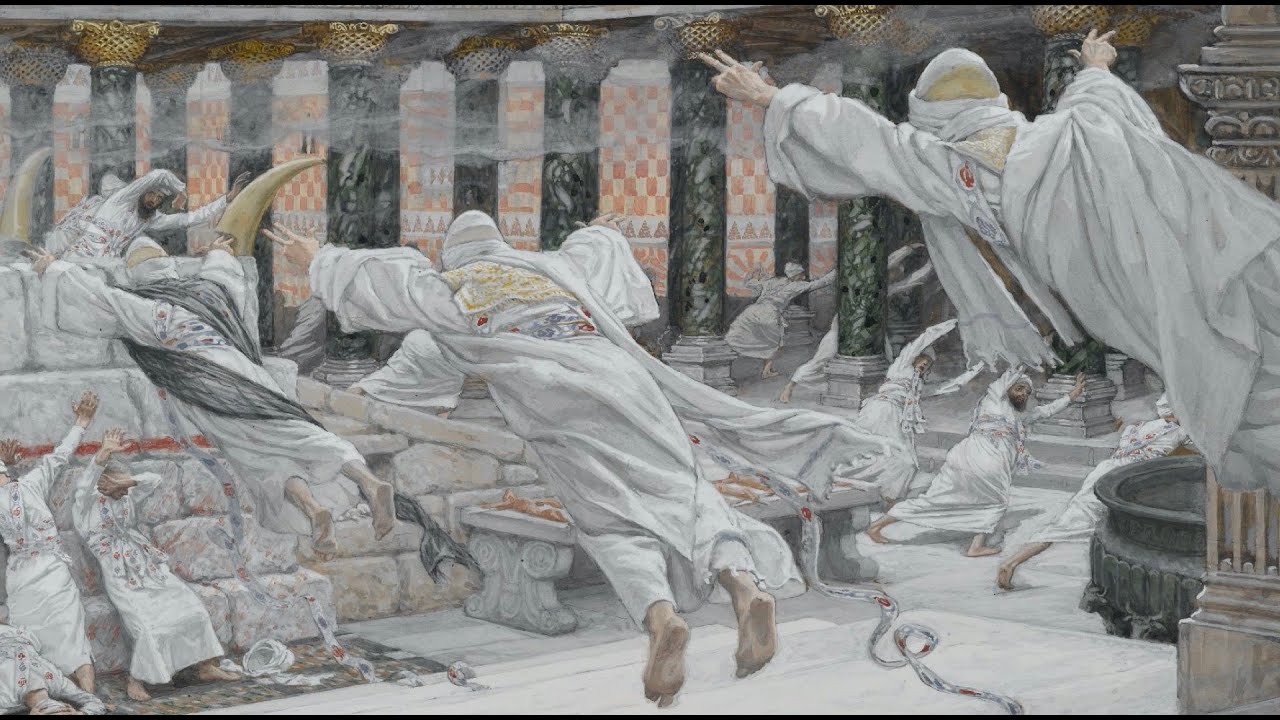
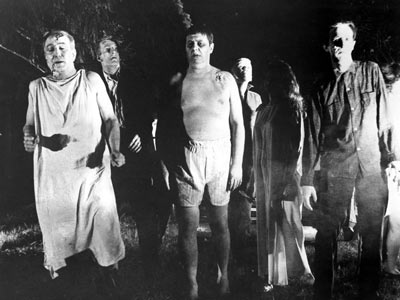
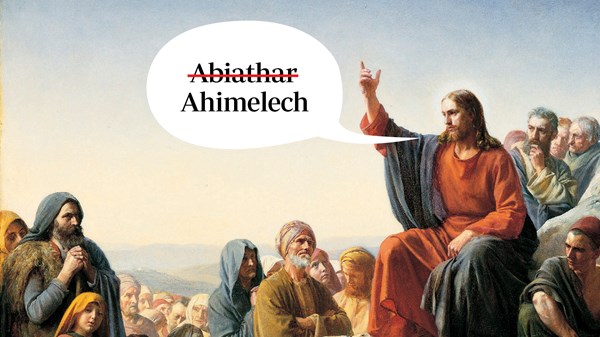
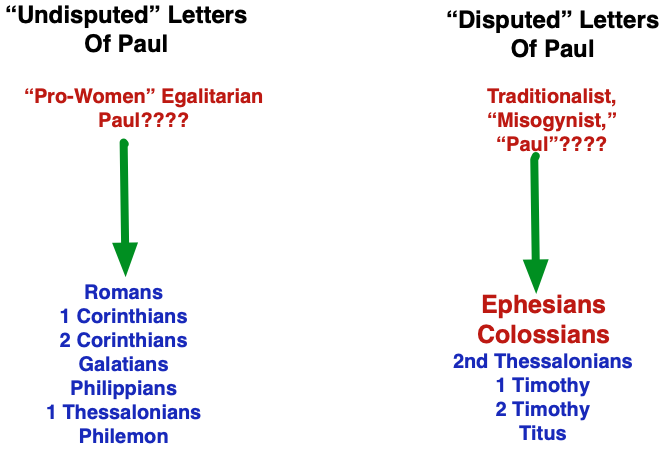









 Veracity