Tag Archives: historical criticism

Notes on Leviticus: By Michael Heiser. Part Two

A popular online video makes the rounds every now and then with a clip from The West Wing, a political drama television series broadcast from 1999 to 2006. It features a scene where the President of the United States, played by the actor Martin Sheen, has an interaction with either a Jewish or Christian call-in show host, with a PhD, where they have some back and forth regarding the interpretation of the Book of Leviticus, and a few other passages describing particulars of Old Testament Law.

The scene dramatizes a heightened conflict, concerning the instruction in Leviticus 18:22 prohibiting same-sex relations. The President challenges the doctor by quoting select verses, such as Exodus 35:2, which prescribes the death penalty for those who violate the Sabbath. Then there is Leviticus 11:7-8, which forbids an Israelite from touching the dead skin of a pig. Would someone playing football be required to wear gloves to avoid becoming unclean? What about Leviticus 19:19, which forbids planting two different kinds of crops within the same field, and wearing different kinds of fabric in their clothing?

The message of The West Wing video connects with many in our culture today, appealing to both non-believers and progressive Christians alike, who find the regulations described in the Book of Leviticus to be baffling, to say the least, if not overly harsh and rigid. At least on an emotional level, it is difficult to parse out why a prohibition against same-sex relations would be mixed in with odd requirements about not wearing two types of clothing (Leviticus 19:19). If historically-orthodox Christians seem so adamant about defending a definition of marriage restricted to one man and one woman for one lifetime, why is it that they seem so casual about wearing clothing made up of both cotton and polyester, when Leviticus addresses both subjects with disapproval?

Such a posture comes across to many critics today as needlessly judgmental, hypocritical, and not very loving. As a result, many progressive Christians (though not all) would rather lump the Levitical prohibition against same-sex acts in with instructions about not planting two different kinds of crops within the same field: Dismiss both of them!

The non-believer would go further and dismiss the whole Bible as a muddle of contradictions, an outdated moral system stuck in the Late Bronze age. Either way, the conclusion drawn by such critics and skeptics is the same: the regulations in Leviticus as a whole are a bunch of nonsense and no longer apply in today’s world. Get your morality from somewhere else other than Leviticus.

On the late Michael Heiser’s Naked Bible Podcast, this Old Testament scholar brings out important highlights, accessible to everyday Christians, who want to have a better grasp on Leviticus, one of the least studied, least understood, and least read books in the Old Testament.


Leviticus: An Outdated Relic from the Late Bronze Age?

Frankly, there are many conservative Christians, who while not being persuaded by such an impactful rhetorical argument, simply would not know how to respond to this kind of message. Disagreements between such progressive Christians and non-believers on the one side, and conservative and even moderate Christians on the other, are indeed very difficult to resolve. Is there any way to make sense of Leviticus? What would it have meant to an ancient Israelite many hundreds of years ago? Is there any kind of sensible application to make today for Christians? Or to put it bluntly: Are historically orthodox Christians really hopeless bigots?

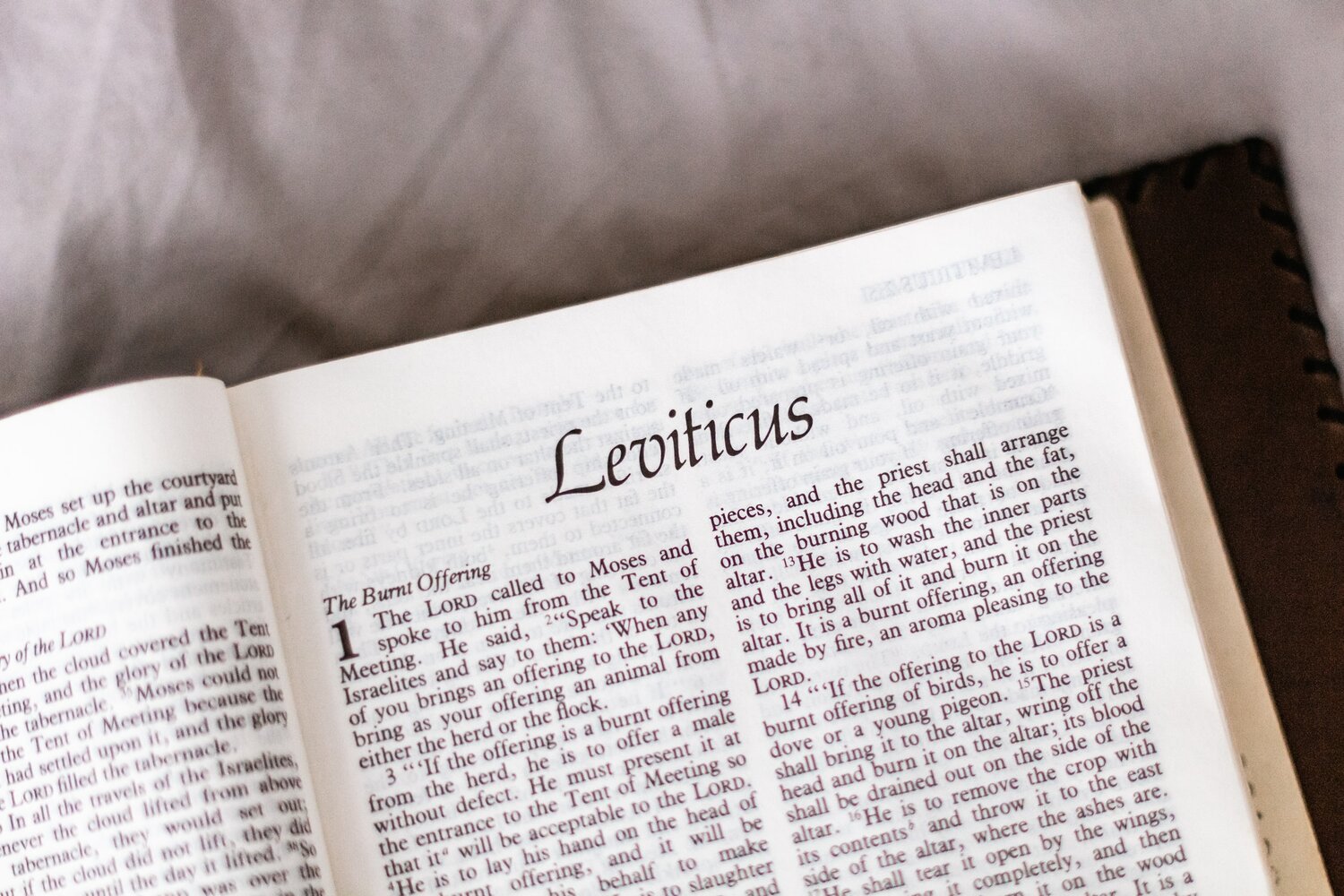
I took the time to listen to Dr. Michael Heiser‘s Naked Bible Podcast series, covering the Book of Leviticus. I was surprised to learn that there are indeed ways in which scholars have been able to parse through such difficult texts, and make sense of them. Heiser’s teaching, where the transcripts of these podcasts have been put into book form, Notes on Leviticus: from the Naked Bible Podcast, while not a full-blown verse-by-verse analysis of every sentence in Leviticus, it nevertheless is an in-depth treatment of the Levitical system, exploring the logic of what is what in Leviticus, and what continues to be applicable today (and how) in a New Testament context, and what does not. While not every question I had in mind was answered, I gained a much better perspective as to how the Bible can be read within its historical, cultural context.


The Difference Between Ritual Impurity and Moral Impurity, in the Old Testament Jewish Mindset

In the previous post in this series, I reflected on Heiser’s teaching regarding “sacred space,” and the distinction between ritual impurity and moral impurity, despite the fact that both concepts of impurity often share the same language of “clean versus unclean.” Ritual impurities are simply things that happen in the normal course of life, and therefore, are not sinful, whereas moral impurities do qualify as sin, in the New Testament sense. The tabernacle/temple idea in Old Testament Judaism is about defining an area of “sacred space,” where God dwells. For someone to enter this “sacred space,” one needs to be fit to enter it, cleansed from both ritual and moral impurity.

One may easily see that the prohibition against same-sex relations is an example of a moral purity regulation as it is associated with the language of “abomination” (Leviticus 18:22). But it is difficult to understand how this relates to commands about mixtures in Leviticus 19:19, just one chapter later:

“You shall keep my statutes. You shall not let your cattle breed with a different kind. You shall not sow your field with two kinds of seed, nor shall you wear a garment of cloth made of two kinds of material.”

A similar passage is found in Deuteronomy 22:9-11. The New Testament is silent about the Leviticus regulations on mixtures. Some scholars argue that since the prohibition against same-sex relations is repeated in the New Testament (1 Cor 6:9-10, Romans 1:26-27), and that the commands against mixtures are not repeated in the New Testament, that the prohibition against same-sex relations is applicable for Christians today but that the commands against mixtures are not. While there is strength to this argument, it does not help us much in understanding why these commands are different from one another. If the commands against mixtures are not related to moral impurity, what about them makes them related to ritual impurity? What is the logic behind both of these regulations: the one concerning homosexual practice and the commands against mixtures?

With respect to homosexuality, it can be easily established that male same-sex relations can imply a role and power imbalance, where one sexual partner dominates and penetrates the other. Outside of ancient Israel, same-sex relations were allowed, with caveats. Heiser notes that same-sex relations were still looked down, but in general, they were not severely punished, in comparison with what is described in the Old Testament. Outside of Israel, homosexual rape was condemned in certain cultures. However, pederasty, where Greek adult men would have sexual relations with younger men, was used as a method of training in the art of war. In this context, homosexual activity was not condemned. Israel was the exception in that all same-sex relations were condemned (Heiser, p. 231ff).

In citing the Jewish Old Testament scholar, Jacob Milgrom, Heiser concludes that homosexual practice goes against the creation order, in that it removes the possibility for procreation. While procreation is not the sole purpose of sex, as texts like the Song of Solomon celebrate human sexuality without reference to procreation, homosexual practice takes the procreative act out of sexual expression. Since the God of Israel is a God of life, to deny procreation from an Old Testament standpoint runs against God’s purposes for human sexuality.

The omission of any reference to lesbianism in the Old Testament is curious. Nevertheless, Paul’s inclusion of a prohibition against lesbian sexual expression in Romans 1:26-27 shows a parallel to male-male sexual relations. As Heiser summarizes:

These passages are not written so that space is devoted to being mean. They’re written to reinforce a worldview that elevated the production of and care for human life” (Heiser, p. 237).1

The commands which restrict mixtures in Leviticus,about wearing different types of clothing, planting different types of seed in a field, etc., are even more perplexing. Centuries later, in the time of David, the Bible mentions mules, which are bred with a mixture of horse and donkey (1 Kings 1:45-47). But the Bible never has anything negative to say about mules. So, how does a student of Scripture make sense of all of this? Thankfully, recent scholarship, particularly from the eminent Jewish scholar, Jacob Milgrom, which Michael Heiser relates to the reader/listener, can help to sort things out.

Continue reading


Responding to Satan’s Guide to the Bible

We are almost a month away from April Fool’s Day, but one of the latest viral videos on YouTube ain’t no joke. Satan’s Guide to the Bible points to the need for having Christian apologetics in our churches.

Satan’s Guide to the Bible is the work of independent filmmaker, Zeke Piestrup. The premise of the documentary film (mainly cartoon) is actually quite clever. Here you have a Sunday school class, with kids gathering around singing “This Little Light of Mine,” waiting for their Sunday school teacher to arrive. But the real teacher is not in class today, so a substitute arrives as the new teacher: SATAN!

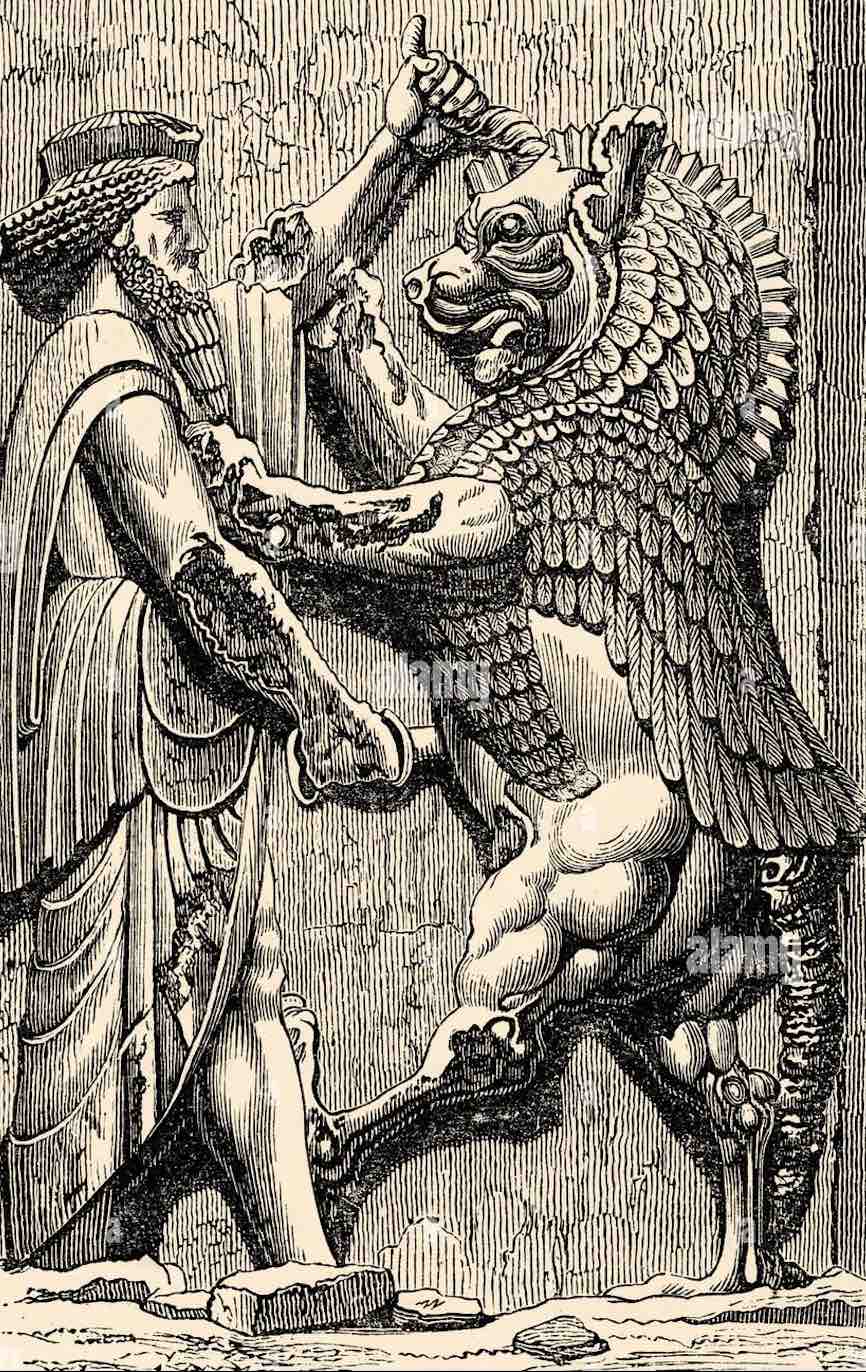
SATAN??? Where did he come from?  ….  In Persian Zoroastrian mythology, Ahura Mazda (the good diety on the left) was locked in combat with Ahriman (the evil deity on the right). Many scholars suggest that the concept of “Satan” was “borrowed” from this dualistic Persian mythology when the Jews were sent off to Babylon after the destruction of Jerusalem and its first Temple. The Persians, who conquered Babylon, allowed the Jews to return to Jerusalem, taking incipient ideas about “Satan” with them. However, a better answer to this is to say that the Jewish encounter with Persian religion served as the opportunity for the Jews to search their own Scriptures, for the source of angelic rebellion against the one True God: Yahweh. There was no need for Jews to “borrow” anything from Zoroastrianism. They had everything they needed in their Scriptures. But they did need to connect the dots to make sense of who “Satan” really was. Progressive revelation regarding the identity of the true rebel against God, “Satan,” the personification of evil, eventually emerged in the writings of the Christian New Testament.  See Veracity review of Anthony J. Tomasino’s  Judaism Before Jesus, for more background.


The Plot Line of Satan’s Guide to the Bible

Satan proceeds to instruct the children that today he will reveal to the student “Bible secrets.”  These “Bible secrets” are secrets that the children’s pastor (“Mark”) knows, which he learned in seminary, but which he keeps hidden from the children, for fear of losing his job. For about the next hour and a half, Satan reveals these “Bible secrets” to the kids, ranging from the idea that the Exodus out of Egypt with Moses splitting the Red Sea never happened, to the controversy that many of the documents in our New Testament are in reality forgeries, meant to deceive the unknowing Bible reader.  Here is the video (but skip on down if you want to get the response):

Satan’s Guide to the Bible uses a lot humor along the way, to keep the viewer engaged. Perhaps the most memorable line is when Jen, one of the kids who is the most skeptical about what Satan is saying, shouts, ““I rebuke you Satan!

Satan’s response? : “Thanks, Jen. Noted.”

I have not worked my way through the entire video yet, but what makes the film so effective is the recorded interviews with leading critical Bible scholars, some of whom are atheists (like Bart Ehrman) and some of whom are progressive Christians (like Dale Allison). Zeke Piestrup has his interview-ees read from their published scholarly books, to reinforce the message. Plus, he pretty much hits just about every major controversial topic regarding the integrity of the Bible and Christian faith claims in general.

A lot of Christians will find the film frustrating, but it is worth asking the question: “What does Satan’s Guide to the Bible get right?” Well, it does point to a real problem, in that while some churches do offer educational opportunities regarding Christian apologetics; that is, learning how to develop an informed defense of the Christian message, many churches do not. Most Christians are woefully unprepared to answer the criticisms raised in this documentary, what the film calls “standard stuff.” But as more and more churches prioritize small group ministries at the expense of structured Christian education, the opportunities to talk about this “standard stuff” in many evangelical churches are few and far between.

It is true that much of what the documentary touches on is “standard stuff” discussed in mainline seminaries. More and more conservative evangelical seminaries also discuss this “standard stuff” today. But you do not have to go get an advanced degree to hear about this “standard stuff.” Most religion departments at secular universities expose their undergraduate students to such “standard stuff”…… And then there are social media platforms, like short Tik-Tok videos, and YouTube, which makes such “standard stuff” readily accessible to any teenager with a smart phone.

Part of what the Veracity blog tries to do is to fill in the gap often left by churches, and offer resources to try to address the criticisms raised in Satan’s Guide to the Bible.  Here is a sample list of previous blog posts that address some specific criticisms highlighted in the video:

The YouTube world of Christian apologetics has responded to Satan’s Guide to the Bible. One of the first one’s to appear is by Mike Winger, which I will highlight below at the bottom of this blog post. Some of Winger’s critics say that Winger overuses the rhetoric of “propaganda” when describing Satan’s Guide to the Bible. Mike has a few technical problems in the first few minutes, and he probably does go overboard with the “propaganda” rhetoric a bit too much, but it is still worth considering what Mike has to say, and I agree with a good majority of Mike’s pushback.

For a deeper dive into the criticism of Satan’s Guide, I would suggest the 3+ hour response video by Michael Jones (and friends) at Inspiring Philosophy (I have it queued up here at the beginning of their discussion regarding the possibility of forgeries being in our New Testament). Here are some of the other timestamps in the response video (roughly) that address certain topics of interest:

Or consider the (much shorter) YouTube review by Roman Catholic apologist, Trent Horn, or explore an even deeper dive with the YouTube playlist by Ratio Christi, a Christian apologetics ministry found on a number of college campuses.

Satan’s Guide to the Bible pokes fun at evangelical Christians, both scholars and apologists with day jobs (like me), so I had to take some jabs with watching the parts that I had gotten through the film already. But if Christians watch something like the Inspiring Philosophy response video above, or the Mike Winger video below, or keep reading Veracity, then this will help equip you to respond to such common criticisms of the Bible, as presented by skeptical non-believers like Zeke Piestrup. As a work of satire, the film provocatively gets its points across, quoting a lot of my favorite Christian scholars out-of-context along the way multiple times, leaving a lot of things left off in a rather one-sided manner.

Is it purely propaganda? I will let you decide.


Is the Apostle Paul Being Anti-Semitic in 1 Thessalonians?

A common critique against Christianity that I run into is that the New Testament promotes a certain degree of antisemitism; that is, a kind of hatred towards the Jews. This may sound strange and offensive to some Christians today, but history has shown us that anti-Jewish statements by supposed followers of Christ, and actual acts of persecution, have indeed tarnished the image of the Christian church. If you have Jewish friends who know about Jewish history, they can probably tell you all about it.

For example, the late Jewish intellectual Richard Rubenstein grew up in New York City. In the mid-20th century, groups of Roman Catholic young people streamed through Jewish neighborhoods after Good Friday Masses yelling “Christ-Killers!” That is pretty intense!

A few other points of evidence stick out in people’s minds:

  1. The Jewish holocaust perpetrated by Nazis during World War II. Germany had a reputation for being a stronghold of Christianity for centuries, yet Adolph Hitler was able to find fertile ground for his poisonous ideas in the early-to-mid 20th century, that led to the murder of 6 million Jewish people. How could that have happened?
  2. The great Protestant Reformer, Martin Luther, who articulated so beautifully the doctrines of salvation by grace, and grace alone, wrote several antisemitic tracts towards the end of his life. For those who have visited the United States Holocaust Museum in Washington, D.C., you will learn that these antisemitic tracts were circulated and read by many across Europe for several centuries. What warped Luther’s otherwise Gospel-saturated mind during the twilight of his life?
  3. Even into the 21st century, some who say that they are followers of Jesus have stirred up controversy over their antisemitic statements. Anti-Jewish prejudice did not simply die off during the Nazi era. It is sadly alive and well today.  I mean, what will Adidas do with $1.3 billion worth of unsold Yeezy shoes??

However, the charges become more poignant when we find certain passages in the New Testament that have what appears to be an anti-Jewish edge to them. Here is one of the most controversial, from the Apostle Paul:

(13) And we also thank God constantly for this, that when you received the word of God, which you heard from us, you accepted it not as the word of men but as what it really is, the word of God, which is at work in you believers. (14) For you, brothers, became imitators of the churches of God in Christ Jesus that are in Judea. For you suffered the same things from your own countrymen as they did from the Jews, (15) who killed both the Lord Jesus and the prophets, and drove us out, and displease God and oppose all mankind (16) by hindering us from speaking to the Gentiles that they might be saved—so as always to fill up the measure of their sins. But wrath has come upon them at last! (1 Thessalonians 2:13-16 ESV)

The language Paul uses is quite strong. So, is the Apostle Paul being antisemitic here?

Paul in prison, by Rembrandt (credit: Wikipedia)


Should We Conclude that the Apostle Paul is Antisemitic? …. Not So Fast

The issue came to mind a number of weeks ago when I was listening to an episode of Mere Fidelity, one of Timothy Keller’s favorite recommended theological podcasts. I am a big enthusiast for Tim Keller, and this particular episode grabbed my attention, because frankly, I have read 1 Thessalonians several times before, but the issue had never crossed my mind.  However, my CSB Apologetics Study Bible had a note about the controversy in it, so it caught my attention. This passage provides a good opportunity to look at out how some very good resources, several of which are freely available on the Internet, can help us study the Scriptures more fruitfully.

In case the gravitas of the difficulty does not hit you, consider the following quote from a 19th century German Bible scholar, Ferdinand Christian Baur:

This passage has a thoroughly un-Pauline stamp. It agrees certainly with the Acts, where it is stated that the Jews in Thessalonica stirred up the heathen against the apostle’s converts, and against himself; yet the comparison is certainly far-fetched between those troubles raised by the Jews and Gentiles conjointly and the persecution of the Christians in Judaea.1

Baur, known to most Bible scholars simply as “F.C. Baur,” was an early champion of the so-called “higher criticism” of the Bible, falling under the broader category of the “historical criticism” of the Bible. One of my first religion classes in college required me to read quite a bit of F.C. Baur’s writings.

Like many other advocates of the tradition of “higher criticism,” Baur was tired of all of the often conflicting and contradictory interpretations foisted upon the Bible, by various denominational traditions, and so he sought to use the principles of scientific investigation, that in the 19th century was beginning to unlock many of the mysteries of the physical sciences, in fields like chemistry and physics, and apply those same kind of principles to the study of the Bible, in hopes of trying to arrive at a scientific interpretation of the Bible. 200 years later, people are still trying to follow F.C. Baur’s example, but with decidedly mixed results.

Despite a number of drawbacks about Baur’s approach, Baur did make some good observations here that are worth noting, namely that Acts 17:13 shows that the believers in nearby Berea had been persecuted by other Jews from Thessalonica:

But when the Jews from Thessalonica learned that the word of God was proclaimed by Paul at Berea also, they came there too, agitating and stirring up the crowds.

The comment about the passage having a “thoroughly un-Pauline stamp ” stems from the evidence that Paul was not antisemitic for several reasons.  First, Paul was Jewish. Christians often forget this simple fact, that has become the topic of considerable debate, as to what the ramifications of this fact suggests. But the main point is that Paul did not throw his entire Jewish tradition away, once he became a Christian.

Secondly, Paul had a tremendous heart for his fellow Jews, that they might come to know Jesus as their Messiah:

I have great sorrow and unceasing anguish in my heart. For I could wish that I myself were accursed and cut off from Christ for the sake of my brothers, my kinsmen according to the flesh. (Romans 9:2-3 ESV)

Far from being antisemitic, Paul grieved that many of his fellow Jews had not yet embraced Jesus as the Christ. If anything, Paul still held to the notion of a type of preeminence that the Jews had with respect to the Gentiles. True, the Gospel was for both Jew and Gentile equally. Nevertheless, the Jew was still first when it came to the Gentile, regarding the order of God’s saving purposes. This did not mean that Jews were somehow better than Gentiles, or that Gentiles were somehow inferior to Jews.

For I am not ashamed of the gospel, for it is the power of God for salvation to everyone who believes, to the Jew first and also to the Greek. For in it the righteousness of God is revealed from faith for faith, as it is written, “The righteous shall live by faith.” (Romans 1:16-17 ESV)

This suggests, for some, the exact opposite of antisemitism, that might be wrongly confused with Paul having actually a lower view of the Gentiles, in comparison to the Jews: Paul evidently believed that God focused on presenting the story of the Gospel through the Jewish people, but why? What makes them so special? Paul speaks of the relationship between the Jews and the Gentiles (non-Jews) in the economy of salvation, in terms of an order, but he frankly admits that this is a “mystery.”

Lest you be wise in your own sight, I do not want you to be unaware of this mystery, brothers: a partial hardening has come upon Israel, until the fullness of the Gentiles has come in (Romans 11:25 ESV)

It is curious that Paul uses the word “mystery” here to describe the order of God’s salvation plan. When I come to things like this, I like to consult the StepBible to dig a little deeper.  For this passage, you can go right to the chapter, Romans 11, and then go down to verse 25 and hover your mouse over the word “mystery,” and it will give you some word analysis of this Greek word, “musterion,” which is “a matter to the knowledge of which initiation is necessary; a secret“. Interestingly, in Saint Jerome’s translation of the Bible, the famous Vulgate, he translated that word into Latin as “sacramentum,” from which we get the English word, “sacrament.”

This word “mystery” is used elsewhere in the New Testament to describe other “mysteries,” such as the picture of Christ’s relationship to the church, which serves as an analogy to help us understand the meaning of marriage (Ephesians 5:32) and God’s overall plan of salvation (Ephesians 3:9). With respect to Paul’s understanding of the relationship between Jew and Gentile, it opens up a deeper way of appreciating Paul’s thought:

There is neither Jew nor Greek, there is neither slave nor free, there is no male and female, for you are all one in Christ Jesus. (Galatians 3:28 ESV).
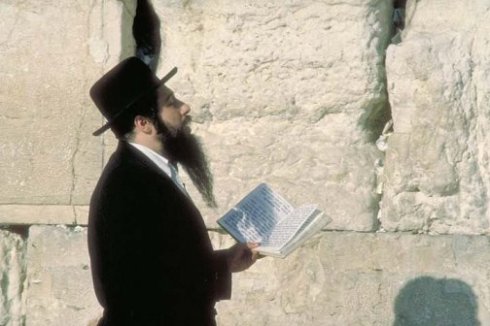
Is Paul turning his back on his own people, the Jews, in 1 Thessalonians? Veracity investigates the claim, and suggests a better answer.


What To Do with This Passage in 1 Thessalonians? Does it Really Belong Here?

Going back to F.C. Baur, conservative evangelical scholars have taken issue with Baur’s insistence that the comparison is “certainly far-fetched” in associating the persecution of Thessalonian Christians with the persecution of believers in Judea. First, it is important to rightly observe the types of persecution in 1 Thessalonians 2:14 suffered by (a) the Thessalonian believers from their “own countrymen;” that is, Jews in Thessalonica who were not convinced by Paul’s message, and (b) that suffered by the Judean believers from “the Jews.

Note that this reference to “the Jews” at the end of verse 14 is not about all Jews everywhere and at all times. Rather, Paul’s focus is on the Jews back in Judea, living in and around Jerusalem, who opposed the Christian message about Jesus being the Risen Messiah. This is not an ethnic slur against “all Jews.”

Still, the real sticking point for F.C. Baur comes in the last verse of this perplexing passage.

(14) For you, brothers, became imitators of the churches of God in Christ Jesus that are in Judea. For you suffered the same things from your own countrymen as they did from the Jews, (15) who killed both the Lord Jesus and the prophets, and drove us out, and displease God and oppose all mankind (16) by hindering us from speaking to the Gentiles that they might be saved—so as always to fill up the measure of their sins. But wrath has come upon them at last!

That phrasing of “so as always to fill up the measure of their sins” is harsh enough, but it is puzzling to consider what is meant by the last phrase, “But the wrath has come upon them at last.”

In Baur’s view, Paul’s statement seems over-the-top. Baur argued that this passage was actually an interpolation, a fancy word used by scholars to suggest that someone else added this passage into Paul’s letter, long after Paul had written the letter, so that over the years copyists of the New Testament simply just included the passage into the main body of the text, assuming that this actually came from the pen of Paul.2

Whoops!!! How did that sneak in there??

A fundamental problem with Baur’s hypothesis as that we have no existing manuscripts that indicate these verses were ever left out of the New Testament. It is quite tempting to be drawn to an interpolation hypothesis when you run into verses in the Bible that come across as objectionable. If everyone were to call out verses of the Bible as being “invalid” insertions, simply because they were objectionable, we might end up with a Bible a lot thinner than the one we already have!! Nevertheless, it is worth considering Baur’s further reasoning here.

As evidence for this late addition into the text, Baur argued that this interpolation hypothesis makes sense since relationships between the Jewish and Christian communities were still fairly positive in the early days of the church, at the time Paul had written this letter, roughly about the year 49 C.E.  Despite notable conflict between Christian and traditional Jews, Jews were still coming into the Christian community. However, by the time of the destruction of the Jerusalem temple in 70 C.E., the relationship between Jews and Christians began to strain severely. Decades later, in the time of the Bar Kokhba Revolt in 132 C.E., the flow of Jews into the Christian church practically slowed down to a mere trickle, if not completely stopped.

Many Christians had concluded that the destruction of the Temple was a sign of God’s judgment against the Jews, more broadly speaking. More than any other event in the 1st century C.E., the destruction of the Temple in Jerusalem was the equivalent of America’s 9/11, in the early 21st century, with the destruction of the Twin Towers of the World Trade Center, in New York. The psychological blow to America in many ways echoes the type of negative psychological impact that the Jews felt with respect to the destruction of their central religious site in Jerusalem. Therefore, Baur proposed that the statement of wrath against the Jews, here in 1 Thessalonians, reflected a view held by Christians decades after Paul wrote this letter.

In other words, someone stuck this passage into a copy of 1 Thessalonians in order to give Paul a certain anti-Jewish edge, according to F.C. Baur, and others sympathetic to Baur’s reasoning.

As it turns out, Baur’s interpolation proposal begins to weaken further once you understand other possible factors involved, based on other evidence. That same year that Paul wrote this letter, which many scholars suggest is indeed Paul’s earliest letter, Emperor Claudius had expelled the Jews from the city of Rome. Also that same year, a riot in Jerusalem during Passover led to the death of thousands of Jews. There was also a great famine in Judea in the previous years. Paul probably had one if not more of these events in mind.3

Nevertheless, there are still those who believe that these incidents in 49 C.E. do not necessarily rise to the level of citing God’s wrath in the severe way that Paul does so in this passage. However, a better solution might be to suggest that Paul is making use of typological interpretation to emphasize the point that opposition to the Gospel in Paul’s current day actually points toward a more fulfilling future event.4

In the typological interpretation of Scriptural prophecy, a particular event (or person) in history serves as a “type” of that which is to come, “the real thing,” sometime in the future. The classic use of typological interpretation by Paul can be found in Romans 5:12-14, where Paul speaks of Adam as a “type of the one who was to come,” that is, Christ. Adam is the first Adam, and Jesus is the second Adam. Jesus was able to fulfill the task that Adam failed at doing. The use of typology was a common interpretive method used, not only by the writers of the New Testament, but by other Jewish writers in the period of Second Temple Judaism.

The language of God’s wrath in this passage might indicate that Paul saw that events like the expulsion of Jews from Rome and/or the death of many Jews at Passover in Jerusalem served as a type of judgment against the Jews that anticipated a yet future event of even greater significance, a catastrophe that would have lasting impact on the Jewish community. In this case, the destruction of Jerusalem and its Temple, some 20 years after this letter was written would fit the bill.

This interpretation is reinforced by other translations that suggests that Paul had this typological thinking in mind. BibleGateway.com allows you to see footnotes in various English translations. For the Christian Standard Bible, you can find a note under 1 Thessalonians 2:16 that reads that “and wrath has overtaken them at last” could be better translated as “and wrath has overtaken them to the end,” which more clearly demonstrates Paul’s prophetic insight, linking the current events of his day with God’s coming future judgment.

I can reference a few other resources for those who wish to dive deep into this perplexing passage:

On the weekend when so many Christians in the West ponder the meaning of the death of Jesus on the cross, Christians should always consider that for centuries the ancestors of our Jewish friends have felt the sting of being called “Christ-killers.” Instead of giving into an antisemitic impulse, we as believers today, whether from a Jewish or Gentile background, probably would have championed for the death of Jesus, if we had been among those Jewish leaders who condemned Jesus 2000 years ago.

In summary, the argument that this passage in 1 Thessalonians 2:13-16 is antisemitic, while at first might seem plausible, in its full analysis does not have the full force of the evidence in its favor. Paul is not antisemitic, nor is it warranted to say that this passage was somehow slipped into the letter by later Christians who wanted to make Paul sound anti-Jewish. Instead, it is quite probable that this passage offers a prophetic glimpse into the type of persecution that believers in Jesus will experience, and that such persecutors will eventually have to face accountability for their actions against those who seek to be faithful to the Truth they received as revealed in Jesus. Paul was no more singling out a particular group of Jews than he was pagan opponents who also sought to persecute the early Christian movement. As verse 13 states, Paul is thankful to God “constantly for this, that when you received the word of God, which you heard from us, you accepted it not as the word of men but as what it really is, the word of God, which is at work in you believers.” May that be true of all believers who experience opposition to their faith in Christ.


Notes:

1. Quoted from Peter C. Hodgson, The Formation of Historical Theology (New York, 1966). See The Harvard Theological Review, 1971, Volume 64, No.1, pp.79-94, “1 Thessalonians 2:13-16: A Deutero-Pauline Interpolation” by Birger A. Pearson.  

2. Another example of possible interpolation into Paul’s letters can be found in 1 Corinthians 14:34-35.  See earlier Veracity posting about that passage.

3. See discussion in Charles A. Wanamaker, The Epistles to the Romans,. p. 30. Josephus reports in Antiquities 20.112 and Jewish Wars 2.225 that twenty to thirty thousand people were killed in that riot. Many scholars believe that Josephus’ numbers are inflated, but this is still a major event.  

4. An exploration of how the New Testament writers used the typological method of interpreting prophecy can be found in an earlier Veracity blog post. It is also important to note that the verb in verse 16, “the wrath has come upon them at last,” is in the Greek aorist tense, a past tense, describing an action without indicating whether it is completed, continued, or repeated. This suggests that the events in 49, though in the past, might point yet forward to a future event.   


Is “Historical Criticism” of the Bible a Good Thing, … or a Bad Thing?

In this series of blog posts, we have examined the “historical criticism” of the Bible. At this point, it might be worth offering a brief summary of where we are at.

Historical criticism of the Bible: Friend or foe?

First, we considered the question as to what “historical criticism” of the Bible is. Briefly put, historical criticism seeks to understand the origins of ancient texts in order to better get at the world “behind the text.” With respect to the Bible, this means trying to place our understanding of the Bible within the historical context of the ancient world of Israel, and first-century Palestine and the Greco-Roman world, where both the Old and New Testaments, respectively, were written.

Secondly, we looked how historical criticism developed over time. The standard story is that “historical criticism” of the Bible arose during the period of the Enlightenment, following the Protestant Reformation. But if we place the rise of historical criticism itself within its own historical context, we see that multiple stories emerge. For historically-orthodox minded Christians, historical criticism is a continuation of an attempt to better understand the Bible as the very Word of God, something that thoughtful believers have been trying to do since the reception of the canon of Scripture. However, for others, historical criticism has been an attempt to take the task of Biblical interpretation out of the hands of spiritual leaders in the churches, and place it in the hands of a different authority, whether that authority be the academic university or even the state. During the Enlightenment the idea was to appeal to the principles of science to resolve Bible interpretation issues, instead of relying on conflicting dogmatic traditions of various church bodies.

Thirdly, we have looked at how the practice of historical criticism in our churches has led to a split, dividing historically-orthodox believers from progressive Christians. On the one hand, the rejection of what is perceived to be “historical criticism,” found in various forms of “fundamentalism,” has led to a concern of an anti-intellectual spirit that marginalizes historical Christianity. On the other hand, the enthusiastic embrace of historical criticism in “progressive Christianity” circles has threatened to empty Christian teaching of any real content, that would distinguish the church from the secularization of the culture growing around the church. In other words, while “progressive Christianity” seeks to rescue Christianity from rigid dogmatism, it often ends up looking no different from the agnostic/atheist assumptions of the secular world.

Fourthly, we have examined a shift over the previous century with respect to the concerns brought to bear on the text of Scripture by historical criticism. Way back in the 19th and 20th centuries, advocates of historical criticism were primarily concerned with superstitious assumptions about the world made by more traditional forms of Christianity. Such superstitions tended to elevate the supernatural over and against the natural, thus sidelining the advance of science in the modern world. Now, in the 21st century, those concerns have dramatically shifted towards more social justice oriented questions, ranging from racism, to the treatment of women, and most recently, to various LGBTQ concerns. While people still wonder about truth claim of a Bodily Resurrection of Jesus, and its miraculous character, Western culture has become more focused on how the Bible is sometimes used as a weapon to hurt people. In other words, when it comes to reading and interpreting the Bible, in the 21st century, social justice concerns have superseded concerns about science, which were more of the primary concerns of the 19th and 20th centuries.

Along the way in this series, we have examined a few case studies that illustrate the themes described above. An historically-orthodox believer who values the benefit of historical criticism will find a harmony within the text where certain tensions exist. However, if an advocate for historical criticism seeks to set aside the divine inspiration in their analysis of the Bible, those same tensions will appear to them as contradictions. For example, if we see the Bible as a cohesive whole, as inspired by God, we can see how God seeks to honor the beauty of the relationship between male and female, whereas a more skeptical critic will see tensions as contradictions, where such teachings can be easily misused to denigrate and oppress women.

We also considered the question of when we should look to harmonize various discrepancies that we find in the Bible, versus looking for more creative ways of thinking, in order to help resolve those tensions we find within Scripture. We then looked at some principles for considering the evidence for a traditional way of reading a passage of the Bible, versus potentially embracing a different interpretation of that passage, that makes better sense of the text overall.

Leading up prior to this blog post, we examined a very helpful scholarly attempt to provide some authoritative answers for believers, when their friends, neighbors, and relatives ask questions about some of the insights gained from the historical criticism of the Bible.

So, back to the question in the title of this blog post: Is “Historical Criticism” of the Bible a good thing?

A reasonable answer is this: YES, it is a good thing for the most part, but it really depends on the assumptions and attitudes one has when doing “historical criticism” of the Bible. For if we come to the text of Scripture in an attempt to knock down its authority, or otherwise distort its message, then it can indeed be a bad thing. On the other hand, coming to the Bible, with a spirit of openness to the Holy Spirit, and a sense of humility, can be a very, very good thing. In some cases, our traditional ways of thinking about the message of Bible will be challenged and transformed, while in other ways, the traditional teachings that have been handed down throughout the ages, will be reaffirmed and treasured more deeply.

This blog post pretty much closes out this series on “historical criticism” for now, though from time to time I will add more articles, indexed from the introductory post in this series.


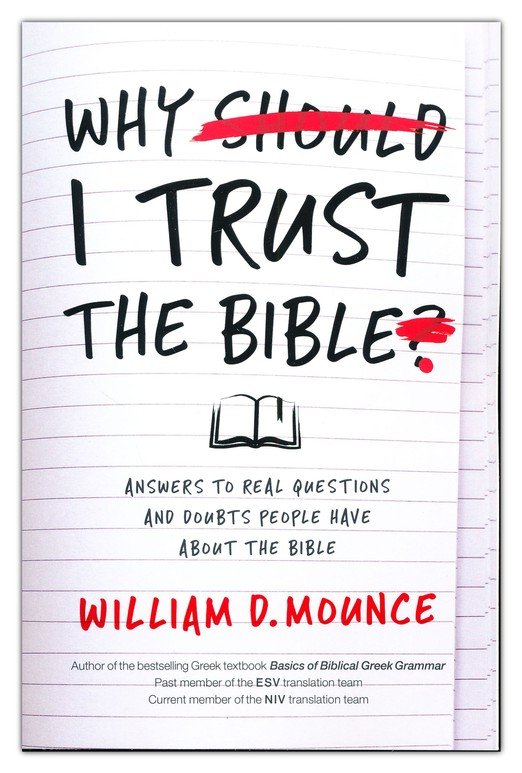
Why I Trust the Bible: Bible Translator Bill Mounce Answers Real Questions and Doubts

Were the Gospels written by anonymous people who had no direct contact with early eyewitnesses to Jesus of Nazareth?

.… Part of an on-going series on the “historical criticism” of the Bible….

How Do You Answer Critics, Who Try to Use “Historical Criticism,” to Attack the Message of the Bible? 

Dr. Bill Mounce, who has served on the translation committee for the New International Version of the Bible, and as the New Testament Chairperson for the English Standard Version of the Bible, has heard of claims like these before. Critical scholars, most notably represented by those like University of North Carolina professor, Bart Ehrman, argue that the writers of the four Gospels were written by sophisticated Greek-speakers, who lived in a very different world from Jesus’ original followers, made up of mostly illiterate persons, like Peter the fisherman, who primarily spoke Aramaic, and only very little Greek. We have no real idea who exactly wrote the Gospels, though they were probably composed as completed works as late as the 2nd century, and therefore, the historical information presented in them can not be entirely trusted as being accurate about Jesus.

As with any scholarly claim like this, there are elements of truth here. Yes, the four Gospels we have probably did not originally have the names of their authors embedded in the text. Titles like, “the Gospel according to Mark,” were added to the text by the late 2nd century. Yes, Jesus’ original hearers primarily spoke and understood Aramaic, while all four Gospels are written in elegant Greek.

But as Dr. Mounce writes in his Why I Trust the Bible: Answers to Real Questions and Doubts People Have about the Bible, the idea that it was really Matthew, Mark, Luke and John who wrote their respective Gospels, was the unanimous consensus by the mid-2nd century. If the Gospels were truly anonymous, we would have heard of other possible author names being put forward as alternatives. But we do not see any contested argument regarding the names of authors in the historical record. In the ancient world, where we had no mass communication systems, made available by today’s technologies like the Internet, the traditional names of the Gospel writers consistently flourished throughout the geographically vast area of the Roman empire.

Contrast this with the disputes over who wrote the Book of Hebrews, the only New Testament book that lacks a particular claim to a particular author. Tertullian argued that Barnabas wrote Hebrews. Other early church fathers suggest Clement of Rome, or Luke. Eusebius believed it was Paul. Some even say Priscilla wrote it. Origen concluded, “In truth only God knows.”

In the case of Mark’s Gospel, we do have good evidence that Mark was indeed the author. Though the writings have not directly survived, Eusebius tells us of the church father and writer Papias, the bishop of Hierapolis in Asia Minor, until about 130 CE, who was a disciple of John. Papias in these lost writings had written that Mark had become Peter’s interpreter. Furthermore, Clement of Alexandria attests to Peter being in Rome, preaching in perhaps the 60s, of the first century. This would indicate that Mark probably wrote his Gospel, based on the eyewitness testimony of Peter, as derived from sermons that Peter gave in Rome, prior to Peter’s martyrdom.

When Doubts Arise: Having a Reliable Guide to Answer Informed Critics

Bill Mounce givens seasoned, evidence-grounded answers, like the one above, to the type of doubts and questions raised by critics of the Bible today, in Why I Trust the Bible. Dr. Mounce makes judicious use of the insights gained by the “historical criticism” of the Bible, that enhance our understanding of the Scriptural text, rather than undermining it. Mounce’s audience is directed at ordinary Christian believers, who find themselves overwhelmed by the popular claims of skeptics, who are looking for reasoned explanations, that are readily accessible, and that do not descend into the overly technical. For those looking for more academic treatments of these topics, Mounce footnotes his references for those who want to dive deeper into these type of discussions.

I was particularly impressed with Dr. Mounce’s chapters on textual criticism, answering both the criticisms against New Testament itself popularly expressed by the famous atheist/agnostic scholar Bart Ehrman, as well as the King James Only-movement on the other side of the debate. Those few chapters alone are worth the price of the book, written at a level that most people should be able to understand, that covers all of the important questions that are typically raised on this topic.

I can quibble with Dr. Mounce on a few points here and there throughout the book. For example, Dr. Mounce’s claim that the “had formed” for the animals’ creation in Genesis 2:19, as found in the ESV and NIV translations, does not carry a sense of temporal sequence, has been criticized by other scholars as a form of cheating when it comes to certain Bible translations (see page 257). But such complaints are minor, as set within the context of the whole of Dr. Mounce’s excellent work.

All in all, Why I Trust the Bible is probably one of the best resources available, that critique some of the more extreme conclusions made within the “historical criticism” movement, regarding the Bible. From questions about the canon of Scripture to the latest intellectual fad of “Jesus Mythicism,” Bill Mounce hits nearly every major topic that skeptics will bring up about the Bible. That being said, this may not be the right book to give to a knowledgeable non-believer, who devours every book that Bart Ehrman publishes. Dr. Mounce pretty much assumes that his audience are either Christians, or those who are genuinely seeking information about the Bible. There are lots of great books now about the existence of God, how science and faith relate to one another, and social justice issues concerning Christianity, but if I had to pick just one book that specifically looks at the trustworthiness of the Bible, Why I Trust the Bible: Answers to Real Questions and Doubts People Have about the Bible stands near the top of the list.

One Serious Gripe

If I had one serious complaint to make about Why I Trust the Bible it would be that the book is too short. Why I Trust the Bible could have explored certain issues at a greater length and depth, but the author chose not to. Dr. Mounce’s book clocks in at around 280 pages, whereas British Anglican liberal scholar John Barton’s A History of the Bible: The Book and Its Faiths, ( reviewed earlier in this blog post series on Veracity ), and endorsed by Bart Ehrman, clocks in at a hefty and whopping 635 pages. Both books are written for a popular audience, and easily digestible. Both books address overlapping material. Both Dr. Mounce and Dr. Barton are world-class scholars. But in spite of the length of Barton’s A History of the Bible, that might easily scare off some readers, Barton’s book outsells Dr. Mounce’s shorter Why I Trust the Bible, and most likely, will continue to outsell it.

I wonder if the topic of “historical criticism” of the Bible is avoided by church-going believers, because they are afraid with what they might find there. Thankfully, Bill Mounce’s Why I Trust the Bible does not exploit such fears, as it actually does the exact opposite. But perhaps the popularity of John Barton’s A History of the Bible exploits the growing skeptical reading audience’s desire for more material to challenge historic, orthodox Christianity.

While conservative evangelical book publishing has continued to improve tremendously over the past few decades, substantial volumes geared towards the general public have languished when compared to similar texts produced by progressive Christian and non-believing scholars. Back when I was in seminary in the 1990s, I remember being mesmerized by books written by the progressive Bible scholar, Elaine Pagels, available at the Barnes and Noble bookstore, while being frustrated by the lack of alternative volumes written by otherwise equally competent conservative evangelical scholars, on similar topics, altogether absent from those Barnes and Noble bookshelves. Elaine Pagels was introducing me to a whole new world of “historical criticism,” but the evangelical churches I knew of in those days, addressed such topics with crickets!!

Is this the fault of evangelical book publishers, or the book reading market that tends to shy away from lengthy books of this type? I do not know that answer here. But what I do know is that we need more substantial books, along the lines of Mounce’s Why I Trust the Bible: Answers to Real Questions and Doubts People Have about the Bible, that help to counter a growing skepticism in an increasingly secularized world.


In closing out this book review, I am leaving a whole list of teasers that might inspire you to go out and buy the book. Thankfully, Dr. Mounce has released a set of short videos, most of them clocking in at well under 5-minutes, that give you a summary of each chapter, plus a few extra videos that dive a little deeper into more complex topics. Here is the link to the entire YouTube playlist, but right below is the first video in the list, and I have hyperlinked to the other videos in the playlist, just below that. This is great stuff for your own personal discipleship journey, and might even be useful in a small group setting. Enjoy!! 


Chapter 1: Did Jesus really exist? Who was the Jesus of history?

Chapter 2: Who wrote the Gospels?

Chapter 3: Are there really contradictions in the Bible?

Chapter 4: What about “discrepancies” in the Bible that really, really look like contradictions?

Chapter 5: Why do we have 27 books in the New Testament?

Chapter 6: When was the New Testament canon closed? What was the role of the church?

Chapter 7: Are the original Greek texts for the New Testament hopelessly corrupt?

Chapter 8: How were the ancient New Testament manuscripts copied down through the generations?

Chapter 9: How does Dr. Bill Mounce interact with the claims of Dr. Bart Ehrman?

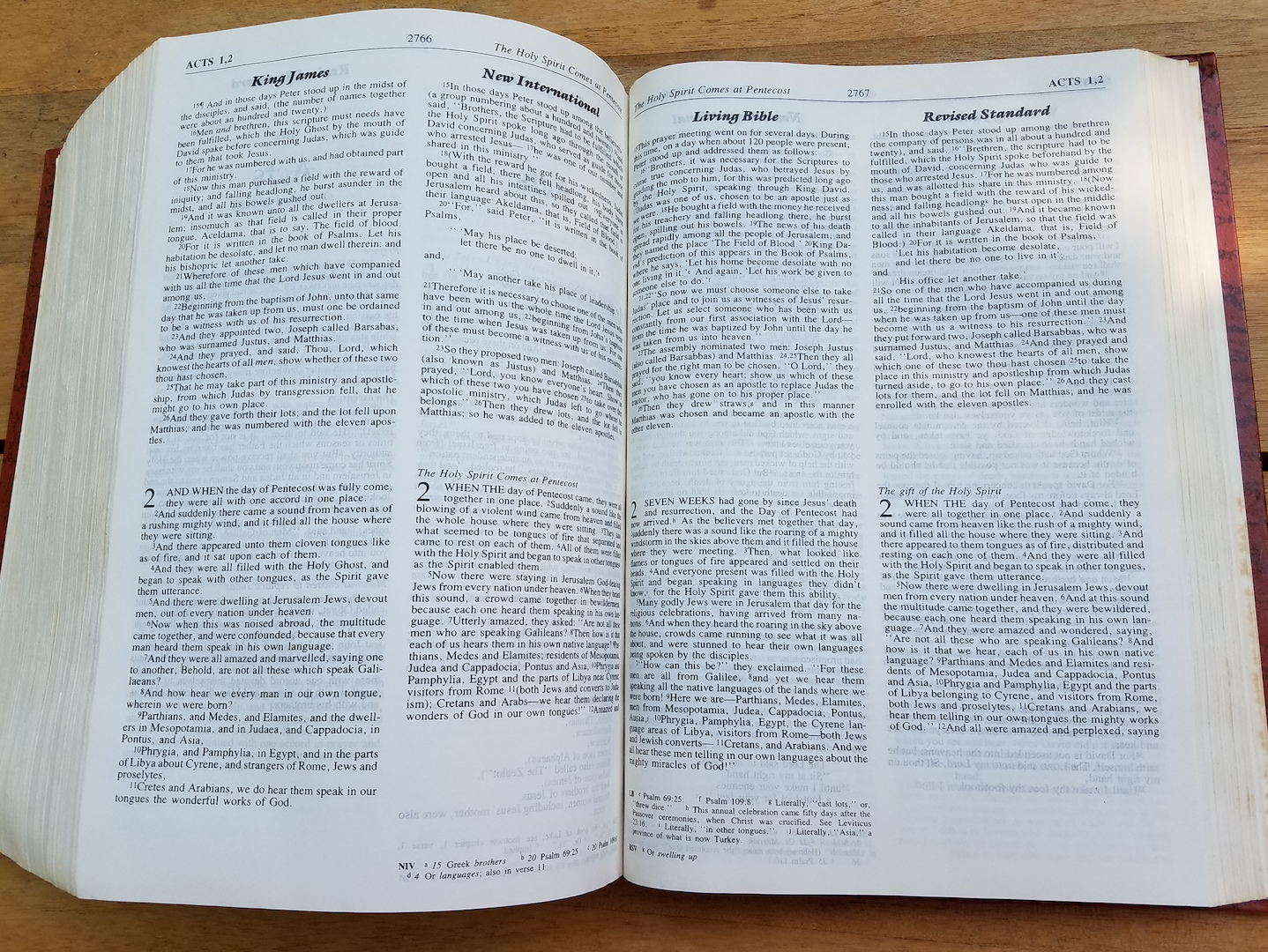
Chapter 10: There are so many Bible translations! Which ones can you trust?

Chapter 11: What are different philosophies behind Bible translations?

Chapter 12: Can I trust the character of God given to us in the Old Testament?

Chapter 13: Can we trust the historicity of the Old Testament?

Conclusion: Why does Dr. Mounce trust the Bible, and why should I?

What is “Jesus Mythicism?”

Does the Bible adequately show that Jesus really existed?

How accurate are the Gospels, if they were written down at least 20-25 years after Jesus lived on earth?

How good were the memories of the Gospel writers?

A tough apparent contradiction: Staff, or no staff?

Staff, or no staff? A shorter summary.

How many times did Peter deny Jesus?

Does the genealogy of Jesus in Matthew contradict the genealogy in Luke?