
I am taking a break from my two-part book review of Bart Ehrman’s Armageddon to address some significant news in the evangelical world. It involves biblical scholar Richard B. Hays on one side, and popular author Rosaria Butterfield on the other. This is probably the one blog post I have made this year, which I really did not want to write. But sadly I find it necessary.
As I wrote about late in the spring of this year, it was announced that a new book by a prominent New Testament scholar would come out this fall that would shake up a lot of people, particular evangelical thought leaders and teachers: “Most Christians probably have no clue who Richard B. Hays is. But when it comes to the Bible, Hays is big news. Think the Tim Tebow of the National League Football, or the Caitlin Clark of women’s basketball, or the Taylor Swift of pop-music, ….. or the John Piper of evangelical pastors. Richard B. Hays is THAT big when it comes to New Testament studies. He is a rock star.” I would urge you to go back and read that post for further context for this blog post.
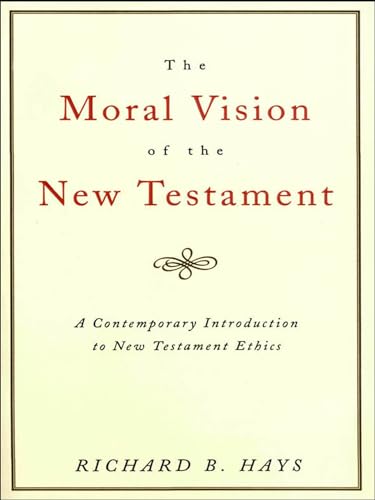
Richard B. Hays is the rough American equivalent to the British New Testament scholar, N.T. Wright. His son, Christopher, teaches Old Testament at my alma mater, Fuller Theological Seminary. Yesterday, the elder Hays and the younger Hays released The Widening of God’s Mercy: Sexuality Within the Biblical Story. What is remarkable about this book is that it marks a reversal in Richard B. Hays’ position in the 1990s, where he then concluded (at least tentatively) that the New Testament does not allow for any concept of affirming same-sex marriage as a legitimate option for the Christian. The elder Hay’s book, The Moral Vision of the New Testament: A Contemporary Introduction to New Testament Ethics, was the touchstone for many in what is often described as a “Side B” approach to same-sex attraction.
A definition at this point is vitally important.
At the risk of being too brief, a “Side B” approach to same-sex attraction is that it acknowledges that some people experience a kind of sexual attraction to members of the same-sex, in which at least some (if not many) who experience this same-sex attraction find it difficult to completely shake off. Though quite debatable in “Side B” circles, some, if not many, or perhaps even most in this category, live with this condition their entire lives. Understood this way, “same-sex attraction” is not an identity, as though “same-sex attraction” competes with one’s identity as a Christian. Neither is it equivalent to sexual lust, though it could lead to same-sex lust, which is described as sin in the Bible. Rather, “same-sex attraction” as an “identity” is simply an acknowledgment of one’s experience in contrast with heterosexuals who never experience same-sex attraction. It does not automatically imply that someone is actively involved in some kind of sexual activity with a member of the same sex.
I recommend an extensive resource page on Veracity with more in-depth analysis regarding issues concerning same-sex attraction and same-sex marriage, and the 2018 controversy regarding the first year of the Revoice conference. The Revoice conference arose from the ashes of the “Ex-Gay” movement after Exodus International, then the world’s largest “Ex-Gay” ministry disbanded. The Revoice conference has been an attempt to find a space between the overturning of the historic Christian sexual ethic regarding same-sex relations on the one side, and the failures of the “Ex-Gay” movement on the other.

Richard B. Hays. One of the top New Testament scholars on the planet. Has he changed his mind on what the Bible teaches about human sexuality?? A new book suggests he has, but his argument is complicated.
Richard B. Hays (Father) and Christopher Hays (Son) on Christian Sexual Ethics
Reviews are starting to come out taking a hard look at the new book, The Widening of God’s Mercy: Sexuality Within the Biblical Story. As many reviewers have indicated, Richard B. Hays has changed his mind regarding the legitimate, biblical boundaries for sexual behavior, a viewpoint which his son, Christopher, also supports. A couple of reviews favorable to the conclusions made by the Hays can be found here:
- Karen Keen, another biblical scholar, published by a liberal Baptist website.
- Robert D. Cornwall, an ordained minister in the Disciples of Christ.
However, there are three other reviews which are critical of the new, changed position published in the new book:
- Thomas Schreiner, a New Testament scholar at the Southern Baptist Seminary
- Rebecca McLaughlin, for The Gospel Coalition. McLaughlin acknowledges she experiences same-sex attraction, but that she is committed to upholding an historic Christian sexual ethic, which honors marriage as being between one man and one woman.
- Preston Sprinkle, of the Center for Faith, Sexuality, and Gender.
All five reviews are worth reading, particularly as preparation for someone who wishes to read the new Hays and Hays book. However, the most detailed and engaging review is the last one by Preston Sprinkle. The conclusion Sprinkle makes is worth quoting in full:
I have to admit, the scholarly side of me was excited when this book was first announced. Some Christians immediately trashed the book on social media—something no thoughtful Christian should ever do with books they haven’t read—but I was genuinely excited to read it. Richard is a brilliant scholar (I wasn’t familiar with Christopher’s work), and his article on Romans 1 in particular was one of the most thorough and exegetically responsible treatments of this tough passage. I was deeply curious how he was going to refute his previous argument. I also wondered if The Widening of God’s Mercy would tease out a fresh argument for same-sex marriage that hadn’t yet been made.
To my surprise, the book did neither. Instead, it simply repackaged an old trajectory argument to make a questionable logical leap: since God welcomes foreigners, eunuchs, tax collectors, and sinners, therefore sex difference is no longer part of what marriage is.
At the risk of oversimplifying, all of these reviews suggest that the exegetical work Richard B. Hays did in the 1980s and 1990s, which demonstrates that the New Testament does not affirm same-sex marriage, is interestingly still intact. In a nutshell, the New Testament affirms marriage as being between one man and one woman, thereby indicating that a marriage between two men, or between two women, can not qualify as within the boundaries of what constitutes a biblical marriage.
However, the message of the new book suggests that God can, and indeed, has changed his mind. While same-sex marriage has been rightly condemned as outside of accepted historic, orthodox Christian understanding for almost 2,000 years, God has in the 21st century moved through the action of the Holy Spirit to now affirm a broader perspective on marriage. This is equivalent to what is often known as a “Side A” approach to same-sex attraction and marriage.
The idea that God can and has changed his mind is provocative. It is also an argument that can act like a wild tiger which can not be tamed, or like the proverbial bull in a china shop.
Some might suggest something like the wearing of head coverings as an example of God changing his mind, in that few Western Christians today adopt the practice. In a recent 1-hour long video interview, the senior Hays and his son Christopher adopt this rationale.
How Do You Know When God Changes His Mind… After the New Testament Has Been Completed?
But the argument can easily go in directions which will surprise Christians and non-Christians alike. The rise of the Enlightenment in the late 18th century suggested that we can essentially dispense with the concept of the supernatural. Why? Because perhaps God has changed his mind.
Follow this thought experiment: Back in the New Testament era, people were naive enough to believe in things like miracles, so God used the belief in the resurrection as a way of convincing premodern people to accept the Christian message. However, now we live in the modern (even post-modern) era, where science tends to reign supreme. We can give up on the whole concept of the supernatural as essential because God has basically changed his mind. No one needs to make any decisions based on supernatural beliefs anymore because the secularization process of society has made those supernatural beliefs irrelevant.
If this argument sounds strange, you should go read something like Harvey Cox’s The Secular City from the 1960s. Cox’s argument has been a sophisticated way of saying God has changed his mind and rejected the importance of supernatural beliefs in a secular world. But if Cox’ theological argument is true, it is difficult to believe that certain fundamental truth claims of the faith, like the Virgin Birth or the Second Coming of Christ, hold any particular meaning now in the 21st century.
This is effectively what the Hays father and son team have done. There is nothing new here.
One might then argue that both secularization and new understandings of marriage in the civil sphere are inevitable results of the trajectory of contemporary Western culture, and could have potential advantages. Perhaps there is some good after all if the ethical framework of Christendom takes a backseat culturally. But theologically, these new supposed “movements of the Holy Spirit” are a disaster for the church. Where can the justification that God has revealed a change of mind be found? In the writings of a pair of United Methodist biblical scholars?
Richard B. Hays has in the past, and even now, ultimately told us the truth about the what Bible says about same-sex attraction and marriage, but in this new book with his son Christopher it would appear that what the Bible says really does not matter. Because God has changed his mind.
The father and son Hays team would probably push back against this. They might say that the Christian ethic of love supersedes the ethical teachings of the New Testament written in the first century. They might say in the sovereignty of God, God has every right to change directions ethically in the 21st century, even at the expense of what we read in Scripture. But as an evangelical Protestant who looks at the Bible as the final authority for faith and practice, it is really difficult to square the contention made by the father and son Hays team that the Bible condemns all same-sex erotic relations as going against Scripture, while simultaneously saying that 2,000 years later this no longer applies, simply because God has since changed his mind.
On the one hand, I appreciate the efforts by Richard B. Hays and Christopher Hays to look for a compassionate way to accept LGBTQ people as people who are genuinely loved by God, thereby rejecting the ways that the church has condemned such persons in the past, simply because they experience some form of same-sex attraction, whether they act on it or not.
But the main problem is not simply their conclusion, but rather, it is the method by which they arrive at their conclusion. In the end, for the Hays, it is not Scripture which remains ultimately authoritative for determining Christian ethics. Instead, it is human experience which trumps Scripture. But in making this argument, Hays and Hays are adopting a kind of progressive Christianity that goes beyond simply affirming same-sex marriage. They are undermining the basis for determining what faithful Christian discipleship and theology has looked like for 2,000 years.
For if the Bible teaches that same-sex marriage is permissible, then that would be one thing. Instead, they argue that Paul and the rest of the New Testament writers got the doctrine of marriage wrong. In their argument, we need new revelation today to fix what Paul and the other apostles messed up.
I do not doubt the Christian commitment of either the senior or younger Hays. Yet as far as I am concerned, it just seems like it would be a whole lot more honest to say that Christianity got some stuff so fundamentally and horribly wrong, that it would be wiser to reject Christianity as purely wishful thinking and leave it at that. To think that the Christian church for nearly 20 centuries got the fundamental doctrine of marriage wrong is a really big “OOPSIE!!!”
Perhaps we could just preserve the supposedly good parts of what the Bible teaches, and safely discard the rest. Perhaps a kind of “cultural Christianity” is all we can really hope for. Perhaps we could set up a committee to try to negotiate through acceptable versus unacceptable moral claims in the Bible. But who gets the authority to carve those things out and make such decisions?
Is this really about telling the truth about same-sex attraction, marriage, and one another?
It would be better to be an atheist, an agnostic, or generic theist instead of trying to stuff the square peg of Richard B. and Christopher Hays version of Christianity into the round hole of 2,000 years of historic orthodox Christianity. But as I believe that the central core claim of Christianity, that Jesus rose from the dead, is indeed true, I am driven to conclude that there must be a better way to describe what Christianity looks like than what the father and son Hays team would have us believe. Even if the Bible teaches something I do not fully understand, I still need to learn to trust that God knows what he is doing, and not try to pretend that twenty centuries after the Incarnation, that I suddenly know better.
I hope to at some point read The Wideness of God’s Mercy, to make sure I have not misrepresented the authors, but for now I would suggest reading some of the reviews that have come out, to whet your appetite for wrestling with the arguments of the book. If you are not much of a reader, you should consider watching or listening to a YouTube video by Preston Sprinkle, where he goes into some detail into what he agrees with about the book and ultimately disagrees with about the book. In a world where the traditional Christian doctrine of marriage has come under relentless attack from the culture, it is refreshing when you have someone telling the truth about what Scripture is saying, and doing so in a respectful way that honors the best of intentions that others possess.
——————————————
An Addendum…. About Rosaria Butterfield’s Fives Lies of Our Anti-Christian Age….And A Plea for Speaking the Truth
This final part of the blog post addresses the other side of the conversation taking place in evangelical spaces in the church today.
I highlight Preston Sprinkle’s video because near the beginning of the video Preston urges Christians to do their best to accurately understand the arguments presented by someone who fundamentally disagrees with you. For if a Christian fails to faithfully represent what someone else believes or says, that Christian is breaking the Ninth Commandment not to bear false witness against one’s neighbor. Lying about what someone actually believes is an immoral act. Christians who lie about others in this way need to repent of such behavior.
Sadly, such breaking of the Ninth Commandment has become fashionable in a number of Christian circles. This commandment breaking is given too much of a free pass today.
For example, I was intrigued and interested to read Rosaria Butterfield’s recent book Five Lies of Our Anti-Christian Age. Rosaria Butterfield was involved in a lesbian relationship for years, and she was an extremely active anti-Christian activist before Jesus got hold of her life. Several of her earlier books are very good, including her phenomenal The Secret Thoughts of an Unlikely Convert, a book I reviewed 11 years ago briefly at Veracity. I only read parts of her next book Openness Unhindered, but that was helpful, too.
In The Secret Thoughts of an Unlikely Convert tells of her “train wreck” conversion story, and how simple acts of Christian hospitality drew her to read the Bible slowly and carefully over a few years, assisted by caring, non-judgmental Christian friends, who welcomed her into their lives. Rosaria’s story is gripping and encouraging. I highly recommend learning about her testimony.

Rosaria Butterfield – An unlikely convert to Christian faith, touched by the art of hospitality…. What has happened to her since?
The Good Stuff in Rosaria Butterfield’s Five Lies of Our Anti-Christian Age
At first I found much to learn from in Five Lies of Our Anti-Christian Age. Rosaria effectively summarizes the five lies being aimed against Christianity today:
- Lie #1: Homosexuality is normal.
- Lie #2: Being a spiritual person is kinder than being a biblical Christian.
- Lie #3: Feminism is good for the world and the church.
- Lie #4: Transgenderism is normal.
- Lie #5: Modesty is an outdated burden that serves male dominance and holds women back
She also has some excellent advice about distinguishing between sympathy and empathy, which encouraged me to keep reading. Rosaria even had a helpful critique of certain aspects of the “Side B” movement, where some have advocated a controversial idea of certain kinds of “spiritual friendships” where such relationships function a lot like marriage without the sex part. That does sound a bit fuzzy.
This has raised a number of questions in my mind, and in my earlier analysis of the Revoice movement, it was not clear as to who associated with Revoice supports that way of thinking and who does not, and what they actually mean by “spiritual friendship.”
I have come to see that Rosaria Butterfield is correct to call out a particular definition of “spiritual friendship” as unbiblical , when such “friendships” mimic marriage. At the very least, this is confusing and unhealthy. Friendship is one thing. Marriage is different. This appears to be her strongest objection to the Revoice movement (Butterfield, Five Lies, p. 59). In many ways, some of this critique is correct, at least in the early years of the Revoice conference.
Hopefully, Revoice is doing a better job now to rein in some of these extreme views on the fringe of the “Side B” movement. If the Revoice statement of “Beliefs” regarding “Sexual Ethics & Christian Obedience” available on their website is an accurate reflection of what they teach, then it would appear that some of the concerns that Rosaria has have been addressed by the leadership of the Revoice conference. This paragraph I find particularly helpful:
We believe that all Christians have the capacity for both sinful (i.e., fleshly) and holy (i.e., Spiritual) desire for relationship with other people; that intimate friendship between believers can be a means of sanctification; and that the Holy Spirit can direct and shape affection for other image-bearers in ways that honor their dignity and celebrate their unique personhood. We believe that Christians should seek wisdom and prudence when entering any relationship marked by greater intimacy, and that believers must exercise care and resolve to avoid all forms of temptation. We believe that Christians must actively resist and turn away from every thought, action, desire, or behavior that does not align with God’s revealed intentions for human sexuality, since we are not our own, but belong—body and soul, both in life and in death—to our faithful Savior, Jesus Christ. (Rom. 8:12–13; Col. 3:5)
If someone has questions about “intimate friendship,” then the phrasing towards the end urging believers to “actively resist and turn away from” anything that “does not align with God’s revealed intentions for human sexuality,” sounds pretty orthodox to me. I do wonder if Rosaria has read this page from Revoice’s website.
The Not-So-Good in Five Lies
I agree that all five of the lies Rosaria outlines are indeed impacting the church in negative ways. The problem with Five Lies comes down to some of the details Rosaria articulates in her book, and how she interacts with other authors writing in this area.
First, it would appear that not everyone defines all “spiritual friendships” in the manner Rosaria puts it. People can live without sex, but they can not live without friends. Even early on in the book, Rosaria makes multiple statements that simply do not resonate with what I know about so-called “Side B” understandings of same-sex attraction:
“Side A rejects the Bible as inerrant, infallible, sufficient, and authoritative, while Side B rejects the biblical doctrines of sin, repentance, and sanctification” (Butterfield, p.67).
“Side B errs on its handling of matters of salvation and sin, forgetting that the first word of salvation is repent—“Repent,” declares Jesus, echoing John the Baptist, “for the kingdom of heaven is at hand” (Matt. 4:17). Side B redefines gay sin merely as sexual action and denies that sin acts with affections, feelings, attractions, and desire. Both Sides A and B believe that homosexuality is fixed and that the gospel might change people in smaller ways but never in the deep matters of sexual desire ” (Butterfield, p. 74)
Confusion regarding the alphabet soup of what is meant by “side A,” “side B,” and what others regard as “side X,” or even “side Y” comes across strong here. Nowhere in Fives Lies does Rosaria even define “side X” or “side Y.” She never mentions either term. I have looked for them.
The logic here resulting from a confusion of terminology and their definitions is difficult to follow: Rosaria rejects both “side A” and “side B” in favor of what might be called “side X,” but it could be instead that she is advocating “side Y,” supposedly somewhere in between “side B” and “side X.” As some define it, “side X” conflates “same-sex attraction” together with lust for the same sex, something which is sinful and needs to be repented from, as opposed to a temptation which is to be resisted, or otherwise something someone should flee from, as when Joseph ran away from Potiphar’s wife, when she propositioned him. Is what I define as “side B” really “side Y” instead? According to GotQuestions.org, perhaps my “side B” is really “side Y.” Are you confused yet?
Rosaria is correct to say that that “side A” believes homosexuality as an orientation to be “fixed,” but not everyone in the “side B” camp would agree with that. It would appear that Rosaria Butterfield defines “sexual attraction” as being equivalent with sexual lust, which is not at all what I have read is consistent with what advocates of a “Side B” approach take.
Even if Rosaria is correct, I do not see the evidence for her position demonstrated in her book. Rosaria Butterfield operates with her own definitions of terms like “sexual attraction,” “side B,” and “sexual orientation” that do not align with how other authors use that terminology. As a result, these different definitions of key terms and ideas distorts her readings of other writers.
For example, in Greg Johnson’s book, Still Time to Care, which I have reviewed on Veracity, he argues that both same-sex attraction and opposite-sex attraction have disordered elements to them, this side of Adam’s fall. Not only is same-sex attraction, in the most sexual sense, disordered, on the opposite-sex attraction side, polygamy is a sign of disorder as well. However, in her review of Johnson’s book, Rosaria Butterfield responds:
Because Johnson rejects the natural and good pattern of heterosexuality, he believes that there is no point or hope in striving for it. Johnson writes, “There is no reason to believe that the ordinary progress of spiritual growth would involve the replacement of sinful homosexual temptation with sinful heterosexual temptation.” (Butterfield, p. 71).
But this misrepresents the argument with Greg Johnson is making in his book. For one thing, for Johnson, the desire on the part of someone who experiences same-sex attraction to want to become opposite-sex attracted is quite natural (contra Rosaria), but it is not the same thing as sanctification; that is, “spiritual growth” from this quote. Johnson’s point is also to say that those who experience opposite-sex attraction can experience temptation and sin just as much as those who experience same-sex attraction, just in different ways.
Exchanging one form of temptation to sin for another form of temptation to sin is not a sign of progress in one’s sanctification. Regardless of the temptation, or the sin such temptation tries to move us towards, we are called to flee from all temptation and repent of all sin.
Go read that book for yourself, and you will see that Greg does talk about the idea of the mortification of the flesh in dealing with disordered sexual desires, whether they be driven by same-sex or opposite-sex attraction. Greg Johnson’s Still Time To Care has received a qualified, but fairly positive endorsement from reviewers at The Gospel Coalition.
Rosaria’s argument as I read her implies that part of Christian sanctification is seeking the transfer of same-sex temptation in someone’s experience over to opposite-sex temptation in their experience. Does this really mean that a same-sex attracted person should strive after a different kind of temptation, that of heterosexual temptation? How about not striving after any kind of temptation at all? What ever happened to that phrase from the Lord’s Prayer, “lead us not into temptation?”
The irony is that in Rosaria’s own writings and interviews she has given acknowledges that she still experiences same-sex attraction at times. How this squares with her view of Christian sanctification is not made clear in her book. Rosaria also agrees with her fellow author, Christopher Yuan, that the object of Christian sanctification is holiness and not heterosexuality, which appears to be in complete contradiction with what she says about Greg Johnson’s book. Again, Greg Johnson’s book emphatically argues that the goal of Christian sanctification for a same-sex attracted person is holiness, not heterosexuality.
The logical disconnect here is incredibly frustrating. Rosaria’s misreading of Greg Johnson’s book is not the first time this happens in Five Lies. This happens several other times with other authors with whom she interacts. If I am wrong about this, I would like to be corrected.
Continually running into roadblocks like this in Five Lies of Our Anti-Christian Age, over and over again, has proved to be very discouraging, making the reading of Rosaria’s book to be more of a slog than a spiritually encouraging process, despite some of the genuinely helpful places in her book where I actually agree with her. The final straw for me came in how she treats author Preston Sprinkle.
Rosaria offers a review of one of Preston Sprinkle’s books, where Preston talks about the kind of close, intimate friendship that David and Jonathan had in the Old Testament. Many on “side A” of the discussion believe that David and Jonathan were in fact gay lovers in the most sexual sense. But Preston Sprinkle takes a different approach. Preston relates the story of David and Jonathan using the initials “K.D.” to refer to King David and using the name “John” to refer to Jonathan. Rosaria’s take on Preston’s reading of the story is odd to say the least:
Sprinkle is casting King David (“K.D.”) as an effeminate poet and Jonathan (“John”) as his unrequited love. In keeping with postmodernism, Sprinkle tips his hat to the false claim that David and Jonathan were probably gay. Playing with the Bible in this way is meant, I suppose, to make it friendlier to sexual minorities (Butterfield, p. 240).
However, if she had read Preston’s book more carefully, she would have read the explicit statement made by Preston Sprinkle on the previous page, “the Bible gives no evidence that David and Jonathan were in a sexual relationship.” (Preston Sprinkle, Embodied, p. 78). If she had bothered to read an earlier book or a later book by Preston Sprinkle, she would have read even more explicit statements as to the nature of David and Jonathan’s friendship:
David and Jonathan weren’t gay. But they did experience deep-seated, same-sex affection, and nonsexual intimacy toward each other. Same-sex oriented Christians experience similar desires only to a greater degree. (Sprinkle, People to Be Loved, p. 146).
David does say that Jonathan’s love was “more wonderful than that of women” (2 Sam. 1:26), but this doesn’t mean their relationship was sexual, since the ancients didn’t automatically equate “love” to “sex,” unlike many modern westerners. (Sprinkle, Does the Bible Support Same-Sex Marriage?: 21 Conversations from a Historically Christian View, p. 63).
For Preston Sprinkle, the kind of “same-sex affection” David and Jonathan had for one another is not identical with “same-sex attraction” in the erotic sense. David and Jonathan instead shared a deep, non-sexual friendship bond with one another. What possessed Rosaria Butterfield to read Preston Sprinkle so badly?
But what took the cake for me was Rosaria Butterfield’s convocation address at Liberty University in the fall of 2023. In her address she names Revoice, Preston Sprinkle and his “heretical” Center for Faith, Sexuality, and Gender, and finally CRU (formerly Campus Crusade for Christ as advancing some of the five lies she outlines in her book. In this and other podcast interviews, Rosaria Butterfield continued to tell this story about Preston Sprinkle.
For those not familiar with the Center for Faith, Sexuality, and Gender, you might want to review their quick facts sheet, which addresses the claims that Rosaria made in her Liberty University convocation address. I have found many of the educational materials very helpful at the Center for Faith, Sexuality, and Gender, particularly for young people who wrestle with LGBTQ issues, and their parents. The Center also has endorsements from several evangelical leaders, such Francis Chan, Matt Chandler, and Karen Swallow Prior, just to name a few. So, if someone can tell me what is “heretical” in this quick facts sheet, I would very much be interested to learn and understand what is heretical here.
In a November 29, 2023 blog entry at the Center for Faith, Sexuality, and Gender, Preston Sprinkle addressed four of the beliefs that Rosaria claimed are “lies” and “heresy,” which she believes Preston Sprinkle holds. The irony of Rosaria’s claims is that in that blog post Preston Sprinkle responds by saying that he holds none of the false claims which she makes about him.
Yet the most alarming thing is that Rosaria has refused to engage with Preston in a conversation to sort out the matter. From Preston’s blog post:
I also wish I could be having this conversation directly with Butterfield. In fact, I reached out her via email to invite her to have a private, good-faith conversation about these matters. (Not a debate; just a clarifying conversation.) Her husband, Kent, who is also one of her pastors, responded with an email he and his co-pastor had written, declining on her behalf. When I asked for permission to quote publicly from their reply, Kent requested that I not do so and provided me with this public statement: “Rosaria’s pastors stated there is a difference in understanding of the gospel and therefore see no basis for discussion.”
The final public statement made by Rosaria’s elders is disturbing as it is inconsistent with the actual data. All of us make mistakes, get things wrong, misunderstand people, etc. I do it quite often, and try to do my best to repent of such sinful errors when I can. But when someone publicly makes a claim about what someone else believes or says, which turns out to be false, and then refuses to discuss or even acknowledge the error, then this is a violation of the Ninth Commandment, which forbids a follower of our Lord to bear false witness against one’s neighbor.
Perhaps what Rosaria is saying is true about her own experience. But when it comes to telling the truth about same-sex attraction, marriage, and one another more generally, something appears to be amiss.
I do hope and pray that Rosaria will rethink her posture, write a letter or email, and make some effort to clear up the matter. For the sake of honoring the Ninth Commandment, she should do so. But to date, Rosaria has done no such thing. This is all very troubling.
Ditching What I Was Hoping Would Be an Edifying Book
That pretty much did it for me.
I finally decided to give up on trying to finish Five Lies of Our Anti-Christian Age. The work required to try to constantly reframe how she defines terms like “sexual attraction,” “side B,” “sexual orientation”, and others and try to mesh them into how other authors uses those same terms was just exhausting. I really wanted to like this book, considering a number of positive reviews from others whom I respect, but I just got worn out by all of the mental gymnastics and contortions.
It made me long for wanting the “old” Rosaria of The Secret Thoughts of an Unlikely Convertback from 11 years ago. I miss that Rosaria. Back then, Rosaria was more the compassionate voice who prized hospitality as the gateway for allowing God to work and change lives, as opposed to the full-on culture warrior posture she now takes in Five Lies of Our Anti-Christian Age.
Mike Hosier at the ThinkTheology blog gives Rosaria a more positive review of Five Lies of Our Anti-Christian Age than I can. Fair enough. Perhaps I will pick the book back up again, once she makes some amends with those she criticizes.
In her favor, I still marvel at the courage that Rosaria Butterfield had in giving up her lesbian relationship, and the very social world that supported her and simultaneously isolated her from Christian community, in order to give her all-in-all to follow Jesus, no matter what the cost. Rosaria is truly a model for radical, Christ-loving discipleship. But for some reason, her tendency towards radicalism has caused her to slip into yet another deadly sin, that of bearing false witness against one’s neighbor. I pray that the Lord will open her eyes so that she might do the right thing some day, and return to telling the truth about others.
The Unfortunate Tie Which Unites Richard B. and Christopher Hays with Rosaria Butterfield
Circling back around to the Richard B. Hays and Christopher Hays book The Wideness of God’s Mercy, it would appear that their book is meant to be kind of a strong pushback to the rather militant culture warrior posture of a Rosaria Butterfield’s Fives Lies of Our Anti-Christian Age. I pray that Hays and Hays would see the error of their posture, but I doubt that such a move will happen anytime soon.
The unfortunate tie which unites Richard B. and Christopher Hays with Rosaria Butterfield is the notion that same-sex attraction inevitably leads to the acceptance of same-sex marriage, forming a symbiotic relationship between the two. For the Hays, this notion is viewed positively. Same-sex attraction is a gift from God which paves the way for God to honor same-sex marriage. The trajectory that starts with same-sex attraction eventually works to redefine marriage. Why? Because God has changed his mind.
For Rosaria Butterfield, this notion is viewed negatively. Same-sex attraction is not merely a temptation, it is the embodiment of a kind of sin itself. There is no difference between temptation and the sin that might result from giving into that temptation. Same-sex attraction is just as much a morally-culpable sin as same-sex marriage is. For Rosaria, same-sex attraction does not merely entail a potential temptation to be resisted, but rather it is a sin to be repented from.
In Rosaria’s anthropology, the trajectory associated with the same-sex marriage movement in the wider culture works in the opposite direction. Because same-sex marriage is a sin that has been normalized, the only way to fight the trajectory is to fully assign same-sex attraction itself into the category of sin as well. Since same-sex marriage is sin, then anything that has the possibility of leading to that sin must be dealt with as sinful itself. Anything short of this radical categorization of same-sex attraction is a concession towards sin which can only be addressed through repentance. Any acknowledgment of a “same sexual orientation” that might never change in a person’s life is simply believing at least one of the “five lies.”
What we are witnessing in our current cultural moment is a “hardening of the categories,” as a top-of-the-line New Testament scholar moves against an historically orthodox Christian ethical position, while a heroic former-lesbian-activist turned evangelical Christian now issues takedowns of other fellow believers who do not follow her exact mindset. Like a “hardening of the arteries,” which endangers the health of the physical body, a “hardening of the categories” pits the timelessness of God’s moral standards against the call to love with compassion and mercy, which endangers the health of the Body of Christ.
Neither side appears to leave much room for a third-way mediating position that seeks to uphold the Christian virtues of hospitality, listening well, and not telling lies about other people, while also upholding an historic, orthodox Christian ethic regarding sexual ethics, and the doctrine of Christian marriage as being between one man and one woman. This is a sad state of affairs. There is a whole generation of LGBTQ+ folk who long to hear the Christian message of both love and truth expressed to them in a way that they can understand.
It is time that we as Christians learn to do a better job in telling the truth about same-sex attraction, marriage, and one another.
UPDATE Monday, September 23, 2024:
Less than two weeks after I published this blog post, Gavin Ortlund of Truth Unites sat down with Rebecca McLaughlin to discuss the controversy regarding the new Hays & Hays book on human sexuality.




 Veracity