Tag Archives: elisha

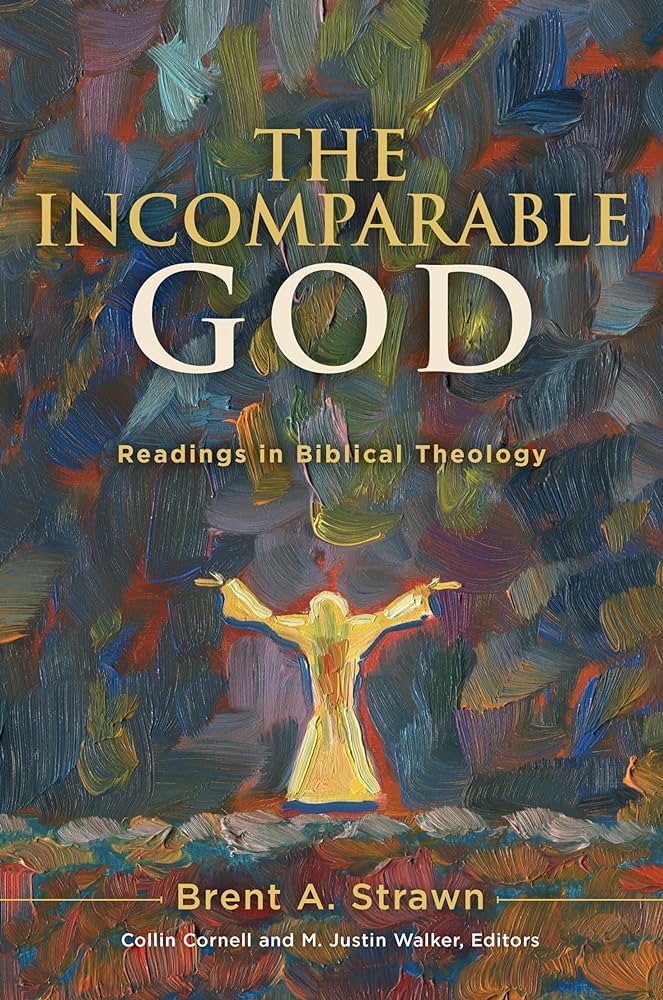
The Incomparable God, by Brent Strawn. Making Sense of Elisha and the She-Bears

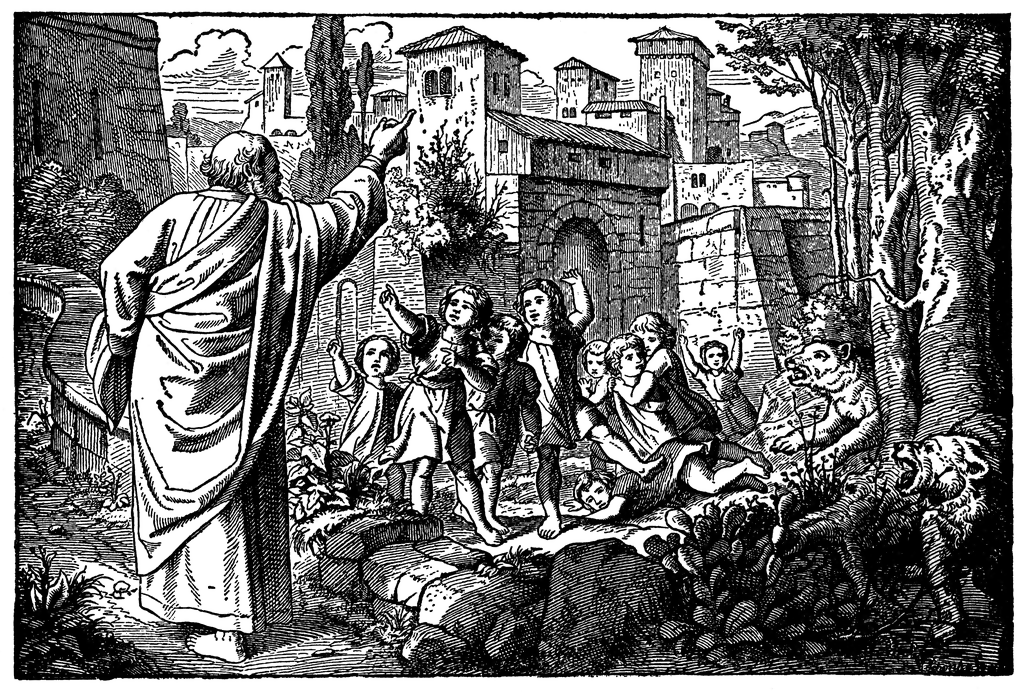
About five years ago, I wrote a Veracity blog post about 2 Kings 2:23-25 , the weird episode of Elisha and the She-Bears. This passage ranks right up there as one of the strangest, if not the most disturbing stories in the Old Testament. To tell the story most bluntly, the prophet Elisha is ridiculed by a bunch of young, little “boys” for the prophet’s “baldness.” Elisha returns the insults by issuing a curse on the boys, and then a pair of she-bears emerge from the woods to maul forty-two of the boys. Pretty weird, right?

I recently ran across a volume of essays, The Incomparable God, by Brent Strawn, an Old Testament scholar at Duke Divinity School, covering various topics related to the Old Testament, including “Revisiting Elisha and the Bears: Can Modern Christians Read — That Is, Pray — the ‘Worst Texts’ of the Old Testament?” The Incomparable God is very helpful, scholarship of the highest caliber, but it is not for the faint of heart, as the reflections in these essays assume some working knowledge of the Hebrew language. While this is clearly in Brent Strawn’s wheelhouse, the average Christian might not be so well equipped to grasp the nuances of Hebrew waw-consecutive grammar.

If you are thinking, “Waw-what?,” then fear not. In this partial book review, I will do my best to put the cookies down on the lower shelf for you.

Nevertheless, when you try to make sense of something as crazy sounding as the Elisha and the She Bears story, it helps to go to the scholars for some assistance. Believe me, when I first focused my attention on this passage, I needed some help. Now with this new publication of Brent Strawn’s essays, it makes for a good opportunity to revisit this text. So please “bear” with me….. uh, pun intended!

A Very Difficult, Morally-Challenging Bible Passage

The difficult passage in question goes like this (from the English Standard Version, 2 Kings 2:23-25):

“23 He [Elisha] went up from there to Bethel, and while he was going up on the way, some small boys came out of the city and jeered at him, saying, “Go up, you baldhead! Go up, you baldhead!”24 And he turned around, and when he saw them, he cursed them in the name of the Lord. And two she-bears came out of the woods and tore forty-two of the boys. 25 From there he went on to Mount Carmel, and from there he returned to Samaria.“

Back when I was doing youth ministry several decades ago, a very bright female high school student asked me what I thought about this passage of the Bible. I was supposed to be the “Bible expert” but I was stumped.

I had to be honest with her that I had been a believing Christian for at least ten years and I had no clue as to what this was about. 1 and 2 Kings never caught my interest too much, books where Israelite king after Israelite king kept messing up and rebelling against God. Aside from some great stories about Elijah, like the big showdown in 1 Kings 18:16-45 between Elijah and the prophets of Baal at Mount Carmel, 2 Kings just seemed like a rehearsal of names of kings I could hardly pronounce.

I had read the Old Testament back in college for a religion class, but I did not remember reading that particular passage at the time. Perhaps I just skimmed over that part without paying much attention. What I do recall is that I had never heard a sermon preached about Elisha and the She-Bears in any evangelical church that I had been attending that entire ten year period. I read the passage more earnestly now, scratching my head all the way through it, thinking that I might have a good response to give to my high school student friend. But now that it was pointed out to me, I found it jarring. I was dumbfounded. I was stuck.
Continue reading


Elisha, She-Bears, and the Cursing of Children?

This is up there near the top of “Weird Stories of the Bible,” when the prophet Elisha curses a group of young boys, who taunt him. But does this image really correspond to the message that the Scriptural writer is intending to convey?

I was totally dumbstruck, a moment I will never forget. I was doing youth ministry, when a high school student asked me about the weird incident of Elisha and the She-Bears, found in 2 Kings 2:23-25. What is that all about?

I had never seen the passage before, and it left me speechless:

23 He [Elisha] went up from there to Bethel, and while he was going up on the way, some small boys came out of the city and jeered at him, saying, “Go up, you baldhead! Go up, you baldhead!”24 And he turned around, and when he saw them, he cursed them in the name of the Lord. And two she-bears came out of the woods and tore forty-two of the boys. 25 From there he went on to Mount Carmel, and from there he returned to Samaria.

What is going on in this passage? I will be honest: Having never read that before, I had no clue how to respond. Over seven years in Bible-teaching churches had never prepared me for that question (Why do most churches skip over these difficult passages????).

Skeptics use these verses to mock the morality of the Bible. It is hard not to blame them, from a quick, surface reading of the text. It sounds like God is sanctioning, even inflicting, violent child abuse.

But this high school student who quizzed me about this passage was not at all trying to ridicule the Bible. It was a honest question. This teenager was sincerely confused… and I was stumped.

I could have simply said, “Well, that is in the Old Testament. No need to worry.” But I knew better.

So, what is the Bible really talking about here? Could there be more going on, than what a plain-text, isolated reading of the text indicates?

A theologian who writes frequently for First Things magazine, Peter Leithart, highlights the work of Keith Bodner, that gives a more nuanced, and greatly more compelling answer as to how to interpret this difficult text in the Bible. In short, the story of Elisha and She-Bears is really an event with satirical theological-political commentary, criticizing the apostatizing of Israel’s leadership, by their sanctioning of idolatry at Bethel. A careful reading of other biblical texts gives us the clues needed to fully unpack this story (see 1 Kings 12:1-15, 2 Kings 1:8, 1 Kings 14:21, 1 Kings 13:24, 2 Kings 8:12, for additional context).

In this interpretation, the “small boys” in this passage, really are not children at all. Instead, they are a band of idolatrous priests that threaten Elisha, and the true worship of God the prophet represents. The author uses the language of “small boys,” not to historically chronicle their age, but rather to criticize the immaturity of these rebellious priests.

The critique of Elisha’s “baldness?” Well, this is not really about a loss of hair, but rather the loss of losing his mentor Elijah, as a spiritual covering.

This explanation may not completely remove for you the scandal that this passage raises. Understood, but the shock value maybe the point. Passages in the Bible that sound just plain weird, might be clues that more is going on than what can be picked up by a surface reading. As I wrote about in my review of Andy Stanley’s book, Irresistible, perhaps the problem with the Old Testament, is not with the Old Testament itself, but in how we interpret it.

Additional Resources:

Gospel Coalition blogger, Derek Rishmawy has an older post highlighting Peter Leithart’s own commentary on this passage, from Leithart’s 1 & 2 Kings commentary. For some other, informed takes on the same story, I would recommend either the following segment of Dr. Michael Heiser’s Naked Bible Podcast (Heiser is an Old Testament scholar, for Logos Bible Software, who wrote many of the notes for the FaithLife Study Bible, and author of the groundbreaking book, The Unseen Realm: Recovering the Supernatural Worldview of the Bible), or a sermon by Dr. Peter Williams (Williams is a textual critical scholar at the University of Cambridge, and Tyndale House, in England, and a translator for the English Standard Version of the Bible), or the detailed analysis from the “uber-intellectual” Alastair Roberts, MereFidelity podcaster and blogger. Dr. Heiser’s treatment is just audio, with no video. But one of Dr. Heiser’s key themes is that if it is weird, it is probably important. This passage surely qualifies. The Dr. Williams’ video is from a talk he gave at, what I think is, Park Street Church in Boston (Williams takes a more traditional view of the “young boys”, summarized in a series of Tweets). Alastair Roberts’ video is from his YouTube Question & Answer channel. All three scholars offer great resources on other topics, I might add!:
