Tag Archives: Creationism

Evidence of Transformation

“It is sown a natural body, it is raised a spiritual body. If there is a natural body, there is also a spiritual body.”
(1 Corinthians 15:44, NIV84)

Dinosaur at Toronto Airport

How come there are no dinosaurs in the Bible? I found this one at the Toronto airport.

After all of Clarke’s hard work leading up to our Facts & Faith symposium, I decided to see if I could help out by taking Veracity on the road—to look for evidence of agreement between science and faith. So…

Niagara Falls

Greetings from Niagara, Ontario! It’s very wet (and beautiful) here.

Old earth creationism, young earth creationism, theistic evolution, neo-Darwinism, naturalism, theism, atheism, science versus faith, science and faith—we’ve taken on quite a bit of material in the weeks leading up to the symposium. There seems to be no end to controversies surrounding these topics. Got it. But does any of this stuff really matter?

Bird at Niagara Falls

What are you thinking?

It is ironic that the three intramural Christian positions on creationism (young earth, old earth, and theistic evolution) all agree that the age of the earth is not essential to the salvation of anyone’s soul. So why does it matter? OK, let’s come at the issue from a less Christian perspective.

Suppose you are sharing your faith with someone who is unfamiliar with Christianity, or has doubts about the claims and content of the Bible. (If you’re not encountering people like this, might it be time to leave your monastery or otherwise get out and meet some real people?) Further suppose that your beliefs are not supported by contemporary science or scientific scholarship. Would you be willing to argue that “science is wrong?” It turns out that many Christians do indeed argue that science teaches things that are contrary to the Bible and that science is wrong. Welcome to the Bible versus science, an unnecessary either-or proposition. Continue reading

From The Dust

What is the role of scientific discovery in Christian faith?  Many today feel that the practice of modern science is not very friendly to belief in the Bible. Is there a way that Bible-believing Christians can make peace with the work of the modern scientist?

From The Dust is a recent documentary film that aims to reframe the discussion regarding the Bible and Science by looking at how we read the Scriptures and how we think about the art and beauty of science.   When we read Genesis 2:7, we get a grand view of the glory of God as He creates Humanity in His Image:

Then the Lord God formed the man of dust from the ground and breathed into his nostrils the breath of life, and the man became a living creature (ESV).

How does Science complement and illuminate the Biblical picture of creation?   Watch the film trailer for an idea:

With interviews by leading and influential Biblical scholars, scientists and theologians from diverse perspectives, such as N.T. Wright, Alister McGrath, John Polkinghorne, John Walton, Jason Lisle, Terry Mortenson, and Pete Enns, From The Dust hopes to reinvigorate the Christian imagination on how we approach these issues.

If you are cheap like me, you can simply review some of the film clips at the movie’s website or view them at the BioLogos website to get an idea of what it is like.  If you really like it, you can order the film through BioLogos, or download on iTunes.

Stretch your mind and enjoy!

Coming Next Weekend!!  Veracity Takes It Out of CyberSpace and Into Live and Personal Discussion!!

Facts & FaithWant to explore more about these issues in conversation with others? Then please join us at the  Facts & Faith Symposium, at the Williamsburg Community Chapel, several Sundays in November, 2013 (the 10th, 17th and 24th) at 6:30 pm.


C.S. Lewis, Myth, and the “E” Word

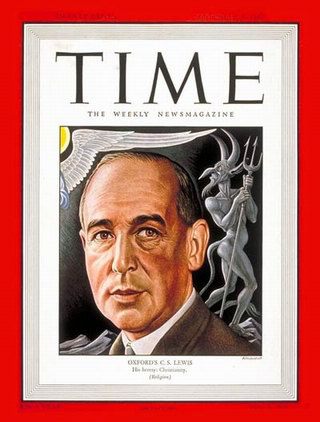
C.S. Lewis on the cover of Time magazine, 1947.  Did he ultimately find "Evolution" to be compatible or in conflict with Biblical faith?

C.S. Lewis on the cover of Time magazine, 1947, perhaps the most popular Christian apologist of the 20th century. Did he ultimately find “Evolution” to be compatible or in conflict with Biblical faith?

A few years ago, a series of letters written by C. S. Lewis back some seventy years ago came to light that has given scholars some questions as to the Narnian’s changing views regarding the “E” word. By the “E” word, I mean … “evolution”.

The “E” word is generally something you do not say in polite company around many evangelical Christians, unless you want to say something negative. Here at Veracity, we have no qualms over discussing topics related to the “E” word. Yet the stakes are high, as many students of Scripture have noted. Some say that evolution is the greatest threat to the truthfulness of the Christian message. Others, to varying degrees, say that evolution is at least partly, if not fully, compatible with Christian belief.

How do  you sort this all out?  It sure would be helpful to know what one of the most popular Christian apologists of the last one hundred years, Oxford’s C. S. Lewis, might have thought about the matter.
Continue reading


No Compromise?

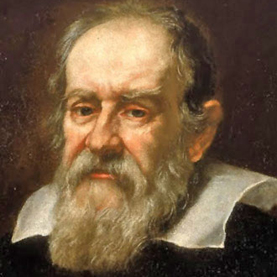
Was Galileo right?  Or did he take the Christian church down the path of compromise, eventually leading to the contemporary secularization of the traditionally Christian societies, weakening the witness of the church?

Was Galileo right? Or did he take the Christian church down the path of compromise, eventually leading to the contemporary secularization of  traditionally Christian societies, and weakening the witness of the church?

Millions of years. The age of the earth. Established scientific fact based on evidence? Or fatal compromise of biblical inerrancy and the integrity of the Gospel?

Answers in Genesis (AiG) is the premier Young Earth Creationist organization in the world. Their basic mission is to try to help Christians have a restored confidence in the full inerrancy of the Bible, starting at the “very first verse” in Genesis. One of their primary claims is that evangelicalism has allowed apostasy to enter the church by accommodating to the modern scientific idea of a “millions of years” Old Earth. Over time, this gradual movement away from a literal 24-hour day interpretation of the Creation account, with a Creation date of less than 10,000 years ago, has led to all sorts of  other confusions of Bible doctrine. Secular critics scoff, church leaders fumble on the questions, and many bewildered young people in our churches go right out the door and leave the faith, according to AiG.
Continue reading


Respecting Disagreement

Now we see but a poor reflection as in a mirror; then we shall see face to face. Now I know in part; then I shall know fully, even as I am fully known.
1 Corinthians 13:12 (NIV)

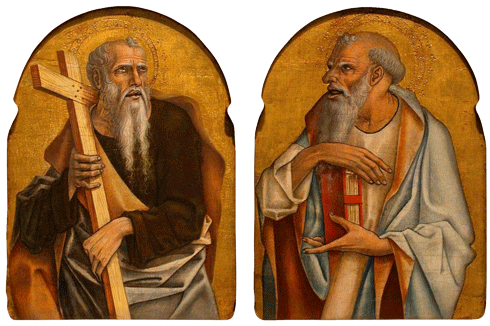
Two Apostles

Two Apostles by Carlo Crivelli, 1475

The apostles Peter and Paul had some famous disagreements.  Ultimately however, it was their shared, unswerving love for Christ that propelled their ministries.

I recently attended a lecture by Dr. Ian Hutchinson, a scientist with impressive technical credentials—and a Christian.  His topic addressed science-faith issues, and concluded with his belief that a Christian worldview is consistent with, and complimentary to, a scientific worldview.  I agree and am thankful that there are scientists of Dr. Hutchinson’s caliber who are willing to share their faith in public forums.  (Let’s be real—who am I to disagree?)

The first question from the audience at the end of the lecture involved the age of the earth and the six ‘days’ of creation.  Dr. Hutchinson’s response was along the lines that the universe is very old (13.7 billion years, again I agree), and that he believes we should not take the creation account in Genesis too literally—that the text is ‘figurative’.  And here we have a fork in the road.  I think it is somewhat dangerous to give up on the text in Genesis too easily, and to ascribe a figurative intent on the part of the author (Moses) when in fact there may be more to the inspired text than meets the eye.

In addition to his work at MIT, Dr. Hutchinson is also a lecturer for the BioLogos Foundation, founded in 2007 by another prominent Christian, Dr. Francis Collins.  These brothers and sisters in Christ adhere to the idea of theistic evolution, which—rather than have my take on this topic—you can read about directly from the BioLogos website.  There are many wonderful Christians who ascribe to the ideas of theistic evolution.

I’m just not one of them.  After studying the matter in detail, I have a different understanding.  I ascribe to old-earth creationism.

Hugh RossDr. Hugh Ross and his colleagues at Reasons To Believe have a great deal to share on this topic.  First, Moses never wrote that the universe was created in six days.  Excuse my provocative statement, but I did it to make a point— ‘day’ is an English word.  Moses did not write in English (which has a million or more words), he wrote in Biblical Hebrew (which only had a few thousand words), and the word that was written was ‘Yom’, which clearly has multiple meanings including the idea of an epoch or age. Continue reading