Tag Archives: Council of Nicaea

The Council of Nicaea Demythologized: Reviewing the Cambridge Companion to the Council

Alas, another year is passing by, and 2025 is just about over. For this last blog post of 2025, I have few introductory comments as we look forward to the New Year, before I address the topic at hand…..

For 2026, I have a few more blog posts scheduled for the “Christianity Along the Rhine” series, a kind of travelogue reflecting on some of the places visited by my wife and I this past October in Europe.

Recently, I have been listening to Barry Strauss’ fascinating new book, Jews vs. Rome: Two Centuries of Rebellion Against the World’s Mightiest Empire. Wow! The backstory to Rome’s relationship to the Israel of Jesus’ day is something I rarely ever hear about in church…. and its connection to contemporary news events in Gaza brings more depth to the daily news. But wow, I am hooked on the story! I want to learn more!!

Plus, I have been doing a lot of thinking about “penal substitutionary atonement” over the past year and a half. The topic of Christ’s death on the cross comes up nearly every week at our church, either through a talking point in a sermon or a song sung in worship, affirming some version of “penal substitutionary” theory, which probably sounds like a bunch of blah-blah-blah intellectual talk to most Christians.  However, the topic has been becoming quite controversial in evangelical circles lately, and a lot of the controversy has to deal with newer scholarship dealing with ancient Jewish understandings of Levitical law and, in particular, how Jesus thought about it. I have been doing some reading on this and related topics, which I hope to blog about (more) in 2026.

Also, coming soon in 2026 will be some blogging focus on Augustine of Hippo, perhaps the most influential father of the early church.

Oh, and one more thing: Why do I still bother with long-form blogging, when it seems to have gone out-of-fashion in favor of pithy Instagram and Facebook posts? Well, sometimes in takes some effort to get the truth right, in a world where misinformation seems like the norm these days. I mean, sometimes it just feels pointless having to deal with such wacky stuff out there on the Interwebs. No one can fix it all. But perhaps what I write might have a positive impact on some people, even if just a handful, and if all else fails, it gives me a chance to learn and grow.

I have already commented recently on bizarre conspiracy thinking which has taken hold of certain corners of right-wing evangelicalism (who would have expected an ideological implosion at the Heritage Foundation ???).  But you also hear a good bit of nonsense from outside of the church.

For example, on Christmas Eve, Dan Snow at History Hit had an interview with biological anthropologist and U.K. television personality Alice Roberts. Yet the topic was not in Roberts’ field of expertise, but rather on the rise of Christianity in the Roman Empire, which is relevant to the subject of this blog post: the Council of Nicaea. I normally like History Hit, but this interview just seemed off ….. (Was Constantine merely interested in Christianity and trying to resolve the Arian controversy in Alexandria, Egypt, simply because Egypt supplied nearly all of Rome’s needs for wheat???  Was it all about politics and grain, and nothing to do with knowing God??).

Thankfully, I wandered over to Tim O’Neill’s History for Atheists blog, and Tim has a lengthy, thorough, and scathing review of Roberts’ book, which sets the record straight. As Tim writes, Alice Roberts made her name in television through her biological anthropology work, particularly with the BBC, and has effectively become an “influencer,” as they say. So, apparently some publisher decided to cash in on Roberts’ “influencer” status and promote her as an “historian,” which is outside of her lane. Roberts’ new book Domination obviously is taking a swipe at Tom Holland’s excellent history book, Dominion, reviewed elsewhere here on Veracity.

Alice Roberts grew up in a Christian church, but became a humanist as she questioned the truthfulness of the Christianity she was taught, something which I wrestled with as a teenager as well (though I finally came to know Christ towards the end of my years in high school).  Yet like a lot of secularist critics, Roberts has since been taken into the “Christianity is all about power and identity politics” woke and deeply cynical mantra (hence the “Domination” book title) that has become quite popular even in certain academic circles. While I do not share Tim’s skepticism for historic orthodox Christianity, I am grateful that someone like him took the time to correct Alice Roberts‘ serious errors. I just wish more of my fellow Christian brothers and sisters had a more serious devotion to truth as I find with atheists like Tim O’Neill.

What is most terribly scary is that the wide acceptance of misinformation will only become worse once artificial intelligence (AI) becomes more deeply embedded in our digital lives, despite certain advantages of AI. Merriam-Webster named the term “slop” the word of the year for 2025; defined as “digital content of low quality that is produced usually in quantity by means of artificial intelligence”….. But that is another topic for a later time.

The Veracity blog here is my humble attempt to try to set the record straight in at least my circle of evangelical Christianity. I know I do not get everything right, but at least I am trying: We as followers of Jesus can do better.

But now is the time to wrap up the 1700th anniversary of the Council of Nicaea, which gave us the church’s most influential creed, summarizing the basics of Christian belief (Read up on Nicaea from these previous blog posts). Time now for one more nerd-out, deep-dive blog post to end off the year!!


………………………………………………………

Most Christians are taught that the doctrine of the Trinity is about believing in one God, made up of three persons: the Father, the Son, and the Holy Spirit. They might even know that this doctrine was first formally taught this way, going back to a famous church meeting of the 4th century, the Council of Nicaea. At Nicaea, a summary of what Christians believe was formulated, becoming what is known as a “creed.” But the details often get fuzzy. So, what was the story of the Council of Nicaea really about?

A lot of “fake news” gets promulgated on the Internet about the Council of Nicaea.  Forget the nonsense about the New Testament canon being formulated at the Council, or Constantine bullying the bishops to abide by his theologically-driven will to make Jesus into God. Forget about all of the garbage floating around for the past twenty years resulting from Dan Brown’s The Davinci Code, about the Council of Nicaea being some corrupt conspiracy to keep people in the dark about the supposed “truth” of Christianity’s failures. The actual history about this famous meeting, which gave us Christianity’s most important summary of belief 1700 years ago, is far more interesting.

As Christians around the world commemorate the 1700th anniversary of what took place in an ancient city in Turkey in 325, I decided to read The Cambridge Companion to the Council of Nicaea, part of the Cambridge Companions to Religion series. Edited by Young Richard Kim, the Cambridge Companion takes a deep dive into the historical context of Nicaea’s famous council. In this review, I hope to report on some of the highlights found in the valuable essays of this book written by top-notch scholars. The Cambridge Companions to Religion series can get pretty beefy and technical (and like most academic books, ridiculously expensive in hardcover form), but there is a lot of fascinating history here that is hard to find elsewhere all in one place. In this book review, as we close out the year of the 1700th anniversary of the Council of Nicaea, I will try to summarize the highlights.
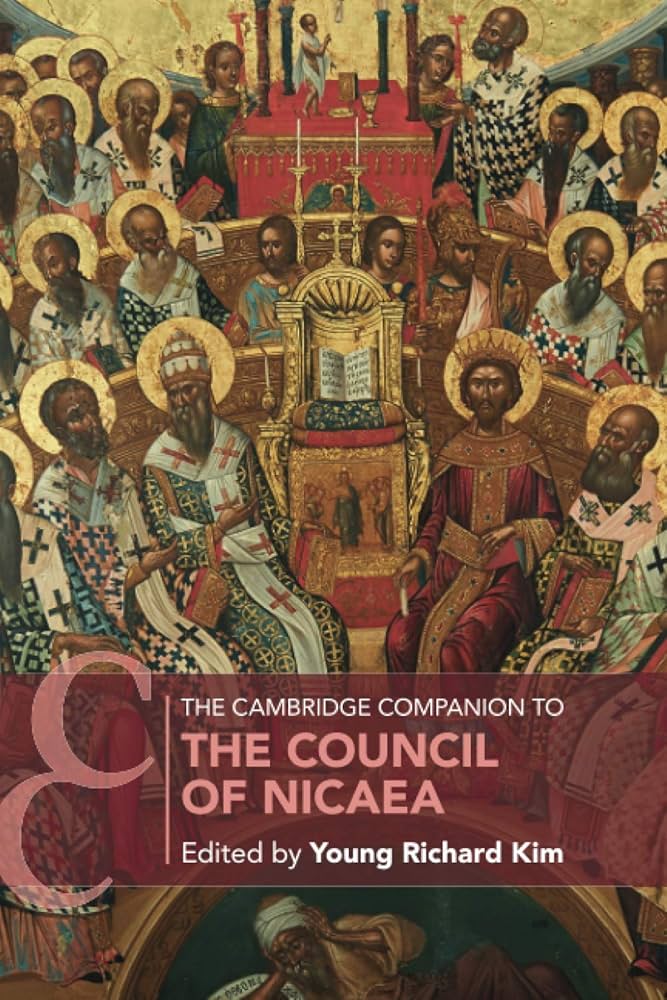
The Cambridge Companions to the Council of Nicaea, edited by Young Richard Kim, is a scholarly collection of essays by skilled historians examining the history of the most important church council ever held. The Nicene Creed summarizes what all historically orthodox Christians (Protestant, Roman Catholic, and Eastern Orthodox) believe about who God is.


A Deep Dive into the History of Christianity’s Most Important Church Council

Through all of the mythological hype about the Council of Nicaea, one bit of truth stands out. It was not a foregone conclusion that the doctrine of the Trinity Christians have inherited today would have won out during the Christological debates of the 4th century. Christians since Tertullian in the second century debated the exact details of the relationship between the Father and the Son, particularly as it pertained to the divinity of Jesus, as the Son of God. In many ways, what eventually became the Nicene view of the doctrine of the Trinity was actually a minority position among a wide variety of understandings of the Godhead in the centuries leading up to Nicaea.

What made the Council of Nicaea into a watershed moment in the history of the church was the controversial claim made by Arius of Alexandria, a presbyter (church elder) who claimed that Jesus was divine, but only in the sense that Jesus as the Son was a divine creature, created by the uncreated Father. While many Christians before Arius were willing to accept some kind of “subordinationism” with respect to the Son subordinated to the Father, it was the Arian insistence that the oneness of God prevented the Son from being of the same uncreated divine essence as the Father that precipitated the theological crisis which led to Nicaea.

The Background to the Council of Nicaea

In the first essay of The Cambridge Companion to the Council of Nicaea, historian Raymond Van Dam surveys the historical backdrop to the controversy, stemming from Emperor Diocletian’s imperial edict to persecute Christianity in the early 4th century. Diocletian had become emperor in 284, and he retired in 305, thus ending the worst of the persecutions. But by the time of his retirement, order had broken down as to who was the rightful emperor of the Roman empire. By 308, there were some six claimants to the position of emperor: Constantine, Licinius, Galerius, Maximinus, and even the former emperors, Maximian and Diocletian. It was a confusing mess of Roman politics for the upcoming years.

Despite the persecution of Christianity, the influence of the Christian church, though far from being in the majority yet, continued to increase, resulting in rival views among the competing emperors. Constantine had his famous vision of the sign of the cross, which precipitated his victory over Maxentius, another claimant to being emperor, at the Battle of the Milvian Bridge, in 312. The following year, Constantine granted religious toleration to the Christians, with the Edict of Milan. But it was not until 324 when Constantine finally pushed Licinius aside to become the supreme and sole emperor of Rome.

However, trouble was brewing in Alexandria, Egypt, the second largest city behind Rome in the Roman Empire. Christians believed that the Son was divine, but in what sense did that mean? Arius was teaching that there was a time when the Son was not. Arius was concerned that by elevating the divine status of the Son to be equal with the Father would undercut the Christian monotheistic conception of God. The bishop of Alexandria, known as Alexander, responded by saying: “Always God, always Son; at once God, at once Son.” Alexander charged that Arius’ position that the Son was a creature diminished the rightful divine status of Jesus as the Son of God.

Constantine was concerned that the rift in Alexandria was splitting the church apart. As emperor, he wanted to rule an empire with a united church, not a divided one, so he called and convened a meeting of bishops from across the empire to meet in Nicaea in 325, in what was then Asia Minor, to resolve the matter.

But the question about the divinity of Christ was not the only subject on the docket at Nicaea. Christians across the empire celebrated the Resurrection of Jesus on different days. Constantine wanted a unified calendar system: One church, one doctrine of God, one calendar, one emperor.

Historian Rebecca Lyman examines the roots of the Arian controversy.  For Lyman, Athanansius, the successor to Alexander’s bishopric in Alexandria, Egypt, used the controversy over “Arianism” to respond to a wider theological crisis across the whole of Christendom. As a result, the story of Arius himself gets blurred by the later rhetoric employed by Athanasius to combat critics of Nicene orthodoxy. In other words, what began as a theological dispute about the teaching of Arius down in Egypt mushroomed into a huge, complex controversy, involving several parties, all across the whole Roman Empire.

A Digression…. An Incredible Tale: Athanasius and His Bitter Opponents

The controversy got very wild at times. It is worth taking a digression and recalling an enthralling story I read from The National Review, by John D. Hagen, Jr., from the November, 2025 issue, “Lessons from the Fight for the Nicene Creed.” Hagen tells the story of Athanasius being challenged by the supporters of Arius, who had been effectively humiliated at the Council of Nicaea. In the following years, Athanasius had risen to become the most ardent defender of the Nicene Creed, and his opponents saw an opportunity to try to discredit bishop Athanasius, as a means of trying to regain favor with the emperor.

Emperor Constantine was so befuddled by the situation that he called a synod to meet in Tyre to investigate Athanasius. The campaign to try to discredit Athanasius was so outlandish that it is best to quote the story which Hagen tells…. how could anyone make this stuff up?

Supporters of Arius accused “Athanasius of sorcery, of arrogance and violence, and of consorting with treasonous persons” …. This led to “the tale of Arsenius’s hand.”

“Arsenius, a schismatic bishop in Egypt, hid himself in an Arian plot. The Arians accused Athanasius of murdering him and amputating his hand to use in magical pursuits. The plotters obtained a human hand, which they brandished on suitable occasions to lend credence to the tale.”

“Athanasius’s deacon flushed Arsenius out of hiding and was able quietly to arrest him at Tyre. This gave rise to a scene of high drama: The Arians bring their charges, histrionically brandish “Arsenius’s hand,” and demand Athanasius’s condemnation. Athanasius appeals for order. He calls for those who knew Arsenius to identify themselves, which several bishops promptly do. Then he brings in Arsenius, exposes his hands one by one, and challenges the Arians to show where the third hand had been cut off. The synod erupts in consternation, and one of the plotters runs away…”

Yep. I would call that high drama.

Now back to the book review! …..


The Practical Details of the Council of Nicaea

Ine Jacobs writes about some of the logistical challenges associated with the Council of Nicaea. Nicaea was chosen by Constantine as the meeting place for the council, primarily due to its location, though some recent scholarship suggests that politics may have played a more significant part. The city is located near a lake, Lake Iznik, and along a Roman highway.

The Council of Nicaea was actually not the first church council that Constantine had called, but it was the first council he had attended. As noted by H. A. Drake in his essay, these earlier church councils, more regional in character, held at places like Rome (313) and Arles (314), sought to resolve various controversies in the church, but with little success. By the time Constantine had removed his brother-in-law Licinius from power in 324, he felt it was finally time to tackle the Arian controversy head on with an empire wide council.

Nicaea was not that far from Nicomedia, where Constantine had an imperial palace. In some ways, it would have made more sense to meet at Nicomedia. But Nicomedia had also been the seat from where Licinius had reigned, and the bishop there, Eusebius of Nicomedia, had been more aligned with Licinius against Constantine, as well as being a supporter of Arius.

The cost of travel for the bishops to Nicaea was covered by the state. Counting all of the bishops who attended, and their related staff persons, some 1200 to 1900 might have descended upon Nicaea for the meeting.  According to Eusebius of Nicomedia, the meeting was held not in a church but in an imperial palace, though it is likely that this palace was made into a church later.

Historian David M. Gwynn reports that there are no transcript records of the official proceedings, so there is a bit of guesswork required to figure out how the council met. Some 318 bishops were reported to have traveled from across the Roman empire to attend this ecumenical council. However, most of the attendees came from the Greek-speaking East and not the Latin West. Modern scholarship estimates that the number of attendees was actually lower, between 200 to 250.

There was an opening ceremony, which the emperor Constantine presided over, and a final imperial celebration banquet at the conclusion of the council. But it was the bishops who largely led the discussions  while the council met. Aside from the Arian controversy, other matters were attended to, the most prominent being the controversy over the date of Easter. Practices for celebrating the date of Easter varied across the church, but the council sought to work towards uniformity. A common date was sought, but the council ruled that the dating method must not derive from the Jewish dating of the Passover.

The story of Santa Claus originated from legends associated with Saint Nicholas of Myra, a 4th century church father who was tortured for his faith during the persecution under Emperor Diocletian. Nicholas attended the Council of Nicaea, but stories about him slapping Arius, the arch-heretic of the council, in the face, arose centuries after Nicaea, so most historians believe these stories are legendary tales about this popular Christian leader.


Nicaea Was Not Just About the Controversy over Christ’s Divinity

The other major topic at Nicaea was to address the schism which resulted from the Great Persecutions under Diocletian, commonly known as the Donatus controversy, named after a controversial bishop in Carthage. Melitus, a bishop in Egypt, sympathetic towards Donatus of Carthage, had insisted that only those presbyters who had remained faithful during the Great Persecution of Emperor Diocletian could properly administer the sacraments, whereas the treatment of lapsed Christians in the rest of the church was far too lenient. Melitus wanted a pure church, but the Nicene fathers concluded that Melitus was too divisive. Melitus was able to retain his position in Egypt, but otherwise he was strongly rebuked by the Council of Nicaea for promoting schism in the church.

H. A. Drake notes that Constantine was surely the “elephant in the room” when it came to the discussions at Nicaea. While modern people today can be quite dismayed over the sorry history of church and state relations in Christian history, it could well be argued that Constantine’s role in urging the bishops to resolve such controversies helped the Roman empire to survive for another thousand years.

Mark J. Edwards corrects a common misinformed idea concerning the “Apostles Creed,” which I grew up thinking went straight back to the first century apostles. Instead, the so-called “Apostles Creed” has its roots in a Latin creed that came into use in the 3rd century in Rome, what some call the “Old Roman Creed.” Because of its Latin origins, the “Apostles Creed” is not recited in Eastern churches.

Interestingly, the most primitive form of the “Apostles Creed” does not include the descensus clause; that is, the phrasing that after the crucifixion of Jesus, he “descended to the dead” or “descended to hell,” as other modern versions put it.  Christians in the early church commonly accepted the idea of Jesus’ descending into the realm of the dead, following his crucifixion, but it is curious that this descensus clause was not originally in the “Old Roman Creed.” Historians are not sure when the descensus clause was integrated into the “Apostles Creed,” but that creed as we largely have it today has been in common use among Christian churches since about the 6th century (See my earlier Veracity article on the Apostles Creed for more about the controversial descensus clause.)

The essay by Andreas Weckwerth explains the twenty canons of the Council of Nicaea. Aside from the Arian controversy, and the Donatus controversy, the assembled bishops discussed twenty rulings regarding canon law within the church.  For example, the Council of Nicaea forbade those who had castrated themselves from becoming members of clergy. This Canon 1 was designed to discourage various kinds of hyper-asceticism in the church, including a practice which some say that Origen of Alexandria inflicted upon himself (I’ll just leave it that!!).  Canon 2 from the Council restricted newly baptized Christians from being too quickly elevated to become members of the clergy. Canon 19 mentioned that the church honored the practice of having women as deaconesses among the clergy.  While having women as presbyters was discouraged, it is evident that both men and women served as deacons/deaconesses. Long after Nicaea, some regions of the church made various claims of additional canons passed at Nicaea which actually were never discussed, thereby misusing the authority of the Council of Nicaea to promote certain church laws in those regions. Canon 20 urged Christian worshippers not to kneel on Sundays and during Easter time. Instead, during such times of Christian worship, they should remain standing.
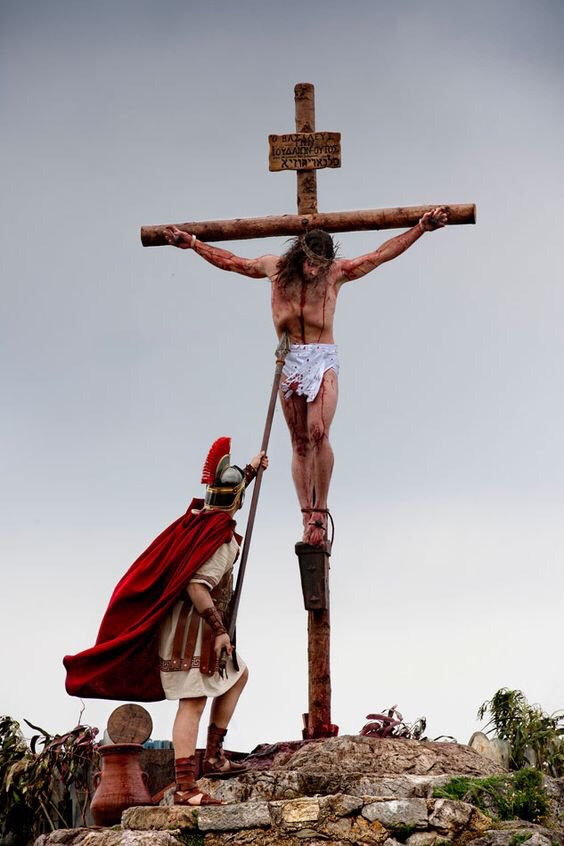
Most Christians figure out when Easter is by looking at a calendar, and trusting what it says. But the calculations for determining the date for celebrating Easter was fraught with controversy during the period of the early church. The controversy stemmed from different ways of recalling the date when Jesus was crucified, and then figuring out the day for celebrating Easter from there. The topic was dealt with at the Council of Nicaea, in 325.


Dating Easter:  The Quartodeciman Controversy

Daniel McCarthy writes about the discussion at Nicaea regarding the celebration of Easter, known as “Pasch” in the ancient world. Today, we take it for granted that Easter comes at the time specified by our physical wall calendars, or whatever Google or Microsoft digital calendars tell us. But for several hundred years during the early church period, figuring out when to annually celebrate the resurrection of Jesus (if at all) was a highly contested matter. For many during the 4th century, it was thought that the Council of Nicaea settled the dispute.

Three problems standout as to why dating Easter became so contentious. First, there is the astronomical difficulty, as the solar and lunar calendars are difficult to get in sync with one another. The Old Testament tended to favor the lunar calendar, but the Jewish community over the centuries has had to insert an additional lunar month into the calendar every so often in order to get the Jewish calendar in sync with the solar year. Even the ancient Jews were not universally in agreement, as we know that the community at Qumran favored the solar calendar at the expense of the lunar calendar.

Secondly, there was the issue as to how the timing of the Jewish Passover was linked to the crucifixion of Jesus. John’s Gospel explicitly links the death of Jesus to the date of Passover, treating Jesus as the Passover lamb who was sacrificed. However, the Synoptic Gospels (Matthew, Mark, Luke) dated the crucifixion on the day after Passover (though some have attempted to resolve this difficulty with revised chronology). Those who favored John’s date eventually rubbed against the tradition which was less concerned about linking the date of the crucifixion with the date of the Jewish Passover, typically associated with the Gospels of Matthew, Mark, and Luke.

Thirdly, the dispute was further complicated by considering which event should be focused on the most: the crucifixion of Jesus or the resurrection of Jesus. The practical consideration had to deal with when to break a fast that eventually became the hallmark of Lent. Christians would abstain from eating certain foods, and various Christian communities did this together, and then break the fast together, as an act of celebration. But what was the focus of the celebration, the death of Jesus or the raising of Jesus from the dead?

The tradition had been that Jesus was resurrected on the third day after the crucifixion, but with a moving date for the Passover every year, this did not place the remembrance of the resurrection always on Sunday. If the celebration was primarily focused on Christ’s crucifixion, the celebration tended to line up with the Jewish Passover. But if the celebration was primarily focused on Christ’s resurrection, the timing of the Jewish Passover was less significant.

Different areas of the church therefore used different methods of calculating the date of Easter, which prompted the bishops at Nicaea to come up with a uniform method for assuring that Christians celebrate Easter on the same day. Church historians typically refer to this as the Quartodeciman Controversy. The Quartodecimans, meaning “fourteenth” in Latin, observed the crucifixion of Jesus on the 14th of the Hebrew month Nisan, following the Jewish Passover tradition, which could have been any day of the week. The other side insisted that the resurrection of Jesus was always to be celebrated on Sunday, the “Lord’s Day.”

Since all four Gospels unanimously placed the resurrection of the “first day of the week;” that is, Sunday, this tradition eventually won out, and the direct dependence upon the dating of the Jewish Passover took lesser priority. It was a messy affair which led one bishop of Rome, Victor, at the end of the 2nd century, to excommunicate all of the Quartodecimans, who did not accept the uniform date for Easter on Sunday. But coming up with a clean way of celebrating Easter (or Pasch) on a consistent year-to-year basis, given the difficulties between the lunar and solar calendars was still tricky to resolve. But with emperor Constantine looking on, insisting on a unified solution for all the churches, the bishops at the council sought to resolve the controversy once and for all, giving us the formula for dating Easter which we mostly take for granted today.

Over the following centuries, theologians constructed tables to precisely date Easter, but every now and then, conflicting calculation methods still led to variations as to when Easter would fall, though it now always fell on a Sunday, as the Council of Nicaea ruled. The situation was further complicated when the Gregorian Calendar was adopted in 1582, as the Julian calendar had slipped so much over the centuries. But not everyone agreed with the decision made by Pope Gregory, particularly Eastern Christians who did not recognize the authority of the Western bishop of Rome, and even the English colonists in North America prior to the 1750s.

Prior to the 1750s, many Christians in the American colonies associated with Puritanism never bothered with celebrating Easter, as  the celebration of Easter was thought to be “too Catholic,” or even of pagan origin!  The confusion was only alleviated in 1752 when the English Parliament formally adopted the Gregorian Calendar, a ruling that was extended to the American colonies, which eventually led to consistent yearly celebrations of Easter in America.
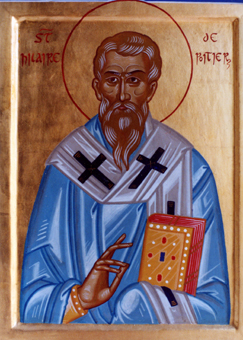
 

Hilary of Poitiers (about 300 – 367 AD), otherwise known as the “Hammer of the Arians,” for his efforts to defend the doctrine of the Trinity. Hilary was to the Western church as Athanasius was to the Eastern church, by encouraging a revival of pro-Nicene thinking, when it looked like the church would capitulate to anti-Nicene ideologies.


The Aftermath of the Council:  And the Formulation of the Nicene-Constantinople Creed

Contributor Aaron Johnson tells the reader about how the Council of Nicaea was narrated by those who reported on it. There were no minutes of the sessions recorded as they happened, so we are dependent upon later interpreters to recall the events and topics discussed. Eusebius of Caesarea, the first great historian of the early church, made the most significant contribution to how Christians remember the Council meeting today.

Sara Parvis describes the aftermath of Nicaea up through the year 360, in how the efforts at Nicaea were effectively reversed in those years after the meeting. Arius’ exile was revoked in 327 by Constantine, just two years after the Council concluded. The controversial word homoousios, which defined the Son as being of the same divine “substance” or “essence” as the Father, was banned from the creed by 360. The great defender of the original creed, the bishop Athanasius of Alexandria, was sidelined by Constantine’s son, Constantius, the subsequent Roman emperor. As bishop, Athanasius was effectively forced into exile perhaps a half a dozen times, resulting from his defence of Nicaea.

The defense of Nicaea made a comeback after 360, as a pro-Nicene alliance eventually emerged. Historian Mark Delcogliano shows how the efforts of Athanasius, who died in 373, were taken up by those like the Cappodician fathers, particularly Basil of Caesarea. When the new emperor, Theodosius, came to the throne, he called yet a new council to meet in Constantinople, to finish the work begun at Nicaea and solidify the historically orthodox, pro-Nicene view of God. What we commonly call the “Nicene Creed,” should more properly be called the “Nicene-Constantinople Creed.”

As an aside, ….. historian Philip Jenkins recently wrote an article about one early church father of the time, another Eusebius (apparently a very common name!!), but this time a Eusebius of Samosata, who was an ardent supporter of the Nicene Creed, against those who were either fully Arian or semi-Arian in rejecting the creed of Nicaea.  Eusebius of Samosata was interestingly martyred for his pro-Nicene position, in that he was killed by an anti-Nicene woman, one of the few anti-Nicene lay persons of the day that we know about, who dropped a roof tile on Eusebius’ head, fatally wounding him in a city street.  The article is an interesting read!

The early church father Apollinarius, who was known to be an avid defender of the original creed formulated at Nicaea, took an unexpected turn which alarmed his friends. According to Kelly McCarthy Spoerl’s essay, Apollinarius affirmed the incarnation of the Son, in that Jesus had a human body and soul, but he denied that Jesus had lacked a rational human mind. Critics of Apollinarius argued that he was dismissive of the full human nature of Christ. Apollinarius had made statements that the Son was a mixture of humanity and divinity, possessing a divine mind and not a human mind. While the pro-Nicene party was largely unified regarding retaining the language of homoousios to speak of the Son in terms of his divine nature, tensions within that party would eventually require another great council to meet at Chalcedon, in 450, to find a resolution, regarding how to understand the precise relationship between the divine and human natures of Christ.

While Christians have probably heard of the Council of Nicaea (325), and perhaps the follow-up Council of Constantinople (380-381), few know that a number of regional councils were held during the intervening years, dealing with controversies which arose after Nicaea. As historian D. H. Williams observes, the Council of Nicaea did not solve all of the problems regarding the Arian controversy. Instead, new problems arose which led to new councils, few which had any lasting effect.  For example, in the 340s, Photinius of Sirmium revived a popular idea known from the second century, the heresy of adoptionism, which according to critics maintained that the Son did not exist until his birth in Bethlehem. Jesus was only adopted as God’s Son, only becoming God at the incarnation.

Constantine’s son, Constantius, while not an Arian by conviction, was driven by political concerns to force the churchmen to more permanently resolve the Nicaea controversies. While Nicaea championed the concept of homoousious, that the Son was of the same divine substance as the Father, others, known as the “Homoian” (or Semi-Arian) party, argued for a kind of middle-way between Arius and Nicaea, that of homoiousios, that the Son was of like substance as the Father, with the insertion of the letter “i” in the word. A council held at Seleucia in the East, and a council held at Arminium, now known as Rimini, in modern day Italy, sought to formalize the Homoian solution, in 359/360.

However, a pro-Nicene movement arose which opposed the Homoian solution, known by historians as the “Dated Creed.” Many pro-Nicenes charged that a number of the bishops at Seleucia and Arminium signed off on the Homoian solution under false pretenses.  The death of Constantius left the “Dated Creed” in an uncertain status, and Nicaea champions, particularly Athanasius of Alexandria, sought to revive the Nicene Creed as the official standard for the orthodox Christian church. Within twenty years, the pro-Nicene party triumphed over the Homoian party at the Council of Constantinople, even though Arian and even Semi-Arian (Homoian) confessions persisted into the 5th century. As Williams’ concludes,”It was not inevitable that the Nicene Creed or faith would become the post-fourth-century church’s way of confession.”


The Impact of the Council of Nicaea Down Through the Centuries

This Cambridge Companion concludes with two chapters on the long reception since Nicaea over the centuries. Paul L. Gavriluk discusses the reception history of Nicaea in the Eastern Orthodox tradition, while Geoffrey Dunn discusses Nicaea’s reception in the Western Catholic tradition. The big conflict between the East and the West arose over the filioque clause, whereby the Latin filioque “and the Son,” as added by Western churches to Nicene-Constantinople Creed to say that the Holy Spirit proceeds from the Father “and the Son,” as the phrase “and the Son” was not included in the version confirmed at Constantinople.  However, proponents of the filioque in the West contend that some Eastern church fathers had endorsed the concept of the filioque, as a defense for the change to the creed.

The story of the filioque clause insertion dates back to the late 6th century, when the Visigothic king Reccared replaced the old Roman Creed, either the predecessor to the Apostles Creed, or close to it, with the Nicene Creed, with the filioque clause inserted. Reccared’s intention was to bring the Spanish church inline with Nicene Christianity, as an intentional rejection of Arianism. In later centuries, Emperor Charlemagne believed that it was the Eastern church which intentionally removed the filioque from the original creed, which is historically not the case. The Nicene Creed with the filioque insertion was ratified by the Council of Toledo (589).

While all of this may sound rather nit-picky and obtuse to many Christians today, the controversy over the filioque continues to stir up discussion even today. The new Pope Leo released a statement acknowledging  the filioque was not part of the original creed, and in a recent trip to Turkey to commemorate the Council of Nicaea, the Roman papal leader did not include the filioque in prayers given, while accompanied by Eastern Orthodox church leaders. Will we see a solution to the filioque controversy within our lifetime? Personally, I welcome it!!

It should be noted that what is known today as the “Nicene Creed,” as formulated finally at the Council of Constantinople, was not formally recorded until the Council of Chalcedon in 451. In the Christian East, no fewer than 18 councils offered creedal alternatives to Nicaea. But what was clearly established at Constantinople, in 381, was an imperial decree:

“The throngs of all heretics must be restrained from unlawful congregations. The name of the One and Supreme God shall be celebrated everywhere; the observance, destined to remain forever, of the Nicene faith, as transmitted long ago by Our ancestors and confirmed by the declaration and testimony of divine religion, shall be maintained. The contamination of the Photinian pestilence, the poison of the Arian sacrilege, the crime of the Eunomian perfidy, and the sectarian monstrosities, abominable because of the ill-omened names of their authors, shall be abolished even from the hearing of men.”

The first recorded usage of the Nicene Creed in the worship liturgy of the church was at Antioch, in the late fifth century. In the Christian West, recitation of the creed in the liturgy was not uniform until perhaps as late as the 11th century. When Emperor Henry II asked Pope Benedict VIII in 1014 why the Nicene Creed was not a standardized part of the liturgy across the entire Christian West, the pope’s reply was that Rome was not subject to the corruption of heresies and had no need for the use of the creed in the liturgy. Nevertheless, the Nicene Creed eventually became the central identity marker of historic orthodox Christianity across the Christian East and West, and it remains that way today.

Even though many churches today only make casual, if any, reference to Nicaea today, the influence of the Council of Nicaea remains the shaping doctrinal statement that unites all of Christendom. While Christians across the globe disagree on many things, including which books should be included in the Bible, etc., at least the Nicene Creed (even despite the filioque controversy) remains the one confession of faith which all believers can profess … and it all began at a meeting of church leaders and a Roman emperor in a lakeside town in what is now modern day Turkey. The Cambridge Companion to the Council of Nicaea is an authoritative scholarly source which articulates the history behind this all influential council and its famous creed.
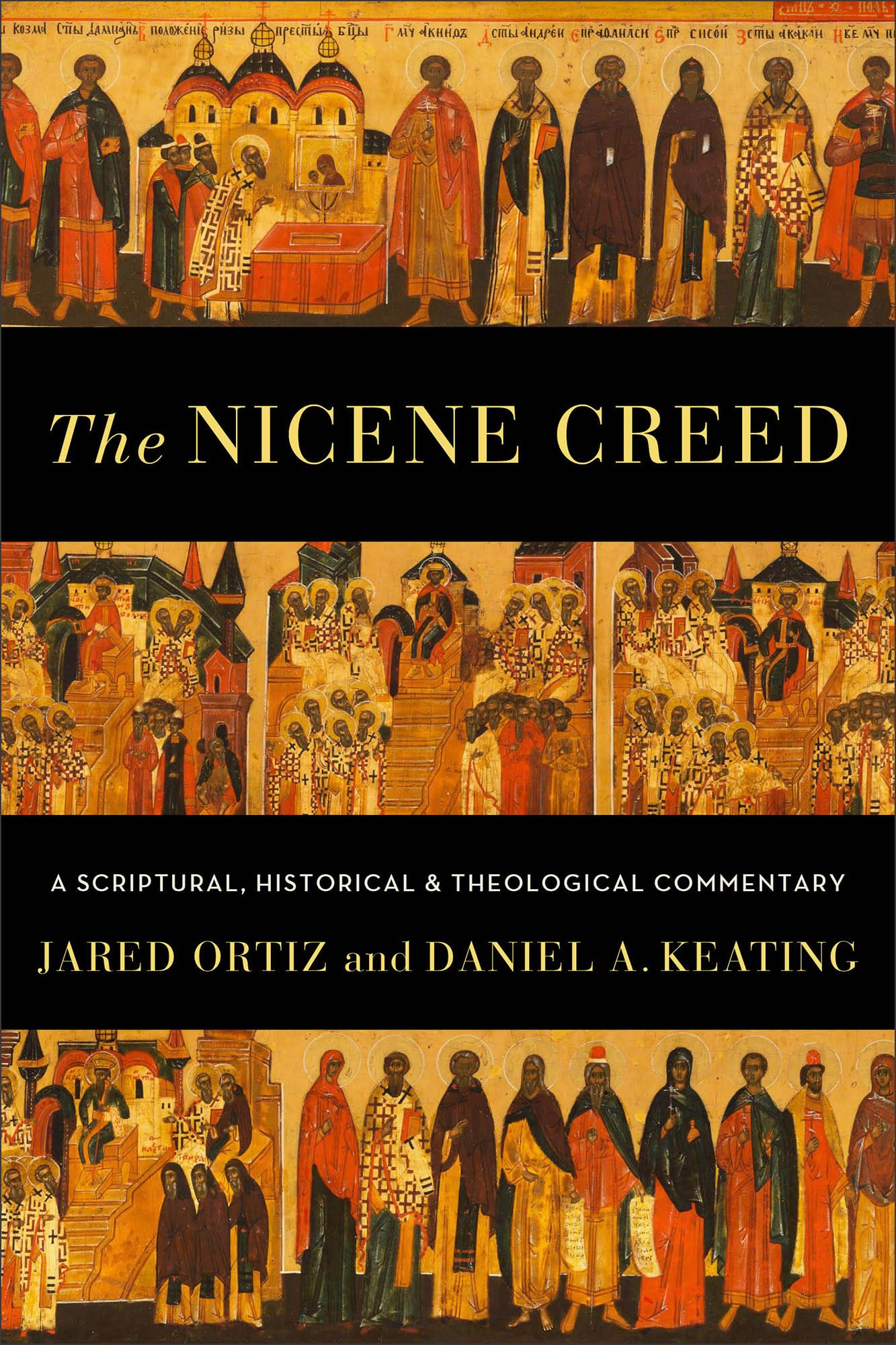

The 1700th Anniversary! … The Nicene Creed, by Jared Ortiz and Daniel A. Keating. A Review.

In 2025, Christians can celebrate 1700 years of the most influential and famous summary of Christian belief, the Nicene Creed. I grew up in a church where we recited the Nicene Creed once a month during worship services. Sadly, a lot of evangelical churches today rarely, if ever, recite the Nicene Creed in public worship, despite the fact that for hundreds of years Christians have historically recited the Nicene Creed (or a shortened version of it, the Apostles Creed) on a regular basis, to remind them of basic Christian truths.

The Nicene Creed has served as a summary of what Christians connected to historically orthodox Christianity have believed and confessed through much of the long history of the Christian movement. It really strikes me as odd that so many conservative evangelical churches, who claim to be concerned with upholding centuries-long-held truths, tend to downplay the creed. Thankfully, with the 1700th anniversary of the first version of the creed, there are a bunch of good books available now that go into detail about the history behind the creed, and what it means for us today.1

I decided to pick up a copy of a book written by a pair of Roman Catholic scholars, who write for an ecumenical audience, from a C.S. Lewis-type “Mere Christianity” perspective. Jared Ortiz and Daniel A. Keating, the authors of The Nicene Creed: A Scriptural, Historical & Theological Commentary, have written a relatively accessible introduction to the creed, making an argument for its importance. Ortiz even teaches at a Protestant evangelical Christian college, Hope College, in Michigan. As Ortiz and Keating put it:

Because we live in an age that doubts the very reality of truth, and because we are trained to go our own way and encouraged to craft our “own truth,” we need more than ever an anchor of Truth—given, tested, and secure—not just as individuals but together as the Church. To our culture, the creeds implicitly say, “These things are true and real. Here is the genuine narrative of our world. And this is true for everyone.” (Ortiz & Keating, The Nicene Creed, Introduction)


The Nicene Creed: A Scriptural, Historical, and Theological Commentary, by Jared Ortiz and Daniel Keating, a great introduction into the most influential Christian creed, celebrating the 1700th anniversary of its first draft.


Urban Legends of Nicaea

There is a lot of misinformation out there regarding the history and purpose of the Nicene Creed. One of the most popular misinformed stories is that the Emperor Constantine essentially bullied a group of Christian bishops, to get together and declare Jesus to be God, as part of a political tactic to exert his control as emperor over the Christian church.

That makes for a tantalizing conspiratorial tale of intrigue, but it is not good history. If anything, Constantine himself was eventually became more partial to the ideas of Arius, the arch-heretic associated with the Council of Nicaea. In reality, the story is more complex: Constantine at first accepted the decision of the bishops at Nicaea, opposing Arius.  Nevertheless, within ten years after the council met, Constantine’s posture towards Arius changed.  In becoming more sympathetic towards Arius, Constantine even ordered that one of Arius’ chief antagonists, bishop Athanasius of Alexandria, be exiled because of his enthusiastic support for the Nicene resolution against Arius.

A second popular misinformed story also makes Constantine into being the “bad guy,” by suggesting that he helped to pressure these bishops to come up with a list of books which would make up the New Testament, accepting books that he and certain bishops liked, and throwing out the rest. In other words, Constantine is “blamed” for trying to put all of the bishops together in a headlock, and forcing them to “fix” the New Testament. This second story is wildly wrong, in that the topic of the canon of the New Testament never once made it into any discussion at Nicaea. It would be several decades before a final list of books of the New Testament would be recognized, and the process was more organic and less autocratic, as purveyors of this story want to believe.

The rumor linking the formation of the New Testament canon with Council of Nicaea probably originated based on a comment made by Jerome, the late 4th and early 5th century translator of the Bible into Latin, the Vulgate, who stated that it was at Nicaea when someone acknowledged that the Book of Judith was an accepted part of Scripture. Jerome had his own doubts about the inclusion of the Book of Judith within the record of Scripture. There is not much more detail about Jerome’s comment, and furthermore, the Book of Judith belonged to the Old Testament Apocrypha, and was never a candidate to be accepted into the New Testament anyway.

Then there is the medieval legend that Saint Nicholas, whose cultural memory over the centuries gave us Santa Claus, stood up and punched Arius in the face for all of his heresies. That probably did not happen, but it is still a fun story to think about, old St. Nick throwing a right hook against a reviled heretic across the cheek. Ha! Ha!

Nevertheless, all of this misinformation about Nicaea does leave the question: What was the Nicene Creed really all about, anyway?


An Overview of The Council of Nicaea

The Nicene Creed in 325 initially addressed the controversy over the deity of Christ, describing the precise relationship between the Father and the Son. But the Creed was expanded at the 381 Council of Constantinople in order to flesh out the doctrine of the Trinity, to include more detail about the role of the Holy Spirit, within the divine Godhead. In other words, most Christians, who even know about the Nicene Creed, do not realize that what was agreed upon in 325 is not the exact creed many Christians recite today. It really took about 55 years for the exact formulation of the Nicene Creed to reach its fullest form, common to both the Western and Eastern churches.

However, the acceptance of the Nicene Creed in the church was not immediate. It took some time before the recitation of the Nicene Creed became a normalized part of Christian worship. Scholars say Paul’s letters in the New Testament included a variety of ancient creeds which preceded the Nicene Creed.

Contrary to what I had always thought, the Apostles Creed did not date back to the earliest apostles. Instead, it was derived from the Old Roman Creed, which Augustine used as late as the early 5th century to prepare catechumens for baptism. It was not until the seventh century (the 600s) when the Nicene Creed became a standard part of a Christian worship service.

Ortiz and Keating say with Saint Augustine that there are three basic concepts which undergird the Trinitarian theology of the Nicene Creed: (Ortiz & Keating, Introduction)

  1. There is only one God.
  2. The Father is God, the Son is God, and the Holy Spirit is God.
  3. The Father is not the Son, the Son is not the Father, and the Holy Spirit is neither the Father nor the Son

Ortiz and Keating go through the major parts of the Nicene Creed, namely about the Father, the Son, and the Holy Spirit, giving a Scriptural exposition regarding where each of these components of the Nicene Creed come from the Bible. Along the way, the authors have helpful sidebars with digressions that fill out the bigger story behind the Nicene Creed, such as various witnesses to the tradition, like Irenaeus and Augustine, and contemporary issues touching on the Nicene Creed, such as “Why is God called ‘Father’ and Not ‘Mother’.” An appendix displays a comparison between the original 325 creed at Nicaea, the finalized Nicene Creed ratified at the Council of Constantinople in 381, and the 7th century Apostles Creed, an abbreviated version of the longer Nicene Creed. A glossary helps the reader to navigate terms essential to the Nicaea debate, such as homoousios (“one in being”) and homoiousios (“like in being”).


Addressing The Arian Heresy

The primary issue at stake with the Nicene Creed was the controversy over the teachings of Arius, a presbyter from Alexandria in Egypt, probably the second largest city in the Roman Empire with one of the most vibrant Christian communities in the ancient world. While Christians worshiped Jesus as the Son of God, by the early 4th century, they had not clearly worked out how the Son of God related to the Father. Arius was not the first one with a commitment to monotheism, who suggested that while Jesus was divine in some sense, the Father was uniquely divine in a different way than the Son.

What stirred up controversy that precipitated the Council of Nicaea was Arius’ particular teaching that Jesus as the Son of God was a creature, whereas the Father was not. Or to put it succinctly, there was a time when the Son was not, according to Arius.

Arius appealed to bible passages like Proverbs 8:25, where divine Wisdom, by which God created the world, speaks and says, “Before the mountains were established, and before all the hills, he begot me.” Because Paul describes Jesus Christ as “the power of God and the wisdom of God” (1 Cor.1:24), Arius like many others saw Jesus as the Son of God described as the Wisdom of God in Proverbs 8, in that Christ was “begotten” by God. However, in that same passage, Wisdom is described in the Greek Septuagint translation as being “created” by God (Proverbs 8:22). As Ortiz and Keating put it, a great “exegetical contest” took place in the 4th century church to resolve the question: Is the divine Wisdom created by God or begotten from God? (Ortiz and Keating, p. 98).

There were some who were at least initially sympathetic towards Arius in saying that while the Father is “truly God,” the Son is also divine, but in a derived and subordinate way. The Fathers who championed Nicaea pushed back on this idea by insisting that the Son is “begotten, not made,” appealing to verses like Jude 25, that the Son existed before every and any age. They also crafted the language that the Son is indeed “God from God, Light from Light, true God from true God,” to emphasize the full divinity of the Son. An appeal was made from texts like “the Word was with God, and the Word was God” (John 1:1), Thomas’ confession of Jesus as “My Lord and My God” (John 20:28), Hebrews 1:3, Hebrews 1:8, Revelation 5:12–14, along with others.2


Using a Non-Biblical Word to Express a Biblical Concept

If Arius was indeed wrong, as the Council of Nicaea concluded, how then should Christians think of the relationship between the Father and the Son? The debate preoccupied the church for about 55 years, until the Council of Constantinople, where the Nicene Creed was reaffirmed and expanded to resolve ongoing disputes. For example, the 325 version of the creed said that the Son is “consubstantial with the Father.” But what does “consubstantial” actually mean here, which the Book of Common Prayer traditionally renders this as “being of one substance with the Father?”

It all came down to a single Greek word: homoousios.

The 325 version used the Greek word homoousios to mean “same substance” or “same essence,” though the word homoousios itself was not found in the Bible. Two Greek words make up the compound word: “homo” for “same,” and “ousia” for “substance” or “essence.” However, some critics argued that the concept of “same substance” did not adequately recognize a real distinction between the Father and the Son, a feature of modalism, the heretical notion the Son’s identity is not permanent, that at some point in the future the Son will “merge back into the Father.” (Ortiz & Keating, p. 107).

These critics, commonly called the “Homoeans,” proposed another word, homoiousios, meaning “like substance,” to reinforce the distinction between the Father and the Son. Nevertheless, those like Athanasius, the most vocal bishop and advocate for the original Nicene formulation, insisted on keeping the language of homoousios. Athanasius was concerned that homoiousios would pave the way back towards the heresy of Arius. The 380 version of the creed kept the word homoousios, as a result. The one letter, a little “i”, made all the difference.

How then should the distinction between the Father and the Son be made (along with the Holy Spirit)? The Greek word hypostasis was selected by some to designate the different persons of the Godhead: Father, Son, and Holy Spirit. Along with the Greek word ousia, meaning “essence” or “being,” the church at the time of the Council of Constantinople in 380/381 adopted the language of “one ousia and three hypostases” to describe the Triune Godhead (Ortiz & Keating, pp.110-111).

However, this brought some confusion as some considered the word hypostasis to be synonymous with the concept of “substance,” which emphasized the oneness of God. The concern was that it made the Christian Godhead into a union of three separate Gods, which was entirely misleading. Another word, prosōpon, was introduced instead, which is best rendered in English as “person.” However, the Greek prosōpon actually meant “face,” which to others seemed not to adequately signal the distinction between the Father, Son, and Holy Spirit. It was not until the Council of Chalcedon in 451 that the common language to describe the Trinity as “one God in three persons” was finally settled as the most suitable way to speak of the Godhead, the language most Christians use today (Ortiz & Keating, pp.110-111).

Despite the efforts at Nicaea to deal with the heresy of Arius, subsequent controversies led to more material being inserted into the creed at the second ecumenical council at Constantinople in 380/381. Marcellus of Ancyra, one of the bishops who attended the Nicene council and opposed Arius, was ultimately condemned at Constantinople for his own teachings. While Marcellus agreed that Son was divine and yet not created, as Arius claimed, Marcellus also championed an idiosyncratic interpretation of Paul’s writings in 1 Corinthians 15:24–28.

When Paul writes that at “the end , when he [the Son] delivers the kingdom to God the Father after destroying every rule and every authority and power,” Marcellus believed that this indicated that the distinction between the Son and the Father should only be understood as a temporary condition. For Marcellus, Paul was teaching that at the end of the age, after the return of Christ, the Son will merge back into the Father. In other words, the Triune nature of God ceases to exist once Christ’s work is complete. At least this is how Marcellus interpreted Paul: “When all things are subjected to him, then the Son himself will also be subjected to him who put all things in subjection under him, that God may be all in all.”

At Constantinople, a phrase at the end of the second stanza regarding the doctrine of the Son was added: “and his kingdom will have no end.” I had always thought this was a throwaway line added into the creed without much of a reason. Now I know that was because the fathers at Constantinople were condemning the heresy of Marcellus by including this insertion, thus affirming the eternal distinct identity of the Son from the Father (Ortiz and Keating, p. 140).


The Holy Spirit at the Second Ecumenical Council in Constantinople

At the 325 council meeting at Nicaea, only one line in the creed mentioned anything about the Holy Spirit: “We believe in the Holy Spirit.” However, in the years immediately prior to the council meeting at Constantinople, some of those who affirmed the full divinity of the Son, standing against Arius, were saying that the Holy Spirit was but a creature, and not fully divine in the same sense as the Son and the Father.

This group, known as the “Macedonians,”named after a former bishop of Constantinople, Macedonius, brought thirty bishops to the 380 council. They believed that the Holy Spirit was a kind of created “super-angel,” serving the purposes of the Father and the Son. But when Gregory of Nazianzus, a well-known orthodox bishop, preached in favor of the full divinity of the Holy Spirit, the Macedonian group left the council meeting. In their absence, the council of Constantinople drafted what would become the stanza that Christians recite today, including such statements affirming that the Holy Spirit is “the Lord, the giver of life” (Ortiz and Keating, p. 165-167).

No exposition of the Nicene Creed would be complete without commenting on the controversy that arose long after the final draft of the creed in 380/381, the so-called filioque controversy, whereby “filioque” is Latin for the phrase “and the Son.” Around the 6th century, various Latin churches altered the Nicene Creed, which describes the Holy Spirit as one “who proceeds from the Father [and the Son],” where the final phrase was added. Notably, it is commonly accepted that the 589 Third Council of Toledo codified the insertion of “and the Son” into the Nicene Creed, in an effort to try to stamp out another variation of the Arian heresy, which had persisted in some areas of the Christian West.

The practice in the Latin churches soon became uniform, but the alteration was made without any consultation with the Eastern church. The addition of the filioque eventually was cited as one of the major reasons for the split between the Eastern and Western churches during the Great Schism in 1054, when Greek-speaking and Latin-speaking Christians officially began anathematizing one another. The original phrasing found in the Nicene-Constantinople version of the creed was drawn from one of the few texts which discuss the origin of the Holy Spirit, John 15:26.

Ortiz and Keating explain the controversy this way: While the final draft of the creed was written at Constantinople in 380/381, it was not broadly known in the West until the Council of Chalcedon in 451, some 70 years later. By that time, the West was developing an understanding of the Holy Spirit’s procession being from both the Father and the Son (or through the Son). It was only a matter of time before the Latin Christians of the West would formally incorporate that theology into the Nicene Creed.

In addition, Ortiz and Keating contend that certain well-respected Eastern church leaders, namely Cyril of Alexandria, Maximus the Confessor, and John of Damascus, had written in favor of the Holy Spirit’s procession from both the Father and the Son (Ortiz and Keating, pp. 174ff). I am not aware of how Eastern Orthodox theologians would respond to these historical claims.3


Other Takeaways From The Nicene Creed

There are a number of other nugget-sized takeaways from The Nicene Creed that are worth noting:

– Saint Augustine is sometimes thought of in negative terms as emphasizing the wrath of God. Those who reject the doctrine of penal substitutionary atonement point to this as a flaw in Augustine’s thought, depicting God as an uncontrollable, angry deity, bent on punishing his human creatures. But Augustine has a rationale for why we see anthropomorphic language about God in the Bible:

“so those men through whom the Holy Spirit has spoken have not hesitated to employ in those books, as the occasion best demands, names of even those passions which our soul experiences and which the man who knows better already understands to be completely foreign to God. For example, because it is very difficult for a man to avenge something without experiencing anger, the authors of Scripture have decided to use the name wrath for God’s vengeance, although God’s vengeance is exercised with absolutely no such emotion.”4

– While the main controversy at Nicaea was over Arius’ failure to affirm the full divinity of the uncreated Son, there were those who failed to affirm the full humanity of the Son Incarnate as Jesus, such as Apollinaris of Laodicea, an eager opponent of Arius, but who unfortunately upheld the divinity of Jesus at the expense of the full humanity of Jesus, a doctrine which Gregory of Nazianzus strenuously opposed:

For Apollinaris, the Christ we meet in the pages of the Gospels is a kind of ‘product’ of two parts: he is part Word (who runs things from the center) and part human (with the intellectual soul removed). As Gregory of Nazianzus famously stated in rejecting this model, ‘The unassumed is the unhealed.’If Christ did not assume a full human nature, including a human soul, then we have not been saved” (Ortiz and Keating, p. 131).5


Offering Some Pushback

Granted, both Ortiz and Keating are Roman Catholic scholars, a feature that will probably bother some readers. Various Roman Catholic distinctive doctrines are mentioned, including purgatory. At the very least, this might cause some confusion.

For example, take the word “catholic” from the creed. In the final version approved at the Council of Constantinople (380 CE), the Nicene Creed says that Christians believe “In one holy catholic and apostolic Church.” That word “catholic” has often been taken out of its historical context.

In the early church era there was only one church, the “catholic” church, as “catholic” simply meant the universal, one and only Christian church. The authors generally use the term “catholic” as an alternative to the Gnostics and other groups deemed heretical and out of step with the main body of historically orthodox Christians. Only occasionally do the authors conflate the term “Catholic” with the Roman Catholic tradition specifically (with an uppercase “C”). But since Roman Catholics, Eastern Orthodox, and evangelical Protestants all accept the Nicene Creed as biblically grounded and theologically true, the focus on the Nicene Creed itself will prove beneficial to anyone who wants to learn more about it.

There is at least one spot where Ortiz and Keating make a controversial claim that should be challenged, regarding how the doctrine of creation out of nothing developed in run-up to Nicaea. On page 79, the authors write:

“By the time of the Nicene Creed, “maker of heaven and earth” was firmly understood to mean that God created all things, without exception, from nothing. But, surprising to many of us, creatio ex nihilo was not a doctrine held by the earliest Christians nor by the Jews who preceded them. Indeed, along with many of their pagan neighbors, they held that God created all things from preexistent matter. The question of the origin of matter—and its implications for God’s being and power—did not arise in a clear way until the second century.”

This startling claim, while having some substance, is ultimately misleading. Admittedly, the authors go on and affirm the Nicene Creed’s teaching concerning God’s creation out of nothing; i.e. creation ex nihilo. However, to say that creation ex nihilo was not held by the earliest Christians and the Jews before them is not wholly accurate.

It is better to say that there was a diversity of views concerning creation ex nihilo in the first century among Christians and Jews. Some Scriptural passages suggested a creation ex nihilo interpretation, whereas others were more ambiguous, lending themselves towards other interpretations. Like concerns about the deity of Christ, and what that actually meant, the early church had to wrestle with what creation actually meant regarding the eternal existence of matter. By the time of the Nicaea era, the issue was resolved in that historical orthodox Christians accepted the idea that the material world had a specific beginning, where the existence of God came prior to that of the material world.6

Even the controversy regarding creation ex nihilo recognizes the need for accurate bible interpretation, in that simply having possession of the Scriptures does not necessarily guarantee that the Scriptures will be interpreted properly. Any controversial ambiguity within the biblical text concerning important doctrines needs to have creeds, such as the Nicene Creed, to act as guardrails, to prevent readers from taking certain passages of Scripture and going in the wrong direction with them.

Thankfully, even with some of the pushback offered, Jared Ortiz and Daniel Keating’s The Nicene Creed gives a high quality introduction to the creed, emphasizing its importance, and presenting the concepts articulated in the creed which remains accessible to the novice reader. Christians should take the opportunity of the 1700th anniversary of the Nicene Creed to study this formative summary of Christian belief.

So, why is it that so many Bible-believing, evangelical Christians tend to either ignore or downplay the Nicene Creed? Now, that is an intriguing question. Perhaps it is due to the uniquely American tradition of “No Creed But the Bible,” a slogan popularized during the Second Great Awakening of the 19th century. Frankly, the tragic lack of emphasis on the great creeds of the Christian church, as with the Nicene Creed, within many evangelical circles is something that those Protestants, who know little about the creeds, could learn a thing or two from our friends in the Roman Catholic and Eastern Orthodox traditions. At least, I hope so. The 1700th anniversary of the Nicene Creed may spark some interest!

For more on the Nicene Creed, honoring the 1700th anniversary of the Council of Nicaea, see this earlier blog post reviewing theologian’s Matthew Barrett’s book on the topic, offering an overview of the classic doctrine of the Trinity. For a helpful walk-thru of each word in the Nicene Creed, set aside an hour-and-a-half to watch this video by apologist Gavin Ortlund:


Notes:

1. Dr. Philip Cary wrote The Nicene Creed: An Introduction, in 2023, which offers a fairly easy read, explaining the creed line by line. Cary, a teacher in philosophy at Eastern University in Philadelphia, is an excellent teacher, someone I actually met and had dinner with at a wedding reception a few years ago, and that I have read and followed for years, so I would highly recommend him. From a Reformed Protestant perspective, Kevin DeYoung, a pastor and popular contributor at The Gospel Coalition, recently wrote The Nicene Creed: What You Need to Know about the Most Important Creed Ever Written. I heard an interview with DeYoung giving an overview of the book, and that sounds very promising. Those are just a couple of recommendations, from a list of several available. Later in the year, I will offer a review of a great academic book, The Cambridge Companion to the Council of Nicea, edited by Young Richard Kim, which takes a deep dive into the story of Nicea, with essays by several historians, covering a wide variety of topics, focused more on the history behind the council. The Ortiz and Keating book, being reviewed in this blog post, is more of a general introduction to the theology of the Nicene Creed, looking at each phrase of the creed to see how the church worked through the controversies to arrive at the most important theological statement and summary of Christian belief. In summary, if you are Protestant and would prefer not to wade through some of the finer points of Roman Catholic theology, stick with either the Philip Cary or Kevin DeYoung book on the Nicene Creed. Linked below are some lectures/interviews with Cary and DeYoung that might spur your interest in their books. But if you want a quick introduction, watch the first video below produced by Gospel Simplicity.

2. The concept of the eternal subordination of the Son, which stirred up tremendous online controversy in the middle of the second decade of the 21st century (about 10 years ago), harkens back to certain elements of the 4th century debate surrounding the Council of Nicaea. See earlier Veracity blog post regarding the doctrine of the Trinity from an author who vigorously opposes the idea of the eternal subordination of the Son. Defenders of the eternal subordination of the Son say that the Son is functionally subordinate to the Father, in eternity, while still being ontologically equal to the Father. I find the doctrine of the eternal subordination of the Son to be wholly unconvincing, though one critic who commented claims that I misrepresents his view. For another conservative critique of the “eternal subordination of the Son” doctrine, see this First Things article by Craig Carter. Readers should do their own research and draw their own conclusions. A helpful overview of the “eternal subordination of the the Son” controversy, and its relationship to the Nicene Creed, is covered by the following discussion on the White Horse Inn “Sola Media” podcast below. This is my biggest beef with Wayne Grudem’s theology affirming the “eternal subordination of the Son” .

3. While these are helpful counterarguments which explain why the filioque was inserted into the creed by the West, this does not excuse the West for making a unilateral change to the creed without first consulting the Eastern church through an ecumenical council. But to the credit of the authors, perhaps there is a middle way forward that might lead to reconciliation. It might be possible for both the Western and Eastern churches to agree that the Holy Spirit proceeds from the Father through the Son.  Interestingly, the Evangelical Lutheran Church of America recently decided to remove the offending filioque phrase from their liturgy. One wonders if the ELCA will backtrack on their revisionist statements regarding human sexuality, and return to a more historic orthodox view on that subject .

4. Augustine, Eighty-Three Different Questions, no. 52, trans. David L. Mosher, FOTC 70 (Washington, DC: Catholic University of America Press, 1982), 88–89., found in Ortiz and Keating, chapter. 2. See Veracity blog posts on the atonement for more (Michael Heiser on Leviticus, Stephen De Young on the atonement.

5. For a technical history but excellent theological reflection on the doctrine of the Trinity, see the work of the late Scottish theologian, Thomas Torrance. I read Torrance when I was in seminary in the 1990s. He goes pretty deep, but the reading investment is very rewarding. You can start with The Trinitarian Faith, but then go for his masterpiece, Christian Doctrine of God, One Being Three Persons.

6. Ortiz and Keating cite Gerhard May’s Creatio Ex Nihilo: The Doctrine of “Creation out of Nothing” in Early Christian Thought, trans.A.S. Worrall (London: T&T Clark, 2004) as evidence for their claim. Even some progressive Christian scholars, like Nazarene scholar Thomas Jay Oord, argue that the Bible does not teach creation ex nihilo. However, William Lane Craig and Paul Copan’s Creation out of nothing : a biblical, philosophical, and scientific exploration (Michigan: Baker Academic, 2004) refutes May’s argument that no one accepted the doctrine of creation ex nihilo until the second century. Copan has an online essay which summarizes the themes of his book.


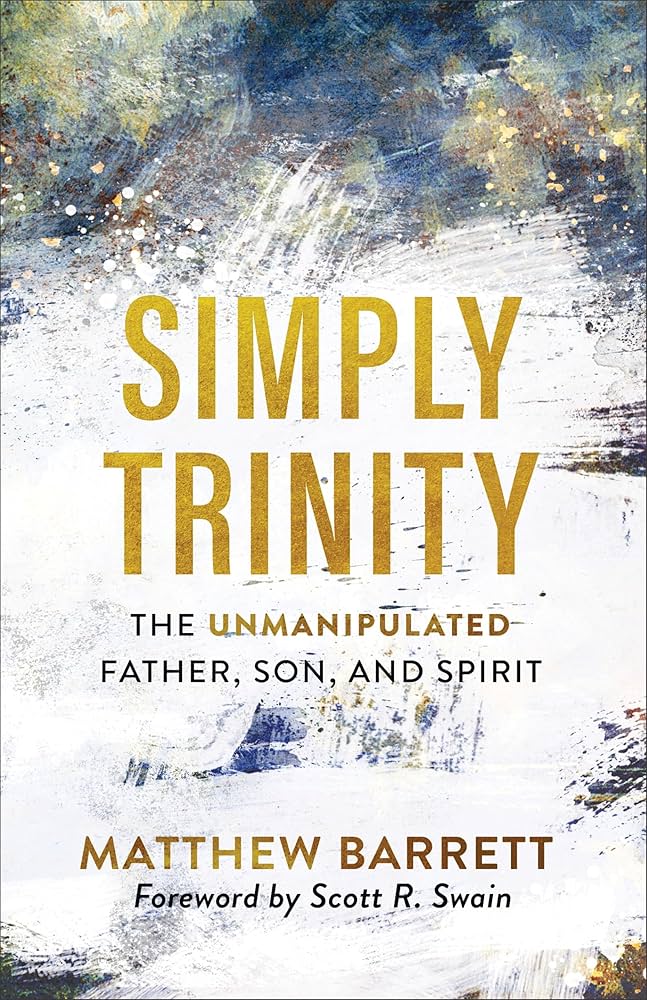
Simply Trinity, by Matthew Barrett. A Review.

Looking for a not-so-technical book which explains the doctrine of the Trinity? Matthew Barrett’s Simply Trinity: The Unmanipulated Father, Son, and Spirit would be a good place to start.

Exactly 1700 years ago this year, back in 325, a gathering of Christian leaders at the modern lake-side city of Iznik, Turkey began a process which took almost a century for the brightest minds in Christendom to hammer out the basic idea of the Triune nature of God. Even still, what the Nicene Creed summarizes regarding the doctrine of God has generated volumes of theological works down through the ages. Millions of Christians (though not all!) recite the core features of the Trinity expressed in the Nicene Creed every week during worship services. But once you go beyond the idea of “One God in Three Persons”, it can be intimidating to try to think through what it all means.

The doctrine of the Trinity is one of the most central doctrines of the Christian faith, but it is also one of the hardest theological concepts to grasp without falling off the edge into heresy. As a young Christian myself, I early on adopted the analogy of water to explain the Trinity: one substance with three distinct states: a gas like steam, a liquid like water, and a solid like ice. It sure made sense to me back then. Little did I know that such an easy formulation is regarded as a heresy by some of the most brilliant theologians in the church.

Ouch.

While some authors, like the 5th century African Saint Augustine of Hippo, have written classic works on the Trinity, others have distorted the doctrine or rejected it as unimportant. The father of 19th century Protestant liberalism, Frederick Schleiermacher, pretty much dismissed the doctrine of the Trinity as a metaphysical waste to be easily disposed of.  In response, more than any other theologian of the 20th century, the Swiss thinker Karl Barth recovered the doctrine of the Trinity as part of the core teaching of Christianity, rescuing it from Schleiermacher’s attempts to discard it. Conservative evangelical theologians since then have taken a renewed interest in articulating this doctrine of God for the postmodern era. Some get it right, but according to Matthew Barrett, a professor at Midwestern Baptist Theological Seminary, some have gotten it terribly wrong.

Simply Trinity: The Unmanipulated Father, Son, and Spirit. Baptist scholar Matthew Barrett wants to revive the classic doctrine of the Trinity, keeping the doctrine of God unmanipulated by contemporary social concerns.


Recovering the Classic Doctrine of the Trinity

In Simply Trinity: The Unmanipulated Father, Son, and Spirit, Matthew Barrett is concerned that even in some of our best evangelical seminaries that many have fallen into a kind of “trinity drift,” whereby Christian thinkers have ever so increasingly veered away from the classic formulation of the Triune doctrine of God, as articulated in the famous Nicene Creed. While some of the terminology and names associated with the great 4th century debate over the Father, the Son, and the Holy Spirit will be unfamiliar to some, Matthew Barrett wants to make the doctrine of the Trinity accessible to interested lay persons who do not know who either Arius or Athanasius was.

Oddly enough for a serious book on theology, Simply Trinity is actually a fun read. Barrett tosses out enough pop culture references to engage his audience, mainly ordinary Christians who want some type of fairly easy read to try to make sense of a complex doctrinal topic. Simply Trinity is not only educational, it is entertaining, listening to it in Audible audiobook form.

Harkening back to the movie classic, Back to the Future, Barrett invites the reader regularly to go “back to the DeLorean,” to meet some of the figures in church history who wrestled with terms like “essence” and “person,” when we think about the Father, the Son, and the Holy Spirit. Barrett apparently loves basketball, so he envisions a kind of “Dream Team” to champion the cause of Nicene Orthodoxy. The NBA has had its Magic Johnson and Larry Bird, but the church has had its Athanasius and Thomas Aquinas.  Did you know that the Puritan theologian John Gill was the “Patrick Ewing” of trinitarian authors, or that Augustine of Hippo was the “Michael Jordan” of the early church? It is a clever way for Barrett to introduce some deep ideas. I think it works.

In Simply Trinity, Barrett, the host of the Credo Magazine podcast, wants to argue that what makes the doctrine of the Trinity so beautiful and essential to faith is its simplicity. In summary, the Father is unbegotten, the Son is begotten, or generated from the Father, and the Spirit is spirated, or breathed out, from the Father. These qualities have to deal with the internal character of the persons in terms of their origins, often called the “immanent” Trinity.  God also acts in history, which displays his external relations to the creation, what is often called the “economic” Trinity.  The “immanent” Trinity is about who God is, whereas the “economic” Trinity is about what God does.

Yet as Barrett sees it, the problem with a lot of modern understandings of the Trinity is that ideas have been invented by theologians regarding the “economic” Trinity, and that these ideas have been imported back into the “immanent” Trinity, thereby causing distortions as to who God really is.

“To be blunt, they have not revived the Trinity, but they have killed it, only to replace it with a different Trinity altogether – a social Trinity – one that can be molded, even manipulated, to fit society’s soapbox” (Barrett, 92).

Barrett is bothered by what he understands to be conceptions of a “social doctrine of Trinity,” emphasizing what God does, as a model for human interpersonal relationships, whether these be principles for governance and politics, economic structures, the organization of the church, and how Christians should think of marriage and family.

Jürgen Moltmann, the great German Reformed theologian of the late 20th century, though not fully a conservative evangelical, pioneered the concept of a “social trinity.” Moltmann developed this theology in an effort to provide a Christian basis for relations within society, and other causes, ranging from care for the environment to a critique of economic systems, like capitalism. Theologians, both liberal and conservative, have followed Moltmann in his wake to apply the model of “social trinity” to other areas of human communal life.

To make his case against a “social trinity,” Barrett sufficiently rehearses the history of the Nicene controversy of the 4th century, and how some of the best theologians since then have reaffirmed the truth of the classic Nicene doctrine of the Trinity. Names like Arius and Athanasius emerge, helping to form the narrative for this ancient theological battle of ideas. Along the way, Barrett illustrates his points through a fictive admirer of Jesus, a Jewish woman named Zipporah, who narrates her own encounter with Jesus and the religious leaders who opposed him. It is a pretty creative way to educate people about the classic doctrine of the Trinity, without diving too much into sophisticated theological jargon.

However, the zinger comes when Barrett attacks the efforts of “social trinitarian” scholars who inadvertently distort the classic doctrine of the Trinity. He chides evangelical egalitarian scholars who base the relations within marriage, between husband and wife, on the supposedly social arrangement within the Triune persons in the Godhead. A husband and wife are essentially equal in their relations to one another because the social trinitarian theologian says that this mirrors the essential equality between the persons of the Godhead. But this is all wrong, says Barrett, because this way of talking about God is really a manipulation of the doctrine of God to serve a kind of social arrangement within human communities. Keep it simple, says Barrett, in response. Do not distort our understanding of God by introducing elements within trinitarian thought that no one before the modern era ever considered.

The Eternal Functional Subordination of the Son (EFS) as an Unhelpful Modern Theological Innovation

But Matthew Barrett saves his most stinging critique to take down the modern concept of the Eternal Functional Subordination (EFS) of the Son, advanced by scholars like Bruce Ware and Wayne Grudem (chapter 8).  In the EFS view, God is ultimately defined in terms of a pattern of authority and submission within the Godhead. For example, the Father is in authority and the Son is in submission to the Father.  Why is this important? Because it explains the earthly human pattern as to how a wife is to submit to the authority of her husband.

Classically understood, when the Son became incarnate as Jesus the Messiah, the Son was indeed submissive to the authority of his Father.  This activity of God through the incarnation is about what God has done, but the EFS theologians have projected this functional arrangement of the Father in authority and the Son in submission back into the very immanent, ontological aspect of God in all eternity.  The EFS theologians maintain that such an arrangement is gladly accepted by both the Father and the Son, therefore there is a kind of equality within God, so it has the appearance of orthodoxy. But Barrett makes the case that the EFS view ultimately veers away from the classic doctrine of God by projecting something from the economic activity of God towards humanity back into God’s very internal relations, a violation of Christian truth which has been received down through the ages.

What really shocked me was to learn about the EFS tendency to suggest that each person of the Trinity has a will of their own (chapter 10).  For when one speaks of an eternal function of subordination of the Son to the Father, it implies that the Son has a will distinct from the Father’s will, with the same idea applying to the Spirit. This does border on tritheism, as the early church fathers aligned with Nicaea argued for the singularity of the divine will, and not three distinct wills.

What makes Matthew Barrett’s critique so striking is that Barrett acknowledges that he is fully committed to a complementarian view of marriage and church office, namely that the husband is the head of the wife, and that only qualified men are to serve as elders of a local church. But Barrett is fully convinced that what EFS theologians have done is to try to bolster their particular brand of complementarian theology by wrongly drawing on a false view of the Trinity, in order to support their views.

Regarding his criticism of the Eternal Functional Subordination of the Son (EFS), Matthew Barrett makes a most compelling case that EFS is off-the-mark.  Back in 2016, evangelical Twitter exploded in controversy when another complementarian Bible scholar raised the spectre of EFS as being “heresy,” which generated hundreds and hundreds of comments online back and forth. Now that the air has cooled down several years later, in 2021 Matthew Barrett has written a very careful, sober case for why EFS, despite whatever good intentions it may have had initially, is simply barking up the wrong tree. Is EFS heresy? Well, if it is not, it sure leans in a direction away from the received tradition of the church, and we need a course correction, if we are going to have a fully robust, and simpler view of the Trinity as Matthew Barrett proposes.

Other reviews of the book are mostly very positive. However, defenders of EFS will probably say that Matthew Barrett has straw-manned their position, and misrepresented what they are trying to say. Perhaps this is the case, but I am not so sure. It is quite telling that such a committed complementarian thinker regarding marriage and local church elders would argue so strongly against the EFS view. One reviewer even acknowledges that Matthew Barrett once held to an EFS-like view, though Simply Trinity makes the case that he has now repented of that wrong viewpoint. So, I find it hard to believe that Barrett would so badly mischaracterize the weakness of the EFS position, if he indeed once held it himself.

On the other side of the gender debate, egalitarian critics of Matthew Barrett’s position argue that a complementarian view of male/female relations collapses without the EFS doctrine of the Trinity. But this alternative view does not hold up very well. An egalitarian must still find an explanation for passages like 1 Corinthians 11:2-16 and 1 Timothy 2:8-3:15, which are difficult passages that simply can not be easily waved away. Long before EFS became fashionable in evangelical circles, Christians have historically held to some kind of complementarian view of gender relations, between male and female. The fact that many complementarian scholars agree with Matthew Barrett testifies to the fact that complementarian theology is not tied to the hip of an EFS doctrine of the Trinity.

The strongest takeaway for me is in Barrett’s critique as to how advocates of EFS misuse 1 Corinthians 11:3, their primary New Testament prooftext,  to defend the Son’s eternal functional subordination to the Father:

…when Paul says the “head of a wife is her husband, and the head of Christ is God” (11:3), he has in view the incarnate, suffering servant, who fulfilled his mission by means of his obedient life, death, and resurrection as the Messiah (Christ). There is absolutely nothing in the immediate or wider context that says anything at all about the Son apart from creation and salvation within the immanent Trinity. To infuse and impose discussions of immanent Trinity on this text is a failure to treat the context with integrity. Paul has in view the salvific lordship of the anointed One, the Messiah (Barrett, chapter 8).

For if the EFS advocates were correct, Paul would have said that the head of the Son is the Father, and not what he did say, “the head of Christ is God.” Paul intentionally speaks of the Son’s incarnate ministry as the Messiah, and not the internal relations between the Son and the Father. Without 1 Corinthians 11:3, the support for the EFS view basically falls apart.

Critical Engagement with Matthew Barrett’s Book on the Trinity

The book is not perfect, as there are a few places in Simply Trinity that left me twitching a bit.  In chapter 10, Barrett flies his Reformed tradition colors rather proudly with his reference to the “doctrines of grace” embodied in the “five points of Calvinism.” That right there is enough to send non-Calvinist Christians into fits. But what was so odd is that I really did not get how Barrett’s appeal to the “doctrines of grace” really tied into the substance of his argument regarding the inseparability of the persons of the Trinity. Barrett could have just as easily made his point without annoying his non-Calvinist readers.

In his chapter 9 on the “spiration” of the Spirit (which in most versions of the Nicene Creed is called the “procession” of the Spirit), Barrett has a sidebar discussing the vexing issue of the filioque. In 589 C.E., about two hundred years after the Nicene Creed was finally formalized, the Council of Toledo in the West modified the Nicene Creed to say that the Spirit “proceeds from the Father and the Son.” That last phrase, “and the Son” is filioque in Latin. Originally, the Creed as agreed upon by both East and West simply read that the Spirit “proceeds from the Father.”

The insertion of the filioque has been regarded as heresy by the Eastern church ever since the Great Schism of 1054 C.E., as it unilaterally changed the Creed without the full participation of the East. Most Christians in the West are completely oblivious to this controversy. But if you ask an Eastern Orthodox Christian, who converses with Western Christians, the filioque controversy stands out as a real sore point. I think our Eastern Christian friends are right to register their protest.

Oddly, Barrett justifies the action of the Council of Toledo, appealing to Anselm’s reasoning that the addition of the filioque protects against any slippage of the church back into the heresy of Arianism, which compromises the fully divine nature of all three persons in the Godhead. But this justification seems like a contradiction of the main thesis Barrett is advancing in the Simply Trinity, that we should not be monkeying with the doctrine of the Trinity that was originally formulated in the 4th century by the early church fathers.  For if you are going to be consistent and poke holes at modern innovations like EFS, you should also poke holes at earlier post-Nicene innovations from the 6th century, like the filioque.

Barrett criticizes modern translations, which the older KJV translated as “only begotten,” now as simply “only,” as John 3:16′s “For God so loved the world he gave is only Son.” But one need not drop the concept of God the Father “begetting” the Son because the Greek word monogenes is translated in a less interpretive manner in today’s translations. Later in chapter 7, Matthew Barrett does come back to acknowledge this: The idea that Jesus is God’s “only begotten Son” can be inferred from this and other passages. It is sufficient to ground the language of the Son’s “only begotten-ness” in other concepts aside from the contested analysis of the Greek word monogenes.

These criticisms aside, my takeaway is that Simply Trinity has changed my mind in a more general way. Back in the 1990s, I held to an egalitarian view of marriage and church structure with respect to elders, and I largely based it on the kind of “Social Trinitarian” theology being advanced back then in evangelical egalitarian circles. But Matthew Barrett has convinced me that whether promoted by egalitarian scholars or by complementarian scholars, trying to use the Trinity as a model for how to conceptualize male-female relations in either marriage or the local church is a wrong-headed way of thinking, in that it invariably leads to a distorted way of thinking about God.

More generally, Matthew Barrett as an evangelical Protestant makes a strong appeal to the “Great Tradition,” the confluence of thought found in Protestant, Roman Catholic, and Eastern Orthodox traditions, which can be traced back to the Council of Nicaea. He laments that a number of evangelical scholars in the name of what Barrett calls a ‘narrow, crude biblicism” have jettisoned the Great Tradition’s formulation of the Trinity in favor of something novel. This is refreshing, as in my mind, too many evangelical Protestants have confused their understanding of sola scriptura; that is, scripture and scripture alone as the final authority for matters of Christian faith and practice, with a kind of “nuda scriptura“; that is, scripture naked, whereby the Bible is stripped of certain understandings of tradition which have served the church well going back to the era of the early church fathers.

This is not to say that the patristic tradition, associated with early Christian luminaries like Saint Augustine and Ireneaus are infallible.  Historically orthodox Christian faith was formed within the crucible of the early church. However, it is to say that if you feel compelled to ditch a traditionally received interpretation of the Scripture going back to the era of the early church, the evidence in favor of a revised view should be able to pass a high bar for acceptance. In the case of social Trinitarian models of theology, whether that be EFS or even egalitarian interpretations which Barrett critiques, those revisionist solutions have not met that high bar standard. Matthew Barrett has convincingly shown that novel concepts, such as the Eternal Functional Subordination of the Son, have set the bar far too low, thereby compromising the integrity of the Great Tradition. In effect, theological positions like EFS have managed to tweak the doctrine of the Trinity to serve purposes that were never envisioned by the 4th century architects of Nicaea who hammered out the classic doctrine of the Trinity.

Even if you lay the controversial chapter 8 aside, there is much in the other chapters of Simply Trinity that can help any Christian have a more confident view about the doctrine of the Trinity. A Christianity Today magazine review hails Simply Trinity with this:  “For anyone who has read confusing blog posts about the Trinity in recent years, the book will help you regain your theological bearings.” Each chapter has helpful key point summaries, to keep the reader from getting lost, and interesting sidebars contain juicy nuggets, which helps to retain the reader’s focus. From even a purely devotional perspective, Simply Trinity is just a joy to read. The book captured my attention from beginning to end. I wish all theology books read like this one!!

As 2025 is the 1700th anniversary of the Council of Nicaea (or “Nicea,” as some spell it), look for a few more blog posts commemorating this all important date in Christian history.

The folks at Remnant Radio have a good interview with Matthew Bates about Simply Trinity. Enjoy!