Tag Archives: Church History

Bullies and Saints, by John Dickson. A Review.

The Crusades. Racism. Slavery. Sexual abuse scandals….among Christian leaders, and even in contemporary Christian music (… the Newsboys???) .

The history of Christianity often gets a bad rap in the culture these days. Is it possible to be honest about Christians behaving badly over the centuries, without becoming cynical about it?

In recent decades, a lot of apologies have been coming forth about Christians not acting much like Christians.  Back in 1992, the Vatican apologized for the mistreatment of Galileo, admitting that Galileo was right and the church was wrong. In 2015, President Barack Obama acknowledged that during the Crusades, “people committed terrible deeds in the name of Christ.”  In the year 2020, we heard all about the horrific legacy of slavery and racism in America, and its links to Christianity, particularly of the fundamentalist variety.

Such apologies have been lauded for their honesty, but have cast serious doubt on the integrity of Christianity. This has led many to believe that the Christian church has done more harm than good in the world. So, is it time to ditch the Christian faith for something better? Or is there more to the story?
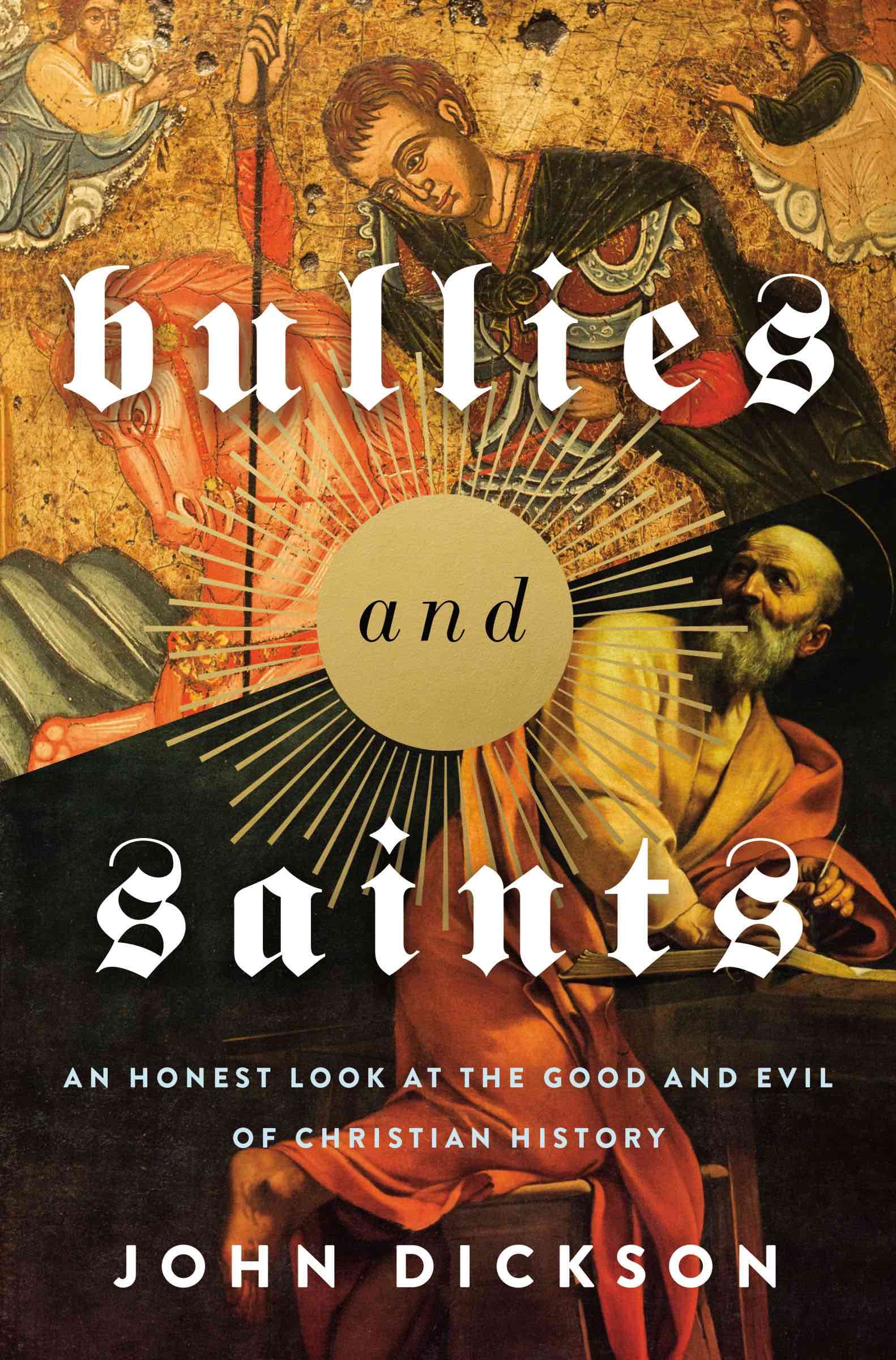
 

Bullies and Saints: An Honest Look at the Good and Evil of Christian History, by John Dickson, looks at both the good and bad side of church history.


Dealing with “Church Hurt”

I recently finished reading Bullies and Saints: An Honest Look at the Good and Evil of Christian History, by John Dickson, host of Australia’s number one religion podcast, Undeceptions.  Dickson has been known in Australia for producing several documentaries about church history, a lot of it about the darker side of Christian history.

In Bullies and Saints, Dickson takes a hard look about both the good side and the darker side of church history. Some have objected that the exposure of that darker side is like airing someone’s dirty laundry. How unpleasant can that be?

In response, John Dickson takes a balanced approach. Whenever Dickson faces the challenge that he is focused too much on the negative, his response is that one of the first things that Jesus taught his disciples is that “they should be willing to admit their own failure to love, their own moral bankruptcy” (Dickson, p. 37).  Citing Jesus’ sermon on the mount, we hear Jesus’ saying “Blessed are the poor in spirit.”

The vocation of the Christian is to be a prophetic voice, to call out the existence of injustice in our world. But as Jesus taught in that same sermon, “Why do you see the speck in your neighbor’s eye, but do not notice the log in your own eye?”  Christians really have no right to call out sin in the world around them until Christians are willing to call out sin in their own lives.

There is a lot of “church hurt,” experienced by people who have spent time in a Christian church, only to walk away from the experience with a bad taste in their mouth. But as John Dickson argues, an instrumentalist may play a musical piece written by Beethoven poorly, leaving the audience disappointed. But the fault for such a bad performance is not the fault of Beethoven. It is the fault of the poorly trained instrumentalist instead.

Likewise, simply because Christians fail to live up to standards set by Jesus Christ, this does not mean that Christianity as defined by Jesus is faulty, or untrue. Rather, it means that such Christians are at fault, either due to their own ignorance, or a failure to understand what being a Christian is all about. The wisdom of G.K. Chesterton is appropriate: “The Christian ideal has not been tried and found wanting. It has been found difficult; and left untried.”

Christians behaving badly need not require that Jesus himself and his message be rejected. In fact, the opposite is the case. The existence of bullies in the church confirms Jesus’ own teachings, and that what Jesus said and did was and indeed is still true. This is the bottomline message in John Dickson’s Bullies and Saints, and he makes an historically responsible case for it. Bullies and Saints is a fantastic, enjoyable, and learned book, a one-stop shop for a balanced look at the good and bad parts of church history across the centuries.

(As an aside, I also consulted John Dickson’s work a good bit in the Veracity complementarian/egalitarian controversy “women in ministry” series, particularly in my review of Kevin DeYoung’s Men and Women in the Church. Spoiler alert: I think John Dickson is mostly right, and has the better end of the argument than does Kevin DeYoung… but that is quite another topic)

A Balanced Approach to Bullies and Saints in Church History

In Bullies and Saints, we learn about the bullying tactics sadly on display by those who have taken up the name of Christ. A few anecdotes are worth reporting.

During the Crusades, church leaders, including one of the most revered and saintly, Bernard of Clairvaux, encouraged knights and others who marched off to defeat the Turks. Bernard wrote a letter around 1145 to some of his followers, promising that such military efforts were to be viewed as a kind of spiritual pilgrimage, an act of penance to blur out and erase one’s own sins: “…Where it is glory to conquer and gain to die. Take the sign of the cross, and you shall gain pardon for every sin that you confess with a contrite heart” (quoted in Dickson, p. 10).

On the other hand, in Bullies and Saints we also learn about some very positive contributions to society in church history. Emperor Constantine is often described as a villain who wedded the Christian church to state power, thereby corrupting the church in the process. Yet Constantine, the Roman emperor who first granted toleration to Christianity with the Edict of Milan in the early 4th century, also passed a legal ruling to make divorce more difficult, one of the first efforts in human history to promote women’s rights.

In Roman history before Constantine, divorce laws put women at a distinct disadvantage.  In that culture, a woman’s family was required to bring a dowry, whether that be a sum of money or other material wealth, to a marriage. But if the marriage was abruptly cut off by the husband, the wife would often be left in a state of significant financial loss. Based on Christian teaching that God created both man and woman in the image of God, Constantine ruled that if a husband divorced his wife on trivial grounds:

….he must restore her entire dowry, and he shall not marry another woman. But if he should do this [i.e., marry another woman after divorcing on trivial grounds], his former wife shall be given the right to enter and seize his home by force and to transfer to herself the entire dowry of his later wife in recompense for the outrage inflicted upon her” (quoted in Dickson, p. 75).

Think about it. A 4th century Roman emperor is saying stuff that mirrors the 21st century #MeToo movement. That surely made an unfaithful husband think twice before “shacking up” with another woman. Pagan Roman society before Christianity came along offered very little defensive support of women taken advantage of by undisciplined men.

Constantine also passed an early version of legal code outlawing the abandonment of infants. In pre-Christian Roman society, it was perfectly legal and moral to leave a baby abandoned if the family did not want the baby, subjecting the helpless child to certain death, unless someone else wandered along to either rescue the child, or to be picked up by a child trafficker (Dickson, p. 75).

Score yet again another point in favor of the influence of Christianity. It balances out the common negative narrative popularized on the Internet today.

Church History is a Complicated, Mixed Bag: A 5th Century Version of the 2020 “George Floyd” Riots

John Dickson corrects a number of misunderstandings about church history, such as the following example. This is a bit of a rabbit trail, but I found it all fascinating, and why you can not always trust popular revisionist history.

Similar to the George Floyd riots in the summer of 2020, Christians rioted in the city of Alexandria, Egypt,  in the early 5th century.  The 2020 death of George Floyd triggered riots across the United States, encouraging thousands to vent their frustrations after being subject for months to social-distancing restrictions in the wake of the COVID-19 pandemic.

Spurred on by social media algorithms designed to get more clicks, the riots spread across the world, leading to the dismantling of statues honoring leaders of the 19th century southern Confederacy, while also inspiring calls to take down statues of venerable modern heroes, like that of Jefferson and Washington in the U.S., and of Winston Churchill in London, the British statesman who stood up against Hitler’s Nazi Germany. Even a statue of Captain James Cook, the English sailor who “discovered” the eastern seaboard of Australia in the 18th century, needed a police guard established in John Dickson’s native Australia (Dickson, p. 118).

Likewise, when the Christians rioted in Alexandria, Egypt, less than a few decades after Christianity was declared the official religion of the Roman Empire, the violence that erupted left its mark upon history. Knowing at least something about church history, I had always thought of Cyril of Alexandria, the bishop in that city at the time, as a great Christian hero, despite some theological controversy along the way. Cyril was engaged in an important dispute with a bishop at Constantinople, Nestorius, that the average Protestant evangelical Christian knows nothing about. (If you do not know who Nestorius was, just consider the idea that the Christian movement that he led eventually brought the Christian faith into faraway places, like China, hundreds of years before the Protestant missionary movement. Supporters of Nestorius today say that Cyril of Alexandria misunderstood Nestorius). Though Cyril’s ideas received further tweaking, Cyril campaigned against his opponents in favor of the theological concept of Jesus having both a divine nature and a human nature, united together.

Jesus is both God and man, at the same time, though the details of this union of natures remain a mystery. Cyril’s campaign helped to pave the way to the Council of Chalcedon in 451, which affirmed the full divinity and the full humanity of Jesus Christ, which the vast majority of Christians continue to affirm to this day.

The history of Christianity would have been quite different without Cyril of Alexandria, especially regarding the Incarnation, a core Christian doctrine most believers in the 21st century take for granted. Cyril is regarded as a saint in both Roman Catholic and Eastern Orthodox communions. But Cyril’s legacy is actually quite complicated, something I knew very little about before reading Bullies and Saints.

Many critics of Christianity blame Cyril for inspiring a mob to attack and murder one of the greatest philosophers of the day, a woman named Hypatia, a leading advocate for reason and science. Such critics cast Cyril as an anti-intellectual zealot, who promoted hatred against science and against women. Unfortunately, such criticism has been mainstreamed into popular history story-telling in contemporary Western culture.

This narrative about Cyril of Alexandria has been promoted by both Edward Gibbons in his 1776 The Decline and Fall of the Roman Empire, and more recently, the world-renowned scientist Carl Sagan in his widely-acclaimed 1981 PBS documentary Cosmos. As a PBS fan back in the 1980s, I took in the message of Cosmos as pure “gospel truth,” though I remember little about the television program now. But there is more to the story, including details that Sagan failed to tell his television viewers, viewers like me.

Yes, a mob who looked up to Cyril did murder Hypatia.  But what is often overlooked is that the reason for the attack had little to do with hatred of philosophy, the fact that Hypatia was a woman, or even issues directly related to Christianity. Political and socio-economic factors played a much larger role.

John Dickson and the sources he uses fill in the gaps of the common narrative: Tensions between Jews and Christians in Alexandria had become very intense in Cyril’s Egypt. Relations between Jews and pagans in Alexandria were arguably just as bad, if not worse, and had been that way for several centuries before Cyril.

Pogroms led by Alexandrian pagans against the city’s Jewish population resulted in perhaps thousands of deaths, as early as a decade after Jesus’ death. The Christian movement had barely got off of the ground at that point. Mistrust of the pagan elites by the relatively poorer Jewish community was inevitable, in the intervening centuries. Yet as time moved on and Christianity eventually eclipsed paganism in political influence in Alexandria, with many former pagans becoming Christians, much of that same hostility from the Jewish community was now redirected towards the new Christian elite.

Bishop Cyril came to believe that the current governor of Alexandria, ironically a baptized Christian named Orestes, had sided against the Christians in favor of the Jews in that city. Orestes had ordered an outspoken Christian to be tortured, resulting from a public dispute this man had with the Jews.

The influential bishop Cyril resented Orestes’ actions. Orestes appealed to Hypatia, a pagan philosopher respected by both pagans and Christians, in order to find a peaceful solution to a crisis that was spiraling out of control. But some of Cyril’s supporters from the lower classes got out of hand and rioted, confronting Hypatia themselves. The confrontation escalated, and the philosopher was killed. The Christian rioters had thought that the pagan Hypatia was aligned with the Christian Orestes, in favor of the Jews against the Christians under Cyril’s influence.

Hypatia, whose family were members of the ruling class as well, had been caught up in a dispute between two professing Christians, the bishop Cyril and the governor Orestes. These elements of the story are never told in Carl Sagan’s Cosmos documentary. (Atheist YouTuber and history blogger Tim O’Neill sets the record straight, as does John Dickson in Bullies and Saints).

Did Cyril order his followers to have Hypatia killed, or did he simply turn a blind eye to enthusiasts who supported him? Historians debate this point. Either way, it would be easy to conclude that Hypatia’s death was a clear example of Christians behaving badly, even with the story’s complications.

However, what is also often neglected is that several of the most vocal supporters of Hypatia were Christians themselves, and these Christians strongly rebuked Cyril and his hot-headed enthusiastic followers, which included easily swayed monks. Much of the history about Hypatia was preserved by Christians sympathetic to her.

In reading Bullies and Saints, you get the picture that the controversy over Hypatia’s death was more of a class dispute as opposed to a religious dispute. Cyril of Alexandria is still in many ways a hero to me, but I can see his clay feet more clearly now. While Cyril’s behavior is certainly less than exemplary, the complex details of the story undermine Sagan’s oversimplified narrative of anti-intellectual, misogynistic Christians attacking a pagan, scientifically-learned female philosopher.

Recommended for a Fair Analysis of the Good and Bad of Church History

Stories like these are peppered throughout Bullies and Saints, offering a balanced analysis of Christians acting as saints as well as being bullies. I have only covered the highlights from the first third of the book.  Dickson goes on with stories beyond the era of the early church, from Augustine’s sophisticated rationale with “just war theory,” to the Inquisition of the medieval period, to the clerical abuse of children by clergy in the modern era. Dickson hits all of the highlights (and “lowlights”) of church history, correcting misinformation with good information along the way.

Dickson moves with ease, acknowledging on the one hand, the anomaly of Charlemagne’s forced conversions of the Saxons (followed by Charlemagne’s eventual relaxation of such a policy, due to the saintly influence of Alcuin of York). On the other hand, Dickson exposes the highly problematic arguments in Stephen Greenblatt’s The Swerve, a popular atheistic attempt to blame Christianity for the medieval “dark ages,” and the Christian church’s supposed rejection of science and the intellect.

C.S. Lewis has been known for criticizing “chronological snobbery,” the tendency to think that we as modern people are more morally upright than our ancient and medieval predecessors. Bullies and Saints has the receipts that demonstrate the truth of Lewis’ argument.

A few surprises met me along the way through Bullies and Saints.  For example, have you ever heard of the Prayer of Saint Francis? “Lord make me an instrument of your peace. Where there is hatred, let me bring love.

I have sung songs based on this prayer ever since I was a little kid. The theme of peace was certainly a mark of Francis of Assisi’s spirituality, but the words of the prayer itself do not originate with him. I did not know that. Instead they were first published in a Roman Catholic magazine in 1912 by an unknown author, a poem that was extremely popular during the years of and following World War I.

Bullies and Saints makes for an extraordinary engaging read.  I listened to it in Audible form, and John Dickson does a great job reading the text himself.

Tim O’Neill, an atheist blogger, gives Bullies and Saints a very fair, considerate, and ultimately positive review, as O’Neill is known for his integrity when he comes to assessing popular history writing.

I highly recommend John Dickson’s Bullies and Saints as a well-rounded, balanced tour through church history, showing that one can acknowledge the many positive contributions of Christianity to the world, while being honest about the failures of Christians over the past twenty centuries, without descending into cynicism.



Why History Matters: That Tucker Carlson – Putin Interview

Here is a quick blog post about the recent Tucker Carlson exclusive interview with Vladimir Putin. I finally made my way through the entire 2-hour video, and I had one big takeaway part.

The posts that I write for the Veracity blog are mainly about Christian apologetics (how to defend your faith in an age when many hold Christian convictions to be rather suspect), but I also write about church history. It is not simply because I am a fanatic about history as a subject (a description I willfully accept), but because I fervently believe that historical amnesia is destructive to the church. The Tucker Carlson – Vladimir Putin interview is Exhibit A in making my case.

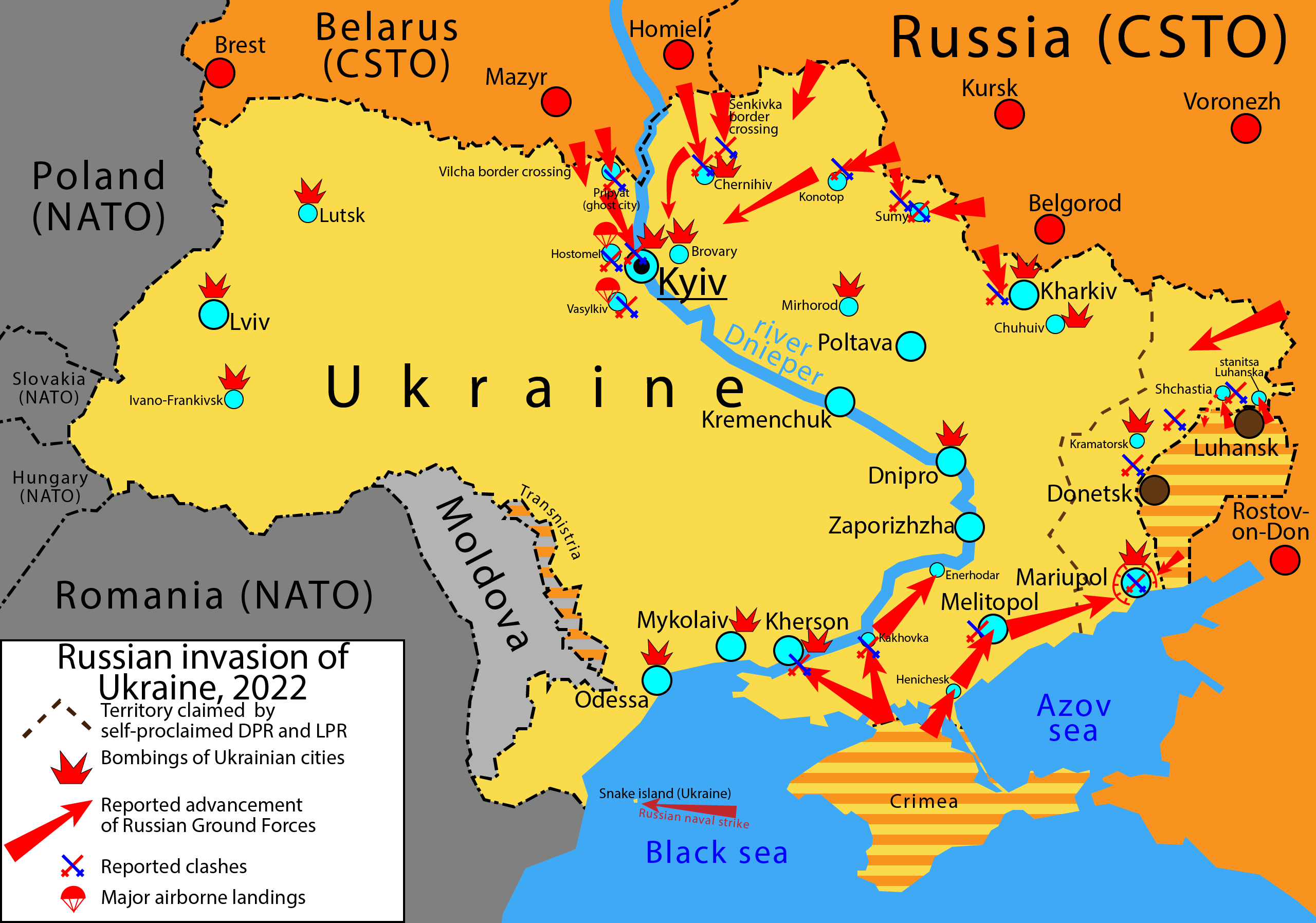
In the interview, President Putin took up about the first half an hour of the interview giving an historical justification for why Russia began attacking Ukraine two years ago.  Putin’s historical argument goes back over 1,000 years, to make the case that Ukraine is really part of Russia. But the argument is not just about ethnic identity. There is a deeply seated theological interpretation of history at work here.

Church history now bubbles up to the top of the 24-hour news cycle.


President Putin is convinced that Russian Orthodox Christianity also binds Russia and Ukraine together into an inseparable bond. The current war in Ukraine is a kind of “civil war” between different factions within the same Russian ethnic and religious family.

Nothing Putin said in the interview is really anything new.  But as historian Tom Holland comments in his reaction to the Carlson – Putin interview, the church history argument being advanced by President Putin is akin to the idea of the British government somehow coming up with a scheme to justify a complete takeover of the whole of Ireland because Saint Patrick came from Britain centuries and centuries ago to establish Christianity in Ireland.

Others have offered additional analysis of Putin’s assertion of certain “facts,” but Tom Holland’s utterly perceptive comments raises a crucial point. When an ideology becomes so strong that it keeps someone from entertaining the possibility that they might be wrong in their understanding of certain historical “facts,” then the consequences can be devastating.

Well over half a million casualties can be associated with the war in Ukraine over the past two years, with hundreds more being killed or wounded every day.

We see the same thing in the Israeli/Gaza conflict, as the body count increases daily, spawned by competing historical and theological narratives that extend back hundreds if not thousands of years.

We see this in disputes in church history, as different flash points continue to divide Christians today, due to theological differences which all look for historical justifications for such divisions.

Why does history matter, and even church history, in particular? Because without a proper grasp of history, the consequences can be devastating.


Regensburg: The 16th Century “Evangelicals and Catholics Together” … (That Failed)

Our tour group walking the streets of Regensburg, Germany. Remnants of the old Roman wall, dating back to the era of Marcus Aurelius, are embedded in various buildings throughout this old and beautiful city.

Our tour guide in Regensburg, Germany this past October had given us an excellent overview of this ancient city on the banks of the Danube. It had once been one of the northernmost points of the ancient Roman Empire, dating back to the reign of Emperor Marcus Aurelius. During World War II, Regensburg was one of the few German cities that escaped bombardment by the Allies, in the attempt to defeat the Nazis, which means that much of the city’s history is well preserved.

Still, I was filled with curiosity and asked our tour guide about the Diet of Regensburg in 1541, which was not mentioned during our 2-hour walk through the city.  After the tour was officially over, he kindly took us to the place where this famous dialogue was held, between representatives of the Roman Catholicism elite and the growing Protestant movement of the 16th century. The building where the meeting was held was next to a beautiful, yet unassuming city square.

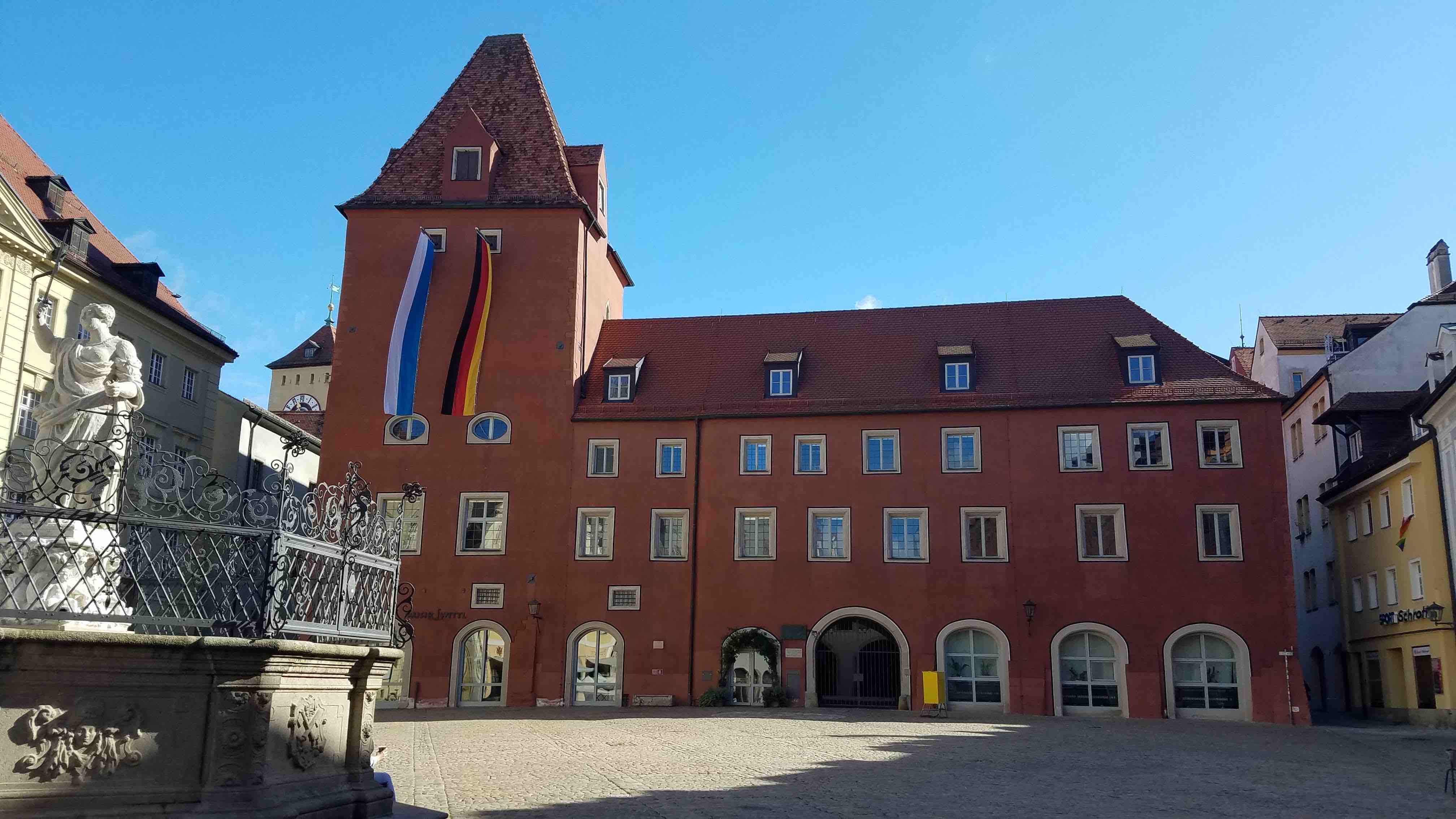
Haidplatz. In this building, off of this city square (though shaped like a triangle), the Diet of Regensburg took place in 1541. Today, Haidplatz is one of the locations where the popular Christmas Markets are held in Regensburg.


A virtual who’s-who of leading thinkers made the journey to this old city, to see if there was any way to heal the breach between the Roman Pontiff and Martin Luther. Luther’s number one cohort, Philip Melanchthon, as well as Johann Eck, Luther’s papal interlocutor at their famous debate in Leipzig, headlined the conference. But then there was Martin Bucer, the Reformation leader from Strasburg, along with Cardinal Gasparo Contarini, a leading Roman Catholic theologian, who sympathized much with the Protestants. Even a young John Calvin was in attendance.

The stakes were high. Unlike today when doctrinal debates among Christians might lead to church splits, where two or more groups simply agree to move along their own separate ways, confessional unity in 16th century Europe impacted more than just determining what church you would attend. The Holy Roman Emperor, Charles V, wanted the Christian peoples of Western Europe be of one accord in political allegiance, and political allegiance was drawn on church confessional lines.

While the followers of the Papacy and the followers of Luther squabbled with one another, a threat had been continuing to emerge from the east. The Islamic Turks had captured the famed Byzantine Christian city of Constantinople (now Istanbul) in 1453, and they were moving towards the west, in hopes of ultimately conquering Vienna, Austria, which was the gateway into the rest of Europe. Charles V was anxious that some acceptable theological/confessional solution be reached in order to contain the Turkish threat. A Europe with divided churches might not be able to stand against this looming threat from the east.

On top of the external threat, concerns internal to Western Christendom weighed heavily among Europe’s political leaders. What would become of the church lands scattered across the regions where Protestantism was gaining ground? According to some scholars, somewhere around 7% of the land in central Europe, on average, belonged in some fashion to the church: Would the Protestants lay claim to much if not all of the land being contested, or would the Roman church still retain title? It was a recipe for war within Christendom. It was a mess.

According to Peter Matheson’s Cardinal Contarini at Regensburg, which chronicles much of the story behind the 1541 proceedings at Regensburg, Charles V was willing to accept some form of toleration of Protestant beliefs within the empire. However, the official legate representative of Rome, Gasparo Contarini, was hoping for something more that just “toleration.” Contarini envisioned a start towards formal reunion among the Roman Catholics and the Protestants, at least by embracing what he considered to be certain essentials of “Catholic” faith.

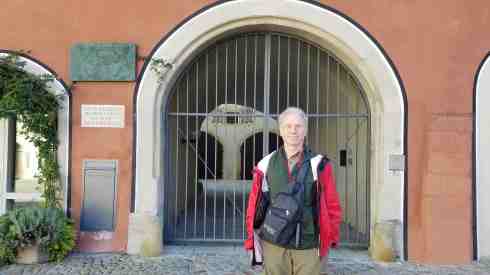
Way behind the gate, behind me, is a painting on the wall, marking the spot where the Roman Catholic and Protestant leaders tried to hammer out a peace solution between the two different theological camps.


Remarkably, both sides in the dialogue came to a number of conclusions that were in agreement with one another. For example, both the doctrines of creation and sin were discussed, and met with substantial agreement by both sides (It would only be until the Council of Trent took place that different theological conceptions of sin and sanctification would stiffen the divide between Protestants and the Roman Church). Surprisingly, a formulation regarding the doctrine of justification was agreed upon by all parties present.

So far, so good.

However, there were a few main sticking points that kept the conference itself from being a full success. First, there was the nature of Scriptural authority. What had the final say, the Bible itself, or the magisterial teaching authority of the Bishop of Rome?

The two sides were unable to agree. This was probably the biggest deal breaker, but the issue of the Eucharist made for another huge obstacle. A lesser dispute over the sacrament of confession and penance was another.

Sadly, even if the conference were to come to a full agreement on everything, the chances of the Diet’s success turned out to be slim. Luther himself was suspicious of the Diet, thinking that it was a waste of time and would not be fruitful, and the office of the Roman Catholic Pope pretty much thought the same way. In other words, the Diet of Regensburg might have been doomed before it even started.

The reputations of some of those who worked hard towards reunion suffered in the wake of the failure at Regensburg. On the Protestant side, Martin Bucer’s legacy was tarnished in the eyes of more entrenched Protestants, for trying to give too much of certain Protestant principles away at Regensburg, particularly on the doctrine of justification.

On the Roman Catholic side, while a frustrated Cardinal Contarini had ultimately and regrettably rejected the Protestant counter-proposals in contrast to his own, Contarini’s efforts at reunification with the Protestants were viewed as compromise among hard liners at the Vatican. Contarini died the year after the Diet of Regensburg. One can only speculate that the stress of being caught in middle of this dispute contributed to his death at age 59. As the conflict wore on through the mid-16th century, the Roman Catholic/Protestant divide only got wider.

Few today even know about the Diet of Regensburg. For example, I have yet to find an English translation of the full transcripts of the Diet available in print or online.


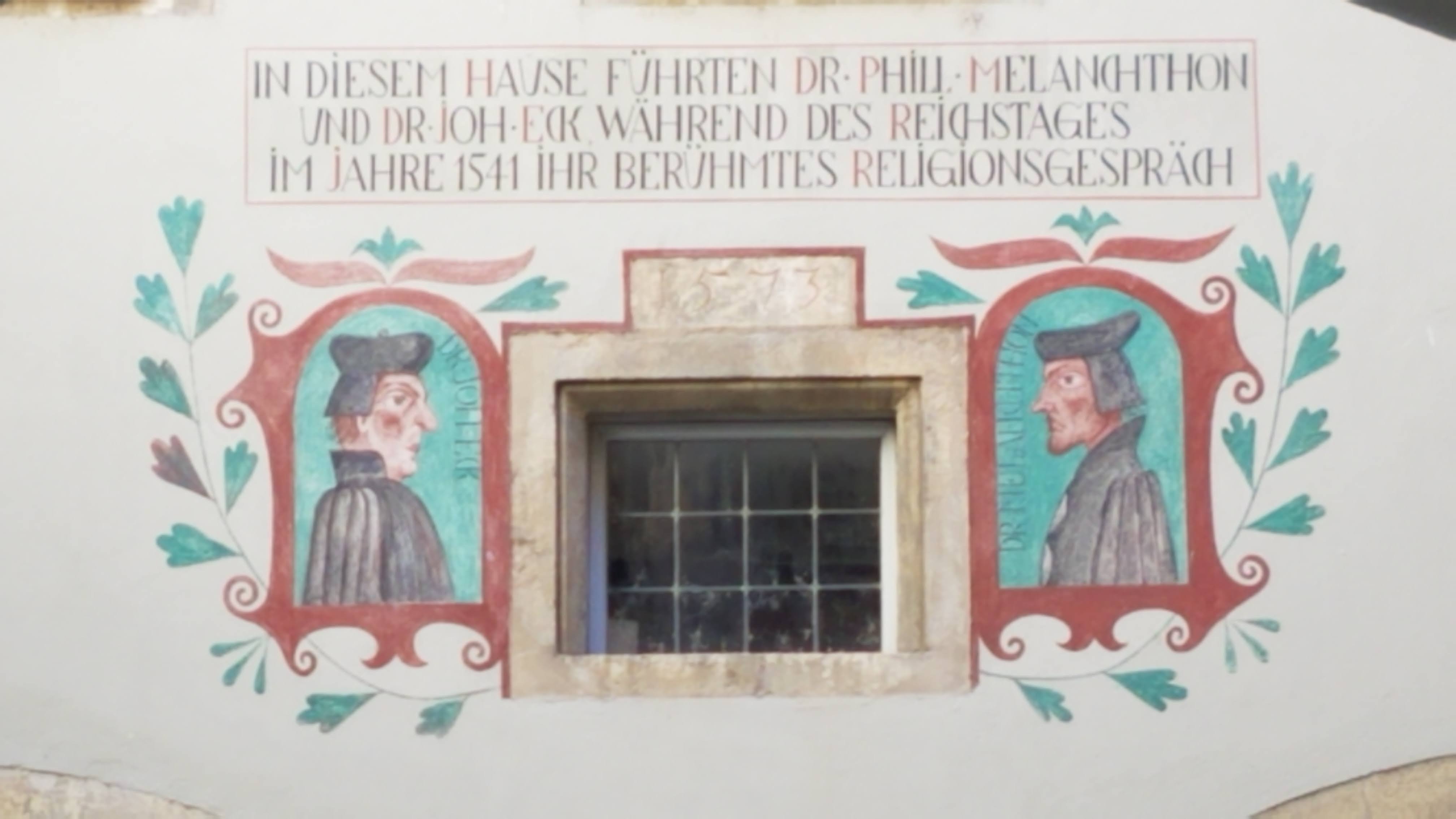
Zooming in on the photo above:  Roughly translated, the wall painting which features Melanchthon and Eck on either side reads: “in this house doctor phil melanchthon and doctor johann eck led their famous religious discourse during the imperial diet in 1541”


Neverthless, the Diet of Regensburg serves as a reminder of the importance of theological dialogue, in order to try to preserve the unity of the church, and work through theological disagreements.

But perhaps the timing was just all wrong….

Let us speed up some 450-ish years….

In 1994, the Lutheran-turned-Roman-Catholic theologian and First Things magazine editor, Richard John Neuhaus, and evangelical Protestant leaders, including Prison Fellowship’s Charles Colson and theologian J.I. Packer gathered together to hammer out a joint statement entitled Evangelicals and Catholics Together. That meeting was sort of like the 20th century version of the Diet of Regensburg. Out of those series of meetings, the joint statement noted points of agreement between Protestant Evangelicals and Roman Catholics in areas of doctrine as well as marking out common causes that both parties can work towards in promoting Christian concepts of culture. Evangelicals and Catholics Together has had their supporters, as well as their detractors.

Not too long after my wife and I returned from Europe, another session of Evangelicals and Catholics Together had met again and released an updated statement, 2022 Evangelicals and Catholics Together. This new statement is more about sharing a common vision of what it means to be Protestant Evangelical and Roman Catholics together in an age which has seen incredible culture shifts over the last ten years or so. Surely, the same type of criticisms that plagued the 1994 Evangelicals and Catholics Together statement, as well as the 1541 Diet of Regensburg, are still there. What is perhaps new this time around is that the dominant mode of Western culture in the 21st century appears to be at odds with certain core assumptions about cultural life shared by both Roman Catholics and Evangelical Protestants. In other words, Roman Catholics and Protestant Evangelicals have their serious points of disagreement, but both parties have far less in common with the trajectory that secular culture is taking. We have come a long way since the era of a divided Christendom in 16th century Europe.

Is this a new opportunity to try to heal the rift between Roman Catholicism and Evangelical Protestantism that the Diet of Regensburg tried to tackle (and eventually failed)? Time will tell.

For more on the Diet (or Colloquy) of Regensburg, read more about it from this previous Veracity blog post.

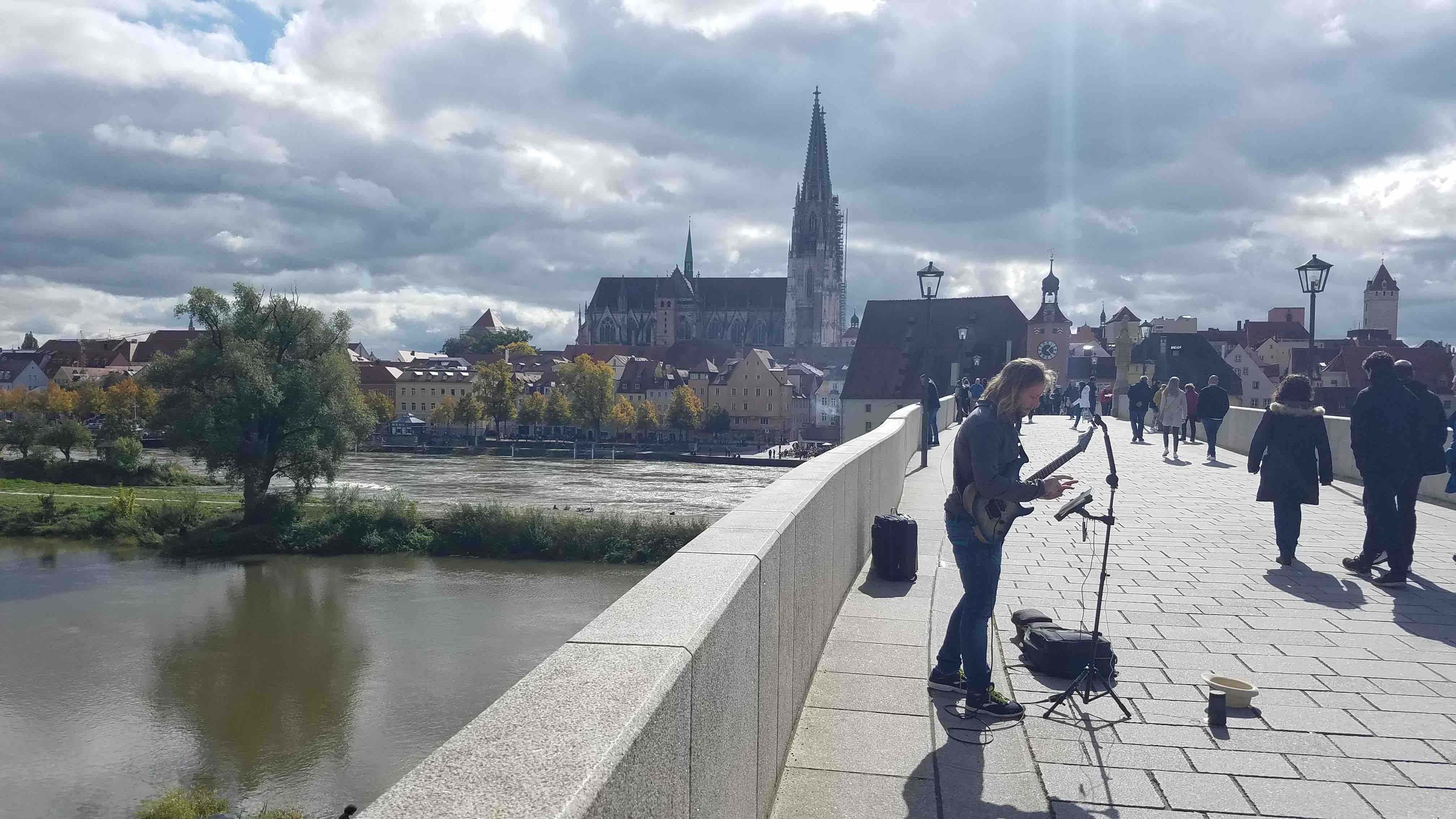
Crossing over the Old Stone Bridge, looking towards the old city center of Regensburg. Hundreds of tourists, mainly from the Danube-Rhine cruise ship industry, were in town the day I snapped this photo, and listened to this street musician crank up his battery-operated guitar outfit to play Led Zeppelin songs.


Defenestration of Prague & The Thirty Years War

My wife and I had the privilege of traveling in Europe for three weeks. Six countries: Germany, Austria, Hungary, Slovakia, Czech Republic, and Italy. Seven, if you include an airplane switch in Zurich, Switzerland.

The main event was to see the Passion Play in Oberammergau, in southern Germany. But it was followed by an 8-day cruise down the Danube, from Regensburg, Germany to Budapest, Hungary. But what I want to blog about here is something I saw the next three days after the cruise, while touring in Prague, in the Czech Republic. So, make this the third post, in a multipart series looking at church history in Europe.

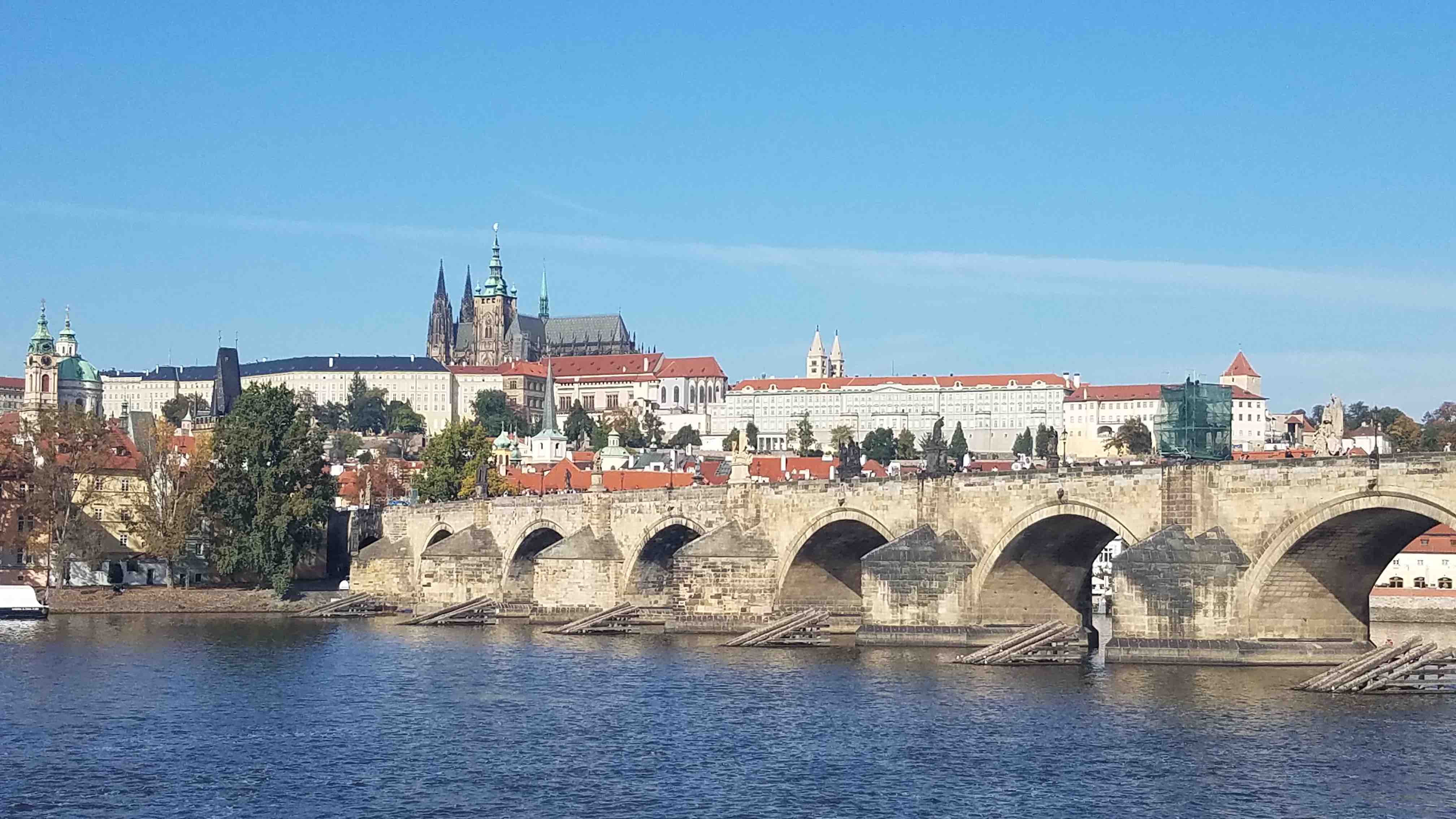
The Defenestration Window, at Prague Castle, where the Thirty Years War began. Several Roman Catholic representatives of the royal governorship were pushed out of the top window of this building, in protest over mistreatment of Protestant subjects.

The Prague Castle is a large complex of buildings overlooking the capital city of today’s Czech Republic, Prague. I had to ask our Czech guide where to find this particular spot, but I was interested in learning where the Thirty Years War technically started. I found it and took the snapshot above.

The Thirty Years War (1618-1648) devastated Europe. For nearly a century after Martin Luther nailed his Ninety-Five Theses to the door at the Wittenberg Church, the Protestant Reformation led to upheaval nearly all over the continent. Europe became divided between Roman Catholic and Protestant areas. The basic way this all happened was that each particular monarch or city-state would essentially declare what form of Christian worship would be permitted within that particular territory.

This was several centuries before the American Founding Fathers enshrined the concept of religious freedom within a governing document, so there was no room for dissension from any government decision. In other words, whatever the government decided the form of worship should be in a particular territory, then people living in that territory must comply…. or else!

But by 1618, the whole solution became unmanageable. For example, let us say that one particular sovereign declared their land or country to be Roman Catholic. There still were wealthy landowners in that country who were persuaded of the Protestant cause. Would they be forced to worship in a Roman Catholic Church? What about church lands that were being stewarded by certain benefactors? Would the right to earn monies from farming being done on those lands be taken away from benefactors with Protestant convictions?  The same type of questions would come up for Roman Catholics living in Protestant areas.

Once one’s personal convictions began to impact the pocketbook, then frustration easily resulted. It did and had serious consequences in 1618, when political power brokers got involved. Some 7% of the land in Central Europe was at one time property of the medieval church, much of it stewarded by church benefactors, which fits in this ambiguous category, which caused all sorts of tension throughout Europe.

The tension came to a head when a group of Protestant landowners met with royal governing authorities representing the Habsburg royal family, who were advocates for the Roman Catholic Counter-Reformation efforts in Bohemia, surrounding Prague. Protestantism had grown greatly in Bohemia, dating back to the days of Jan Hus and his protests in the early 15th century. Instead, the Habsburgs wanted to reinstitute Roman Catholic worship throughout their realm, and Prague was under the domain of the soon-to-be new Habsburg emperor, Ferdinand II. Several Protestant leaders protested against the Habsburg policies and were subsequently arrested. When the Habsburg governors were challenged to release the prisoners, the governors refused to budge.

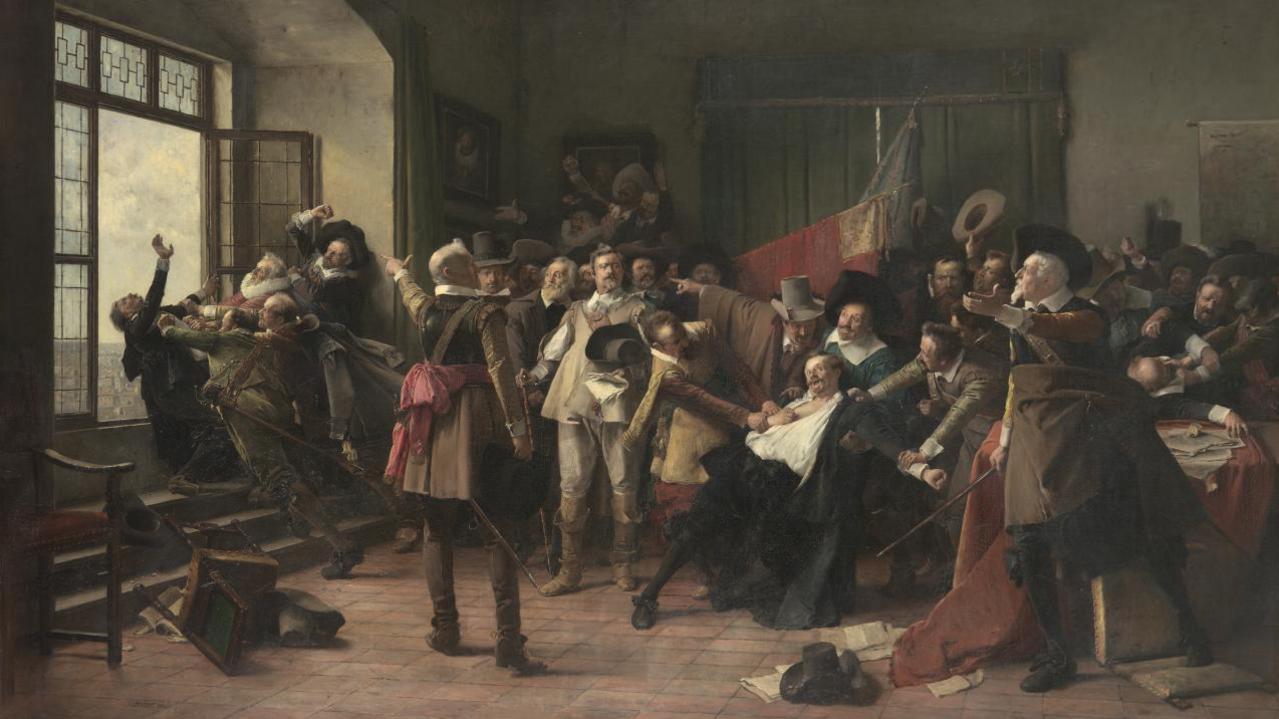
On May 23, 1618, these Protestant landowners staged a mass demonstration at Prague Castle. They argued with the royal governors, and pushed three Roman Catholic representatives out the third story of window of Prague Castle (above where I am standing in the photo above). This is known as one of the Defenestrations of Prague, in which “defenestrate” means to push someone out of a window.

Depiction of the Defenestration of Prague that precipitated the start of the Thirty Years War.

To the benefit of the victims, they survived the fall. My guide told me one version of the story, that they were saved by landing in a pile of manure at the bottom of the building below the window. That is probably the Protestant version of the story, as another version says that the Virgin Mary miraculously intervened and saved the men from their deaths. Nevertheless, and needless to say, the Roman Catholic governing authorities were not thrilled by this action. Both sides left the meeting intent on building up armies.

Two years later, the Protestant forces were defeated at the Battle of White Mountain, which effectively ended the Protestant revolt in Bohemia. But it was merely the first of many conflicts throughout Central Europe. Eventually, the Thirty Years War evolved from being a Protestant/Catholic conflict to a very complicated affair with alliances that crossed confessional boundaries, intent on settling old scores and exacerbating rivalries. Armies as far as Sweden rushed in across Central Europe, spreading disease with the troop movements, even threatening the small Bavarian village of Oberammergau (the topic of the first blog post in this series).

By the time the Peace of Westphalia was signed in 1648, very little had changed in terms of who controlled what and where. The whole region was exhausted of war. Religious concerns gave way to nationalistic concerns, as the unity of the Holy Roman Empire had effectively crumbled, and different nation/states had formed all across Europe.

Roughly one out of four Europeans had been killed by either disease or battle. Tired of religious disputes, the European world had by then become preoccupied with nationalistic aims and concerns, and the days of European colonialism were in full swing, as new areas across the world, from India to the Americas, gained the attention of Europeans hoping to extend the influence of their native lands and cultures… and take their minds off of intra-European issues. Europe would not experience another major military calamity until Napoleon campaigned across these same lands in the name of Enlightenment nationalism in the early 19th century.

Gone were the days when a united Christian faith, at least under the oversight of the church in Rome, held the glue together for Western society. Denominationalism has since become the defining factor of the Western church.

You can still feel a sense of the Thirty Years War’s impact in the Czech Republic. Another Czech tour guide told me that there is a tragic connection between the religious strife of the Thirty Years War and the loss of Christian faith among most Czech people. For example, according to a 2021 census, for 70 percent of citizens who responded to the question about their religious beliefs, approximately 48 percent held none, 10 percent were Roman Catholic, 13 percent listed no specific religion, and 9 percent identified with a variety of religious faiths, Protestant evangelical being among that last group. For a country which was once the cradle of Gospel-driven Christianity in Europe in the 15th century, that is a sad statistic.

Lessons learned: denominationalism was never intended by God to happen in Christ’s church. But the combination of denominationalism and forced religious observance of a particular denomination is a recipe for disaster. Be thankful for religious freedom!! Nevertheless, we should use that freedom to engage in dialogue with other believers in Jesus, who do not read the Bible exactly the way we do. Better to learn how to have “impossible conversations” than trying to settle theological and worldview issues with weapons that kill!!!

My “postcard” photo of Prague Castle, looking across the river, with the famous Charles Bridge in front. Click on the photo to get the full impact. You can make out the “defenestration” window, just below the middle of where the cathedral is.


Christian Urban Legends

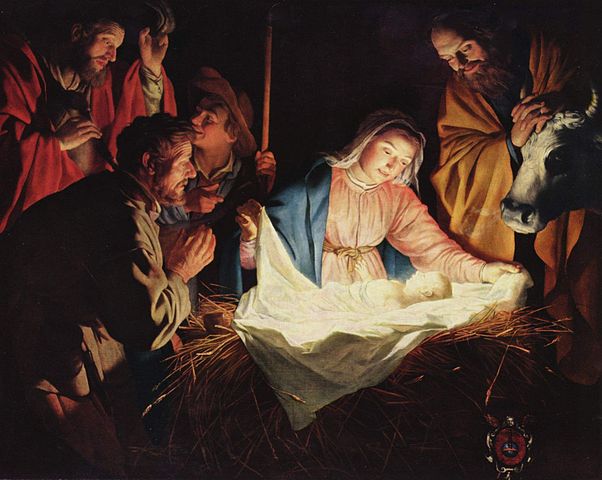
Were the shepherds at the birth of Christ really despised, social outcasts? This popular story makes for a great Christmas sermon message, namely that lowly, poor shepherds, having the social reputation equivalent to prostitutes, were given the honorary privilege of giving testimony to the birth of the Messiah. Though well intended, it turns out that this is largely an urban legend.

“Adoration of the Shepherds,” by Gerard van Honthorst, 1622. (credit Wikipedia: The Yorck Project: 10.000 Meisterwerke der Malerei. DVD-ROM, 2002. ISBN 3936122202)

Evangelical Bible scholar, David Croteau, the Dean of Columbia Biblical Seminary, and author of Urban Legends of the New Testament, acknowledges that many other scholars over the years have commented on the supposed despised nature of 1st century Jewish shepherds, citing sources like Aristotle and the Babylonian Talmud, for support. However, Croteau points out that Aristotle was not a Jew, and lived several hundreds of years before Christ, and the Babylonian Talmud was not produced until several centuries after Christ. Furthermore, British Bible scholar Ian Paul notes that the Babylonian Talmud’s denigration of shepherds might have been shaped more by an anti-Christian polemic, rather than the actual historical context. In other words, these are not the best expert witnesses as to how shepherds were viewed by 1st century Jews.

As it turns out, Croteau cites the best evidence that counterbalances this legend directly from the New Testament itself. Luke 2:18 tells us that “all who heard it were amazed at what the shepherds said to them,” when speaking of the appearance of angels. But the people were not amazed by the supposed fact that these were “lowly” shepherds. Rather, they were amazed by what the shepherds were talking about, that of the birth announcement of the Messiah.

Instead, the Bible holds the profession of shepherding in high respect. For example, Genesis 13 notes that Abraham had much livestock, herds, and flocks of sheep. Also, Exodus 3:1 tells us that Moses was a shepherd, and that before David was king, 1 Samuel 17 tells us that David himself was a shepherd. Jesus himself speaks of being “the good shepherd [laying] down his life for the sheep” (John 10:11).

True, shepherds were not wealthy, and belonged to the lower class, and thus represented the poor and humble, but they were hardly the social equivalent to prostitutes. With such an established pedigree, from Abraham to David, to ultimately Jesus, the traditional story of the “despised” Bethlehem shepherds simply does not fit the actual data.

Continue reading