Tag Archives: Christianity

Things that Go Bump in the Night

“From goulies and ghosties and long-leggedy beasties
And things that go bump in the night
Good Lord, deliver us!”
Scottish prayer recorded in The Cornish and West Country Litany, 1926

Nightmare

Nightmare by Paul Bielaczyc. Charcoal, 2005.


There was my dentist—a normally genteel man—in the back of a military cargo plane decked in an olive-drab Level A HAZMAT suit, gesturing me into his examination chair with long, gleaming, barbaric surgical instruments. I had a hard time making out what he was saying behind his face shield, but it sounded like, “Buckle up.” I’m pretty sure he was grinning.

I’m not one much for dreaming, nor am I particularly anxious, but it’s amazing what the anticipation of a minor dental procedure did to loose my subconscious this week.

Fear is powerful, and the Bible has a lot to say about it. The words fear, afraidanxious, and anxiety appear 541 times in the ESV.

  • The fear of the LORD is the beginning of knowledge; (Proverbs 1:7)
  • Be not wise in your own eyes; fear the LORD, and turn away from evil. (Proverbs 3:7)
  • Therefore I tell you, do not be anxious about your life, what you will eat or what you will drink, nor about your body, what you will put on.” (Matthew 6:25)
  • He said to them, “Why are you so afraid? Have you still no faith?” (Mark 4:40)
  • And he said to them, “Why are you afraid, O you of little faith?” (Matthew 8:26)

Need an anti-anxiety prescription?  Here you go: fear in the right channel is prescribed—throughout Proverbs and the rest of the Bible. The apostle Paul instructs believers in Philippians 2 to, “Work out your own salvation with fear and trembling.”  We’re not supposed to be free from fear. We’re supposed to live with fear in the right context—reverence and respect for the awesome power of our Creator. That’s what Dick Woodward’s 4 Spiritual Secrets are all about.

Ready for some good news? According to Jesus, fear has an anecdote: faith.

Fear is powerful. My loving mother, who hung that Scottish prayer just outside my bedroom door, was paralyzed by fear her entire life. So many times I wished I could have helped her think through her fear. But that’s not the way it works. Overcoming fear is not a matter of our intellect or will—it’s a matter of the heart. And no one gets out alive. Apart from the grace of God and a little faith we don’t stand a chance.

Here’s a link to Whom Shall I Fear? by Chris Tomlin that gets to the heart of the matter.

Peace.

HT: Paul Bielaczyc (Nightmare used with the kind permission of the artist.)

An Audible Miracle

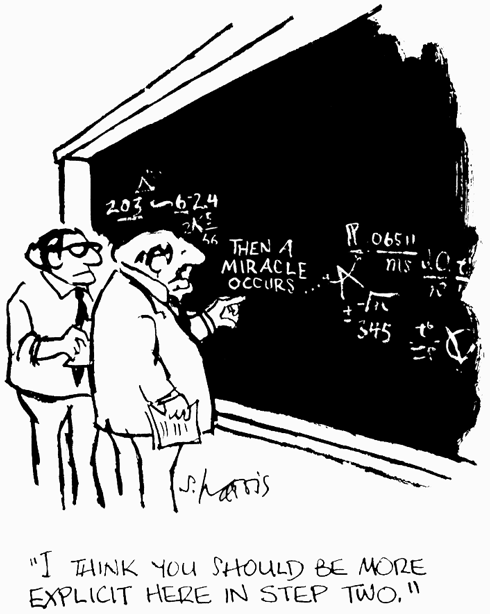
Then a Miracle Occurs

The Bible is full of miracles, from Genesis to Revelation.  From the parting of the Red Sea, to the raising of Lazarus, to Jesus’ resurrection—there’s no shortage of the spectacular recorded in the Scriptures.  Regardless of our perspective and biases, we have to process the testimony of miracles.

Truth be told, most of us tend to be spiritual Missourians when it comes to the supernatural.  We may have no qualms about praying for God to grant a miracle, but when someone actually claims to have experienced one we get edgy and uncomfortable. Continue reading


Hey Jude, Who is this Son of Man?

God took Enoch (Genesis 5:24).   From Figures de la Bible, Gerald Hoet and others, 1728.

God took Enoch (Genesis 5:24). From Figures de la Bible, Gerald Hoet and others, 1728.

Jude is one of those obscure little books. Just one page in most Bibles. Whenever I glance at it, I want to sing with the Beatles, “Na na na, na-na na na. Na-na na na, hey Jude!” Often overlooked, the Letter of Jude references a critical key to help unlock the mystery of Jesus as the Son of Man.

The odd key is found in verses 14-15:

It was also about these that Enoch, the seventh from Adam, prophesied, saying, “Behold, the Lord comes with ten thousands of his holy ones, to execute judgment on all and to convict all the ungodly of all their deeds of ungodliness that they have committed in such an ungodly way, and of all the harsh things that ungodly sinners have spoken against him (Jude 1:14-15 ESV).

The funny thing about this is that you will search your Bible in vain for this prophesy from Enoch. Enoch is only mentioned a handful of times in the whole Bible, such as in Genesis 5:24:

Enoch walked faithfully with God; then he was no more, because God took him away.(Genesis 5:24 ESV)

Pretty brief. Pretty curious, too. Pretty much leaves a lot open to the imagination. So, what is up with this Enoch, who just disappears, and what does he have to do with Jesus as the Son of Man?
Continue reading


A New New Testament: Are You Serious?

Veracity is all about the Bible: what it is and is not, how it came to be, what it reports and claims, who it describes, and the difference it should make in our lives. Here’s another outstanding post by Dr. Daniel Wallace that gets to the heart of these issues, demonstrating solid scholarship and discipleship in response to yet another agenda to remake Christianity.

Daniel Wallace

Daniel B. Wallace's avatarDaniel B. Wallace

Just released from the giant publishing firm, Houghton Miflin Harcourt: A New New Testament: A Bible for the 21st Century Combining Traditional and Newly Discovered Texts, edited by Hal Taussig.

The advertisement from HMH distributed widely via email last week was not shy in its claims for the 600-page volume. The subject line read, “It is time for a new New Testament.” In the email blast are strong endorsements by Marcus Borg, Karen King, and Barbara Brown Taylor. Borg and King, like Taussig, were members of the Jesus Seminar (a group headed up by the late Robert W. Funk, which determined which words and deeds of Jesus recorded in the Gospels were authentic). King and Taylor are on the Council for A New New Testament. All of them share a viewpoint which seems to be decidedly outside that of the historic Christian faith, regardless of whether it is…

View original post 2,205 more words


Like a Son of Man

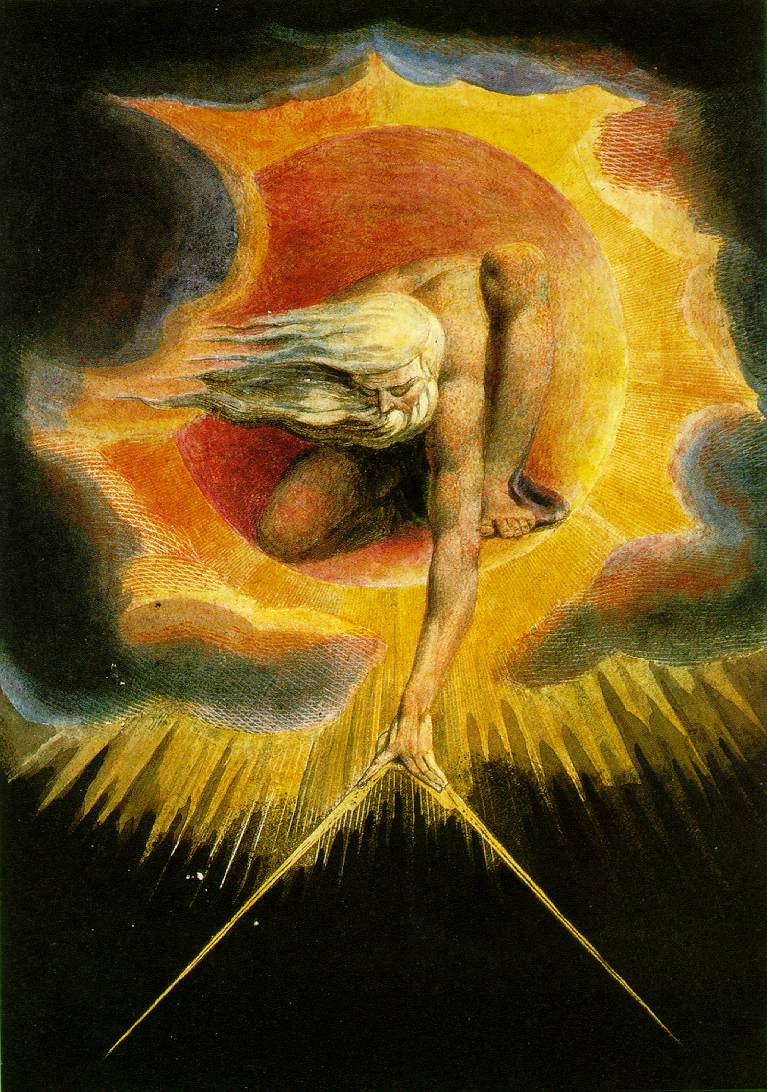
The Ancient of Days. 1794.  Watercolor by William Blake.

The Ancient of Days. 1794. Watercolor by William Blake.    Based on the “like a son of man” passage in Daniel 7.    In the Old Testament, Daniel is the master of apocalyptic imagery, which means using words as pictures to “reveal” or “uncover” that which is hidden.

Jesus talks about being the “Son of Man” eighty-one times in the New Testament. The term is Jesus’ favorite designation for Himself in the Gospels. So, what is the deal with this “Son of Man” stuff anyway?

Son of Man = Messiah = Divinity of Christ“. For years, I merely assumed this to be true, simply out of reflex of being a Christian. But if it is true, why is it true?  I never really thought about it that much. Recently, our  small group Bible study has been looking at the Gospel of Luke, and every now and then there are puzzled looks whenever Jesus speaks of this Son of Man. As I observe everyone scrambling to read their study bible notes, I know that I am not alone in my why question.

A number of critics complain that Christians read way, way too much into this phrase. The Son of Man as the Messiah?  Mmmm. How so?   Furthermore, the Bible never explicitly equates Son of Man with “divinity”. Are followers of Jesus getting ahead of the Bible when asserting the messianic, divine meaning of Son of Man? Can a believer in Christ reasonably defend such a claim?

Continue reading