Tag Archives: billy graham

Racism, Police Authority, and the Misinterpretation of the Bible

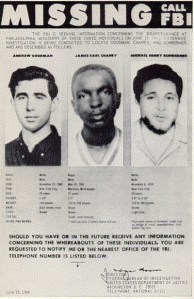
FBI posted looking for three civil rights workers in Neshoba County, Mississippi, June 21, 1964.

FBI poster looking for three missing civil rights workers in Neshoba County, Mississippi, June 21, 1964.

Ferguson, Missouri. Baltimore. Minneapolis. Baton Rouge. Dallas. Black Lives Matter.

America is caught in the middle of racial conflict, as tensions between law enforcement and African American communities have erupted in violence. However, the problem has deep roots in history. An understanding of these roots will go a long way towards healing and reconciliation. Some of these roots go back to misinterpretation of the Bible.

In June, 2016, the Mississippi attorney general officially closed a 52-year old case involving the murders of three civil rights workers, in the summer of 1964. Members of the Ku Klux Klan in Neshoba County had killed two white men and one African American who had traveled to Mississippi to help segregated African Americans register to vote. The Klansmen feared that the efforts of these three men would lead to the “mixing of the races,” so they sought to teach the civil rights workers “a lesson.”

The Klansmen were aided by one of their number, a local deputy sheriff, Cecil Price, who arranged for the abduction of the three men after a supposed traffic stop and afternoon in jail. The three were taken to an earthen dam, where they were shot and buried, one of them still breathing as the bulldozer shoveled the dirt over them.

Deputy Cecil Price was never convicted of murder, but he was tried and sentenced to six years in prison on civil rights violations, in 1967. The ringleader of the Klan group, Edgar Ray Killen, was finally convicted of manslaughter and put in jail thirty-six years later in 2005, as part of this infamous “Mississippi Burning” case.1

Edgar Ray Killen was a part-time Baptist preacher. Killen had been put on trial back in the 1960s, but he escaped conviction back then due to a hung jury. One of the jurors in that early case claimed that they could have never convicted a preacher.

Price was the “law man,” and Killen had the Bible. Thankfully, men like Price and Killen are an exception, and do not represent in any way all law enforcement authorities or Christian preachers. Yet I sincerely doubt that Price would have been able to self-justify his actions if Killen, the preacher, had not somehow signaled that the terrible actions they ended up all taking were somehow, “Okay with God.”

So, what goes through the mind of someone, like “Preacher” Killen, who can justify such brutality, a man who claims to be guided by the Word of God? How can a law enforcement official, like Cecil Price, go along with such actions? Where do people get the idea, that the “mixing of the races” is something contrary to the Bible, to begin with? Continue reading

The “Unbroken” Legacy and Billy Graham

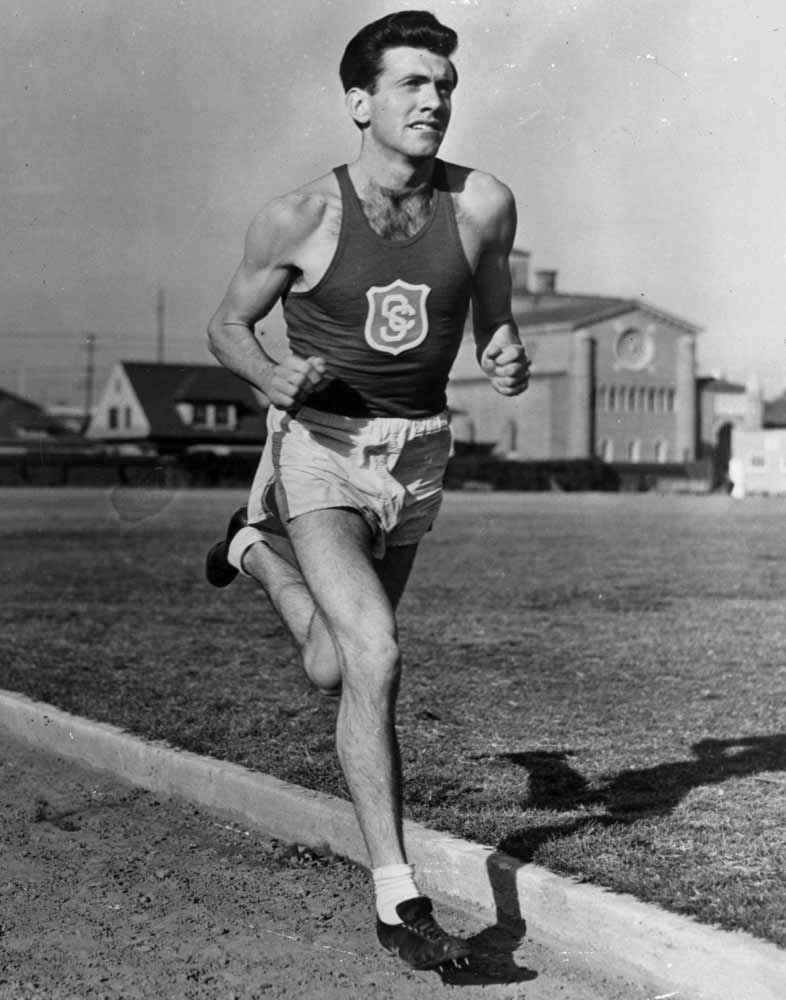
Louis Zamperini. Restless young man, U.S. Olympic runner, war hero, and sinner in need of grace who helped to define the era of Billy Graham (early publicity photo)

Louis Zamperini. Restless young man, U.S. Olympic runner, war hero, and sinner in need of grace who helped to define the era of Billy Graham (early publicity photo)

It was 1949 in Los Angeles. The conservative Christian community had pulled together to put on a multi-week revival under a big tent, featuring a then relatively-unknown Billy Graham. By the end of week three, the organizers were unsure if the revival meetings were to continue. Despite a massive publicity campaign with flyers and newspaper ads, attendance had been rather so-so. Graham and the leadership team decided to pray, asking for God’s guidance on what to do. After much prayer, they decided to go ahead and extend the meetings a few more weeks.  But had they done the right thing?

Several weeks later, on week five, a well-known celebrity made his way into the revival tent. Louis Zamperini grew up a restless teenager and became a juvenile delinquent. To give his life some focus and meaning, Zamperini took up running. Eventually, he earned a spot on the United States Olympic team in 1936 in Berlin. World War II dramatically changed his life, where he was shot down over the Pacific and suffered terribly as a Japanese prisoner of war. When Zamperini came back home after the war, his life kept falling apart. After struggling with marriage problems, alcohol abuse, and horrific post-traumatic stress, he entered that revival tent that one evening. He gave his life over to the Lord Jesus Christ, and he spent the rest of his life serving Him.

Zamperini’s conversion to Christ had helped to give Billy Graham and his team a sense of confirmation that extending the revival a few more weeks was the right thing to do. For Graham, the Los Angeles revival gave him international exposure and influence that has continued to last today into Graham’s twilight years.

Louis Zamperini died in 2014, but his story lives on. Laura Hillendbrand’s bestselling book Unbroken is an enthralling story, from friends of mine who have read the book. From what I have been told, even if you are not a Christian, you will be spellbound by Hillendbrand’s telling of the story. Also, according to his son, Luke Zamperini, the 2014 movie Unbroken by Angelina Jolie tells the story of his dad’s life well, particularly with respect to how Jolie presents Louis Zamperini’s Christian faith, though some say that the faith element is downplayed too much.

But what I find even more fascinating is how Zamperini’s story also helps to tell the story of Billy Graham and the generations of believers who have come under his influence. The intersection of Zamperini with Billy Graham was a critical watershed moment for American evangelicalism in the 20th and early 21st centuries. Here is a summary of some correspondence between Graham and Zamperini before Zamperini’s death.

I would be curious to know from other Veracity readers what you have thought of the book and the movie.

HT: John Paine, for the Luke Zamperini story about the Christian faith element in the movie.