Tag Archives: biblical interpretation

Andrew Bartlett Responds to My Review of His Men and Women in Christ

In May, 2023, I wrote an extended book review of Andrew Bartlett’s, Men and Women in Christ: Fresh Light from the Biblical Texts.  Andrew is an author from “across the pond,” with a background as a barrister in the U.K., with expertise in international arbitration. He has written perhaps one of the most thorough books on the complementarian/egalitarian controversy, a divisive issue among evangelical Protestants today. Andrew Bartlett is articulate, and has written a blog post on Scot McKnight’s Jesus Creed blog, hosted by Christianity Today magazine.

This is pretty rare, but Andrew discovered that I had written a pretty lengthy review of his book, and so he wrote a detailed rejoinder to address my criticisms. Let me tell you, Andrew is a really smart gentleman and a sharp writer. He presents some very good arguments. After all, he is a lawyer, so I confess to feel a bit intimidated.

But Andrew loves Jesus, and he is quite charitable as you will read. While we share a lot in common, we differ substantially on the topic of women serving as elders in a local church. In fairness, I also differ substantially with certain complementarians on the exact opposing side of Andrew’s position as well; that is, particularly those who tend to needlessly minimize the gifting and role of women in the life of the church.

Andrew Bartlett’s rejoinder is not a quick read, and I hope not to botch the formatting, but his attention to detail is important to engage for those who care about what the Bible teaches about men and women ministering together in the local church. I have offered to publish his critique of my review here on Veracity. I will refrain from commenting until the very end, after Andrew’s footnotes. So, if you see flames flying out of your phone or computer as you read this, just know that they are not harmful ( I am poking some fun here, though I know that this is an important issue for some).  

I am writing this just days after the October, 2023 horrific tragedy in Israel and Gaza unfolded. In the Israeli-Palestinian conflict, it would appear that we have peoples who are irreconcilable with one another. Most sadly still, much of the conflict has theologically-ideological roots underneath, bound up with different perspectives on history, that perpetuate the conflict. Hopefully, this engagement among fellow Christians, Andrew and myself, will model what healthy disagreement should look like in the wild, wild world of the Internet.

If Andrew wants to respond to me again, I will go ahead and include at the end of this post his rejoinder to my rejoinder of his rejoinder to my book review of his book , and allow him to have the last word. This post is already very long as it is, but I want Andrew to have a chance to clear up any leftover points, if he chooses. Otherwise, I plan on focusing away from this topic in future blog posts towards other issues that in my view need to receive more attention. Until then, it is my privilege to present to you, a guest blog post from Andrew Bartlett, author of Men and Women in Christ: Fresh Light from the Biblical Texts:

UPDATE: November 1, 2023.  Andrew sent to me some “concluding words” to our on-going discussion about his book, in response to my rejoinder posted towards the end of this blog post. Since this blog post is already long enough, I decided to post Andrew’s “last word” in a separate blog post.
Continue reading


Men and Women in Christ, by Andrew Bartlett. An Extended Review.

Engaging in an online discussion can lead to some interesting outcomes.

In early 2022, I corresponded with a Christian author from the U.K., Andrew Bartlett, about the complementarian/egalitarian debate. Earlier I had heard of a book written in 2019, Men and Women in Christ: Fresh Light from the Biblical Texts. Little did I know that my online interlocutor had written this thorough examination of the Bible’s teaching regarding men and women in the family and the church.1

I promised Andrew that I would read his book, only to discover that while 100 pages into his 648 page book (according to Kindle…. 430 pages in the hard copy version), that this really is a big book!  Andrew is a lawyer and arbitrator, with a background in theology, so it really should not have been a surprise. I had to put the book down and try to come back to it, every now and then, over the past year and a half. Then an email from Andrew a few months ago convinced me that I should finish the book and offer a review. By the time I finished, I ended up with the following article that best summarizes my reflection on the men/women debate in the church to date, after four years of research and blogging. So, you might want to go grab a beverage, a nice chair to sit in, and perhaps even a Bible before I go on…

The length of the Men and Women in Christ: Fresh Light from the Biblical Texts will be a drawback to some readers, who simply will not have the patience to wade through many pages of detailed analysis and argumentation. This is unfortunate since there are many, many rewards the book has for the reader, filled with insights, and being exceptionally thorough, without getting overly technical.  In other words, mere human beings without a PhD can read this book, and walk away with an understanding why this issue is so complex. Men and Women in Christ: Fresh Light from the Biblical Texts interacts with a vast array of literature on the topic, published over the last several decades, which makes it essential reading for anyone desiring to dig deep into the debate. Regardless of what one ultimately thinks of Andrew Bartlett’s thesis, Andrew is a great dialogue partner, and he has done the Christian church an invaluable service with his thorough and careful analysis. So, thank you, Andrew (assuming you read this)!!

Continue reading


Why Communication is Hard

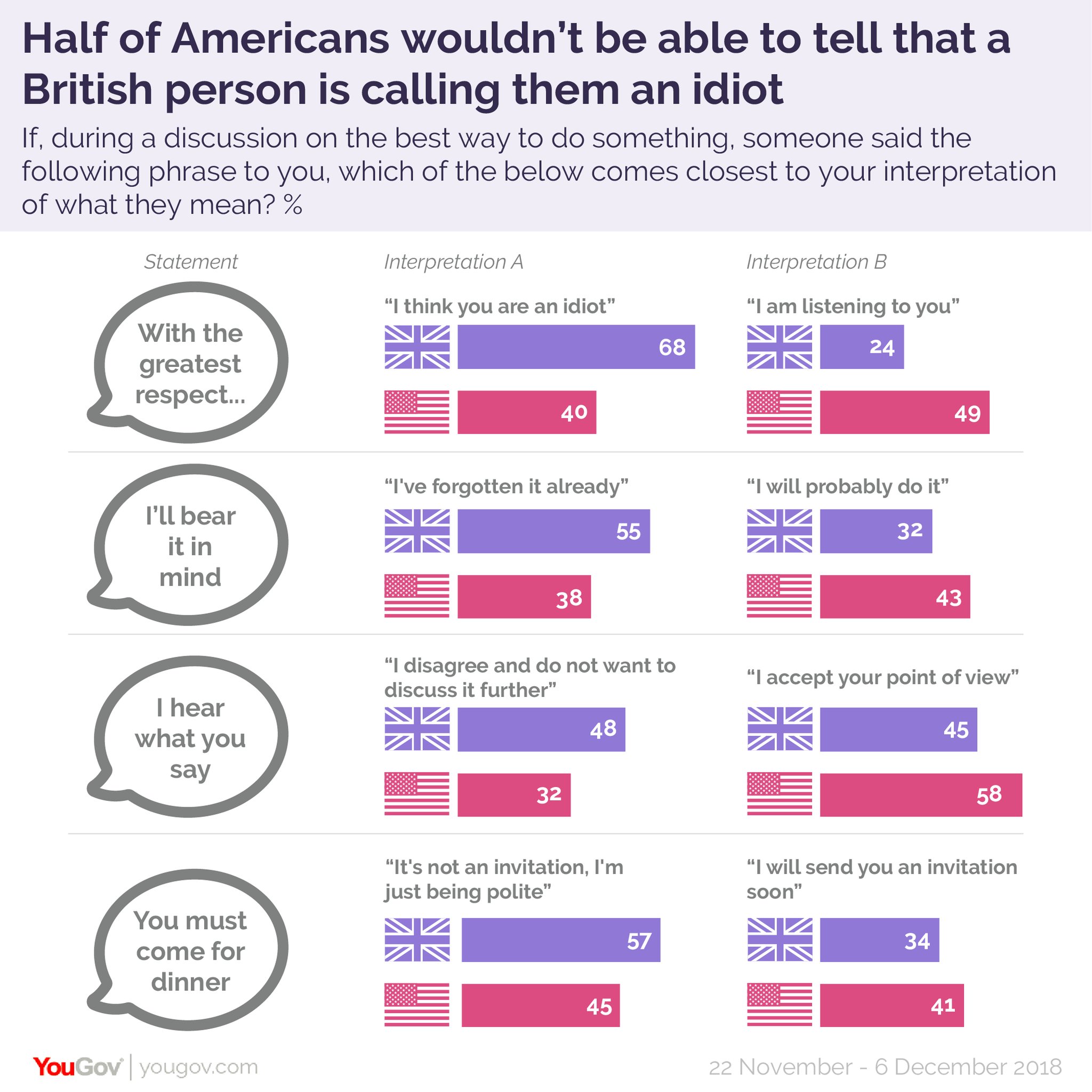
Hearing what someone says does not always mean that you will interpret them correctly.

The same principle often applies when reading the Bible (… or being married, for that matter).

Read the results of the survey: Half of Americans would not be able to tell that a Briton is calling them an idiot.


When is a Gentile Not a Gentile (or Pagan or Heathen)?

The purple wildflower, heather, covers much of rural Scotland. In early medieval times, a person living among these heather fields, was considered to be a "heathen," or "from the countryside." However, in Christian usage, the term has taken on a number of meanings, sometimes controversial.

The purple wildflower, heather, covers much of rural Scotland. In early medieval times, a person living among these heather fields, was considered to be a “heathen,” or “from the countryside,” or “from the heath.” However, in Christian usage, the term has taken on a number of meanings, sometimes controversial.

A question came up the other night in a Bible study. When we read Matthew 18:15-17, Jesus is describing the principles of church discipline. If someone who claims to be a Christian, but who acts in a non-Christian manner and will not change their behavior, what is the rest of the community supposed to do?

If your brother sins against you, go and tell him his fault, between you and him alone. If he listens to you, you have gained your brother. But if he does not listen, take one or two others along with you, that every charge may be established by the evidence of two or three witnesses. If he refuses to listen to them, tell it to the church. And if he refuses to listen even to the church, let him be to you as a Gentile and a tax collector (Matt 18:15-17 ESV)

Jesus’ use of the description “Gentile” for someone who is making up their own rules for Christian behavior sounds confusing. Are there not “Gentiles” who are genuine Christians? If someone is already a “Gentile,” that is a non-Jewish person, how can you then be disciplined and treated as a “Gentile?” How do we make sense of this?
Continue reading


Tim Keller on Interpreting Genesis

New York City pastor, Tim Keller, offers a different approach than the one I put forward on how Genesis 1 relates to Genesis 2. Keller argues that Genesis 2 is actually historical narrative and that Genesis 1 fits more into a poetic genre, as opposed to a straight-forward historical narrative.

Keller may be right. The point I want to make is that different believers can look at some of the non-essential interpretation matters in Genesis differently, and they can still agree on the big picture, namely the essential doctrines concerning the knowledge of the God of Abraham, Isaac, and Jacob as the Creator, as well as who is humanity in relation to that Creator.

I call these the great “who” questions of faith: Who is God? Who is the Creator? Who is Man? These “who” questions are in contrast with the “how” questions: How did God create? How long did it take God to create? How does Genesis 1 relate to Genesis 2? The “how” questions are still important, but they pale in comparison to the great “who” questions that the Bible seeks to address.

The following short video by Keller demonstrates some of the challenges in determining the appropriate context and genre of this very ancient passage of the Bible in early Genesis. Keller and I both affirm that no one takes all of the Bible completely literally, and he gives his brief analysis as to what type of interpretive “grid” should be used when reading the Bible. We can still debate the smaller questions, but let us keep in the front of our minds the big picture.

I would highly recommend Tim Keller’s book Reason for God as a great book to give to a non-believer or believer who is struggling with these issues. Here is a quote from the book, around pages 93-94, that explains more in detail Keller’s approach to interpreting Genesis, and interpreting the Bible in general:

“Christians who accept the Bible’s authority agree that the primary goal of Biblical interpretation is to discover the Biblical author’s original meaning as he sought to be understood by his audience. It has always meant interpreting a text according to its literary genre. For example, when Christians read the Psalms they read it as poetry. When they read Luke, which claimes to be an an eyewitness account (see Luke 1;1-4), they take it as history. Any reader can see that the historical narrative should be read as history and the the poetic imagery is to be read as metaphorical.

The difficulty comes in the few places in the Bible where the genre is not easily identifiable, and we aren’t completely sure how the author expects to be read. Genesis 1 is a passage whose interpretation is up for debate among Christians, even those with a “high” view of inspired Scripture. I personally take the view that Genesis 1 and 2 relate to each other the way Judges 4 and 5 and Exodus 14 and 15 do. In each couplet one chapter describes a historical event and the other is a song or poem about the theological meaning of the event. When reading Judges 4 it is obvious that it is a sober recounting of what happened in the battle, but when we read Judges 5,  Deborah’s Song about the battle, the language is poetic and metaphorical. … I think Genesis 1 has the earmarks of poetry and is therefore a “song” about the wonder and meaning of God’s creation. Genesis 2 is an account of how it happened including Genesis 1. But it is false logic to argue that if one part of Scripture can’t be taken literally then none of it can be. That isn’t true of any human communication.

What can we conclude? Since Christian believers occupy different positions on both the meaning of Genesis 1 and on the nature of evolution, those who are considering Christianity as a whole should not allow themselves to be distracted by this intramural debate. The skeptical inquirer does not need to accept any one these positions in order to embrace the Christian faith. Rather, he or she should concentrate on and weigh the central claims of Christianity. Only after drawing conclusions about the person of Christ, the resurrection, and the central tenets of the Christian message should one think through the various options with regard to creation and evolution.

That last part shows some real wisdom that followers of Jesus should keep in mind at all times. Contrary to some well-intended yet misguided approaches, I do not need to debate the age of the earth or even the scientific theory of evolution with a non-believer. Instead, I should focus first on the central claims of the Gospel: Jesus Christ and Him crucified and risen from the dead.