Tag Archives: Bart Ehrman

More on Newsweek‘s Misunderstanding of the Bible

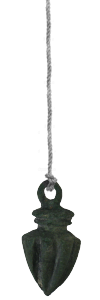
Plumb LineMy Veracity blogging colleague, John Paine, recently referenced New Testament scholar Dan Wallace’s response to Newsweek author Kurt Eichenwald’s Christmas tirade against Christian “misunderstandings” of the Bible.  Sadly, despite some of the genuine substance Mr. Eichenwald displays to the reader, it is the Newsweek piece itself, “The Bible: So Misunderstood It’s a Sin,” that bears most of the misunderstanding.

The article has generated A LOT of responses, so many that I think it would be best to list out some of the more prominent ones. The original Newsweek article is extremely long, but it is worth taking some time to go through it as it adequately illustrates many of the most common objections and confusions regarding Christianity and the Bible that you will encounter today among secularly-minded thinkers, or those thinkers who wish to reshape Christian faith to look more “modern.” But you should also read a few of the responses as an aid to help you develop an informed response to Eichenwald’s many complaints. It is great way to get an education on some critical issues in doing Christian apologetics in a skeptical world.  Some of what Eichenwald says presents challenging difficulties for the Christian, while much of what he says, if not the bulk of it, can be answered in a manner that effectively communicates an honorable confidence in God’s Word:

  • Michael Kruger (Reformed Seminary in Charlotte, N.C.) has two articles (#1 and #2 ), but what is most valuable is that Mr. Eichenwald offers some rejoinders to Kruger’s critique in the comments section.
  • Ben Witherington (Asbury Seminary, Kentucky) offers a response from an evangelical Wesleyan perspective.
  • For a response from the more conservative wing of mainstream Protestantism, this detailed response from Robert Gagnon (Pittsburgh Theological Seminary) fills in some of the gaps left by others in their critiques.
  • Kurt Eichenwald has repeatedly said that some of the responses to his Christmas essay from Christians were loaded with “vitriol” and “name calling.” Perhaps Eichenwald has this series of video responses in mind ( you have to scroll past much of the unedited chatter in places, but you can look here: #1 and #2)by Reformed apologist James A. White (Alpha-Omega Ministries), but I will let the viewer be the judge of that.
  • In addition to the well-known agnostic Bart Ehrman (University of North Carolina, Chapel Hill), Mr. Eichenwald leans heavily on the critical views of Jason David BeDuhn, professor of Comparative Study of Religions, at Northern Arizona University. BeDuhn, in this essay, responds to a critique of the Newsweek article by Southern Baptist Seminary head, Al Mohler.
  • If you want to know what the more progressive end of Christianity is thinking about this, read this by blogger Rachel Held Evans, or this from Old Testament scholar Pete Enns.
  • In my view, the best and most thorough response is from Darrell Bock (Dallas Seminary). If you only have time to read one of these, pick either the Dan Wallace one linked above or this one by Bock.
  • The latest response from Newsweek itself is that they agreed to publish the following rejoinder by messianic scholar Michael Brown. In Newsweek’s introduction to Dr. Brown’s essay, they still stand by Eichenwald’s original story, in an effort to promote discussion. Furthermore, they announced that Dr. Brown has invited Mr. Eichenwald to be on his Line of Fire radio program the week of January 19.


Bart Ehrman’s Challenge to the Divinity of Jesus

How God Became Jesus, by multiple authors, is a rebuttal to Bart Ehrman's book, How Jesus Became God.

How God Became Jesus, by multiple evangelical scholars, is a popular-style, accessible rebuttal to Bart Ehrman’s book, How Jesus Became God.

From the preface of How God Became Jesus, by editor and Australian scholar Michael Bird:

[Bart] Ehrman is something of a celebrity skeptic. The media attraction is easy to understand. Ehrman has a famous deconversion story from being a fundamentalist Christian to becoming a “happy agnostic.” He’s a New York Times bestselling author, having written several books about the Bible, Jesus, and God with a view to debunking widely held religious beliefs based on a mixture of bad history, deception, and myth. He’s a publicist dream since in talk shows and in live debates he knows how to stir a crowd through hefty criticism, dry wit, on the spot recall of historical facts, and rhetorical hyberbole. He also has a global audience…

For conservative Christians, Ehrman is a bit of a bogeyman… Conservatives buy his books if only for the purpose of keeping their disgust with him fresh and find out what America’s favorite skeptic is up to now… For secularists,… Erhman is a godsend. He provides succor and solace that one need not take Jesus too seriously, confirming that religion is the opiate of the masses and that the whole God thing might be just a big mistake.

Why is Bart Ehrman, a professor of religion teaching at the University of North Carolina at Chapel Hill, on a lot of people’s radar?

Continue reading


New Manuscript Evidence

Several pieces of the New Testament have been discovered recently, that when properly vetted will comprise the oldest New Testament fragment of the Bible, and the earliest copies of several Pauline letters.  The discovery of these ancient documents is exciting enough for anyone interested in ancient artifacts and Bible history, but this particular story is shaping up to be the New Testament equivalent of the Dead Sea Scrolls, which broke the record of the oldest surviving copies of Old Testament manuscripts by 900 years.  In so doing they demonstrated very clearly the precision of ancient scribes in handing down the original text.  (The methods used by scribes, particularly the Masoretes, will be covered in a future post—suffice it to say these people were extremely meticulous in quality control, and the Dead Sea Scrolls proved just how effective their methods were.)

P52, The Rylands Papyrus

The Rylands Papyrus (P52): the ‘current’ oldest New Testament fragment

Paper deteriorates over time due to chemical reactions with the atmosphere.  This is particularly true of ancient papyrus, parchment and vellum, although there are tens of thousands of surviving specimens.  When it comes to the Bible, there are far more documented copies than for any other ancient text.  But the fact remains we do not have the original Biblical manuscripts—we only have copies.

Many skeptics have tried to prove that the Scriptures were changed—and therefore corrupted—as they were copied over time.  In fact, even Josh McDowell set out many years ago to make an “intellectual joke” of Christianity by undermining the authority of the Scriptures.  Working with this intention, Josh had two main questions on which he focused his research:

    1. Is what we have today in the Bible what was written down 2,000 years ago, and
    2. Was what was written down true?

Eventually Josh McDowell said, “I came to the conclusion that I can hold the Bible in my hand and say it is the word of God, it is true, and it is accurate historically.”  His research is documented in a foundational work entitled New Evidence That Demands a Verdict.

“Textual criticism” is the discipline that attempts to determine the original wording of any document whose original no longer exists.  Never heard of textual criticism?  Sounds pretty boring doesn’t it?  Turns out it is a big deal.  A very big deal.

There are those who purport that the Bible was so corrupted by changes during the copying process over time that we no longer have reliable copies of the original documents.  The implication is that if the text is corrupt, we can’t trust the Bible.  And it would be hard to argue that point if in fact the Bible had been substantively corrupted in its transcription.  We would then be left at best to make our own determinations about what parts are genuine and what parts we could or should overlook.  (Actually, there are a lot of people doing that anyway—without thinking about textual corruption—but that’s another matter.)

But a main contention of this blog is that the Bible can stand up to scrutiny, so bring it on.

Let’s start with the obvious: there are problems with our current Bibles.  Pick up a copy of the New International Version or English Standard Version, both meticulous translations, and you will find notes like these:

  • “The earliest manuscripts and some other ancient witnesses do not have verses 9–20” (Mark, Chapter 16), and
  • “The earliest manuscripts and many other ancient witnesses do not have John 7:53—8:11.  A few manuscripts include these verses, wholly or in part, after John 7:36, John 21:25, Luke 21:38 or Luke 24:53.”

In attempting to produce the most accurate text, the translating committees and publishers took the most reliable ancient (mostly Greek) texts to translate from among many copies, which did not settle the matter of the definitive text in these two instances.  But these are minor problems, and they don’t negate the original message of the entirety of Scripture.  You can argue that these passages should be cut from the Bible, but nothing would be changed or lost by such deletions.

But before taking liberties with scissors, meet Dr. Daniel B. Wallace and the Center for the Study of New Testament Manuscripts.  Dr. Wallace and his colleagues have spent decades studying ancient manuscripts.  They have developed intricate systems for comparing texts, and have some interesting conclusions about the accuracy of the Bibles we possess in the 21st century.  You might be very surprised at their take on textual criticism, and its value in defending the veracity of Scripture.  The Day of Discovery folks recently produced a three-part documentary on their work.

With that bit of introduction, read about Dr. Wallace’s exciting discoveries and all the press his work is generating.  He has a lot to say about the accuracy of the Bible.  He can quantify the textual variants, and you might be surprised to see how insignificant most of them are.  And how they resolve discrepancies between manuscripts.  Fortunately there’s a lot of evidence to work with in the thousands of manuscripts that are now catalogued.  You might also be interested to discover how the correct text can be determined from the volume of copies.  Don’t miss the radio interview in which he describes what is going on with the new discoveries and why he can’t rush to publish.  It’s important to get it right.  And that’s the point of this post.

Dan Wallace by Justin Taylor

Dan Wallace Interview
