Back when I was in high school, I managed to read the entire New Testament cover-to-cover over several days…. EXCEPT for the Book of Revelation.
Frankly, I could not make sense of it. I gave up on it, until I picked it back up again in briefly in college, and more intensely years later in seminary. Over the years since then, I have learned that I was not alone with my initial confusion about the book.
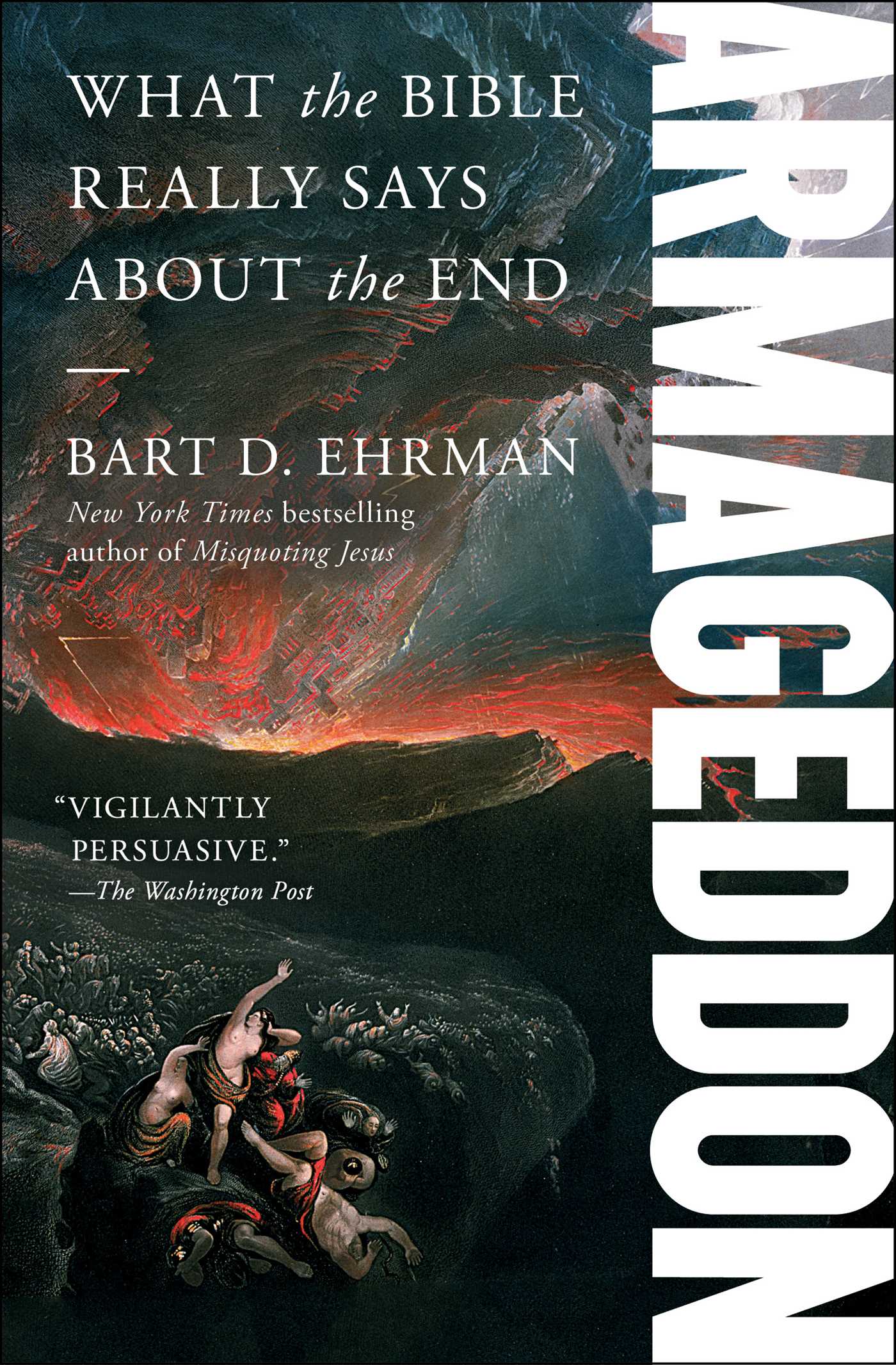
Even the great conservative stalwart Protestant of the 16th century, Martin Luther, had his own doubts about the very inspiration of the Book of Revelation, as Bart Ehrman tells us, saying that Luther “can in nothing detect that it [Revelation] was provided by the Holy Spirit” (Armageddon, Ehrman, p. 32). Nevertheless, Luther submitted to the collective mind of the early church as accepting Revelation as part of canonical Scripture, translating it into his German version of the New Testament, though he did place the book in his New Testament translation in an appendix and not the main body of the translation (Ehrman, p. 31). Despite Luther’s personal skepticism, traditional Lutherans today still accept the Book of Revelation as inspired Word of God, as do all historically orthodox Christians.
The late Protestant Bible teacher, R.C. Sproul, once said that the canon of Scripture is a fallible list of infallible books. My Roman Catholic and Eastern Orthodox friends might push back a little on this, and Sproul’s statement can sound a little odd even to Protestants. Nevertheless, all historically orthodox Christians affirm the Book of Revelation as infallible…. though difficult to interpret when it comes to some of the nuts and bolts of the text.
Revelation can be a hard book to understand. But why?
In the first part of this book review of Armageddon: What the Bible Really Says About the End, some consideration was made as to the violent imagery we find in the book, analyzing the type of literature the book is (apocalyptic), and concluding with a look into the controversy regarding the millennium. While every biblical scholar knows that Revelation contains a great deal of symbolism, much of the controversies in interpreting the book come down to (a) how much is symbolism being used, and (2) when you do find symbolic language, what do these symbols mean?
In this second and last part of this review, some of the other difficulties are explored, along with an analysis of what Bart Ehrman thinks the book is really about. I then hope to show why Ehrman’s solution is itself problematic.
Did Jesus want a woman raped and her children killed in the Book of Revelation?
To start off this post with such a question is shocking. But it was just as shocking to me when I heard this claim made in Bart Ehrman’s 2023 best seller, Armageddon: What the Bible Really Says About the End. What follows is a PG-13 rated Veracity book review.
The Book of Revelation is one of the most difficult books of the Bible to understand. It is also one of the most fascinating books of the Bible. Over the past ten years, a number of Christian bible studies in my town across multiple churches have tried to tackle this last book of the Bible, in order to figure out its enigmatic teachings. From the blowing of trumpets, to the bowls of God’s wrath, to the mark of the beast, etc., the images we read of in Revelation have both disturbed and inspired Christians down through the ages. Revelation is of particular interest in the cultural moment of our day, when political controversies in the United States have been tearing people and families apart, cultural change sparked by social media ripples across society, and reports of civil unrest and horrific wars across the world come across daily in our news feeds.
Are we living in the end times? It sometimes feels like it. People look to the Book of Revelation to try to find the answer.
I am taking a break from listening to the cicadas singingthis May to publish another post about our Christmas in Europe….Our last morning in Cambridge, England, during our “Christmas-in-Europe” trip in late 2023 and early 2024, was spent attending Eden Church.
Eden Church, a Baptist church in Cambridge, England.
One of the coolest surprises about visiting Eden Church was getting to meet a Christian scholar and author whom I have greatly respected over the years. My wife and I were sitting with our friends, Jon and Meredith Thompson, and their family (Jon is the executive director of the Cambridge House at the College of William and Mary). Two rows ahead of us, I saw a man whose hair on the back of his head looked very, very familiar. I asked Jon, “Is that Simon Gathercole two rows in front of us?”
“Why, yes, it is,” replied Jon. After the service, I made my way up to meet Simon Gathercole, a scholar of the New Testament and Early Christianity. Simon Gathercole is simply a great guy to meet, very friendly and not what one thinks of as a nerdy Bible scholar. Though confessionally an evangelical, Simon Gathercole’s research is highly respected across a wide theological spectrum, one of the tops in his field. We chatted about some of the books he has written and/or contributed to over the years.
Veracity blogger (me!!) with Simon J. Gathercole. United Kingdom New Testament scholar, Professor of New Testament and Early Christianity, and Director of Studies at Fitzwilliam College, Cambridge.
My first encounter with Dr. Gathercole’s work was from a co-edited volume of the book, How God Became Jesus, a response to Bart Ehrman’s book of a similar title, How Jesus Became God. The book was reviewed here on Veracity back in 2014, ten years ago. Simon Gathercole wrote a chapter defending the idea that the Gospels really do make claims regarding the divinity of Jesus, in contrast to Ehrman’s claim that the theology of Jesus’ divinity emerged later in the history of the early church. Here is a sample of what Gathercole writes:
“Ehrman’s argument that the Jesus of Matthew, Mark, and Luke is a Jesus fundamentally different from the later preexistent, divine Jesus of the creeds is a flawed one. For one thing, preexistence is more deeply rooted in the Gospels than Ehrman recognizes (although, to be fair, most other commentators on the Gospels also underestimate its significance). More importantly, a divine identity is attributed to Jesus in the Gospels, and not merely a divine identity of a low-level kind” (p.102).
This is just a teaser, as the whole essay is remarkable. I highly recommend the book, and particularly Gathercole’s essay in it. I have a few other books written by Simon Gathercole on my “to-be-read” list, which I look forward to diving into at some point. It was such a pleasure to meet and converse with such as world-class Bible scholar!!
A final note…. if you like podcasts, and would like to hear Simon Gathercole speak, he was recently interviewed on John Dickson’s Undeceptions podcast, where he discusses the popular claim, advanced by skeptics like Bart Ehrman, that the four Gospels were completely anonymous, and so we have no idea who wrote them. Simon Gathercole takes a different view. Check it out!
How God Became Jesus, by multiple authors, is a rebuttal to Bart Ehrman’s book, How Jesus Became God.
Finally, in this last of a five part series, reviewing Bart Ehrman’s Forgery and Counterforgery, I want to play a bit of “devil’s advocate.” What if Bart Ehrman is correct about forgeries in our New Testament?
If the New Testament actually has a number of forgeries within its pages, as Bart Ehrman claims, what type of impact would that have on the truthfulness of the Christian faith? On the other hand, what if Bart Ehrman is wrong; that is, what if the early church got the New Testament right after all?
The special case of the pastoral letters of Paul. Of the thirteen letters attributed to the Apostle Paul, the most disputed regarding their authenticity are 1 Timothy, 2 Timothy, and Titus. Why some progressive Christian scholars accept some of the arguments presented by Bart Ehrman.
In this concluding post, I can begin by saying that in Forgery and Counterforgery Bart Ehrman is presenting evidence that is worth considering and wrestling with. While most Christians are probably unaware of these claims, Christians who ignore them are doing so at great peril. Ehrman is a highly-skilled, very persuasive scholar, certainly when measured in terms of book sales (as a New York Times best selling author) and the hundreds of thousands, and even millions of YouTube channel views.
It is quite common for Christian apologists to dump on Bart Ehrman, and as suggested by the second half of this blog post’s title, (“But Why He is Wrong Instead“), I am not ultimately persuaded by his thesis either. But in fairness, if you follow the methodology he takes, he does make certain arguments that require a measured, thoughtful response, which I hope to do here.
But first, in playing “devil’s advocate” I consider what might be the ramifications if Bart Ehrman’s case was proven to be correct. After that, I want to show why I do not find Bart Ehrman’s arguments, based on the method he uses, for forgery in our New Testament to be convincing in the long run. Granted, some particular lines of evidence advanced by Ehrman do give me some pause. Other lines of evidence do not. Nevertheless, the cumulative case Ehrman presents is not strong enough to make me dismiss any of our twenty-seven books from the New Testament. Rather, the cumulative case for supporting a “forgery-free” New Testament is still very strong.
In other words, the early church got the New Testament right.
Bart Ehrman’s Forgery and Counterforgery: The Use of Literary Deceit in Early Christian Polemics argues that up to 70% of the New Testament content is derived from forged documents. How well do the claims of Bart Ehrman stand up to scrutiny?
We are almost a month away from April Fool’s Day, but one of the latest viral videos on YouTube ain’t no joke. Satan’s Guide to the Bible points to the need for having Christian apologetics in our churches.
Satan’s Guide to the Bible is the work of independent filmmaker, Zeke Piestrup. The premise of the documentary film (mainly cartoon) is actually quite clever. Here you have a Sunday school class, with kids gathering around singing “This Little Light of Mine,” waiting for their Sunday school teacher to arrive. But the real teacher is not in class today, so a substitute arrives as the new teacher: SATAN!
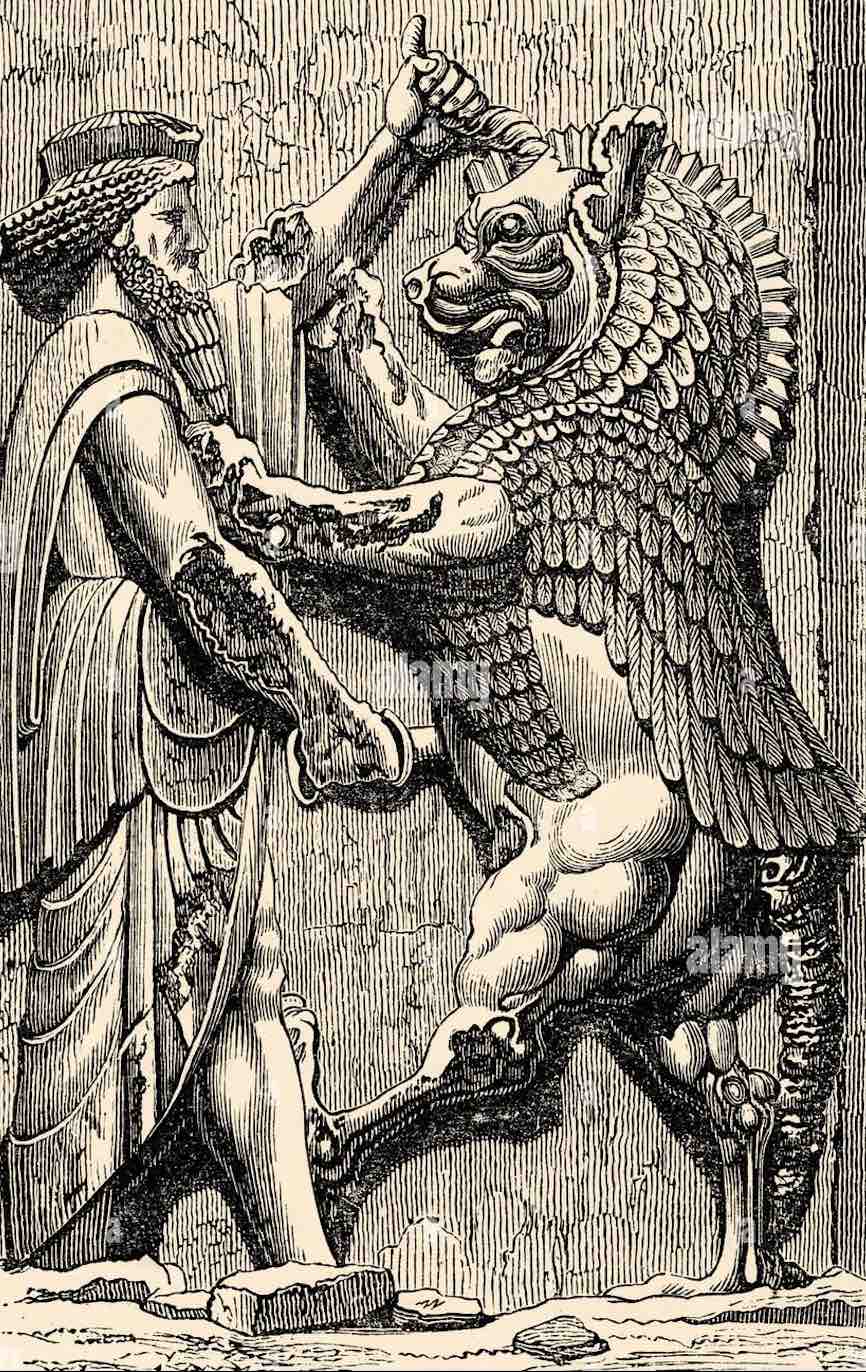
SATAN??? Where did he come from? …. In Persian Zoroastrian mythology, Ahura Mazda (the good diety on the left) was locked in combat with Ahriman (the evil deity on the right). Many scholars suggest that the concept of “Satan” was “borrowed” from this dualistic Persian mythology when the Jews were sent off to Babylon after the destruction of Jerusalem and its first Temple. The Persians, who conquered Babylon, allowed the Jews to return to Jerusalem, taking incipient ideas about “Satan” with them. However, a better answer to this is to say that the Jewish encounter with Persian religion served as the opportunity for the Jews to search their own Scriptures, for the source of angelic rebellion against the one True God: Yahweh. There was no need for Jews to “borrow” anything from Zoroastrianism. They had everything they needed in their Scriptures. But they did need to connect the dots to make sense of who “Satan” really was. Progressive revelation regarding the identity of the true rebel against God, “Satan,” the personification of evil, eventually emerged in the writings of the Christian New Testament. See Veracity review of Anthony J. Tomasino’s Judaism Before Jesus, for more background.
The Plot Line of Satan’s Guide to the Bible
Satan proceeds to instruct the children that today he will reveal to the student “Bible secrets.” These “Bible secrets” are secrets that the children’s pastor (“Mark”) knows, which he learned in seminary, but which he keeps hidden from the children, for fear of losing his job. For about the next hour and a half, Satan reveals these “Bible secrets” to the kids, ranging from the idea that the Exodus out of Egypt with Moses splitting the Red Sea never happened, to the controversy that many of the documents in our New Testament are in reality forgeries, meant to deceive the unknowing Bible reader. Here is the video (but skip on down if you want to get the response):
Satan’s Guide to the Bible uses a lot humor along the way, to keep the viewer engaged. Perhaps the most memorable line is when Jen, one of the kids who is the most skeptical about what Satan is saying, shouts, ““I rebuke you Satan!”
Satan’s response? : “Thanks, Jen. Noted.”
I have not worked my way through the entire video yet, but what makes the film so effective is the recorded interviews with leading critical Bible scholars, some of whom are atheists (like Bart Ehrman) and some of whom are progressive Christians (like Dale Allison). Zeke Piestrup has his interview-ees read from their published scholarly books, to reinforce the message. Plus, he pretty much hits just about every major controversial topic regarding the integrity of the Bible and Christian faith claims in general.
A lot of Christians will find the film frustrating, but it is worth asking the question: “What does Satan’s Guide to the Bible get right?” Well, it does point to a real problem, in that while some churches do offer educational opportunities regarding Christian apologetics; that is, learning how to develop an informed defense of the Christian message, many churches do not. Most Christians are woefully unprepared to answer the criticisms raised in this documentary, what the film calls “standard stuff.” But as more and more churches prioritize small group ministries at the expense of structured Christian education, the opportunities to talk about this “standard stuff” in many evangelical churches are few and far between.
It is true that much of what the documentary touches on is “standard stuff” discussed in mainline seminaries. More and more conservative evangelical seminaries also discuss this “standard stuff” today. But you do not have to go get an advanced degree to hear about this “standard stuff.” Most religion departments at secular universities expose their undergraduate students to such “standard stuff”…… And then there are social media platforms, like short Tik-Tok videos, and YouTube, which makes such “standard stuff” readily accessible to any teenager with a smart phone.
Part of what the Veracity blog tries to do is to fill in the gap often left by churches, and offer resources to try to address the criticisms raised in Satan’s Guide to the Bible. Here is a sample list of previous blog posts that address some specific criticisms highlighted in the video:
The YouTube world of Christian apologetics has responded to Satan’s Guide to the Bible. One of the first one’s to appear is by Mike Winger, which I will highlight below at the bottom of this blog post. Some of Winger’s critics say that Winger overuses the rhetoric of “propaganda” when describing Satan’s Guide to the Bible. Mike has a few technical problems in the first few minutes, and he probably does go overboard with the “propaganda” rhetoric a bit too much, but it is still worth considering what Mike has to say, and I agree with a good majority of Mike’s pushback.
Satan’s Guide to the Bible pokes fun at evangelical Christians, both scholars and apologists with day jobs (like me), so I had to take some jabs with watching the parts that I had gotten through the film already. But if Christians watch something like the Inspiring Philosophy response video above, or the Mike Winger video below, or keep reading Veracity, then this will help equip you to respond to such common criticisms of the Bible, as presented by skeptical non-believers like Zeke Piestrup. As a work of satire, the film provocatively gets its points across, quoting a lot of my favorite Christian scholars out-of-context along the way multiple times, leaving a lot of things left off in a rather one-sided manner.






 Veracity