Tag Archives: Apostle Paul

A Jewish Paul, Matthew Thiessen’s Case for Paul’s Pneumatic Gene Therapy

Let us make Paul weird again. In Matthew Thiessen’s A Jewish Paul, which is actually a rather short book, the author packs quite a punch with a core idea in the thought of the Apostle Paul which is often overlooked: Paul’s “Pneumatic Gene Therapy.”

The first blog post of this book review offers an overview and special insights into A Jewish Paul: The Messiah’s Herald to the Gentiles. However, in this second blog post of a two part book review, we focus on Thiessen’s description of  “Pneumatic Gene Therapy.”

The story of the Bible focuses on Israel as God’ chosen people. How much more anti-democractic or anti-egalitarian can you get to have a “chosen people” separated out from the other, gentile peoples of the world? But the Christian message according to Paul is a lot about breaking down that barrier between Jew and Gentile, without fundamentally losing the distinctiveness of what it means to be Jewish.

So, we have a problem. Gentiles are outside of the God’s covenant with Israel, but Israel is simultaneously set apart to be a blessing to all of the nations. How then is the gentile problem solved by Jesus, according to Paul, as read by Matthew Thiessen? This is where Thiessen’s most provocative insight comes into play, and it highlights even more the weirdness of Paul.
A Jewish Paul: The Messiah’s Herald to the Gentiles. Matthew Thiessen makes Paul weird again.


Pneumatic Gene Therapy

For Paul, gentile believers need to be connected to Abraham, but how? “Abraham is the father of all who believe, and those who trust in the Messiah are Abraham’s seed (Rom. 4:11, 13; Gal. 3:6, 29)” (Thiessen, p. 102). But if circumcision itself fails to properly unite gentile believers in Jesus to Abraham, what does?

Thiessen maintains that Paul knows the solution, as described primarily in Romans 4 and Galatians 3, but it is a solution that is often misunderstood. Thiessen offers his translation of Galatians 3:29: “If you are [part] of the Messiah [ei hymeis Christou], then you are the seed [sperma] of Abraham” (Thiessen, p. 103). Some translations begin this verse with: “And if you are Christ’s” (ESV) or “if you belong to Christ” (NIV). But it takes some unpacking to figure out what it means to “belong to Christ,” for example. Thiessen explains:

“One does this by being immersed into and being clothed in the Messiah. Paul uses the language of containment—entering into (eis) and becoming wrapped by or clothed in (enduō) the Messiah (Gal. 3:27). Such statements encourage us to think in very spatial categories. The Messiah is a location or a container or a sphere into which gentiles must enter in order to be related to Abraham” (Thiessen, p. 103).

But how does one enter that container or sphere? Through the “spirit,” or what Thiessen transliterates from the Greek, “pneuma,” which gives us English words like “pneumatic” and “pneumonia.” In Galatians 4:6, God has sent the pneuma of his Son into the hearts of believers. But what is this pneuma all about?

This is where Matthew Thiessen suggests that Paul’s actual thinking about the pneuma is counter-intuitive to modern readers of Paul. Today, we often think of “spirit” as something which is immaterial. Not so, according to Thiessen. For when the pneuma enters the heart of a believer, the actual stuff of the Messiah enters the body of that believer, permeating, clothing, and indwelling that person (Thiessen, p. 105). This material aspect of “spirit/pneuma” reflects the ancient science of Paul’s day.

Thiessen explains:

“Understandably, this strikes us as odd. The best analogy that I can come up with is a sponge that one immerses in a pail of water. If held underwater long enough, the porous body of the sponge is filled with water while also being surrounded by it. The water simultaneously enters into the sponge and “enclothes” the sponge. This is close to, if not quite the same thing as, what Paul envisages” (Thiessen, p. 105).

Paul’s view of pneuma is related to the ancient Stoic understanding of krasis, whereby two substances can mix with one another, so that the first substance surrounds the second substance, and the second substance surrounds the first substance. Not everyone bought into the Stoic view of krasis. Plutarch thought it was laughable.

But apparently Paul accepted this ancient scientific concept as genuinely real. The spirit/pneuma is made up of the best material available, extremely fine in nature, which then combines with the “flesh and blood” of the believer, made up of coarse material, subject to corruption and decay. Here is how Thiessen translates Romans 8:9-11, where Paul dives deep into his teaching on the spirit/pneuma:

“But you are not in the flesh; you are in the pneuma, since the pneuma of God dwells in you. Anyone who does not have the pneuma of the Messiah is not part of him. But if the Messiah is in you, though the body is dead because of sin, the pneuma is life because of righteousness. If the pneuma of him who raised Jesus from the dead dwells in you, he who raised the Messiah from the dead will give life to your mortal bodies also through his pneuma that dwells in you” (Thiessen, p. 106)

For comparison purposes, consider how the ESV translation renders this passage:

“You, however, are not in the flesh but in the Spirit, if in fact the Spirit of God dwells in you. Anyone who does not have the Spirit of Christ does not belong to him. But if Christ is in you, although the body is dead because of sin, the Spirit is life because of righteousness. If the Spirit of him who raised Jesus from the dead dwells in you, he who raised Christ Jesus[a] from the dead will also give life to your mortal bodies through his Spirit who dwells in you.”

The classic Greek understanding of matter suggested that there are four elements that make up matter: fire, air, earth, and water. But all four of these elements are subject to corruption and decay. So, Aristotle suggested yet a fifth element, aether, which is completely different in that it was eternal, unchanging, and divine (Thiessen, p. 106). So while Paul does not reach for Aristotle’s aether, a similar idea is in his mind. For that which is of the “flesh” (Greek, sarx) is subject to corruption and decay, whereas the spirit/pneuma is not.

The spirit/pneuma then is what connects the gentile believer in Jesus with Abraham, and Abraham’s seed. To summarize the argument made by Paul:

Gentiles need to become Abraham’s sons and seed to inherit God’s promises. The Messiah is Abraham’s son and seed. Gentiles, through faith, receive the Messiah’s essence, his pneuma. Through faith and pneuma they have been placed into the Messiah. The pneuma of the Messiah also infuses their bodies. They have the Messiah’s essence in them, and they exist in the essence of the Messiah. Gentiles have become Abrahamic sons and seed (Thiessen, p. 110-111).

This very material understanding of spirit/pneuma radically goes against the common immaterial view of spirit/pneuma readers today typically have of Paul’s thought. This makes Paul weird.

It also helps to explain one of the most difficult parts of Paul’s great chapter on the resurrection, 1 Corinthians 15:

(42) So is it with the resurrection of the dead. What is sown is perishable; what is raised is imperishable. (43) It is sown in dishonor; it is raised in glory. It is sown in weakness; it is raised in power. (44) It is sown a natural body; it is raised a spiritual body. If there is a natural body, there is also a spiritual body. (45) Thus it is written, “The first man Adam became a living being”; the last Adam became a life-giving spirit. (46) But it is not the spiritual that is first but the natural, and then the spiritual (1 Corinthians 15:42-46 ESV).

What is this passage really talking about?

A Material Spirit?

Matthew Thiessen’s reading of Paul’s notion of “spirit/pneuma” as material resolves several problems. For it identifies a “spiritual body” as being fully material. Just as Christ experienced a fully bodily resurrection, so will believers experience the same type of resurrection, but with a new, incorruptible body in its place of the decaying, corruptible body. The finer material of the spirit/pneuma will overcome the limitations of the coarse material of the flesh.

We may not be able to fully resolve existing questions about what the future resurrected life would look like: for example, will someone born as an amputee have a new bodily limb that they never had in their earthly life? Yet it does establish that a material spirit/pneuma guarantees that the resurrection will be a material existence, and that this new bodily existence will be without corruption.

Thiessen notes that as early as the second century, some Christians no longer accepted Paul’s understanding of a material spirit/pneuma. A pseudepigraphic text that sought to imitate Paul, known to historians as Third Corinthians, tried to argue for a “resurrection of the flesh,” against what the historical Paul was arguing (Thiessen, p. 117).  Third Corinthians was probably written by an overly enthusiastic defender of Paul, some time after the apostle’s death, who was bothered that certain people were not believing Jesus to have been genuinely human, susceptible to frailty and death; that is, having human flesh. But in trying to defend the humanity of Jesus, the pseudo-Pauline author of Third Corinthians never bothered to consider the misleading ramifications of promoting a “resurrection of the flesh.”

This “resurrection of the flesh” in Third Corinthians suggests that bodily resurrection is no more than a kind of resuscitation, whereby our old bodies are simply given life back into them, without any substantial change. But a “resurrection of the flesh” means that the body is still susceptible to death and decay. Thankfully, the early church fathers who helped to affirm the New Testament canon we have today were astute enough to recognize the deceptive origins of Third Corinthians, thus excluding it from our New Testament.

The historical Paul may be weird, but the explanatory power is substantial. This ancient understanding of material spirit/pneuma may give greater insight into Paul’s use of the phrase “in Christ” in his letters. This is commonly associated with the “mysticism” of the apostle Paul, whereby a believer somehow “participates” in Christ. But perhaps being “in Christ” is more closely connected to this understanding of material spirit/pneuma as opposed to an ambiguous “mysticism” of what it meant to participate in Christ, which can be quite difficult to grasp.

Furthermore, a material interpretation of “spirit/pneuma” helps to better explain why Paul insists that the church, the gathered believers in Christ, make up what he calls “the body of Christ.” This “body” language is not simply presented as a metaphor in the New Testament. Rather, it suggests that “the Messiah followers are his flesh-and-blood body on earth” (Thiessen, p.119), a theme that Paul elaborates on in 1 Corinthians 12 and Romans 12:4-8.

Paul even combines the corporate body of the Messiah; that is, his church, with the individual bodies of believers, showing that the gathered believers, the body of the Messiah, and the sacred space where God dwells, just as God dwelt in the tabernacle and the temple in the Old Testament, and therefore, Christians should act accordingly with their individual bodies. Thiessen shows that Paul pulls the individual and corporate sense of “body” together in his translation of 1 Corinthians 6:19-20:

“Or do you all not know that your [plural] body [singular!] is a temple of the holy pneuma within you all, which you all have from God, and that you all are not your own? For you all were bought with a price; therefore glorify God in your [plural] body [singular]” (Thiessen, p. 121).

Modern English translations rarely demonstrate this intentional connection of the plural “your” with the singular “body,” as English lacks a particular second person plural pronoun as differentiated from second person singular (the primary exception is the old trusty King James Version, which still had a second person plural pronoun, from the Elizabethan era). Certain translations, like the NIV, obscures Paul’s point altogether by wrongly translating “body” as “bodies.”

On numerous occasions, Paul refers to those who are “in Christ‘ as “holy ones” (Here is a short list of such references: Rom. 1:7; 8:27; 12:13; 15:25, 26, 31; 16:2, 15; 1 Cor. 1:2; 6:1, 2; 7:14; 14:33; 16:1, 15; 2 Cor. 1:1; 8:4; 9:1, 12; 13:12; Phil. 1:1; 4:22). Unfortunately, most English translations miss the significance of this terminology by translating this phrase as “saints.” The language of “holy ones” harkens back to this same language found in the Old Testament, such as Zechariah 14:5.

So, who are these “holy ones?” In the Old Testament, as well as Second Temple literature like the Wisdom of Solomon and in the Dead Sea Scrolls, the “holy ones” are identified as being members of Yahweh’s divine council (Thiessen, p. 124ff). This suggests that those who are “in the Messiah,” including both Jew and Gentile are to be somehow connected to God’s divine council. This demonstrates that the Eastern Orthodox view of sanctification as “theosis,” whereby believers in Christ are being made, in some sense, to be “divine,” is not just some late theological development unique to Eastern Orthodoxy, but that goes back to very language of the New Testament (see 1 Thessalonians 3:13. The NIV translation is one of the few English translations that gets this verse right!).

It should not be a surprise then that in 1 Corinthians 6:2-3, Paul is teaching that believers in Christ will one day judge angelic, divine beings. This is not to be confused with a Mormon understanding that certain human beings will become “gods” themselves, suggesting that such humans will become just as the God of the Bible is now. Rather, the God of the Bible is supreme overall.

“This does not threaten Paul’s belief in one supreme God; it rather confirms it. The supreme God is God by nature (physis) and has the power to deify others. All other gods are gods only by God’s gift or grace, a gift that is newly available to humanity in and through the Messiah and the Messiah’s pneuma” (Thiessen, p. 128).

Correcting False Views About the Resurrection

Here is my biggest takeaway from A Jewish Paul. Matthew Thiessen’s thesis about a material concept of “spirit” (pneuma), as opposed to a non-material concept, clears away confusion about the doctrine of the resurrection.  Look at how the pseudepigraphic author of Third Corinthians (noted above) gets Paul wrong in comparison to what Thiessen says about 1 Corinthians 15, the greatest chapter in the New Testament about the resurrection in the world to come:

If we allow our own astrophysics to creep into our readings of 1 Corinthians 15, then we are bound to run into problems. Since most (perhaps all) of us make a sharp distinction between the material and spiritual realms, we might think that when Paul says “spiritual,” he must mean nonphysical. Consider the NRSVue translation of 1 Corinthians 15:44, which distinguishes between the first body, which is sown, and the second body, which comes out of the sown seed: “It is sown a physical body; it is raised a spiritual body. If there is a physical body, there is also a spiritual body.” There are at least two problems with this translation. First, the Greek word the translators render as “physical” is psychikos, a word that does not mean physical. Instead, it is related to the Greek word for soul—psychē. So while Paul is referring to a material body, that is not the point of the distinction he is making between the two bodies. Rather, he alludes to Genesis 2:7, which speaks of God making the earthling into a living soul (eis psychēn zōsan). In contrast to this original psychikos (soulish) body, the resurrection body will be a pneumatic body. Second, I prefer to use the term pneumatic rather than spiritual because it helps modern readers distance themselves from the assumption that what is spiritual is the opposite of material or physical. (Think, for example, of how often you hear that you must be grateful for your spiritual blessings rather than your material blessings.) (Thiessen, p. 142).

It is remarkable how so many popular English Bible translations get 1 Corinthians 15:44 wrong. The Common English Bible (CEB), the Contemporary English Version (CEV), the older Revised Standard Version (RSV), and even The Message all get this wrong,  just as the NRSVue has done. By translating psychikos as “physical,” this implies that the resurrection body is in contrast with the physical, suggesting that the “spiritual body” is not material.  Thankfully, there are translations like the NIV, NASB, and ESV that get it right:

It is sown a natural body; it is raised a spiritual body. If there is a natural body, there is also a spiritual body (1 Corinthians 15:44 ESV).

Being sown a “natural body” is the much better translation, and not a “physical body.” (A recent interview with New Testament scholar Michael Licona underscores this point). Sadly, such mistranslations of the Bible have given many Christians the wrong impression that our resurrection bodies will have no material element.

This wrong interpretation suggests that at the resurrection we will simply have some ethereal existence floating on the clouds, kind of like the Hollywood picture of wearing white robes, with halos, and even sprouting wings, with lots of harp playing going on.  In other words, “going to heaven when we die” in this wrong view of resurrection is about escaping the human body, with all of its frailties, instead of a transformation of the human body to become perfected. In contrast, a more biblical and accurate perspective has our resurrected bodies in a material form existing within the realm of the “new heaven and new earth” (Revelation 21:1).

If there is but one critical lesson to learn about “pneumatic gene therapy” in the writings of Paul, it would be this one!


Pushback Against the “Pneumatic Gene Therapy”

Perhaps the strongest pushback against Thiessen’s “Pneumatic Gene Therapy” proposal is what is to be done with Paul’s doctrine of the Holy Spirit? In many of the passages where Thiessen cites the “pneuma” as this material conception of “spirit” some translations instead capitalize the word as “Spirit,” thereby suggesting that Paul has in view the third person of the Trinity, the Holy Spirit.

It is important to note that the original Greek of the New Testament does not use capitalization for “spirit/pneuma,” or for anything else. The King James Version translation set a type of precedent of capitalizing “Spirit,” an interpretive decision which has been a difficult habit to shake for subsequent English translations. The KJV often distinguishes between some other “spirit” and the “Holy Spirit” by simply capitalizing the single word, “Spirit,” as in Romans 8:15:

For ye have not received the spirit of bondage again to fear; but ye have received the Spirit of adoption, whereby we cry, Abba, Father.

This might indeed be the right way to interpret this verse, but capitalization of the latter is not found in the original Greek. Context is key when trying to figure out the correct interpretation for any passage of Scripture, and it is not entirely self-evident as to why the KJV translators capitalized “Spirit” sometimes but not other times. Perhaps the “spirit of adoption” is meant by Paul to mean the finest material available, associated with being a new creature in Christ, versus the inferior “spirit of bondage,” which suggests the coarser, corruptible material of the fallen world. It may not necessarily suggest that the “spirit of adoption” here is the third person of the Trinity, in Paul’s mind.

Clinging to a more non-material “spirit of adoption” might well explain the rise of the idea that believers “go to the heaven” when they die, and stay there, living up on some puffy clouds, bearing ethereal wings, or something else which owes itself more towards the Gnostic idea of getting rid of our bodily existence in the afterlife. This Gnosticism is very much at odds with historic orthodox Christianity, which insists that believers will dwell bodily, exploring all that the “new heaven and new earth” has to offer. Perhaps we should be much slower to think “Holy Spirit” when we read of the “pneuma/spirit,” at least in certain passages of our New Testament.

Yet a purely material conceptualization of the “Holy Spirit” does seem at odds with historic Christian orthodoxy. I am not saying Thiessen’s “Pneumatic Gene Therapy” idea is misleading or incorrect. I am just wondering how this all fits in with Paul’s understanding of the Holy Spirit.

But there could be an answer to this objection. It is quite possible that not all Pauline references to the “pneuma” have the ancient material sense of “spirit” in mind. There are potentially other Pauline uses of “pneuma” that have the Holy Spirit in view, as opposed to a material infusion of “spirit/pneuma,” congruent with Stoic philosophy.

For example, Romans 5:5 specifically mentions the “Holy Spirit,” as in “God’s love has been poured into our hearts through the Holy Spirit who has been given to us” (ESV). The ESV here suggests a personal and less material sense of “spirit/pneuma.” But in the same letter, particularly in chapter 8, Paul speaks of the “spirit/pneuma” in more of the material sense numerous times, as in: “For to set the mind on the flesh is death, but to set the mind on the [spirit] is life and peace” (Romans 8:6 ESV, without capitalizing). Compare this with the KJV which intentionally does not capitalize the “spirit,” translating the phrasing differently: “For to be carnally minded is death; but to be [spiritually] minded is life and peace.”

Yet then Paul might be shifting back and forth between the “Holy Spirit” or “Spirit of God“, and the “spirit/pneuma” in the material sense, later in Romans 8:13-14: “For if you live according to the flesh you will die, but if by the [Spirit/spirit] you put to death the deeds of the body, you will live. For all who are led by the [Spirit/spirit] of God are sons of God” (ESV). Is the first reference to pneuma in the material sense, and the second reference in the sense of the Holy Spirit? The ESV translation by default capitalizes “S/spirit,” which suggests that both references are to the “Holy Spirit,” but perhaps this is not the best way to understand Paul. Unfortunately, Matthew Thiessen does not address this particular issue as to how the Holy Spirit and “spirit/pneuma” in the material sense relate to one another.

What I would like to see is other critics taking a good look at Thiessen’s thesis, and suggest if a convincing explanation could be found to figure out why this Pauline concept of a material “spirit/pneuma” was relatively so quickly lost during the era of the early church, at least among some Christians. Is it possible for a robust Pauline theology of the Holy Spirit to be synthesized with Matthew Thiessen’s thesis? To my knowledge, there was no early church effort among the historically orthodox to strongly deny such a “pneumatic gene therapy,” though I could be proven wrong here. As I understand Thiessen’s thesis, it could simply have been that a material concept of “spirit/pneuma” was simply forgotten over time, at least in popular thought, as opposed to being actively rejected by certain groups of Christians, whereby debates concerning the “Spirit” in Paul’s writings eventually got taken over by other theological concerns.

A second pushback could be made by those who bristle at the thought that Paul might have embraced an ancient, obsolete scientific view of matter to explain one of the central themes in Pauline theology taught within his New Testament letters. Would God really accommodate to the apostle’s fallible, yet broadly accepted view of “spirit/pneuma” in Paul’s day in order to reveal divine, infallible truth?

For those who say that such a suggestion of divine accommodation violates their sense of the inspiration of Scripture, pneumatic gene therapy will find a difficult path towards acceptance. But those who struggle with such a prospect, they already have enough on their hands trying to explain why the human heart, which according to modern science, is but a sophisticated pump, is nevertheless described in the Bible as the seat of human emotions (1 Samuel 13:14, Psalm 73:21). They also struggle with the notion of the kidneys being a similar source for human emotions (Proverbs 23:16), when modern science tells us that the kidneys have a different function, that of being a filter to rid the body of substances that threaten it. Do we need to say anything more about the supposed “teaching” of Genesis 1 that we will live on a flat earth? I have written before on Veracity that it would be unfair to judge the Bible negatively simply because the scientific views held during ancient times had not yet caught up with contemporary understandings of biology and cosmology.

These possible pushbacks aside, Thiessen’s material interpretation of “pneuma” makes for the most thought-provoking contribution to our understanding of Paul to be found in A Jewish Paul. The explanatory power of Thiessen’s thesis is indeed very compelling. While there are still some lingering questions in my mind, I am pretty much on-board with Thiessen’s thesis.

A Recommendation for Reading A Jewish Paul

Far too often in some conservative evangelical circles, various reassessments of Pauline theology have resulted in a false dichotomy whereby a “new perspective” is thought to cancel out an “old perspective” regarding Paul (Read here for an introduction to the so-called “New Perspective on Paul”). I have friends of mine who are immediately suspicious of anything “new” regarding a “New Perspective Paul,” as this suggests that something “new” must be something “liberal,” and therefore not based on the Bible. But “new” in this context should be better understood as recovering something that has been lost and forgotten due to layers and layers of tradition.

However, such suspicion is not totally unwarranted, as some proponents of such “new perspectives” have too excitedly tried to show that everything you once thought about Paul has now been “proven” to be wrong. Why? Because some scholar with a PhD said so.

Thankfully, Matthew Thiessen does not do that in this book. Thiessen is sympathetic to such concerns. A renewed focus on Paul’s Second Temple Jewish context need not cancel out a robust and classical doctrine of justification by faith. If anything, a fresh look at Paul can help to better sharpen our theological understanding of Paul, rather than blunt it.

Perhaps the best example to be considered is the status of Luther’s view of the righteousness of Christ being imputed to the Christian believer, a doctrine that a number of proponents of the New Perspective on Paul deny. Those who oppose the New Perspective on Paul often do so because they believe that such advances in our understanding of Paul today have obscured this doctrine, to the detriment of the Gospel. But Matthew Thiessen’s proposal helps to give us a different way of thinking through this controversy. For if it is a kind of pneumatic gene therapy that makes one belong to the people of God, and find salvation, then this surely is not something which originates from one’s self. This pretty much rules out any kind of “works-righteousness” approach to salvation, which is consistent with Martin Luther’s 16th century concern, while reframing our thought to be more consistent with Paul’s original 1st century perspective.

According to the old Greek way of looking at matter, based on the four primary elements of earth, sky, fire, and water, human existence by default dwells within this state of coarse matter. To move towards a state of the finest matter, that of the “spirit/pneuma,” Paul in no way would suggest that can be accomplished by human effort alone. Rather, in order to attain this finest matter, it must be given to us, a reality that rules out any idea of a “works-based” righteousness. In this sense, to say that Christ’s righteousness is “imputed” to us, as Protestant Reformers like Martin Luther insisted, is not that far off from saying that the Messiah gives us spirit/pneuma to transform us. It would be of great interest if Thiessen would explore this theme in some follow-up book.

Paul’s theology is indeed rich, teaching that salvation by good works is not achievable by human effort, while simultaneously affirming the Jewishness of Paul.  Matthew Thiessen backs up his argument not by any appeal to some new idea, but by recovering the ancient sources to make his case. Whether or not Thiessen has solidly interpreted those ancient sources is up for the reader to assess. No matter where the reader lands, Matthew Thiessen gives the reader a lot to think about.

If I could recommend a single book that acts like a one-stop shop that gives an overview of where Pauline studies is today, without a lot of academic jargon, it would be Matthew Thiessen’s A Jewish Paul. Paula Fredriksens’ impressively engaging Paul: The Pagans’ Apostle covers a lot of the same ground as Thiessen’s A Jewish Paul, and comes to broadly overlapping conclusions, as I have reviewed here before two years ago on Veracity. Paula Fredriksen is a more senior, experienced scholar than Matthew Thiessen. But Fredriksen’s still extraordinary book is more difficult to penetrate for the general reader, whereas Thiessen’s book is easier to grasp and brief in comparison. For the best book review of Matthew Thiessen’s A Jewish Paul, read what Brad East had to say, which gave me plenty of food for thought in this review.

And a Cautionary Note For Reading A Jewish Paul

I could continue with the accolades for A Jewish Paul. Matthew Thiessen is a fine scholar and enjoyable to read. Nevertheless, there are still some problematic issues with Matthew Thiessen’s work that might give at least some readers pause. I could be very wrong on this, but I am doubtful that Thiessen would consider himself an “evangelical” Christian scholar, as he rejects (or to be more generous, at least downplays) a number of historically orthodox views of the Christian faith. He embraces a number of ideas popular today among many critical scholars that might bother some in his audience. This is disappointing, but not altogether unexpected.

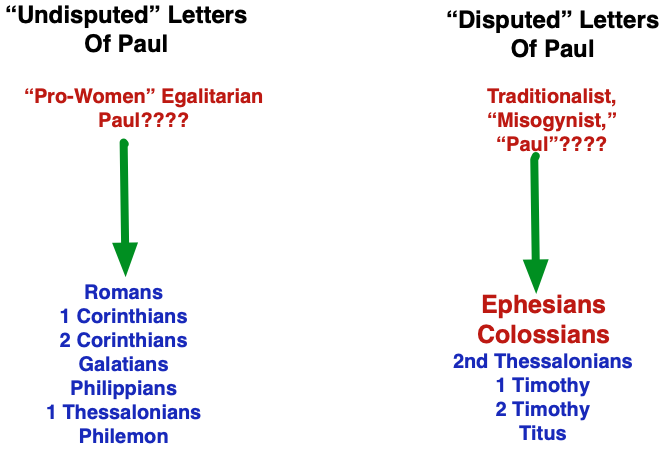
Three examples stand out. First, Thiessen follows the common critical view that Paul did not write all thirteen letters in the New Testament, associated with his name. He is largely convinced that Paul did not write the pastoral letters (1 Timothy, 2 Timothy, Titus), and he is unsure about 2 Thessalonians, Ephesians, and Colossians. Nevertheless, he (cautiously) uses evidence found in all thirteen letters associated with Paul to make his case (Thiessen, p. 51), which suggests that he might be open to being wrong about the disputed status of certain letters from Paul.

Good for him. I will just say that I am persuaded that all thirteen letters in our New Testament all derive from Paul’s authority, though he probably enlisted significant help from competent secretaries he trusted, particularly in the case of 1 Timothy, 2 Timothy and Titus, the most disputed of the Pauline writings.

Furthermore, Thiessen remarks and asks, “Paul was not a trinitarian, but do his writings perhaps inevitably point in trinitarian directions?” (Thiessen, p. 113). I wonder if Thiessen could have reframed this a little differently. Some readers will be annoyed to think that Paul was not trinitarian from the start, at least implicitly, but Thiessen is nevertheless open to thinking that Paul’s ideas do lend themselves towards a fully trinitarian theology articulated at the councils of Nicea and Constantinople in the 4th century. Still, Thiessen’s stark remark about Paul not being a trinitarian is a curious posture to take.

Here is how I would put it: While Paul was not explicitly trinitarian, Paul was implicitly trinitarian, as those early church fathers eventually understood the doctrine of the trinity by the end of the 4th century.

On top of that, it was not clear to me as to what Matthew Thiessen thinks about the exclusive claims of Christ. On the one hand, Thiessen emphasizes that Paul unequivocally taught that one must believe in Jesus as the Messiah. There is no denying Paul’s exclusivity about Jesus. Then Thiessen gives the analogy of being on the Titanic when it starts to sink. The exclusive truth claim of historic orthodox Christianity is akin to the cry that one must board one of the lifeboats, or else one may die. The lifeboat on the Titanic represents Jesus as the only way to salvation. “Many Christians believe that they have a moral obligation to tell people throughout the world that they are doomed and that they need the lifeboat” (Thiessen, p. 43). This has been the historically orthodox position, despite various attempts to posit a doctrine like universalism. Thiessen on the other hand refrains from telling the reader his own position.

One particular critique of the “Paul Within Judaism” school of thought is that it might be making the exclusive truth-claims of Christianity not-so exclusive. Thiessen is hesitant about applying the “Paul Within Judaism” label to himself, but it left me as a reader scratching my head. This theological issue is probably best understood as one of those mysteries of the faith: where we must simultaneously uphold the uniqueness and supremacy of Christ, while trusting in the goodness and wisdom of God in dealing with those like the Jewish people, and others, who do not outwardly make a profession of Christian faith. Unfortunately, Thiessen left me hanging on this one. Again, this is disappointing.

Salvation is salvation in Christ, and Christ alone. But from our finite human perspective we can nevertheless trust in God’s sovereign purposes and the wideness of God’s mercy to save in ways that we can not fully understand.

A Jewish Paul: A Final Assessment

However, while none of these comments above from A Jewish Paul are ringing endorsements of classic, historically orthodox Christian claims, this should not discourage potential readers from taking in what Matthew Thiessen has to say. A Jewish Paul wants to engage with all Christian believers across the theological spectrum to help us to gain a more accurate and nuanced appreciation for Paul and his message.

A Jewish Paul also serves as a catalyst for trying to purge centuries of antisemitic tropes Christians have at times unwittingly wielded against Jews. While I still consider the great Reformer, Martin Luther, one of my favorite Protestant heroes, Luther went off the rails towards the end of life writing some of the worst, anti-Jewish writings imaginable. Luther’s failure to see the real Jewish-ness of Paul is a fault that we as Protestant evangelicals need to get past and overcome. I am grateful that Matthew Thiessen is helping to try to set the record straight.

As a conservative evangelical myself, I think Matthew Thiessen’s A Jewish Paul is a wonderful book, which has taught me a lot, even though I find myself wondering about or disagreeing with the author on certain fundamental convictions. I can still learn from someone who does not share the exact same evangelical commitments that I have. As a book of less than 200 pages, A Jewish Paul is a perfect introduction into the state of contemporary scholarship regarding the apostle Paul, written at an accessible level. I plan on referring to A Jewish Paul often when I read Paul. A Jewish Paul is an invaluable contribution to the discussion, deserving the widest readership possible, for both scholars and laypersons alike.


A Jewish Paul, Matthew Thiessen Makes Paul Weird Again

Can we please make Paul weird again?

Many of us know the standard story of Paul. At one time, Paul (then Saul) was the most feared opponent of the fledgling Christian movement, bent on destroying such a pernicious heresy. The followers of Jesus had foolishly embraced the idea of a crucified now-risen Messiah, and Paul was dedicated to stamp the movement out.

God soon stopped Paul on the road to Damascus. Confronted by the Risen Jesus himself, Paul realized that he had been championing the very wrong side. Shortly thereafter, Paul reversed his course entirely, proclaiming the Resurrection of Jesus. It took some time for the other Christian leaders to fully trust him, but Paul was eventually to become the great apostle to the Gentiles. Paul had rejected the Jewish commitment to the Law of Moses, with all of its “works-righteousness.” Instead, Paul embraced and proclaimed a message of faith, that of having trust in the Risen Messiah. In contrast with those unbelieving Jews obsessed with trying to earn their own salvation, Paul’s new gospel was a message of grace towards those who believe, receiving a salvation that could never be earned by human effort alone.

While much of this story has staying power, it has a serious weakness when it comes to analyzing the following question: When Paul became a Christian, did he really cease to be a Jew?

Such is the question at the very heart of Matthew Thiessen’s A Jewish Paul: The Messiah’s Herald to the Gentiles.

A Jewish Paul: The Messiah’s Herald to the Gentiles. Matthew Thiessen makes Paul weird again.


What Was At the Heart of Paul’s Message?

Matthew Thiessen acknowledges many of the virtues associated with the standard story of Paul, but he contends that this standard story begins to break down when trying to consider Paul’s real relationship to Judaism as a professing Christian. In essence, Thiessen maintains that Paul never ceased being a Jew when he became a follower of Jesus. Instead, he became a very particular kind of Jew. While this may sound weird to Bible readers today, this is the very point Thiessen is trying to make: We need to make Paul weird again.

Matthew Thiessen is a New Testament professor at McMaster University, in Canada. Coming from a Mennonite background, he is part of an intellectual movement to try to rethink and recover who the real Paul the Apostle was. Sadly, layers of anti-Jewish sentiment following the break between Judaism and Christianity in the early church period have distorted the historical picture we have of Paul. While Jesus is surely the founder of the Christian faith, Paul is indeed his greatest and most influential interpreter. Agree or disagree with Matthew Thiessen on particular matters, one thing Thiessen says sticks out for sure is this: Paul is indeed weird. We would do well to remember this.

What? Paul remained a Jew, while still becoming a Christian? I have to admit, this did sound pretty weird when I first heard this. But Thiessen makes a compelling case for Paul’s weirdness. Some of Paul’s weirdness goes against the norm of Western, Educated, Industrialized, Rich and Democratic people today (WEIRD!), as Jonathan Haidt popularized in his absolutely brilliant The Righteous Mind: Why Good People are Divided by Politics and Religion. But perhaps that is a point as to why thinking about Paul’s weirdness is so important. It shows us just how “weird” we are today, and perhaps why our weirdness gets in the way of situating Paul in his original first century context as a Jewish follower of the Risen Messiah.

In A Jewish Paul: The Messiah’s Herald to the Gentiles, Thiessen offers a succinct overview of the history of Pauline studies over the past few hundred years. First, the traditional reading reflected in the standard story above stems from Martin Luther and other leading Protestant Reformers. In this traditional reading, the main problem faced by Paul was legalism, the attempt to earn one’s salvation through good works. Paul linked this legalism with Judaism itself, and rejected it for the message of grace found by having faith in Christ, superseding Judaism as a whole.

What many Christians do not realize is that a reexamination of this standard story has occupied the attention of New Testament scholars for at least a good forty years now, among both non-evangelical and evangelical scholars. In the world of academic scholarship, it seems like a new study with new insights into the Apostle Paul gets published about once a month.

The thrust of this new line of scholarly research is known as the “New Perspective on Paul” founded by the late E.P Sanders, but popularized the most by writers like N.T. Wright and James D.G. Dunn. Unlike the traditional view, the “New Perspective on Paul” says Paul was not concerned about legalism and correcting it with the “imputed righteousness” of Christ championed by Martin Luther (which is N.T. Wright’s way of saying it). Instead, with the “New Perspective on Paul,” the problem faced by Paul was ethnocentrism. To borrow from N.T. Wright at times, the message of Paul was about “grace, not race.” The Judaizers of Paul’s day wanted gentiles to become Jews by embracing circumcision and the rest of Torah law. But Paul insisted that the death and resurrection of Christ is what makes people right before God and joined together as God’s people, not the ethnically cultural customs  which have been part of keeping the Torah.

Thieseen observes yet a third way of looking at Paul, having its origins in the “apocalyptic” theology of the early 20th century German scholar-turned-missionary doctor, Albert Schweitzer. In this apocalyptic view, the coming of Jesus ushers in a radical break with the Jewish past. Schweitzer had written about the “mysticism” of the Apostle Paul, with all of Paul’s statements about being “in Christ,” and Schweitzer’s followers like the 20th century German theologian Ernst Käsemann, have suggested that the death and resurrection of Jesus relativizes the Torah completely. All of the old structures of order: Jew and Gentile, male and female, and slave and free, have been dissolved (Galatians 3:28).

Thiessen acknowledges that each of these three views have certain strengths to them, but they also fall short in other ways. For example, Paul is clearly teaching that one can not earn one’s salvation by works, so Luther was absolutely right here. But the New Perspective on Paul offers an important corrective by showing that at least some, if not most forms of ancient Judaism were not promoting a works-based righteousness. For example, the Old Testament announces that “there is no one who does not sin” (2 Chronicles 6:36 ESV), and “Surely there is not a righteous man on earth who does good and never sins” (Ecclesiastes 7:20 ESV). This hardly coheres with the standard, old Protestant view that all Old Testament Jews believed that you could simply earn your own salvation on the basis of performing good works. Even Abraham, the father of the Jewish people, received God’s favor due to an act of God’s graciousness, and not by superior Law-keeping.

This Old Testament theme of grace is echoed in the Paul of the New Testament: “Yet we know that a person is not justified by works of the law but through faith in Jesus Christ, so we also have believed in Christ Jesus, in order to be justified by faith in Christ and not by works of the law, because by works of the law no one will be justified” (Galatians 2:16 ESV). Everyone from the Old Testament Jew to the New Testament Gentile stands in need of God’s grace.

But according to Thiessen, the New Perspective on Paul has faulted by insisting that Paul’s problem with the Jewish resistance to the Christ message was ethnocentrism. For Paul himself could also be accused of ethnocentrism, just as anyone else could: Paul’s message was “first to the Jew, then to the Gentile(Romans 1:16 NIV). Why put the Jew first? Was Paul placing the Jew as being more important or superior to the gentile?

Thiessen’s critique continues with another target: While the “apocalyptic” view rightly announces a radical proclamation of something new, that view tends to suggest a break with Judaism that Paul never really had. Paul believed that the Mosaic Law had its goal and purpose fulfilled in the coming of Christ: “For Christ is the end of the law for righteousness to everyone who believes” (Romans 10:4 ESV).

Instead, what Matthew Thiessen proposes is yet a fourth view that might be called “Paul within Judaism,” though Thiessen is not wholly satisfied with that description. Nevertheless, it is a label that a scholar such as Paula Fredriksen agreeably aligns with, in her Paul: The Pagan’s Apostle. First and foremost, this “Paul within Judaism” view acknowledges that the Judaism of the Second Temple period, to which the Apostle Paul lived in, was not some monolithic belief system. Someone who was Jewish in Paul’s (and Jesus’) day could have held beliefs that sharply differed from another Jew. For example, even Acts 23:8 tells us that the Sadducees and the Pharisees held contradictory views about a future resurrection, the Sadducess being dismissive of such an idea whereas the Pharisees embraced it. It is better to think in terms of multiple “Judaisms” of Paul’s day as opposed to a single “Judaism.”

“Paul was one ancient Jew living and thinking and acting within a diverse Jewish world that sought to be faithful to Israel’s God and Israel’s law“(Thiessen, p. 8).

Yet what makes Paul so important is that Paul is the most prolific and deepest thinker we encounter when reading the pages of the New Testament. But to miss the essential Jewishness of the Apostle Paul is to completely miss the message from him we read about in the New Testament.

Paul’s Unique Contribution to New Testament Christianity

Along the way in reading A Jewish Paul, we learn that:

…It is simply wrong to believe that all or even most Second Temple Jews thought that gentiles needed to become Jews. Such a commonly held view is the result of Christian interpreters who have reconfigured Judaism into the image, albeit inevitably an inferior image, of Christianity” (Thiessen, p. 18).

Yet Thiessen’s contention is contrasted with the very mission of Paul to be Christ’s apostle to the Gentiles, compelling Paul to travel across the Roman empire to share the Good News with all he encountered. While most Jews did not “evangelize” their faith, Paul in his own understanding of Judaism was exactly opposite, a feature of Paul’s ministry which Thiessen acknowledges.

Paul did not in any way think that Judaism was somehow deficient as a whole. Rather he specifically came to believe that Jesus Christ was the once dead but now Risen Messiah, and that gentiles can be brought into the community of God’s people by having faith in Jesus.

Some might argue against Thiessen that Paul spoke of his “previous way of life in Judaism” (Galatians 1:13-14 ESV), suggesting that Paul had given up his Jewish way of life. However, later in Galatians 2:15 Paul tells his readers that he is very much still a Jew, and in Romans 11:1 and Philippians 3:5, he embraces his Benjamite identity. Therefore, it is better to think of Galatians 1:13-14 as saying that Paul gave up one form of Judaism for yet another form of Judaism (Thiessen, p. 41 and pp. 54ff).

It might be fair to say then that Paul’s “conversion” to Christianity was not a “conversion” away from Judaism. Rather, Paul was converted from one form of Judaism to a different, particular Jewish vision of acknowledging Jesus as God’s promised Messiah.

Paul is not against circumcision per se, for he does not believe the Jewish Christians need to have the marks of circumcision removed. But he is emphatic on insisting that gentile Christians not be required to undergo circumcision in order to become followers of the Messiah.

To demonstrate Paul’s very point, it is crucial to understand how the Book of Acts functions in its placement within the New Testament.  Sandwiched between the Gospels and Paul’s letters, Acts shows the reader that Paul was very much still a Torah-observant Jew (Acts 21:23–24; 25:8; 28:17), getting along well with other apostles, like Peter. But even in Acts, Paul preaches that complete Torah observance was not required for the Gentile follower of Jesus (Acts 13:38-39). It was this insistence that circumcision be not required of the believing gentile which stirred up Paul’s opponents within the Jesus movement in Jerusalem. For there is nothing in the story of Jesus from his earthly ministry prior to his Resurrection, as we find in the Gospels, which would indicate that Jesus had removed the circumcision requirement from the gentiles. We only get that from the post-Resurrection story of the apostle Paul.

So, it would be too strong to say that Paul was the founder of Christianity. Jesus himself took that role. But it was through Paul’s unique calling, as the apostle to the gentiles, that Christianity became a universalizing faith, intended for everyone, and not just one particular group of people.

Christians who contend that they “love Jesus” while “having problems with the Apostle Paul,” need to seriously rethink such an attitude. For while Paul does believe that he got his message straight from the Risen Jesus, nevertheless, if it were not for Paul, Christianity probably would never have made the in-roads which it did into the gentile world.

If all we had was the teaching of Jesus in the Gospels, we would never have had a Christian message with the universal impact it had. While Paul does not go as far some would like in stimulating social change, we might never have had the eradication of racial-based slavery without Paul, nor the reconfiguring of roles for women in leadership without Paul, in the Western world. Why Jesus waited to impart through the Holy Spirit the full Gospel message until after the Ascension, perhaps somewhere on that road to Damascus, so that Paul could unpack it all out for us, is a question I hope to to get answered some day. Without Paul, Christianity might have remained a peculiar Jewish sect, where the only Jesus followers would be those who accepted circumcision, and other distinctives of the Law of Moses.

Rethinking Paul’s Message in Light of His Jewishness

Much of contemporary New Testament scholarship has tried to show that the narrative of Paul’s life, as told through his letters, conflicts with the narrative of Paul given to us in the Book of Acts. This has led many scholars to dismiss the historical reliability of Acts. But Thiessen argues that much of this conflict comes from misunderstanding Paul from his own letters (Thiessen, pp. 27ff).

Thiessen suggests that part of our misunderstanding about Paul comes from misleading ways of reading the book of Romans. For example, many Bible translations of Romans 1:18-32 employ subtitles like the ESV’s “God’s Wrath on Unrighteousness” or the NIV’s “God’s Wrath Against Sinful Humanity.”   Only a few translations, like the CSB, with “The Guilt of the Gentile World,” more accurately convey the intent of  Paul’s message.  The primary thrust of Romans 1:18-32 is to critique the sin of idolatry and its consequences in the gentile world, problems that do not normally appear in the Jewish world.

Much of Paul’s writing is focused on how his message of inclusion regarding the gentile believers meshes together with honoring circumcision among believing Jewish followers of Jesus. In contrast, Thiessen refutes someone like N.T. Wright, who redefines circumcision as taught in 1 Corinthians 7:19 as something “spiritual,” and therefore physical circumcision is no longer important to Paul, for the Jewish Christian. Thiessen suggests that this spiritualizing of circumcision would be akin to a Christian today rejecting baptism or communion as unnecessary, and that we should only listen to God’s words instead (Thiessen, p. 31).

While Paul has the gentile in mind in Romans 1:18-32, Paul has the Jewish Christian in mind in Romans 2.  Nevertheless, some Bible translations tend to miss this focus, as did the older NRSV in Romans 2:28-29:

“For a person is not a Jew who is one outwardly, nor is true circumcision something external and physical. Rather, a person is a Jew who is one inwardly, and real circumcision is a matter of the heart—it is spiritual and not literal. Such a person receives praise not from others but from God.”

(The new NRSVue translation fixes this). Thiessen notes that this older translation is misleading as there is no mention of “true” or “real” in the original Greek. Instead, Thiessen offers this alternative translation:

For it is not the visible Jew, nor is it the visible in-flesh circumcision, but the hidden Jew, and the circumcision of the heart by the pneuma [spirit], not the letter, whose praise is from God, not from a human.

Paul still acknowledges the importance of physical circumcision for the Jewish Christian. Paul’s inward “circumcision of the heart” in no way invalidates the outward circumcision of the Jew. God’s desire was for the Jew to be both outwardly circumcised and inwardly circumcised in the heart (Thiessen, p. 91).

Rethinking the “Allegory” of Galatians 4:21-31

Paul’s use of the “allegory” of Abraham’s son Ishmael versus his son Isaac, in Galatians 4:21-31 can be puzzling. For years, I have thought that in this passage Paul is treating the story about Ishmael and Isaac as an allegory that actually flips the roles around filled by Ishmael and Isaac.  Ishmael represents the Jews who rejected Jesus, whereas Isaac represents Christian believers.  In other words, the descendants of Abraham through Isaac, the Old Testament Jews, have now become the Ishmaelites, separated from the promise of God.  In turn the Ishmaelites, those who embrace Jesus, including the gentiles, have now become the inheritors of the promise given through Abraham’s son, Isaac.

But there are several problems with this interpretation according to Thiessen. First, Matthew Thiessen notes that Paul is not simply treating or interpreting the Genesis narrative regarding Ishmael and Isaac as an allegory. Rather, the Genesis story IS an allegory, according to Paul.  Some translations, such as the ESV, take the wrong approach at translating Galatians 4:24:

Now this may be interpreted allegorically: these women are two covenants. One is from Mount Sinai, bearing children for slavery; she is Hagar.

In contrast, the NASB 2020 is more direct:

This is speaking allegorically….

Or better the NRSVue:

Now this is an allegory: these women are two covenants. One woman, in fact, is Hagar, from Mount Sinai, bearing children for slavery

The implications of this claim by Thiessen go beyond what he comments on in A Jewish Paul. But the lesson for how Paul reads the Old Testament is evident: “The trick, then, was to learn to recognize which texts were originally allegorical and then to figure out how to read them accurately” (Thiessen, p. 95).

However, the clarifying insight in A Jewish Paul suggests that my old way of reading Galatians completely misses the original context of the letter, which is about Paul’s efforts to encourage his gentile followers of Jesus to not fall into the trap a listening to the Judaizers who want these gentile Christians to undergo circumcision to become fully Jewish. In the allegory, we learn that both Ishmael and Isaac undergo circumcision.  However, only Isaac is the one who receives the promise. The covenant will be fulfilled through the line of Isaac, and not Ishmael. Isaac is circumcised correctly, whereas Ishmael was not, an idea that Theissen draws from the apocryphal Book of Jubilees, a popular Jewish text from the Second Temple period (Theissen, p. 97). Therefore, in and of itself, circumcision itself does not guarantee membership within the covenant people. The very fact that in the Genesis narrative that Hagar and her son Ishmael are eventually expelled from Abraham’s household demonstrates the failure of circumcision done for the wrong reasons.

Paul does not want the gentile Christians in Galatia to follow along the Ishmaelite path, for to do so would be accepting a false gospel, and lead to spiritual peril. Much of this explains why Paul encouraged Timothy to get circumcised, though having a gentile father, was also born of a Jewish mother (Acts 16:3), while explicitly rejecting the idea that Titus, a pure gentile, should get circumcised (Galatians 2:3-5).

The correct interpretation of Galatians 4:21-31 then is as follows:

“You gentile men want to keep the law, but you haven’t read it carefully enough. You want to be Abraham’s sons through circumcision. But Abraham had two circumcised sons: Ishmael (a slave) and Isaac (an heir). By undergoing adult circumcision, you imitate Ishmael, not Isaac. Consequently, you will share in Ishmael’s fate. You, like Ishmael, will not inherit. Instead, you will be cast out of Abraham’s house altogether. Only those who are like Isaac, born according to the pneuma [spirit] and promise, will inherit” (Thiessen, p. 98).

While this does not solve the gentile problem of how gentiles can become inheritors of the promise, it does show that “gentile circumcision is nothing more than a cosmetic effort to look like Abraham, but it is one that results only in a superficial, fleshly connection, something too tenuous to be of eschatological, and therefore lasting, value” (Thiessen, p.99).

For me, this insight alone is worth the price of A Jewish Paul.

Stay Tuned for Part Two of This Book Review:  Pneumatic Gene Therapy?

However, the best and most provocative part of A Jewish Paul comes towards the second half of the book. This is where Matthew Thiessen dives into a core idea in Paul’s thinking, which Thiessen cleverly calls “pneumatic gene therapy.” The concept is so intriguing that it is best to cover this in a separate blog post, where I will also give some critique, pushback, and summary conclusions to A Jewish Paul.  Stay tuned!

Link to next blog post.


Why “Red Letter” Christianity Short-Changes the Full Story of the Gospel

Well done, good and faithful slave.”

How would you like that to read on your tombstone? Most Bible translations of this verse, Matthew 25:21, read “good and faithful servant,” or something less provocative. The Legacy Standard Bible is one of the few translations today that reads “good and faithful slave.”

Slave??? Jesus said that?”

Skeptics will confront me to say that the New Testament condones slavery. How do I respond? Well, on this particular point, with respect to Matthew 25:21, the skeptics have a valid point to make. But this needs a bit more unpacking to explain, as the complaint from skeptics is misleading.

Frederick Douglass, born February, 1818, into slavery. Photo colorization by Marina Amarai. Many associate “slavery” as found in the Bible with what Frederick Douglass experienced in early 19th century America. The story of “slavery” in the Bible, like other issues with respect to social justice (and other aspects of the problem of evil), is more complicated than what many Christians and skeptics typically think.


“Red-Letter” Christianity??

There is a movement among many Christians called “Red-Letter Christianity.” As explained from a previous Veracity blog post, the idea arose from the fact that just over a hundred years ago, some Bible publishers began to print the words spoken by Jesus in red, to distinguish the sayings of Jesus from the rest of the New Testament text. The venerable King James Version (KJV) of the Bible contains no quotation marks, so it is difficult to discern when someone is speaking and when an author is simply giving narration. Yet despite its problems, having the words of Jesus highlighted in red has been helpful to many over the past decades.

Efforts like “Red-Letter Christianity” can be well-intended, seeking to soften the edge of a lot of supposedly Christian rhetoric these days deemed to be harmful to others. A lot of times, the way we express the truths found in the Bible matters just as much, sometimes even more, than the actual truths themselves. The Bible can be easily weaponized to hurt people, so it is understandable to a certain degree that “Red-Letter” Christianity pushes back against such misuse of Scripture.

Some who describe themselves as “Progressive Christians” would also call themselves “Red-Letter” Christians. For example, when push comes to shove, many such “Red-Letter” Christians will say that they will take the words of Jesus over the letters of Paul, or other writings in the New Testament, any day. However, such efforts that try to elevate the words of Jesus like this have their own downsides to them.

So-called “Red Letter Bibles” were probably a good idea in the beginning, but they have sure made a mess of things.


Noah curses his son Ham, a 19th-century painting by Ivan Stepanovitch Ksenofontov.  The so-called “Curse of Ham” in Genesis 9:25 was the foundational prooftext used to defend the institution of slavery in the ante-bellum American South. Contrary to popular opinion, Jesus never comes out to explicitly condemn slavery. This blog post seeks to explain why, and to offer a better approach to how the New Testament deals with slavery.


Some Potentially Embarrassing “Red Letters” of Jesus

A focus on the “Red Letter” speeches of Jesus has good intentions behind it, but a careful examination of these red letters should give us some pause. Consider the “Red Letters” of Jesus found In Revelation 2:22-23, where the writer John is retelling a vision he has of Jesus speaking out against a female false teacher in one of Revelation’s seven churches, Thyatira, who is propagating a number of bad ideas in that Christian community:

Behold, I will cast her into a bed, and them that commit adultery with her into great tribulation, except they repent of their deeds. And I will kill her children with death; and all the churches shall know that I am he which searcheth the reins and hearts: and I will give unto every one of you according to your works.

Yikes. Even with the archaic language of the KJV, this sounds pretty harsh. I can hear the objection of the skeptic now: “Well, your Jesus wants to murder children. I know that, because the words of Jesus are printed in red.”

Those red letters suddenly begin to look like red flags.

It is important to concede something here. There are a number of disturbing things Jesus says in this passage, but I highlighted the number one thing that bothers me: “And I will kill her children with death.” The ESV translation renders this phrase, “I will strike her children dead.” For this Christian who is pro-life, particularly with respect to abortion, this red-letter snippet from Jesus can be jarring. Does Jesus really want to kill a woman’s children, even if this woman is a heretic?

However, a proper understanding of the literary context of any book of the Bible is essential to interpreting the Bible responsibly. Some Christians will staunchly defend the idea that they take the Bible “literally,” without a careful examination of what “literally” even means. Instead, it is better to consider what is the literary genre of a book like Revelation. The Book of Revelation falls within the peculiar genre of apocalypticism, a group of writings that grew out of Judaism that are heavily laced with hyperbole and metaphor. The Book of Daniel in the Old Testament is another example of apocalyptic literature, where parts of Daniel have a very similar feel to what is read in Revelation.

It can be well argued that Jesus is not hyper-literally favoring abortion or infanticide here, but rather is condemning the bad fruit of the false teaching associated with this “Jezebel” from Thyratia.  In other words, this reference to “Jezebel’s” children metaphorically symbolizes the corruptive result of this woman’s incorrect doctrine, which distorts the truth, a distortion which Jesus intends to do away with.

Oh, and lest we forget, more than anyone else in the entire New Testament, Jesus speaks about the doctrine of hell the most. Depending on the Bible translation, the word “hell” appears anywhere from 13 to 23 times in the New Testament, the majority traced back to the lips of Jesus, even in the Book of Revelation. In comparison, the letters of Paul barely mention “hell” at all. The concept of eternal lostness, one of the most despised concepts of Christianity in our contemporary world, is found primarily in the “Red Letter” words of Jesus.

Yes, the “Red Letter” Jesus does speak about love, goodness, and kindness towards others. But that same “Red Letter” Jesus also speaks words of judgment against a hard-hearted and disobedient people.

Chapel Mural

In the Gospels, Jesus calls all of the little children to come unto him and loved them (Mark 10:13-16). But in Revelation 2:22-23, Jesus threatens to “kill the children” of a woman described as a false teacher in the church. A more responsible reading of the so-called “Red Letters” of Jesus is needed that values the original literary context of the New Testament. (From a mural painted at the Williamsburg Community Chapel).


Smoothing Over Some the “Red Letters” of Jesus?

In comparison to the Book of Revelation, the Gospels are quite a different form of biblical literature.Yet even in the Gospels, Jesus used hyperbole and metaphor rather frequently. Just think about Jesus’ instruction to “hate” your own family (Luke 14:26). However, there is a tendency to try to smooth over some of those “Red Letters” of Jesus which make us feel even more uncomfortable.

Philip Jenkins, an historian at Baylor University whose work I have reviewed a few times on this blog, has written a very insightful article about Matthew 25:21. As Jenkins informs us, the problem is that we often read parts of the Bible through our own cultural lens, and when it comes to “slavery,” the experience of racial-based, chattel slavery in American history immediately comes to mind. But the “slavery” during the New Testament period was different. The Romans never paid any attention to skin color when it came to slavery. If your cultural group was defeated by the Roman army, then your group became perfect candidates for Roman enslavement in an effort to make reparations for war debts, regardless of the pigment of one’s skin. But nevertheless, slavery is slavery.

To be a slave in Jesus’ day was to be considered a piece of property in the eyes of the master. Furthermore, in the world of the first century Roman Empire, slavery was a big deal, and the Roman province of Israel was no exception. Historians estimate that roughly one out for three persons living in the Roman Empire in the time of Jesus was a slave.

People looking to “Red Letter” Christianity to find a message from Jesus condemning slavery will be hard pressed. The Legacy Standard Bible, a translation produced by the seminary founded by John MacArthur, a pastor in Southern California, uses the English word “slave” for the Greek “doulos.” Some translations will use the word “bondservant” or “servant,” to try to convey the same idea.

These translations work to a certain extent. Indentured servitude, where slaves could work off their debts to earn their freedom, commonly known as “debt bondage,” was more widely practiced in the ancient Roman empire than what you find with cradle-to-grave slavery in the antebellum American South. However, the use of  “bondservant” or “servant” may obscure the original meaning as it was originally heard by Jesus’ hearers in first century Galilee or Jerusalem. Sure, it makes me squirm a bit, but the text is still authoritative and worth considering, if you read it within the longer context of the global history of slavery. Read Jesus’ speaking in Luke 12:47-48, from the Legacy Standard Bible:

And that slave who knew his master’s will and did not get ready or act in accord with his will, will receive many beatings, but the one who did not know it, and committed deeds worthy of a beating, will receive but a few. From everyone who has been given much, much will be required, and to whom they entrusted much, of him they will ask all the more.

That comes straight from a modern equivalent of your “Red Letter” Bible, folks. However, statements like these can be balanced by other sayings made by Jesus: “You shall know the truth, and the truth shall set you free” (John 8:32). But this is speaking more of slavery in metaphorical terms, as in spiritual slavery, and not so much about physical, chattel slavery. So, what are we to think about this?1

A Better Way to Think About the New Testament’s Approach to Slavery

The reality is that the only New Testament message which challenges chattel slavery can be found in the writings of the Apostle Paul, but you will not find Paul’s letters written in red in any Bible I know about. Granted, Paul is not as explicit in condemning slavery as we would like, as he never directly challenges slavery as a system. Paul’s teaching in Ephesians thankfully went against the grain of typical Greco-Roman treatment of slaves (Ephesians 6:5-9), by calling masters to not “mistreat their slaves.” Nevertheless, slaves are still called to obey their masters, in Paul’s letters. Paul simply assumes the slavery system to be the societal norm. However, it is important to recognize neither Paul nor anyone else in the Bible refers to slavery as part of God’s created order. We get the “slavery from creation” idea from Aristotle, and not from the Bible.

Still, we see indirect evidence that Paul did not imagine slavery to be part of God’s ultimate plans and purposes. In 1 Corinthians 7:21, Paul encourages Christians who are slaves to pursue their freedom from slavery, if they have the opportunity. In Philemon 1:8-16, Paul considers the runaway slave, Onesimus, to be like a son and a brother, and encourages Philemon, the slave owner of Onesimus, to do the same. To call a slave a “son” or “brother” would have been revolutionary in the Greco-Roman culture, which saw slaves as merely being pieces of property.

One other example can be added to the list, though it is controversial among some scholars. In 1 Timothy 1:9-10, the KJV reads Paul as condemning “men-stealing.” Here is how the English Standard Version renders the passage:2

…the law is not laid down for the just but for the lawless and disobedient, for the ungodly and sinners, for the unholy and profane, for those who strike their fathers and mothers, for murderers,the sexually immoral, men who practice homosexuality, enslavers, liars, perjurers, and whatever else is contrary to sound doctrine…..

The ESV reads “enslavers” instead of the KJV’s “men-stealers,” but the ESV includes a helpful note describing “enslavers” as “those who take someone captive in order to sell him into slavery.” Other translations render this Greek word as “kidnappers,” which pretty well describes a lot that has gone along in the history of slavery for how slaves had been obtained in the first place, such as from the African slave trade during the American colonial era. It would be too much to call the Apostle Paul a full-on “abolitionist,” but you have to be blind to these verses to claim that Paul was a sold-out apologist for slavery.

All this being said, Paul is our best resource in the New Testament for pinpointing the evils of slavery. You just do not find such a resource in the so-called “Red Letter” words of Jesus. Those “Red Letters” do not go far enough.

That is right. We have to look to Paul, that man who is often described as supposedly “gay-hating,” “woman-hating,” etc., in order to build a Christian theology that works to address the evils of something as bad and as unjust as slavery. Jesus as presented in the so-called “Red Letters” of the Gospels and Book of Revelation does not help us much at all. Thankfully, Jesus did designate Paul to be the apostle to the Gentiles, and Jesus’ advocate for a more just and equitable world (See Galatians 1:11-12). It was this Gospel message that Paul preached throughout the Roman empire that ended up changing the world, and handing down the ethics of the New Testament over multiple generations to our present day some 20 centuries later, despite efforts in recent decades to overturn certain elements of New Testament ethics.

Christians are called to try to correct injustices in society, to work towards caring more about the environment, to fight against racism, and to advocate for the poor and needy. But we need the  whole story of the New Testament to do that, and not just the “Red Letters” of Jesus.

So-called “Red Letter” Bibles that seek to highlight the spoken words of Jesus in red were probably a good idea a century ago. But today, such Bibles can often cause more problems than what they try to solve.


The “Red Letters” of Jesus vs. the More Emancipating Letters of Paul, Regarding Women… and Gentiles

Here is another point: An exclusive focus on the words of Jesus are not always as helpful when it comes to concerns about women, as compared to Paul. While Jesus’ primary financial supporters were wealthy women like Mary Magdalene, Johanna, and Susanna (Luke 8:2-3), his inside top-ministry team of twelve were all men. Some argue that Jesus was simply “accommodating to a patriarchal culture” in limiting the roles of women in leadership. I have often made this type of argument in the past myself!

However, this is difficult to square with the revolutionary attacks Jesus made against Jewish cultural standards. Why would Jesus be so timid in encouraging women to be his top leaders, when he went smack dab up against the standard Jewish practice of strict Sabbath observance and in challenging the very Temple establishment itself? This idea that Jesus did not want to “upset the apple cart” of first century Judaism regarding the role of women, or that Jesus was some kind of “closet feminist,” may sound appealing to some, but it lacks solid evidence. Whatever Jesus’ motivation was, feminism was not on his highest agenda list.

Some may fault Paul for not having women serve as elders/overseers in his churches (a much disputed teaching today: read this in-depth Veracity blog series), while others support more historically-grounded, traditional readings of Paul on this issue as being still applicable today. However, despite the controversy regarding women serving as elders/overseers in local churches, Paul regularly worked alongside fellow women missionaries, as described in Romans 16. Euodia and Syntyche were regarded, not just as friends or supporters, but actual co-workers for the sake of the Gospel with Paul (Philippians 4:2-3). Paul recognized a woman named Nympha, who led a gathering of Christians in her home (Colossians 4:15).

Surely, Jesus had female friends in the Gospels. Yes, Jesus valued the women around him highly. Mary Magdalene has for centuries been regarded as “the apostle to the Apostles,” for being the first to proclaim the Good News of Jesus’ Resurrection.  Jesus’ mother Mary is probably one of the greatest, if not THE greatest, and most celebrated woman in all of world history. But none of these women have been described as Jesus’ “co-workers” like what we find with Paul.

A number of “Red Letter” Christians get incensed with Bible translations that say that Paul insists that an elder must be the “husband of one wife,” suggesting that only men are qualified for that job description (Titus 1:5-6 ESV). But the objection is overblown. For even though historical tradition going back to the early church controversially reserved the office of “elder/overseer” of a local church to qualified men in 1 Timothy 2:11-3:7, and certainly not all men are qualified, that same historical tradition affirmed both men and women as “deacons” (1 Timothy 3:8-13; Romans 16:1-2). Paul even instituted a special order of ministry among women, the “widows” of 1 Timothy 5:1-16. Paul evidently affirmed that both men and women are to serve as spiritual “fathers” and “mothers” in the church, respectively.

One more data point: There is nothing in the “Red Letters” of Jesus to suggest that it was possible to be a true follower of Jesus and not be circumscribed. As presented in the Gospels, Jesus was Jewish and expected those who follow him to adhere to the tenets of Judaism, including circumcision. With just a few exceptions, most of Jesus’ ministry was with his fellow Jews, and not Gentiles.

Jesus himself stated that he “was sent only to the lost sheep of the house of Israel” (Matthew 15:24 ESV). No mention of Gentiles here.

You read that right, folks. In “Red Letter” Bibles, Jesus’ focus was on his ministry towards the Jews, and not the Gentiles. Living in an age where many in America value “diversity” and “inclusion,” Jesus’ message in the Gospels can be a bit uncomfortable to accept.

Paul in prison, by Rembrandt (credit: Wikipedia). Jesus personally selected Paul to pioneer outreach to the Gentiles with the Good News of the Gospel, expanding out from Jesus’ ministry to primarily his fellow Jews.


Towards the Full Story of the Gospel

The story changes dramatically once we get to Paul. For years it had bothered me that Paul seemed to make a big deal about his apostolic calling to go preach the Gospel to the Gentiles. Case in point: Read 2 Corinthians 10:8…. “For even if I boast a little too much of our authority, which the Lord gave for building you up and not for destroying you, I will not be ashamed.” Paul seems to boast a lot about his apostolic calling in 2 Corinthians 10. Was Paul just being arrogant?

But I have since learned that this was not about Paul trying to make a name for himself. Rather, this was about honoring the fact that Jesus had personally selected Paul to be his representative to the Gentiles, and remove the circumcision requirement for becoming members of Christ’s family. Others who claimed to be associated with the Jesus movement rejected Paul’s message, and insisted that Gentiles must undertake circumcision in order to follow Christ. For if it was not for Paul, the expansion of Christianity would not have made it very far into the Gentile world, as the “Red Letter” message of Jesus in the Gospels had not yet paved a way for the Gentiles to enter into the covenant people of God without circumcision.

We have Paul to thank for that, in his obedience to share the Gospel the way he did with the Gentiles, as revealed to him by Jesus!

So, when I meet up with Christians who tell me that they like Jesus, but do not care much about Paul, I want to remind them of this reality: Without Paul, we simply would not have Christianity as we know it.

I am all for the idea that we should put our focus first and foremost on Jesus as believers. Of course we should. Jesus alone is our King, our Lord, and Savior. Jesus is the founder of Christianity. But if we are honest with what we read about in the New Testament, we owe a great debt to the revolutionary message given to us through Jesus’ “slave,” the Apostle Paul (see Romans 1:1). For without the story of Paul we would not have the full story of the Gospel. Jesus personally selected Paul to fulfill this vital task. Let us not short-change the Gospel by just reading the “Red Letters” of the Bible.3

Ponder this idea for a moment. Perhaps this was God’s plan all along. God probably already knew that having the Son of God walking around in human flesh in first century Israel, preaching and teaching, might be a tough sell for a people accustomed to the slavery system, despising Gentiles, etc. But after the Resurrection, things would become clearer as to what the Gospel message was all about. So it would have been fitting for Jesus to then commission Paul to spread the fullness of the Gospel message that God had intended to communicate all along.

Here is the bottom-line of this whole exercise: Too many Christians want the Bible to say things the Bible really is not saying. Skeptics of Christianity often know this, so when Christians proceed to pretend things to be true about what the Bible is saying, but the evidence points in a different direction, it only reinforces the skepticism of the skeptic (I keep having to learn this lesson the hard way myself!!).  Instead, making more modest claims about what the Bible says goes a lot farther in making a defense of the Gospel than making extraordinary, overstated claims that are very difficult to support from the evidence. When we simply allow the Bible to speak for itself, we discover things that may have never been seen before. Then these discoveries can become great opportunities to have an honest conversation with a skeptic, and wonderful things can happen.

“Red Letter Christianity” gives us truth about the Gospel. But it only gives us a partial truth. In the worst cases, it can even distort the truth. To focus only or even primarily on the “Red Letters” of Jesus undermines the full story of the Gospel. To get the full story of the New Testament faith we need the rest of the New Testament, including the story of the Apostle Paul.


If you appreciated this blog post, you might want to check out other Veracity articles on Christian approaches from an historically orthodox perspective to such hot topics as slavery, justice, climate change, racism, women in the church and the home, homosexuality, reaching out in love towards our LGBTQ friends, and protecting the poor and the needy. Be sure to subscribe to new blog posts via email, on the right side of the page (unfortunately, the Twitter method of following Veracity does not work well any more).

Notes:

1. Even if an appeal is made to Jesus’ statement in Luke 4:18 about him being sent “to proclaim liberty to the captives,” this is only of marginal help as the original context of where Jesus is quoting from Isaiah 61:1-2, is speaking of war captives, but not necessarily slaves.  

2. Philip Jenkins does not think that the NIV’s rendering of the “men-stealing” terminology in 1 Timothy 1:10 as “slave traders” is correct. Dr. Jenkins cites a Greco-Roman source demonstrating how some forms of slave trading in the Roman empire were legal and others were not. I am not persuaded that Dr. Jenkins has it completely right that Paul is only condemning certain kinds of illegal slave trading in the Greco-Roman world, as though Paul is only listing vices that were illegal in Greco-Roman law, if I understand Dr. Jenkins correctly. To the contrary, the practice of homosexuality was legal in Greco-Roman society, and it is hard to figure out why Jenkins would include deviation from sound Christian doctrine as being against Greco-Roman law. Contrary to Dr. Jenkins, Paul is making reference to Old Testament Law when describing the list of vices to be avoided, not necessarily Greco-Roman law. Granted, you could argue that there was a legal form of acquiring slaves even in Old Testament Law in terms of making war reparations, which would not fit in the category of “slave trading,” itemized in 1 Timothy 1. But in the New Testament we have no prescriptive teaching that addresses slavery in the context of making war reparations. However, the New Testament does talk quite a bit about forgiving others, as in the Lord’s Prayer (“forgive us our debts, as we forgive our debtors“) . While slavery still exists today, as in the exploitation of children and the sex trade, many of the traditional motives for slavery today have been rendered moot in light of the advances in technology, particularly with farming,  and in modern complex economic systems, which mitigate against the need for traditional means of obtaining war reparations.   I also need to pushback on how Dr. Jenkins thinks through 1 Corinthians 14:34-35, as I would argue that there is a convincing argument for a better way to read this text..

3. This blog post complements a similar theme from a few years in another Veracity blog post.  For more on how Christians wrongly picked up the idea that slavery was somehow a part of God’s plan, see this previous Veracity blog post on that topic.  For more on how the New Testament treats women, see my book review of Andrew Bartlett’s Men and Women in Christ.  For more on the history of “Red Letter” Bibles, see this previous Veracity blog post.  


Paul, the Pagans’ Apostle, by Paula Fredriksen. An Evangelical Review.

When Paul became a Christian, did he cease to be Jewish? What prompted the thinking behind Paul’s Gospel, which sought to include Gentiles among the people of God through having faith in Christ signaled by baptism, and not through circumcision? Such are some of the questions that Paula Fredriksen seeks to answer in her Paul, the Pagans’ Apostle.

(Time for another Bible-nerdy book review…..this book is very rich, but can be very dense, for the average reader)

Paula Fredriksen is one of the most recognized and highly respected scholars of early Christianity today. It took me two years, but I thoroughly enjoyed her monumental study Augustine and the Jews: A Christian Defense of Jews and Judaism, and reviewed it here on Veracity several years ago. She knows her field incredibly well. Until 2009 she researched and taught at Boston University and has since served at Hebrew University in Jerusalem. She hit the media spotlight in 1998 when she acted as the primary consultant for the PBS Frontline program, From Jesus to Christ: The First Christians, which was one of the first mainstream television programs to bring the so-called “third” quest for the historical Jesus, active in academic circles, to the eyes and ears of a popular American audience.

Early Christian historian Paula Fredriksen, though not a professing Christian, argues in her Paul: The Pagans’ Apostle that Paul did not “convert” to Christianity. Rather, Paul saw Christianity as fulfilling the message of the Hebrew Scriptures, and that Paul remained within the fold of Judaism to the very end of his ministry.


A Scholarly, Non-Evangelical Look at the Life & Ministry of the Apostle Paul

For Veracity readers, it is important to know that Dr. Fredriksen is not an evangelical in her theological orientation. From Jesus to Christ: The First Christians alarmed conservative Christians in the promotion of “Jesus Seminar” views that were well publicized in the 1990s. But in fairness to Dr. Fredriksen, she does not come across as having an axe to grind, as it is not completely clear to me even what her theological convictions are, though I have been told she is a former Roman Catholic turned Jewish. According to her writings, she seeks to act purely as an historian, putting together what she estimates is a competent reconstruction of the historical record, even where our current sources are not as plentiful as we would all like. Though popular among skeptics, Paula Fredriksen does not appear to be cynically antagonistic, for she acknowledges a set of facts, an “historical bedrock,” that does not explicitly rule out the central Christian claim that Jesus bodily rose from the dead.

To say that Dr. Fredriksen is not an “evangelical” is also to acknowledge that she does not uphold an historically orthodox, Christian view of the New Testament and its inspiration. Instead, she follows the thinking common in secular academia today regarding how the New Testament documents can be viewed as historical sources for reconstructing the life of Jesus and the period of the earliest Christ followers. This would include the topic of Paul, the Pagans’ Apostle, the life of the Apostle Paul. Outside of academia, and certain social media circles, few evangelical Christians know how a certain breed of scholars have a view of the Bible so radically different from their own.

For example, whereas the letters of Paul can be trusted upon as historically reliable, the Book of Acts is only reliable up to a certain point in comparison (Fredriksen,see footnote 1, chapter 3. ). She furthermore dates the writing of the Book of Acts to the early second century, which effectively takes the traditional authorship out of the hands of the historical Luke, who probably died long before the first century ended. She concludes this, despite the fact that the well known British 20th century liberal scholar, John A.T. Robinson, saw no firmly established scholarly reason why the entire New Testament could not be dated before the year 70 C.E.

But even with the “letters of Paul,” a caution is in order, in that of the thirteen letters directly ascribed in the New Testament as being written by Paul, only seven of them are considered to be authentic, whereas the letters 2 Thessalonians, Ephesians, Colossians, 1 Timothy, 2 Timothy, and Titus are to be regarded as letters written after Paul’s death, by writers other than Paul, seeking to modify Paul’s theological agenda. None of this would sound strange at all to an atheistic scholar, like a Bart Ehrman, who fully embraces such views.

For those committed to the idea that our received New Testament canon is the final authority for Christian faith and practice (as I do), such views held by academics like Dr. Fredriksen (and Dr. Ehrman) are in direct conflict with an evangelical view of Scripture. As will become evident in this review, a number of conclusions that Dr. Fredriksen makes about early Christianity will stand at odds with more classic understandings of Christian belief. Nevertheless, while I disagree with Dr. Paula Fredriksen regarding her view of the Bible, I still think that historically orthodox Christians can learn a good deal from her, particular from someone as skilled and learned as she is.

As a Christian, Did Paul Remain a Jew? 

With this caveat in mind, there is much to be gained from Paula Fredriksen’s central thesis that Paul remained a Jew, and continued to be thoroughly Jewish, as he became perhaps the single most articulate and influential leader of the early Christian movement, after the crucifixion, resurrection, and ascension of Jesus. The question that continues to puzzle such scholars is in explaining how such a committed Jew like Paul came to the conclusion that a way be opened up to include Gentiles among the people of God, along with Israel, without the circumcision requirement that classically identified what it meant to a member of God’s covenant people.

For many Christians today, knowing that Paul has a Jewish background is a “no-brainer.” I mean, is it not obvious?  Paul was Pharisee, was he not? However, Dr. Fredriksen argues in Paul, the Pagans’ Apostle that the importance of Judaism in the life of Paul, after he became a follower of Jesus, and as apostle to the Gentiles, has been greatly misunderstood and under appreciated.

Part of the key in appreciating Paula Fredriksen’s approach comes in perceiving the difference between “Gentiles” (a religiously neutral, ethnic term) and “pagans” (a religiously specific, ethnic term denoting non-Jews and non-Christians). For a non-Jew to follow Jesus, in Paul’s mind, they would remain a Gentile but they would need to give up their pagan idolatry and beliefs.The question of what is a “Gentile” and what is a “pagan” has interested me for years, and Paula Fredriksen thoroughly explores the topic.

Since the 1977 publication of (the late) E.P. Sanders Paul and Palestinian Judaism, a revolution has taken place in the academic study of Paul. Since the days of Martin Luther, in the 16th century, much of Protestant scholarship has insisted on a radical break between the Christian message of Paul and the story of Judaism. But with the advent of this “New Perspective on Paul,” inaugurated by Sanders’ research, a one-time professor at the College of William and Mary, where I currently work on staff, scholars have been working to reassess Paul’s relationship to the Judaism of the first century. Some look upon the “New Perspective on Paul” as a refreshing way of trying to approach the intractable divide between Protestants and Roman Catholics on the thorny issue of justification, whereas others view it as a threat to undermining the classic Reformation view of salvation.

Paula Fredriksen’s Paul, the Pagans’ Apostle attempts to steer a middle course through the debate between the New and Old Perspectives of Paul, which is probably the most sensible path forward. Fredriksen’s research is top notch, as her endnotes are well documented, something that the audiobook version I listened to on Audible sorely lacked, which meant a trip to the library for me! Fredriksen’s description of the Greco-Roman and Jewish worlds that Paul lived in is very insightful, and gives the reader a lot of food for thought. Still, there are other assumptions made in Fredriksen’s work that will frustrate evangelicals who try to read her.

Did the Council of Nicea Get Paul Wrong?

A modest acceptance of at least some of the New Perspective on Paul has even made its way into conservative evangelical circles, notably through the writings of N.T. Wright, perhaps the most well known New Testament scholar living in our day, in the first quarter of the 21st century. Nevertheless, Fredriksen’s approach is colored by a sharp disagreement she has with scholars like Wright, mainly in what undergirded the sense of urgency that Paul had in trying to spread his Gospel far and wide throughout the Roman Empire.

In a stunning statement, most likely directed at scholars like Wright, Paula Fredriksen urges “that we try to interpret both Paul and his Christology in innocence of the imperial church’s later creedal formulas.” This would suggest that Dr. Fredriksen believes that the early church’s move to articulate in the Nicene Creed an affirmation of the Son as being of the same substance as the Father is actually a distortion of the Gospel message being promoted by the historical Paul, as she sees him. Really?

Her analysis comes partly from her reading of Philippians 2:5-11:

Have this mind among yourselves, which is yours in Christ Jesus, who, though he was in the form of God, did not count equality with God a thing to be grasped, but emptied himself, by taking the form of a servant, being born in the likeness of men. And being found in human form, he humbled himself by becoming obedient to the point of death, even death on a cross. Therefore God has highly exalted him and bestowed on him the name that is above every name, so that at the name of Jesus every knee should bow, in heaven and on earth and under the earth, and every tongue confess that Jesus Christ is Lord, to the glory of God the Father (ESV).

Fredriksen notes that our English translations can fool us here, in that the word “God,” capitalized four times in this passage, commonly suggests the one divine being, God the Father. However, in the first two instances (verse 6) the word “God” has no definite article whereas later (verse 9), beginning with “Therefore God,” does have the definite article in the original Greek. In her view, this suggests that the reference to “therefore (the) God” means that it was God the Father who highly exalted Jesus, but those two prior references, which she translates in lower-case merely as “god,” or “a god,” as in “in the form of a god,” is a reference to divine status, but that this divine status is for some other divine being apart from God the Father. “Paul distinguishes between degrees of divinity here. Jesus is not ‘God’” (Fredriksen, p. 138).

I can only imagine Arius, the arch-heretic who debated the other early church fathers gathered at the Council of Nicea, issuing to Dr. Fredriksen a hearty “thank you!,” as Arius believed that Jesus was divine, but not in the same way the Father was divine. Jehovah’s Witnesses today pick up the same type of idea by asserting that Jesus was an angel, a divine being, but surely not of the same substance as God the Father, which was articulated in the creed at Nicea.  For Fredriksen, Arius was simply reading his Greek New Testament to make his case against anything that hinted of a Triune nature of God, in an effort to uphold what he understood to be monotheism.

Dr. Fredriksen then goes onto handling an objection, namely that for Paul to say that “Jesus Christ is Lord,” according to the ordinary Greek of the day, suggests that the meaning of “Lord” (kurios, in the Greek) is a deference to any social superior, and not necessarily divine (Fredriksen, p. 139). However, a careful examination of the passage that Paul is drawing from in the Septuagint (LXX) indicates otherwise. Throughout Isaiah 45, from where Paul gets his “every knee shall bow” and “every tongue confess” (Isaiah 45:23), each reference to the one true God is that Greek word for “Lord;” that is, kurios.  This would indicate that Paul undoubtedly had Jesus’ associated with the one true God in mind, and not merely some lesser divine being.

In other words, while Arius might have had certain good intentions of protecting against some form of polytheism in his reading of Paul, the orthodox church fathers who eventually won the debate at the Council of Nicea were able to read Paul better in his Old Testament context, thus making the case for Trinitarianism, against Arius. Dr. Fredriksen would strongly disagree with my assertion here. Nevertheless, historically orthodox Christian believers have understood Paul this way ever since. The Nicene Creed remains one of most familiar and well-affirmed statements of Christian belief in the history of the Christian movement, a common statement of faith among Protestants, Roman Catholics, and Eastern Orthodox alike.

A Common Assumption in Academia: Paul Emphatically Expected the Return of Jesus Within His Lifetime

So, given the shortcomings in her argument, why does Dr. Fredriksen urge such a movement away from the conclusions drawn up at the Council of Nicea? Dr. Fredriksen follows the standard consensus view among notably critical New Testament scholars, such as Bart Ehrman, that Paul “lived and worked in history’s final hour” (Fredriksen, p. xi), a well-known thesis popularized by the influential German New Testament scholar of the early 20th century, Albert Schweitzer.  In other words, Paul was absolutely convinced that Jesus would return as the victorious Jewish Messiah, to set the world order aright, sometime during his lifetime. This apocalyptic, eschatological expectation of the Apostle Paul is what drove him to preach far and wide across the greater Mediterranean coastlines and even inland.

As this story goes, when Paul eventually died, probably in the 60’s C.E., and there was no returning Messiah in sight, the Christian church was put into an existential crisis. What we possess in our New Testament today is essentially a combination of those early writings by Paul, along with other writings that came later, like the Gospels, that seek to refashion the message of the early Christian movement. With the failure of Jesus’ imminent return, this modified Christian movement, ultimately defined and regulated by the early church councils, most notably the Council of Nicea, now must endure for the “long haul,” something which has continued to survive and thrive now for 2,000 years.

Pushing Back Against the “Ghost of Albert Schweitzer”

In his multipart review of Paul, the Pagans’ Apostle, evangelical New Testament scholar Ben Witherington, of Asbury Seminary, critiques this presuppositional mindset that scholars like Dr. Fredriksen possesses. Witherington acknowledges that Fredriksen presents her central thesis well, despite the inadequacies of the Ehrman/Schweitzer approach that Fredriksen front loads to her book.

For example, when Paul states in Romans 16:20 that Christ will “soon” crush Satan under the feet of the Roman Christian community, he means that the crushing of Satan will happen “quickly,” a statement about how Satan will be crushed and not exactly when this would happen. For Paul also reminds the Romans in chapter 15 that he must go to Jerusalem, then to Rome, and then hopefully to Spain. So it would be odd for Paul to tell the Romans of his planned future schedule, years out in advance, while simultaneously announcing the coming end of the world, as he knew it, at any moment, as he was writing this letter. After all, Jesus himself acknowledged that he did not know the exact timing of his Second Coming (Mark 13:32). Witherington remarks, “Could we please now let the ghost of Albert Schweitzer rest in peace, and stop allowing his misreading of Paul to continue to haunt the way we evaluate Paul?

Nevertheless, even Witherington largely agrees that Dr. Fredriksen is correct to say that Paul was not a “convert” to Christianity, in the sense that Paul was somehow leaving his Judaism behind to become a Christian. Instead, Paul saw that the Gentiles’ acceptance of the Gospel was part of the new post-Resurrection-of-Christ reality, that had been a part of Israel’s story told for centuries within the Old Testament. In other words, for Witherington, Paul’s “conversion” was an expression of his Jewishness, in light of the coming of the Messiah, albeit a rather radical expression, more radical than what Fredriksen is willing to admit.

Many Christians for centuries have imagined Paul to have “converted away” from Judaism, when he became a follower of Jesus, whereas Fredriksen is an advocate of the “Paul Within Judaism” school of thought. Sadly, this “parting of the ways” between Judaism and Christianity was exacerbated by the severe drop off of Jews entering the Christian movement, and rapid increase of Gentiles joining the movement, particularly after the failure of the Bar Kokhba revolt in the early 130’s C.E.

That being said, Witherington faults Fredriksen for being too dismissive of some of the historical details that Acts offers up to support the narrative found in Paul’s letters about his own life, or to miss the more radical implications of Paul’s message, even in his own letters. For Paul saw that the death and resurrection of Jesus inaugurated a New Covenant, a fulfillment of what Jeremiah 31 says would be the law written on people’s hearts. Yes, Paul remained a Jew throughout his life, but following his road to Damascus experience, he radically reframed his Judaism along the lines that would eventually inform historical, orthodox Christianity (The late New Testament scholar Larry Hurtado shares a similar appreciation of Fredriksen’s approach while offering critiques similar to Witherington’s).

Paul in prison, by Rembrandt (credit: Wikipedia)

True Judaism for the Apostle Paul

With those critiques already in view, it is helpful to consider positively more what Paula Fredriksen is trying to do in her central thesis regarding Paul. The challenge of properly translating a passage like Galatians 1:13-14, when Paul explains his former life before becoming a follower of Jesus, is a case in point:

For you have heard of my former life in Judaism, how I persecuted the church of God violently and tried to destroy it. And I was advancing in Judaism beyond many of my own age among my people, so extremely zealous was I for the traditions of my fathers (ESV).

What does Paul mean by “Judaism” here? Is he implying that by becoming a follower of Jesus that he is leaving one religion to join another? No, says Fredriksen. But if not, what then does Paul mean?

Furthermore, what is one to make of Romans 2:1-29, where Paul suggests that “true circumcision” is a matter of the heart (particularly Romans 2:29)? Being a “true Jew” is a matter of the spirit, of having the law inside of you, and not in one’s flesh. Is Paul redefining Judaism by taking circumcision out of the mix? Or is Paul addressing Gentile Christians here, showing them that circumcision should not be a barrier to their following Jesus?

There were certainly barriers for Gentiles to become Jews in the first century. The “God fearers” of the New Testament were attracted to the message of Judaism, but would not follow with circumcision. You also have the question as to how much proselytizing of Gentiles by traditional (non-Christian) Jews was actively being done in the first century, a practice that Dr. Fredriksen is skeptical about.

Who exactly were the Judaizers that Paul opposed in Galatia, those supposed followers of Christ who opposed Paul’s anti-circumcision efforts among the Gentiles? Did they really come from James’ church in Jerusalem? Were they instead other supposed Christ-followers, unaffiliated with James, who opposed Paul’s missionary tactics as being compromising? Was the conflict in Galatia over the same issue Paul faced in Antioch, or something different? Was the specific Judaizing complaint table fellowship between Gentile and Jewish believers in Jesus, or something else?

Paul vs. Judaism, or Paul vs. Christian Judaizers?

These are the questions that preoccupy Paul, the Pagans’ Apostle. One point that Fredriksen raises deserves highlighting. In Galatians, particularly in Galatians 4, where Paul brings out an allegory comparing the children of Sarah versus the children of Hagar, Fredriksen notes that most interpreters historically have said that Paul is comparing Christianity (children of Sarah) with Judaism (children of Hagar). But Fredriksen claims that this interpretation is incorrect, in that Paul is arguing for the difference between Christ-followers who take his approach to Gentile evangelism (children of Sarah), and those other Christ-following Jews who oppose him, and distort the Gospel (children of Hagar). On this observation, I find Paula Fredriksen’s argument quite persuasive (Fredriksen, p. 99-100).

Scholars, both conservative and liberal, have acknowledged that the preaching ministry of Jesus, prior to the crucifixion, was oriented towards the Jews of Palestine. Jesus rarely ventured outside of Jewish-dominated areas in what we now call the land of Israel. With a handful of exceptions, Jesus’ primary audience was Jewish.

It was not until Paul came along, with his road to Damascus experience with the Risen Jesus, that the early Christian movement began to actively engage outreach among the Gentiles. By emphasizing having faith in Christ, and removing circumcision as the traditional barrier for entry among the people of God, as described in the story of the Bible, Paul revolutionized the Christian movement. At the same time, Dr. Fredriksen argues, the Apostle Paul himself, along with the original members of Jesus’ apostolic circle, remained committed to their own ancient Jewish customs, despite the trend in later Christianity to make Paul appear to be anti-Jewish (Fredriksen, p. 106).

For while Paul vehemently opposed the “Judaizers” who distorted his Gospel in Galatia, Paul still insisted on at least some form of “Judaizing” for Gentile followers of Jesus. He insisted that Gentile believers forsake idolatry, adhere to the Ten Commandments, give up sexual immorality, and uphold “any other commandment” of the Law (Romans 13:9, Fredriksen, p. 119). This raises the question as to why Paul drew the line at circumcision as he did.

Rethinking Old Approaches to Paul

Dr. Fredriksen wades into the debate over the meaning of “faith” (pistis, in Greek), which she sees as having a long history of referring to “psychological inner states concerning authenticity or sincerity or intensity of ‘belief‘.” She corrects this misunderstanding by appealing to a meaning more sensible to Paul’s first century context, that of ‘“steadfastness” or “conviction” or “loyalty”‘(Fredriksen, p. 121). I resonate with her translation of Romans 13:11b: “Salvation is nearer to us now than it was when we first became convinced.”  Compare this with the Common English Bible translation of the same: “Now our salvation is nearer than when we first had faith,” which is much more ambiguous.

From a fresh perspective, Dr. Fredriksen contends that the mysterious “I” of Romans 7:7-22 is a rhetorical device used by Paul, and not a reference to his own spiritual struggles, neither as a non-believer before his encounter with Christ, nor himself as a believer (example v. 15: “For I do not understand my own actions. For I do not do what I want, but I do the very thing I hate“). Accordingly, Paul is self-identifying as “the non-Jew who struggles to live according to Jewish ancestral customs,” as they follow Christ (Fredriksen, p.123-124). This reading is quite plausible, though it is quite different from the late-Augustine interpretation of Paul’s struggle with indwelling sin as a believing Christian. Nevertheless, both Fredriksen’s reading and the late-Augustinian reading are not necessarily in conflict with one another.

Fredriksen is convinced that Paul knew his Hebrew Scriptures (the Old Testament) well enough to know that there would come a day when the nations of the world would turn from their idolatry and embrace of the God of Israel. With the coming of Jesus as the Messiah, Paul knew that this day had come. But this bringing in of the Gentiles into God’s covenant people would not be limited by circumcision, but rather would be conditioned by their response of having faith in Jesus. Paul sees this as being completely consistent with the message of the Hebrew Scriptures, and is therefore adamantly opposed to other Jewish “Christ-followers” who do not read the Old Testament just as he has.

Furthermore, there is no such thing as two different ways of salvation, one for the Jews and another way for the Gentiles. All of the people of God, whether they be Jew or Gentile, are reconciled to God through faith in Christ.

The way Dr. Fredriksen frames her argument has implications on how Christians should read their Bible. For example, many Christians continue to read the Book of Romans without this Pauline mindset in view. As a result, many Christians look at his whole argument for justification/salvation as starting in Romans 1 and culminating in Romans 8, with Romans 12-16 as being about the application of Paul’s theological treatise. Romans 9-11 then sticks out like a sore thumb, as like some sort of appendix bolted onto Paul’s teaching in Romans 1-8. Yes, Romans 8 does end with a glorious promise that no one will separate us from the love of Christ. But there is more to the story. The lesson I take from Dr. Fredriksen is that the Romans 1-8 story only gets us part of the way there to where Paul is going. Rather, Paul wants to show us how “all Israel will be saved” (Romans 11:26). Paul’s theological argument runs from Romans 1-11, where Romans 8 offers a theological crescendo, but Romans 11 is the real climatic conclusion.

As an aside, on a somewhat minor point, Paula Fredriksen is completely right to say that Paul’s allusion to Isaiah 45:23, that “every knee shall bow” to God, in both Philippians 2:10 and Romans 14:11 is about all of the nations coming to the conscious realization that Jesus is the True Messiah, not simply that of Israel, but that of all of the nations of the world, at his final return (footnote 15, chapter on “Christ and the Kingdom”). These New Testament verses have been used either to justify some type of begrudging acceptance of Jesus’ Lordship by the wicked in hell, after the final judgment, or to justify a type of Christian Universalism, implying that every human individual will be saved in the end. However, the reference to “every knee shall bow” by Paul is not about individuals but rather about the nations, with every bowing of the knee referring to each distinct national allegiance, as the context of Isaiah 45 shows.

Rethinking Pauline “Anti-Jewishness” …. (Without Compromising Historically Orthodox Christianity)

Nevertheless, a number of other conclusions made by Dr. Fredriksen are driven by her acceptance of the common academic narrative that the authentic Paul only wrote seven of the thirteen letters we possess, which is further skewed by her adoption of the Ehrman/Schweitzer “imminent end of the world” thesis. In fact, these are fundamental assumptions that she makes without apology (Fredriksen, p. 252).

This is quite evident when you compare Fredriksen’s reading of 1 Thessalonians, an undisputed letter of Paul, which includes the famous passage on the “Rapture” (1 Thessalonians 4:13-18), which she believes teaches the imminent return of Christ within Paul’s lifetime, with her reading of the disputed 2 Thessalonians, which she believes was written by another author claiming to be Paul, which “explained the reasons for the Kingdom’s evident delay, adding a punch-list of necessary further events before the final apocalyptic scenario could unwind (2 Thes. 2:1-11)” (p.169). In other words, in her view, 2 Thessalonians attempts to fix Paul’s erroneous expectation, sometime after Paul’s death of the coming Kingdom with a different message, that emphasizes a more “we-are-in-this-for-the-long-haul” approach to the consummation of world history.

As another example, she appears to favor the position that the “deutero-Pauline author [of Ephesians] collapses the ethnic distinctions that Paul himself upheld” (footnote 35, chapter on “Paul and the Law”) between Jew and Gentile, in contrast with the authentic Paul. Furthermore, she believes that the authentic Paul discouraged the act of having children, as being a distraction from the imminent return of the Messiah (p. 113). She believes that the “Pauline” teaching about parents having authority over their children, as described in Ephesians and Colossians, was a non-Pauline teaching introduced into our New Testament to accommodate the reality of the failure of Jesus to return within Paul’s own lifetime.

Paula Fredriksen asks vital questions about Paul’s precise thinking about the message of the Gospel with his self-understanding of what it meant to be Jewish. Fredriksen rightly reveals the theological wedge driven between Paul the missionary to the Gentiles and Paul the faithful Jew, a trend that eventually dominated a great deal of Christian theology. While the phrase “replacement theology” is often too elusive here, it is correct to say that if there was one particular failure of the early church, particularly from Constantine onwards, it was the tendency to marginalize the Jewishness of the earliest Christian movement to the point of enabling a kind of anti-Judaism that has done tremendous harm throughout Christian history.

While voices like Origen and Augustine resisted such anti-Jewish thinking, by reminding their readers that Paul and other early Jewish Christian leaders maintained many of their ancient Jewish customs, not everyone heeded these voices. This anti-Judaism wedge was even codified into certain aspects of Roman law, in the post-Constantine era (Fredriksen,see footnotes 25, 26, under chapter “Paul and the Law”). Aside from Origen and Jerome, very few of the early church fathers even understood Hebrew, which is the primary language in which the Old Testament was written in!!

But Paula Fredriksen’s attempt to obliterate that wedge is eventually an overcompensation, a product of her historical methodology. For it is evident that her view of the New Testament contrasts sharply with the received view of the church, down through the centuries, which views all of the thirteen letters of Paul as being authentically Pauline. I, on the other hand, believe that the early church got the canon of Scripture right!

Anti-Judaism is not a core feature of historical, orthodox Christianity. For example, you would be hard-pressed to find conservative evangelicals who do not possess profound sympathies with Jewish people today. In other words, you do not have to buy into the full revisionist program of much of critical scholarship today in order to root out “anti-Jewishness” understandings of Paul that have, nevertheless, crept into at least certain interpretations of the New Testament.

There are plenty of resources within historical, orthodox Christianity to tackle the task Paula Fredriksen takes up. She convincingly demonstrates that a traditional view of a Paul who “converted” from Judaism to Christianity is anachronistic and wholly unnecessary. For the language of “conversion” presupposes a modern concept of “religion” which was in many ways foreign to Paul and his world. Paul’s Christianity was not a rejection of Judaism, per se, but rather it was the outworking of his Jewish faith, set within the context of the coming of the Messiah.

In other words, while is it surely correct to say that Paul indeed “converted” to Christ, by embracing Jesus’ mission and following the Risen Lord, it would be wrong to say that Paul “converted” away from Judaism to get to something else, like “Christianity.” As an evangelical, I am thankful to Dr. Fredriksen for pointing this out. However, it is not a prerequisite to accept the whole of Fredriksen’s critical, non-evangelical assumptions about the Bible to get her central thesis.

Rethinking Paul’s Greatest Letter: To the Romans

However, I am not entirely convinced yet by Dr. Fredriksen’s attempt to re-read Romans is correct, though it is a coherent and plausible reading.  She believes that Paul’s audience are Gentile Christians, at least some of whom consider themselves as “Jews” (Romans 2:17). Yet she does not think that Paul is addressing any actual Jewish, bodily-circumcised Christians in Romans. Instead, Pauls uses a rhetorical style, by implicitly addressing a “so-called Jew” as the interlocutor of his argument; that is, a Gentile Christian who is trying to Judaize too much (Fredriksen, pp. 156ff). This goes against the standard reading that the recipients of Paul’s letter to the Romans were a mix of both Gentile AND Jewish Christians, who were not necessarily getting along very well with one another, from the reports Paul had received. So in Romans 2, according to Fredriksen, Paul is addressing a Gentile “who calls himself a Jew,” and not someone who was bodily circumcised, a view consistent with how she interprets Romans 7 (see above).

The problems here are several. First, it is hard to imagine that Paul would go to such great lengths to write such a treatise to a Christian community he had not yet met, and completely ignore the Jewish part of that community in his correspondence. When Phoebe presented Paul’s letter to the church in Rome (Romans 16:1-2), did she ask the Jewish Christians to leave the room while inviting the Gentile Christians to stay and listen? Probably not. But perhaps the believers in Rome, both Jew and Gentile, would have caught onto Paul’s rhetorical style. But then, maybe not.

Secondly, according to Dr. Fredriksen, Paul’s great statements in Romans about justification, particularly in Romans 3, are primarily aimed at Gentile believers, and not all believers as a whole. This does not necessarily mean that Paul’s teaching about justification could not be extended to Jewish Christians as well, as a further application of Paul’s teaching in Romans. But I am not yet persuaded that her reading of Romans will bring about a clear breakthrough in the persistent debates regarding the nature of justification among theologians. Excluding Rome’s Jewish Christians from the intended audience of Paul’s letter to the Romans is a problematic weakness to Dr. Fredriksen’s argument.

I might add that there are a few other places in Paul, the Pagans’ Apostle, where it is hard to connect Dr. Fredriksen’s conclusions with the actual data she cites. For example, in her discussion about the controversial term “righteousness“, (in Greek, dikaiosynē) she ties Paul’s thinking of righteousness quite exclusively to the adherence to the second table of the Ten Commandments, which does not exactly line up with the Scriptural texts she references (Fredriksen, p. 120-121).

In the prior paragraph, she rebukes the RSV translators for rendering Romans 1:4b-5 as “Jesus Christthrough whom we have received grace and apostleship to bring about obedience to the faith,” as there is no definite article associated with “faith” in the Greek original. Fredriksen is correct in that the use of “the faith” connotes the idea of faith as a set of propositional statements that one must believe, which is not in view here in Paul’s writings. But the version Fredriksen is quoting dates back to the 1953 printing of the RSV, a reading that was apparently grandfathered in from the KJV. Yet as of 1973, the inclusion of “the” in “the faith” had been removed from the RSV, and I could find no modern, recent translation of the RSV, the ESV that succeeded it, nor the new NRSV with the definite article included. Perhaps Dr. Fredriksen mistakenly had the KJV in mind, but it would seem odd to point out an error in the RSV that was corrected perhaps some 50 years ago. Little head scratchers like these pop up every now and then in Paul, the Pagans’ Apostle.

With all of this in mind, I would not necessarily recommend Paul, the Pagan’s Apostle to Christians who are unfamiliar with Fredriksen’s type of critical biblical scholarship. The landmines you would have to walk over to get to the valuable insights Dr. Fredriksen has regarding a neglected aspect about Paul and his mission might be too distracting and discouraging. But for someone who can read something like a Bart Ehrman book, without throwing it at the wall in utter frustration, Paula Fredriksen’s Paul, the Pagan’s Apostle makes for a provocative and refreshing look at the Apostle Paul.

Rethinking Paul? So What??

Some might respond with a yawn about such questions that come up about Paul and his relationship to Judaism, with a “So what?” But such indifference is woefully mistaken.

The circumcision issue in Paul’s day is not something which has no bearing for Christians today. A lot of people wonder if certain other “quirks” of Judaism still apply for Christians in the 21st century. Some argue that Paul’s dismissal of the circumcision requirement for Gentiles, in order to be Christian, is a model for jettisoning other peculiarities associated with the Old Testament-inspired Jewish tradition for us living 2,000 years later. Others (like myself) disagree, saying that Paul’s “disputable matters” position on eating food sacrificed to idols and his opposition to Gentile circumcision for Christ-followers was more probably unique for those particular issues Paul was thinking about and should not be confused with contemporary concerns, such as with Westernized rethinking concerning gender, sexuality, and marriage, explosive topics for not only non-believers but believers in Jesus today as well.

There were “God-fearers” in the first century Roman Empire, such as the centurion in Luke 7:1-10, who admired the Jews and who were drawn to the God of Israel, and yet they were not prepared to go the full conversion route into Judaism by becoming circumcised.  Perhaps there are “God-fearers” today (or some nearly equivalent category) who admire the Christian faith, but who find certain obstacles to historic orthodox Christian belief and practice that they are unwilling to embrace. This is an area that requires concentrated thought and discussion, in our current post-Christian era where once widely accepted Christian beliefs and practices have now become deeply controversial in recent decades.

Then there is the whole debate about justification, that placed an intractable wedge between Protestants and Roman Catholics in the 16th century, that still haunts the church to this day. The type of reassessment of the Apostle Paul offered by scholars like Paula Fredriksen might go a long way towards opening new paths for dialogue in healing this rift within the Christian movement. I read her Paul, the Pagans’ Apostle, as a prelude to her more popular and accessible work, When Christians Were Jews, which I hope to get to in due time.


Did Paul Really Write Ephesians and Colossians?…. (and Why Women Should Care)

Should women care about who wrote Ephesians and Colossians?

The question in the title of this blog might strike some as a bit puzzling. After all, Ephesians starts off with “Paul, an apostle of Christ Jesus by the will of God, To the saints who are in Ephesus,” and the beginning of Colossians is not that much different (Colossians 1:1-2).

Sounds like a silly “no brainer,” right? Paul wrote these two letters. It’s obvious!

Well, anyone who has studied the development of “historical criticism” over the past several hundred years might tell you differently. While some think this topic is too heady or nerdy for them, it turns out that if you are married, as a husband or a wife, or a woman of any kind, or the concept of misogyny bothers you, this just might be important to you….

…. in a series of blog articles on “historical criticism”.…This is probably the longest post in this series, and while I thought about breaking it up into separate parts, maintaining the flow of the argument convinced me not to do so….

Of the “disputed” letters of Paul, 2 Thessalonians and 2 Timothy makes no significant contribution to a theology of male/female relations, but 1 Timothy, Titus, Ephesians, and Colossians do. This blog post focuses on this issue as it pertains to Ephesians and Colossians.


Why Do So Many Scholars Not Believe that Paul Wrote Ephesians Nor Colossians? Is this REALLY True?

In this blog series on “historical criticism,” we have been looking at how historical critical method has had an impact for the past several hundred years, in how people read the Bible. In some cases, the historical critical method has been helpful, in giving us more solid confidence in the Bible as the very Word of God. But in other ways, the historical critical method has led to more doubts about the Bible. This current blog post is a deep dive into one of these issues.

A general consensus among many (though not all !) biblical scholars trained in historical criticism today suggests that of the thirteen letters that are attributed to Paul in the New Testament, only seven of them were actually written by the Apostle Paul: Romans, 1 Corinthians, 2 Corinthians, Galatians, Philippians, 1 Thessalonians, and Philemon. That leaves perhaps as many as six of them were not written by the great apostle: 2 Thessalonians, 1st Timothy, 2nd Timothy, Titus, and the two to be examined in this blog post, Ephesians and Colossians. Furthermore, some of the issues surrounding the Pauline authorship question have a direct impact upon concerns many women have today in a postmodern age, as I will explain further below.

The question of Pauline authorship for the letters associated with his name is an acute difficulty in biblical scholarship. For example, the Gospels do not explicitly tell us who wrote them; that is, Matthew, Mark, Luke and John. We get those attributions of authorship from the unified, consensus tradition of the early church. According to most scholars, titles like “the Gospel according to Matthew,” etc. were attached to these Gospels after they were originally written. The letters of Paul are different. In the letters of Paul, each letter explicitly tells you that Paul, along with perhaps a co-author, like Timothy, for Colossians, wrote the letter.

The reasons why Ephesians and Colossians are considered to be “disputed” among the letters of Paul are not too much different from the most controversial letter of the New Testament, that attributed to Peter, regarding its authorship, namely 2 Peter. The typical reasons such scholars question Pauline authorship include variances in literary style and vocabulary, as compared to the “undisputed” letters of Paul, like Romans and the Corinthian letters.1

A prime example of this type of difference can be found in terms of grammar used in Ephesians and Colossians: like the use of run-on sentences.  In much of Paul’s “undisputed” correspondence, the sentences are fairly compact (for the most part). But not in Ephesians 1:3-14. Many scholars contend that this particular passage is one monster, run-on sentence, one of the longest sentences in the entire Bible (though some translations do break up this passage into shorter sentences, to make it easier to read). That’s twelve verses folks, all in a single sentence!

My high school English teacher would probably not have approved of this. She likely would have made Paul stay after class and work on his writing skills.

However, the problems with this type of argument are two-fold. First, Paul does use rather long, run-on sentences in some of his “undisputed” letters, as well. Check out the eight total verses, all in one sentence, in 2 Corinthians 6:3-10 sometime. Sure, there are style and vocabulary differences between the so-called “disputed” and “undisputed” Paul, but these differences are often exaggerated.

Second, such style and vocabulary differences can readily be explained by the use of a secretary, whether named or unnamed, which was actually a familiar practice in the ancient world. Back then, letter writing was more of a professional activity, due to the expense of working with papyrus, and not as commonplace as in modern times, where literacy rates are higher and writing material is much cheaper.

Ever tried buying a pack of papyrus today down at OfficeMax? That is a special order, I am afraid. Paul even tells us that Timothy helped out in the writing of Colossians, so the Bible is far from silent regarding the evidence for Paul getting help from others in producing his letters.

It is also very possible that such secretaries operated like ghostwriters, as we have with many popular authors today, or with political speech writers. Do you really think that the President of the United States writes out every speech he gives? No. Chances are more likely that certain writers are paid to write on behalf of such authors, political figures, etc., as long as they are trying to communicate the same content and message being intended. So, we should not be surprised if style and vocabulary vary between Paul and his use of secretaries.2

UK New Testament scholar Paul Foster took an informal survey at the “British New Testament Conference on Pauline Authorship” in 2011, of roughly 100 scholars, regarding which letters of the New Testament were written by the Apostle Paul. Hebrews is the “loner” here, as there is no claim in it that Paul wrote it. 1 & 2 Timothy and Titus have the least amount of confidence, but Ephesians and Colossians are next in terms of low confidence that Paul wrote them. This survey excludes American and other non-U.K. scholars, where some say the bias against Ephesians and Colossians as being truly Pauline is higher. Reference.


Does the Teaching in Ephesians and Colossians, These “Disputed” Letters of Paul, Contradict the Teaching of  the “Undisputed” Paul?

The more challenging case to authentic Pauline authorship of Ephesians and Colossians comes down to differences in theological and ethical content. In other words, the claim is that what the author of Ephesians and/or Colossians is teaching is sufficiently different enough from, or even contradictory with, what is found in the undisputed letters of Paul, such that it would rule out the possibility of the Apostle Paul being the legitimate author. This claim suggests that someone, other than Paul, was writing in the name of Paul in order to push their own theological and/or ethical agenda on their readers.3

What type of evidence do scholars cite, when making such claims? Two particular theological differences stand out as examples:

  1. In Paul’s “undisputed” letters, Paul talks about sin in terms of a hostile power, in the singular sense, and that the Gospel gives us a means of deliverance from that power (see Romans 5:6-11; 7:8, 11). However, in the “disputed” Paul of Ephesians and Colossians, “sins” is referenced in the plural, where deliverance is spoken of as “the forgiveness of sins” (see Ephesians 1:7; 2:1, 4:32 and Colossians 1:14; 2:13; 3:13).
  2. In Paul’s “undisputed” letters, Paul talks about the resurrection as primarily a future event for believers (Romans 6:5). However, in the “disputed” Paul of Ephesians and Colossians we read that believers already experience Christ’s resurrection (Ephesians 2:4-8 and Colossians 2:12-13; 3:1).4

But even many scholars, who are otherwise not so sure of Pauline authorship, will admit that such differences are not necessarily contradictions. It could easily be understood that such differences result from differences in emphasis, and not some theological conflict.

For example, to speak of “sin” as a power, in one letter, and the forgiveness of “sins” in another letter does not imply a contradiction, but rather can be understood as complementary teachings. Likewise, the idea that the resurrection is a future event, regarding the future bodily resurrection of the saints, as well as it being a current event, in that we as believers share in the resurrection life of Jesus, who is already risen from the dead, are complementary theological themes. They do stand in tension with one another, but they do not conflict with each other.

Furthermore, it could be easily argued that the supposed tension between the “undisputed” and “disputed” Paul is overdrawn by critics who see a contradiction here. For example,  Romans 8:9-10 argues that believers are “not in the flesh but in the Spirit, if in fact the Spirit of God dwells in you.” This is the same Spirit who dwelt in Christ who was raised from the dead. But this indwelling of the Spirit is in the present tense, and not the future tense.  In one sense, resurrection is off into the future, but the presence of the Spirit in the believer is in the here and now, whereby we now experience a foretaste of what is to come.   Romans 4:24-25 argues that Jesus was “raised [from the dead] for our justification.” Then in Galatians 2:20, Paul teaches that “It is no longer I who live, but Christ who lives in me.”

Both Romans and Galatians are regarded as “undisputed” letters of Paul. These “undisputed passages suggests that the Christian life is lived, in the here and now, as a result of Jesus’ resurrection, a past event. Therefore, the “undisputed” Paul is not simply relegating the resurrected life for the Christian believer as some purely far off event, way off into the future. The theology of Romans and Galatians need not be pitted against the theology of Ephesians and Colossians, as certain scholars have argued.

Paul could have easily tailored his message in different ways to different audiences, to meet different needs. Even in 1 Corinthians 9:20-22, Paul admits that to the Jews he became as a Jew, in order to win Jews, and to the Gentiles he became a Gentile, in order to win them to the Gospel.

In the 19th. century, a number of German scholars, who originally developed the historical critical method, believed that the undisputed letters have a more democratic, Protestant feel to them, as opposed to a more hierarchal, “early Catholic” feel to what is supposedly found in Ephesians and Colossians. For example, the undisputed letters of Paul have a sense of the church (Greek, ekklesia) as an egalitarian gathering of believers. The term ekklesia was originally a political term, that talked about a group of people assembled in a local community to make decisions together, on an essentially democratic basis. However, in Ephesians and Colossians, the writer talks about the church in a more highly structured, universal, even cosmic sense. Furthermore, Ephesians and Colossians appears to be more concerned about structured social arrangements within a Christian household, all within the larger Christian community, as in the relationship between parents and children, and slaves and masters (Ephesians 6:1-9; Colossians 3:20-4:1).

More can be said about that, but suffice to say, the particular issue about the Protestant “undisputed” Paul versus the more Roman Catholic “disputed” Paul is less of an issue these days. Both the “undisputed” and “disputed” Paul use the language of church as “ekklesia,” just with different emphases. However, the big differentiator, in the minds of many scholars today, concerns how the “undisputed” Paul versus the “disputed” Paul thinks about women. The pronounced concerns about Paul’s treatment of women, in his New Testament letters, more than anything else, overshadows the arguments made to deny that Paul wrote Ephesians and/or Colossians. 5


Does the “Paul” of Ephesians and Colossians wish to silence and subjugate women? Veracity examines the case made by critics.


How Does the Paul (or “Paul”) of Ephesians and Colossians Treat Women?

In our postmodern age, many are concerned about misogyny, the wrongful treatment of women. Sadly, Christians have at times been guilty, and such wrongful treatment has been rightfully exposed. Furthermore, in a day and age where “diversity”, “equity”, and “inclusion” are the watchwords, anything that even hints of misogyny is held suspect. Therefore, many skeptical scholars today suggest that the “disputed” Paul of Ephesians and Colossians has a rather ethically challenged view of women, when compared to what we find in the “undisputed” letters of Paul. 

Is this really true? Let us take a look at the case being made.

For example, some argue that the “undisputed” Paul of Galatians 3:28 envisions an egalitarian relationship between men and women, by saying that “there is no male and female, for you are all one in Christ Jesus.” So far, so good. However, this is in contrast with the “disputed” Paul of Ephesians 5:21-24:

…..submitting to one another out of reverence for Christ. Wives, submit to your own husbands, as to the Lord. For the husband is the head of the wife even as Christ is the head of the church, his body, and is himself its Savior. Now as the church submits to Christ, so also wives should submit in everything to their husbands.

The “Wives, submit to your own husbands ” part sticks out like a sore thumb, for many 21st century readers.

A generation ago, you might have heard this Ephesians 5 passage read at a Christian wedding, and very few would have raised an eyebrow over it. But in the third decade of the 21st century, this Bible passage would undoubtedly trigger someone, and perhaps spoil the whole wedding day. You are more likely to instead hear the famous “love chapter”, 1 Corinthians 13, taken from one of the “undisputed” letters of Paul, thus avoiding any controversy.

Here in this Ephesians 5 passage, along with a parallel passage in Colossians 3:18-19, the “disputed” Paul is describing the relationship between husbands and wives, along the lines of the Roman “household codes.” In the era of the Apostle Paul, Roman society adopted the idea of “pater familias” (related to the Roman legal code of patria potestas,”power of a father”), where the oldest living male in a household had complete, absolute and unquestioned rule over everyone in the household, including wives, children, slaves, and other servants. The male head of the house had life and death power over everyone in the home. He even had unrestricted sexual access to slaves, without fear of censure by the surrounding society.

Advocates for rejecting Paul as the rightful author of Ephesians and Colossians will contend that the patriarchal, “chain-of-command” approach towards the treatment of women in these “disputed” letters is in contradiction with the egalitarian, “real” Paul of the “undisputed” letters. 

Admittedly, at first glance, it does not look good for the Paul, or “Paul,” of Ephesians (and Colossians), as being a paragon supporter of women. But there is more to the argument. See if you can follow where this is all going.

The rejection of pater familias for sexual relations between husbands and wives is clear in the “undisputed” Paul of 1 Corinthians 7:2-4, where the conjugal rights are equally and reciprocally shared between the husband and wife, as opposed to the unilateral arrangement of husbands having complete sexual control over their wives, associated with the pater familias. It is claimed that the “undisputed” Paul of 1 Corinthians, emphasizing this pure egalitarianism, has no room for the contrary message found in Ephesians and Colossians. Many today see that the notion of “male headship” in marriage is actually not a Christian concept, but rather, something smuggled into the New Testament, via Ephesians and Colossians, by someone with an agenda alien to the “real” Paul of 1 Corinthians. 6

If Paul did not write Ephesians/Colossians, why would someone use the name of Paul to promote a teaching that some see as endorsing misogyny? The standard answer has been that Ephesians/Colossians were probably written decades after Paul’s death in the 60’s, between the years of 70 and 100 C.E. Some even date these letters perhaps up to 70 years later, well into the 2nd century C.E., in a time when church officials sought to domesticate the radically egalitarian teachings of the “undisputed” Apostle Paul. According to this view, late 1st century or 2nd century church officials had come to believe that the Apostle Paul’s teachings were too radical for Roman society, and needed to be amended to make Christianity more compatible with the pagan society. 7

This is a serious argument raised by a growing number of scholars (including a few Christian ones). For those who have grown up looking at the “Leave it to Beaver” days of the 1950s, as a hopelessly dark relic of a misogynistic past, this argument gives plenty of fodder for those who would rather leave Paul alone, and reject a good portion of the New Testament (if not all of it).

Women in the Greco-Roman world of the New Testament era were thought of as socially inferior to men. Did the Apostle Paul share that view? Do Ephesians and Colossians specifically endorse misogyny?


How to Respond to the Supposedly Misogynistic Views of the “Disputed” Paul?

The reactions drawn from this contrast of the “undisputed” Paul with the “disputed” Paul of Ephesians and Colossians, particularly with respect to the Bible’s treatment of women, vary greatly.

In our contemporary age, where feminism has an enormous impact on both society and the church, some would say that out of respect for women, we should reject Ephesians and Colossians as part of the Christian canon, in order to show Christian solidarity in opposing misogyny. When “diversity,” “equity,” and “inclusion” are the watchwords of the day, at least in certain quarters, a push for Christians to marginalize Ephesians and Colossians is ideologically strong. This position is radical, but at least it is honest and not half-hearted.

Other ways of thinking about this in progressive Christian circles are a bit more complicated. Some might say that it really does not matter what Paul says, whether it be the “undisputed” or “disputed” Paul, and that we should only focus on what Jesus’ says in the Gospels.

Others are more nuanced, and say that we can still embrace Ephesians and Colossians as part of the New Testament, even if Paul never wrote those letters. British Anglican priest and Oxford scholar John Barton is pretty typical of this perspective, as he writes in his A History of the Bible:

‘A lot depends on how we define the authority of biblical books. Are Paul’s letters authoritative because they are by Paul? If so, then establishing that one of them is in fact pseudonymous presumably reduces or even annuls its authority. Or are they authoritative because they are in the Bible? If so, the question of who wrote them might be regarded as irrelevant.’ (p.187)

Such progressive Christians conclude that Ephesians and Colossians were probably written by some avid disciple (or disciples) of Paul’s, decades after his death, with the understanding that these writers could tweak the Apostle’s Paul message in a new way that tried to meet the needs of a new generation. The progressive Christians holding such a view would suggest that we can still accept Ephesians and Colossians as part of the Christian New Testament canon, embracing those elements that are in sync with the “undisputed” Paul, while rejecting those elements that are seen to be in contradiction with the “real” Paul, found elsewhere in the New Testament. This is sort of like the analogy of eating a piece of fish: eat the meaty part, but spit out the bones, as an approach to suspect parts of the Bible.

The problem with this “spit out the bones” approach to Ephesians and Colossians is that it assumes that the practice of writing something in someone else’s name, and changing what is taught, was somehow benign in the ancient world. However, a number of scholars today are challenging that view, that it was “okay” to use the name of a famous person to promote even a slightly different agenda.  For if someone in the ancient world was writing in the name of the Apostle Paul, for the purpose of changing the teachings of Paul, then such a literary work should be rejected as a forgery. In other words, writing something with the intent to deceive was considered lying (just as it is now). A forgery is a forgery.

So, is the judgment of “forgery” laid against Ephesians and Colossians a foregone conclusion? Not necessarily. In fact, we have good evidence to indicate even Ephesians and Colossians were authentically Pauline. The process by which certain writings were accepted into the New Testament canon was actually quite rigorous in the early church. Numerous other writings, ranging from the Epistle to the Laodiceans, Third Corinthians, to the Apocalypse of Paul were all rejected from the New Testament canon as being not authentically Pauline, though they all claimed to be. Therefore, to think that Ephesians and Colossians, if judged to be forgeries, simply slipped into the canon unnoticed is quite a remarkable claim indeed. Furthermore, there are good reasons to suggest that Ephesians and Colossians are not as misogynistic as some think.8


A More Faithful Response?: Evangelical Cases for Paul as the Legitimate Author of Ephesians and Colossians

Most evangelical scholars today do uphold the traditional position, that Paul was the real author of Ephesians and Colossians, but when intertwined with the issue of women, and their relationships to men, there are two primary camps within the evangelical fold: the egalitarian and the complementarian. Both the egalitarian and the complementarian camps affirm the equality as well as the non-interchangeability between male and female, yet broadly speaking, the egalitarian camp emphasizes the equality aspect, while the complementarian camp emphasizes the non-interchangeability aspect. Egalitarians tend to emphasize mutuality between male and female. Complementarians tend to emphasize the complementary roles that male and female perform, with respect to the other. Before outlining the distinctives of each position, it is important to highlight where both positions agree. 9

Egalitarian and complementarian evangelical Christians both agree that Paul wrote Ephesians and Colossians, citing the points above that the style and vocabulary differences between the “disputed” and “undisputed” Pauline letters are often over-exaggerated, and can be reconciled when considering Paul’s use of secretaries in writing his letters.  When it comes to the theological content argument, where critics say that the “disputed” Paul contradicts the “undisputed” Paul, with what is being taught, evangelical scholars will also argue that such supposed “contradictions” are highly exaggerated, or else not properly understood. Part of the supposed “contradictions” could simply be a result of Paul’s growing understanding of the Gospel truth, as he advanced in his own spiritual maturity, filling out areas of theological and ethical concern that were not wholly addressed in other letters.

Evangelical scholars will also say that when wives are called to “submit to their husbands,” they are to do so “as to the Lord,” or “unto the Lord” (Ephesians 5:21-14). Submission is grounded in the concept that submission is to be understood, first and foremost, to God Himself, and secondarily, that submission more broadly speaking is mutual in human interpersonal relationships (see verse 21, especially, “submitting to one another out of reverence for Christ.“). Wives are not to submit to their husbands, as though the rule of the husband is absolute. Rather, they are to submit to God, as their husbands should as well. In other words, husbands and wives are to submit to one another, in mutual, yet different kinds of ways, within the context of giving honor and glory to God.10

Many scholars will say that while Paul in Ephesians and Colossians is using the “household codes” framework for stating his teachings, he is actually calling into question some key components of the Roman pater familias social arrangements. First, it is noted that the Ephesians 5 passage begins with a directive to wives first, and then to husbands, which flips the order of how the pater familias was typically expressed in the Roman era, where husbands/fathers always came first. Changing the order of presentation is important, as it would indicate that Paul is reversing the position of both the stronger and weaker parties in typical Roman thinking. In other words, far from rubber-stamping the pater familias Roman tradition, Paul is subverting it. Here is what follows the directive to wives (the corresponding Colossians 3:18-19 passage is more succinct):

Husbands, love your wives, as Christ loved the church and gave himself up for her, that he might sanctify her, having cleansed her by the washing of water with the word, so that he might present the church to himself in splendor, without spot or wrinkle or any such thing, that she might be holy and without blemish. In the same way husbands should love their wives as their own bodies. He who loves his wife loves himself.For no one ever hated his own flesh, but nourishes and cherishes it, just as Christ does the church, because we are members of his body. (Ephesians 5:25-30 ESV)

Secondly, this section regarding how husbands are to treat their wives does not in anyway indicate a type of dominating, overbearing relationship that a husband is supposed to have with his wife. Instead, the ethic of love, particularly as following the ethic of how Christ loves His church, is expressed. The husband is required to give self-sacrificially for the wife, just as Christ has done for the whole church. This overarching element of love is missing from the Roman pater familias, which makes explicit reference to the husband’s absolute control over his household, and is therefore in contrast with Paul’s teachings. 11

An Evangelical Egalitarian Approach to Ephesians & Colossians…

Nevertheless, egalitarian and complementarian evangelicals do differ beyond what is argued above. An evangelical egalitarian view will contend that the “disputed” Paul and “undisputed” Paul are one in the same, in that they are both egalitarian. The argument usually centers around the claim that the word “head” in Ephesians 5:21-24 has been mistranslated and misinterpreted. They would argue that “head”, in this context, actually means “source,” as opposed to something more traditional, like “authority,” or “leader.” In other words, to say that the “the husband is the head of the wife” is to say that the husband is the “source” of the wife, and not the “authority” or “leader.” For example, in an analogy of English usage, we could speak about the “head” of a river” as also being the “source” of a river, where the concept of authority is absent. 12

This egalitarian evangelical approach suggests that the claim made by critics, in denying Pauline authorship of Ephesians and Colossians, are doing so on the basis of reading a tradition into the text of Scripture, that simply is not there. At the same time, egalitarian evangelicals argue that the traditional-leaning complementarians are actually encouraging the critics in their resolve to undermine Ephesians and Colossians, by tacitly supporting a more misogynistic reading of these letters. In other words, when complementarians look the other way when some complementarians use their theology to hide the abuse the women, it brings the gospel into disrepute.

An Evangelical Complementarian Approach to Ephesians & Colossians…

A complementarian view will push back on an egalitarian view at this point. First,  a complementarian view would call into the question the more “pro-women” perspective articulated by egalitarians, as misrepresenting complementarianism, as complementarianism is actually more “pro-women” than what egalitarians typically think. After all, even in some egalitarian churches, women still find themselves on the receiving end of abuse.

Secondly, a complementarian view may readily concede that there is a real difference between the ethical emphases in the “undisputed” letters versus what we find in Ephesians and Colossians, as more skeptical critics do argue. However, this is not a cause for embarrassment. Rather, this is what we would expect as Paul is tailoring his unified message in different contexts, with different needs, through his different letters. What might have been a concern at Ephesus or Colossae might not have been a concern in Corinth or Rome.

However, a complementarian view also pushes back against those critics who deny Pauline authorship of those latter two letters, in saying that such critics make too much of such a contrast between the “disputed” and “undisputed” Paul. In particular, the “undisputed” letters make no substantial reference to how husbands and wives are to have structure and order, with respect to decision-making, particularly when consensus between marriage partners is not easily reached, etc., whereas Ephesians and Colossians do specifically address such questions of structure and order. For example, Paul’s desire that husbands and wives have mutual conjugal rights in 1 Corinthians 7:2-4 need not conflict with the idea that the husband and wife relationship should parallel the Christ and church relationship.13

While many “broad” complementarians might emphasize the more traditional notion of “authority” and/or “leader“, with respect to interpreting the meaning of “head” in Ephesians 5:21-24 , there is also a “narrow” (or “moderate”) complementarian view that sees a mediating position between the “‘head’ means ‘source’” and the “‘head’ means ‘authority’” camps. This mediating position follows the most current research that argues that “head” in the Ephesians and Colossians context simply means “to occupy the position at the top or front.14

Towards a Meeting Place Between Complementarian and Egalitarian Christians?

Many in our postmodern culture today, and even in the church, view any form of complementarianism as an affront to contemporary sensibilities. But complementarians do not necessarily see it that way, as the tendency towards authoritarianism was never in Paul’s view. At least, those who hold a more moderate complementarian view reject a more rigid, authoritarian perspective, though admittedly, more extreme complementarians do go down the more authoritarian route.

Rather, the notion of the man occupying “the position at the top or front” with respect to the woman is simply meant to be understood in a more sacramental, mysterious way. It is part of what makes Christianity weird and unique, not yet just another voice echoing what we hear all of the time in the surrounding culture. In other words, the notion of “male headship” is not any more weird, than say, the Incarnation, Christ’s substitutionary atonement, the idea that we can “feast on Christ” through our participation in the Lord’s Supper, the doctrine of the Trinity, or even a belief in Christ’s resurrection.

Sadly, the sacramental character of a robust complementarian theology gets overshadowed by concerns over the mistreatment, exclusion, and denigration of women.The complementarian side of this debate finds themselves in the awkward position of dealing with extreme traditionalists who misuse passages like Ephesians 5:21-24 and Colossians 3:18-19 to gloss over all kinds of abuse of women, which only reinforces skepticism, not only of the complementarian position, but of the Bible in general. The silencing of women, by extreme traditionalists, has only added fuel to the skeptic’s fire, particularly as 1 Corinthians 14:34-35 often gets weaponized against women, in ways completely unwarranted by what is actually in the text.. 15

But the egalitarian view is not in any better position. In fact, it might be more precarious. For while evangelical egalitarians and skeptical critics of Ephesians and Colossians might find mutual agreement about relations between husbands and wives in marriage, along with the notion of having women serve as elders/presbyters in a local church, the skeptical critics of Ephesians and Colossians will most probably give evangelical egalitarians a silent pass, while dismissing their exegesis of at least some disputed texts as being a case of perhaps well-intentioned, but nevertheless, hopelessly wishful thinking. Perhaps it might be better for complementarians and egalitarians to learn to listen to one another better, and find common ground.16

Holding Onto Ephesians and Colossians as Pauline, Versus Losing Them

Many evangelical Christians look upon the complementarian/egalitarian debate as primarily a matter of how one should interpret particular controversial verses found in the New Testament. While this is still a valid concern for believers, far more is at stake. It should be evident that the current cultural and church debate, concerning how men and women are to relate to one another, has an apologetic component to it. In other words, how do we defend an historically orthodox approach to the Bible, without allowing current cultural concerns to completely alter how we view the nature of the New Testament?

This may sound like a “devil’s advocate” type of response, but this is worth exploring, for those who tend to doubt. After all, Christians are called to be truth seekers, above all else: So, what if the critics are correct, and a final conclusion is reached, that someone used Paul’s name to write Ephesians and Colossians? At one level, losing Ephesians and Colossians is not the end of the Christian faith. For if Jesus Christ is risen from the dead, then Christianity is true….period!  If Paul never actually wrote Ephesians or Colossians, this would not destroy the reality of the resurrection of Jesus, which is the foundation of our faith. Christianity would still be true, but our Bibles would be a bit smaller.

However, at another level, ditching Ephesians and Colossians as not being truly Pauline may still cause problems for some doubters. For if the early church did not get the New Testament right, in terms of accurately identifying the letters that bear Paul’s name, then some might wonder, “What else did the early church get wrong?

Furthermore, losing Ephesians and Colossians throws the debate between egalitarians and complementarians, by default, in the favor of the egalitarians. Some may celebrate this, but it does so at a high cost. Rejecting Ephesians and Colossians as being non-Pauline (and while you at it, toss in 1 Timothy and Titus as well), might provide great comfort to those who find any hint of misogyny in our New Testament objectionable. But what else would you lose?

If Ephesians and/or Colossians are shown to be non-Pauline in origin, we lose certain unique dimensions of Christian teaching that have given strength and comfort to Christians for generations. While other texts in the remainder of the New Testament do speak of the “forgiveness of sins,” without Ephesians and Colossians we lose Paul’s unique contribution to that doctrine. We lose a more robust and enriching Pauline teaching that not only do we await the coming resurrection, we also experience the reality of resurrection presently in our lives, as an established fact. Without Ephesians and Colossians, we lose Paul’s grand vision of the cosmic and universal nature of the church. We could go on citing other unique Pauline contributions to Christian faith, found in Ephesians and Colossians. In other words, we lose a lot without an authentically Pauline Ephesians and Colossians.

Attempts to “eat the meat” and “spit out the bones” of Ephesians and Colossians will not do. For this places the authority of the message, not in the text of Scripture itself, but rather in the hands of the interpreter. The interpreter becomes the one to try to separate the “meat” from the “bones,” as opposed to allowing the Scripture itself to speak authoritatively. Attempts to say that someone else could have written Ephesians and Colossians in the name of Paul, while drastically changing certain elements of his teaching, and still claim that Ephesians and Colossians should be accepted as authoritative Scripture, simply are not convincing. If Ephesians and Colossians are judged to be forgeries, then they are forgeries. Therefore, it is exceedingly more difficult to trust the Bible, if we somehow concede that certain writings in the canon were written with an intent to deceive us as readers.

On the other hand, a closer examination of the evidence indicates that there still is a solid case to be made that Paul is the real author of Ephesians and Colossians. If I have been successful in my argument from this blog post, there are good reasons to continue to affirm Ephesians and Colossians as truly Pauline, though different evangelicals might still differ on some of the details. Rumors of a misogynistic “Paul” obliquely lurking in the pages of the New Testament have been greatly exaggerated. Ephesians and Colossians can be confidently regarded as truly coming from the mind and teaching of Paul. Therefore, we can still enjoy the theological riches that Ephesians and Colossians give us as the very Word of God.


Why This All Matters for Believing Christians… Both Women AND Men (or It Should)

It has become quite common in recent years for some Christians to claim that the denigration of women was a prominent feature in the earliest, historically orthodox Christian communities. Strenuous efforts have been made to separate that ugly history from the Bible itself, in an effort to salvage confidence in the Christian faith as being “on the side” of women. Have these efforts worked?

This blog post documents a view, commonly held by many scholars today, that the Christian Bible we have now is hopelessly filled with misogynistic themes, that place women in a subjugated status. Some progressive Christians therefore conclude that the only way to rescue the Bible from those who wish to completely undermine its relevance to postmodern life is to clip out significantly large chunks of the New Testament, namely certain letters, or certain portions of letters, attributed to Paul, and dismiss such material as having no authority for believers today.

But is that claim true? Was the denigration of women really part of the story of the earliest Christian communities? Furthermore, was it really rooted in the very pages of the New Testament itself?

Or when we read certain difficult passages that we find in either Ephesians and Colossians, do we instead discover that Paul has something utterly different than propagating misogynistic tropes? Rather, is Paul speaking something about the beauty and difference between male and female that is to celebrated, instead of something to be embarrassed about and ignored?

Christian readers should consider these things, particularly when we discuss our faith with our neighbors. It is something to think about.

A few days before I eventually published this post, Erik Manning, an apologist aligned with William Lane Craig, put out the following videos that address some of the arguments made against Pauline authorship of Ephesians and Colossians:


Notes:

1. This is a pretty technical blog post, but the issue is very important. The notion of “disputed” letters of Paul in the New Testament, in contrast to the “undisputed” letters of Paul,  means that scholars across the theological and ideological spectrum dispute about the authorship status of the former letters. Comparatively few Christians are aware of the debate, despite the fact that many scholars in the field doubt the authenticity of the “disputed” letters of Paul. The Oxford Bible Commentary, edited by John Barton, has an article on Ephesians by J.D.G. Dunn that best summarizes the matter: “Was the Letter Written by Paul? The traditional view, from the second century onwards, is certainly in the affirmative… But for the past 200 years the issue has been disputed, and though several prominent contemporary scholars still hold to Pauline authorship…, the majority have concluded that it was most probably written by someone else” (p.1166). A number of “progressive Christians” have been swayed by the debate, in favor of rejecting the six “disputed” letters of Paul as not being genuine; i.e. “fake”, while still coming up with a variety of fairly creative, yet ultimately convoluted ways of still keeping these books within the New Testament canon of Scripture, while selectively dismissing certain elements of teaching found in those “fake” letters (see this typical blog post by Keith Giles, a “progressive Christian.”)  As I hope to show in this blog post, the ramifications of this debate are quite substantial, and impact how we view Christian discipleship. Plus, there is good scholarship done by a variety of scholars that suggests that the traditional view, that Paul really authored all 13 letters attributed to him, still has a good case to make….. A note should be added about the missing titles from the original copies of the Gospels: some scholars, like Brant Pitre, argue that the titles of the Gospels were likely included in the texts originally. While this is a possibility, the problem with this view is that it is not necessary to make a defense of the Gospels with that argument. It is sufficient to say that church tradition was unified in saying the Matthew, Mark, Luke, and John wrote their respective Gospels. We have no record of any early church leader suggesting that the authorial designations that we possess now are incorrect. In fact, we have other evidence that indicates that Justin Martyr, an early 2nd. century Christian apologist, simply referred to the Gospels as “the memoirs of the apostles,” without naming the authors. But these need not force the conclusion that the Gospels were purely anonymous, for other church fathers, particularly Irenaeus, explicitly named Matthew, Mark, Luke and John as the respective authors.    

2. The classic case illustrating Paul’s use of secretaries can be found in Paul’s most important letter, Romans. In Romans 6:22 we read that Tertius wrote the letter to the Romans. This would suggest that Paul dictated the letter to Tertius, who served as Paul’s amanuensis. It is quite possible that Paul gave his secretaries different degrees of latitude with respect to style and vocabulary. How much latitude would have been granted is greatly debated among scholars. Some find the ghostwriter or speech writer analogy to be too broad, but we simply have no evidence to discount the possibility, in the case of the 13 letters attributed to Paul.

3. There is a special condition, cited by certain scholars, that suggests instances where someone was writing in someone else’s name, but doing so in a non-deceitful manner. Such scholars make a distinction between pseudepigraphical (writing under someone else’s name falsely) and allonymity (writing under another name, but doing so out of indebtedness to that famous person, by summarizing or faithfully restating the famous person’s teachings, intentionally for the benefit of future generations). Evidence in support of allonymity is based on the fact that the ancient world did not have copyright law, and so there was no legal conception of authorial ownership for written materials. The allonymity proposal was suggested by I. H. Marshall, as a middle-alternative between the designation of an ancient letter/document as being written authentically by the named author, and the pseudepigraphical designation, associated with deceit; i.e. forgery. Philip Towner, in his New International Commentary to the Letters of Timothy and Titus, summarizes Marshall’s approach, with explicit reference to Colossians and Ephesians (Kindle location 1525):

To navigate this treacherous middle-ground, Marshall suggests the term “allonymity” to define an authorial process that might close the gap between the apostle and the author who co-opts his name, in a way that allows escape from the allegations of deception and falsehood in the process. He explains that either the student or follower of Paul edits the notes of the deceased apostle, or he steps into the shoes of the dead apostle and carries the master’s teaching forward for future generations in a manner that is faithful to earlier apostolic intentions, even if the key of theological score has been transposed. Examples of this might be found in the philosophical schools, and some aver that Colossians and Ephesians represent letters of the same type. The view allows that the letters to Timothy and Titus, and 2 Timothy especially, may well contain authentic Pauline fragments that a follower worked into the three letters after Paul’s death. At some point between the time of their writing and early circulation and the time of the fathers who first mention them, the “allonymous” authorship of the letters was forgotten and the earliest witnesses attribute them to the apostle.

My New Testament instructor at Fuller Theological Seminary, Donald Hagner, followed this solution, championed by Marshall as well.  Some scholars in support of this add that this would explain how the Book of Hebrews was admitted into the New Testament canon, on the basis of its apostolic teaching, despite the fact that there is no name attached to Hebrews anywhere in the text. However, the case of Hebrews differs in that the other letters traditionally associated with Paul all have Paul’s name attached to them, whereas Hebrews as no name attached to it, thereby making it an anonymous writing, in a different class of its own. Perhaps a better candidate might be 2 Peter, which some say was put together by a devoted disciple of Peter, based on sermon notes, etc. made from Peter’s teachings. Nevertheless, other scholars are not convinced that such a fine middle-ground solution can be found. But considering the current state of the evidence, it remains a plausible solution.   

4. The Harper Collins Study Bible introductory notes for Ephesians and Colossians do a good job of summarizing the case, arguing that the teachings found in Ephesians and Colossians diverge from the teachings found in the “undisputed” letters of Paul. It should be noted that the degree of suspicion regarding Ephesians is higher than for Colossians. For example, Werner Georg Kümmel, in his classic 20th century Introduction to the New Testament (pp. 340-346, 357-366), makes the case that Colossians is authentically Pauline, while Ephesians is not. Some readers might object that I should not even be entertaining any “historical critical” perspective that would jeopardize the traditional understanding of the New Testament canon. But as I have argued elsewhere, we need not fear the insights that “historical criticism” can give us. Once we understand the assumptions being made by an historical critic, we can then properly appreciate the evidence being presented without necessarily being driven to the same conclusions made by that historical critic, that are often subject to cognitive bias.   

5. Readers unfamiliar with the debate regarding “women in ministry” might consider where I try to make a case for a “gentle complementarianism,” a middle way between a more hard-core traditionalism/complementarianism on the one side, and egalitarianism on the other side. A good summary of my position is articulated by Gavin Ortlund, in this YouTube clip, where he coins the term “gentle complementarian”. For more detail, please see this multi-part blog series from a few years ago on Veracity. I find that the distinction between male and female is mainly of a sacramental character, as set forth in the Bible, as opposed to some oppressive hierarchy, on one hand, or some “gender is a social construct” idea, on the other.  

6. (See footnote #14 below regarding the special case of 1 Corinthians 11:3, and footnote #15 below regarding the special case of 1 Corinthians 14:34-35)…. Baylor University historian Beth Allison Barr, in her The Making of Biblical Womanhood, makes the argument that the concept of “male headship” was invented by the church, and not Scripture. Barr is correct to observe that at least certain expressions “male headship” have distorted the application of Scriptural principles, all throughout church history. There is no argument against Barr here. However, it is difficult to see how she can call out “male headship” as an invented doctrine, without implicating the Bible itself in the process. The language of “head” with respect to male/female relations, particularly in marriage, is difficult to divorce from Scripture. See my review of Barr’s book here.  

7. The case is more pronounced with the Pastoral letters (1 Timothy, 2 Timothy, and Titus), where many scholars are more skeptical about Pauline authorship, as compared to Ephesians and Colossians. But a similar logic applies: someone other than Paul wrote these letters, using Paul’s name, in order to domesticate the more radical message of the Apostle Paul, and make it sound more palatable to the social standards of the wider pagan culture, and less offensive. According to Lilian Portefaix:

“…. with the suspicions that Christianity was a revolutionary sect in mind, it was important for the author to convince the authorities that Christian leaders were no revolutionaries. It has been noticed that the catalogue of virtues demand of the office-bearers (bishops, deacons, and elders) in the church (1 Tim 3:1-7; 8-12; Tit. 1:5-9) corresponds to the fixed pattern of traditional qualities appropriate to a military command… which are listed in the Strategikos by the tactic Onosander…. The catalogue of virtues attributable to an army leader embodies the Roman ideal of a paterfamilias who keeps a tight hand over his family; this idea is prescribed for bishops and deacons… who besides their own families, are set to govern the household of God… Presumably the ‘one in Christ’ formula (Gal. 3:28), concealing social and political implications, had tended to place master and slave on a equal footing outside the community and had attracted the attention of non-Christians.” (Feminist Companion to Paul: Deutero-Pauline Writings, ed. Amy-Jill Levine. “‘Good Citizenship’ in the Household of God: Women’s Position in the Pastorals Reconsidered in the Light of Roman Rule,” p. 151).

The problem with this thesis is that it still assumes that the pseudepigraphical author of “Paul’s” letters deemed Paul’s writings to be insufficient, and thus felt the need to change Paul’s teachings; effectively, contradicting the authentic Paul. Jouette M. Bassler is even more condescending in her assessment of the Pastoral Letters, a judgment that can be easily extended to Ephesians and Colossians, for the same reasons. In her discussion about the pseudepigraphical Paul’s treatment of widows in 1 Timothy,  Bassler is not simply saying that misogyny crept into the early church. Rather, she is saying misogyny is rooted in the very New Testament itself. Bassler states:

“… the very persistence of the concern to control widows suggests that the church hierarchy continued to feel threatened by their (latent or active?) spiritual power… The Pastoral Letters were accepted into the canon and their pronouncements on widows in particular, and women in general, attained the normative status of inspired authority. Fortunately, the author left enough cracks in the letters’ rhetorical facade that we can get glimpses of the early struggle and expose his words for what they are — a calculus of suppression.” (Feminist Companion to Paul: Deutero-Pauline Writings, ed. Amy-Jill Levine. “Limits and Differentiation: The Calculus of Widows in 1 Timothy 5:3-16”, p. 146).

If Jouette M. Bassler is correct, then you have to wonder why anyone would want to keep these “disputed” letters in the New Testament canon today. But if Bassler is wrong, and the teachings about women in the “disputed” letters can be coherently read together with the content in the “undisputed” letters, thereby viewing the tension as indicative of complementary differences, as opposed to contradictions, then a more vibrant, positive and edifying view of Paul’s teaching can be gained.  

8. University of North Carolina bible scholar, Bart Ehrman, who is no ally to historically orthodox Christianity, and who considers Ephesians and Colossians to be forgeries, rejects the notion popular in some “Progressive Christian” circles that is was somehow “okay” in the ancient world to use the name of a famous person to write material that altered the message of that famous person. In Ehrman’s book Forged, he makes a persuasive case that forgery was considered forgery then, just as much as forgery is considered to be forgery now. The difficulty with Ehrman’s thesis is that he does not sufficiently value the evidence in favor of authenticity for the writings associated with the Apostle Paul, as well was seeing contradictions in the New Testament that need not be interpreted as contradictions.   In a previous blog post, contrary to Ehrman, I elaborate on the rigorous process at work in the early church to adequately vet the legitimacy of New Testament documents to be admitted into the canon of the New Testament.

9. The Veracity blog series on “women in ministry” goes into the complementarian/egalitarian debate in more detail.

10. Some argue that mutual submission here is more of an egalitarian perspective, specifically. However, mutual submission can also carry the sense of a reciprocative relationship, whereby the movement of one towards another calls for a corresponding movement from the other back towards the initiator, but in a different manner. The analogy of ballroom dancing might be applicable here, as one partner is the leader, and the other follows, but both parties must mutually submit to one another in order for the dance to be a success. Mutual submission, understood this way, has more of a complementarian perspective. One can easily identify extremes on both the complementarian and egalitarian sides of the debate, where on the one side, men are too often given a pass in abusing women, and on the other side, where gender becomes merely a social construct, where “man” and “woman” become purely subjective identifiers.  

11. Sarah Ruden’s Paul Among the People offers a refreshingly different view of Paul, that sees him more at odds with the Roman pater familias traditions of his day. Ruden’s perspective is all the more remarkable considering that she is a classicist, with a more progressive theological leaning. Her view on Paul’s understanding of slavery forced me to conclude two things about Paul: First, Paul was not a social revolutionary who sought to overthrow the established slavery system. Secondly, Paul did undercut the whole rationale for how people become slaves in the first place, mainly through what Paul wrote to Philemon about Onesimus. In other words, Paul does not upset the apple cart of slavery as an institution, but by subtly attacking the basis for how people can be regarded as slaves in the first place, Paul renders the slavery system as being mute. For without slaves, you can have no slavery system to uphold. Similar insights in Ruden’s book are applicable to the complementarian/egalitarian discussion.  See my review of her book on Veracity.  

12. Andrew Perriman, author of Speaking of Women: Interpreting Paul, and a committed egalitarian, does not find such arguments by his fellow egalitarians convincing. He makes a different point that will be brought out below in another footnote.   

13. If there is one pet peeve I have about an egalitarian view of marriage is that it is hopelessly unrealistic, for the vast majority of people. I know of several egalitarian Christians with marriages, where they contend that the spouses have been married for decades without any substantial disagreements that could not be resolved by seeking after consensus. Even the prominent New Testament scholar Gordon Fee makes the same claim. Well, great for them. But unfortunately, for the rest of us, the effort to try to arrive at consensus in marital decisions at all costs is really a setup for failure. Yes, we should try to reach consensus when making decisions. But what happens when a consensus can not be reached? Does that mean that the marriage is a failure, or the marriage partners are a failure? Sometimes, someone has to step up to the plate and make a decision. Unfortunately, egalitarian marriage principles do not help you in those circumstances. They just leave you with a sense of failure, with unrealistic expectations prodding you along the whole way. 

14. The “to occupy the position at the top or front” understanding of “head” seems to be gaining the consensus in the research today regarding the meaning of “kephale” in Ephesians 5:22-24. I would liken it to standing at the “head” of a line to board a plane or a bus….  A “broad” complementarian view tends to see the authority/lead understanding of male “headship” as having a wide range of applications, not just in marriage or in the church, but in society as well.  A more “narrow” (or moderate) complementarian view tends to see male “headship” more in terms of the husband as the gentle leader of the family, and that the office of elder in the church is restricted to qualified men, but allowing women to serve in other church leadership capacities without restriction (like deacon, bible study teacher, worship leader, seminary teacher, etc.). Some see an even more “narrow” view where only the senior pastor needs to be qualified male. Nevertheless, all flavors of “narrow” complementarians do not see any particular application outside of the home or the church (See footnote #5 above about “gentle complementarians”)… Regarding the meaning of “head” in Paul’s writings, see 1 Corinthians 11:3 also. The whole topic of 1 Corinthians probably deserves another blog post focused on that text. But a short response by some critical leaning scholars is to say that the whole of 1 Corinthians 11, regarding male headship, is actually a position that Paul himself does not hold, and that we know this from 1 Corinthians 11:16, which in the Christian Standard Bible reads, “If anyone want to argue about this, we have no other custom, neither the churches of God.” Most Christians traditionally understand Paul to say that the principle of male headship, however it is interpreted, is an inherent belief to be affirmed in the church, and that having such arguments to dispute against it is not a custom that he tolerates. However, these critical scholars will contend that it is the custom of male headship itself which not a custom he tolerates, and that therefore Christians should not bother with the concept of male headship. In this perspective, it is argued that the concept of headship in Ephesians has been horribly misconfigured to mean something opposite to what Paul originally intended.

Anyway, back to “kephale” or “head”:   Andrew Wilson has a great summary of where the current scholarship stands regarding the understanding of “head” in 1 Corinthians 11:3 and Ephesians 5, suggesting a middle pathway between complementarian and egalitarian positions.  Ian Paul offers an egalitarian view of “head” that is typical in such circles. As foreshadowed in a previous footnote, Andrew Perriman contends for a middle-ground reading for “head.” Interestingly, Andrew Perriman argues as an egalitarian, but dismisses the “‘head’ means ‘source‘” school of thought as wishful thinking speculation, that can not be defended exegetically. Instead, he simply believes that Paul’s teaching regarding wifely submission in Ephesians and Colossians were temporary, an accommodation to the Roman culture of the day. Times have changed now. However, he provides no convincing exegetical basis to support this argument. All Perriman can muster is that we do not live under the Roman system anymore, which does not tell us whether or not Paul’s teaching is prescriptive across all time and places, versus only limited to that particular 1st/2nd century situation. Well, at least Perriman is being honest about it. Here is a review of Perriman’s book Speaking of Women: Interpreting Paul.   

15. 1 Corinthians 14:34-35 is one of the most puzzling passages in the Bible, as this passage has encouraged some to conclude that women should remain completely silent in church. This is difficult, not only for egalitarians, but complementarians as well. The most obvious difficulty in this interpretation is that just three chapters prior, in the same letter, in 1 Corinthians 11:2-16, Paul is encouraging women to pray and prophesy in church, which entails speech. For a full exposition of this passage, see the previous Veracity posting, on “Women Should Keep Silent in Church? : A Corinthian Conundrum Considered.”  In summary, the three main views are (a) women are to remain silent in the church, but only when it comes to judging prophecy, which the preceding passage in 1 Corinthians 14 addresses, (b) this passage is an interpolation; that is, something added later to the text by a copyist scribe, and not part of the original New Testament,  and (c) that Paul is actually quoting a view held by the Corinthian community, of which he is strenuously refuting, as being contrary to the Gospel message. Since the earliest New Testament documents lacked quotation marks in the original Greek, it is quite easy to understand how many Christians could have misinterpreted this passage. In that previous blog post, I make the case that the third view (c) makes the most sense of the text. This third view completely removes any hint of misogyny in Paul’s thinking here in this undisputed letter written by the Apostle. 

16. Andrew Wilson’s post on “Twenty Myths of the Gender Debate” is exceedingly helpful for both sides in the complementarian and egalitarian debate.