Tag Archives: anti-semitism

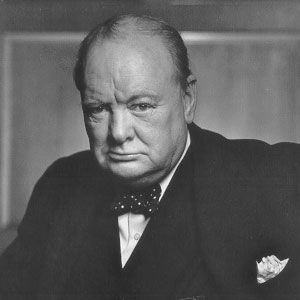
Was Winston Churchill a Warmonger?? (And Other Lunacy in the “New Media”)

From the Christianity Along the Rhine blog series…

Lunatic conspiracy-like theories tend to run amuck at the most confusing times in the oddest places. You can spot these typically in the hands of self-promoting journalists and other thought leaders in the age of the “new media,” who have a misguided or otherwise inadequate grasp on human history.

Take for example statements made by popular conservative news commentator Candace Owens about the early Christian movement:

And those Jews became Christians. Full stop. There is no hyphenated faith. You are either a Christian or you are a Jew. Christ fulfilled the law.”

Candace Owen apparently believes that the earliest Christ followers left their Judaism behind to follow Jesus. Such statements have given rise to a kind of “replacement theology,” which has infected Christian thinking in various quarters for centuries. Now, “replacement theology” can mean different things to different people, which does get confusing. But in this context, it suggests that God has somehow forgotten the Jews, and “replaced” the Jews with Christianity.

Has Ms. Owens never met a “messianic Jew?” A “messianic Jew” is a Jewish person who has become a Christian, believing that having faith in Jesus fulfills what Judaism is all about. The growth of messianic Judaism, particularly in the last generation or so, where thousands of Jews have come to know Jesus as their true Messiah, is one of the most remarkable stories of Christian missions in our day. In other words, contrary to what Ms. Owens thinks, you can be both a Jew and a Christian, and the trend is growing.

So, where do people get such bizarre ideas? Apparently, Ms. Owens has never learned that nearly all of Jesus’ earliest disciples were Jewish, and they never forsook their Jewish heritage. Even after the Apostle Paul became a Christian, he still acknowledged that he was both “a Hebrew of Hebrews (Philippians 3:4-5) and “I am a Jewish man” (Acts 21:39). If you read the text carefully, you will notice that Paul is speaking in the present tense, and not the past tense. Do we need a reminder that Jesus himself was Jewish?

Back in September, 2024, another popular conservative news commentator took a step in a similar direction. Tucker Carlson has been a television journalist, who after leaving the Fox television network, became perhaps the first Western journalist to score an in-person interview with Russian President Vladmir Putin, after the Ukraine-Russian war began in February, 2022. Since then, Mr. Carlson has been on an interesting journey, essentially re-discovering Christianity, as evidenced by several interviews he has given, which is very encouraging. Carlson’s interview with campus evangelist Cliff Knectle stands out as a positive example of engaging journalism, allowing a Christian evangelist to discuss the Gospel at length without being misconstrued.

That being said, Mr. Carlson crossed a line when he interviewed an American historian, Darryl Cooper, a man who Carlson describes as “may be the best and most honest popular historian in the United States.” In that interview, Cooper makes the claim that during World War 2 era, British Prime Minister Winston Churchill was a “warmonger” who was itching for a fight with Adolph Hitler, suggesting that Churchill became the “chief villain” of World War 2, making the war into something more than just the invasion of Poland. Sadly, Carlson did very little to challenge Cooper’s claims.

NOTE: This was all a year before THAT interview Tucker Carlson had with Nick Fuentes in October, 2025….. (And I need not go down the road of more recent conspiracy theories propagated by Ms. Owens, well documented by others …. which gets more and more bizarre by the day, wild claims which possess no evidence)…. But Tucker Carlson’s promotion of revisionist history by Darryl Cooper is the most troubling to me, partly because of the popular reach Tucker Carlson has, particularly among evangelical Christians.

It is troubling as Christians are often blamed for a good amount of antisemitism, needless antipathy towards ethnic Jews, which I have argued stems from a failure to interpret Scripture responsibly. So, when public figures who consider themselves as Christians, play into certain anti-Judaic falsehoods, whether intentionally or not, it nevertheless harms Christian witness.

Where do people get such nonsense?

Why do such voices get so many clicks on social media platforms?

Well, I decided to find out for myself.

One of the most highly respected biographies of Winston Churchill is by British historian Andrew Roberts, who responded to the Darryl Cooper interview by Tucker Carlson. Roberts’ articulate and evidence-based response from 2024 has been so stinging (and a follow-up piece just a year later, criticizing even the Heritage Foundation), that I knew I had to get a copy of Churchill: Walking With Destiny.  On Audible, the audiobook is a whopping 50 hours long. But in my estimation, it was worth it!

Churchill: Walking With Destiny, by the highly respected British historian, Andrew Roberts, dispels the false narratives being propagated in some supposedly Christian circles in our day. Read Roberts’ book to get the real truth about Winston Churchill.


Winston Churchill: Villain or Hero of the Second World War?

This past fall, in October, 2025, my wife and I were in Europe. After taking a cruise down the Rhine River, we visited the Luxembourg American Cemetery, where about 5,000 American war dead are buried, many of them who died in the Battle of the Bulge, in the ferociously cold winter of 1944-1945.  As I walked around the cemetery, and spotted the grave of General George Patton, the U.S. Army leader who relieved the tired and surrounded troops of Bastogne, during that terrible battle, I wondered why so many young American men lost their lives in an effort to defeat Nazi Germany.

According to Darryl Cooper, Tucker Carlson’s most highly revered historian, much of the American involvement in the war was prompted by the “warmonger” rhetoric of Winston Churchill.  This “warmonger” description of Churchill suggests that perhaps Adolph Hitler was not quite as bad as commonly believed, and that Churchill had become rather unhinged in his opposition to the Nazis. Is this claim really true? For if Darryl Cooper is correct about Winston Churchill, then it casts a lot of doubt regarding the moral reasoning which led to the deaths of so many Americans buried in Luxembourg.

Winston Churchill was a most complex and interesting figure, the son of another famous British politician. Winston Churchill idolized his father, though his parents often placed their own ambitions above spending time with their son. When his father, Randolph, died an early death, Winston Churchill knew that he was filled with ambition to exceed the political aspirations of his father. He even expected that he would become prime minister of the United Kingdom, some time in the future.

Churchill believed that his path of national leadership would be through a combination of military service and journalism. In some cases, he was able to serve in the military without pay, while receiving pay as a journalist. He served as a war correspondent in Cuba. He also served in the army in one of the last British cavalry clashes in Sudan. In South Africa, he was captured and imprisoned, but somehow managed to escape confinement. His imprisonment and escape from prison made Churchill a war hero.

Churchill’s military and journalism career took him far across the global British empire. While in the British army in India, Churchill began to read widely, influenced greatly by the writings of Edward Gibbon and Charles Darwin. Particularly due to Gibbon’s skeptical influence, Churchill, who had been raised a nominal Anglican, expressed doubts about the truth claims of Christianity. But as Roberts portrays him, Churchill was an agnostic, who embraced a kind of “cultural Christianity,” acknowledging the virtues of Christianity’s influence in British culture without believing the metaphysical truth-claims associated with the faith.

He finally made his way into Parliament in 1901, and eventually became First Lord of the Admiralty in 1911, overseeing the British Navy. It was during the “Great War” that Winston Churchill’s reputation suffered the most, when he was blamed for much of the failure of the Gallipoli campaign, an attempt by allied forces to try to knock the Ottoman Empire out of the war. Churchill sought to revive his reputation after that by saying that the campaign was mismanaged by other military leaders, when he advocated for a Naval attack on the Dardanelles, with insufficient Army support to back up Churchill’s efforts, thus leading to the quagmire, and ultimate failure of the campaign.

Churchill continued on in the military, and served in the trenches on the continent during the Great War, after Gallipoli, avoiding death on several occasions. Even after the war, Churchill continued to serve in public office, but was eventually forced out of office in 1929. Many historians called this period, where Churchill was in many ways a government outsider, his “wilderness years.” In the run up to World War 2, Churchill became a voice sounding the alarm about Hitler, but now largely as a journalist and popular historian.

Sir Winston Churchill. Fiery debater. He had a reputation for respecting his opponent. Yet he never gave up on his belief that Nazi Germany was bent on perpetuating evil. In the end, history proved Churchill to be right. Is it possible for the evangelical apologist to have Churchill’s fortitude AND respectfulness when it comes to defending the Christian faith?


The Churchill “Warmonger” Thesis Challenged

As with any conspiracy or conspiracy-like theory, there is a grain of truth about Darryl Cooper’s fantastic claim that Churchill was a “warmonger.” The British Isles had suffered greatly during the “Great War,” and afterwards the economy was extremely sluggish. There was not much stomach for military conflict at the time, but Churchill did advocate for an accelerated development of the Royal Air Force, predicting that Hitler would eventually become a menace to Europe. Historian Andrew Roberts notes that many during the 1930’s considered Churchill to be a “warmonger,” stirring up trouble where none existed. Simply put, very few people considered Hitler to be the type of evil person, who in our day and age is now considered to be the very personification of evil.

Churchill opposed the appeasement policy of Prime Minister Neville Chamberlain, who proclaimed “peace in our time.’ When Chamberlain helped to broker a peace deal with Hilter with the 1938 Munich Agreement, allowing Hilter to occupy the Sudetenland, part of Czechoslovakia, with no consultation with the Czechs, Churchill was appalled. For Hilter merely broke the agreement and occupied the rest of Czechoslovakia in less than a year later.

It is true that Hilter called Churchill a “warmonger,” in view of Churchill’s reaction to Nazi German aggression. But it is completely false to claim that Churchill was somehow itching for a fight with Hitler, as though Churchill was the instigator, a point which Andrew Roberts makes clear in his biography of Churchill. 

As war grew closer, so did Churchill’s popularity increase. Churchill’s predictions about Hitler’s aggression proved true over and over again. Churchill’s urging for beefing up the military was in reaction to Hitler’s provocations, not the other way around. As Hitler’s army invaded Belgium and made its way towards France, Churchill was selected to be Prime Minister, believing that the whole of his life thus far was preparation for this dire moment in Britain’s history.

Many still distrusted Churchill, recalling the failure of the Gallipoli campaign during the “Great War” a few decades earlier. As war with Germany became inevitable, before Churchill became prime minister, he made some major mistakes in trying to coordinate efforts to stop the Nazi takeover of Norway. But as Andrew Roberts describes the next few years, Churchill learned from his mistakes. Churchill’s skill as a an orator helped to unite the British people to resist the Nazi movement, as the island of Great Britain eventually became subject to withering attack by Hitler’s Luftwaffe.

As Andrew Roberts reveals in an interview, Cooper’s thesis that Churchill was the “chief villain” of World War 2 is simply “reheated, old David Irving stuff from twenty years ago.” David Irving has been known as a holocaust denier voice in the U.K., publicly claiming that the gas chambers at Auschwitz never existed. This need not imply Cooper as being a holocaust denier himself, but it does not better his case. Cooper’s thesis that Churchill was the “chief villain” falls flat when one realizes that Hilter’s blitzkrieg against the West happened before Churchill was selected as prime minister of Great Britain. Do journalists like Tucker Carlson need to be platforming such views as merely offering a different perspective having equal footing with many others?

Though admittedly not an historic orthodox Christian, Winston Churchill was nevertheless a lonely voice who saw the anti-Christian motivations behind Hitler, and who called out the evil nature of the Nazi regime. Churchill had his quirks, and like many of his day, uttered some frankly racist statements. He opposed national sovereignty for India, which has left him with many critics still today in India. He was slow to support the effort giving women the right to vote, only being persuaded to accept the cause after marrying Clementine, who fully supported female suffrage. Churchill made many mistakes, even somewhat silly ones, at one point suggesting that a curtain supported by balloons might be launched above the border of England, carrying explosives, as a deterrent against Hitler’s luftwaffe.

Churchill: Walking With Destiny is not hagiographic. Roberts does not shy away from telling about Churchill’s shortcomings. In many ways, Churchill had a lot of the same negative qualities that people despise so much about the U.S. President Donald Trump. Yet Churchill was also a great communicator, very witty, and brilliant, with an ability to connect with the British people during a time of great national and world crisis, which ultimately helped to stem the tide against Hitler’s aggressions.

One of my favorite lines from Churchill is this: “Stop interrupting me while I’m interrupting you.”

Churchill was a British patriot, who at times was blinded by his own nationalism, xenophobia, and other faults. Nevertheless, he spoke out against Hitler for years, when relatively few in Britain in the early and mid-1930s would do so. Churchill’s study of history convinced him that Adolph Hitler was up to no good and could not be trusted. Years before the Nazi implementation of “The Final Solution,” Churchill knew that Hitler’s antisemitism was a serious problem. Thankfully, people began to eventually listen to Churchill, and Hitler was finally challenged and his Nazi regime was stopped. As the British prime minister, Churchill took an active role in countering the anti-Jewish objectives of the Nazis. Churchill was perhaps the most influential person on the planet to persuade the Americans take the fight against Hitler. Winston Churchill was the right man for the right job at the right time.

One standout irony of Churchill’s life was in how self-prophetic it was.  At age 16 or 17, Winston Churchill came to believe that one day, “I shall save London and England from disaster.”  Many decades later, that prophecy would come true.

Unlike so many voices from the “new media” of YouTube and TikTok, studied and reputable historians, like Andrew Roberts, can help to dispel the nonsense. Grab a copy of Churchill: Walking With Destiny, and learn for yourself, just like I did.

We live in an age when credible authorities for discerning the truth are being distrusted by social media algorithms. As a Christian, we should be wary of these unfortunate trends, and look instead towards God’s standard for truth: beginning with the Holy Scriptures, under the Lordship of Jesus Christ.

Walking along the many rows in the Luxembourg American Cemetery was an incredibly sobering experience, realizing just how many American soldiers died for the cause of freedom and the defeat of the Nazi regime. My photo taken in October, 2025.


George S. Patton’s grave at the Luxembourg American Cemetery. My photo taken in October, 2025.


Be Careful What You Click!

I go back to the lunatic storylines promoted by figures like Candace Owens and Tucker Carlson. With the demise of the monopolies of traditional news organizations has come the “new media” of podcasts, which claim to get at the “real truth” being obscured or hidden by “mainstream media.” Much of this democratization of the newer media driven by advances in information technology has been fruitful. The stranglehold which legacy news organizations have had over the flow of information has been broken by the “new media.” Yet while trying to hold “mainstream media” accountable, these new forms of news media have their own accountability problems.

As Konstantin Kisin, co-host of the Trigonometry podcast, says in the following video, “what you reward with your clicks is what you create more of in the world. That is not a responsibility to be taken lightly.” Our consumption of media does not simply try to tell us the truth about our world, it also reveals a lot about ourselves. This is a good measure of wisdom to think through before you flip on the television or turn on your favorite YouTube channel:

As a double-bonus, the folks at the Trigonometry podcast have a two-hour interview with Andrew Roberts, about the book Churchill: Walking With Destiny . Following that, the historian dynamic duo of Tom Holland and Dominic Sandbrook on The Rest is History Podcast tackle the kind of rubbish revisionism being pedaled in certain corners of the “new media,” with another installment of their history of Nazism series, this time focused on Britain’s and France’s entry into the war against Germany, following Hitter’s invasion of Poland. Both are well worth the time. Enjoy!!


Did Pilate Really Wash His Hands to Seal Jesus’ Fate?

Who was ultimately responsible for Jesus’ crucifixion? Theologically, all of us as humans have played a role in the death of Jesus, while believers in Christ mercifully receive its atoning benefits. But historically speaking, was it Pilate or the Jewish leaders who consigned Jesus to die on the cross? This is a thorny question which requires a careful answer.

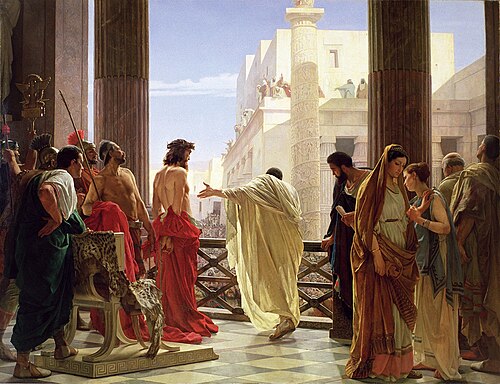
Ecce Homo (“Behold the Man”), Antonio Ciseri’s depiction of Pilate presenting a scourged Jesus to the people of Jerusalem. It took Ciseri twenty years, from 1871 to 1891, to complete the painting (from Wikipedia)

Pilate’s Hands Washing: From Mick Jagger to a Cathedral in Regensburg, Germany

The Rolling Stones lead singer, Mick Jagger, imprinted a passage from the Christian New Testament on the minds of a generation, when in 1968 he first sang “Sympathy For The Devil,” as a personification of Satan:

“And I was ’round when Jesus Christ
Had his moment of doubt and pain
Made (expletive) sure that Pilate
Washed his hands and sealed his fate”

What was the washing of Pilate’s hands all about? In Matthew 27:1-2, the Jewish chief priests and elders judged that Jesus should be put to death, but they sent him to Pontius Pilate, the Roman governor of Judea anyway. Later in Matthew 27:24-26 we read of the aftermath of Pilate’s interview with Jesus:

So when Pilate saw that he was gaining nothing, but rather that a riot was beginning, he took water and washed his hands before the crowd, saying, “I am innocent of this man’s blood; see to it yourselves.” And all the people answered, “His blood be on us and on our children!” Then he released for them Barabbas, and having scourged Jesus, delivered him to be crucified.

All four of the Gospels note that Pilate had a role in Jesus’ crucifixion, but there are some differences in how Pilate is portrayed. What is peculiar about this passage in Matthew is that none of the other three Gospels record the incident of Pilate washing his hands. Neither do the other Gospels tell of the specific response of the people, “His blood be on us and on our children!

Was Matthew putting the blame for Jesus’ crucifixion on the Jews? Or is something else going on here?

On a trip to Europe my wife and I took in 2022, I was stunned to see so much historical evidence of antisemitic sentiment preserved in what was once the very heart of Christendom, central Europe. In Regensburg, Germany stands a great cathedral, where one side looks over the remains of what once was the city’s only Jewish synagogue. Prior to becoming an Anabaptist in the early 16th century, Balthasar Hubmaier, who was then a firebrand medieval priest at that cathedral, preached a pogrom against Regensburg’s Jewish population, leading to the expulsion of Regensburg’s Jews and the destruction of their synagogue. Regensburg’s Jews had been labeled as “Christ-killers,” whereby the blame for Jesus’ death had shifted from Pilate to the Jews, and the label got stuck there.

A memorial to the destroyed old synagogue stands in its place now, overshadowed by the towers of Regensburg’s St. Peter’s Cathedral. On the side of the church is engraved a “Judensau,” an image of several Jews sucking from the teats of a female pig, a disgusting vilification of Judaism.  I do not even want to post an image of this on this blog post! Some 48 towns across Germany have “Judensau” engravings on their Christian churches, dating back to medieval times. Why were church authorities so willing to allow such degrading carvings on their cathedrals?

Some have tried to have these Judensau engravings removed. But I am in a sense grateful that they are still around, as it helped to convince me that antisemitism is real, deeply embedded in the psyche of many, and we should leave reminders of the past around in order to educate younger generations.

Walking around the streets of Regensburg, and other European cities, like Prague and Munich, and seeing the evidence of centuries of antisemitic propaganda advertised by those claiming to be Christians was quite a shock to me. How could so many people call themselves Christians and do such repulsive things towards Jewish people?

That question haunted me as I wandered the streets of Regensburg.

When I reviewed two books on Veracity a few years ago, Augustine and the Jews, by Paula Fredriksen (a convert herself from Roman Catholicism to Judaism), and Future Israel: Why Christian Anti-Judaism Must Be Challenged, by Australian evangelical bible scholar, Barry E. Horner, I felt a lot of discomfort reading about the history of antisemitic acts perpetrated by so-called “Christians.” I got another taste of that discomfort in reading When A Jew Rules the World, by Bible prophecy teacher Joel Richardson, showing that some of my heroes in the early church voiced a kind of anti-Jewish sentiment at times in some sermons. But that visit to Europe two years ago convinced me that the history of antisemitism was worse than I had previously thought.

This blog post goes on multiple rabbit trails, but I want to address several issues:

  • Answering the charge by critics that the New Testament is antisemitic.
  • Thinking about why the Gospel of Matthew portrays Pontius Pilate the way Matthew does.
  • Showing how the Gospels use Greco-Roman compositional devices to frame their narratives.
  • Comparing modern compositional devices with the way first century literature like the Gospels were written.
  • Making the case that a nuanced understanding of biblical inerrancy increases our confidence in the Bible.
  • How Christian “Fan Fiction” has shaped the way we have thought about Pontius Pilate down through the ages.
  • Christians have been both “Bullies” and “Saints” in church history, and why it is important to wrestle with this.

Christians should be able to share the Gospel with our Jewish friends without stepping on mines filled with anti-Jewish prejudice. Journey with me on this exploration of Christian apologetics through the lens of church history!

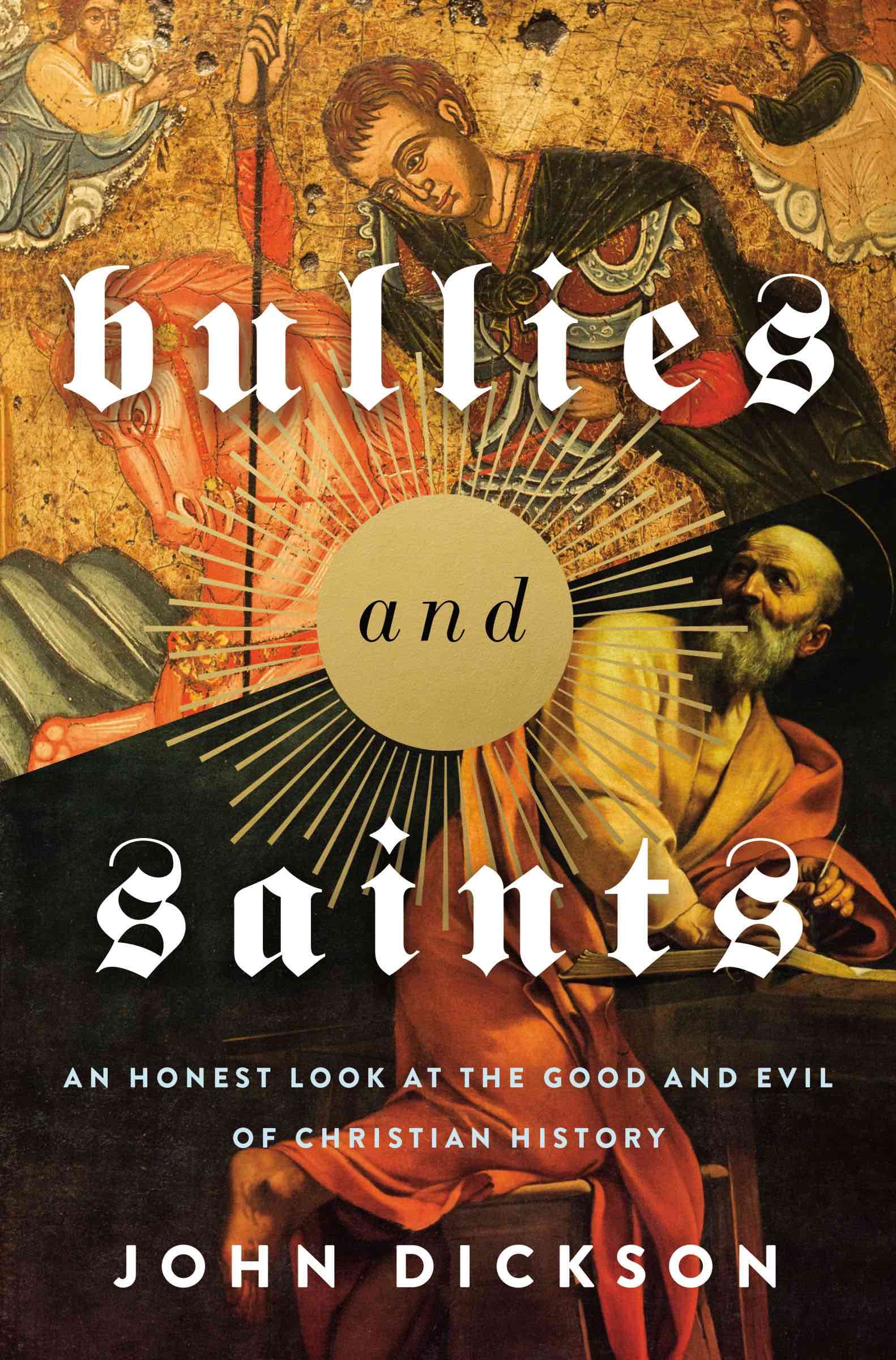
Bullies and Saints: An Honest Look at the Good and Evil of Christian History, by John Dickson, explores many of the good contributions of Christianity to the world, while also casting a light on a number of the more unsightly episodes of church history, that as a Christian I would rather forget. Celebrating the goodness of the Gospel’s impact on society while simultaneously acknowledging failures of the church along the way is vitally important, in a day when many in Western culture are skeptical about the value of organized Christianity.

Continue reading


Is the Apostle Paul Being Anti-Semitic in 1 Thessalonians?

A common critique against Christianity that I run into is that the New Testament promotes a certain degree of antisemitism; that is, a kind of hatred towards the Jews. This may sound strange and offensive to some Christians today, but history has shown us that anti-Jewish statements by supposed followers of Christ, and actual acts of persecution, have indeed tarnished the image of the Christian church. If you have Jewish friends who know about Jewish history, they can probably tell you all about it.

For example, the late Jewish intellectual Richard Rubenstein grew up in New York City. In the mid-20th century, groups of Roman Catholic young people streamed through Jewish neighborhoods after Good Friday Masses yelling “Christ-Killers!” That is pretty intense!

A few other points of evidence stick out in people’s minds:

  1. The Jewish holocaust perpetrated by Nazis during World War II. Germany had a reputation for being a stronghold of Christianity for centuries, yet Adolph Hitler was able to find fertile ground for his poisonous ideas in the early-to-mid 20th century, that led to the murder of 6 million Jewish people. How could that have happened?
  2. The great Protestant Reformer, Martin Luther, who articulated so beautifully the doctrines of salvation by grace, and grace alone, wrote several antisemitic tracts towards the end of his life. For those who have visited the United States Holocaust Museum in Washington, D.C., you will learn that these antisemitic tracts were circulated and read by many across Europe for several centuries. What warped Luther’s otherwise Gospel-saturated mind during the twilight of his life?
  3. Even into the 21st century, some who say that they are followers of Jesus have stirred up controversy over their antisemitic statements. Anti-Jewish prejudice did not simply die off during the Nazi era. It is sadly alive and well today.  I mean, what will Adidas do with $1.3 billion worth of unsold Yeezy shoes??

However, the charges become more poignant when we find certain passages in the New Testament that have what appears to be an anti-Jewish edge to them. Here is one of the most controversial, from the Apostle Paul:

(13) And we also thank God constantly for this, that when you received the word of God, which you heard from us, you accepted it not as the word of men but as what it really is, the word of God, which is at work in you believers. (14) For you, brothers, became imitators of the churches of God in Christ Jesus that are in Judea. For you suffered the same things from your own countrymen as they did from the Jews, (15) who killed both the Lord Jesus and the prophets, and drove us out, and displease God and oppose all mankind (16) by hindering us from speaking to the Gentiles that they might be saved—so as always to fill up the measure of their sins. But wrath has come upon them at last! (1 Thessalonians 2:13-16 ESV)

The language Paul uses is quite strong. So, is the Apostle Paul being antisemitic here?

Paul in prison, by Rembrandt (credit: Wikipedia)


Should We Conclude that the Apostle Paul is Antisemitic? …. Not So Fast

The issue came to mind a number of weeks ago when I was listening to an episode of Mere Fidelity, one of Timothy Keller’s favorite recommended theological podcasts. I am a big enthusiast for Tim Keller, and this particular episode grabbed my attention, because frankly, I have read 1 Thessalonians several times before, but the issue had never crossed my mind.  However, my CSB Apologetics Study Bible had a note about the controversy in it, so it caught my attention. This passage provides a good opportunity to look at out how some very good resources, several of which are freely available on the Internet, can help us study the Scriptures more fruitfully.

In case the gravitas of the difficulty does not hit you, consider the following quote from a 19th century German Bible scholar, Ferdinand Christian Baur:

This passage has a thoroughly un-Pauline stamp. It agrees certainly with the Acts, where it is stated that the Jews in Thessalonica stirred up the heathen against the apostle’s converts, and against himself; yet the comparison is certainly far-fetched between those troubles raised by the Jews and Gentiles conjointly and the persecution of the Christians in Judaea.1

Baur, known to most Bible scholars simply as “F.C. Baur,” was an early champion of the so-called “higher criticism” of the Bible, falling under the broader category of the “historical criticism” of the Bible. One of my first religion classes in college required me to read quite a bit of F.C. Baur’s writings.

Like many other advocates of the tradition of “higher criticism,” Baur was tired of all of the often conflicting and contradictory interpretations foisted upon the Bible, by various denominational traditions, and so he sought to use the principles of scientific investigation, that in the 19th century was beginning to unlock many of the mysteries of the physical sciences, in fields like chemistry and physics, and apply those same kind of principles to the study of the Bible, in hopes of trying to arrive at a scientific interpretation of the Bible. 200 years later, people are still trying to follow F.C. Baur’s example, but with decidedly mixed results.

Despite a number of drawbacks about Baur’s approach, Baur did make some good observations here that are worth noting, namely that Acts 17:13 shows that the believers in nearby Berea had been persecuted by other Jews from Thessalonica:

But when the Jews from Thessalonica learned that the word of God was proclaimed by Paul at Berea also, they came there too, agitating and stirring up the crowds.

The comment about the passage having a “thoroughly un-Pauline stamp ” stems from the evidence that Paul was not antisemitic for several reasons.  First, Paul was Jewish. Christians often forget this simple fact, that has become the topic of considerable debate, as to what the ramifications of this fact suggests. But the main point is that Paul did not throw his entire Jewish tradition away, once he became a Christian.

Secondly, Paul had a tremendous heart for his fellow Jews, that they might come to know Jesus as their Messiah:

I have great sorrow and unceasing anguish in my heart. For I could wish that I myself were accursed and cut off from Christ for the sake of my brothers, my kinsmen according to the flesh. (Romans 9:2-3 ESV)

Far from being antisemitic, Paul grieved that many of his fellow Jews had not yet embraced Jesus as the Christ. If anything, Paul still held to the notion of a type of preeminence that the Jews had with respect to the Gentiles. True, the Gospel was for both Jew and Gentile equally. Nevertheless, the Jew was still first when it came to the Gentile, regarding the order of God’s saving purposes. This did not mean that Jews were somehow better than Gentiles, or that Gentiles were somehow inferior to Jews.

For I am not ashamed of the gospel, for it is the power of God for salvation to everyone who believes, to the Jew first and also to the Greek. For in it the righteousness of God is revealed from faith for faith, as it is written, “The righteous shall live by faith.” (Romans 1:16-17 ESV)

This suggests, for some, the exact opposite of antisemitism, that might be wrongly confused with Paul having actually a lower view of the Gentiles, in comparison to the Jews: Paul evidently believed that God focused on presenting the story of the Gospel through the Jewish people, but why? What makes them so special? Paul speaks of the relationship between the Jews and the Gentiles (non-Jews) in the economy of salvation, in terms of an order, but he frankly admits that this is a “mystery.”

Lest you be wise in your own sight, I do not want you to be unaware of this mystery, brothers: a partial hardening has come upon Israel, until the fullness of the Gentiles has come in (Romans 11:25 ESV)

It is curious that Paul uses the word “mystery” here to describe the order of God’s salvation plan. When I come to things like this, I like to consult the StepBible to dig a little deeper.  For this passage, you can go right to the chapter, Romans 11, and then go down to verse 25 and hover your mouse over the word “mystery,” and it will give you some word analysis of this Greek word, “musterion,” which is “a matter to the knowledge of which initiation is necessary; a secret“. Interestingly, in Saint Jerome’s translation of the Bible, the famous Vulgate, he translated that word into Latin as “sacramentum,” from which we get the English word, “sacrament.”

This word “mystery” is used elsewhere in the New Testament to describe other “mysteries,” such as the picture of Christ’s relationship to the church, which serves as an analogy to help us understand the meaning of marriage (Ephesians 5:32) and God’s overall plan of salvation (Ephesians 3:9). With respect to Paul’s understanding of the relationship between Jew and Gentile, it opens up a deeper way of appreciating Paul’s thought:

There is neither Jew nor Greek, there is neither slave nor free, there is no male and female, for you are all one in Christ Jesus. (Galatians 3:28 ESV).

Is Paul turning his back on his own people, the Jews, in 1 Thessalonians? Veracity investigates the claim, and suggests a better answer.


What To Do with This Passage in 1 Thessalonians? Does it Really Belong Here?

Going back to F.C. Baur, conservative evangelical scholars have taken issue with Baur’s insistence that the comparison is “certainly far-fetched” in associating the persecution of Thessalonian Christians with the persecution of believers in Judea. First, it is important to rightly observe the types of persecution in 1 Thessalonians 2:14 suffered by (a) the Thessalonian believers from their “own countrymen;” that is, Jews in Thessalonica who were not convinced by Paul’s message, and (b) that suffered by the Judean believers from “the Jews.

Note that this reference to “the Jews” at the end of verse 14 is not about all Jews everywhere and at all times. Rather, Paul’s focus is on the Jews back in Judea, living in and around Jerusalem, who opposed the Christian message about Jesus being the Risen Messiah. This is not an ethnic slur against “all Jews.”

Still, the real sticking point for F.C. Baur comes in the last verse of this perplexing passage.

(14) For you, brothers, became imitators of the churches of God in Christ Jesus that are in Judea. For you suffered the same things from your own countrymen as they did from the Jews, (15) who killed both the Lord Jesus and the prophets, and drove us out, and displease God and oppose all mankind (16) by hindering us from speaking to the Gentiles that they might be saved—so as always to fill up the measure of their sins. But wrath has come upon them at last!

That phrasing of “so as always to fill up the measure of their sins” is harsh enough, but it is puzzling to consider what is meant by the last phrase, “But the wrath has come upon them at last.”

In Baur’s view, Paul’s statement seems over-the-top. Baur argued that this passage was actually an interpolation, a fancy word used by scholars to suggest that someone else added this passage into Paul’s letter, long after Paul had written the letter, so that over the years copyists of the New Testament simply just included the passage into the main body of the text, assuming that this actually came from the pen of Paul.2

Whoops!!! How did that sneak in there??

A fundamental problem with Baur’s hypothesis as that we have no existing manuscripts that indicate these verses were ever left out of the New Testament. It is quite tempting to be drawn to an interpolation hypothesis when you run into verses in the Bible that come across as objectionable. If everyone were to call out verses of the Bible as being “invalid” insertions, simply because they were objectionable, we might end up with a Bible a lot thinner than the one we already have!! Nevertheless, it is worth considering Baur’s further reasoning here.

As evidence for this late addition into the text, Baur argued that this interpolation hypothesis makes sense since relationships between the Jewish and Christian communities were still fairly positive in the early days of the church, at the time Paul had written this letter, roughly about the year 49 C.E.  Despite notable conflict between Christian and traditional Jews, Jews were still coming into the Christian community. However, by the time of the destruction of the Jerusalem temple in 70 C.E., the relationship between Jews and Christians began to strain severely. Decades later, in the time of the Bar Kokhba Revolt in 132 C.E., the flow of Jews into the Christian church practically slowed down to a mere trickle, if not completely stopped.

Many Christians had concluded that the destruction of the Temple was a sign of God’s judgment against the Jews, more broadly speaking. More than any other event in the 1st century C.E., the destruction of the Temple in Jerusalem was the equivalent of America’s 9/11, in the early 21st century, with the destruction of the Twin Towers of the World Trade Center, in New York. The psychological blow to America in many ways echoes the type of negative psychological impact that the Jews felt with respect to the destruction of their central religious site in Jerusalem. Therefore, Baur proposed that the statement of wrath against the Jews, here in 1 Thessalonians, reflected a view held by Christians decades after Paul wrote this letter.

In other words, someone stuck this passage into a copy of 1 Thessalonians in order to give Paul a certain anti-Jewish edge, according to F.C. Baur, and others sympathetic to Baur’s reasoning.

As it turns out, Baur’s interpolation proposal begins to weaken further once you understand other possible factors involved, based on other evidence. That same year that Paul wrote this letter, which many scholars suggest is indeed Paul’s earliest letter, Emperor Claudius had expelled the Jews from the city of Rome. Also that same year, a riot in Jerusalem during Passover led to the death of thousands of Jews. There was also a great famine in Judea in the previous years. Paul probably had one if not more of these events in mind.3

Nevertheless, there are still those who believe that these incidents in 49 C.E. do not necessarily rise to the level of citing God’s wrath in the severe way that Paul does so in this passage. However, a better solution might be to suggest that Paul is making use of typological interpretation to emphasize the point that opposition to the Gospel in Paul’s current day actually points toward a more fulfilling future event.4

In the typological interpretation of Scriptural prophecy, a particular event (or person) in history serves as a “type” of that which is to come, “the real thing,” sometime in the future. The classic use of typological interpretation by Paul can be found in Romans 5:12-14, where Paul speaks of Adam as a “type of the one who was to come,” that is, Christ. Adam is the first Adam, and Jesus is the second Adam. Jesus was able to fulfill the task that Adam failed at doing. The use of typology was a common interpretive method used, not only by the writers of the New Testament, but by other Jewish writers in the period of Second Temple Judaism.

The language of God’s wrath in this passage might indicate that Paul saw that events like the expulsion of Jews from Rome and/or the death of many Jews at Passover in Jerusalem served as a type of judgment against the Jews that anticipated a yet future event of even greater significance, a catastrophe that would have lasting impact on the Jewish community. In this case, the destruction of Jerusalem and its Temple, some 20 years after this letter was written would fit the bill.

This interpretation is reinforced by other translations that suggests that Paul had this typological thinking in mind. BibleGateway.com allows you to see footnotes in various English translations. For the Christian Standard Bible, you can find a note under 1 Thessalonians 2:16 that reads that “and wrath has overtaken them at last” could be better translated as “and wrath has overtaken them to the end,” which more clearly demonstrates Paul’s prophetic insight, linking the current events of his day with God’s coming future judgment.

I can reference a few other resources for those who wish to dive deep into this perplexing passage:

On the weekend when so many Christians in the West ponder the meaning of the death of Jesus on the cross, Christians should always consider that for centuries the ancestors of our Jewish friends have felt the sting of being called “Christ-killers.” Instead of giving into an antisemitic impulse, we as believers today, whether from a Jewish or Gentile background, probably would have championed for the death of Jesus, if we had been among those Jewish leaders who condemned Jesus 2000 years ago.

In summary, the argument that this passage in 1 Thessalonians 2:13-16 is antisemitic, while at first might seem plausible, in its full analysis does not have the full force of the evidence in its favor. Paul is not antisemitic, nor is it warranted to say that this passage was somehow slipped into the letter by later Christians who wanted to make Paul sound anti-Jewish. Instead, it is quite probable that this passage offers a prophetic glimpse into the type of persecution that believers in Jesus will experience, and that such persecutors will eventually have to face accountability for their actions against those who seek to be faithful to the Truth they received as revealed in Jesus. Paul was no more singling out a particular group of Jews than he was pagan opponents who also sought to persecute the early Christian movement. As verse 13 states, Paul is thankful to God “constantly for this, that when you received the word of God, which you heard from us, you accepted it not as the word of men but as what it really is, the word of God, which is at work in you believers.” May that be true of all believers who experience opposition to their faith in Christ.


Notes:

1. Quoted from Peter C. Hodgson, The Formation of Historical Theology (New York, 1966). See The Harvard Theological Review, 1971, Volume 64, No.1, pp.79-94, “1 Thessalonians 2:13-16: A Deutero-Pauline Interpolation” by Birger A. Pearson.  

2. Another example of possible interpolation into Paul’s letters can be found in 1 Corinthians 14:34-35.  See earlier Veracity posting about that passage.

3. See discussion in Charles A. Wanamaker, The Epistles to the Romans,. p. 30. Josephus reports in Antiquities 20.112 and Jewish Wars 2.225 that twenty to thirty thousand people were killed in that riot. Many scholars believe that Josephus’ numbers are inflated, but this is still a major event.  

4. An exploration of how the New Testament writers used the typological method of interpreting prophecy can be found in an earlier Veracity blog post. It is also important to note that the verb in verse 16, “the wrath has come upon them at last,” is in the Greek aorist tense, a past tense, describing an action without indicating whether it is completed, continued, or repeated. This suggests that the events in 49, though in the past, might point yet forward to a future event.   


Paul, the Pagans’ Apostle, by Paula Fredriksen. An Evangelical Review.

When Paul became a Christian, did he cease to be Jewish? What prompted the thinking behind Paul’s Gospel, which sought to include Gentiles among the people of God through having faith in Christ signaled by baptism, and not through circumcision? Such are some of the questions that Paula Fredriksen seeks to answer in her Paul, the Pagans’ Apostle.

(Time for another Bible-nerdy book review…..this book is very rich, but can be very dense, for the average reader)

Paula Fredriksen is one of the most recognized and highly respected scholars of early Christianity today. It took me two years, but I thoroughly enjoyed her monumental study Augustine and the Jews: A Christian Defense of Jews and Judaism, and reviewed it here on Veracity several years ago. She knows her field incredibly well. Until 2009 she researched and taught at Boston University and has since served at Hebrew University in Jerusalem. She hit the media spotlight in 1998 when she acted as the primary consultant for the PBS Frontline program, From Jesus to Christ: The First Christians, which was one of the first mainstream television programs to bring the so-called “third” quest for the historical Jesus, active in academic circles, to the eyes and ears of a popular American audience.
Early Christian historian Paula Fredriksen, though not a professing Christian, argues in her Paul: The Pagans’ Apostle that Paul did not “convert” to Christianity. Rather, Paul saw Christianity as fulfilling the message of the Hebrew Scriptures, and that Paul remained within the fold of Judaism to the very end of his ministry.


A Scholarly, Non-Evangelical Look at the Life & Ministry of the Apostle Paul

For Veracity readers, it is important to know that Dr. Fredriksen is not an evangelical in her theological orientation. From Jesus to Christ: The First Christians alarmed conservative Christians in the promotion of “Jesus Seminar” views that were well publicized in the 1990s. But in fairness to Dr. Fredriksen, she does not come across as having an axe to grind, as it is not completely clear to me even what her theological convictions are, though I have been told she is a former Roman Catholic turned Jewish. According to her writings, she seeks to act purely as an historian, putting together what she estimates is a competent reconstruction of the historical record, even where our current sources are not as plentiful as we would all like. Though popular among skeptics, Paula Fredriksen does not appear to be cynically antagonistic, for she acknowledges a set of facts, an “historical bedrock,” that does not explicitly rule out the central Christian claim that Jesus bodily rose from the dead.

To say that Dr. Fredriksen is not an “evangelical” is also to acknowledge that she does not uphold an historically orthodox, Christian view of the New Testament and its inspiration. Instead, she follows the thinking common in secular academia today regarding how the New Testament documents can be viewed as historical sources for reconstructing the life of Jesus and the period of the earliest Christ followers. This would include the topic of Paul, the Pagans’ Apostle, the life of the Apostle Paul. Outside of academia, and certain social media circles, few evangelical Christians know how a certain breed of scholars have a view of the Bible so radically different from their own.

For example, whereas the letters of Paul can be trusted upon as historically reliable, the Book of Acts is only reliable up to a certain point in comparison (Fredriksen,see footnote 1, chapter 3. ). She furthermore dates the writing of the Book of Acts to the early second century, which effectively takes the traditional authorship out of the hands of the historical Luke, who probably died long before the first century ended. She concludes this, despite the fact that the well known British 20th century liberal scholar, John A.T. Robinson, saw no firmly established scholarly reason why the entire New Testament could not be dated before the year 70 C.E.

But even with the “letters of Paul,” a caution is in order, in that of the thirteen letters directly ascribed in the New Testament as being written by Paul, only seven of them are considered to be authentic, whereas the letters 2 Thessalonians, Ephesians, Colossians, 1 Timothy, 2 Timothy, and Titus are to be regarded as letters written after Paul’s death, by writers other than Paul, seeking to modify Paul’s theological agenda. None of this would sound strange at all to an atheistic scholar, like a Bart Ehrman, who fully embraces such views.

For those committed to the idea that our received New Testament canon is the final authority for Christian faith and practice (as I do), such views held by academics like Dr. Fredriksen (and Dr. Ehrman) are in direct conflict with an evangelical view of Scripture. As will become evident in this review, a number of conclusions that Dr. Fredriksen makes about early Christianity will stand at odds with more classic understandings of Christian belief. Nevertheless, while I disagree with Dr. Paula Fredriksen regarding her view of the Bible, I still think that historically orthodox Christians can learn a good deal from her, particular from someone as skilled and learned as she is.

As a Christian, Did Paul Remain a Jew? 

With this caveat in mind, there is much to be gained from Paula Fredriksen’s central thesis that Paul remained a Jew, and continued to be thoroughly Jewish, as he became perhaps the single most articulate and influential leader of the early Christian movement, after the crucifixion, resurrection, and ascension of Jesus. The question that continues to puzzle such scholars is in explaining how such a committed Jew like Paul came to the conclusion that a way be opened up to include Gentiles among the people of God, along with Israel, without the circumcision requirement that classically identified what it meant to a member of God’s covenant people.

For many Christians today, knowing that Paul has a Jewish background is a “no-brainer.” I mean, is it not obvious?  Paul was Pharisee, was he not? However, Dr. Fredriksen argues in Paul, the Pagans’ Apostle that the importance of Judaism in the life of Paul, after he became a follower of Jesus, and as apostle to the Gentiles, has been greatly misunderstood and under appreciated.

Part of the key in appreciating Paula Fredriksen’s approach comes in perceiving the difference between “Gentiles” (a religiously neutral, ethnic term) and “pagans” (a religiously specific, ethnic term denoting non-Jews and non-Christians). For a non-Jew to follow Jesus, in Paul’s mind, they would remain a Gentile but they would need to give up their pagan idolatry and beliefs.The question of what is a “Gentile” and what is a “pagan” has interested me for years, and Paula Fredriksen thoroughly explores the topic.

Since the 1977 publication of (the late) E.P. Sanders Paul and Palestinian Judaism, a revolution has taken place in the academic study of Paul. Since the days of Martin Luther, in the 16th century, much of Protestant scholarship has insisted on a radical break between the Christian message of Paul and the story of Judaism. But with the advent of this “New Perspective on Paul,” inaugurated by Sanders’ research, a one-time professor at the College of William and Mary, where I currently work on staff, scholars have been working to reassess Paul’s relationship to the Judaism of the first century. Some look upon the “New Perspective on Paul” as a refreshing way of trying to approach the intractable divide between Protestants and Roman Catholics on the thorny issue of justification, whereas others view it as a threat to undermining the classic Reformation view of salvation.

Paula Fredriksen’s Paul, the Pagans’ Apostle attempts to steer a middle course through the debate between the New and Old Perspectives of Paul, which is probably the most sensible path forward. Fredriksen’s research is top notch, as her endnotes are well documented, something that the audiobook version I listened to on Audible sorely lacked, which meant a trip to the library for me! Fredriksen’s description of the Greco-Roman and Jewish worlds that Paul lived in is very insightful, and gives the reader a lot of food for thought. Still, there are other assumptions made in Fredriksen’s work that will frustrate evangelicals who try to read her.

Did the Council of Nicea Get Paul Wrong?

A modest acceptance of at least some of the New Perspective on Paul has even made its way into conservative evangelical circles, notably through the writings of N.T. Wright, perhaps the most well known New Testament scholar living in our day, in the first quarter of the 21st century. Nevertheless, Fredriksen’s approach is colored by a sharp disagreement she has with scholars like Wright, mainly in what undergirded the sense of urgency that Paul had in trying to spread his Gospel far and wide throughout the Roman Empire.

In a stunning statement, most likely directed at scholars like Wright, Paula Fredriksen urges “that we try to interpret both Paul and his Christology in innocence of the imperial church’s later creedal formulas.” This would suggest that Dr. Fredriksen believes that the early church’s move to articulate in the Nicene Creed an affirmation of the Son as being of the same substance as the Father is actually a distortion of the Gospel message being promoted by the historical Paul, as she sees him. Really?

Her analysis comes partly from her reading of Philippians 2:5-11:

Have this mind among yourselves, which is yours in Christ Jesus, who, though he was in the form of God, did not count equality with God a thing to be grasped, but emptied himself, by taking the form of a servant, being born in the likeness of men. And being found in human form, he humbled himself by becoming obedient to the point of death, even death on a cross. Therefore God has highly exalted him and bestowed on him the name that is above every name, so that at the name of Jesus every knee should bow, in heaven and on earth and under the earth, and every tongue confess that Jesus Christ is Lord, to the glory of God the Father (ESV).

Fredriksen notes that our English translations can fool us here, in that the word “God,” capitalized four times in this passage, commonly suggests the one divine being, God the Father. However, in the first two instances (verse 6) the word “God” has no definite article whereas later (verse 9), beginning with “Therefore God,” does have the definite article in the original Greek. In her view, this suggests that the reference to “therefore (the) God” means that it was God the Father who highly exalted Jesus, but those two prior references, which she translates in lower-case merely as “god,” or “a god,” as in “in the form of a god,” is a reference to divine status, but that this divine status is for some other divine being apart from God the Father. “Paul distinguishes between degrees of divinity here. Jesus is not ‘God’” (Fredriksen, p. 138).

I can only imagine Arius, the arch-heretic who debated the other early church fathers gathered at the Council of Nicea, issuing to Dr. Fredriksen a hearty “thank you!,” as Arius believed that Jesus was divine, but not in the same way the Father was divine. Jehovah’s Witnesses today pick up the same type of idea by asserting that Jesus was an angel, a divine being, but surely not of the same substance as God the Father, which was articulated in the creed at Nicea.  For Fredriksen, Arius was simply reading his Greek New Testament to make his case against anything that hinted of a Triune nature of God, in an effort to uphold what he understood to be monotheism.

Dr. Fredriksen then goes onto handling an objection, namely that for Paul to say that “Jesus Christ is Lord,” according to the ordinary Greek of the day, suggests that the meaning of “Lord” (kurios, in the Greek) is a deference to any social superior, and not necessarily divine (Fredriksen, p. 139). However, a careful examination of the passage that Paul is drawing from in the Septuagint (LXX) indicates otherwise. Throughout Isaiah 45, from where Paul gets his “every knee shall bow” and “every tongue confess” (Isaiah 45:23), each reference to the one true God is that Greek word for “Lord;” that is, kurios.  This would indicate that Paul undoubtedly had Jesus’ associated with the one true God in mind, and not merely some lesser divine being.

In other words, while Arius might have had certain good intentions of protecting against some form of polytheism in his reading of Paul, the orthodox church fathers who eventually won the debate at the Council of Nicea were able to read Paul better in his Old Testament context, thus making the case for Trinitarianism, against Arius. Dr. Fredriksen would strongly disagree with my assertion here. Nevertheless, historically orthodox Christian believers have understood Paul this way ever since. The Nicene Creed remains one of most familiar and well-affirmed statements of Christian belief in the history of the Christian movement, a common statement of faith among Protestants, Roman Catholics, and Eastern Orthodox alike.

A Common Assumption in Academia: Paul Emphatically Expected the Return of Jesus Within His Lifetime

So, given the shortcomings in her argument, why does Dr. Fredriksen urge such a movement away from the conclusions drawn up at the Council of Nicea? Dr. Fredriksen follows the standard consensus view among notably critical New Testament scholars, such as Bart Ehrman, that Paul “lived and worked in history’s final hour” (Fredriksen, p. xi), a well-known thesis popularized by the influential German New Testament scholar of the early 20th century, Albert Schweitzer.  In other words, Paul was absolutely convinced that Jesus would return as the victorious Jewish Messiah, to set the world order aright, sometime during his lifetime. This apocalyptic, eschatological expectation of the Apostle Paul is what drove him to preach far and wide across the greater Mediterranean coastlines and even inland.

As this story goes, when Paul eventually died, probably in the 60’s C.E., and there was no returning Messiah in sight, the Christian church was put into an existential crisis. What we possess in our New Testament today is essentially a combination of those early writings by Paul, along with other writings that came later, like the Gospels, that seek to refashion the message of the early Christian movement. With the failure of Jesus’ imminent return, this modified Christian movement, ultimately defined and regulated by the early church councils, most notably the Council of Nicea, now must endure for the “long haul,” something which has continued to survive and thrive now for 2,000 years.

Pushing Back Against the “Ghost of Albert Schweitzer”

In his multipart review of Paul, the Pagans’ Apostle, evangelical New Testament scholar Ben Witherington, of Asbury Seminary, critiques this presuppositional mindset that scholars like Dr. Fredriksen possesses. Witherington acknowledges that Fredriksen presents her central thesis well, despite the inadequacies of the Ehrman/Schweitzer approach that Fredriksen front loads to her book.

For example, when Paul states in Romans 16:20 that Christ will “soon” crush Satan under the feet of the Roman Christian community, he means that the crushing of Satan will happen “quickly,” a statement about how Satan will be crushed and not exactly when this would happen. For Paul also reminds the Romans in chapter 15 that he must go to Jerusalem, then to Rome, and then hopefully to Spain. So it would be odd for Paul to tell the Romans of his planned future schedule, years out in advance, while simultaneously announcing the coming end of the world, as he knew it, at any moment, as he was writing this letter. After all, Jesus himself acknowledged that he did not know the exact timing of his Second Coming (Mark 13:32). Witherington remarks, “Could we please now let the ghost of Albert Schweitzer rest in peace, and stop allowing his misreading of Paul to continue to haunt the way we evaluate Paul?

Nevertheless, even Witherington largely agrees that Dr. Fredriksen is correct to say that Paul was not a “convert” to Christianity, in the sense that Paul was somehow leaving his Judaism behind to become a Christian. Instead, Paul saw that the Gentiles’ acceptance of the Gospel was part of the new post-Resurrection-of-Christ reality, that had been a part of Israel’s story told for centuries within the Old Testament. In other words, for Witherington, Paul’s “conversion” was an expression of his Jewishness, in light of the coming of the Messiah, albeit a rather radical expression, more radical than what Fredriksen is willing to admit.

Many Christians for centuries have imagined Paul to have “converted away” from Judaism, when he became a follower of Jesus, whereas Fredriksen is an advocate of the “Paul Within Judaism” school of thought. Sadly, this “parting of the ways” between Judaism and Christianity was exacerbated by the severe drop off of Jews entering the Christian movement, and rapid increase of Gentiles joining the movement, particularly after the failure of the Bar Kokhba revolt in the early 130’s C.E.

That being said, Witherington faults Fredriksen for being too dismissive of some of the historical details that Acts offers up to support the narrative found in Paul’s letters about his own life, or to miss the more radical implications of Paul’s message, even in his own letters. For Paul saw that the death and resurrection of Jesus inaugurated a New Covenant, a fulfillment of what Jeremiah 31 says would be the law written on people’s hearts. Yes, Paul remained a Jew throughout his life, but following his road to Damascus experience, he radically reframed his Judaism along the lines that would eventually inform historical, orthodox Christianity (The late New Testament scholar Larry Hurtado shares a similar appreciation of Fredriksen’s approach while offering critiques similar to Witherington’s).

Paul in prison, by Rembrandt (credit: Wikipedia)

True Judaism for the Apostle Paul

With those critiques already in view, it is helpful to consider positively more what Paula Fredriksen is trying to do in her central thesis regarding Paul. The challenge of properly translating a passage like Galatians 1:13-14, when Paul explains his former life before becoming a follower of Jesus, is a case in point:

For you have heard of my former life in Judaism, how I persecuted the church of God violently and tried to destroy it. And I was advancing in Judaism beyond many of my own age among my people, so extremely zealous was I for the traditions of my fathers (ESV).

What does Paul mean by “Judaism” here? Is he implying that by becoming a follower of Jesus that he is leaving one religion to join another? No, says Fredriksen. But if not, what then does Paul mean?

Furthermore, what is one to make of Romans 2:1-29, where Paul suggests that “true circumcision” is a matter of the heart (particularly Romans 2:29)? Being a “true Jew” is a matter of the spirit, of having the law inside of you, and not in one’s flesh. Is Paul redefining Judaism by taking circumcision out of the mix? Or is Paul addressing Gentile Christians here, showing them that circumcision should not be a barrier to their following Jesus?

There were certainly barriers for Gentiles to become Jews in the first century. The “God fearers” of the New Testament were attracted to the message of Judaism, but would not follow with circumcision. You also have the question as to how much proselytizing of Gentiles by traditional (non-Christian) Jews was actively being done in the first century, a practice that Dr. Fredriksen is skeptical about.

Who exactly were the Judaizers that Paul opposed in Galatia, those supposed followers of Christ who opposed Paul’s anti-circumcision efforts among the Gentiles? Did they really come from James’ church in Jerusalem? Were they instead other supposed Christ-followers, unaffiliated with James, who opposed Paul’s missionary tactics as being compromising? Was the conflict in Galatia over the same issue Paul faced in Antioch, or something different? Was the specific Judaizing complaint table fellowship between Gentile and Jewish believers in Jesus, or something else?

Paul vs. Judaism, or Paul vs. Christian Judaizers?

These are the questions that preoccupy Paul, the Pagans’ Apostle. One point that Fredriksen raises deserves highlighting. In Galatians, particularly in Galatians 4, where Paul brings out an allegory comparing the children of Sarah versus the children of Hagar, Fredriksen notes that most interpreters historically have said that Paul is comparing Christianity (children of Sarah) with Judaism (children of Hagar). But Fredriksen claims that this interpretation is incorrect, in that Paul is arguing for the difference between Christ-followers who take his approach to Gentile evangelism (children of Sarah), and those other Christ-following Jews who oppose him, and distort the Gospel (children of Hagar). On this observation, I find Paula Fredriksen’s argument quite persuasive (Fredriksen, p. 99-100).

Scholars, both conservative and liberal, have acknowledged that the preaching ministry of Jesus, prior to the crucifixion, was oriented towards the Jews of Palestine. Jesus rarely ventured outside of Jewish-dominated areas in what we now call the land of Israel. With a handful of exceptions, Jesus’ primary audience was Jewish.

It was not until Paul came along, with his road to Damascus experience with the Risen Jesus, that the early Christian movement began to actively engage outreach among the Gentiles. By emphasizing having faith in Christ, and removing circumcision as the traditional barrier for entry among the people of God, as described in the story of the Bible, Paul revolutionized the Christian movement. At the same time, Dr. Fredriksen argues, the Apostle Paul himself, along with the original members of Jesus’ apostolic circle, remained committed to their own ancient Jewish customs, despite the trend in later Christianity to make Paul appear to be anti-Jewish (Fredriksen, p. 106).

For while Paul vehemently opposed the “Judaizers” who distorted his Gospel in Galatia, Paul still insisted on at least some form of “Judaizing” for Gentile followers of Jesus. He insisted that Gentile believers forsake idolatry, adhere to the Ten Commandments, give up sexual immorality, and uphold “any other commandment” of the Law (Romans 13:9, Fredriksen, p. 119). This raises the question as to why Paul drew the line at circumcision as he did.

Rethinking Old Approaches to Paul

Dr. Fredriksen wades into the debate over the meaning of “faith” (pistis, in Greek), which she sees as having a long history of referring to “psychological inner states concerning authenticity or sincerity or intensity of ‘belief‘.” She corrects this misunderstanding by appealing to a meaning more sensible to Paul’s first century context, that of ‘“steadfastness” or “conviction” or “loyalty”‘(Fredriksen, p. 121). I resonate with her translation of Romans 13:11b: “Salvation is nearer to us now than it was when we first became convinced.”  Compare this with the Common English Bible translation of the same: “Now our salvation is nearer than when we first had faith,” which is much more ambiguous.

From a fresh perspective, Dr. Fredriksen contends that the mysterious “I” of Romans 7:7-22 is a rhetorical device used by Paul, and not a reference to his own spiritual struggles, neither as a non-believer before his encounter with Christ, nor himself as a believer (example v. 15: “For I do not understand my own actions. For I do not do what I want, but I do the very thing I hate“). Accordingly, Paul is self-identifying as “the non-Jew who struggles to live according to Jewish ancestral customs,” as they follow Christ (Fredriksen, p.123-124). This reading is quite plausible, though it is quite different from the late-Augustine interpretation of Paul’s struggle with indwelling sin as a believing Christian. Nevertheless, both Fredriksen’s reading and the late-Augustinian reading are not necessarily in conflict with one another.

Fredriksen is convinced that Paul knew his Hebrew Scriptures (the Old Testament) well enough to know that there would come a day when the nations of the world would turn from their idolatry and embrace of the God of Israel. With the coming of Jesus as the Messiah, Paul knew that this day had come. But this bringing in of the Gentiles into God’s covenant people would not be limited by circumcision, but rather would be conditioned by their response of having faith in Jesus. Paul sees this as being completely consistent with the message of the Hebrew Scriptures, and is therefore adamantly opposed to other Jewish “Christ-followers” who do not read the Old Testament just as he has.

Furthermore, there is no such thing as two different ways of salvation, one for the Jews and another way for the Gentiles. All of the people of God, whether they be Jew or Gentile, are reconciled to God through faith in Christ.

The way Dr. Fredriksen frames her argument has implications on how Christians should read their Bible. For example, many Christians continue to read the Book of Romans without this Pauline mindset in view. As a result, many Christians look at his whole argument for justification/salvation as starting in Romans 1 and culminating in Romans 8, with Romans 12-16 as being about the application of Paul’s theological treatise. Romans 9-11 then sticks out like a sore thumb, as like some sort of appendix bolted onto Paul’s teaching in Romans 1-8. Yes, Romans 8 does end with a glorious promise that no one will separate us from the love of Christ. But there is more to the story. The lesson I take from Dr. Fredriksen is that the Romans 1-8 story only gets us part of the way there to where Paul is going. Rather, Paul wants to show us how “all Israel will be saved” (Romans 11:26). Paul’s theological argument runs from Romans 1-11, where Romans 8 offers a theological crescendo, but Romans 11 is the real climatic conclusion.

As an aside, on a somewhat minor point, Paula Fredriksen is completely right to say that Paul’s allusion to Isaiah 45:23, that “every knee shall bow” to God, in both Philippians 2:10 and Romans 14:11 is about all of the nations coming to the conscious realization that Jesus is the True Messiah, not simply that of Israel, but that of all of the nations of the world, at his final return (footnote 15, chapter on “Christ and the Kingdom”). These New Testament verses have been used either to justify some type of begrudging acceptance of Jesus’ Lordship by the wicked in hell, after the final judgment, or to justify a type of Christian Universalism, implying that every human individual will be saved in the end. However, the reference to “every knee shall bow” by Paul is not about individuals but rather about the nations, with every bowing of the knee referring to each distinct national allegiance, as the context of Isaiah 45 shows.

Rethinking Pauline “Anti-Jewishness” …. (Without Compromising Historically Orthodox Christianity)

Nevertheless, a number of other conclusions made by Dr. Fredriksen are driven by her acceptance of the common academic narrative that the authentic Paul only wrote seven of the thirteen letters we possess, which is further skewed by her adoption of the Ehrman/Schweitzer “imminent end of the world” thesis. In fact, these are fundamental assumptions that she makes without apology (Fredriksen, p. 252).

This is quite evident when you compare Fredriksen’s reading of 1 Thessalonians, an undisputed letter of Paul, which includes the famous passage on the “Rapture” (1 Thessalonians 4:13-18), which she believes teaches the imminent return of Christ within Paul’s lifetime, with her reading of the disputed 2 Thessalonians, which she believes was written by another author claiming to be Paul, which “explained the reasons for the Kingdom’s evident delay, adding a punch-list of necessary further events before the final apocalyptic scenario could unwind (2 Thes. 2:1-11)” (p.169). In other words, in her view, 2 Thessalonians attempts to fix Paul’s erroneous expectation, sometime after Paul’s death of the coming Kingdom with a different message, that emphasizes a more “we-are-in-this-for-the-long-haul” approach to the consummation of world history.

As another example, she appears to favor the position that the “deutero-Pauline author [of Ephesians] collapses the ethnic distinctions that Paul himself upheld” (footnote 35, chapter on “Paul and the Law”) between Jew and Gentile, in contrast with the authentic Paul. Furthermore, she believes that the authentic Paul discouraged the act of having children, as being a distraction from the imminent return of the Messiah (p. 113). She believes that the “Pauline” teaching about parents having authority over their children, as described in Ephesians and Colossians, was a non-Pauline teaching introduced into our New Testament to accommodate the reality of the failure of Jesus to return within Paul’s own lifetime.

Paula Fredriksen asks vital questions about Paul’s precise thinking about the message of the Gospel with his self-understanding of what it meant to be Jewish. Fredriksen rightly reveals the theological wedge driven between Paul the missionary to the Gentiles and Paul the faithful Jew, a trend that eventually dominated a great deal of Christian theology. While the phrase “replacement theology” is often too elusive here, it is correct to say that if there was one particular failure of the early church, particularly from Constantine onwards, it was the tendency to marginalize the Jewishness of the earliest Christian movement to the point of enabling a kind of anti-Judaism that has done tremendous harm throughout Christian history.

While voices like Origen and Augustine resisted such anti-Jewish thinking, by reminding their readers that Paul and other early Jewish Christian leaders maintained many of their ancient Jewish customs, not everyone heeded these voices. This anti-Judaism wedge was even codified into certain aspects of Roman law, in the post-Constantine era (Fredriksen,see footnotes 25, 26, under chapter “Paul and the Law”). Aside from Origen and Jerome, very few of the early church fathers even understood Hebrew, which is the primary language in which the Old Testament was written in!!

But Paula Fredriksen’s attempt to obliterate that wedge is eventually an overcompensation, a product of her historical methodology. For it is evident that her view of the New Testament contrasts sharply with the received view of the church, down through the centuries, which views all of the thirteen letters of Paul as being authentically Pauline. I, on the other hand, believe that the early church got the canon of Scripture right!

Anti-Judaism is not a core feature of historical, orthodox Christianity. For example, you would be hard-pressed to find conservative evangelicals who do not possess profound sympathies with Jewish people today. In other words, you do not have to buy into the full revisionist program of much of critical scholarship today in order to root out “anti-Jewishness” understandings of Paul that have, nevertheless, crept into at least certain interpretations of the New Testament.

There are plenty of resources within historical, orthodox Christianity to tackle the task Paula Fredriksen takes up. She convincingly demonstrates that a traditional view of a Paul who “converted” from Judaism to Christianity is anachronistic and wholly unnecessary. For the language of “conversion” presupposes a modern concept of “religion” which was in many ways foreign to Paul and his world. Paul’s Christianity was not a rejection of Judaism, per se, but rather it was the outworking of his Jewish faith, set within the context of the coming of the Messiah.

In other words, while is it surely correct to say that Paul indeed “converted” to Christ, by embracing Jesus’ mission and following the Risen Lord, it would be wrong to say that Paul “converted” away from Judaism to get to something else, like “Christianity.” As an evangelical, I am thankful to Dr. Fredriksen for pointing this out. However, it is not a prerequisite to accept the whole of Fredriksen’s critical, non-evangelical assumptions about the Bible to get her central thesis.

Rethinking Paul’s Greatest Letter: To the Romans

However, I am not entirely convinced yet by Dr. Fredriksen’s attempt to re-read Romans is correct, though it is a coherent and plausible reading.  She believes that Paul’s audience are Gentile Christians, at least some of whom consider themselves as “Jews” (Romans 2:17). Yet she does not think that Paul is addressing any actual Jewish, bodily-circumcised Christians in Romans. Instead, Pauls uses a rhetorical style, by implicitly addressing a “so-called Jew” as the interlocutor of his argument; that is, a Gentile Christian who is trying to Judaize too much (Fredriksen, pp. 156ff). This goes against the standard reading that the recipients of Paul’s letter to the Romans were a mix of both Gentile AND Jewish Christians, who were not necessarily getting along very well with one another, from the reports Paul had received. So in Romans 2, according to Fredriksen, Paul is addressing a Gentile “who calls himself a Jew,” and not someone who was bodily circumcised, a view consistent with how she interprets Romans 7 (see above).

The problems here are several. First, it is hard to imagine that Paul would go to such great lengths to write such a treatise to a Christian community he had not yet met, and completely ignore the Jewish part of that community in his correspondence. When Phoebe presented Paul’s letter to the church in Rome (Romans 16:1-2), did she ask the Jewish Christians to leave the room while inviting the Gentile Christians to stay and listen? Probably not. But perhaps the believers in Rome, both Jew and Gentile, would have caught onto Paul’s rhetorical style. But then, maybe not.

Secondly, according to Dr. Fredriksen, Paul’s great statements in Romans about justification, particularly in Romans 3, are primarily aimed at Gentile believers, and not all believers as a whole. This does not necessarily mean that Paul’s teaching about justification could not be extended to Jewish Christians as well, as a further application of Paul’s teaching in Romans. But I am not yet persuaded that her reading of Romans will bring about a clear breakthrough in the persistent debates regarding the nature of justification among theologians. Excluding Rome’s Jewish Christians from the intended audience of Paul’s letter to the Romans is a problematic weakness to Dr. Fredriksen’s argument.

I might add that there are a few other places in Paul, the Pagans’ Apostle, where it is hard to connect Dr. Fredriksen’s conclusions with the actual data she cites. For example, in her discussion about the controversial term “righteousness“, (in Greek, dikaiosynē) she ties Paul’s thinking of righteousness quite exclusively to the adherence to the second table of the Ten Commandments, which does not exactly line up with the Scriptural texts she references (Fredriksen, p. 120-121).

In the prior paragraph, she rebukes the RSV translators for rendering Romans 1:4b-5 as “Jesus Christthrough whom we have received grace and apostleship to bring about obedience to the faith,” as there is no definite article associated with “faith” in the Greek original. Fredriksen is correct in that the use of “the faith” connotes the idea of faith as a set of propositional statements that one must believe, which is not in view here in Paul’s writings. But the version Fredriksen is quoting dates back to the 1953 printing of the RSV, a reading that was apparently grandfathered in from the KJV. Yet as of 1973, the inclusion of “the” in “the faith” had been removed from the RSV, and I could find no modern, recent translation of the RSV, the ESV that succeeded it, nor the new NRSV with the definite article included. Perhaps Dr. Fredriksen mistakenly had the KJV in mind, but it would seem odd to point out an error in the RSV that was corrected perhaps some 50 years ago. Little head scratchers like these pop up every now and then in Paul, the Pagans’ Apostle.

With all of this in mind, I would not necessarily recommend Paul, the Pagan’s Apostle to Christians who are unfamiliar with Fredriksen’s type of critical biblical scholarship. The landmines you would have to walk over to get to the valuable insights Dr. Fredriksen has regarding a neglected aspect about Paul and his mission might be too distracting and discouraging. But for someone who can read something like a Bart Ehrman book, without throwing it at the wall in utter frustration, Paula Fredriksen’s Paul, the Pagan’s Apostle makes for a provocative and refreshing look at the Apostle Paul.

Rethinking Paul? So What??

Some might respond with a yawn about such questions that come up about Paul and his relationship to Judaism, with a “So what?” But such indifference is woefully mistaken.

The circumcision issue in Paul’s day is not something which has no bearing for Christians today. A lot of people wonder if certain other “quirks” of Judaism still apply for Christians in the 21st century. Some argue that Paul’s dismissal of the circumcision requirement for Gentiles, in order to be Christian, is a model for jettisoning other peculiarities associated with the Old Testament-inspired Jewish tradition for us living 2,000 years later. Others (like myself) disagree, saying that Paul’s “disputable matters” position on eating food sacrificed to idols and his opposition to Gentile circumcision for Christ-followers was more probably unique for those particular issues Paul was thinking about and should not be confused with contemporary concerns, such as with Westernized rethinking concerning gender, sexuality, and marriage, explosive topics for not only non-believers but believers in Jesus today as well.

There were “God-fearers” in the first century Roman Empire, such as the centurion in Luke 7:1-10, who admired the Jews and who were drawn to the God of Israel, and yet they were not prepared to go the full conversion route into Judaism by becoming circumcised.  Perhaps there are “God-fearers” today (or some nearly equivalent category) who admire the Christian faith, but who find certain obstacles to historic orthodox Christian belief and practice that they are unwilling to embrace. This is an area that requires concentrated thought and discussion, in our current post-Christian era where once widely accepted Christian beliefs and practices have now become deeply controversial in recent decades.

Then there is the whole debate about justification, that placed an intractable wedge between Protestants and Roman Catholics in the 16th century, that still haunts the church to this day. The type of reassessment of the Apostle Paul offered by scholars like Paula Fredriksen might go a long way towards opening new paths for dialogue in healing this rift within the Christian movement. I read her Paul, the Pagans’ Apostle, as a prelude to her more popular and accessible work, When Christians Were Jews, which I hope to get to in due time.



The Stain of Antisemitism in “Christian” Europe

Our three-week journey across Europe this fall was fantastic. However, there were sobering moments. The most disturbing part that I learned about was the pervasive stain of antisemitism in Europe’s Christian history.

While my wife and I were away from the United States, the celebrity rapper Kanye West made a number of bizarre antisemitic comments , apparently cobbled together from conversations the singer/artist has had with Louis Farrakhan, that led to various corporate sponsors abandoning commercial agreements with Kanye, in an effort to distance themselves from the popular-rapper-turned-born-again Christian (since I originally wrote the rough draft for this post, some apologists are now saying that Kanye has been flirting with the theology of the Black Hebrew Israelites movement. Hear more about it on the Dallas Seminary Table Podcast, or with apologists Mike Winger and Allen Parr).

Christians and traditional Jews do not have the same view of Jesus, and that difference is significant. But Christians owe a tremendous debt to the Jewish people, for Jesus himself was Jewish. Sadly, extreme examples in European church history demonstrate that some have forgotten this simple truth.

Such incidents may seem rare in the 21st century, but in medieval Europe right up through the period of Nazi Germany, antisemitism poked up its ugly head far too many times. On our trip down the Danube River, our first stop was in Regensburg, Germany. We heard from a guide that the persecution of Jews there goes back at least to stories during the Crusade era of the late 11th century, when wandering bands of Crusade enthusiasts ransacked Jewish homes and businesses. Some church bishops thankfully offered sanctuary for their Jewish neighbors, but within centuries, anti-Jewish sentiment was stirred up again.

In the late 15th century, the preaching of a Bavarian Dominican preacher, Peter Nigri, led to the confiscation of Jewish property in Regensburg. But Roman Catholic leaders have not been the only ones to stir up persecution against Jews.

A generation later in 1519, another preacher in Regensburg, Balthasar Hubmaier, called for the expulsion of Jews from the city, an event that led to the destruction of the local Jewish cemetery and the turning of a Jewish synagogue into a church as Jews fled the city. Within a few years, Hubmaier got married, even though he was a medieval priest, and joined up with the Anabaptist cause, having himself re-baptized, actions that not only put him in bad relations with the Roman church, but also with Ulrich Zwingli, the leader of the Swiss Reformation. He and his wife were shortly thereafter martyred for their Anabaptist faith. Whether or not Hubmaier eventually repented of his mistreatment of Jews is unknown to me, but the mark he left on Regensburg’s Jewish community remains to this day.

When the Jewish cemetery in Regensburg was destroyed as a result of Hubmaier’s preaching, various citizens of the city took the gravestones and reused them in various building projects. One gravestone was set underneath the floor of a room used as a toilet, as seen in the following photograph, an obvious insult to a Jewish person.

Jewish gravestone placed underneath a toilet in a Regensburg, Germany home, after Jews were expelled from the city in the early 16th century. Expand the photo to see the Hebrew lettering more clearly (photo credit: Clarke Morledge)


Now, why would someone claiming to be a Christian do such a thing?

The great cathedral of St. Peter’s Church, in Regensburg, an otherwise beautiful building, has a strong hint of antisemitism embedded in one of its outward walls. Someone had carved a sculpture of three Jews sucking from a pig, looking in the direction of the old Jewish synagogue.

What an insult. Hardly Christ-honoring. Where was the church’s bishop when this sculpture was placed on the side of this otherwise glorious church building? Why did he not put a stop to such nonsense?

Reminders of Europe’s antisemitic past like these are sprinkled across Europe. For example, in Prague, in the Czech Republic, a Jewish ghetto was formed in the 13th century, when Jews were told to vacate their homes and live in one particular area of the city. While Jews were allowed during the day to traverse the city, at night a curfew was placed on the Jews that kept them inside their Jewish Quarter. Even as Jews were expelled from other areas of Europe, like Spain in the late 15th century, such Jews made their way to more tolerant cities like Prague, but they still had to live in these prescribed areas.

Entrance into the Jewish Quarter in Prague. Note the Jewish town hall clocks, where the top clock is displayed with Roman numerals and the bottom clock is displayed in Hebrew (photo credit: Clarke Morledge).


But nothing  compares to the utter brutality experienced by Europe’s Jewry during the Nazi years of World War II. At the beginning of the war, when Hitler’s German army occupied Prague, there were some 92,000 Jews living in this section of the city. But by the end of World War II, nearly 60,000 of those Jews had been killed, many of them in concentration camps, like Auschwitz, in neighboring Poland to the north. Today, less than 5,000 Jews live in Prague, though ironically the Jewish Quarter in Prague is considered to be the “hip” place to live in the city.

Just one more example of antisemitism on display in Prague’s history….. The following photo is one of many statues that populate the sides of the Charles Bridge, one of the most iconic places in all of the Europe, where many thousands of visitors walk across every year. At first glance, you see a picture of the crucified Jesus. As a Christian, I was quite impressed with this… until I looked a bit closer, and learned the whole story behind it. The sculpture itself has  gone through several revisions over the centuries.

Calvary Statue. Charles Bridge, Prague, Czech Republic. Original metal versions, 1657. Sandstone figures off to the sides, 1861. Bronze plaques added in 2000. More information here. (photo credit: Clarke Morledge)


If you look closer, the head of Christ is surrounded with Hebrew letters. The rough translation into English is “Holy, Holy, Holy is the Lord of Hosts,” from the Jewish prayer, the Kedushah.

In my ignorance as a Christian, this is a pretty interesting and encouraging thing to see…  until you hear the backstory about it.  In 1696, a Jewish community leader, Elias Backoffen, was forced to pay for the gold-plated lettering, as a punishment for an alleged act of blasphemy, committed by another Jewish businessman. In other words, this was not a voluntary act of devotion to Christ, but rather it was a forced act of humiliation, for which Prague’s Jews had to look at for the next 300 years whenever they crossed the Charles Bridge, over the Vltava River.

In 2000, bronze plaques were affixed below the crucifix (hard to read from the photo), with explanatory text in Czech, English and Hebrew. In English, they roughly say, “‘The addition to the statue of the Hebrew inscription and the explanatory texts from 1696 is the result of improper court proceedings against Elias Backoffen, who was accused of mocking the Holy Cross.’ The addition to the Hebrew inscription, ‘which represents a very important expression of faith in the Jewish tradition, was supposed to humiliate the Jewish Community.’ It is signed ‘The City of Prague.’

Wow.

Some might protest that leaving these reminders of antisemitism up for public display is a bad idea, that they “celebrate” beliefs and behaviors that most everyone in a post-Hitler world would find abhorrent. I disagree. Rather, they should remain available for people to see for the exact opposite reason: that they should remind us that sinful humanity has the awful tendency to forget the sins of previous generations, and thereby end up repeating those same sins later on.

It is difficult to understand how such blatant acts of antisemitism went unanswered for centuries in a land which was so dominated by Christian devotion, along with its impressive church architecture, drawing one’s attention to the Glory of God. Anglican theologian Gerald McDermott has a response to this that I find quite helpful. A lot of our Bible translations have given rise to the wrong ideas about the Jews of Jesus’ day. While we all know that Jesus was indeed a Jew, he received a lot of opposition from the “Jews.”

In one rather unsettling passage, Jesus says to the “Jews” who challenge him:

Why do you not understand what I say? It is because you cannot bear to hear my word.You are of your father the devil, and your will is to do your father’s desires. He was a murderer from the beginning, and does not stand in the truth, because there is no truth in him. When he lies, he speaks out of his own character, for he is a liar and the father of lies (John 8:43-44 ESV).

It is passages like these that were badly misinterpreted, often taken out of context and prompted various church goers in medieval Europe to call out “the Jews” as “Christ-killers,” as they exited their churches to go taunting their Jewish neighbors.

But professor McDermott makes the point that misleading Bible translations have been a big part of the problem. For example, the phrase “the Jews,” as found in many of these passages in various translations comes from the Greek term, “Iudaioi.” That word can also be translated as “Judeans,” that is, in this context, the leaders of the Jewish community in Jerusalem, the capital of Judea.

When Jesus had his earthly ministry, many Jews lived all across the Roman Empire, and not just in “Judea,” proper. Furthermore, to speak of “Judeans” is lot like talking about those in Washington, D.C., who make decisions for Americans. It simply is not true that the American political statespersons in Washington D.C. represent the viewpoints of everyone living in Washington. In the same way, it makes better sense to translate “Iudaioi” as “Jewish leaders,” instead of the overly broad designation as “the Jews.” Besides, nearly all of the earliest followers of Jesus were Jews themselves, in contrast with the Jewish leaders in Judea, who opposed Jesus’ ministry.

Consider therefore, the immediately following passage from John 8, which in the ESV reads:

The Jews answered him, “Are we not right in saying that you are a Samaritan and have a demon?” (John 8:48 ESV).

Professor McDermott’s suggestion is that we modify “the Jews” translation of “Iudaioi” with better clarity as “the Jewish leaders” instead:

The Jewish leaders answered him, “Are we not right in saying that you are a Samaritan and have a demon?” (John 8:48).

Not only does a reading like this avoid the stain of antisemitism, it makes better sense when reading the passage. It avoids the temptation to want to lump all Jews in the same category, when the Gospels make it abundantly clear that many Jews were indeed, not only sympathetic, but also enthusiastic followers of Jesus as their Messiah.

For years, I tended to dismiss complaints from non-Christians that Christianity harbored antisemitic elements in certain elements of the faith. After all, anyone who is truly Christian would never be antisemitic. My reasoning had been that opponents of Christianity will say and do anything to discredit the Gospel, including making false charges of “antisemitism.” There is still some truth to this, as some critics of the Christian faith will tend to focus on antisemitism as a reason for rejecting the Christian faith outright, which is not a fair representation of what most Christians have believed over the centuries.

About four years ago, I read and reviewed several books that touched on this topic, Joel Richardson’s When a Jew Rules the World, and in tandem, Paula Fredriksens’ magisterial Augustine and the Jews, along with a shorter work, Barry Horner’s Future Israel: Why Christian Anti-Judaism Must Be Challenged. I admit that a lot of the points raised in those works about anti-Judaic teachings being promoted at various times in church history seemed fairly suspicious to me. But after this year’s visit to Europe, and seeing quite a bit of this antisemitic history for myself, I find myself more grieved by such occasional teachings by even some of my favorite theological heroes. Such writing and preaching enabled antisemitic thinking, at least among certain segments of the Christian community, more so than I had imagined before.

While it helps to always remind ourselves that Jesus was a Jew, and that his most prominent followers in those early years, like the Apostle Paul, were Jews as well, we should do more than that, and be more vigilant in rooting out anti-Judaic sentiments as Christians. It is quite evident that Jews and Christians have a number of differing beliefs, as genuine Christians believe that Jesus is indeed the promised Messiah of the Jews, and that traditional Jews are still waiting for their Messiah to come, and therefore reject Christian claims about Jesus’ messianic status.

This is obviously a significant theological barrier that simply can not be ignored or waved off as unimportant. We should never trivialize such differences. I still want to engage my Jewish friends with the claims of the Gospel that Jesus is indeed that True Messiah that they have been waiting for these many, many generations. Many “Messianic Jews” and “Completed Jews,” as they are sometimes called, have come to discover that wonderful truth about Jesus.

But this is a far cry from the sad examples from church history, where Jews have been forced to live in segregated communities, expelled from cities, and having their cemeteries destroyed, all in the name of promoting certain extreme preachings popularized in certain segments of the Christian world. Being forced to pay for and sponsoring works of Christian art, that spring not from a voluntary act of worship, but rather as way of humiliating people, is something that we as believers should strongly condemn. Even if a popular rapper spreads lies about Jewish people, we as followers of the True Messiah, should take no part in such coarse and unguarded speech.

Instead, we should lovingly point others to the way of humility in following after Jesus, and giving God all of the honor and the glory and the praise, and not allow our petty agendas to distort how we view others, for whom our Savior and Lord died.