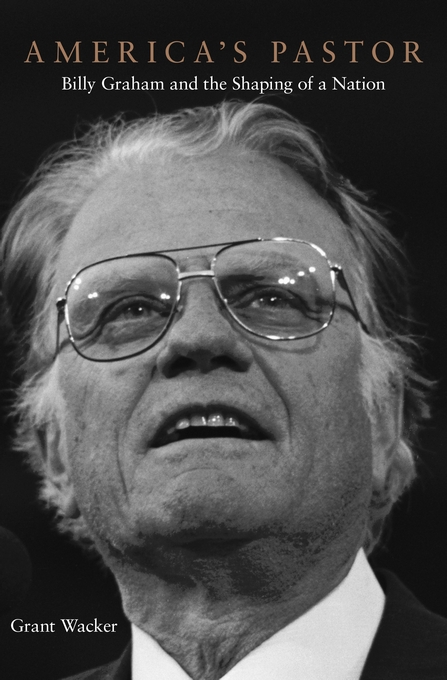
Many young people today do not know the name of “Billy Graham.” But those of us who grew up in the 20th century knew of Billy Graham as probably the greatest evangelist who ever lived. He was easily the most influential Protestant evangelical leader in the 20th century. ChristianityToday, the magazine that Billy Graham helped to found, has an extensive tribute to his remarkable legacy. Last year, I read historian Grant Wacker’s biography of Graham, so I offer my review and personal reflections below. Losing Billy Graham is like losing your pastor. Billy Graham was America’s Pastor.
……….
I was 21 years old, walking towards the main arena in Champaign/Urbana, at the tri-annual Urbana missions conference, then held at the University of Illinois. This would be the highlight evening for some 18,000 college students, where we had the opportunity to listen to the world famous evangelist, Billy Graham. By this time in Graham’s ministry in the 1980s, he had shared the Gospel before millions of people around the world, having an impact on world evangelization, far greater than any other human in history.
Not only that, but Billy Graham had managed to forge a remarkable alliance of like-minded believers, all united around a common cause of proclaiming the Gospel of Jesus Christ to others, calling these people to have a living, vital relationship with the Lord, and upholding the Bible as God’s Word of Truth to humankind. What made this so remarkable is that this alliance spanned across multiple denominations, race barriers, nation borders … you name it, Billy Graham transcended them all. Every church and ministry I had been affiliated with looked up to him as a grandfatherly type of figure.
As an aside, a few years after this Urbana missions conference, I would attend a seminary that Reverend Graham helped to found. Furthermore, for nearly the past twenty years, being involved in my church’s music ministry, I have enjoyed a warm friendship with Ted Cornell, who himself was involved in the music ministry of the Billy Graham Evangelistic Association, traveling with the Graham team for crusade meetings all over the world.
I had been truly impressed with Billy Graham. Now, at this Urbana conference, it would be my first time to see the man preach, in person, aside from watching him on television.
But I soon experienced a moment of anxiety, on that December evening.
As I was crossing the sidewalk by the arena, packed with other college students, an older gentleman approached and stopped me earnestly, “Please take this and read it.” It was a small pamphlet, and the message was direct and to the point: Billy Graham was a “false teacher.” Graham did not insist, that all inquirers for the Gospel, who came forward to give their lives to Jesus at Graham’s crusades, receive water baptism as adults. Graham had substituted baptism, as taught in the Bible, with “coming forward” to the front of the preacher’s podium. This was a grave theological error, according to the pamphlet.
I was puzzled, having grown up in liberal Protestantism, with very little exposure to so-called “fundamentalism,” prior to my years in college. I had dedicated my life to Christ, a few years earlier in high school, and all of my spiritual mentors spoke highly of Billy Graham. Graham taught of having a personal relationship with Jesus, in a manner that eluded my experience in mainline, liberal Christianity.
Most of my mainline Protestant friends still liked Billy Graham. They just did not care that much for his “evangelical” message.
Now, as a college student, I was confronted with a jarring claim that this well-respected man, perhaps the most well-respected man in all of evangelical Christianity, was really a “compromiser” in disguise. Having defended Graham in front of my mainline church peers, and alternatively resisting ridicule from my atheist acquaintances, I felt angry, and a bit confused, by this pamphlet. I promptly dumped the pamphlet in the trash, and proceeded into the arena to hear the popular evangelist speak to a captivated crowd.
Did this man with his pamphlets not have anything better to do?
Listening to Billy Graham preach that evening was incredibly inspiring. He represented what “real Christianity” was all about, from what I knew… at least the “evangelical” kind of faith that I had experienced. Graham either directly spoke of or alluded to the central tenets, or fundamentals, of Christian faith as I understood them. They included having confidence in the Bible as the very Word of God; a belief in the Virgin Birth, signifying the incarnation of the Son of God; a belief in the Bodily Resurrection of Jesus, and His atoning work on the Cross to deal with sin; a trust in the work of the Holy Spirit, to give new life to the believer; and an expectation of the Second Coming of Christ. I left the arena that night invigorated and emboldened in my faith.
There were no protestors out on the street, as students poured out from the arena, after the event. The man who gave me the pamphlet had disappeared. But I kept thinking about him. As I went to bed that night, I wondered. Could I have misjudged the “pamphlet man?” Was he trying to “save” me from some errors of Graham’s preaching, that I knew nothing about, or was this merely the Evil One’s subtle attempt to try to confuse me? What was that episode with the “pamphlet man” all about? Continue reading










 Veracity