Politics and the Christian Faith

Political Family

“My opponent is a #^&@)*g.  You know he’s a #^&@)*g because here’s a picture of him frowning with his finger near his nose.  (Cue the pleasant music)  Here’s a picture of me smiling with my family and our dogs.  I will be good for you, and I will be good for your wallet.  You can tell I am a true patriot.  I am your non-#^&@)*g candidate, and I approved this message. (Smile)”

Welcome to the predominant success formula on the American political landscape. To get elected candidates discredit their opponent—by striking fear in voters that there is something really wrong with the other guy. Political handlers believe that American voters have short attention spans. There isn’t enough time in a 30-second spot to address substantive issues or ideas—but we can absorb short, memorable sound bites that leave horribly unfavorable impressions of the opponent.

After being bombarded with political rhetoric and campaign commercials in the month leading up to the midterm elections, I was hoping the election results would bring an end, at least for now, to this ugly parade of mudslinging.

But I received a troubling email this week. Not from a political candidate who caved in to his handlers, but from a seminary that, at the very least, has an increasing appetite to engage in political issues and debates.

So?! What’s wrong with that? Shouldn’t seminaries be engaged in the democratic process? After all, the right to free speech is protected in our constitution. The church is under increasing attacks from political figures and the culture in general. Shouldn’t seminaries prepare their graduates to engage and challenge the culture? Shouldn’t Christians be thermostats instead of thermometers? Why would anyone object to Christians being actively engaged in political processes? Some of these candidates are sincere Christians who truly want to serve their Lord and their country.

At the risk of disappointing family, friends and Veracity readers, there is something wrong with mixing politics and political agendas with the Christian faith.

Please hear me out. There are times when it is right—even necessary—to mix Christian values with politics. Consider the political activities of William Wilberforce (fighting slavery), Dietrich Bonhoeffer (fighting Nazism), or Martin Luther King, Jr. (fighting racism). These are three strong examples of when Christian activism was necessary and made an impact on our world.

But let’s be honest—it’s a long way from Wilberforce, Bonhoeffer and King, Jr. to the political candidates of the 21st century. So, how willing should we be to lock arms as Christians with political candidates or political agendas? Is that necessarily a problem?

The problem is that one institution (politics) is fueled by popular opinion, and the other (Christianity) is beyond popular opinion. Democratic politics is practiced successfully by appealing to the widest swath of voters, while negotiating compromises to build plurality positions. The objective in politics is to make a better world for ‘us’. The means are often ugly and combative. Christianity, on the other hand, is successfully practiced by appealing to God, who isn’t favorably impressed or swayed by popular opinion. The objective in Christianity is to develop a right relationship with God, by representing Him well and serving others.

An Argument from Silence

When we bring Jesus to the political arena, we risk equating our faith with our politics. The Christian faith compels us to maintain a certain integrity—by sharing God where it matters most, not necessarily in politics for political gain.

Jesus never attacked a government (although He certainly did attack religious leadership), and nowhere did He model that His followers should engage in any political debate, issue or cause. Jesus launched the ultimate revolution. He did call upon His followers to fight—not against individuals or governments—but against separation from God, darkness, evil and man’s own inhumanity to man. And what weapons did He prefer? Kindness, compassion, self-sacrifice, empathy and love. In fact, when confronted by Pontius Pilate at His trial, Jesus said, “My kingdom is not of this world. If my kingdom were of this world, my servants would have been fighting, that I might not be delivered over to the Jews. But my kingdom is not from the world” (John 18:36, ESV). When the apostle Peter drew his sword to defend Jesus in Gethsemane, Jesus said, “Do you think that I cannot appeal to my Father, and he will at once send me more than twelve legions of angels?” (Matthew 26:53, ESV). Jesus was fighting a different kind of war, for something far more important than political gain. And He never promised that anything would be better in this world—”In this world you will have trouble, but take heart! I have overcome the world.” (John 16:33, NIV84).

In the 1st century somewhere between 10 and 15 percent of the entire population of the Roman empire was enslaved. The Romans occupied Palestine and Jerusalem. Talk about political causes you could sink your teeth into! In fact, Jews expected their Messiah to be a king who would overthrow the Roman occupiers. So if Jesus wanted to gain the respect of the chosen people, all He would have had to do was take on the Roman government. But when Jesus said, “Give to Caesar what is Caesar’s, and to God what is God’s” (Matthew 22:21, Mark 12:7, Luke 20:25, NIV84), we see the ultimate example of a big thinker. If they were looking for a leader to free the slaves, Jesus was way ahead of them—You know that the rulers of the Gentiles lord it over them, and their great ones exercise authority over them. It shall not be so among you. But whoever would be great among you must be your servant, and whoever would be first among you must be your slave, even as the Son of Man came not to be served but to serve, and to give his life as a ransom for many” (Mathew 20:25b-28, NIV84). In John 8:34-36 Jesus answered them, Truly, truly, I say to you, everyone who commits sin is a slave to sin. The slave does not remain in the house forever; the son remains forever.  So if the Son sets you free, you will be free indeed.

The apostle Paul got it. Paul had a lot to say about slavery, particularly as he addressed the idea that we are all one in Christ. His letter asking a slave owner to restore a runaway slave as a brother in Christ is as poignant as his instructions to slaves and masters in Ephesians 6:9. Paul ends these instructions by noting that God is everyone’s master in Heaven. There’s that big-picture idea again.

In logic, this type of argument is termed an “argument from silence.” Can we infer from Jesus’ own words and deeds, and apostolic writings, that the Christian faith is dealing with more important matters than politics and political ideas? Is there a principle to be applied in our own lives about our approach to politics?

Ravi Zacharias on Christianity and Politics

Ravi Zacharias recently wrote an eloquent post about Christianity and politics.

“Only Christianity is strong enough to preserve our freedom and our dignity. Only the gospel of Jesus Christ gives us the enormous privilege of sacred freedom without imposing faith on anyone. Those who mock this faith will find themselves before long under the oppression of an ideological domination that uses religion to gain political and cultural dominance and will not tolerate the mocking of their beliefs without cruel responses.

“History is replete with examples that politics never has had and never will have the answers to ensuring the perpetuity of a nation and the freedom and dignity of our souls. From the feudal warlords of ancient Mesopotamia to the divine status of kings in Babylon and Persia, from the democratic and republican ideas of Greece to the empire building of Rome, from the theocracies of Islam and the state church of Europe to flirtation with the idea of freedom without responsibility in postmodern America and the materialism of Communism—what has remained? A world in turmoil.

“Political theories come and go. Nations and empires rise and fall. Civilizations wax and wane. For this very reason, Jesus resisted any efforts to make himself an earthly king. The allegiance he wants is that of the heart, for the ultimate universal battle is that of the will against God. In Him alone are we truly made free.”
Ravi Zacharias, Think Again–Freedom and Dignity

 So What?

Back to Lon Solomon‘s litmus test. Back to Jesus and the apostle Paul, and bring it through Ravi Zacharias. What would I say to the seminary president who introduces a politician at a national Christian apologetics conference, and who has specific ideas about which political parties have made certain mistakes, and which legislative bills should be passed and which should be defeated?

Simply this. Your faith is of far more consequence than your political views, and (with all due respect) your Savior deserves better treatment than your Congressman.

You have a right to your political opinions, and you have a right to speak out. In matters of highest import I sincerely hope you will. But when you take up one politician or political cause and promote them with your faith, you put Jesus in a position of lower integrity than He deserves, and you invite questions about your judgment and priorities. Be as shrewd as snakes and as innocent as doves.

So, promote the Gospel and promote Jesus Christ with all your heart, mind, soul and strength. Let your efforts affect the political system most importantly through the votes of the citizens that you counsel and teach. Prepare them to engage this world and our culture, but more importantly prepare them for the next. Prepare them to recognize the shortcomings in a political system that succeeds by following formulas built on disdain for people who think differently than we do.

As Ravi Zacharias wrote, “History is replete with examples that politics never has had and never will have the answers to ensuring the perpetuity of a nation and the freedom and dignity of our souls.” Christianity should remain above politics.

 Additional Resources

Relevant Magazine (yes, Relevant Magazine has fresh, insightful material) published a piece by contributing author Brian Roberts entitled 7 Things Christians Need to Remember About Politics that we would all do well to heed.


Review: James Bryan Smith’s, The Good and Beautiful God

Spiritual formation author James Bryan Smith has the right aims in mind, but he delivers a "so-so" message in a way that can confuse evangelical readers.

Spiritual formation author James Bryan Smith has the right aims in mind, but he delivers a “so-so” message in a way that can confuse some evangelical readers.

Our small group in our church recently completed a multi-week study on James Bryan Smith’s The Good and Beautiful God. To put it in a nutshell, we made the best of it. While having some excellent teaching points scattered here and there, along with some helpful practical examples regarding spiritual discipline, at best the book was rather “so-so” in its presentation, and at worst, for some, spiritually dangerous.

James Bryan Smith belongs to that class of writers focusing on the dynamics of spiritual formation, standing within the tradition of reviving lost spiritual practices that writers such as Dallas Willard and Richard Foster have sought to recover for the contemporary church. I remember reading Richard Foster’s classic A Celebration of Discipline in the 1980s, and I was encouraged by Foster’s desire to remind the church of the great wealth of spiritual disciplines throughout the history of the church that has helped believers down through the ages to draw nearer to God. Christians can learn much from the positive examples set by evangelical, charismatic, liturgical, contemplative, and socially-concerned expressions of faith within the Body of Christ. It was from this sense of taking the best of various approaches to Christian spirituality, instead of just having a narrow focus on one tradition alone, that has provided the impetus for the various Renováre conferences that have been held across the United States for years.

On the positive side, James Bryan Smith seeks to take some of the teachings laid down by Willard and Foster and make them available to readers in an even more accessible manner. The real treasure of The Good and Beautiful God are the various “soul training” exercises at the end of each chapter. Best done in a small group like ours, it really helped to go through different spiritual practices, such as silence, solitude, having an awareness of God’s creation, counting our blessings, praying through a passage of Scripture like Psalm 23, developing an approach to meditating on Scripture like the ancient practice of lectio divina, reading a book of the Bible straight without depending on commentaries and the notes of a study Bible, and creating space or “margin” in our lives and slowing down so that we can be receptive to the activity of God’s Holy Spirit working within believers.

Quite a lot of has been written on the Internet associating the “spiritual formation movement” with what are perceived to be the “dangerous” tendencies associated with the “Emerging Church” trend of the first decade of the 21st century. Just google for “spiritual formation movement,” and you will see what I am talking about. The critics cite, that in “spiritual formation” lingo, you will find suggestions towards mysticism, tinged with the worst of medieval Roman Catholic asceticism, or even more towards New Age spirituality, along with a “works-righteousness” approach to faith. Granted, you can find extremes like this, just like you can find extremes in just about any teaching within the church.

Folks, you simply can not trust everything you read on the Internet as being accurate. I have tried before to set the record straight here on Veracity (#1, #2, #3), showing that much of the negative attitude towards “spiritual formation” is based on well-intentioned, yet seriously misinformed theological analysis of various approaches to the biblical doctrine of sanctification. I need not go into that here. But if James Bryan Smith was hoping to “put things down on the bottom shelf” for people to easily grasp the great depths of Christian spirituality, while disarming the critics of “spiritual formation,” he did not succeed. Continue reading


Mark Driscoll and the Cult of Personality

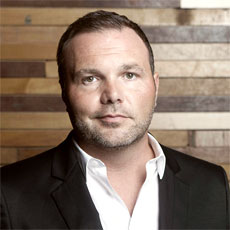
Mark Driscoll. Former pastor of the Mars Hill mega-church in Seattle, Washington.

Mark Driscoll. Former pastor of the Mars Hill mega-church in Seattle, Washington.

I have a confession to make. I like Mark Driscoll.

Mark Driscoll is a gifted Bible teacher. I have referenced some of his material here before on Veracity. He is direct, does not pull any punches, explains things from the Bible really well, and relates to the guy on the street in a very winsome way, putting things right on the bottom shelf for people within easy reach. For years he had led one of the fastest growing mega-churches in the country, but now the mega-church run is over. Just a few weeks ago, Driscoll resigned his position as head over his multi-site congregation, where his video sermons had been displayed live via satellite over about twelve locations in Seattle, Washington.

Veracity’s blogger-in-chief, John Paine, sent me this article from the Atlantic this morning that tells the whole story. According to the article, Driscoll’s Mars Hill Church has dropped from a peak in January of 14,000 Sunday worshippers down to 6,000, less than a year later. Now the remaining congregations will become autonomous local churches and the Mars Hill infrastructure will disband completely.

For years, Mark Driscoll has had his critics. Some conservatives had complained that he was too vulgar in his public demeanor. Others dismissed his muscular, Calvinist brand of Christianity as too divisive. He has had difficulties in being charged with plagiarism. Countless progressive Christians have accused him of everything from misogyny to being horribly infatuated with his own ego, something that even historian Molly Worthen reported on several years ago. But what really brought about his downfall was the internal disputes within his church among the church leadership and elder board. It was not a sexual or drug abuse related scandal. Instead, Driscoll was apparently a control-freak, prone to bullying other church leaders, all while projecting a congeniality towards others who did not know the inside situation that well.

The really sad part is that because of the crisis of leadership at the church, dozens of church staff people will lose their jobs. A once vibrant and growing community will have to remake itself. We would do well to pray for those remaining at Mars Hill, that the unemployed staff will find jobs elsewhere soon to support their families and that the remaining congregants will rebuild the leadership in these small churches into more healthy, growing and dynamic communities of faith. We should pray for Mark Driscoll, too, as losing your job as a pastor can be a dreadfully humiliating experience, not simply for himself, but for his family, as well.

What do we learn from the Mark Driscoll saga? Well, the big thing for me is to realize that the evangelical church in general has a serious problem with cultivating cults of personality. It can happen in large churches like Mars Hill, but it can happen in much smaller churches.

It can happen in your own church.

If a church builds itself around the “charismatic” leadership of one individual, no matter how gifted or likable that person is (remember: I still like Mark Driscoll, even with his flaws), then we should have red flags go up. However, if the church instead is built around the message of the Gospel, where Jesus Christ and Him alone is the “head pastor,” and not some guy in the pulpit, then that church is doing the right thing.

If and when a church goes through a crisis of leadership, it will serve as a wake-up call to that community. Churches that survive these difficult times do so because they focus on Christ and His work, not on the work of man. If a church experiences a decline in attendance because of a cult of personality crisis, then perhaps that is actually a good thing. If people are a part of a local church simply because they want to hear one particular person preach, and then they leave because their guy is no longer there, then I would argue that this is actually a good thing. On the other hand, if someone is in a local church because they are excited by what God is doing among the community as a whole, not simply through one individual, then a community of faith built with people like that will not only survive, it will flourish.

We have much to learn from the Mark Driscoll saga, lessons we all need to learn.

HT: John Paine


Happy Halloween…Er… Reformation Day!!

Martin Luther nails his Ninety-Five Theses to the Wittenberg church door. Most people associate October 31st with Halloween, but students of church history know this as "Reformation Day"

Martin Luther nails his Ninety-Five Theses to the Wittenberg church door on All Hallows Eve, 1517. Most people associate October 31st with Halloween, but students of church history know this as “Reformation Day”

Like any kid growing up in an American secularized society, I liked the whole Halloween thing. I have a serious weakness for chocolate, so I always looked forward to going door to door to see how many chocolate treats I could get. Sure, there were horror stories about  people sneaking razor blades into mini-candy bars, but I was willing to take the risk. As I got a little older, I would try to terrify the neighborhood kids by playing Pink Floyd’s Echoes album through my bedroom speakers out the window as costumed figures approached our house.

Okay. I stopped that pretty quick when my mother learned about it and reprimanded me for making a few of the little kids cry.

When I began to take my spiritual journey with Jesus Christ seriously in high school, I began to hear other types of horror stories about Halloween from my new church friends. There were tales about its connection to Satanism at worst, or perhaps just only a milder, yet just as bad, connection to Wiccan, Druid and other forms of pagan religions… and those “dreadful” Harry Potter books.

I began to see a shift in evangelical churches away from celebrating “All Hallows Eve” towards things like having “Harvest Parties” or “Fall Festivals.” Well, I can surely appreciate the effort to shift the focus, but I am not so sure how successful it has been.

Instead, I think if we really want to shift the focus away from the negative aspects of Halloween, then we should instead take a page or two from church history. On October 31st, 1517, Martin Luther approached the door of the Wittenberg church with a list of his Ninety-Five Theses regarding abuses in the Roman church. What he nailed to the door of that church that day has forever changed the face of Western Christianity… and the whole world!

Martin Luther had kicked started the Protestant Reformation, a movement that resulted in perhaps the greatest revival of spiritual vitality and love for the Scriptures that the world has ever seen.  But Martin Luther’s Reformation belongs not just to Protestants. It belongs to the whole Christian church. Even those Roman Catholics who murmured about Luther must admit that change was necessary to correct some serious problems. It was through the efforts of people like Martin Luther that the Bible came to the common people in their native tongue, a privilege that most Christians today simply take for granted. It was also through the turmoil of the Reformation that made the Western world into what it is today, providing the intellectual and cultural incubator for the growth of modern science and capitalism. So even if someone is not a Christian, Luther’s Reformation has made an incredible impact upon world history.

So, instead of getting all flustered about those trick or treaters coming to our doors to unwittingly fan the flames of pagan traditions, let us as believers consider a completely different approach, encouraging people to remember this day in world history, where one man with a hammer in hand and a powerful set of ideas birthed in Scripture changed the world.

Let us celebrate Reformation Day!

 Additional Resources:

Do you have no idea what Luther’s Ninety-Theses were all about? Check out the following interview with Carl Trueman, professor of church history at Westminster Theological Seminary in Philadelphia.

And one final “treat” courtesy of something I found on Andrew Wilson’s Twitter log from “Across the Pond.” Enjoy!:

HT: Timothy George on First Things, and Andrew Wilson at Think.


Bumgarner Blues

"Madison Bumgarner on September 3, 2013" by SD Dirk on Flickr - Originally posted to Flickr as "SF Giants Madison Bumgarner". Wikipedia

“Madison Bumgarner on September 3, 2013” by SD Dirk on Flickr. Wikipedia

Okay, I really wanted the Kansas City Royals to win the World Series this year. It would have been a wonderful Cinderella story, but it was not to be. The Series belonged to a young pitcher for the San Francisco Giants, Madison Bumgarner.

Wow. What a performance. Bumgarner shut out the Royals in game 5 and then in game 7 closed out the final innings without allowing a single score from the Royals. Baseball does not get any better than that.

I did not know this before, but it turns out that Madison Bumgarner is also an evangelical Christian, according to an interview he gave about four years ago. As long as his stellar performance this past week does not go to his head, this extraordinary athlete will serve as an inspiring example to a generation of young baseball pitchers out there growing up in families all across the country.

So, why did I title this blog post the “Bumgarner Blues?” Well, I am continually struck at how so many cultural celebrities from a Christian background who make the scene are athletes. Rarely do you find public intellectuals or respected spokespersons representing an evangelical point of view in the wider culture. Over the next week, you will surely see the lanky, dark curly haired figure of Madison Bumgarner graced over the pages of magazines and Internet websites. Well, great for him, great for the San Francisco Giants, and great for Christian believers for whom baseball is an important part of life.

But when was the last time you saw someone like a C.S. Lewis, a Malcolm Muggeridge, or a Billy Graham hailed across the Internet media landscape? Who stands up to present the Gospel in such a persuasive way that others will thoughtfully listen to the message, even though they might respectfully decline to accept that message? Why is it that great evangelical scholars like Daniel Wallace, Darrell Bock and Ben Witherington, or even prolific pastors like John Piper or Tim Keller, fail to register much of a bleep on the cultural landscape… even on Christian media? Aside from some moral scandal or political debate, about the only time you get a glimpse of an evangelical spokesperson is when someone tips over some line theologically, like a Rob Bell (to the left) or a John Hagee (to the right).

Okay. I can think of one public intellectual or spokesperson over the past ten years who stands out as an exception: National Institutes of Health director Francis Collins. Can anybody think of others?

Sure, you can probably find a number of reasons where blame can get assigned, such as perhaps a media bias of some sort. Okay, I get that. But I wonder if the trouble is not something within the church, too. Do we really value public thought for the sake of Christ, seeking earnestly to give a reason for the hope that we have in Jesus? It will take more than phenomenal baseball players like Madison Bumgarner to draw the world’s attention to the Savior.

Where are the public intellectuals and spokespersons for the faith today?

I wonder.