Marcus Borg: Friendly Liberal Critic

One of the most well-known liberal critics belonging to the Jesus Seminar died on January 21, 2015, Marcus Borg. Marcus Borg was an influential writer in liberal Protestant circles, such as in my late father-in-law’s church in the last years of his life, but with respect to Borg’s conservative evangelical critics, like Dallas Seminary’s Darrell Bock, Borg was a respectful and friendly dialogue partner.

My first encounter with Marcus Borg was in a highly recommended book he co-wrote with Anglican scholar N.T. Wright, The Meaning of Jesus: Two Visions. N.T. Wright defended an evangelical orthodox position affirming the virgin birth of Jesus, the divinity of Christ, and the bodily resurrection of the Lord. Marcus Borg denied ALL of these doctrines of the faith, but he nevertheless endeavoured to identify himself as a Christian, something that most evangelicals find incomprehensible. Borg aligned himself with the Jesus Seminar, which was notoriously known to gather together regularly to “vote” on which statements in the Gospels were actually authentic or inauthentic. Evangelical critics of the Jesus Seminar noted that was basically like using a democratic system of decision-making in order to establish what is true versus what is false, relying on the wisdom of man as opposed to the wisdom of God as revealed in inspired, sacred Scripture. Nevertheless, Borg was always rather cordial in his disagreements with his conservative evangelical dialogue partners.

Gospel Coalition author and blogger Derek Rishmawy best describes the Protestant liberal mindset as of “those who can at best recite the creeds with their fingers crossed. Having embraced the various presuppositions of Enlightenment and postmodern thinking, they are skeptical of supernatural claims and often doubt the very idea of objective truth.” Those who identify themselves as “liberal Christians,” like Marcus Borg, can say that they believe in Jesus, but when honestly challenged, their doubts regarding the supernatural get in the way of them having a full confidence of the genuine reality of a personal Lord and Savior in their lives…well, maybe the theologically sophisticated like Marcus Borg can somehow convince themselves, but in my experience the typical pew sitters in a liberal congregation under the influence of Borg and his followers find it difficult to overcome their doubts.

I, on the other hand, contend that there are other ways to address the question of doubt, as opposed to the way Borg sought to do it. While I am sympathetic that doubt is always something that challenges us in our faith, we can nevertheless move through our doubts and have the confident assurance that “If the Spirit of him who raised Jesus from the dead dwells in you, he who raised Christ Jesus from the dead will also give life to your mortal bodies through his Spirt who dwells in you.” (Romans 8:11) … and this is no mere “spiritual” resurrection. It is bodily full and real! Seeking to move through our doubts is part of the journey of personal discipleship behind the purpose of this Veracity blog.

In honor of this friendly liberal critic, it might be worth observing this classic debate between William Lane Craig and Marcus Borg on the topic, “Did Jesus Rise from the Dead?” Though I do not agree with Marcus Borg, it is nevertheless important to learn from this exchange how to challenge this way of thinking in a manner that is gentle and respectful.



Newsweek‘s Continued Misunderstanding of the Bible

Plumb LineJohn Paine and I have reported before on Newsweek‘s now infamous Christmas front page article written by journalist Kurt Eichenwald entitled, “The Bible: So Misunderstood It’s a Sin.”As a way of following up on the continuing saga of the blunder made by such an influential mainstream publication, after Newsweek invited messianic Bible scholar Dr. Michael Brown to write a response essay in their magazine, Brown then invited the journalist, Kurt Eichenwald, to appear on Brown’s Line of Fire radio show recently. I listened to the program available online and simply felt compelled to make some commentary.

On the bright side, it is apparent that Eichenwald and Newsweek hope that evangelical Christians will engage in creative and respectful dialogue with others without resorting to vitriol and name calling. I could not agree more. Furthermore, Eichenwald believes that there are many Christians who say that they “believe the Bible” but they simply have not read and studied what the Bible really says. Again, Eichenwald is 100% correct about the problem of biblical illiteracy and lack of understanding concerning theological doctrine and church history within our churches today. The hypocrisy of those who say that they “know the Bible” yet who do not take the time or energy to dig into the study of God’s Word and its history is truly appalling. But is Eichenwald correct is his understanding of the Bible, and its history? Continue reading


Patterns of Evidence: One Night Showing Tonight!

On Monday, January 19, 2015, selected movie theatres across the country will be showing a special documentary film, Patterns of Evidence. The story is about a filmmaker, Timothy Mahoney, who had a crisis of faith when he learned from the consensus of critically minded scholars that the Exodus, the famous story of Moses leading the people out of Egypt and the parting of the Red Sea,… NEVER HAPPENED.

Well, at least, that is the conclusion that is drawn from many archaeologists of the ancient Bible periods. True, the study of archaeology has yet to provide demonstrative evidence confirming the Biblical account of the Exodus. Therefore, many come to the conclusion that the Exodus was simply a “made up” part of the Bible. In other words, the story in the Bible is just as fictional as Ridley Scott’s version of it in Exodus: Gods and Kings, introduced with extensive background discussion to the archaeological issues involved here earlier on Veracity. But is there another way to approach this issue and arrive at a different conclusion?

In Mahoney’s documentary film, he looks at the possibility that the search for the Exodus has focused on the wrong time and place. Having not seen the film myself, I can not myself offer a review, but you may want to look at the following reviews from Answers in Genesis and the Gospel Coalition.

To find a film showing for this one night in your area according to zip code, look here. (In Williamsburg, Virginia, it is at 7pm at the High Street Movie Tavern). A 6:30 pm discussion led by Fox News commentator Gretchen Carlson and featuring author Anne Graham Lotz, Eric Metaxas, Father Jonathan Morris, and Dennis Prager precedes the film. If you attend the film, I would like hear your thoughts about it, as I am not sure myself that Mahoney’s case is without difficulties. Take a skeptical friend. It is sure to be controversial and generate plenty of conversation. Does the filmmaker make a convincing case?

UPDATE: January 20

Check out the Veracity review of the film by viewing the comments section below, given by Veracity’s own John Paine. Thanks, John!


The Nature of Truth

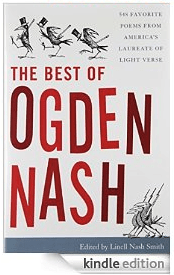
The Best of Ogden Nash

SEEING EYE TO EYE IS BELIEVING

by Ogden Nash


When speaking of people and their beliefs I wear my belief on my sleeve;

I believe that people believe what they believe they believe.

When people reject a truth or an untruth it is not because it is a truth or an untruth that they reject it,

No, if it isn’t in accord with their beliefs in the first place they simply say, “Nothing doing,” and refuse to inspect it.

Likewise when they embrace a truth or an untruth it is not for either its truth or its mendacity,

But simply because they have believed it all along and therefore regard the embrace as a tribute to their own fair-mindedness and sagacity.

These are enlightened days in which you can get hot water and cold water out of the same spigot,

And everybody has something about which they are proud to be broad-minded but they also have other things about which you would be wasting your breath if you tried to convince them that they were a bigot,

And I have no desire to get ugly,

But I cannot help mentioning that the door of the bigoted mind opens outwards so that the only result of the pressure of facts upon it is to close it more snugly.

Naturally I am not pointing a finger at me,

But I must admit that I find any speaker far more convincing when I agree with him then when I disagree.

_______
HT: Ogden Nash


More on Newsweek‘s Misunderstanding of the Bible

Plumb LineMy Veracity blogging colleague, John Paine, recently referenced New Testament scholar Dan Wallace’s response to Newsweek author Kurt Eichenwald’s Christmas tirade against Christian “misunderstandings” of the Bible.  Sadly, despite some of the genuine substance Mr. Eichenwald displays to the reader, it is the Newsweek piece itself, “The Bible: So Misunderstood It’s a Sin,” that bears most of the misunderstanding.

The article has generated A LOT of responses, so many that I think it would be best to list out some of the more prominent ones. The original Newsweek article is extremely long, but it is worth taking some time to go through it as it adequately illustrates many of the most common objections and confusions regarding Christianity and the Bible that you will encounter today among secularly-minded thinkers, or those thinkers who wish to reshape Christian faith to look more “modern.” But you should also read a few of the responses as an aid to help you develop an informed response to Eichenwald’s many complaints. It is great way to get an education on some critical issues in doing Christian apologetics in a skeptical world.  Some of what Eichenwald says presents challenging difficulties for the Christian, while much of what he says, if not the bulk of it, can be answered in a manner that effectively communicates an honorable confidence in God’s Word:

  • Michael Kruger (Reformed Seminary in Charlotte, N.C.) has two articles (#1 and #2 ), but what is most valuable is that Mr. Eichenwald offers some rejoinders to Kruger’s critique in the comments section.
  • Ben Witherington (Asbury Seminary, Kentucky) offers a response from an evangelical Wesleyan perspective.
  • For a response from the more conservative wing of mainstream Protestantism, this detailed response from Robert Gagnon (Pittsburgh Theological Seminary) fills in some of the gaps left by others in their critiques.
  • Kurt Eichenwald has repeatedly said that some of the responses to his Christmas essay from Christians were loaded with “vitriol” and “name calling.” Perhaps Eichenwald has this series of video responses in mind ( you have to scroll past much of the unedited chatter in places, but you can look here: #1 and #2)by Reformed apologist James A. White (Alpha-Omega Ministries), but I will let the viewer be the judge of that.
  • In addition to the well-known agnostic Bart Ehrman (University of North Carolina, Chapel Hill), Mr. Eichenwald leans heavily on the critical views of Jason David BeDuhn, professor of Comparative Study of Religions, at Northern Arizona University. BeDuhn, in this essay, responds to a critique of the Newsweek article by Southern Baptist Seminary head, Al Mohler.
  • If you want to know what the more progressive end of Christianity is thinking about this, read this by blogger Rachel Held Evans, or this from Old Testament scholar Pete Enns.
  • In my view, the best and most thorough response is from Darrell Bock (Dallas Seminary). If you only have time to read one of these, pick either the Dan Wallace one linked above or this one by Bock.
  • The latest response from Newsweek itself is that they agreed to publish the following rejoinder by messianic scholar Michael Brown. In Newsweek’s introduction to Dr. Brown’s essay, they still stand by Eichenwald’s original story, in an effort to promote discussion. Furthermore, they announced that Dr. Brown has invited Mr. Eichenwald to be on his Line of Fire radio program the week of January 19.