
I just heard the news tonight that former President Jimmy Carter has died at age 100 (1924-2024). Following is a review of a book written by President Carter about his spiritual journey, that I finished reading a year or two ago…….
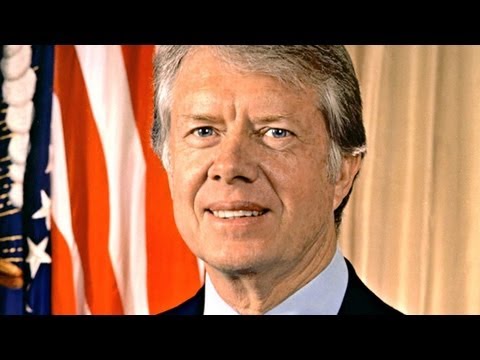
Jimmy Carter. Peanut farmer and America’s “Born Again” President.
Reading President Jimmy Carter’s 1996 spiritual autobiography, Living Faith, is really an eye-opening perspective on the history of American evangelicalism, over the past half century or more. Furthermore, Carter has had the distinction of being the longest living American President, during the whole history of the republic.
The Spiritual Journey of a Georgia Peanut Farmer, Turned Icon for “Born Again” Christian Faith
Jimmy Carter grew up in the small town of Plains, Georgia. He was the son of a Baptist Sunday school teacher, and so southern Baptist life and teachings permeated his upbringing. In Living Faith, Carter describes the evolving journey he had towards faith, marked particularly by his baptism at age 11. He admits that coming forward at an “altar call” was significantly more important than his baptism, a unique feature of American evangelicalism, since the period of the Second Great Awakening of the early 19th century.
Carter believed in the Gospel, but he also nursed some doubts, which he largely kept to himself. He sensed a conflict between the science being taught in school and the story of creation taught in Sunday school. Presumably, this meant that Carter had a Young Earth Creationist interpretation of the Bible instilled into him, at an early age, in the late 1920s and through the 1930s.
Like most people growing up in the “Bible Belt” of the 20th century, Christian-influenced people, whether such individuals were professing Christian or not, made up the world around him. He knew of some neighboring Jews, but knew nothing about their faith. It was not until his years in college and in the Navy that he became exposed to worldviews substantially different from his own.
What strikes me about Carter’s story up to this point is how vastly different it is from the world that most young people in America, even in the traditional “Bible Belt,” grow up in today. We live in a world of technology, with SmartPhones, Netflix, and Amazon Prime, built on the foundations of modern science. Most Christians simply take this for granted today. Furthermore, the world seems like it is getting smaller all of the time, as cultural and religious pluralism has become more and more the norm, rather than the exception. I go to the grocery store in my once very southern Virginia town, where now I hear languages spoken around me in the diary section that sound nothing like English. Gone are the days when all of one’s neighbors all “went to church.” You might now be living on a street where a Muslim or Buddhist lives, or next to someone who has never stepped a foot inside of a church.
As Carter tells the story, the most important crisis in his spiritual life was the death of his father, who died in the prime years of his life. Carter left the Navy and returned to his home town in Georgia, to experience a sense of community, where nearly all of his neighbors and church members felt like family to him. Yet he was troubled by his doubts regarding the problem of evil, wondering why his father had died at such a young age.
Fundamentalism to Neo-Orthodoxy: and Response to Racism
For solace, Carter turned to the writings of the popular Neo-Orthodox theologians of the day, ranging from Reinhold Niebuhr to Paul Tillich. Carter found in such writings a means of reconciling his faith with modern science. He was able to find a measure of comfort, where certainty was not always available to sustain his faith.
The insights of Neo-Orthodoxy have been eclipsed today by the raging cultural war battles, that divide our post-Christian society. Neo-Orthodoxy in the 20th century sought to restore confidence in Christian faith, that troubled those from mainline Protestant liberal backgrounds, as well as some conservative evangelicals. But Neo-Orthodoxy made the assumption that traditional Christian social ethics, particularly regarding human sexuality, were the norm in societies historically associated with traditional Judeo-Christian values. But that cultural consensus does not belong to the world of the 21st century West.
Despite Neo-Orthodoxy’s efforts to reinvigorate mainline Christianity, the free-fall collapse of the liberal mainline in 21st century continues to marginalize the old mainline traditions. What may have worked to sustain doubting believers in the 20th century, where the social mores remained fairly conservative, no longer effectively helps in today’s pluralistic cultural milieu.
Carter’s distancing from what he calls “fundamentalist” Christianity was driven largely by the persistent history of racism in Georgia, operating under the cloak of “Bible-believing” Christianity. Carter had experienced a racially integrated Navy, but he experienced ostracism upon his return to Plains, Georgia, among some of his professedly-Christian, yet evidently racist neighbors. Carter’s openness towards racial reconciliation was encouraged by the forward-thinking views of his mother, in contrast with the more settled views of his father, who simply viewed the divisions of the races, as the accepted norm.
A telling example of rural Georgian racism was the practice of receiving neighbors as guests. White neighbors were to be greeted at the front door of the home. Black neighbors, on the other hand, were to be greeted at the back door of the home. Carter’s mother rejected this practice, much to the consternation of Carter’s father.
In following the path of his mother, Jimmy Carter’s agricultural supply business was the target of boycotts. Carter survived such boycotts, which eventually faded away over time, but the connection between fundamentalist Christianity and racism had become cemented in his mind.
This aversion to fundamentalism can be seen in how Carter has responded to issues that have invigorated the “Religious Right,” over the decades. For example, Carter writes (p. 126) that he “opposed constitutional amendments that would have… totally prohibited abortions. However [this issue] was one over which I had great concern. I have never been able to believe that Jesus would have approved the taking of human life, but the difficult question then remained: When does a fetus become a human being? My duty was to comply with the rulings of the Supreme Court, but I did everything possible to minimize the need for and attractiveness of abortions.”
Carter believed though abortion was wrong, he was not in favor of government intervention to criminalize it. For those conservative Christians who believe that justice for the unborn can only be achieved by the overturning of Roe vs. Wade and other legislative efforts, Carter’s hesitancy to challenge Roe vs. Wade would ring hollow, despite his concerted efforts to reduce incentives for abortion.
Carter relates a very telling story as to how his theological beliefs got misrepresented by the media, during those years when he was very active in public, political life. When Carter ran for President against Gerald Ford, Carter submitted to a series of interviews by Playboy magazine. Despite attempts by his campaign to review and approve every word that was said during those interviews, one statement slipped out that the magazine could not resist in publishing.
Carter had engaged in a discussion with the Playboy journalist about Jesus’ saying from the Sermon on the Mount in Matthew 5:27-28, “You have heard that it was said, ‘You shall not commit adultery.’ But I say to you that everyone who looks at a woman with lustful intent has already committed adultery with her in his heart.” Towards the end of the interview, the reporter had asked if Carter had ever committed adultery… even in his heart. Not realizing that the reporter had secretly kept the tape recorder rolling, Carter responded with, “Yes, I have lusted.” (p. 128)
Carter’s previous hours of questions and answers with the reporter got lost by the scandal that erupted over this last, single comment. Speculations about Carter’s sex life, devoid of the context behind Carter’s response, nearly derailed the Presidential election for Carter. Carter survived the crisis, but just barely.
He would probably be grateful that never ran for office in the first quarter of the 21st century, with Facebook, TikTok, and Instagram ready to pounce on every slip up!
One particularly enlightening section of Living Faith was the candor in which Carter talked about his familial relationships. He has written openly about struggles in his marriage, his own failures and lessons learned, and tensions at times with his sons. The fact that Jimmy and Rosalyn Carter survived and even flourished in their marriage, for so many years, bears testimony to the power of faith to resolve problems in the home.
Jimmy Carter, Habitat for Humanity, and Serving the Poor
To this reviewer, perhaps the most rewarding part of Living Faith was learning about Jimmy Carter’s work with the Carter Center and Habitat for Humanity. The Carter Center was founded to help find solutions to difficult to solve problems, particularly international conflicts, where United States official response has not proven effective in addressing these issues. For example, where sitting U.S. Presidents have been unable to make progress, in certain foreign conflicts, the Carter Center has been able to intervene as a moderator in civil disputes. One particular case was where Carter himself was asked by the nation of Israel to find a way for Ethiopian Jews to emigrate from Ethiopia to Israel, which the Ethiopian government eventually allowed.
Habitat for Humanity was founded by Linda and Millard Fuller, where volunteers are able to partner together with those who lack adequate housing, to build nice, affordable homes for those who need them. The Fullers had been neighbors and friends of the Carters, and Jimmy Carter had lent his name and countless volunteer hours to support this humanitarian ministry, centered on a Christian vision of serving others. Both the Carter Center and Habitat for Humanity are good examples as to how Jimmy Carter will probably be best remembered as most effective in his post-Presidential life, as opposed to his service as President during the late 1970s.
Cultural and Theological Shiftings
While Jimmy Carter shares many of the same perspectives that most evangelical Christians today have regarding the Christian life and theology, there are a few areas where Carter expresses a contrary view, which many see as being more in alignment with Protestant mainline liberal theology. In a 2012 interview with Southern Baptist Seminary president, Al Mohler, Carter shared his views on homosexuality:
“Well I have to admit, Dr. Mohler, that I’m kind of selective on that point of view. I really turn almost exclusively to the teachings of Jesus Christ, who never mentioned homosexuality at all as a sin. He never condemned homosexuals and so I don’t condemn homosexuals. And our church, our little church in Plains (Ga.), we don’t ask, when people come to join our church, if they’re gay or not. We don’t ordain, we don’t practice marriage between gay couples in our church, but that’s a Baptist privilege of autonomy of local churches. I’m against any sort of government law, either state or national, that would force churches to perform marriage between gay people, but I have no objection to civil ceremonies. And so, I know that Paul condemns homosexuality, as he did some other things like selfishness that everybody’s guilty of, and so I believe that Jesus reached out to people who were outcast, who were condemned, brought them in as equals and I also pretty well rely on Paul’s writing to the Galatians that everyone is equal in the eye’s of God and we’re treated with compassion. And I personally believe, maybe contrary to many of your listeners, that homosexuality is ingrained in a person’s character and is not something they adopt and can abandon at will. So I know that what I’ve just explained to you might be somewhat controversial, but it’s the way I feel.”
President Carter evidently identified with what might be called “Red Letter Christianity,” which prioritizes the words of Jesus, printed in red in some Bibles, over other parts of the Bible. While “Red Letter Christianity” has had its appeal, that approach to the Bible has become difficult to sustain.
Carter himself would later, though indirectly, admit the inadequacy of that approach, and take a theological shift that would have been unthinkable in previous generations. By 2018, Carter altered his views to say that “Jesus would approve of gay marriage.” Few evangelical Christians would agree with the former United States President and Baptist Sunday school teacher today.
In other areas, Carter holds views that can be found in both liberal mainline as well as some evangelical churches, such as generally approving of women’s ordination. In Living Faith, Carter makes no distinction between the office of deacon and the office of elder, and contends that the 1984 Southern Baptist restrictions against “the ordination of women” were based on a “ridiculous statement” grounded in 1 Timothy 2, a position which he broadly rejects (p. 193). Carter appeals to the argument that limiting the qualification of elders to be men only, from 1 Timothy 2-3, is perhaps “derived from [Paul’s] background as a Pharisee or were designed to resolve specific social problems in a troubled New Testament church” (p.192). Carter affirms the service of women, in leadership of a local church as elders, in terms of an understanding of total equality of men and women in church leadership, without any restriction concerning how male and female are to relate with one another. One wonders if Carter would still maintain that view today, in an era where claims of transgenderism, and the ideology of gender merely being a social construct, are continuing to grow, thus blurring the definition of “male” and “female.”
Carter also holds a position that might be interpreted as being anti-Calvinist. He rejects “the doctrine that God decides in advance who will be accepted — who will be the chosen or ‘the elect.’” Carter sees an inherent arrogance in such a doctrine, a view that many convinced Calvinists might perceive as misunderstanding the very nature of election.
I found intriguing that Carter, after having served as a Georgia Senator to Congress, and after running as a candidate for Governor of Georgia, back in the 1960s, participated in several Baptist mission trips to urban areas outside of Georgia, where he engaged in what I would describe as “door-to-door” evangelism. I wonder what some of those home dwellers, who received Carter as a door-to-door evangelist, would have thought when a decade or so later this same man was serving as President of the United States!
Jimmy Carter: A Life that Reflects the Twists and Turns of American Christianity
Living Faith was written in 1996, but the American culture has witnessed a dramatic shift since that time period. While Jimmy Carter has sought to remain a Christian throughout, it would appear that Carter has shifted his theology along with the shifting of culture. As Carter was once someone who greatly admired the Neo-Orthodoxy of the 20th century, it is evident that this particular theological movement has collapsed as the years move through the 21st century. It might be fair to characterize the Jimmy Carter of his mature years as more of a “progressive Christian,” as opposed to a more traditional conservative evangelical Christian. Though Carter has surely valued much of what might be called a classical evangelical faith, he has identified more and more with the “Religious Left,” over the years. Nevertheless, Jimmy Carter has eagerly sought to continue reading his Bible everyday, a discipline that even many more conservative Christians rarely practice as faithfully as Carter has done. Furthermore, he had promised to keep teaching his Baptist Bible class as long as he was able.
In many respects, Jimmy Carter offers a glimpse into how the evangelical Christian movement has changed over the past 50 years or so. When he was President in the 1970s, conservative evangelical Christians like Carter were generally less politically active, but were largely united in basic Protestant Christian beliefs, as reflected in the common moral values held by most Americans.
Nevertheless, cracks had started to emerge. The culture was changing. The controversy over the 1960’s Civil Rights Movement exposing the Christian hypocrisy of racism in his part of the South was still fresh in people’s minds. The crisis over Roe vs. Wade energized the political energies of would have then been known as the “Silent Majority.”
But since then, and even more so since the 1990s, larger rifts have been felt within the evangelical movement at the non-political, theological level. The theological liberalism of what was known as the Protestant mainline has now permeated inside of today’s megachurch evangelical culture, as sprouts of “progressive Christianity” appear to be emerging more and more. The spiritual journey of Jimmy Carter has mirrored that shift.
Looking back, Jimmy Carter will be remembered as one of the first Presidents of the United States, in the modern era, to boldly and publicly state that he was a “born again” Christian. Many of his fellow “born again” believers will undoubtedly wince at some of the beliefs and statements Carter made, both during his Presidency and afterwards. Nevertheless, Carter’s willingness to bring Christian belief into the public sphere, in an era when public professions of Christianity are often looked upon with disdain by a surrounding culture, have left a definite mark on the history of American Christianity.






 Veracity