Category Archives: Topics

Oliver Cromwell’s Crisis

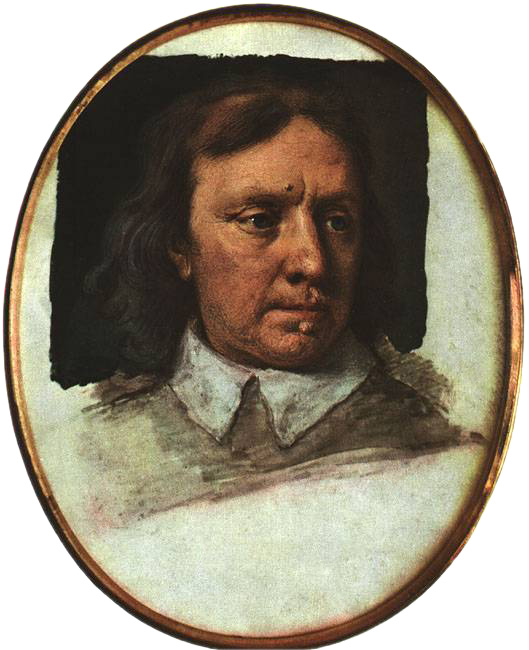
Oliver Cromwell (1599-1658), Lord Protector of England, and Christian reformer of church and civil governance. A hero of liberty to some. A fanatical tyrant to others.  From an unfinished portrait by Samuel Cooper (credit: Wikipedia)

Oliver Cromwell (1599-1658), Lord Protector of England, and Christian reformer of church and civil governance. A godly hero of liberty to some. A fanatical tyrant to others. From an unfinished portrait by Samuel Cooper (credit: Wikipedia)

By the early 17th century, the only type of governance that the English people had known for hundreds of years was the monarchy.  Along with the office of the king in the political realm, for Christians there was a corresponding office of bishop. The term bishop was derived from the Greek word episkopos, as found in Titus 1:7, typically translated today as “overseer.” Just as the king oversaw the worldly affairs of state, the bishop oversaw the spiritual affairs of the church.  King James I of England, who sponsored the famous English Bible translation that bears his name, was famously quoted as saying, “No bishop, no king.”

For James, a king can only rule a people properly with the assistance of bishops who could administer the spiritual life of Christian communities in accordance with the standard set by such a benevolent and divinely appointed king. King James, along with his bishops, saw this governing arrangement as quite efficient. But what happens when the people begin to lose confidence with their leaders? What happens when you can trust neither your bishop nor your king?
Continue reading


Martyn Lloyd-Jones on the Human Condition

Let us be honest. None of us really likes to talk about sin.

But when we talk about the great and glorious news of the Gospel, that in Jesus Christ we have been forgiven of our sin, it would behoove us to fully understand what the sin problem really is. If we fail to do that, it would be like a doctor trying to give a prescription to a patient for their healing without fully grasping the proper diagnosis of the condition.

Dr. Martyn Lloyd-Jones was perhaps the greatest evangelical preacher in 20th century Britain, only rivaled by perhaps one of my favorite expository British teachers, John R. W. Stott (who teaches on the subject of human sin as found in Ephesians 2:1-3 in a commentary found here). Formerly a doctor, Martyn Lloyd-Jones went onto preach as a minister for 30 years. Jones was a great admirer of the Puritans, thoroughly immersed in the Reformed tradition.

I have been spending several weeks reading Romans 5:12-21 in preparing some discussions for our small group Bible study. Of everything I have read in Romans, this passage of Scripture is probably the most compact, dense, liberating, and enriching text in the entire letter. It is nevertheless controversial within the church as to how it has been interpreted. Just ask any Roman Catholic, Protestant or Eastern Orthodox Christian familiar with the discussion. For starters, consider verse 12:

Therefore, just as sin came into the world through one man, and death through sin, and so death spread to all men because all sinned——

The Apostle Paul simply breaks off his thought within mid-sentence.  It is as though Paul had to pause there, anticipating the objections that would be raised to the concept of human as sinners that would chafe against the rational mind for the next 21 centuries. What does Paul mean by this phrase all sinned?   I have been reading this over and over again, looking at commentaries like this one, only to be further drawn into the Apostle Paul’s famous pause at the point. What was Paul getting at?

It is as breath-taking as it is challenging.

In the following video, Martyn Lloyd-Jones gets to the heart of why so many people have such difficulties with Paul’s message in Romans 5.

Also, if you want to hear some of the best Reformed, expository Bible preaching ever recorded, you will be pleased to know that over 1,600 of Martyn-Lloyd Jones sermons are now available for free on the Internet (though you can donate to make sure that those sermons remain freely available).

In the meantime, you can get the flavor of his approach to the Bible and why it is so important to understand the proper diagnosis of the human condition. This interview was conducted by journalist Joan Bakewell in December, 1970:


Irreplaceable: A Focus on the Family Film

Colorado Springs-based Focus on the Family (FOTF) is promoting a special one-night viewing of a new film, Irreplaceable, at select movie theaters on Tuesday, May 6th. The film follows Tim Sisarich, FOTF’s New Zealand director, on a documentary quest to explore the nature of the traditional family and its current status in postmodern society. Even if you have missed the effective barrage of Christian-themed movies in the Spring of 2014, you might be surprised that this one-night showing has provoked some controversy.

Some in the Lesbian Gay Bisexual and Transgender (LGBT) community have been working hard to effectively ban Irreplaceable from being shown in mainstream movie theaters. Why all of the fuss? Well, Focus on the Family has historically been outspokenly supportive of what some call “reparative” or “conversion” therapy, which represents types of psychological treatments intended to alter someone’s sexual orientation. In recent years, various groups have become vocally opposed to the use of such treatments describing them as abusive and causing more harm than good. Even some evangelical Christian ministries, notably the former Exodus International in 2013, have now distanced themselves from the use of such therapies.

My understanding is that very little if anything in the film will address reparative therapy, as my guess is that the main focus is on issues like fatherlessness, out-of-wedlock births, and divorce.  If the film is successful, it will help people realize that while the “crisis of the family” does have an impact on society at large, the real challenges are complex and very personal and they begin within our own families. Focus on the Family is following up the release of this film with a DVD-based study curriculum developed for churches and small groups, The Family Project, to be released in the U.S. later in the year, modeled after their popular “The Truth Project” from several years ago. The Truth Project itself became controversial within the evangelical church for taking on a whole set of complex worldview issues and oversimplifying them, as suggested by this friendly critic linked here.

In the Williamsburg, Virginia area, the film Irreplaceable will be showing at the Movie Tavern at High Street, at 7:30pm on Tuesday, May 6. If you are planning on seeing the film, we would love to know of your thoughts on it.


This Is My Father’s World

“…in the rustling grass I hear him pass; He speaks to me everywhere.”
Maltbie D. Babcock, This Is My Father’s World, 1901
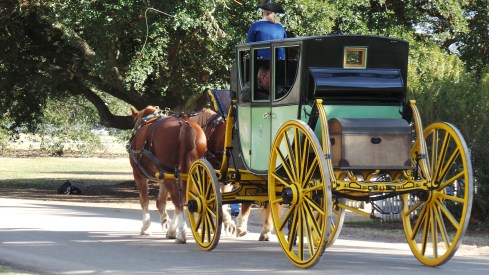
Williamsburg, Virginia

A beautiful day in our town, Williamsburg, Virginia

It’s funny how things get connected when you stop long enough to think about them. Yesterday was one of those Thornton Wilder, Our Town kind of days. The weather was spectacularly beautiful, Marion went to a graveside funeral for a childhood friend who died of cancer, and I replaced the radiator in her minivan.

The radiator was a mail-order replacement that I gave her as a Christmas gift (lucky her—I’m just sayin’). Between work and family commitments and waiting for the weather to be just right for the job, it took me four months to get to it. While wrenching in the driveway, I was listening to music, and got into a bunch of songs by Chicago. Between the gorgeous weather and thinking about Marion’s childhood friend and the kind of life they lived growing up in small-town Williamsburg, when Old Days played, I found myself daydreaming about Wilder’s Our Town. It’s a beautifully crafted, melancholy play about the ebb and flow of life in small-town America. Everyone would love to live in Wilder’s fictional Grover’s Corners, and be part of that Pulitzer-Prize-winning community.

But the play ends with a fatalistic dialogue about life beyond the grave. “There are the stars—doing their old, old crisscross journeys in the sky. Scholars haven’t settled the matter yet, but they seem to think there are no living beings up there. Just chalk…or fire.” That kind of melancholy makes me wonder what kind of ‘scholars’ Thorton Wilder trusted.

Somewhere in my childhood, long ago and far away, the words to Maltbie D. Babcock’s pastoral hymn This Is My Father’s World got engraved in my soul.

This is my Father’s world, and to my listening ears all nature sings, and round me rings the music of the spheres.

This is my Father’s world: I rest me in the thought of rocks and trees, of skies and seas; his hand the wonders wrought.

This is my Father’s world, the birds their carols raise, the morning light, the lily white, declare their maker’s praise.

This is my Father’s world, he shines in all that’s fair; in the rustling grass I hear him pass; he speaks to me everywhere.

This is my Father’s world. O let me ne’er forget that though the wrong seems oft so strong, God is the ruler yet.

This is my Father’s world: why should my heart be sad? The Lord is King; let the heavens ring! God reigns; let the earth be glad!

So what happened to Marion’s friend? That depends upon whom she trusted. Me? Thankfully, I have plenty of reasons to appreciate the beautiful world and wonderful family and friends all around me (and how that all came into being). Not everyone does. Got it. But if you’re inclined to pin your faith—or lack thereof—on your circumstances, consider the words of the apostle Paul:

“That is why I am suffering as I am. Yet I am not ashamed, because I know whom I have believed, and am convinced that he is able to guard what I have entrusted to him for that day.”
2 Timothy 1:12 (NIV84)

The truth is everything is connected—whether we appreciate it or not.

Excursis

Courtesy of Grooveshark.com, here are some of Chicago’s Our Town songs I was listening to out in the driveway: Old DaysDialogue (Part 1 & Part 2)(I’ve Been) Searchin’ So Long, and Alive Again.


A Multi-Site Ministry Market

Loud music, monster-sized video screens,  all in multiple locations. Is this the future of church?

Loud music, monster-sized video screens, all in multiple locations, with a single highly-visible teaching pastor. Is this the future of church?

What will tomorrow’s evangelical church look like?

Every now and then, I like to sneak off on a Sunday and check out what other churches are doing. One of the fastest growing movements in America currently is the multi-site church phenomenon. Within the past year, two new multi-site churches have entered our local community, and people are coming out of the woodwork to attend. So I had to find out for myself what the fuss was all about.

American culture is changing rapidly as the traditional Protestant Christian consensus is breaking down. How do churches compete with all of the very exciting things to do on a Sunday morning aside from church? As the culture gets more atomized, evangelical churches have found it challenging to know how to reach out to an increasingly disaffected and distracted population.

Enter the multi-site church. Essentially, such a church is simply a community with one senior pastor that meets in multiple places. But what makes the multi-site movement unique is how these communities hold together and their strategy for growth. Let me walk you through one multi-site church experience. Your mileage may vary, but at least you will get the flavor as we dig into this…
Continue reading