Category Archives: Topics

Basic Islam – Part 2

In our previous post on the basics of Islam, we noted that Islam is defined by:

The Quran is believed by Muslims to be the word of God dictated by the angel Gabriel to Muhammad. The Hadith are the recorded sayings and actions of Muhammad. There are thousands of them, and many have questionable authenticity, so there is a grading system. The biographies of Muhammad, or sīra, are considered by some to be part of the Hadith. Muslims believe that Muhammad is the exemplar of their faith and they aspire to imitate him. The sīra provide information that helps in their practice.

All Muslims accept the authority of the Quran. As you get more into the Hadith, the faith divides into sects with differing interpretations and beliefs (not unlike Christian denominationalism). The authority framework is all important, and shapes the derivative interpretations of Islam.

If you’re going to understand the basics of Islam, you must know something about Muhammad, the early history of Islam, how the Hadith came into being and how they are used today, and how Sharia law forms the framework for Islamic jurisprudence.

If you want to get an overview in less than an hour, here is a very informed presentation by Nabeel Qureshi that can help. I appreciate Dr. Qureshi’s empathy for Muslims—too many Christians take the terrorism we see reported in the news and never get beyond those horrifying impressions to develop even a modest understanding of Islam. I’m not in any way suggesting that the world should empathize with the violence that is carried out in the name of Islam, but we cannot address what we refuse to understand. After all, if you want to share the Christian faith with Muslims, wouldn’t it help to know something about their faith?


The Peculiarity of Seventh-Day Adventism #2

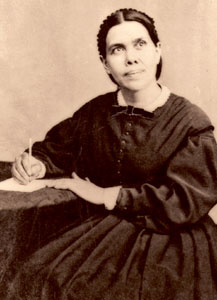
Ellen Gould Harmon White (1827-1915). Spiritual visionary who has given shape to the contemporary Seventh-Day Adventist movement.

Ellen Gould Harmon White (1827-1915). Spiritual visionary who has given shape to the contemporary Seventh-Day Adventist movement (credit: Seventh-Day Adventist literature)

As alluded to in the previous post in this series, Seventh-Day Adventism is sort of like a round peg that does not quite exactly fit in the square hole of groups that make up evangelical Christianity. Consider, for example, the most influential founder of Seventh-Day Adventism, Ellen G. White.

Ellen G. White was considered to be the prophetess who held together the fledgling Adventist/Millerite movement that nearly collapsed after the Great Disappointment of 1844, when William Miller’s prediction of the Second Coming of Christ failed to materialize. But among evangelical Christians, she is viewed anywhere from being an outright false teacher, such as in this Tim Challies blog post, to an eccentric visionary, who has since had her excesses corrected by reforming elements within contemporary Seventh-Day Adventism.

So, who is Ellen G. White, and how did she help define what would become Seventh-Day Adventism? Moreover, what type of movement did she and other early leaders help create?

Continue reading


The Peculiarity of Seventh-Day Adventism #1

Ben Carson, former Director of Pediatric Neurosurgery at John Hopkins Hospital, and the subject of the film Gifted Hands, is running as a Republican candidate for the 2016 Presidential race. Carson credits his Seventh-Day Adventist upbringing, guided by his single mother, as one of main factors in his success as a brain surgeon and bringing his family out of poverty (photo credit: cnn.com)

Ben Carson, former Director of Pediatric Neurosurgery at John Hopkins Hospital, and the subject of the film Gifted Hands, is running as a Republican candidate for the 2016 Presidential race. Carson credits his Seventh-Day Adventist upbringing, guided by his single mother, as one of the main factors in his success as a brain surgeon and bringing his family out of poverty (photo credit: cnn.com)

What is a Seventh-Day Adventist? To most people who know anything about them, Seventh-Day Adventists are those who go to church on Saturdays, instead of Sundays, and who have a pretty strict diet. Until recently, evangelical and mainline Christians have tended to view Seventh-Day Adventism as some type of strange sect or “cult.” But attitudes have been changing over the years.

I have not followed the political race for President much this fall.  But what I have noticed is a large number of evangelical Christians have come out as strong supporters of Republican candidate Ben Carson. What is surprising about the Ben Carson phenomenon among evangelicals is that he is a Seventh-Day Adventist.

It was primarily through the influence of Baptist theologian and cult expert, Walter Martin, that evangelical Christians started to rethink attitudes towards Seventh-Day Adventism, as far back as the 1950s. In The Kingdom of the Cults, Walter Martin observes that there have been signs of change within the movement (p. 535):

It should be carefully remembered that the Adventism of today is different in not a few places from the Adventism of 1844, and with that change the necessity of new evaluation comes naturally…It is my conviction that one cannot be a true Jehovah’s Witness, Mormon, Christian Scientist, etc., and be a Christian in the biblical sense of the term; but it is perfectly possible to be a Seventh-Day Adventist and be a true follower of Jesus Christ despite certain heterodox concepts.

Not everyone agrees with Walter Martin’s assessment. Some still view Seventh-Day Adventists to be “outside of the camp.” But the general trend appears to be that Seventh-Day Adventists are “within the camp” of evangelicalism, even though they do possess some quirky beliefs.

So, how did Seventh-Day Adventism start, how did it get branded as being heretical, and then how has the movement become cautiously accepted today by other Christians as being relatively OKAY? No matter where you come down on Seventh-Day Adventism, the story of it all is quite peculiar.
Continue reading


Basic Islam – Part 1

Mecca

Mecca, 2015
(Photo credit: Ahmad Masood / Reuters)

At a recent apologetics conference, one of the speakers I was most interested to hear could not finish his presentation on Islam. He was thoroughly prepared, but the audience interrupted him with so many questions that he only got through a few slides. It was clear they were eager to know more about Islam.

Most Christians, myself included, have spent little time studying Islam. Don’t agree? Did you recognize the photo above without reading the caption? I’ve heard about Mecca all my life, but can’t recall ever seeing a single photograph of it—as if it were a mythical place. The Atlantic Monthly did a recent photo essay showing the development of Mecca over the past 128 years. The development has caused quite a bit of controversy, even within the Islamic world.

Truth be told, our ignorance can be a barrier to understanding why there is so much strife between Christians, Jews, and Muslims throughout the world, and to sharing our faith. This new blog series on Islam will lay out the basics—without being disrespectful and without being naïve. (This is Veracity after all.) The posts will be short, in the hope that you will follow the hyperlinks to learn more about Islam.

One caveat before we start. If you asked someone to explain Christianity, consider how the answer might be shaped by the person answering the question. Depending on whom you asked, you might get an informed, orthodox answer or a completely off-the-wall distortion. To get the essence of Christianity, you have to get the Bible right. So for these posts on Islam we will focus on the orthodoxy of the Quran, the Hadith Collections, and the biography of Muhammad—the foundational documents of Islam. There are profound contradictions in these documents, ranging from peaceful and passive teaching to calls for extreme violence. Much of the material in these sources is contradictory, so we’ll spend some time on the Islamic Doctrine of Abrogation as well.

What is Islam?

Islam is a monotheistic religion that traces its roots all the way back through Abraham and Ishmael in the Book of Genesis. Islam is defined by:

Adherents of Islam are called Muslims, and believe that the Quran was dictated to Muhammad by the angel Gabriel. Muslims are taught to accept the authority of the Quran. The word ‘Quran’ means “the recitation.”

The small building at the center of Mecca is the Kaaba, which is considered to be the “House of God.” The Kaaba is considered the holiest site in Islam. Muslims must pray their Salah five times each day facing the Kaaba. The Salah is part of the Five Pillars of Islam, which are mandatory for Muslims.

Start with the Quran

The Quran can be found online here. (This site loads the Arabic script with the English translation and individual pages can take some time to load, so be patient; their legacy Quran version seems to load faster.) There are many English translations. If you prefer to have it read to you, Audible has an English version of the Quran in three volumes (that will take 19 hours to hear). The only authoritative version of the Quran is in Arabic, although today 85 percent of the Islamic world does not speak Arabic.

The Quran is organized into 114 chapters, called suras, roughly arranged in descending length (not chronological or thematic order). Each surah is divided into verses, the smallest having three and the largest having 286. Of the 114 suras, 86 are classified as Meccan, while 28 are Medinan. Each surah has a name, and how each name was ascribed is unclear, although some were named directly by Muhammad.

Most Christians will never read the Quran. Even if that’s true for you, at least read Surah 1 and Surah 2. One of the keys to Islam is Surah 2:106. It might help to understand while reading these suras that Muslims believe Christians—by way of belief in the Trinity—are ‘polytheists.’ They also believe that the Christian Trinity consists of God the Father, Jesus, and Mary (not the Holy Spirit).

So why study Islam? Why take the time to read the Quran? Maybe we can gain some insight into the religious strife that grips our world. Well, maybe. Reading the Quran and studying Islam won’t give us credentials, but it does take away the rejoinder, “Have you ever read the Quran?

More importantly, maybe by first reading the Quran we can then have informed, empathetic, civil discussions about Christianity with Muslims.


Grandson

Whitner David Paine, b. October 8, 2015

Whitner “Whit” David Paine, b. October 8, 2015

I pray that you will:

  • recognize that God loves you
  • be a good friend
  • be dependable
  • be able to let things go
  • be humble and gracious
  • be a compelling witness
  • be slow to anger and quick to forgive
  • be a good steward
  • be willing to make difficult decisions
  • be loved unconditionally
  • love unconditionally
  • try hard
  • laugh easily
  • smile when people need you to smile
  • enjoy the small things in life
  • listen to and respect those who disagree with you
  • know that God has a plan for your life
  • know the joy of personal discipleship
  • discover and appreciate that Christianity is objectively true
  • have courage
  • have compassion
  • have an uplifting sense of humor
  • have friends like your parents

I pray that you will never:

  • hate people
  • burn with anger
  • chase things that don’t matter
  • worry about things that you cannot control
  • waste your time
  • embrace cultural values that contradict your faith
  • forget who died for you